Hokkaido Campervan Rental for Obon (August): Booking, Pricing & Crowd-Avoidance Guide 2026
Planning to book a Hokkaido campervan for Obon (August)? This is your last chance.
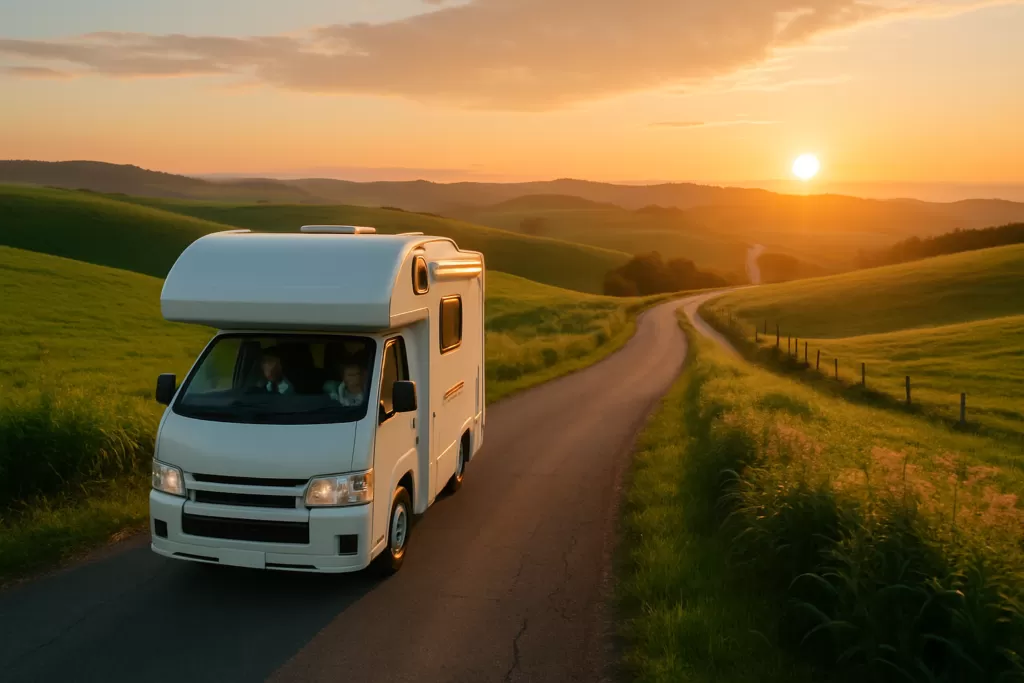
Obon (August 13–16, 2026) is the busiest time of year for campervan rentals in Hokkaido. Popular cab-over models sell out 4–5 months in advance, but if you nail your booking timing and route planning, you can travel completely free from the hotel reservation frenzy. This guide covers booking strategy, pricing, how to choose a rental company, a crowd-avoiding 7-night itinerary, recommended overnight spots, and what to pack.
Why Rent a Campervan in Hokkaido during Obon
Skip the Hotel Price Surge Entirely
Hokkaido in August reaches 25–28°C during the day, with nights dropping to around 15°C — a welcome escape from the mainland heat. Hotel and ryokan rates, however, jump to 1.5–2x normal prices. In Furano, Biei, and Hakodate, ¥20,000+ per night is standard. A family of four booking two rooms for seven nights can easily spend over ¥500,000 on accommodation alone.
In a campervan, an RV park night costs just ¥2,000–3,000, and many Michi-no-Eki (roadside stations) are free. Bedding, kitchen, and toilet are all on board — no check-in lines. Split among 4–5 people, it almost always works out cheaper than hotel plus rental car combined.
Beat the Crowds by Moving Early or Late
Furano and Biei face serious traffic congestion during the day. Queues at Shirogane Blue Pond and Farm Tomita typically form between 10:00 and 16:00. With a campervan, you can drive to the area the night before and arrive at 6–7 a.m., enjoying the scenery before the crowds appear.
Reroute on the Fly when Weather Changes
Fixed hotel reservations lock you in regardless of weather. In a campervan, you can decide on the spot: “It’s raining — let’s head to Eastern Hokkaido early” or “The view here is too good — let’s stay another night.” That flexibility is invaluable in the weather-variable east and north.
How Far in Advance? Booking Strategy & Waitlists
Ideal: Mid-April to Early May — Absolute Deadline: End of June
Obon rentals should be booked 3–4 months ahead — mid-April to early May. Family-sized cab-over models (6–7 seats) go first; by early May, weekend departure slots at major bases are nearly gone. Pet-friendly vehicles and large 7–8 seat models are especially competitive, sometimes selling out 4–5 months ahead. Our seasonal booking timing breakdown covers the general rule of thumb for every peak season.
If you’re searching from June onward, the realistic strategy is threefold: (1) shift your dates to before August 11 or after August 17, (2) check multiple Sapporo-area bases simultaneously, and (3) join waitlists.
Best Waitlist Windows: Mid-July and Late July
Most companies see cancellations right after the 30-day and 14-day cancellation fee thresholds kick in. Check availability daily in mid-July and late July. Last-minute openings are not impossible, so combine waitlist registrations at multiple companies with frequent checks.
Book RV Parks and Campgrounds at the Same Time as the Vehicle
Popular RV parks and campgrounds in Furano and eastern Hokkaido fill up in June–July. Once your route is set, lock in overnight spots the moment you book the van — that is the golden rule.
Obon Pricing: What to Budget
Vehicle Rates: 20–30% Higher than Off-Season
High-season rates apply over Obon. Expect roughly ¥15,000–25,000/night for a kei camper, ¥25,000–40,000 for a van conversion, and ¥35,000–55,000 for a cab-over. Over 7 nights, a van conversion runs ¥150,000–280,000 and a cab-over ¥250,000–380,000. Always confirm the all-in price including liability waiver and insurance surcharges.
| Vehicle Type | Per Night (Obon) | 7-Night Estimate |
|---|---|---|
| Kei Camper (2–3 people) | ¥15,000–25,000 | ~¥100,000–180,000 |
| Van Conversion (4–5 people) | ¥25,000–40,000 | ~¥180,000–280,000 |
| Cab-Over (6–7 people) | ¥35,000–55,000 | ~¥250,000–380,000 |
Fuel, Accommodation & Food Estimates
For a 1,200–1,800 km 7-night trip at 7–10 km/L and ¥150–180/L, fuel runs roughly ¥20,000–50,000. RV park and campground fees of ¥1,500–3,000/night total ¥10,000–20,000 over seven nights. With some home cooking, food costs stay around ¥2,000–3,000 per person per day.
Total Cost Overview
A 7-night van conversion trip runs roughly ¥280,000–350,000 all in; a cab-over ¥350,000–500,000. Split among 4–5 people, each person pays ¥70,000–100,000 — strong value compared to hotel-based Obon travel in Hokkaido.
Choosing a Rental Company and Base Location
New Chitose Airport Area vs. Central Sapporo
Most Hokkaido rental bases cluster around New Chitose Airport and central Sapporo. Flying in? A New Chitose-area company with airport transfers lets you pick up the van within an hour of landing. A Sapporo city base suits travelers who stay the previous night and want an early-morning start.
4 Things to Verify before You Book
- Liability waiver cap and NOC (loss-of-use) coverage limit
- Whether bedding, cookware, and camp chairs are standard or extra
- Refueling and cleaning conditions at return
- Minimum rental nights over Obon (many companies require 3–4 nights minimum)
Equipment add-ons can add ¥10,000–20,000 to the total — always compare all-in prices.
Crowd-Avoiding 7-Night Hokkaido Obon Route
Days 1–3: Central Hokkaido (New Chitose to Furano to Biei to Sounkyo)
Obon congestion concentrates around Sapporo, Otaru, and Furano. The classic crowd-avoidance strategy is to cover central Hokkaido early in the morning at the start of the trip, then spend the second half in the lightly trafficked east.
Day 1: Pick up at New Chitose Airport and head to Furano (~130 km, about 2 hrs). Arrive by evening, shop for supplies, and overnight at Michi-no-Eki Minami-Furano. Day 2: Explore Biei’s rolling hills, Hokuseinoka Viewpoint, and Blue Pond from 5–7 a.m. before the crowds arrive. Midday, drive toward Asahikawa and overnight near Asahiyama Zoo. Day 3: Move from Asahikawa to Sounkyo (~100 km), explore the Ohako and Kohako gorges, and relax in Sounkyo Onsen.
Days 4–5: Eastern Hokkaido (Nukabira to Obihiro to Kushiro Marsh)
Cross Mikuni Pass from Sounkyo into the Nukabira Lake area. Book a guided tour to visit the Taushubestu River Bridge — early-morning departures are best. Night 4 is at Michi-no-Eki Shikaoi or an RV park in the Nukabira Onsen area, known for brilliant stargazing on clear nights.
Day 5: Head through Obihiro to the Kushiro Marsh (~120 km). Enjoy Banei horse racing or pork rice bowl, then overnight at an RV park or campground around Kushiro. August fog over the marsh creates an otherworldly atmosphere at dawn.
Days 6–8: Shiretoko to Okhotsk to New Chitose
Day 6: Head north from Kushiro to the Shiretoko Peninsula (~130 km). Check bear activity reports at the Rausu Visitor Center, walk the Shiretoko Five Lakes elevated boardwalk (no reservation needed), and stargaze near Mashu. Night 6 is at an RV park in the Utoro Onsen area.
Day 7: Drive west along the Okhotsk coast. Sightsee at Tento-yama Observatory and Lake Abashiri, then overnight in Kitami. Day 8: Return to New Chitose via Asahikawa, planning to arrive 1 hour before your return time (Abashiri to New Chitose is ~360 km, 5 hours).
Recommended Overnight Spots (Booking Info and Fees)
Central Hokkaido
Michi-no-Eki Biei Shirogane Birke (Biei): 5 minutes from Blue Pond by car. Large parking lot with clean 24-hour restrooms. Arrive just as it opens at 8 a.m. to catch the site before the crowds.
Michi-no-Eki Biei Oka no Kura (Biei): Gateway to the Biei hills. Arrive early during Obon — it fills fast.
Toyako Lakeside Campground (Toyako): Lakeside pitches with spectacular views. The Toyako Long-Run Fireworks display launches every night at 8:45 p.m. in August. Hot-spring facilities within walking distance. Reservation required.
Eastern Hokkaido
Michi-no-Eki Shikaoi (Shikaoi): Convenient base for Shikaribetsu and Nukabira Lakes, with parking spacious enough for large cab-overs. Warm up before bed at nearby Shikaoi Onsen Shiki-no-Yu.
Utoro Harbor Area (Shari): Areas near the Utoro fishing port permit overnight parking. Fresh seafood is sold at the harbor in the early morning. Always secure food inside the vehicle — bear activity is real.
Michi-no-Eki Okhotsk Monbetsu (Monbetsu): The adjacent Monbetsu Fishermen’s Co-op Market peaks with scallops and horsehair crab in August. Paved parking and 24-hour restrooms make it a reliable transit stop.
| Spot | Estimated Fee | Reservation |
|---|---|---|
| RV Parks (Sounkyo, Kushiro, Obihiro, etc.) | ¥2,000–3,000/night | Required (powered sites) |
| Auto Campgrounds (Toyako Lakeside, etc.) | ¥3,000–5,000/pitch | Required — book by June for Obon |
| Michi-no-Eki (Biei, Shikaoi, etc.) | Free to ¥2,000 | Required only if RV park attached |
Obon Campervan Highlights: Making the Most of Hokkaido
Cook Fresh Local Produce on Board
August is peak season for Hokkaido produce. Furano’s corn, tomatoes, and melons are at their best; Pacific saury starts appearing in eastern Hokkaido. Buying ingredients at Hakodate Morning Market, Kushiro Washo Market, or Obihiro farm stands — then cooking at a lakeside or hilltop with the van’s galley — is one of the great campervan pleasures.
The Off-Peak Tourism Strategy for Sunrise, Stars, and Sunsets
Peak crowds hit popular spots between 9:00 and 16:00. Park nearby the night before, start moving at 6 a.m., and you will have the lavender fields and rolling hills to yourself. Spend the congested midday hours driving to your next stop. In the evening, Hokkaido summer skies darken early — after 20:00, stars appear. Areas like Biei, Mashu, and Teshio have low light pollution; on clear nights the Milky Way is visible to the naked eye.
Wrap Up Fireworks Festivals Without Fighting the Exit Traffic
Obon brings fireworks and summer festivals across Hokkaido: Asahikawa Summer Festival (mid-August), Obihiro Fireworks Display (mid-August), and Toyako Long-Run Fireworks (nightly in August). Park nearby, watch the show, go straight to bed. No exit-traffic gridlock — just a relaxed departure the next morning.
Packing Checklist and Safety Notes
Cold Weather, Insects and Driving
Even in August, nights drop to around 15°C; eastern and northern Hokkaido can fall below 10°C. A fleece or light down jacket makes a real difference for sleep quality. In eastern Hokkaido’s wetland areas, use DEET-based insect repellent and wear long sleeves and socks. Gas stations are scarce on a Sunday in eastern and northern Hokkaido — refuel in Asahikawa, Kitami, or Obihiro before the tank drops below half.
- Warmth: fleece, light down jacket, sleeping bag or blanket
- Insects: DEET repellent, bite relief cream, long sleeves and trousers
- Van comfort: blackout sunshades, extension cord, portable battery
- Food: cooler box, airtight containers, plenty of rubbish bags (pack out your waste)
- Driving: sunglasses, ETC card, watch for deer and foxes darting across roads at dusk
Fresh Water, Waste Water and Bear Safety
Refill your fresh-water tank when it drops below 40%. During Obon, RV parks and roadside stations get busy — flexible timing is essential. Most Hokkaido campsites have dump stations, but not all; confirm in advance so your schedule does not unravel.
Bear activity is elevated in Shiretoko, Daisetsuzan, and the Hidaka range during Obon. Always carry a bear bell and hike with others — solo entry into mountain areas is strongly discouraged. In the van, store all food in airtight containers and never leave rubbish outside.
FAQ: Obon Campervan Rentals in Hokkaido
Q. Can I still find a van close to Obon?
It is not impossible. Watch for openings right after the 30-day and 14-day cancellation fee deadlines — from mid-July onward, check availability daily at multiple companies while registering on their waitlists.
Q. Do I need a special license?
The vast majority of rental vehicles are registered as passenger vehicles and require only a standard Japanese driver’s license or equivalent IDP. That said, cab-overs are about 2 m wide and 3 m tall — watch clearance restrictions and crosswinds, and avoid city streets on your first day until you are comfortable.
Q. How bad is traffic during Obon?
National Route 230 near Sapporo, the road toward Otaru, and the tourist roads in Furano get congested during the day. Move at 6–7 a.m. and focus your itinerary on eastern Hokkaido, and you will encounter very little traffic.
Q. Is it cheaper from August 17 onward?
Many companies drop rates by ¥5,000–10,000 per night after August 17. If you have schedule flexibility, shifting your trip later pays off.
Q. Is it okay to sleep at a Michi-no-Eki?
Roadside stations are for rest stops, not camping. One overnight of sleep is generally accepted, but generators and idling engines are prohibited, external furniture is frowned upon, and you must pack out all rubbish. Some stations have official RV park zones with fees — always check before you park for the night.
New Chitose Airport / Tokachi-Obihiro Airport
Rent the Cab-Over “Cresson Journey”
Explore all of Hokkaido by campervan from New Chitose Airport. Obon slots go fast — book early.
View Details at Moving InnBook a Campervan in Hokkaido
Moving Inn New Chitose Airport supports English booking and offers airport transfers.

![Can You Rent a Campervan in Hokkaido in Winter (Dec–Mar)? Companies With Winter Closures and What to Check Before Booking [2026]](https://hokkaido-campingcar.jp/wp-content/uploads/2026/10/hokkaido-campingcar-rental-winter-open-eyecatch-768x432.webp)