Hokkaido Campervan Travel Guide with Your Cat | Escape Prevention, Temperature & Litter Tips [2026]
A complete guide to traveling Hokkaido by campervan with your cat. Covers escape prevention, cabin temperature management, litter box setup, carrier training, pet-friendly spots, and vet information.
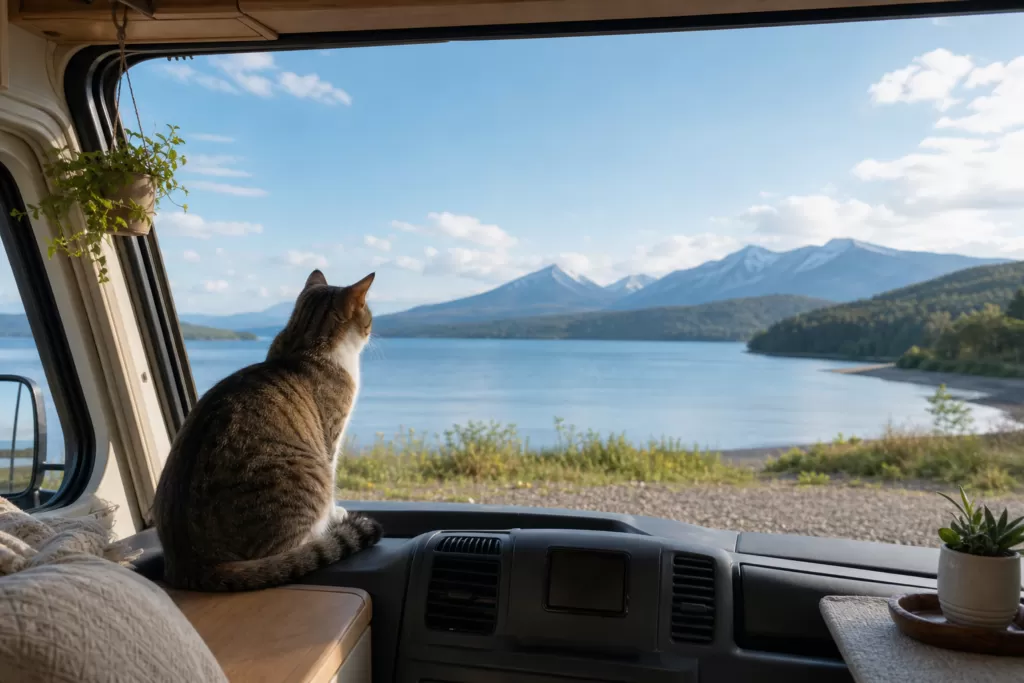
Traveling Hokkaido in a campervan with your cat sounds exciting — but worries like “what if they escape?” or “what if they overheat?” are completely valid. Unlike dogs, cats are highly sensitive to environmental changes and can panic in an unfamiliar vehicle. This guide covers everything cat owners need to know: preparation, safety during travel, and choosing the right spots in Hokkaido — all focused on cat-specific risks.
Estimated cost: Campervan rental in Hokkaido typically runs ¥20,000–¥40,000 per night depending on vehicle type and season. Most companies charge an additional cleaning fee for pet travelers, so confirm in advance.
Can You Travel with a Cat? Preparation & Carrier Training
Many people assume cats hate cars, but with proper preparation a trip is absolutely possible. However, unlike dogs, cats don’t simply “enjoy” being taken along — they feel intense stress outside their territory. That’s why the pre-departure acclimation period makes or breaks the trip.
Carrier Training: Start at Least 2–4 Weeks Ahead
About a month before the trip, place the carrier in your cat’s living space with the door open. Once your cat enters on its own, move to the next step. Put a familiar towel or something with your cat’s scent inside to help them feel at home.
Next, close the door for 10–15 minutes, then take a short drive nearby — gradually building up exposure. A cat unaccustomed to engine noise and vibration may panic on a sudden long-distance journey. Never attempt a Hokkaido trip with a cat that has never been in a car before.
Match Trip Length to Your Cat’s Stress Tolerance
Individual cats vary greatly — some handle 2–3 nights easily while others tire after just one. For a first campervan trip, a 1-night short trip is safest. Confirm that your cat can relax in the vehicle and eat and use the litter box normally before attempting a longer journey.
Pre-Departure Checklist
- Vaccine validity (3-in-1 vaccine should be current; rabies vaccination is not required for cats)
- Microchip registration (Ministry of the Environment database)
- ID tag on collar with phone number
- Notify your vet and confirm any regular medications
- Declare “traveling with a cat” to the rental company and confirm pet policy
A microchip is the only reliable way to identify your cat if they escape or get lost. Microchipping became mandatory for newly sold cats and dogs in Japan from June 2022, but is a best-effort obligation for existing cats. If unregistered, consider getting it done at a vet before the trip.
Preventing Escapes: Entry/Exit Rules, Screen Locks & Harnesses
The most common problem on cat travel trips is escape. A cat that bolts in an unfamiliar place can panic and run far — and in Hokkaido’s vast natural environment, finding them again can be nearly impossible. Treat escape prevention not as a “just in case” measure, but as a fundamental part of the trip.
Set Strict Entry/Exit Rules
Most escapes happen in the split second of getting in or out. Agree to always put the cat in the carrier before opening any door, or use a door on the opposite side from the cat. Campervans have multiple entry points unlike regular cars — share the rule “always open the cat’s side door last” with all travel companions.
Always Lock Screens and Vents
Campervans have screened windows and roof vents for ventilation. Cats can claw open screen doors. When ventilating, attach escape-prevention netting on the inside, or use locking hardware to secure screens in the cat’s area.
During travel, keep windows closed and use the air conditioner for ventilation. When ventilation is needed while parked, put the cat in the carrier first before opening windows.
Using a Harness and Retractable Leash
Always use a harness (body harness) rather than a collar when going outside. Collars can slip off when a cat backs up, increasing escape risk. Acclimate the harness indoors weeks before the trip to reduce stress at the destination.
Limit outdoor walks to within the campsite only — keep cats away from roads and tall grass. Cats can bolt suddenly, so never let go of the leash and always keep it short.
Compare Hokkaido Campervan Rentals
Base yourself at New Chitose Airport and compare rates, vehicle types, and pickup locations all in one place.
Compare Rental Companies & Prices →Cabin Temperature, Ventilation & AC Risk When Leaving Your Cat Alone
Summer heat inside a vehicle is a life-threatening issue for cats. While heatstroke in dogs gets a lot of attention, cats face the same risk. Hokkaido summers may seem cooler than Honshu, but since the 2020s temperatures regularly exceed 30°C, and a closed car interior can reach 15–20°C above outside temperature.
Even 30 Minutes with the Engine Off Is Dangerous
“Just a quick convenience store run” or “I’ll be right back” — these judgments lead to accidents. Even on a 25°C day, a car with the engine off and windows closed can exceed 40°C in 30 minutes. A cat can develop heatstroke at 40°C in a short time, and without prompt treatment, it can be fatal.
During summer (June–August), consider it an absolute rule: do not leave the cat in the vehicle unattended. Even with the engine running and AC on, there is always a risk of sudden engine failure or AC malfunction. Traveling as a couple or pair means you can take turns staying with the cat — a major safety advantage.
Temperature Control While Driving
Use the cabin AC while driving to keep the cat’s area at around 26–28°C. Avoid directing cold air directly at the carrier. Covering part of the carrier with a cloth can help the cat feel more secure.
At campsites, Hokkaido summer nights often drop below 20°C — watch for overcooling. Keep a cat blanket handy so the cat can self-regulate its temperature.
Using the Roof Vent for Ventilation
Some campervans have a roof vent fan. Using it while parked maintains airflow without running the engine. But as noted above, don’t forget escape-prevention locks. When opening the roof vent with the cat inside, attach a net over the opening or put the cat in the carrier first.
Litter Box, Food, Health Monitoring & Local Vets
Cats may hold off using the litter box in an unfamiliar environment. Extended periods without toileting during a trip can lead to urinary tract problems. Loss of appetite is also a stress signal. Make a habit of checking both every day.
Setting Up an In-Vehicle Litter Box
Bringing your cat’s usual litter box is ideal. If size is an issue, use a foldable travel litter box with familiar litter. Choose a spot in the vehicle where the litter won’t scatter easily during travel, and line the bottom with a sheet. Use deodorizing sheets if odor is a concern. For a complete guide to campervan toilet facilities, see Campervan Toilet Complete Guide.
Bring slightly more litter than you think you’ll need. Cat litter is available at Hokkaido home improvement stores (Kohnan, DCM Homac, etc.), but some cats refuse unfamiliar brands, so bring your own from home as a baseline.
Managing Food and Water
Bring the same food your cat eats at home. Switching to a new food on the road can cause gastrointestinal problems. Change water daily and monitor how much they drink. Cats often don’t show obvious signs of dehydration — especially in summer, encourage drinking by mixing in wet food.
Daily Health Checks & Hokkaido Veterinary Clinics
Build a habit of checking the following every morning and evening:
- Litter box use (presence, color, volume of urine and feces)
- Appetite (eating as usual?)
- Energy level (lethargic? eye discharge? runny nose?)
- Vomiting or diarrhea
If you notice anything unusual, visit a vet promptly. Key Hokkaido veterinary clinics:
- Sapporo: Multiple 24-hour emergency animal hospitals available
- Hakodate: Hakodate Animal Hospital and several others near Hokuto City
- Asahikawa: Hokusuito Animal Hospital and others in the city
- Obihiro: Multiple clinics in the city center
Search for vet clinics along your route before the trip. Search “animal hospital” on Google Maps to find clinics near your current location. Keep the phone number of a Sapporo emergency animal hospital on hand for after-hours emergencies.
New Chitose Airport / Tokachi-Obihiro Airport
Rent a Cab-Over Campervan “Cresson Journey”
Base yourself at New Chitose Airport and travel all across Hokkaido by campervan.
View Details at Moving Inn →Cat-Friendly Hokkaido Spots & Sample Daily Itinerary
Where can you go with a cat? Unlike dogs, cats are hard to walk freely outdoors, so the realistic approach is: keep the cat comfortable inside the vehicle while the humans do the sightseeing. Here are cat-friendly spots and a sample daily schedule.
Cat-Friendly Spots for a Hokkaido Campervan Trip
Roadside stations & service areas (SA): Spacious parking makes it easy to stop and check on your cat. Morning and evening when temperatures are lower are ideal for breaks.
Pet-friendly auto campsites: Hokkaido has many campsites accepting pets. However, some have conditions like “dogs only” or “cage required” — always declare you have a cat and confirm in advance.
- Campsites near Niseko Annupuri International Ski Area: spacious grounds for relaxed stays
- Furano/Biei area campsites: cool nights are comfortable for cats
- Shiretoko/Abashiri campsites: cool even in summer, low heatstroke risk
Hot spring resort parking lots: Jozankei, Noboribetsu, Toya Lake, and other resort areas have large parking lots — take turns at the hot springs while one person stays with the cat in the vehicle.
Sample 1-Day Schedule with a Cat (Summer, Furano Area)
| Time | Activity | Cat’s Situation |
|---|---|---|
| 6:30 | Wake up, health check, breakfast | Short leash walk within campsite |
| 8:00 | Depart, begin driving | In carrier or cage in vehicle |
| 10:00 | Sightseeing around Biei / Blue Pond | Take turns watching cat in parking lot |
| 12:00 | Lunch at roadside station | Parked in shaded lot, windows open for ventilation (cat inside) |
| 14:00 | Drive to Furano lavender fields, sightsee | Continue taking turns; if engine off, one person must stay |
| 16:00 | Campsite check-in | After setup, take cat out for leash walk |
| 18:00 | Dinner, campfire | Cat relaxing inside campervan |
| 21:00 | Sleep | Sleep together inside the campervan |
The key to this schedule: never leave the cat alone for long, and balance movement with rest. Instead of long-distance driving every day, staying two nights at one campsite and exploring the surrounding area minimizes cat stress.
FAQ
Q: Will campervan rental companies accept a cat?
It varies by company. Contact them in advance and explicitly state you’re traveling with a cat. Even if pets are allowed, most companies charge an additional cleaning fee, and conditions such as mandatory cage use or restrictions on free movement inside the vehicle may apply. Returning the vehicle clean is basic etiquette. If you’re looking for a pet-friendly company near New Chitose Airport, Moving Inn’s campervan rental is one option to consider.
Q: Can I leave my cat alone in the vehicle while sightseeing?
During summer (June–August), leaving a cat alone is essentially off-limits. Even at 20°C outside, a parked car can reach near 40°C in a short time. Running the engine with AC on carries risk of sudden failure — it’s not 100% safe. Take turns with travel companions staying in the vehicle, or choose cat-friendly spots and times for sightseeing.
Q: My cat keeps meowing inside the vehicle. What should I do?
This is a sign of stress or anxiety. First check that the carrier is comfortable (temperature, ventilation, vibration). Placing a familiar towel or something with your cat’s scent in the carrier may help calm them. Feliway (a synthetic feline pheromone product) sprayed on the carrier is also effective. If meowing continues, pull over at the next rest point and check on the cat. Forcing a long drive while the cat is distressed is dangerous for everyone.
Q: My cat hates the harness. Do I have to take them outside?
There is no need to force them outdoors. If your cat is relaxed inside the vehicle, staying in the campervan at the campsite is perfectly fine. If the harness is absolutely refused, briefly letting the cat breathe fresh air while in the carrier is sufficient. Prioritize minimizing cat stress over getting them outside.
Q: What if my cat gets sick during the Hokkaido trip?
Stop the trip and visit the nearest vet. Search “animal hospital” on Google Maps to find clinics nearby. For nighttime emergencies, Sapporo’s after-hours emergency animal hospitals are available. Before the trip, ask your regular vet if you can call them during the journey for phone guidance.
Q: Are there age restrictions for cats?
Kittens (under 6 months) and senior cats (15+) face greater physical strain — plan long trips carefully. Kittens should complete their vaccination schedule before traveling. Senior cats should consult a vet about travel suitability, especially if they have existing conditions. Healthy adult cats (1–10 years) can absolutely enjoy a Hokkaido trip with proper preparation.
Q: Can my cat roam freely inside the campervan?
Strongly recommended to keep cats in a carrier or cage while driving. In sudden braking, a loose cat can be thrown and suffer fractures or internal injuries. A cat getting into the driver’s footwell is a serious accident risk. While parked or sleeping, letting the cat move freely inside is fine, as long as no escape is possible. Some rental companies require “cage use while driving” as a rule — confirm this in advance.
Q: What happens to my cat on a ferry to Hokkaido?
Pet policies vary by ferry company and vessel. Some leave pets in the vehicle deck while others use a dedicated pet room. Major companies like Pacific Ferry and Shin Nihonkai Ferry have pet facilities, but be aware that long hours in a dark vehicle can be very stressful for cats. Always declare you’re traveling with a cat before boarding and confirm the handling rules for the voyage. Air travel is extremely stressful for cats, so for a campervan trip, driving or ferry is the better option.
Traveling Hokkaido by campervan with your cat takes extra preparation, but it’s a uniquely rewarding experience — sharing Hokkaido’s nature with your beloved pet in the same space. Keep three things in mind: escape prevention, temperature management, and a proper litter box setup. Start with a short trip, go at your cat’s pace, and enjoy Hokkaido together.
Book a Campervan in Hokkaido
Moving Inn New Chitose Airport supports English booking and offers airport transfers.

![Campgrounds Near Tokachi-Obihiro Airport: 8 Sites Within 30 km, Compared by Vehicle Access, Power and Price [2026]](https://hokkaido-campingcar.jp/wp-content/uploads/2026/10/photo-obihiro-airport-featured-pl232-768x512.jpg.webp)
![Campgrounds Near Hakodate Airport: 12 Sites Within 30 km, Compared by Vehicle Access, Power and Price [2026]](https://hokkaido-campingcar.jp/wp-content/uploads/2026/10/photo-hakodate-airport-featured-hl4722-768x484.jpg.webp)