Complete Guide to Camping Car Travel in Shakotan Peninsula | Shakotan Blue, Sea Urchin & Overnight Parking Spots [2026]
A complete guide to exploring Shakotan Peninsula by camper van.
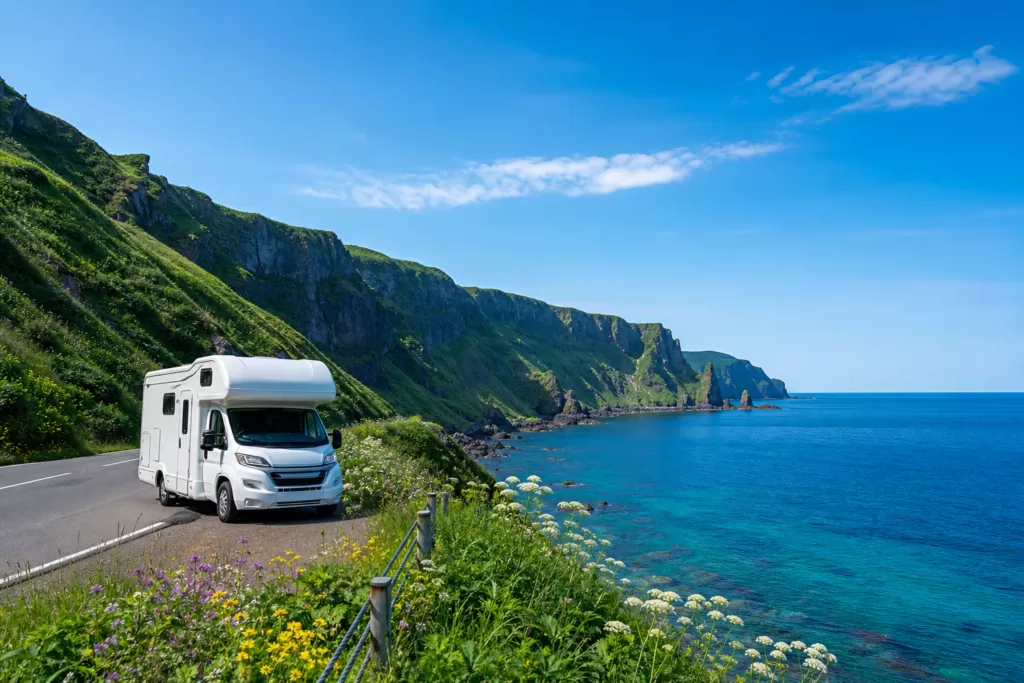
The best time to explore the Shakotan Peninsula by camper van is from June through August. During this season, you can enjoy both the crystal-clear cobalt sea known as “Shakotan Blue” and fresh Bafun and Murasaki sea urchin at their peak. Located about an hour’s drive from Otaru via Yoichi, the area pairs perfectly with visits to Yoichi Winery and Nikka Whisky Distillery. Be aware that the peninsula’s geography presents some challenges: narrow roads, strong winds, and long gaps between restroom facilities. This guide covers all the practical information you need for a safe and enjoyable camper van trip around Shakotan.
Shakotan Peninsula’s Appeal and Best Season
Despite being small in area and population, Shakotan Peninsula is nationally renowned for three things: “Shakotan Blue,” Shakotan sea urchin, and Cape Kamui. It attracts visitors from across Japan every year for its exceptionally clear waters and status as Hokkaido’s top sea urchin producing area. The combination of stunning natural scenery and exceptional food makes it an increasingly popular camper van destination. For couples and duo travel camper van plans, see this article for reference.
The Shakotan Peninsula juts out from the northwestern part of Hokkaido’s Shiribeshi subprefecture, featuring a ria coastline of dramatic scenery. Known for “Shakotan Blue,” its water clarity ranks among the best in Japan — on sunny days, the vivid blue visible through the rocky reefs is breathtaking.
Why June to August Is the Best Season
Sea urchin fishing opens in Shakotan for Bafun uni typically from early June to mid-July, and Murasaki uni from early July to late August. During this period, restaurants serving “Shakotan uni-don” line the streets and draw tourists from across Hokkaido and beyond. Ocean clarity is at its highest in summer, with snorkeling and sightseeing boat tours also in operation.
However, weekends and the Obon period from June to August see heavy congestion in Shakotan. The Cape Kamui parking lot can fill up by mid-morning, so large vehicles like camper vans must arrive early. Plan for a weekday visit or aim to arrive before 8 AM.
Always Check Weather and Wave Conditions
Because Shakotan Peninsula faces the Sea of Japan directly, weather can change quickly — winds often pick up in the afternoon even on sunny-forecast days. The walking trail at Cape Kamui closes in strong winds, and many visitors have been disappointed to find the path shut after making the trip. Before departure, check the Japan Meteorological Agency forecast for the Shiribeshi/Shakotan area and the Shakotan Tourism Association’s trail open/close updates.
Quiet Shakotan After September
After September, the uni fishing season ends and tourist numbers drop sharply. While crowds thin out, many restaurants shift to reduced hours or close entirely, limiting dining options. From October onward, rough weather typical of the Sea of Japan coast increases, and the Cape Kamui trail may close due to strong winds. For the best combination of scenic beauty and culinary richness, June to August remains the peak period.
Why to Avoid Winter (November to April)
Facing the Sea of Japan, Shakotan Peninsula experiences severe blizzards in winter, and roads can be closed. Most tourist facilities and restaurants shut down, and campgrounds and Michi-no-Eki rest stop amenities become unavailable. This season is not practical for camper van travel.
Recommended Drive Routes and Travel Times from Otaru and Yoichi
The main access route to Shakotan Peninsula is from Otaru via National Route 5 → Yoichi → Prefectural Route 914 (Shakotan Peninsula Loop Road). From New Chitose Airport, allow approximately 1 hour 10 minutes by expressway to Otaru, then about 25 minutes to Yoichi, and another 45 minutes from Yoichi to Cape Kamui.
Basic Route: Otaru → Yoichi → Shakotan
- New Chitose Airport → Otaru IC: Via Doo Expressway, approx. 1 hr 10 min (75 km)
- Otaru IC → Yoichi (Nikka Whisky): National Route 5, approx. 25 min (20 km)
- Yoichi → Shakotan Town (Bikuni Fishing Port): Prefectural Routes 913-914, approx. 40 min (35 km)
- Bikuni Fishing Port → Cape Kamui Parking Lot: approx. 20 min (15 km)
Allow about 85 minutes total from Otaru IC to Cape Kamui to travel comfortably. Note that on summer weekends, the prefectural road between Yoichi and Shakotan can become congested, more than doubling travel times.
Combining Yoichi Winery and Nikka Whisky into Your Itinerary
Yoichi is both a transit point to Shakotan and a destination in its own right. The Nikka Whisky Yoichi Distillery (free admission, open for tours) has a large parking lot that accommodates large camper vans. Yoichi Winery similarly offers parking and a shop where you can purchase after tastings (drivers may not taste). A good plan is to spend the morning in Yoichi, head into Shakotan before noon, and walk Cape Kamui in the afternoon. The classic 2-day Shakotan trip wraps up with uni-don the next morning before returning to Otaru.
Sample 1-Night 2-Day Itinerary for Shakotan Peninsula
Here is a reference schedule for a 1-night, 2-day visit to Shakotan.
- Day 1 Morning: Depart New Chitose Airport → Yoichi Nikka Whisky Distillery tour → Yoichi Winery stop
- Day 1 Noon: Uni-don in the Furubira-Bikuni area (aim to arrive around 11 AM)
- Day 1 Afternoon: Kogane-misaki stroll → Shimamui Coast → Campground check-in, dinner
- Day 2 Early Morning: Cape Kamui (arrive before 8 AM, round-trip trail walk about 40 min)
- Day 2 Morning: Michi-no-Eki Osukoi! Kamoenai → Yoichi Onsen bath → Head back to Otaru / New Chitose
This schedule covers the main spots with room to spare. With 3 or more nights, you can add Otaru sightseeing or Niseko hot springs.
Narrow Road Cautions for Large Camper Vans
Prefectural Route 914, which circles the peninsula, is generally a comfortable two-lane road, but there are several sections near the tip (between Cape Kamui and Shimamui Coast) that narrow to 1-1.5 lanes. Passing oncoming traffic can be tricky, so large camper vans (width around 2.2 m) should take extra care. The peninsula is also exposed to strong Sea of Japan winds, especially from early autumn to spring, which can catch tall-profile camper vans off guard. Always check the weather forecast before departure.
Scenic Spots: Cape Kamui, Shimamui Coast, Kogane-misaki and More
Shakotan Peninsula is dotted with viewpoints where you can experience “Shakotan Blue.” Here is a summary of the major spots and camper van parking information.
Cape Kamui (Kamui-misaki)
The peninsula’s top tourist attraction. The walking trail “Charanka no Komichi” runs along the sheer clifftops to the cape’s tip. The one-way trail from the parking lot to the tip is about 770 m (approx. 20 min), with some elevation changes and narrow sections.
- Parking: Free surface lot only (no multi-story parking). Large camper vans can park, but large-vehicle spaces are limited. Arrive before 8 AM in summer
- Trail: Closes in strong winds. Check closure status on the Shakotan Tourism Association website
- Restrooms: Public toilets next to the parking lot
- Shop: Small shop and light meals next to the parking lot (seasonal only)
From the tip of Cape Kamui on a clear day, Shakotan Blue stretches all the way to the horizon. Kamui-iwa Rock, standing at the cape, is an iconic Shakotan image and a popular photo spot.
Shimamui Coast (Shimamuikaigan)
A beach with exceptional clarity selected among Japan’s 100 Best Shores. Walking through a tunnel from the parking lot, you are suddenly greeted by brilliant blue water and sandy beach. Swimming is not allowed, but many visitors snorkel off the rocks.
- Parking: Free surface lot. Large vehicles can park, but spaces are limited — arrive early in summer
- Access: Walk through the tunnel (3-5 minutes on foot) from the parking lot to the shore. Steps present
- Restrooms: Available next to the parking lot
Kogane-misaki (Golden Cape)
A cape within walking distance of central Shakotan (Bikuni), named for the golden glow the sea takes on at dusk. You can enjoy Shakotan Blue on the walking trail without the crowds of Cape Kamui. Being near Bikuni Fishing Port, it makes a perfect stop after a bowl of uni-don.
- Parking: Use free parking near Bikuni Fishing Port. Surface only; large vehicles welcome
- Time needed: Approximately 30 minutes to walk the full trail loop
Shakotan-misaki / Joroko-iwa Lookout
From the viewpoint at Shakotan-misaki (Nozuka), you can look down on Shakotan Blue from above — a hidden gem with few crowds. Parking is limited to a small roadside pull-off. Best reserved for small to mid-sized vehicles.
Sightseeing Boats and Snorkeling Tours
Glass-bottomed boats depart from Bikuni Fishing Port, letting you observe Shakotan Blue beneath the surface without getting wet. Trips run about 40 minutes, with adult fares around 1,500-2,000 yen (varies by season and operator). Boats run during summer only; same-day tickets are usually available, but they sell out when crowded. Guided snorkeling tours are also growing in popularity. Combining camper van mobility with a boat trip is the essence of travel here.
Shakotan Sea Urchin, Seafood Dining, and Food Stops
A major highlight of any Shakotan trip is the food. Fresh sea urchin leads the lineup, alongside flounder, abalone, atka mackerel, and other Sea of Japan bounty.
How to Enjoy Shakotan Uni and Where to Eat
Shakotan’s “uni-don” is a generous bowl of rice topped with a lavish pile of raw sea urchin. Bafun uni is richly sweet and full-flavored; Murasaki uni is lighter and more refined. During the season (June-August), multiple restaurants operate around Bikuni Fishing Port.
- Misaki Shokudo (Bikuni): A long-established uni-don restaurant run by local fishermen. Often sells out early
- Shokudo Ushio (Yobetsu): A restaurant near Cape Kamui. Grilled seafood set meals are also popular
- Shakotan Fishermen’s Cooperative Direct Sales: Fresh fish and processed goods direct from the source; uni available for purchase
Bafun uni-don typically runs 4,000-8,000 yen, with wide variation by season, quality, and portion. Many restaurants are cash-only, so come prepared. If there is no large parking lot near a restaurant, walk from the public fishing port lot.
Stocking Up at Michi-no-Eki and Farm Stalls
For camper van travelers, stocking up on supplies at Michi-no-Eki rest stops is important. The most convenient options near Shakotan Peninsula are:
- Michi-no-Eki Space Apple Yoichi (Yoichi Town): Rich in agricultural products like apples and grapes. Yoichi wine available. Large parking lot (large vehicles welcome)
- Michi-no-Eki Osukoi! Kamoenai (Kamoenai Village): A rest stop near the entrance to Shakotan Peninsula. Fresh fish corner available. Large vehicles can park
There are no large supermarkets within Shakotan Town, so stock up on food and drinking water in Yoichi or Furubira before heading in. Convenience stores on the peninsula are extremely scarce — there is only one in the Bikuni area of Shakotan Town.
Compare Hokkaido Camper Van Rentals
Base yourself at New Chitose Airport and compare rates, vehicle types, and pickup locations all in one place.
Compare Rental Companies & Rates →Overnight Parking, RV Parks, Rest Stops, and Hot Springs
Shakotan Peninsula has few campgrounds and RV parks, so accommodation options are limited. Decide on your overnight spots in advance.
Campgrounds and RV Parks Around Shakotan Peninsula
- Shakotan no Sato Campground (Shakotan Town): Campground with an oceanside setting. Auto sites available. Call ahead to confirm access for large camper vans. Showers on-site
- Hamanishikawa Auto Campground (Shakotan Town): A campground with a mix of cottages and auto sites. Beachside location is popular. Reservation required
- RV Park Yoichi (tentative): RV park details near Yoichi can change year to year — check with the Japan RV Association or individual RV park official sites before your trip
Overnight Stays at Michi-no-Eki
Michi-no-Eki rest stops do not explicitly permit overnight stays, but a certain number of travelers do spend the night in their parking lots. During summer, however, Michi-no-Eki around Shakotan Peninsula are busy, so large camper vans should be considerate about extended parking. Always follow facility rules and avoid inconsiderate parking.
Securing Restrooms, Water, and Power
Be aware that restroom gaps can be long inside Shakotan Peninsula. The major tourist spots all have facilities, but there are stretches of several dozen kilometers in the middle of the peninsula without any restrooms. For details on using cassette toilets and managing wastewater in a camper van, see the Complete Camper Van Toilet Guide. Make active use of Michi-no-Eki rest stops as well.
- Water: Fresh water available at Michi-no-Eki Osukoi! Kamoenai and Michi-no-Eki Space Apple Yoichi (confirm RV water facilities in advance). Convenience stores and public toilet-area taps are also options
- Power: External electrical hookups are generally unavailable outside RV parks. If using a generator, do not run it during sleeping hours
- Trash: Disposing of general waste within Shakotan Town is not permitted as a rule. Use Michi-no-Eki or paid waste facilities, or take trash with you
Hot Springs and Bathing Facilities Near Shakotan
There are almost no hot spring facilities on the Shakotan Peninsula itself. You will need to drive to a neighboring town to bathe.
- Yoichi Onsen (Yoichi Town): Day-use hot spring in central Yoichi. Outdoor bath available. Wide parking lot easy for large vehicles
- Iwanai Onsen (Iwanai Town): A hot spring resort town south of Shakotan Peninsula. Multiple day-use bathing facilities available
- Niseko Yumoto / Konbu Onsen area: 1-1.5 hours from Shakotan. Abundant hot spring choices; convenient if combining with Niseko sightseeing
New Chitose Airport / Tokachi-Obihiro Airport
Rent a Cab-Over Camper “Cresson Journey”
Base yourself at New Chitose Airport and travel all across Hokkaido by campervan.
See Details at Moving Inn →Frequently Asked Questions (FAQ)
Q: Can I drive a large camper van around the entire Shakotan Peninsula?
Circumnavigating the peninsula via Route 914 is generally possible, but there are some narrow sections near the tip. A cab-over type around 7 m long and 2.2 m wide can manage, though you’ll need to be careful passing oncoming vehicles. Doing out-and-back runs to Cape Kamui and Shimamui Coast is also very rewarding.
Q: Can a large camper van park at Cape Kamui?
Yes. The Cape Kamui parking lot is a flat surface lot with no height restrictions. However, in summer it fills up early and large-vehicle spaces are limited. Aim to arrive before 8 AM.
Q: When can I eat uni-don? Do I need a reservation?
Shakotan uni-don is at its best from early June to late August. Most restaurants do not require reservations, but popular spots can have lines before opening. Many sell out quickly, so visiting around 11 AM is the safe bet. From September onward, fewer restaurants serve it.
Q: Where can I fill up with fresh water on Shakotan Peninsula?
Michi-no-Eki Osukoi! Kamoenai (Kamoenai Village) and Michi-no-Eki Space Apple Yoichi (Yoichi Town) are your main water sources. In the central peninsula (Bikuni area), water access is limited — fill up thoroughly before heading in.
Q: Can I rent a camper van from New Chitose Airport and drive to Shakotan?
Absolutely. There are camper van rental companies based at New Chitose Airport, and the popular plan is to stop at Yoichi and Nikka Whisky on day one, then explore Shakotan on day two. From New Chitose to Shakotan via the expressway takes about 2 hours. A 2-3 night schedule gives you ample time to enjoy Shakotan.
Q: Where can I do laundry and dump waste during a Shakotan trip?
Coin laundries are available in central Yoichi Town. For cassette toilet waste, use the disposal facilities at an RV park. There are no confirmed dedicated dump stations on the peninsula itself, so plan to handle waste when returning toward Yoichi or Otaru. Build extra time into your itinerary.
Book a Campervan in Hokkaido
Moving Inn New Chitose Airport supports English booking and offers airport transfers.

![Campgrounds Near Tokachi-Obihiro Airport: 8 Sites Within 30 km, Compared by Vehicle Access, Power and Price [2026]](https://hokkaido-campingcar.jp/wp-content/uploads/2026/10/photo-obihiro-airport-featured-pl232-768x512.jpg.webp)
![Campgrounds Near Hakodate Airport: 12 Sites Within 30 km, Compared by Vehicle Access, Power and Price [2026]](https://hokkaido-campingcar.jp/wp-content/uploads/2026/10/photo-hakodate-airport-featured-hl4722-768x484.jpg.webp)