How to Rent a Campervan at Memanbetsu Airport | Your Gateway to Eastern Hokkaido and the Okhotsk Region (2026 Edition)
Sums up access from Memanbetsu Airport, how to find a rental base, the same-day pickup process, and driving routes to Abashiri, Shiretoko, Lake Mashu, and Lake Akan.
Pick a campervan by what matters to you.
Guide price
Moving Inn New Chitose Airport: HIACE van conversion from ¥22,000 per night. 20–30% off when booked 60–90 days ahead (official rate table, checked 15 Oct 2026).
Rent at New Chitose Airport
See only the rental bases in Chitose, where the airport is.
Rent in winter (Dec–Mar)
Companies that rent through winter, listed apart from those that close.
Before you book: with an International Driving Permit if your country is in the Geneva Convention (for example the US, Australia, Singapore); Taiwan, Switzerland, Germany, France, Belgium and Monaco need your licence plus a Japanese translation (Tokyo Metropolitan Police). Questions in English: Moving Inn on WhatsApp. Every roadside station (michi-no-eki) must have free 24-hour toilets, and Hokkaido has 128 of them (MLIT).
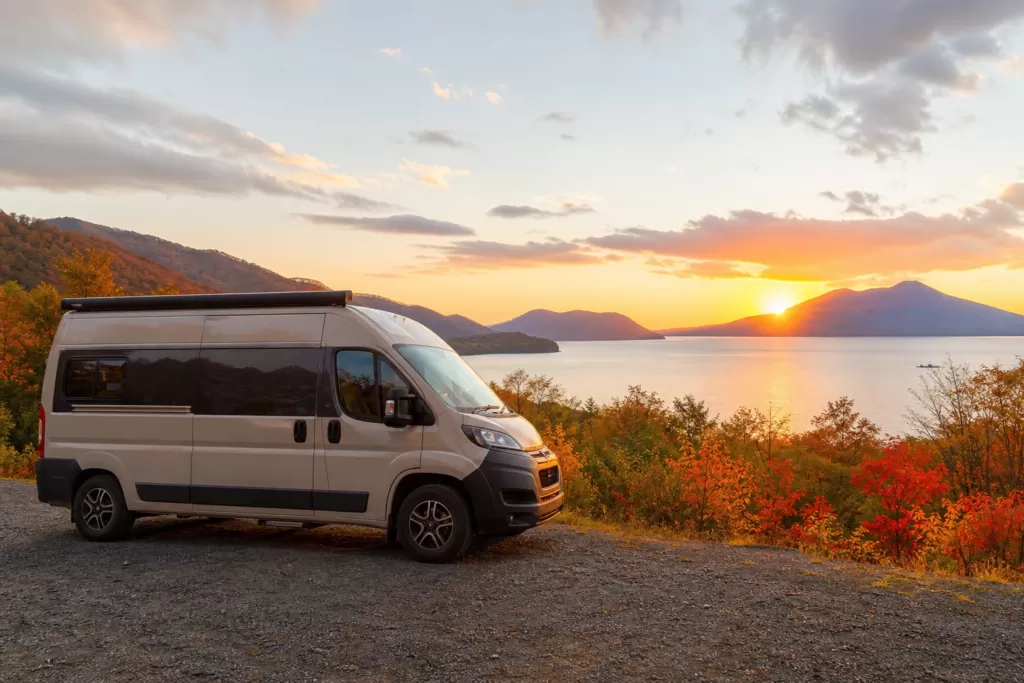
The moment you land at Memanbetsu Airport, Abashiri, Shiretoko, Lake Mashu, and Lake Akan are all right in front of you. Rausu and Shari are close by in a straight line, and if you switch to a campervan right after landing, you can reach Abashiri or the Koshimizu Genseikaen flower fields the same day.
Many spots in eastern Hokkaido take 5 to 6 hours to reach by car from New Chitose Airport, so starting from Memanbetsu Airport makes a real difference in travel time. This article covers the process of renting a campervan from Memanbetsu Airport, things to check beforehand, and how to make the most of it for touring the Okhotsk and eastern Hokkaido region. We’ve laid out the airport itself, how to find a rental base, and the full pickup flow on the day, covering the points that trip up first-time visitors driving around eastern Hokkaido.
What kind of airport is Memanbetsu?
Memanbetsu Airport (in Ozora Town) is the gateway to eastern Hokkaido, with direct flights from Haneda, Itami, Chubu, Kobe, and other airports. The number of daily flights is far lower than at New Chitose Airport, and arrival times are fairly fixed, so rental companies often schedule their shuttle slots around those times. On the flip side, arriving outside the busy windows may require arranging a shuttle in advance.
The terminal itself is small, so it doesn’t take long to get from baggage claim to the exit. The flow from arrival to getting in the vehicle is simple, which makes it an easy airport even for first-time campervan renters in Hokkaido.
How much closer does Memanbetsu Airport put you to eastern Hokkaido?
Memanbetsu Airport sits in Ozora Town, about 20 minutes by car from central Abashiri, and around 1.5 hours from Shari/Utoro, the gateway to Shiretoko. Lake Mashu, Lake Kussharo, and Lake Akan, around Teshikaga and Kushiro, are also within about 2 to 3 hours. With direct flights from Haneda, Itami, Chubu, and other cities, more travelers are using it as their starting point for eastern Hokkaido trips every year.
Renting a campervan at New Chitose Airport and heading to eastern Hokkaido means spending most of your trip on the expressway or national highways. Starting from Memanbetsu Airport instead lets you put that travel time straight back into sightseeing or overnight parking. For a 3 to 4 day trip, that difference is substantial.
| Starting point | To Abashiri | To Shiretoko (Utoro) | To Lake Akan |
|---|---|---|---|
| Memanbetsu Airport | About 20 min | About 1h 30min | About 2h |
| New Chitose Airport | About 5h | About 6h | About 4h |
| Kushiro Airport | About 2h | About 2h 30min | About 1h |
Travel times are only a rough guide since they vary with road conditions and season. In winter, snow and icy roads often add time, and even in summer, weekends during peak tourist season can get congested.
Towns are spread further apart in eastern Hokkaido, and convenience stores and gas stations are spaced out more than around Sapporo. Since you’ll cover more distance, fuel economy and tank size are worth factoring into your vehicle choice.
What to check first when renting a campervan at Memanbetsu Airport
Memanbetsu Airport has fewer rental options than New Chitose Airport. Few companies have a location right at or near the airport; most instead run shuttles from bases in Memanbetsu, Abashiri, or Kitami. Before booking, always confirm whether airport handover is supported, and get an idea of the shuttle schedule and expected wait time.
Ask whether you’ll be met in the arrivals lobby or at a parking area, and what happens if your flight is delayed, so you’re not caught off guard on the day. Some companies don’t cover late-night or early-morning flights, so that’s also worth checking when you book.
Compare campervan rentals in eastern Hokkaido
See rental bases in the Abashiri / Memanbetsu area
Compare shuttle service, pricing, and vehicle types by base. Includes travel-time estimates from Memanbetsu Airport.
Compare Abashiri / Memanbetsu bases →From pickup to departure: the flow on the day
① Meet the shuttle after arrival
You’ll meet the shuttle either just outside the arrivals lobby or at a designated parking spot. If you have a lot of luggage, it’s worth confirming in advance that there’s enough seating and storage space for your group.
② Get a vehicle walkthrough at the rental office
The kitchen, toilet, fresh/waste water tanks, generator, and air conditioning all work a little differently from vehicle to vehicle. Make sure you ask about the tank locations, what to do when they’re full, and how to work the heater and ventilation at night — mornings and evenings stay cool in eastern Hokkaido even in summer, so it pays to sort out the heater early.
③ Confirm your insurance and NOC coverage before you leave
Go over the NOC (Non-Operation Charge) coverage, who to call in an accident, and whether roadside assistance is included, reading through the contract together with staff. Towns are spread far apart in eastern Hokkaido and there often isn’t a rental office nearby if something goes wrong, so this check matters even more here than around Sapporo.
④ Confirm your return time and location before setting off
Whether one-way drop-off is available also varies by company. If you’re thinking about picking up in Memanbetsu and returning in Kushiro or Obihiro (or the reverse), confirm availability and any extra fees at the time of booking. It also helps to note down a contact number in case you’re running late for your return.
As a final check before leaving, make sure the fresh water tank is full, the waste water tank is empty, you know your gas canister level, and the heater and fridge are working properly — this cuts down on trouble on the first night. It also helps to confirm the location of the nearest gas station before you pull out of the rental office.
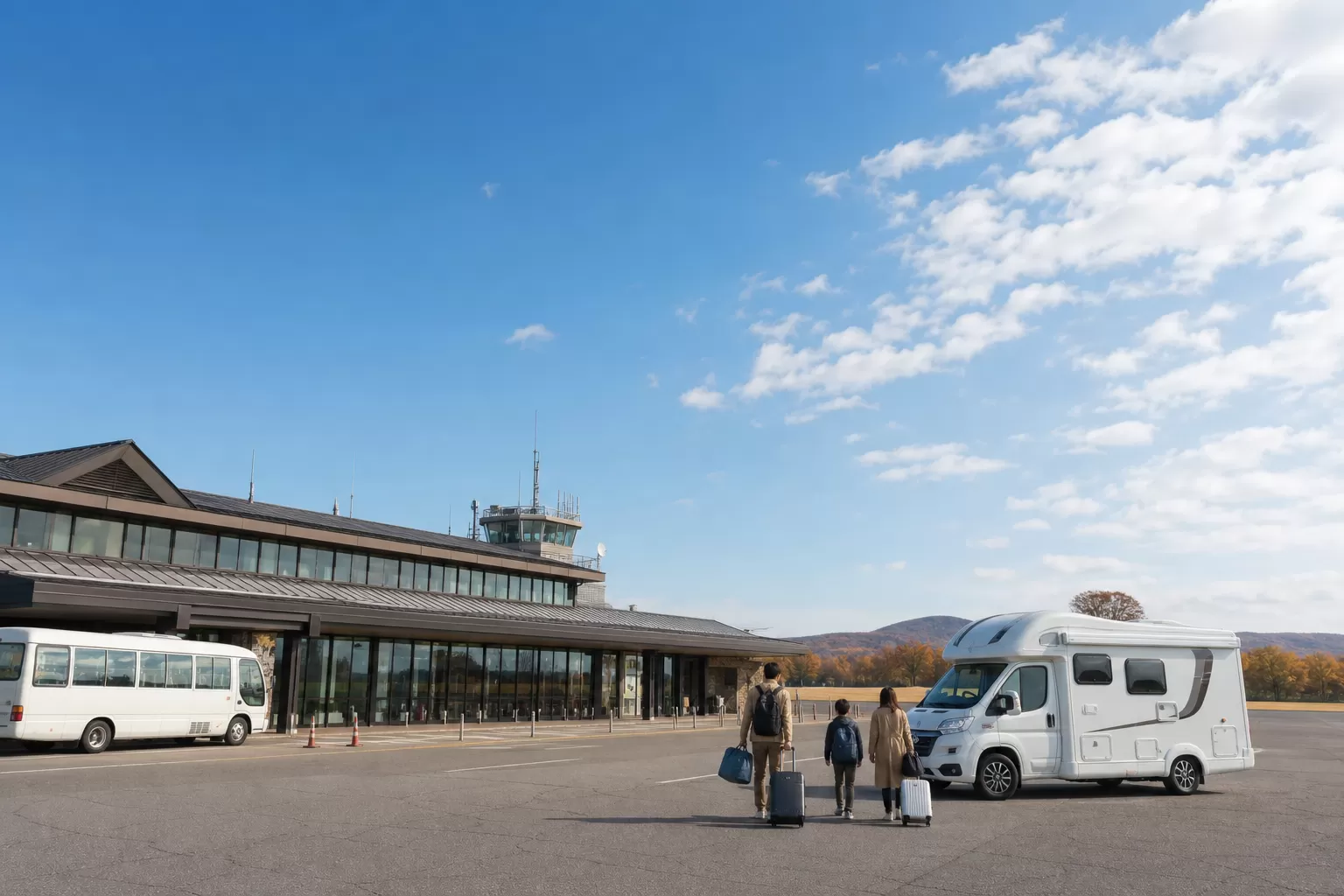
Touring eastern Hokkaido and the Okhotsk region from Memanbetsu Airport
Day one works well built around Abashiri — stop at Cape Notoro or the shores of Lake Abashiri, then head toward Shiretoko in the evening or the next morning. Utoro has parking areas and hot springs suited to overnight parking, and visiting the Shiretoko Five Lakes and Shiretoko Pass early in the morning helps you dodge the crowds. The Okhotsk Ryuhyo Museum and the Abashiri Prison Museum are both within about 30 minutes of the airport, so you don’t have to spend your whole first afternoon just driving.
On day two, you can either cross Shiretoko Pass toward Rausu, or backtrack toward Nakashibetsu and Shibetsu. The pass can close during snowy periods, so it’s worth checking for a detour route in advance depending on the season.
From day three onward, heading toward Lake Mashu and Lake Kussharo, with a stop in Teshikaga or Kawayu Onsen, is a classic route. Lake Mashu is known for frequent fog, so arriving early in the morning gives you better odds of a clear view. From there it’s roughly another hour to Lake Akan, so if you want to cover the lakes of eastern Hokkaido in one trip, starting from Memanbetsu keeps things moving smoothly. Spending your last night at Akanko Onsen and heading back to the airport at a relaxed pace the next day works well too.
You can still tour eastern Hokkaido starting from Kushiro Airport or Tokachi-Obihiro Airport, but if Abashiri, Shiretoko, and the Okhotsk coast are your focus, starting from Memanbetsu cuts down on wasted travel. If Kushiro Wetlands or the Tokachi area are your main focus instead, starting from Kushiro or Obihiro can work better in some cases. It makes sense to choose your starting airport based on where the bulk of your itinerary lies.
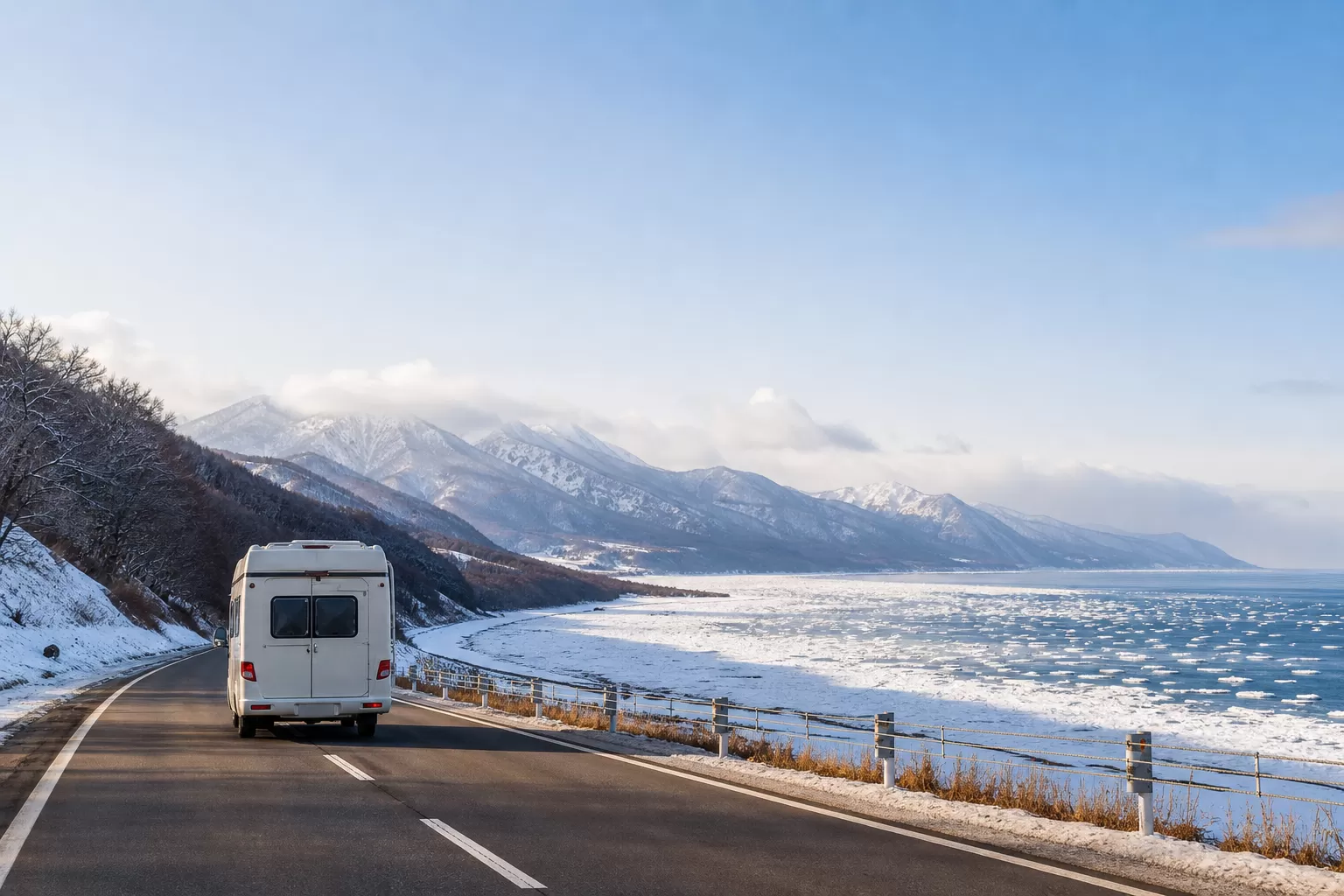
January to March is drift ice season, while June to September is best for the Koshimizu Genseikaen flowers and the clear air around Lake Mashu and Lake Kussharo. Winter brings icy roads throughout eastern Hokkaido as a matter of course, so choosing a vehicle with winter tires and 4WD is essential.
Cape Notoro, the shores of Lake Abashiri, the footbaths at Kawayu Onsen, and roadside stations (michi-no-eki) are all places along the eastern Hokkaido route where you can stop and stretch your legs briefly. A trip built around frequent short stops to take in the scenery suits a campervan better than one focused purely on covering distance. Swapping drivers instead of relying on one person keeps things relaxed enough to actually stop at the sights along the way.
Which vehicle type should you choose?
Since you’ll cover more distance in eastern Hokkaido, fuel economy and ease of driving matter more here than in central Hokkaido. For 2 to 4 people, a kei-camper or vancon is easy to maneuver and won’t give you trouble even in a tight michi-no-eki parking lot. For 5 or more people, or longer stays, a cabcon gives you more beds and storage room.
| Vehicle type | Suited for | How it handles in eastern Hokkaido |
|---|---|---|
| Kei-camper | 1–2 people | Easy to maneuver, handles tight michi-no-eki parking lots well |
| Vancon | 2–4 people | Good balance of fuel economy and interior space, suits long drives |
| Cabcon | 4–6 people | More beds and storage, good for longer stays; check vehicle width in advance |
If you’re renting in winter, always confirm whether the vehicle is 4WD and comes with winter tires as standard, regardless of type. In snowy eastern Hokkaido, this equipment directly affects your safety.
Vehicle width and height are easy to overlook too. Some michi-no-eki and sightseeing parking lots have spaces where larger vehicles are hard to fit, so it helps to know your vehicle’s dimensions in advance. If you’re not very experienced behind the wheel, working your way up from a kei-camper or vancon before trying a cabcon on a future trip is also a reasonable approach.
Check before you go
Compare campervan rental bases in eastern Hokkaido
Compare access from Memanbetsu Airport, shuttle service, and winter availability by base.
Compare rental bases →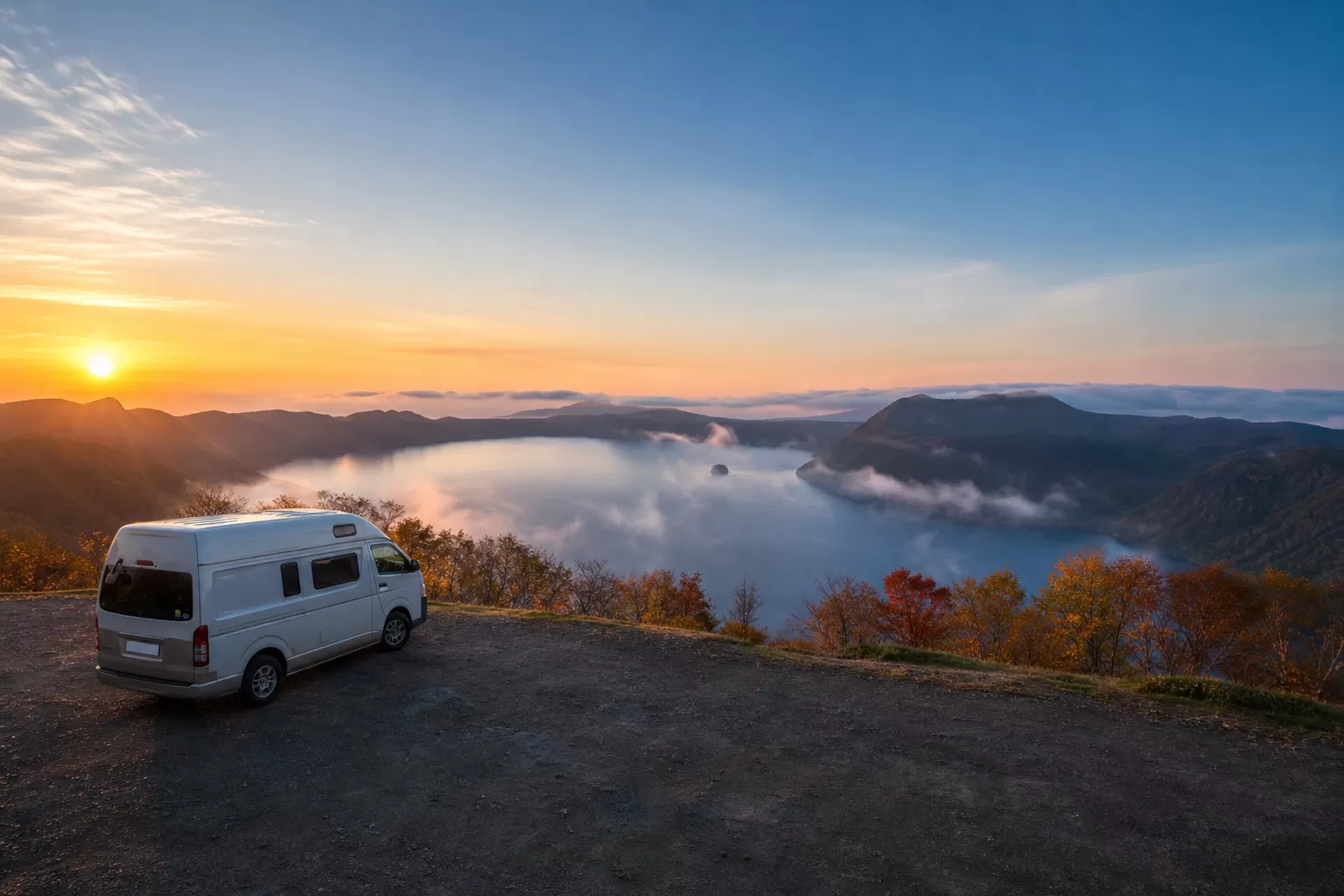
What to pack and wear by season
January to March is drift ice season. You can see drift ice up close along the Okhotsk coast around Abashiri and Mombetsu, but the sea wind is bitterly cold, so warm clothing, gloves, and hand warmers are essential. Even with the heater running inside the vehicle, time spent outside will take more out of you than you’d expect.
June to September is the season for the Koshimizu Genseikaen flowers and the clear air around Lake Mashu and Lake Kussharo. Daytime can get hot, but mornings and evenings are often cooler than central Hokkaido, so it’s worth packing an extra long-sleeve layer. Insect repellent is also worth having around the lakeshores and flower fields.
October to November is autumn foliage season, but opening hours at roadside stations and tourist facilities may be shortened. If there’s somewhere specific you want to visit, checking opening days and hours before you set out will keep your plans from falling apart on the day.
Points easy to overlook before booking
Memanbetsu Airport simply has fewer rental bases than New Chitose Airport, so bookings fill up early during busy periods. In summer and drift-ice season, availability can start shrinking as much as three months out, so it’s best to move quickly once your dates are set.
Gas stations and convenience stores are also spaced further apart than in urban areas, so it’s reassuring to stock up on fuel and food together. There are stretches with no shops for a while once you leave central Abashiri, which is worth keeping in mind ahead of time.
Cell signal can also drop out in mountainous areas like Shiretoko Pass and around Lake Mashu. Check your route in advance with a paper map or offline map, and plan around the assumption that you’ll be out of range. Keep in mind that dash cams and in-vehicle communication devices may not work either while you’re out of signal range.
If it’s your first time in a campervan, it also helps to read through the contract’s mileage limits, extension and cancellation fees, and refueling rules (such as returning with a full tank) before you set off. Distances add up quickly in eastern Hokkaido, so a contract with a mileage cap can get exceeded sooner than you’d expect.
Packing tends to grow too, given the bigger temperature swings compared to central Hokkaido — more warm clothing and changes of clothes. Storage space varies by vehicle type, so if you’re traveling with a larger group or a lot of luggage, it helps to ask the rental company for photos or dimensions of the storage space before you book.
Whether pets are allowed also varies by company, so confirm this before booking — there may be an extra cleaning fee. Pricing, shuttle terms, and winter closures can all change, so always confirm the latest official information with each company at the time of booking rather than relying on this article.
Frequently Asked Questions (FAQ)
Is there a campervan rental counter at Memanbetsu Airport itself?
Few companies have a counter inside the terminal; most instead run shuttles from bases in Abashiri, Kitami, or Ozora Town. Confirm directly with each company whether airport handover is supported before booking.
Should I rent at Memanbetsu Airport or New Chitose Airport?
If your destination is centered on Abashiri, Shiretoko, Lake Mashu, or Lake Akan, Memanbetsu is the shortest route. If Niseko, Lake Toya, or the south of Hokkaido are your focus, New Chitose works better. The fastest way to decide is by looking at your overall itinerary.
How long does it take from Memanbetsu Airport to Shiretoko?
Around 1 hour 30 minutes by car to the Utoro area is a rough guide. It can take longer than that in winter or during crowded tourist seasons.
Can I do a one-way rental (pick up in Memanbetsu, return elsewhere)?
Some companies support it, but it isn’t offered across the board. Always confirm availability and any extra fees when you book.
Is it unreasonable to rent a campervan at Memanbetsu Airport in winter?
Some people do rent in winter for drift-ice sightseeing, choosing a vehicle with winter tires and 4WD and confirming the heater and water-system freeze protection with the rental company beforehand. That said, icy roads and poor visibility require more preparation than in central Hokkaido, so it’s also a reasonable call not to push it if you’re not confident driving in those conditions.
Are there plenty of places to park overnight?
There are several michi-no-eki and RV parks around Abashiri, Koshimizu, and Teshikaga, some of which are used to accepting overnight campers. That said, “overnight parking OK” and “has a campsite” mean different things, so check each facility’s current rules directly. Trash disposal and generator-use rules also vary by location.
Can I bring kids or pets?
Whether child seats or pets are allowed varies by company, and there may be extra fees or cleaning charges, so be sure to tell the company your group size and whether you’re bringing a pet when you book.
What kind of driver’s license do I need?
Most kei-campers and vancons can be driven on a regular passenger license. Some cabcons, however, require an intermediate or higher license class depending on the vehicle’s gross weight, so confirm the vehicle size and required license with the company before booking. Travelers from overseas should also confirm requirements for an international driving permit and any other necessary documents in advance.
Can I rent a campervan on the same day near Memanbetsu Airport?
Since there are only a limited number of rental bases, same-day walk-in arrangements are often difficult. Bookings can fill up weeks in advance during drift-ice season or the summer tourist season, so it’s best to inquire as soon as your dates are set.
Memanbetsu Airport is a starting point that can significantly cut travel time if eastern Hokkaido and the Okhotsk region are your focus. Since the number of rental bases is limited, once your dates are set, check shuttle availability and openings early and build your trip around Abashiri, Shiretoko, Lake Mashu, and Lake Akan.
Starting your trip right off the plane feels quite different from spending hours getting to eastern Hokkaido from New Chitose Airport. Using that proximity to explore the Okhotsk side from the very first afternoon is the biggest advantage of flying into Memanbetsu. It’s worth considering as your starting point for your next trip to eastern Hokkaido.
Book a Campervan in Hokkaido
Moving Inn New Chitose Airport supports English booking and offers airport transfers.
Pick a campervan by what matters to you.
Guide price
Moving Inn New Chitose Airport: HIACE van conversion from ¥22,000 per night. 20–30% off when booked 60–90 days ahead (official rate table, checked 15 Oct 2026).

![Can You Rent a Campervan in Hokkaido in Winter (Dec–Mar)? Companies With Winter Closures and What to Check Before Booking [2026]](https://hokkaido-campingcar.jp/wp-content/uploads/2026/10/hokkaido-campingcar-rental-winter-open-eyecatch-768x432.webp)