What Is a Cab-over Conversion? Features, Advantages & Disadvantages Explained [Best for Hokkaido Rentals]
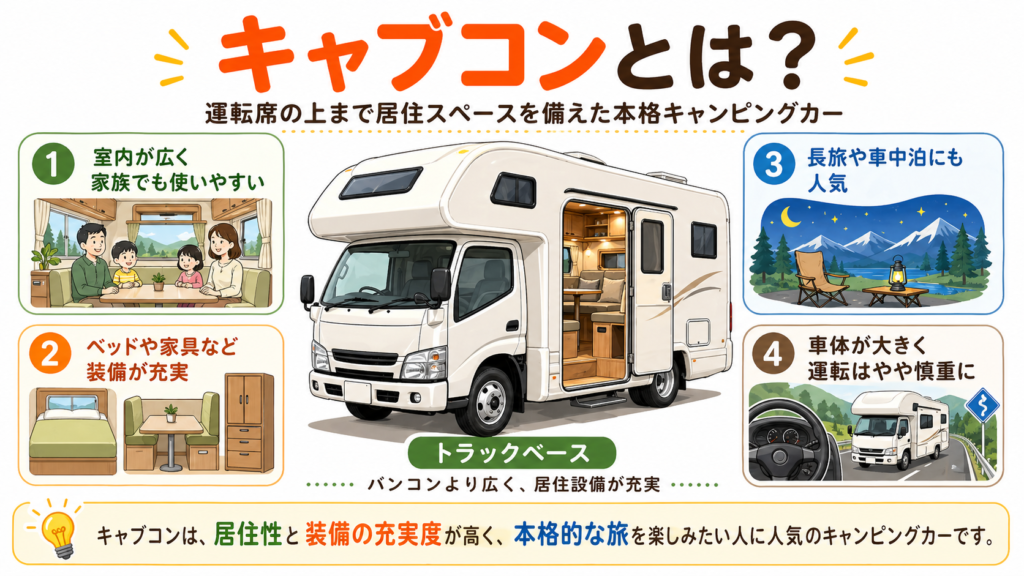
Research any campervan and you’ll quickly encounter the term “cab-over conversion.” You might have a rough idea of what it is, but many people aren’t quite sure how it differs from a van conversion or a kei campervan.
This article explains cab-over conversions clearly — from basic features through advantages and disadvantages to why they suit Hokkaido travel.
What is a Cab-over Conversion?
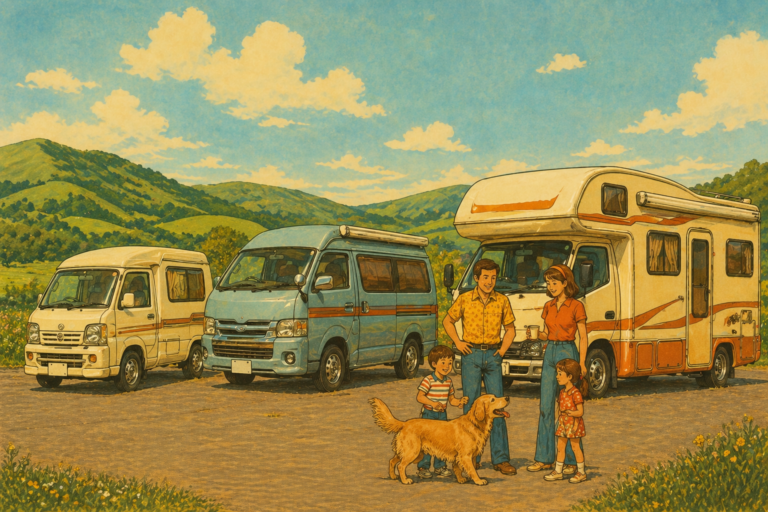
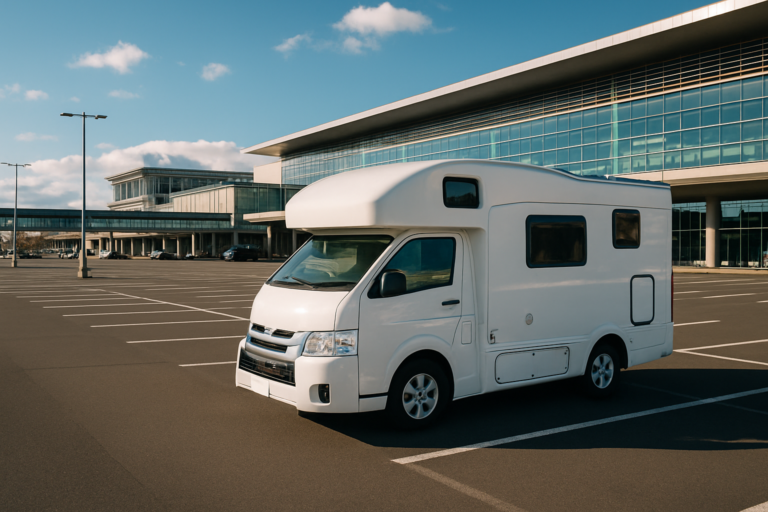
A cab-over conversion (cabcon) is a campervan with the living space extending over the truck’s cab (driver’s area). The defining feature is the “bank bed” — sleeping space that overhangs the driver’s cab — and for many people this silhouette is what “campervan” means in Japan.
The Toyota Camroad is the most commonly used base vehicle, and various manufacturers fit camping shells to it. Well-known models include the Cordoba Banks, Jil 520, and Vantech Z4.
Cab-over Conversion Basic Specifications
| Item | Typical cab-over conversion figures |
|---|---|
| Overall length | 5.3–6.5 m |
| Overall height | 2.8–3.1 m |
| Interior height | 180–195 cm (can walk standing up) |
| Sleeping capacity | 4–8 (bank bed + dinette conversion) |
| Licence required | Standard licence (models under 3.5t GVW) |
| Fuel economy | 6–10 km/L |
| New vehicle price | ¥5M–¥15M |
| Approx. rental price | ¥25,000–¥45,000/day |
Five Things That Make Cab-over Conversions Great
① Fixed bed — no setup or pack-down needed
The biggest attraction of a cab-over is the “bank bed” above the driver’s cab. Unlike a van conversion, where you fold the seats flat every night, you can fall straight into bed when you arrive at your destination.
On a long-distance trip like Hokkaido, the convenience of being able to rest immediately after pulling into a roadside station is enormous. Bank beds typically sleep two adults, and the dinette (living area) inside converts to an additional bed, so many models sleep 4–6 people.
② Interior height that lets you stand and walk
Interior height of 180–195 cm means adults can move around standing up. Van conversions often require crouching, but a cab-over has enough liveability to use as a genuine “moving home.”
On trips of a week or more, this difference significantly affects comfort.
③ Well-equipped
Most cab-overs include the following as standard or optional equipment:
- Sink and fresh-water tank
- Hob (cassette or gas)
- 12V-powered refrigerator
- Sub-battery and shore power connection
- FF heater (forced-circulation diesel heater)
- Toilet (cassette or portable)
- Shower (some models)
With this equipment you can travel all of Hokkaido without using hotels or inns.
④ Driveable on a standard licence
The size might suggest a special licence is required, but most cab-overs have a GVW under 3.5t and are driveable on a standard licence. Some larger models do require a semi-medium or medium licence — confirm at booking.
⑤ Cost-effective for longer trips
Rental rates are higher than van conversions (¥25,000–¥45,000/day), but for week+ trips, eliminating hotel costs often makes the total cheaper.
For example, an 8-day 7-night Hokkaido cab-over rental vs. 7 nights of hotels (¥10,000/night × 7 = ¥70,000): the rental cost difference can be offset by the accommodation savings.
Disadvantages and Things to Watch Out For
① Won’t fit multi-storey or low-clearance car parks
At 2.8–3.1 m height, multi-storey and underground car parks with height restrictions are off-limits. Some tourist attraction and shopping centre car parks also have restrictions — get into the habit of checking in advance.
In Hokkaido, however, large surface car parks are everywhere, so this is rarely a significant problem.
② Worse fuel economy than van conversions
The heavier, less aerodynamic body means fuel economy of 6–10 km/L vs. 10–13 km/L for van conversions. On Hokkaido’s long drives fuel costs accumulate — build it into your budget.
Estimated fuel costs at 200 km/day:
- 8 km/L, ¥170/L → approx. ¥4,250/day
- 7 days → approx. ¥30,000
③ More affected by wind
The tall body with a large frontal area makes it susceptible to crosswinds. Strong winds are common in central and northern Hokkaido, so caution is required on motorways. Keep a firm grip on the wheel and drive at a reduced speed.
④ Beginners need time to adapt to the size
The 5–6+ m body can feel daunting at first. However, the Camroad base vehicle doesn’t feel drastically different from a regular truck, and most people say they’ve adapted after a few hours of driving. Rental companies usually include a pre-departure walkthrough and test drive — take full advantage if you’re nervous.
Cab-over Conversions Are the Best Match for Hokkaido Travel
Among all types, a cab-over is particularly compatible with Hokkaido long-distance travel. Here’s why in specific terms.
Reason ①: In vast Hokkaido, a “moving home” is the best accommodation
Hokkaido covers 83,424 km² — about 22% of Japan. Internal distances equivalent to Tokyo–Osaka (~550 km) occur within the island. Rather than booking a hotel every night, staying in a cab-over at roadside stations and overnight spots gives far greater itinerary flexibility.
Reason ②: FF heater keeps Hokkaido nights comfortable
Hokkaido night temperatures can fall below 10–15°C even in summer, and are much colder in spring, autumn, and winter. Most cab-overs come with an FF heater as standard, maintaining 20°C+ inside even in −20°C conditions.
Cold nights are a challenge in van and kei campervans, but in a cab-over it’s rarely a concern.
Reason ③: Fridge + self-catering slashes food costs
Hokkaido’s produce is outstanding straight from the source and available at reasonable prices at roadside stations and farm-direct markets. Cooking in the cab-over kitchen lets you enjoy Hokkaido food at low cost.
Rental companies offering cab-overs in Hokkaido
See our comparison page for Hokkaido cab-over rental companies and prices.
Who Cab-overs Are (and Aren’t) For
| Good fit | Not a good fit |
|---|---|
| Family campervan trips of 4+ | Solo / couple 1–2 person trips (van or kei campervan is better) |
| Hokkaido long trips of a week or more | Short 2–3 night trips (cost-effectiveness doesn’t work out) |
| Travellers wanting to minimise hotel costs | Trips in cities with heavy multi-storey car park use |
| Travellers anxious about Hokkaido’s climate (FF heater gives peace of mind) | Drivers with serious anxiety about driving (try a van conversion first) |
| Trips centred on roadside stations and RV parks | Trips where tent camping is the primary mode |
Summary: Cab-overs Are the Best Partner for Long-Term Hokkaido Travel
Key cab-over features:
- Bank bed + standing interior — top-class liveability
- FF heater, fridge, sink and more — well-equipped
- Standard licence (most models)
- For week+ trips, hotel savings make total cost lower
- Ideal match for Hokkaido’s long distances, temperature swings, and self-catering style
For a full comparison of all campervan types, see the article below.
For Hokkaido cab-over rental companies, prices, and reviews: