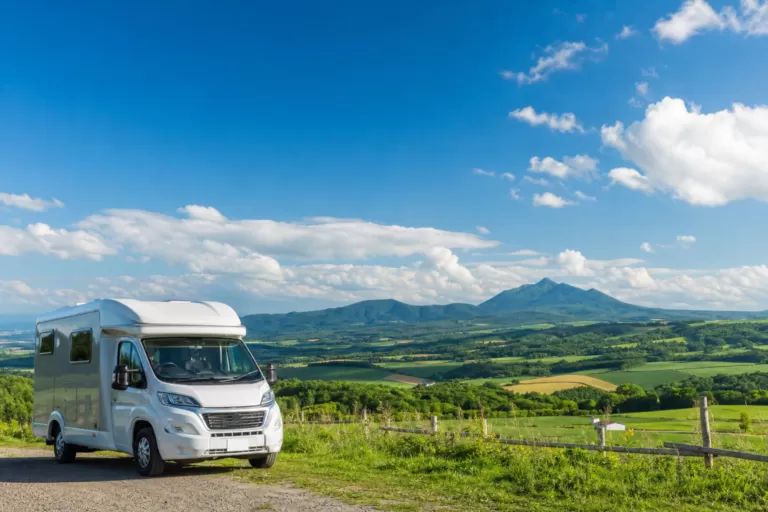
Complete Guide to Hokkaido Campervan Rental for Obon | Beating the Crowds, Booking Tips & Best Routes
Pick a campervan by what matters to you.
Guide price
Moving Inn New Chitose Airport: HIACE van conversion from ¥22,000 per night. 20–30% off when booked 60–90 days ahead (official rate table, checked 15 Oct 2026).
Rent at New Chitose Airport
See only the rental bases in Chitose, where the airport is.
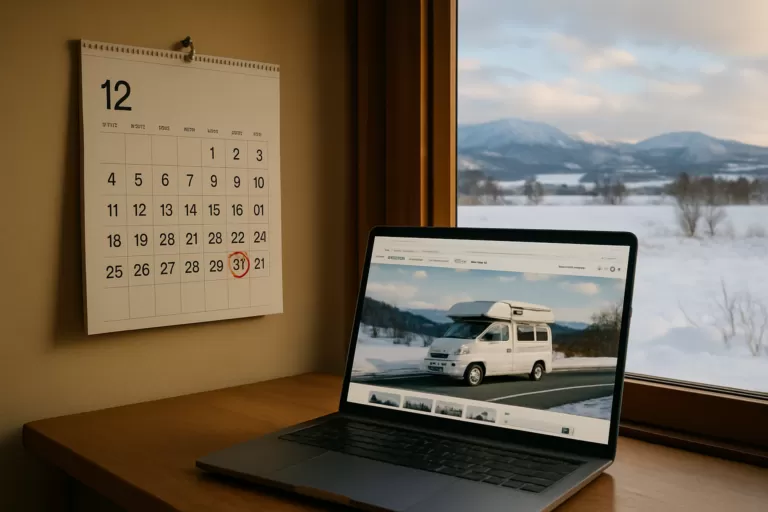
Rent in winter (Dec–Mar)
Companies that rent through winter, listed apart from those that close.
Before you book: with an International Driving Permit if your country is in the Geneva Convention (for example the US, Australia, Singapore); Taiwan, Switzerland, Germany, France, Belgium and Monaco need your licence plus a Japanese translation (Tokyo Metropolitan Police). Questions in English: Moving Inn on WhatsApp. Every roadside station (michi-no-eki) must have free 24-hour toilets, and Hokkaido has 128 of them (MLIT).
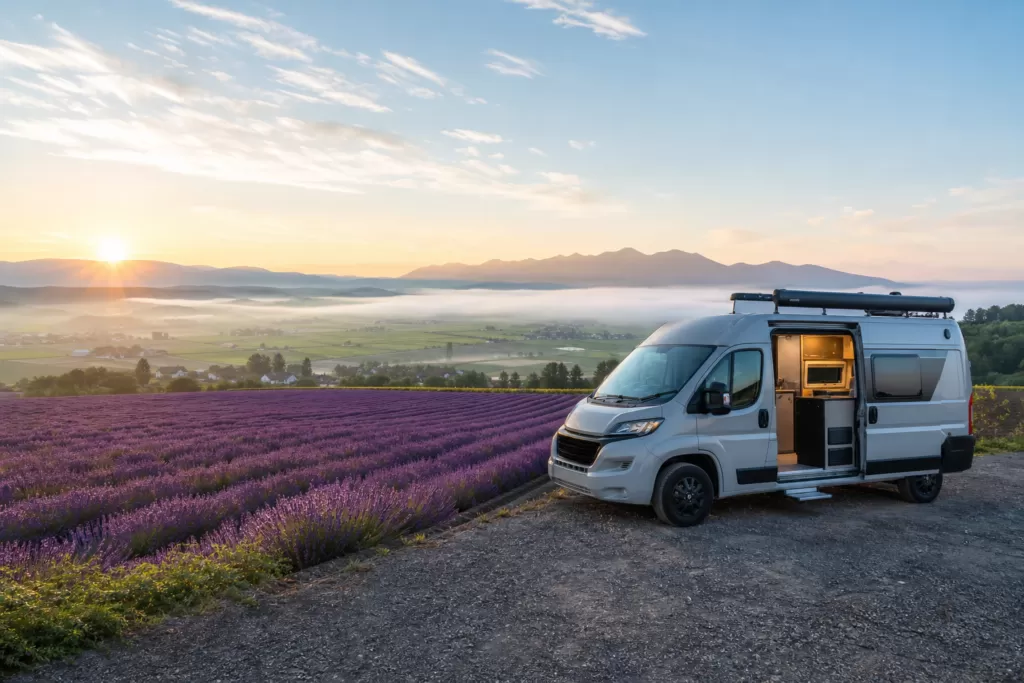
Hokkaido Campervan Rental Guide for Obon Holidays | How to Turn Obon Crowds to Your Advantage
During Obon (Japan’s mid-August holiday period, roughly August 13-16, when many Japanese travel to visit family graves and take summer vacation), Hokkaido gets crowded everywhere you go. Ferries sell out, parking lots at tourist spots form long lines, and accommodation books up months in advance. But traveling by campervan changes the equation. Since you don’t need to worry about lodging, you can arrive at popular sites first thing in the morning, and if somewhere is crowded, you can simply move on to another spot. This guide covers everything about renting a campervan and touring Hokkaido during Obon, from booking tips to concrete route suggestions.
New Chitose Airport / Tokachi-Obihiro Airport
Rent the Cabcon “Cresson Journey”
Base yourself at New Chitose Airport and compare rates, vehicle types, and pickup locations all in one place.
See details at Moving Inn →Benefits of Touring Hokkaido by Campervan During Obon
Escape the Race for Hotel Reservations
During Obon in Hokkaido, hotels in popular areas commonly fill up by June or July. With a campervan, RV parks and campgrounds become your lodging, opening up far more options. Hokkaido has over 300 campgrounds, and if you use a powered site at an RV park, you can run your air conditioner and refrigerator all night for a comfortable sleep.
Dodge Crowds by Moving in the Early Morning and Late Night
The lavender fields of Furano and the Blue Pond in Biei are nearly empty between 6 and 7 a.m. With a campervan you can sleep in the vehicle, park nearby the night before, sightsee only during the early morning quiet hours, and then head straight to your next destination. This kind of time-shifted travel, difficult for ordinary tourists, is one of the biggest advantages of a campervan trip.
No Need to Worry About Luggage
When traveling as a family, the volume of clothes, food, and outdoor gear adds up fast. Campervans have generous storage space, and many travelers even bring bicycles or surfboards along. Since Hokkaido’s weather can change quickly during Obon, having room to pack extra rain gear and warm layers adds real peace of mind.
When to Book Your Obon Campervan Rental
Book Peak Season by April
The number of campervans available for rent in Hokkaido is limited. Obon (roughly August 10-16) is the single busiest period of the year, and popular vehicle models are often fully booked by April or May. If you start searching for a summer plan after Japan’s Golden Week (early May), it may already be too late. If your dates are set, book early. For a broader look at why (and when) to book early, see our guide to campervan booking timing.
Check Waitlists and Cancellation Policies
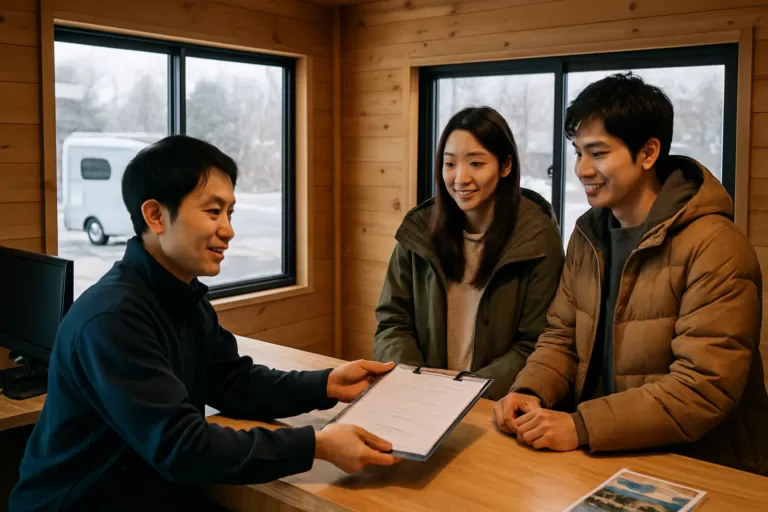
If your preferred dates are fully booked, some rental companies let you join a waitlist. Cancellations sometimes appear in June or July, right before Obon, so it’s worth inquiring before giving up. On the flip side, consider the possibility that you yourself might need to cancel, and check when cancellation fees kick in — policies vary significantly between companies.
Rental Pickup Location Shapes Your Itinerary
Hokkaido’s campervan rental depots are concentrated around New Chitose Airport, Sapporo, Tomakomai, and Asahikawa. Where you pick up and drop off the vehicle affects your initial travel time. If you rent near New Chitose and head toward eastern Hokkaido, just driving east toward Obihiro on day one can take 2-3 hours. It’s worth cross-checking your flight arrival time against the rental company’s reception hours in advance.
Recommended Model Routes for an Obon Campervan Trip in Hokkaido
7 Nights, 8 Days | Central to Northern Hokkaido Loop Route
After picking up your vehicle at New Chitose, spend the first night at the Utonai Lake roadside station (michi-no-eki) in Tomakomai. On day 2, tour Furano and Biei early in the morning, then move on to Asahikawa and visit Asahiyama Zoo in the early afternoon. Day 3 takes you to the Sounkyo area and Mt. Daisetsuzan. On days 4-5, head north to Wakkanai and Cape Soya, then travel south along the Orolan Line. On day 6, pass through the Rumoi and Mashike areas and arrive in Otaru. Day 7 is for sightseeing in Otaru and a walk around central Sapporo, and on the final day you return the vehicle. The total distance runs around 1,200 km, but since a campervan removes the need to search for lodging every day, covering this much distance is manageable without feeling rushed.
5 Nights, 6 Days | Eastern Hokkaido Focused Route
This route is for travelers who want to immerse themselves deeply in the wilderness of eastern Hokkaido. From New Chitose, take the expressway toward Obihiro and spend the first night at an RV park near Tokachigawa Onsen. On day 2, try canoeing in the Kushiro Wetlands, then head to the Michi-no-eki Mashu Onsen roadside station by evening. Early on day 3, tour Lake Mashu and Mt. Io before moving on to Shiretoko. Day 4 is for the Shiretoko Five Lakes and a sightseeing boat cruise to look for brown bears. On day 5, pass through Abashiri and Lake Notoro on your way back, then return the vehicle on the final day. Eastern Hokkaido involves long distances, but with few traffic lights, driving is smoother than you might expect.
3 Nights, 4 Days | Furano-Biei Short Route
For shorter trips or first-time campervan travelers, a compact route focused on the Furano-Biei area works well. From New Chitose, drive via Asahikawa to Biei and spend the first night at a campground near Shirogane Onsen. The next morning around 6 a.m., visit the Blue Pond and Shirahige Falls before heading to Farm Tomita in Furano. On day 3, stop by Tokachidake Onsen and have dinner in central Furano in the evening. On the final day, simply drive back to New Chitose. With relatively little driving distance, this route is comfortable even for those less confident behind the wheel.
Mt. Tokachidake has been at Volcanic Alert Level 3 (entry restrictions) since September 12, 2026. Prefectural Route 966 beyond Bogakudai is closed to traffic, so if you are heading toward Tokachidake Onsen or Fukiage Onsen, check the Japan Meteorological Agency volcano information for Tokachidake and the latest notices from Biei Town and Kamifurano Town (checked 2026-10-08).
Overnight Spots Worth Using During Obon
Michi-no-Eki (Roadside Stations) — The Classic Free Overnight Spot
Hokkaido has 128 michi-no-eki (roadside stations), and overnight parking in campervans is tolerated at many of them, though not all officially permit it. It’s best to search for the latest information on which stations officially allow overnight stays, or to contact the station directly before visiting. Since these spots get crowded during Obon, arriving late can mean parking spaces are already full. Planning to arrive by 4-5 p.m. gives you some breathing room.
RV Parks — Comfortable Stays with Power and Water Hookups
RV parks are paid overnight facilities certified by the Japan RV Association, equipped with power, water, and restrooms. They’re scattered across areas including Obihiro, Furano, Hakodate, and Tomakomai, typically costing around 2,000-3,500 yen per night. Since you can run the air conditioner, they offer comfortable sleep even during the hotter Obon period. Most require reservations, so book early once your route is set.
Auto Campgrounds — For Those Who Want Campfires and BBQ
Auto campgrounds, where you can park right next to your site and enjoy a campfire or barbecue, are plentiful throughout Hokkaido. Since usage spikes during Obon, popular campgrounds can be fully booked as much as six months ahead. Check availability on sites like Now Camp or each facility’s official website, and if you already know where you want to go, book in early spring. Note that open fires directly on the ground are banned in most locations, so you’ll need to bring a fire pit stand — some rental companies offer them as an optional rental.
Things to Keep in Mind for an Obon Trip in Hokkaido
Be Ready for Sudden Weather Changes
August in Hokkaido is cooler than mainland Japan, but the weather is also prone to sudden change. Fog is common along the Pacific coast, and mornings in eastern Hokkaido can dip below 15°C. Bring warm layers and rain gear even in summer. This is also typhoon season, so it’s wise to build slack into your schedule. A campervan lets you wait out bad weather inside the vehicle, but strong winds can trigger traffic restrictions on expressways and bridges.
Watch Out for Wildlife on the Road
In Hokkaido, Ezo deer and foxes can dart out into the road. Visibility is especially poor in the early morning, evening, and at night, raising the risk of animal encounters. Because campervans are heavier, they take longer to stop even with hard braking. Keep your speed moderate and drive with extra caution around blind curves. In the Shiretoko area, brown bears can appear near roadsides, so it’s safer to avoid driving with windows open.
Follow the Rules for Water and Waste Disposal
Campervans carry fresh water and wastewater tanks. Dumping wastewater into rivers or parking lots is prohibited — it must be disposed of at designated points at RV parks or campgrounds. Similarly, discarding trash at michi-no-eki or other public spaces is generally not allowed, so bring several trash bags and plan to carry your garbage out with you. Following these basic rules of etiquette helps keep campervan travel culture sustainable in Hokkaido for years to come.
What to Check When Choosing a Rental Company
Check the Vehicle Type, Capacity, and Equipment
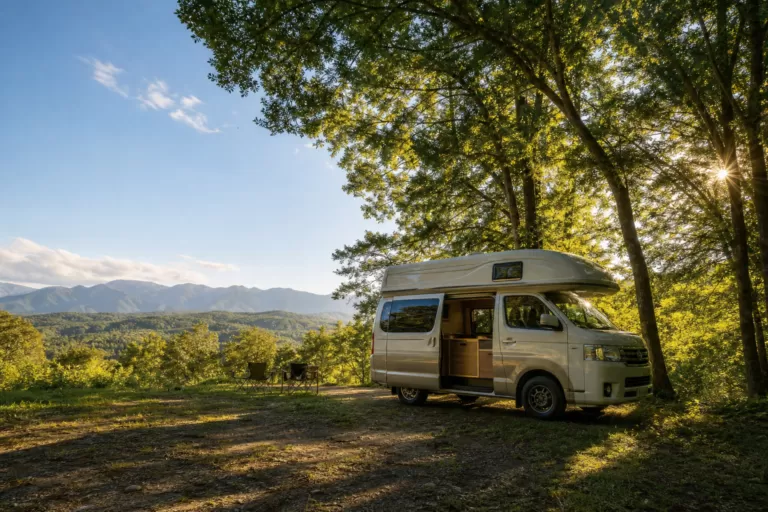
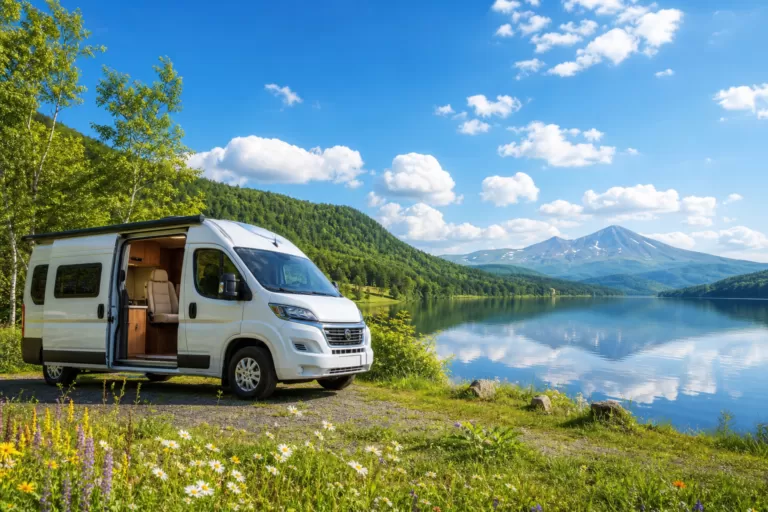
Campervans come in several types: light campers (kei-camper), van conversions, cab conversions, and bus conversions. For a family of four, a cab-conversion or van-conversion model with a sleeping capacity of four is standard. Whether air conditioning, a refrigerator, a shower, or a toilet is included varies by company and model. Since air conditioning is essential during the hot Obon period, always check the equipment list. If there’s no shower, you can rely on onsen (hot springs) or shower facilities at michi-no-eki — Hokkaido has so many onsen that traveling in a shower-less vehicle is rarely inconvenient in most areas.
Check One-Way Rental Availability
Some companies offer one-way plans that let you pick up and drop off at different locations — for example, picking up at New Chitose and returning in Hakodate. This adds a lot of flexibility to your itinerary. However, one-way plans almost always carry an extra fee. If you’re planning to take a ferry from Hokkaido to mainland Japan, confirm in advance whether the company supports drop-off in Hakodate or Tomakomai.
Confirm Insurance Coverage and Roadside Assistance
Like standard rental cars, campervans come with liability, property damage, and vehicle insurance. The deductible (the maximum amount you’d pay out of pocket in an accident) varies by company, and some offer a plan that reduces the deductible to zero for an additional fee. Given how spread out Hokkaido is, it’s also worth checking whether roadside assistance is available 24 hours a day. Getting a clear picture of your insurance coverage before you set off means you won’t be caught off guard if something goes wrong.
“`New Chitose Airport / Tokachi-Obihiro Airport
Rent the Cabcon “Cresson Journey”
Base yourself at New Chitose Airport and compare rates, vehicle types, and pickup locations all in one place.
See details at Moving Inn →Book a Campervan in Hokkaido
Moving Inn New Chitose Airport supports English booking and offers airport transfers.
Pick a campervan by what matters to you.
Guide price
Moving Inn New Chitose Airport: HIACE van conversion from ¥22,000 per night. 20–30% off when booked 60–90 days ahead (official rate table, checked 15 Oct 2026).

![Can You Rent a Campervan in Hokkaido in Winter (Dec–Mar)? Companies With Winter Closures and What to Check Before Booking [2026]](https://hokkaido-campingcar.jp/wp-content/uploads/2026/10/hokkaido-campingcar-rental-winter-open-eyecatch-768x432.webp)