Solo Female Travel in a Hokkaido Campervan: A Safety Guide to Security, Overnight Stays, and Choosing a Base (2026 Edition)
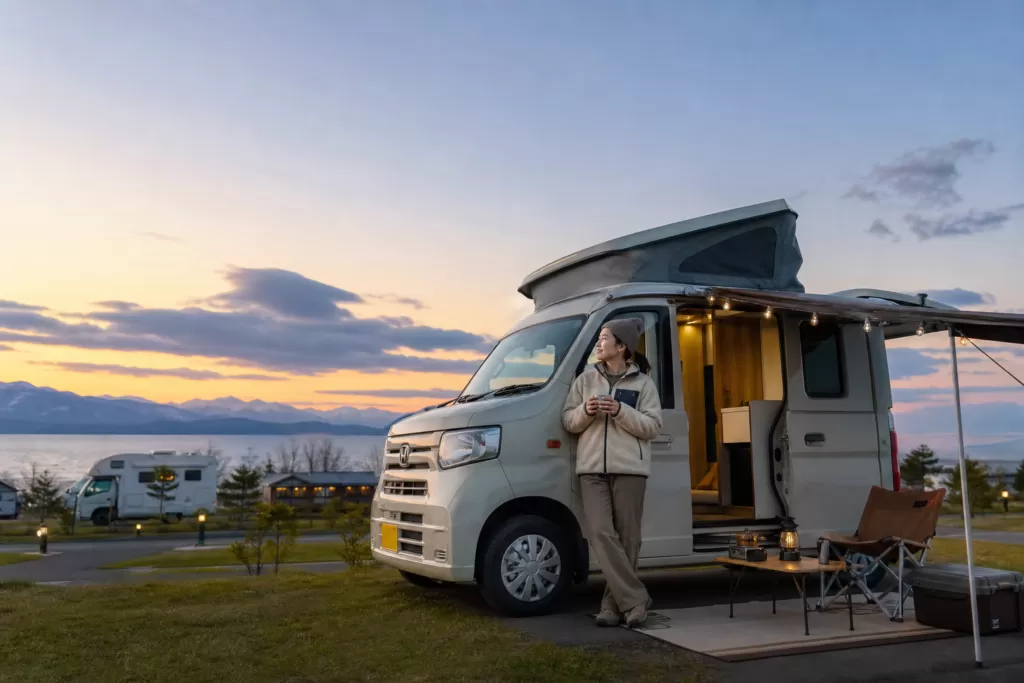
You’d like to try a campervan trip in Hokkaido on your own. But questions come up right away: is it safe to sleep in the vehicle overnight? What about security? How do bathing and toilets work? In reality, more and more women are taking solo campervan trips each year, and if you choose the right locations and take some basic precautions, you can enjoy the experience with real peace of mind.
This article brings together concrete preparation and decision-making guidance for women traveling solo by campervan in Hokkaido, organized around four pillars: choosing where to stay overnight, security, hygiene, and vehicle type. Rather than dwelling on fear, we’ve focused on laying out specific, reassuring options.
The Reality of Solo Female Campervan Travel — and Putting Your Worries to Rest
When people ask, “Isn’t it dangerous for a woman to sleep alone in a vehicle overnight?” the honest answer is: “It depends on the location and your preparation.” Staying alone, unguarded, in a spot with no one around does carry real risk. But if you choose an RV park with an on-site manager, or a designated site at a paid campground where other campers are present, you can feel just as safe as staying at a hotel — often more so.
One of the great advantages of campervan travel is that your accommodation is your vehicle. You can lock the doors and shut yourself into a space you control and can move on your own — in some ways, that makes it easier to create a safer situation than walking city streets with your luggage. If something feels off, you can simply drive away.
Common Worries for Solo Female Travelers — and the Reality
- “What if someone approaches me in the middle of the night?” → RV parks and paid campgrounds have a resident or patrolling manager, making it hard for unrelated people to enter the grounds. This is very different from a roadside station (michi-no-eki) parking lot.
- “I’m scared to go outside at night to use the toilet.” → Choose a vehicle with an onboard toilet, or rent a portable toilet.
- “What if people realize I’m traveling alone?” → There are simple tricks to make it look like more than one person is present (covered later in this article).
- “There’s no one to help if I get lost.” → Your smartphone’s navigation app is more than enough. Asking locals at a roadside station is also a reliable option.
Choosing a Safe Place to Sleep (RV Parks Recommended, Places to Avoid)
One of the most important decisions for a solo female traveler is where to spend the night. Choosing the right location determines most of your overall safety.
Why RV Parks Should Be Your First Choice
RV parks are reservation-based facilities designed specifically for overnight vehicle stays. Guests’ names and vehicle license plates are recorded, and a manager is either resident or makes regular rounds, making it difficult for unrelated people to wander in. Most guests are families or couples who are experienced campervan travelers.
Hokkaido has several RV parks certified by the Japan RV Association, and an increasing number are located next to roadside stations. Expect to pay around 2,000–4,000 yen per night, but power, water, and toilets are all provided — a reasonable price to pay for peace of mind on the road.
Paid Campgrounds with Designated Sites Are Also a Good Option
Paid campgrounds with a resident manager are another safe choice. Parking your campervan at a designated site, with another camper right next door, feels far more secure than staying alone in an empty area. Choosing a facility where you check in face-to-face with staff adds an extra layer of reassurance.
Places to Avoid: Sleeping Alone in an Unmanned Roadside Station Parking Lot
Roadside stations (michi-no-eki) have a reputation as free places to spend the night, but they were never designed with overnight vehicle stays in mind. There’s no manager present late at night, and anyone can come and go freely. If several groups are parked there together, the psychological barrier is lower — but a woman staying alone at a deserted roadside station is a situation best avoided.
The same goes for highway service areas (SA/PA). Late at night these are used mainly by long-haul truck drivers taking rest breaks, and they are not well suited to solo female overnight stays.
Book Your Next Night’s Stay a Day Ahead
If you head into the evening without having decided where you’ll sleep, you may end up settling for a less secure location out of necessity. Popular RV parks and campgrounds in Hokkaido can fill up during peak season, so make it a rule to reserve your next night’s stay by the evening before, at the latest.
Compare Campervan Rentals in Hokkaido
Base yourself at New Chitose Airport and compare rates, vehicle types, and pickup locations all in one place.
Security Measures (Locking Up, Blocking the View, Personal Alarms, Location Sharing)
Security isn’t about “scary precautions” — it’s preparation that lets you enjoy your trip with confidence. Going through the basics one by one will put your mind at ease.
Lock Up Thoroughly
Even when you’re inside the vehicle, keep every door locked while you sleep or eat. Some campervans can also be entered through a rear door, so make it a habit before bed to check that every entry point — not just the main door — is locked.
Some campervans have an “interior lock” feature that can only be locked from the inside. It’s worth checking how the locking mechanism works when you pick up your rental.
Block the View Into the Vehicle
If the interior lights are on while you sleep, your silhouette can reveal from outside that you’re alone. Use curtains, shades, or reflective insulation mats to completely cover the windows.
- Curtains: Standard equipment on many campervans. Check for any gaps.
- Reflective insulation mats: Cut to fit the shape of each window. They double as light-blocking, insulation, and privacy screens, and are available at 100-yen shops or mountaineering supply stores.
- Suction-cup sunshades: Commercially available for the windshield, these block the view from the dashboard area.
For windows without curtains — such as the rear door or small side windows — use insulation mats or sunshades to cover them as well. Step outside and check for light leaking through gaps for extra assurance.
Making It Look Like You’re Not Alone
It’s a genuinely effective idea to make it harder for others to tell you’re traveling solo. Common techniques include leaving two pairs of shoes outside, or placing men’s shoes or belongings somewhere visible. You don’t need to overdo it, but it’s worth keeping in mind.
Personal Alarms and Emergency Preparedness
Keeping a personal safety alarm within arm’s reach inside the vehicle provides real peace of mind. Keeping your smartphone charged so you can always call the police (110 in Japan) is another basic essential. In parts of eastern and northern Hokkaido, cell signal can be weak in certain areas, so along with downloading offline maps, you may want to consider carrying a satellite communication device that works out of cell range, such as a Garmin inReach.
Share Your Location With Someone You Trust
Make a habit of letting family or friends know where you’ll be staying each night. Features like iPhone’s Share My Location, LINE’s live location sharing, or Google Maps location sharing let someone keep track of where you are at all times. Setting up an arrangement such as “if you haven’t heard from me by 9pm, check in on me” can help ensure any problem is caught early.
Bathing, Toilets, and Getting Ready — Hygiene and Logistics
“How do bathing and toilets even work when you’re sleeping in a vehicle?” is one of the most common questions before starting a solo trip. RV parks and roadside stations in Hokkaido often have clean showers and toilets, and knowing what to expect ahead of time means you can handle it all without stress.
Bathing: Hot Spring Facilities and Showers
Hokkaido is an especially good match for campervan travel combined with hot springs. Areas like Lake Toya, Noboribetsu, Jozankei, Sounkyo, Tokachigawa, and Kawayu all have day-use hot spring facilities scattered throughout. Entry typically costs around 500–800 yen, and you can wash your hair and body fully.
Some RV parks have paid showers (200–400 yen) either on-site or right next door. Check whether showers are available when you make your reservation. Hot spring facilities often close around 10pm, so it’s a good idea to head there as soon as you arrive.
Toilets: A Vehicle With an Onboard Toilet Is Reassuring
For solo female travel, we strongly recommend choosing a vehicle with an onboard (cassette) toilet. Simply not having to walk to an outside toilet in the middle of the night makes a huge difference to your peace of mind.
A cassette toilet is a portable toilet whose waste cartridge is periodically emptied at dump stations found at RV parks and some roadside stations. Ask for an explanation of the disposal process when you pick up your rental. If your vehicle doesn’t have an onboard toilet, it’s worth keeping a few emergency portable toilet bags on hand just in case.
Getting Changed and Maintaining Privacy
Change clothes inside the vehicle only once the windows are fully blocked from view. With curtains and insulation mats in place, make it a habit to get changed as quickly as possible. A wet towel for wiping down and a large bath towel from a public bathhouse make things much easier while on the move.
Use coin laundromats for washing clothes. Since there are laundromats near roadside stations and in town centers throughout Hokkaido, doing a load every two to three days keeps your luggage from piling up. Bringing a laundry net and a small amount of detergent makes the process smoother.
Vehicle Types That Are Easy to Drive, and Equipment You Can Handle Alone
Since you’ll be driving the entire route by yourself, choosing a vehicle size and handling that suits you matters a great deal.
Van Conversions Are the Easiest Option for Solo Female Travelers
Van conversions built on a Hiace or Caravan base are close in size to a standard one-box vehicle, making them manageable if you’re used to driving a regular car. Most are around 5 meters long and 1.9 meters wide, small enough to fit into convenience store parking lots and roadside stations.
Large cab-conversion campers (cab-cons) offer more living space, but many are 6–7 meters long and over 2 meters wide, which can make parking and tight maneuvers difficult if you’re not used to it. For a first campervan trip, a van conversion is the safer choice.
Check for an Automatic Transmission and Backup Camera
Most rental campervans in Hokkaido are automatic, but confirm this when booking. A backup camera is essential for safely checking your surroundings while reversing. It’s also worth confirming whether large mirrors come as standard equipment.
Equipment to Confirm You Can Operate Alone
- Side awning (sunshade): Confirm before you set off whether it’s designed to be extended by one person.
- Connecting to external power: The procedure for connecting to shore power at an RV park (this will be explained at pickup).
- Bed conversion: For vehicles where the seats convert into a bed, confirm you can manage the process on your own.
- Jack and spare tire: Know the procedure for a flat tire and have the roadside assistance contact number on hand.
Hokkaido rental campervan companies provide a walkthrough of vehicle operation before you set off. Make sure to resolve any questions during that time.
Check Gas Station Locations in Advance
In parts of eastern and northern Hokkaido, gas stations can be spaced far apart. Make it a rule to refuel once your tank is at half. Getting into the habit of checking upcoming gas stations on your navigation app or Google Maps will help you avoid running low on fuel.
Packing List for a Comfortable Solo Trip
Here’s a rundown of items to make your vehicle comfortable, plus things that help with safety and hygiene. None of these are strictly required — choose based on the length and itinerary of your trip.
Safety and Security Items
- Personal safety alarm: Keep it within reach, and by your pillow while sleeping.
- High-capacity portable charger: Essential for keeping your phone charged. Aim for at least 10,000mAh.
- Smartphone mount: Lets you use navigation hands-free while driving.
- Emergency contact list: Write down numbers for police, ambulance, the rental company, and your travel insurance support desk, and keep the note in your wallet.
Light-Blocking and Privacy Items
- Reflective insulation mats (cut to fit each window): Fully cover the front, side, and rear windows.
- Suction-cup sunshades: To cover smaller windows.
- Curtain clips: To close any gaps in existing curtains.
Hygiene and Bathing Items
- Laundromat detergent and laundry net: For doing laundry every two to three days.
- Two large bath towels: One for hot springs/showers, one to keep in the vehicle.
- Wet wipes (both alcohol and alcohol-free): For wiping down on days you can’t get to a hot spring.
- Dry shampoo: Lets you skip washing your hair on rainy or tiring days.
- Portable toilet bags (3–5): A backup for emergencies.
Cold-Weather Items
Even in July and August, nighttime temperatures in Hokkaido can drop below 15°C, and it gets even colder in eastern Hokkaido and higher-elevation areas. A lightweight down jacket or down sleeping bag will bring peace of mind. Check whether the vehicle’s FF heater is usable when you pick it up, and make sure you understand how to operate it.
A Recommended 7-Day Solo Route for Women in Hokkaido
Here’s a sample route that combines areas where it’s easy to secure safe overnight stays with sightseeing spots and hot springs nearby.
- Day 1: Pick up your campervan at New Chitose Airport → overnight at Tomakomai Alten Auto Campground (manager on-site, pet-friendly)
- Days 2–3: Stay two nights at Lake Toya (RV Park Toyako, with a day-use hot spring nearby)
- Days 4–5: Stay two nights in Hakodate (RV Park Hakodate, morning market, night views)
- Day 6: Travel via Onuma Park toward the Otaru area, staying at an RV park
- Day 7: Travel back to New Chitose Airport and return the campervan
The Lake Toya and Hakodate areas have well-developed tourist infrastructure, with convenience stores, laundromats, and hot spring facilities all close by — making them easy to navigate even for first-time solo travelers. Extending your trip to eastern Hokkaido (Shiretoko, Kushiro) is worth considering on a second trip.
New Chitose Airport / Tokachi-Obihiro Airport
Rent the Cab-Con “Cresson Journey”
Base yourself at New Chitose Airport and travel all across Hokkaido by campervan.
Frequently Asked Questions (FAQ)
Q: Is it difficult for a woman to drive a campervan alone?
If you choose a van conversion, it shouldn’t be much of an issue if you’re used to driving a regular car. The main difference in feel comes from the vehicle’s length and width, so it’s a good idea to practice reversing and turning in a spacious parking lot before you set off. Rental companies also provide an operating walkthrough before departure.
Q: How can I avoid letting people around me know I’m traveling alone?
Be thorough about blocking the view into the vehicle at night (curtains and insulation mats), leave belongings or shoes outside that suggest more than one person, and consider posting to social media after your trip rather than in real time. Avoid sharing your current location publicly in real time.
Q: Can I still travel solo in a vehicle without an onboard toilet?
Yes, but it’s important to reliably book facilities with clean toilets, such as RV parks or paid campgrounds. Keeping a few portable toilet bags on hand for emergencies will also give you peace of mind.
Q: What’s the typical cost of a campervan trip in Hokkaido?
The main costs are the rental fee (15,000–30,000 yen per night), RV park fees (2,000–4,000 yen per night), fuel, and food. For a 7–10 day trip, expect a total of roughly 150,000–250,000 yen including transportation. This often works out cheaper than covering the same itinerary while staying in hotels.
Q: What should I do if a problem comes up during my trip?
Most rental campervan companies have a 24-hour support line — contact them first for any vehicle trouble. For illness or accidents, call the police (110) or an ambulance (119). Having travel insurance makes it much easier to handle medical costs and cancellation fees.
Q: What’s the best season for a solo trip in Hokkaido?
June and September are especially recommended. July and August see the heaviest tourist crowds, making popular RV parks and campgrounds hard to book. June is less crowded, with lavender and wildflowers beginning to bloom, offering beautiful scenery. In September, sika deer become more active, so extra care is needed when driving after dusk, but you can enjoy your trip in clear, crisp air.
Book a Campervan in Hokkaido
Moving Inn New Chitose Airport supports English booking and offers airport transfers.
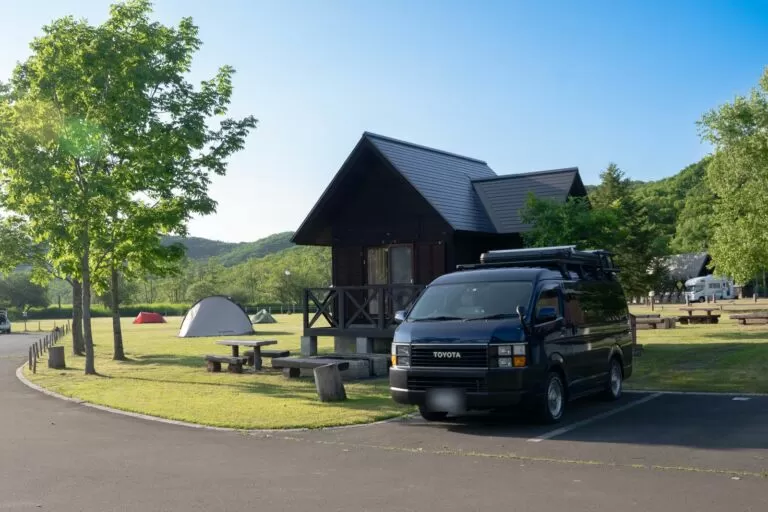
![Campgrounds Near Tokachi-Obihiro Airport: 8 Sites Within 30 km, Compared by Vehicle Access, Power and Price [2026]](https://hokkaido-campingcar.jp/wp-content/uploads/2026/10/photo-obihiro-airport-featured-pl232-768x512.jpg.webp)
![Campgrounds Near Hakodate Airport: 12 Sites Within 30 km, Compared by Vehicle Access, Power and Price [2026]](https://hokkaido-campingcar.jp/wp-content/uploads/2026/10/photo-hakodate-airport-featured-hl4722-768x484.jpg.webp)