Lake Saroma & Kamiyubetsu Tulip Park Campervan Guide | Flower Fields & Lakeside Camping [2026]
A campervan guide to Lake Saroma and Kamiyubetsu Tulip Park in Hokkaido's Okhotsk region.
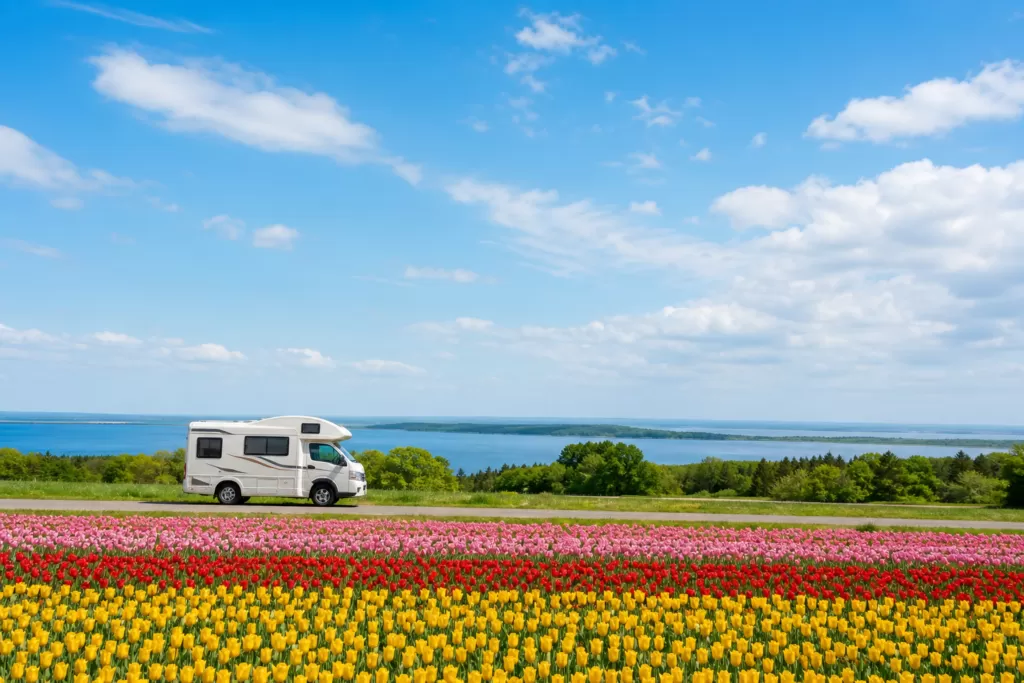
When people think of Hokkaido’s flower fields, Furano and Biei come to mind first. But Hokkaido has equally stunning floral landscapes that remain largely undiscovered. The area around Lake Saroma on the Sea of Okhotsk coast and Kamiyubetsu is one such hidden gem.
Furano and Biei are iconic Hokkaido destinations, but the Lake Saroma and Kamiyubetsu area along the Okhotsk coast offers floral scenery just as beautiful — with a fraction of the crowds. No traffic jams, no parking queues, no jostling for space. For travelers who want to explore Hokkaido at their own pace in a campervan, the Okhotsk flower fields are an ideal destination. This 2026 guide covers bloom calendars, access information, overnight parking spots, and recommended routes.
Okhotsk Flower Area Overview and Comparison with Furano
Hokkaido’s flower fields are synonymous with the lavender of Furano and Biei. During peak season, the roads around Biei and Furano can back up for kilometers, and just getting into the parking lot at a popular farm can take over 30 minutes.
The Okhotsk side — Kamiyubetsu (上湧別) and Lake Saroma — has a smaller tourism footprint, which means you can actually enjoy it. Even during the Tulip Fair, there’s plenty of room to stroll. On many evenings you can watch the sunset over Lake Saroma almost alone.
Timing works in your favor too. Furano’s lavender peaks in early-to-mid July, but Kamiyubetsu tulips bloom mid-to-late May. The wildflowers at Wakka Nature Garden along the Okhotsk coast then carry the season through June and July. The Okhotsk route lets you enjoy flowers in stages from spring through summer.
Geographically, the Okhotsk area fits naturally into the middle or later part of a Hokkaido road trip. It sits close to Shiretoko, Abashiri, and Akan — making it easy to combine flower fields with wild nature. A flow of Tulips → Wakka → Shiretoko is geographically smoother than heading from Furano to Shiretoko the next day.
Key Spots in the Area
Here are the main stops to include in a campervan itinerary.
- Kamiyubetsu Tulip Park (Yubetsu-cho, Monbetsu-gun): Around 1 million tulips in 200 varieties. The Tulip Fair typically runs mid-to-late May.
- Lake Saroma (Hokkaido’s largest lake): About 90 km in circumference, famous for oyster and scallop farming.
- Wakka Nature Garden (Tokoro-cho, Kitami City): A wildflower meadow along the sandbar separating Lake Saroma from the sea. No vehicles allowed — bicycle or walking only.
- Lake Saroma 100km Ultramarathon Course Roadside: Spectacular lakeshore scenery accessible by driving alone.
Kamiyubetsu Tulip Fair: Bloom Calendar and Access
Kamiyubetsu Tulip Park is a vast tulip field operated by Yubetsu-cho. Admission is charged during the Tulip Fair (around ¥500 for adults).
Typical Bloom and Event Dates
Bloom timing varies year to year. The typical window is mid-to-late May. In early years, color begins around May 10; in late years, blooms can continue into early June. Check the Yubetsu Town Tourism Association’s official social media or local live cameras before finalizing plans.
The highlight during the Fair is the colorful gradient created by color-coded sections of tulips — bands of red, yellow, orange, and purple spread across the hillside. Paths through the flower beds are well maintained, with great photo spots throughout.
Getting There
The closest airport is Okhotsk-Monbetsu Airport, about 30 minutes by car. Coming from Memanbetsu Airport (Ozora-cho) takes longer, so allow extra time. From New Chitose Airport, the drive via the Doto Expressway is about 380 km (4–5 hours). In a campervan you can break the journey with an overnight stop.
Public transit is not practical — buses from JR Engaru Station are infrequent. This is exactly where a campervan shines: your own vehicle, your own schedule.
Temporary parking lots open during the Fair period. Large-vehicle spaces are usually available; confirm with the Yubetsu Town Tourism Association in advance.
Compare Hokkaido Campervan Rentals
Base yourself at New Chitose Airport and compare rates, vehicle types, and pickup locations all in one place.
Wakka Nature Garden and Lake Saroma Highlights
Lake Saroma is Hokkaido’s largest lake, with a circumference of 90 km and a surface area of about 151 km². Wakka Nature Garden spreads across the narrow sandbar at the lake’s eastern end.
How to Explore Wakka Nature Garden
Wakka Nature Garden is closed to vehicles. Park at the Nature Center, then explore by rental bicycle or on foot along the roughly 11 km sandbar path. Riding about 5 km in takes you deep into the garden.
Peak bloom is late June to mid-July, when over 100 wildflower species carpet the ground — including Ezo tiger lily, beach rose (hamanasu), and Siberian peashrub. Riding with Lake Saroma on your right and the Sea of Okhotsk on your left delivers a sense of openness unique to Hokkaido’s wilderness.
Rental bicycles are available inside the Nature Center (fee applies; limited supply). Arrive early to avoid crowds. Walking is an option too, but allow plenty of time to reach the far end.
Oyster and Scallop Food Spots Around Lake Saroma
Lake Saroma is one of Hokkaido’s premier shellfish farming zones. Roadside stations and direct-sale shops serve fresh local shellfish at very reasonable prices.
- Michi-no-Eki “Ai-Land Yubetsu”: A roadside station in Yubetsu-cho with Okhotsk seafood dishes — a convenient campervan rest stop.
- Saroma-cho Fishermen’s Cooperative Direct Sales Area: Restaurants serving grilled scallops and sashimi. A chance to meet local fishermen.
- Tokoro Fishermen’s Cooperative Scallop Market: A fishery direct-sales facility in Tokoro-cho, Kitami City. Buy scallops and oysters to grill yourself in the campervan.
With a campervan, you can buy ingredients at a direct-sales shop and cook them that evening. Grilling scallops while watching the sunset over Lake Saroma is an experience no restaurant can replicate. Saroma oysters are sometimes available in spring too — ask at local shops when you visit.
Scenic Viewpoints at Lake Saroma
Horiiwayama Lookout offers a panoramic view of the entire lake and the distant Okhotsk Sea. A short walk through forest brings you to the summit. At dusk, the lake surface glows deep red across the vast Hokkaido landscape.
The lakeside drive is equally rewarding — alternating pasturelands and lake vistas, with occasional red-crowned cranes or swans landing nearby.
Lakeside Campgrounds, RV Parks, and Overnight Spots
The Okhotsk area offers plentiful overnight options amid its abundant nature. Here are the main spots.
Toppushi Campground
A municipal campground on the south shore of Lake Saroma run by Saroma-cho. Lakefront sites look directly out over the water. Facilities include kitchen and restrooms; fees are low, making it great for longer stays. Misty morning views over the lake are magical and popular with photographers.
Large vehicles and campervans are accommodated, but availability during peak periods should be confirmed with Saroma-cho in advance.
Lake Saroma Auto Campground
An auto campground on the lakeshore with powered sites. AC connections let you run campervan appliances without worry. Shower facilities are available. There are no convenience stores nearby — stock up on food and fuel in Saroma, Yubetsu, or Kitami before arriving.
Roadside Station Overnight Parking
Several roadside stations in the area accommodate overnight parking. Note that staying at a michi-no-eki is intended as a rest stop, not full camping. Avoid running engines or generators for long periods, and observe proper etiquette.
- Michi-no-Eki “Ai-Land Yubetsu” (Yubetsu-cho): 24-hour restrooms; wide parking area easy for campervans.
- Michi-no-Eki “Lake Saroma” (Saroma-cho): Near the lake; shop sells local scallops and dairy products.
- Michi-no-Eki “Okkoppe” (Okoppe-cho): Slightly west of Lake Saroma, convenient for the Hokuhon area.
Campground Notes
Even in May and June, nighttime temperatures in the Okhotsk area frequently drop below 10°C, and lakeside sites can be windy. Pack warm clothing and a proper sleeping bag. Brown bears are present in this area — store food securely and dispose of garbage at designated sites. For the 11-location, ten-day temperature breakdown including Abashiri, and how to think about overnight cold-weather gear, see our guide to Hokkaido’s Golden Week and May temperatures.
2-Night 3-Day Route from Memanbetsu Airport
Here’s a model itinerary starting from Memanbetsu Airport, combining the Tulip Fair, Wakka Nature Garden, and Lake Saroma seafood. Late May to early June gives the best chance of overlapping both bloom periods.
Day 1: Memanbetsu Airport → Kamiyubetsu Tulip Park → Overnight in Yubetsu
Pick up your campervan at Memanbetsu Airport and head north on National Route 238 to Kamiyubetsu — it is a fair distance, so leave with time to spare. Stroll through the tulip fields in the afternoon, then find a campsite or roadside station near Yubetsu for the night. Michi-no-Eki “Ai-Land Yubetsu” is a well-equipped and easy first-night base.
Dinner at the roadside station’s restaurant: butter-grilled scallops, sashimi sets, and other Hokkaido classics.
Day 2: Yubetsu → Lake Saroma Lakeside Drive → Wakka Nature Garden → Lakeside Overnight
Start early with a clockwise drive around the lake, stopping at Horiiwayama Lookout. Then head to the Nature Center at the eastern tip for Wakka Nature Garden. Rent a bicycle and ride the sandbar with the Okhotsk Sea on one side and the lake on the other.
Grab lunch near the Tokoro scallop market, then check in to a lakeside campground. As dusk colors the lake, grill scallops over charcoal — the quintessential Okhotsk experience.
Day 3: Saroma → Kitami → Return Campervan at Memanbetsu Airport
On the final morning, check for a local morning market in Saroma-cho, then head to Kitami for lunch. Kitami is famous for Jingisukan (grilled lamb), with several long-established specialty restaurants in the city. After lunch, drive to Memanbetsu Airport to return the campervan.
Total driving distance: roughly 250–300 km. Roads in the Okhotsk area are wide with sparse traffic lights — comfortable campervan driving. Refuel in Yubetsu, Saroma, and Kitami; rural gas stations can have limited hours.
Alternative Route from New Chitose Airport
If renting from New Chitose Airport, overnight near Asahikawa on Day 1, then move to Kamiyubetsu and Lake Saroma on Day 2. Enjoy Asahikawa Zoo and ramen on Day 1, cycle Wakka on Day 3, return via Kitami and Memanbetsu on Day 4 — a 3-night 4-day trip covering all Okhotsk highlights.
New Chitose to Lake Saroma is a long haul; driving straight through leaves no time for sightseeing. Stopping overnight near Takikawa or Asahikawa splits the drive and keeps fatigue at bay. With a campervan, you can adjust your route freely.
New Chitose Airport / Tokachi-Obihiro Airport
Rent a Cab-Over Camper “Cresson Journey”
Base yourself at New Chitose Airport and travel all across Hokkaido by campervan.
Frequently Asked Questions
Q: When can I find the exact Tulip Fair dates?
The Fair typically runs mid-to-late May, but exact dates change each year. The Yubetsu Town Tourism Association announces dates on its official website and social media between December and March. Check 1–2 months before your trip.
Q: Can I drive my campervan inside Wakka Nature Garden?
No. Vehicles are prohibited on the sandbar area. Park at the Nature Center — spacious enough for large vehicles — and explore by rental bicycle or on foot.
Q: Can I rent a campervan at Memanbetsu Airport?
Dedicated campervan rental bases near Memanbetsu Airport are limited. New Chitose Airport has several established rental companies; the typical approach is to pick up there and drive to the Okhotsk region. It’s 4–5 hours, but stopping in Asahikawa or Kitami turns the drive into sightseeing.
Q: Are there hot springs near Lake Saroma?
Lake Saroma Hotel on the south shore accepts day visitors for bathing during set hours. Kitami City and Engaru Town also have public hot spring facilities nearby. Confirm hours and fees before you go.
Q: Can I combine this with Furano and Biei?
Yes, but timing matters. Kamiyubetsu tulips peak in late May while Furano lavender peaks in early-to-mid July. For a combined trip, visit the Okhotsk tulips in late May and return for Furano lavender in early July, or cover both in a single June–July trip. In June, Wakka is blooming and early lavender varieties are opening in Furano.
Q: Are there bears in this area? Is camping safe?
Brown bears (Higuma) are present across Hokkaido, including the Okhotsk area. Store food properly while camping: don’t leave scented bags outside the tent, and dispose of garbage at designated sites. Following basic rules is sufficient. Ask campground staff about recent sightings. One advantage of a campervan: all food is stored inside the vehicle, which is safer than tent camping.
Book a Campervan in Hokkaido
Moving Inn New Chitose Airport supports English booking and offers airport transfers.

![Campgrounds Near Tokachi-Obihiro Airport: 8 Sites Within 30 km, Compared by Vehicle Access, Power and Price [2026]](https://hokkaido-campingcar.jp/wp-content/uploads/2026/10/photo-obihiro-airport-featured-pl232-768x512.jpg.webp)
![Campgrounds Near Hakodate Airport: 12 Sites Within 30 km, Compared by Vehicle Access, Power and Price [2026]](https://hokkaido-campingcar.jp/wp-content/uploads/2026/10/photo-hakodate-airport-featured-hl4722-768x484.jpg.webp)