Camping Car Trip to Teuri Island & Yagishiri Island | Ferry Transport & Island Van Life Guide [2026]
Teuri Island's seabird paradise and Yagishiri Island's Suffolk sheep and yew forests. Can you bring your campervan on the ferry, or leave it on the mainland?
Pick a campervan by what matters to you.
Rent at New Chitose Airport
See only the rental bases in Chitose, where the airport is.
Rent in winter (Dec–Mar)
Companies that rent through winter, listed apart from those that close.
Guide price
Moving Inn New Chitose Airport: HIACE van conversion from ¥22,000 per night. 20–30% off when booked 60–90 days ahead (official rate table, checked 15 Oct 2026).
New Chitose Airport map for campervan travellers →
Before you book: with an International Driving Permit if your country is in the Geneva Convention (for example the US, Australia, Singapore); Taiwan, Switzerland, Germany, France, Belgium and Monaco need your licence plus a Japanese translation (Tokyo Metropolitan Police). Questions in English: Moving Inn on WhatsApp. Every roadside station (michi-no-eki) must have free 24-hour toilets, and Hokkaido has 128 of them (MLIT).
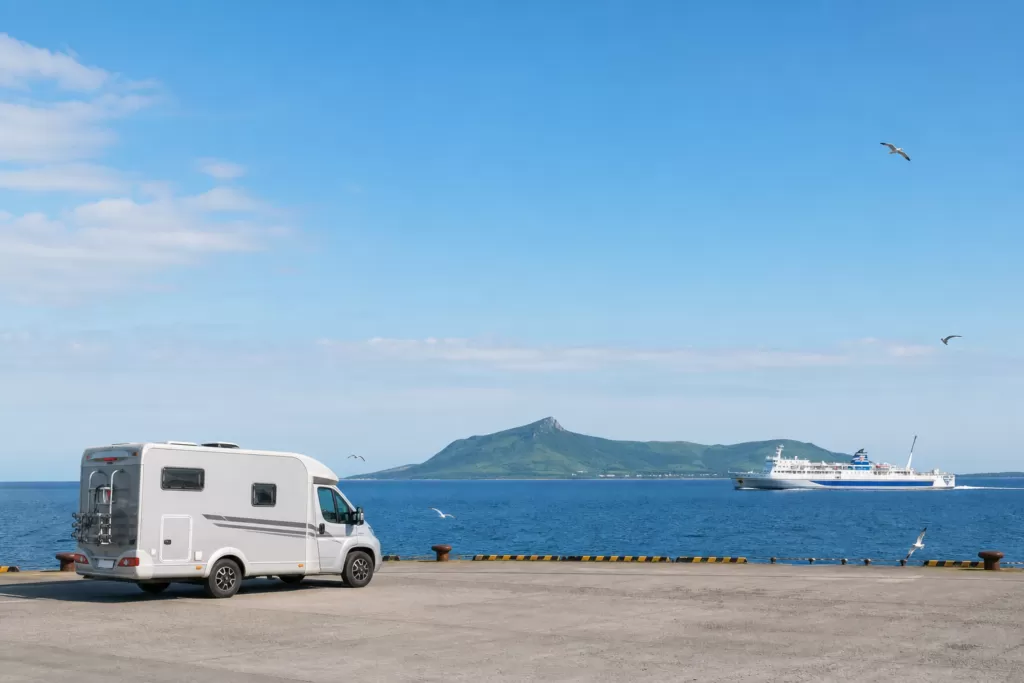
Teuri Island and Yagishiri Island, floating in the Sea of Japan off Hokkaido, are remote islands that even travelers from Honshu rarely visit. Teuri is home to an estimated one million seabirds, while Yagishiri features flocks of Suffolk sheep and a primeval forest of yew trees (onko). Both islands are among Hokkaido’s most untouched destinations — places many travelers wish they had visited sooner.
For those traveling Hokkaido by campervan, a key question arises: Can you take your vehicle onto the island? If not, where do you leave it on the mainland, and how do you get around? This guide covers ferry transport conditions, accommodation, island transportation, and overnight parking in Haboro — all from a campervan traveler’s perspective.
Note that a day trip from Haboro to both islands is not feasible. Plan for at least one overnight stay — ideally one night on each island — to properly experience the islands’ pace of life.
The Appeal of Teuri and Yagishiri Islands
Teuri Island (Teuri-to) belongs to Haboro Town and has a circumference of about 12 km. The cliffs on the western side of the island serve as a breeding ground for over one million seabirds every spring and summer. The island hosts the world’s largest colony of rhinoceros auklets (utou), and the evening return of hundreds of thousands of birds from late May through July is a spectacle found nowhere else in Hokkaido. The common murre (ororo bird) once bred here in large numbers but has sharply declined and is now under conservation protection. The island is mostly accessible to tourists from spring through autumn, as winter brings fierce winds and rough seas.
Yagishiri Island (Yagishiri-to) lies just east of Teuri, closer to Haboro Port (Teuri is about 28 km from the port, Yagishiri about 25 km). The entire island is covered with primeval forests of yew trees (onko/ichii) that have grown into unique wind-sculpted shapes, designated as a Hokkaido Natural Monument as the “Yagishiri Onko Forest.” Suffolk sheep grazed on the island also welcome visitors with their gentle faces. Yagishiri sees even fewer tourists than Teuri and is favored by travelers seeking quiet island time. For couples or pairs renting a campervan, a short detour to these islands adds a truly special experience.
Neither island has a convenience store or supermarket. Accommodation is mainly guesthouses (minshuku), and you need to stock up on food, drinks, chargers, and other necessities before boarding the ferry. Preparation on the mainland in Haboro makes all the difference.
The main difference between the two islands is their “liveliness.” Teuri attracts a steady stream of birdwatchers and has several guesthouses. Yagishiri has a population of around 100 and only a handful of places to stay. Many visitors to Yagishiri describe the feeling of “having the whole island to themselves.” The most popular itinerary for visiting both islands is one night on Yagishiri and one night on Teuri.
Ferry Routes from Haboro and Vehicle Transport: Availability and Fare Guide
Access to Teuri and Yagishiri is via Heartland Ferry from Haboro Port. The route departs Haboro, stops at Yagishiri, then continues to Teuri. Travel time is about 1 hour from Haboro to Yagishiri, and about 20 more minutes from Yagishiri to Teuri. Direct services between Teuri and Haboro are also available.
The number of daily sailings varies significantly by season. In summer (roughly June–August), there are often 3–4 round trips per day; in winter, service is reduced to 1–2 sailings per day. Always check the official Heartland Ferry website for up-to-date timetables. Rough seas can cause cancellations, so monitoring weather forecasts and cancellation notices is essential for island travel.
The crossing is relatively short but can be rough in the Sea of Japan. Those prone to seasickness should take medication before boarding. Early morning summer sailings sometimes let you watch the sunrise over the open sea — a memorable moment for any traveler.
Vehicle Transport on the Ferry
The first question campervan travelers have is whether they can bring their vehicle onto the island. Heartland Ferry’s Teuri/Yagishiri route accepts passengers, bicycles, motorcycles, and regular cars, but there are height and weight restrictions for large vehicles. Cab-over campervans and large van conversions may exceed these limits, so always contact the ferry company directly with your vehicle’s dimensions before booking.
Vehicle slots fill up quickly during peak season. In summer, reservations may be required 2–3 months in advance. When booking your passenger ticket, confirm at the same time whether a vehicle slot is available.
Passenger fares (one-way, per adult) between Haboro and Teuri are approximately ¥2,000–¥2,500. Vehicle transport fees vary by vehicle size; a standard car is roughly ¥5,000–¥10,000, depending on the season and vehicle dimensions. Check the latest rates on the official Heartland Ferry website.
Compare Hokkaido Campervan Rentals
Base yourself at New Chitose Airport and compare rates, vehicle types, and pickup locations all in one place.
Compare Rental Companies & Rates →Leaving Your Campervan on the Mainland vs. Taking It on the Ferry
In practice, campervan travelers face two options: leaving the vehicle in Haboro and crossing as a foot passenger, or transporting the vehicle by ferry. Here is how they compare.
Plan A: Leave the Campervan in Haboro and Cross as a Foot Passenger
This is the simplest and most reliable approach. Park your campervan near Haboro Port and cross to the island with just your luggage. Get around the island on foot, by bicycle, or by island tour taxi, stay 1–2 nights, and return.
This plan has several advantages: booking only a passenger ticket is straightforward, you do not need to worry about vehicle dimensions or weight on the day of departure, and you can move freely on narrow island roads by foot or bicycle. Even if you brought a car to the island, Teuri is only 12 km in circumference — a bicycle actually allows better access to the seabird colonies than a car.
The downsides are that you need to pack light, you cannot use the food and supplies stored in your campervan, and you will need to stay in a guesthouse. However, minshuku on Teuri and Yagishiri often serve fresh sea urchin, sweet shrimp, and scallops — island dining itself becomes a highlight of the trip. “I’ll never forget the dinner at the guesthouse” is something you often hear from returning visitors.
For long-term parking in Haboro, there are paid lots near the ferry terminal. For a 2-night, 3-day trip, the combined cost of parking and island accommodation is usually less than the vehicle transport fee, making Plan A the economical choice.
Plan B: Take the Campervan on the Ferry
If you can bring your vehicle to the island, there are no luggage restrictions and you can drive around at will. Yagishiri has “Shirahama Campsite” — campsite van parking is one option for overnight stays (check with the Haboro Tourism Association in advance whether camping is possible on Teuri).
However, this plan requires careful verification upfront. First, most rental campervan contracts prohibit ferry transport. Rental agreements often include conditions such as “no entry to island areas” or “ferry transport prohibited,” and violating these terms means insurance may not apply. Always check with your rental company before departing.
Large campervans may also exceed the ferry’s vehicle restrictions. Island roads are narrow, and long or wide vehicles require extra caution. Plan B is only realistic if all these conditions can be met.
Owner-operated compact campervans or kei-class campers may be able to meet the size restrictions. However, vehicle slots during peak season fill up early — book 3–4 months in advance.
| Plan A (Leave on mainland) | Plan B (Take vehicle on ferry) | |
|---|---|---|
| Ease of ferry booking | Simple — passenger only | Must secure a vehicle slot |
| For rental campervans | No problem | Usually violates rental terms |
| Luggage on island | Must travel light | Full access to vehicle supplies |
| Island transportation | On foot, bicycle, taxi | Drive freely on the island |
| Accommodation | Guesthouse/minshuku | Campsite van parking possible |
| Cost | Passenger fare only | Vehicle transport fee added |
Getting Around the Islands: Seabird Colonies and Sheep Pastures
Highlights of Teuri Island
Teuri Island is best known for its seabird breeding grounds. The cliffs on the western side host rhinoceros auklets, common murres (ororo birds), spectacled guillemots, and other species. The rhinoceros auklet is the star attraction: at dusk, hundreds of thousands return from the sea all at once to their burrows, filling the sky above — a sight that leaves first-time witnesses speechless. The best season for viewing is late May through July. Joining the guided “Auklet Homecoming Tour” at dusk is the safest and most rewarding way to observe them.
Sightseeing boats offer cruises to view the cliffs and seabirds from the sea. The island has a loop road, and many visitors rent bicycles to ride around. Near Teuri Port on the eastern side you will find shops and guesthouses, while Kannon-zaki on the western tip offers a panoramic view of the Sea of Japan — also renowned as a sunset spot.
Highlights of Yagishiri Island
Yagishiri Island has two iconic sights. The first is the primeval yew forest. Constant exposure to Sea of Japan winds has caused the yew (onko/ichii) trunks to grow horizontally, taking on sculptural forms. These forests spread across the island, creating an otherworldly atmosphere as you walk through them.
The second is the Suffolk sheep. These white-bodied, black-faced sheep graze freely on the island’s pastures and can be photographed up close. Suffolk lamb from Yagishiri is a local specialty and sometimes appears on guesthouse menus.
The island is about 10 km around and you can cover the main sights on foot in half a day. A rental bicycle makes it even more efficient. There are no traffic lights and almost no cars, making it easy to stroll and take photos at leisure. If dinner at your guesthouse includes Yagishiri Suffolk lamb, that alone makes the trip worthwhile.
Shirahama Campsite on Yagishiri is free to use (bring your own tent). Views extend over the sea and pastures. If you have managed to bring your campervan to the island, overnight parking here offers a uniquely peaceful experience. Note that proper campervan toilet and wastewater management is especially important in remote island environments with limited facilities.
Overnight Parking, RV Spots, and Bathing Facilities in Haboro
If you are leaving your campervan in Haboro and crossing to the islands, you will need overnight parking on the night before departure and after your return.
Overnight Parking Spots in Haboro
The Michi-no-Eki (roadside station) “Hotto Haboro” is a good option for campervan parking in Haboro. Located in the town center, it is adjacent to the hot spring “Haboro Onsen Sunset Plaza” and is a short drive from the port — convenient for an early morning ferry departure. Please follow campervan parking etiquette: avoid idling and dispose of garbage properly.
Locating a parking spot near Haboro Port allows you to walk to the ferry terminal. Confirm whether long-term parking is permitted. During peak summer season, securing your parking spot early is advisable.
Bathing and Hot Spring Facilities
Haboro has “Haboro Onsen Sunset Plaza,” conveniently located within the Michi-no-Eki Hotto Haboro grounds. Day-use bathing is available, making it ideal for relaxing after returning from the islands. Rates and hours may change, so a phone call to confirm in advance is recommended.
A short drive south of Haboro, Tomamae Town has “Tomamae Onsen Fuwatto,” and Rumoi further south has several bathing facilities. A natural flow is to use the onsen next to Michi-no-Eki Hotto Haboro on the evening you return, then spend the night in the parking lot before continuing your journey.
Resupply in Haboro for Your Campervan Trip
Haboro has supermarkets and convenience stores where you can stock up on food before crossing to the islands. There are also gas stations in town, so fill up before departing — there are no gas stations on the islands, or operating hours may be very limited.
Haboro is about 60 km north of Rumoi along National Route 232, and about 130 km south of Wakkanai. Many travelers on the Hokkaido Sea of Japan coastal route include Teuri and Yagishiri in their itinerary, particularly those following the Ororen Line along the Sea of Japan through Mashike and Rumoi. The Michi-no-Eki “Obira Nishin Banya” just before Haboro is also worth a stop to learn about the history of herring fishing.
New Chitose Airport / Tokachi-Obihiro Airport
Rent the Cab-over “Cresson Journey” Campervan
Base yourself at New Chitose Airport and travel all across Hokkaido by campervan.
View Details at Moving Inn →Frequently Asked Questions (FAQ)
Q: Can I take a campervan on the ferry to Teuri or Yagishiri Island?
Depending on the vehicle’s size, ferry transport may be possible, but large campervans may exceed height and weight limits. Most rental campervan contracts also prohibit ferry transport. If traveling in your own privately owned campervan, always contact Heartland Ferry with your vehicle’s dimensions to confirm eligibility before booking.
Q: What is the best month to see the seabirds?
The best season for observing rhinoceros auklets and common murres on Teuri Island is late May through July. Mid-June to early July is the peak breeding period, and the evening homecoming scene is spectacular. The number of seabirds begins to decline after August. If seabird watching is your goal, plan your trip around this window.
Q: How many days of food should I bring from Haboro?
There are no convenience stores or supermarkets on either island, so you must either bring all your food for the stay or rely on guesthouse meals. If staying at a minshuku, most offer meal-inclusive plans. For self-catering, buy enough supplies at a Haboro supermarket for your entire island stay. Carry extra drinking water as well.
Q: How likely is the ferry to be cancelled?
The Sea of Japan is prone to rough seas, and cancellations can occur especially in early spring and autumn. Even in summer, cancellations or delays happen depending on weather. Build flexibility into your schedule and have a plan in case the return ferry is cancelled. Cancellation information is available on the Heartland Ferry website and social media.
Q: Which island should I visit first, Yagishiri or Teuri?
The ferry route from Haboro stops at Yagishiri before Teuri, so departing from Haboro you arrive at Yagishiri first. For most travelers spending one night on each island, a natural flow is Yagishiri first, then Teuri. On the return, taking the direct service from Teuri to Haboro saves time.
Q: How do I get around the islands without a campervan?
Both Teuri and Yagishiri have rental bicycles, and the islands are small enough that a bicycle is sufficient. Some guesthouses lend bicycles to their guests. Island tour taxis and sightseeing boat tours are also available. Fit visitors can cover the main sights on both islands on foot in about half a day each.
Book a Campervan in Hokkaido
Moving Inn New Chitose Airport supports English booking and offers airport transfers.
Pick a campervan by what matters to you.
Rent at New Chitose Airport
See only the rental bases in Chitose, where the airport is.

![Campgrounds Near Tokachi-Obihiro Airport: 8 Sites Within 30 km, Compared by Vehicle Access, Power and Price [2026]](https://hokkaido-campingcar.jp/wp-content/uploads/2026/10/photo-obihiro-airport-featured-pl232-768x512.jpg.webp)
![Campgrounds Near Hakodate Airport: 12 Sites Within 30 km, Compared by Vehicle Access, Power and Price [2026]](https://hokkaido-campingcar.jp/wp-content/uploads/2026/10/photo-hakodate-airport-featured-hl4722-768x484.jpg.webp)