Bihoro Pass & Lake Kussharo Campervan Drive Guide | Sea of Clouds, Sunayu & Scenic Overnight Spots [2026 Edition]
A complete campervan guide to Bihoro Pass and Lake Kussharo: how to catch the sea of clouds, dig-your-own hot springs at Sunayu, free open-air baths, RV parks, and a 2-night 3-day model route from Memanbetsu Airport.
Pick a campervan by what matters to you.
Rent at New Chitose Airport
See only the rental bases in Chitose, where the airport is.
Rent in winter (Dec–Mar)
Companies that rent through winter, listed apart from those that close.
Guide price
Moving Inn New Chitose Airport: HIACE van conversion from ¥22,000 per night. 20–30% off when booked 60–90 days ahead (official rate table, checked 15 Oct 2026).
New Chitose Airport map for campervan travellers →
Before you book: with an International Driving Permit if your country is in the Geneva Convention (for example the US, Australia, Singapore); Taiwan, Switzerland, Germany, France, Belgium and Monaco need your licence plus a Japanese translation (Tokyo Metropolitan Police). Questions in English: Moving Inn on WhatsApp. Every roadside station (michi-no-eki) must have free 24-hour toilets, and Hokkaido has 128 of them (MLIT).
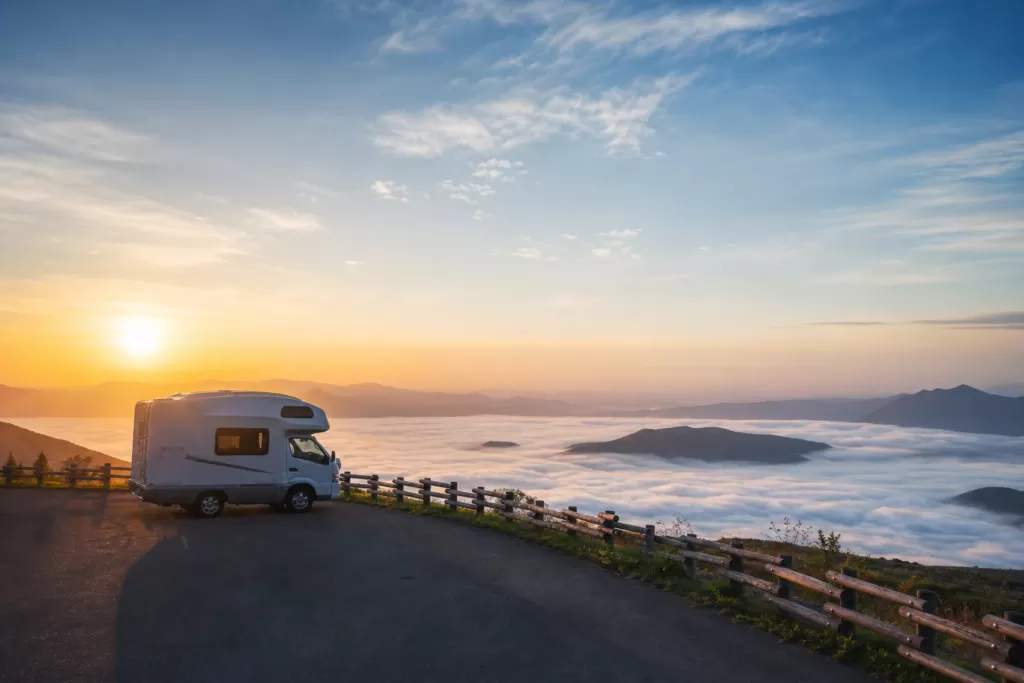
If you want to experience Hokkaido’s wilderness up close, Bihoro Pass and Lake Kussharo offer some of the most special moments of any campervan journey. Climb the pass in the early morning and a sea of clouds spreads out below you; along the lakeshore, hot spring water bubbles up through the sand you dig yourself — a landscape found almost nowhere else in Japan. Even in mountain areas with few hotels, a campervan lets you stay wherever you like, moving on your own schedule. This guide covers how to catch the sea of clouds, how to enjoy Sunayu, the Wakoto Peninsula and Kotan Onsen, where to park overnight, and a 2-night 3-day model route starting from Memanbetsu Airport or Kushiro.
Why Bihoro Pass and Lake Kussharo Are Perfect for a Campervan Trip
Bihoro Pass sits at an elevation of about 490 m and is known as one of Hokkaido’s premier “sea of clouds” spots. On clear early mornings, the whole of Lake Kussharo is wrapped in white mist, and the caldera lake creates a truly otherworldly scene. Lake Kussharo is one of Japan’s largest caldera lakes, with a circumference of about 57 km. The island of Nakajima floats in the middle of the lake. The lake water is mildly acidic, and hot springs well up naturally from the lakebed and shoreline in many places — a geologically rare environment that has created free bathing spots like Sunayu, Wakoto Onsen and Kotan Onsen.
There are not many places to stay near the pass itself. Most visitors use the hot spring town of Kawayu in Teshikaga, or hotels around Lake Mashu, but hotel checkout times make it hard to chase the pre-dawn sea of clouds. With a campervan, you can park the night before at a roadside station or lakeside overnight spot, then head up to the pass one or two hours before sunrise. No traffic jams, no hunting for parking — you can simply wait in comfort for the light to be right. That is the biggest advantage. Since cloud-sea days depend entirely on the weather, spending two or more nights in the area raises your chances considerably. A campervan lets you stay flexible and move with the conditions rather than being tied to one base.
Also, the open-air baths at Sunayu and the Wakoto Peninsula are not commercial day-spa facilities — nature itself is the bathtub. There are almost no convenience stores or shops nearby, so you need a degree of self-sufficiency. A campervan stocked with food, water and cooking equipment is a perfect match for this area.
Timing, Weather Conditions and Parking Tips for the Bihoro Pass Sea of Clouds
Conditions That Produce a Sea of Clouds
The sea of clouds appears most reliably in autumn, September to October, followed by early summer in June and July. Your chances rise when the following weather conditions line up.
- A morning after a warm, sunny day followed by sharp overnight cooling (radiative cooling)
- Light wind (roughly 2 m/s or less)
- A large temperature difference between the air and the lake surface
The prime window is the 30 to 60 minutes around sunrise. In October the sun rises around 5:30–6:00 a.m., so you want to be at the pass lookout by 5:00 at the latest. In September sunrise is around 5:00–5:30 a.m., which means an even earlier start.
The sea of clouds dissolves quickly once the sun climbs. After 7:00 a.m. the mist often burns off, leaving an ordinary lake view. Check the forecast the night before — if it calls for clear skies, light wind and a sharp overnight temperature drop, that morning is your moment.
Michi-no-Eki “Gurutto Panorama Bihoro Pass” Facilities
The roadside station “Gurutto Panorama Bihoro Toge,” right next to the pass lookout, serves as a base with parking, toilets, a restaurant and a shop. The following details were confirmed as of June 2026.
- Parking: Large-vehicle spaces available (free). Campervans can park
- Toilets: Available 24 hours (outdoor toilets)
- Restaurant and shop: Hours vary by season (roughly 8:00–17:00). Closed in winter
- Observation deck: About a 3-minute walk on a maintained footpath
- Water refill: No facilities at the station. Refill in central Teshikaga beforehand
Regarding overnight parking: resting and napping in the parking lot is permitted, but visitors are asked to refrain from multi-night stays. Arriving the night before to catch the sea of clouds is fine, but for two nights or more, use the campgrounds described below.
Parking Tips and Peak Hours
On autumn-foliage weekends in September and October the lot can fill up during the day. The pre-dawn hours (around 5:00 a.m.) when cloud-chasers arrive are usually still empty, so an early start also means you avoid the crowds. Large campervans are safest in the large-vehicle bays at the back of the lot, which reduces the risk of contact with other cars.
Highlights of Lake Kussharo: Sunayu, Wakoto Peninsula and Kotan Onsen
Sunayu — the Lakeshore Where Hot Springs Rise from the Sand
Sunayu, on the southeastern shore of Lake Kussharo, is a place found nowhere else in Hokkaido: dig into the sandy beach with your hands or a shovel and hot spring water wells up from underground. Bring a swimsuit and you can build your own “open-air bath.” The local technique is to mix in lake water to adjust the temperature — an experience that captivates adults and children alike. A shovel and a small bucket are handy; cheap sand-play toys from a hundred-yen store work perfectly well.
There is also a free foot bath adjacent to the Sunayu campground, open from early morning. Before sunrise there is hardly anyone around. Tour buses and day visitors peak between 10:00 and 15:00, so if you have stayed overnight in your campervan, you can often have the beach almost to yourself between 6:00 and 8:00 a.m. Around Sunayu there are a shop and public toilets, and in summer you can buy drinks and light meals.
The spring water at Sunayu is mildly acidic, heated by the geothermal energy of the Kussharo caldera and rising directly through the lakebed. The temperature varies by spot, and some patches are too hot to touch with bare hands. Avoid the hottest areas of sand as you dig, and once you find a spot at a comfortable temperature, channel in lake water to fine-tune it. The process itself is half the fun, and it is consistently popular with families.
In winter (December to March) large numbers of swans arrive on Lake Kussharo. Because hot springs keep parts of the lake from freezing over completely, open water remains even in midwinter. At the peak in January and February, hundreds of whooper swans gather on the open water near Sunayu — a stunning sight against the surrounding snow. Winter campervan travel requires cold-weather preparation, an FF heater and attention to tire-chain regulations, but the sight of swans on the snowfield is a completely different kind of magic from summer.
Wakoto Peninsula — Nature Trail and Free Open-Air Bath
The Wakoto Peninsula, jutting out from the western shore of Lake Kussharo, has a maintained walking trail of about 2.5 km around its perimeter. At the tip of the peninsula is “Wakoto-no-Yu,” a free mixed open-air bath. The changing hut is basic, but you bathe with a full view of the lake. The water is a gentle simple spring, mild on the skin. Early morning and late afternoon are quiet times to soak. The trail undulates gently through old-growth oak and white birch forest, with the lake appearing and disappearing between the trees. It is also a haven for wild birds — bring binoculars if you have them.
Wakoto Peninsula Campground sits on the lakeshore and has a cooking shelter and toilets. For overnight campervan use, follow the rules set by the town of Teshikaga (check in advance for campervans). Confirm with the management office before the season whether there is turning space for large vehicles.
Kotan Onsen — the Open-Air Bath Closest to the Lake
On the northwestern shore of the lake in the Kotan district, “Kotan Onsen Rotenburo” is a rustic free mixed bath built from piled lakeshore stones. The rim of the bath sits at almost the same height as the surface of Lake Kussharo, so you soak while gazing straight out across the water. Bathe in the evening and you can watch the sun set behind the mountains on the far shore. The changing space is extremely basic, so realistically you should change and prepare inside your campervan before walking over.
There is roadside parking for a few cars nearby. Large campervans may find it difficult, so consider parking in a more open spot in the Kotan district and walking in. The water at Kotan Onsen is a simple spring (mildly alkaline) with a smooth, silky feel. Compared with the acidic water at Sunayu it is gentler on the skin and suited to longer soaks. The three bathing spots — Sunayu, Wakoto-no-Yu and Kotan Onsen — each have a different character and water quality, and doing the full circuit as a “bath crawl” is the classic Lake Kussharo experience.
Compare Campervan Rentals in Hokkaido
Base yourself at New Chitose Airport and compare rates, vehicle types, and pickup locations all in one place.
Overnight Parking, Powered Sites, Water and Toilets in the Area
Sunayu Campground (Town of Teshikaga)
A campground adjacent to Sunayu on the shore of Lake Kussharo. Campervans can drive in; most sites have no electric hookups. There is a management building, cooking shelter and flush toilets, and you can refill water here. Fees vary by season and site type, so check the latest information with the Teshikaga Tourist Association or at the on-site office.
Wakoto Peninsula Campground
A lakeside campground at the base of the Wakoto Peninsula, with a cooking shelter and toilets. Access for large vehicles may be restricted in places, so check on site.
Overnight Rest at Michi-no-Eki “Gurutto Panorama Bihoro Pass”
As noted above, toilets are available 24 hours. There is no water refill facility, so top up your tank in central Teshikaga or the Memanbetsu/Bihoro area before arriving.
Where to Get Power and Water (Auto Campground near Central Teshikaga)
We could not find any facility in Teshikaga Town on the Japan RV Association’s list of RV parks (checked October 2026). On days when you need power or water, the auto sites with power and water hookups at RECAMP Mashu (formerly Sakuragaoka Forest Park Auto Campground), near central Teshikaga, are an option. It operates seasonally from late April to late November and has regular closing days, so confirm current availability with the facility.
Water and Garbage in the Area
Convenience stores are very scarce around Lake Kussharo. There is a Seicomart in central Teshikaga (about 20 minutes by car from Kawayu Onsen). Garbage must be taken with you as a rule — do not dispose of it anywhere other than campground management buildings.
2-Night 3-Day Model Route from Memanbetsu Airport or Kushiro
The following is a 2-night 3-day model route picking up a campervan at Memanbetsu Airport and touring the Lake Kussharo and Bihoro Pass area. If you start from Kushiro Airport, simply reverse the order (Kushiro → Lake Mashu → Lake Kussharo → Bihoro Pass flows naturally).
Day 1: Memanbetsu Airport → Bihoro Pass → Lake Kussharo (Overnight at Sunayu)
Pick up your campervan at Memanbetsu Airport, then stop at a supermarket in central Kitami to stock up on food. Take Route 39 to Bihoro and turn onto Route 243 there; the roadside station “Gurutto Panorama Bihoro Toge” is about 40 minutes away. Arrive in the early afternoon, take in the view of Lake Kussharo from the lookout, then descend to the lake toward Sunayu. In the late afternoon, try the dig-your-own hot spring experience at Sunayu and stay overnight at Sunayu Campground. Cook dinner in your campervan.
Day 2: Sea of Clouds at Bihoro Pass → Wakoto Peninsula → Kotan Onsen
Aim to wake at 4:30 a.m. If conditions look good, leave Sunayu Campground before 5:00 and drive up to Bihoro Pass (about 40 minutes). After watching the sea of clouds, return to the roadside station around 7:00–8:00 for breakfast. Then move to the western shore of the lake, walk the Wakoto Peninsula trail and bathe at Wakoto-no-Yu. Cook lunch in the campervan, and in the afternoon visit the Kotan Onsen open-air bath. In the evening, drive to RECAMP Mashu near central Teshikaga and stay on a powered site, where you can hook up to power and refill water. A visit to one of Kawayu’s day-bathing facilities is a good way to end the day.
Day 3: Lake Mashu → Lake Akan, or Return to Memanbetsu Airport
On the last day, choose according to your schedule. With time to spare, the classic option is to stop at Lake Mashu (about 20 minutes from Kawayu Onsen) or Lake Akan (about 60 minutes from Kawayu) before heading to Memanbetsu Airport. The drive from Kawayu Onsen to Memanbetsu Airport takes about 1 hour 30 minutes. If returning at Kushiro Airport, allow about 1 hour 45 minutes via Lake Akan.
If you plan your trip from New Chitose Airport instead, rent a campervan at Moving Inn New Chitose Airport and take the Doto Expressway via the Ashoro IC for a 3–4 night route: Lake Akan → Lake Kussharo → Bihoro Pass → return near Memanbetsu Airport (or drive back to New Chitose).
New Chitose Airport / Tokachi-Obihiro Airport
Rent the Cab-Over Camper “Cresson Journey”
Base yourself at New Chitose Airport and travel all across Hokkaido by campervan.
Frequently Asked Questions (FAQ)
Q: Which month is best for the sea of clouds at Bihoro Pass?
September to October is said to offer the highest probability. Radiative cooling occurs easily then, and the day-night temperature difference is large. June to July is the next most likely period. If the forecast shows clear skies, light wind and a sharp temperature drop from the previous day, that morning is promising.
Q: Is the open-air bathing at Sunayu really free?
Digging in the sand and enjoying the hot water costs nothing. The adjacent foot bath is also free. However, if you use the facilities of Sunayu Campground (cooking shelter, toilets), the campsite fee applies.
Q: Where can I get power and water for my campervan around Lake Kussharo?
Powered sites are available at RECAMP Mashu near central Teshikaga, which has auto sites with power and water hookups. For water, use the cooking shelters at Sunayu Campground or Wakoto Peninsula Campground, or refill in central Teshikaga (note that the Bihoro Pass roadside station has no water facilities). For dump stations (waste water disposal), check with the facility where you plan to stay before booking.
Q: When can I see the swans on Lake Kussharo?
The main season is December to March each year. Hot springs keep the lake from freezing over completely, so open water remains through midwinter. The swans gather mainly on the open water near Sunayu. Winter campervan travel requires cold-weather gear and an FF heater check, but the scene of swans on the snowfield is exceptional.
Q: Can I rent a campervan at Memanbetsu Airport?
Dedicated campervan rental shops are scarce around Memanbetsu Airport. Most travelers either rent in central Kitami or drive a campervan up from New Chitose Airport. From New Chitose it takes about 3.5 to 4 hours via the Doto Expressway to the Akan/Teshikaga area.
Q: How long does it take from Bihoro Pass to the Lake Kussharo shore?
From the roadside station “Gurutto Panorama Bihoro Toge” to Sunayu takes about 30–40 minutes via Route 243 and Prefectural Road 52. The Wakoto Peninsula is also about 30 minutes. Kotan Onsen is another 20 minutes north of the Wakoto Peninsula. Roads in the area have few traffic lights and are easy to drive.
Q: Is this area good for children?
The dig-your-own hot spring at Sunayu is a huge hit with children. The Wakoto Peninsula trail is unpaved but flat and easy to walk; children of elementary school age and up can manage the full loop. The Bihoro Pass lookout has a proper deck, so even small children can enjoy the view safely. The changing facilities at Kotan Onsen are very basic, so with small children it is wise to check the situation on site before deciding to bathe.
Book a Campervan in Hokkaido
Moving Inn New Chitose Airport supports English booking and offers airport transfers.
Pick a campervan by what matters to you.
Rent at New Chitose Airport
See only the rental bases in Chitose, where the airport is.

![Campgrounds Near Tokachi-Obihiro Airport: 8 Sites Within 30 km, Compared by Vehicle Access, Power and Price [2026]](https://hokkaido-campingcar.jp/wp-content/uploads/2026/10/photo-obihiro-airport-featured-pl232-768x512.jpg.webp)
![Campgrounds Near Hakodate Airport: 12 Sites Within 30 km, Compared by Vehicle Access, Power and Price [2026]](https://hokkaido-campingcar.jp/wp-content/uploads/2026/10/photo-hakodate-airport-featured-hl4722-768x484.jpg.webp)