Winter Hokkaido Campervan Travel Guide | Essential Gear, Routes & Safety Techniques
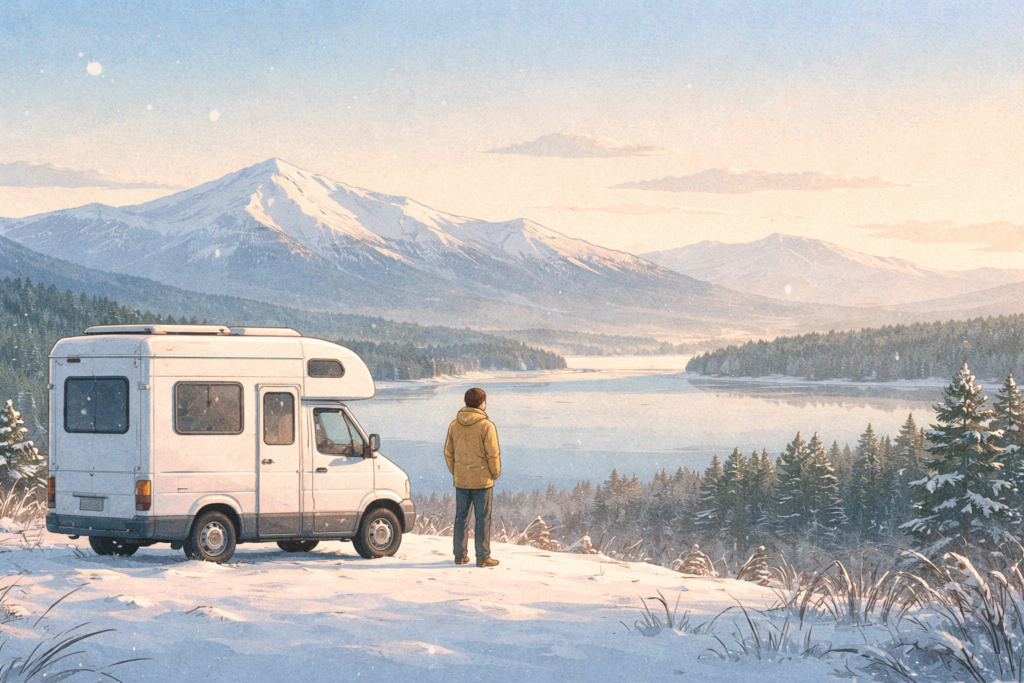
Hokkaido in winter is the ultimate destination for a campervan trip. Snow-covered landscapes, drift ice, hot springs, and winter events — plus off-season rates that make it even more appealing. At the same time, driving in winter Hokkaido is challenging, and overnight stays in your vehicle require extra care.
This article gives you everything you need to enjoy winter Hokkaido safely and comfortably by campervan. We cover essential gear, driving techniques, recommended routes, and overnight stay precautions.
If you are considering a winter Hokkaido campervan trip, please read to the end.
Related article: The Hokkaido Campervan Comprehensive Guide covers seasonal tips and general rental guidance.
Why Winter Hokkaido by Campervan is Worth It
There are far more reasons to take a campervan trip in winter Hokkaido than in summer or autumn. Here are some of the highlights.
Drift Ice and Snowy Scenery
The greatest winter attraction in Hokkaido is the spectacular drift ice. From mid-January to mid-March, drift ice arrives on the Sea of Okhotsk — a globally rare phenomenon where ice flows down from the Arctic Ocean and reaches Hokkaido on ocean currents.
The snow-covered land, silver mountains, and frozen lake surfaces make winter Hokkaido feel like another world entirely. Watching the ever-changing scenery through a campervan window is a memory that lasts a lifetime.
Hot Spring Relaxation
Winter Hokkaido is home to many hot spring resorts. Noboribetsu Onsen, Sounkyo Onsen, and the areas covered in the Obihiro & Tokachi Campervan Drive Guide all offer day-trip bathing and hot spring campgrounds to warm you up. If you are starting from the Obihiro/Tokachi area, also check the Obihiro & Tokachi Campervan Rental Comparison.
Snow-viewing baths are a uniquely winter pleasure — soaking in an outdoor bath while snow falls around you is simply extraordinary.
Winter Events Galore
Winter Hokkaido is packed with events: the famous Sapporo Snow Festival (early February), the Otaru Canal Illumination (November–February), the Ryuhyo no Utage (drift ice festival, Abashiri area), and more. You can drive your campervan right to these event venues.
Off-Season Pricing
January–March is the off-season for campervan rentals, meaning you can rent at 30–40% below peak rates. Traveling in a high-quality campervan while keeping costs down is a uniquely winter advantage.
Essential Winter Campervan Equipment
Having the right equipment is the key to a successful winter Hokkaido campervan trip. Here is what you need.
Studded Snow Tires
The most critical winter equipment is studded snow tires (studless tires). Standard summer or all-season tires have extremely poor grip on frozen roads, greatly increasing the risk of skidding accidents.
There is no legal mandate in Hokkaido, but in practice you should treat studless tires as mandatory from October through April. Reputable rental companies include studless tires as standard equipment on their winter campervan fleet.
The Importance of the FF Heater
The FF heater (forced-draft fuel heater) runs on kerosene or diesel and is essential for maintaining a comfortable cabin temperature while you sleep.
However, regular ventilation is mandatory when using an FF heater. Open a window for fresh air every 30–60 minutes while sleeping. (See the “Overnight Stay Precautions” section for details.)
Other Cold-Weather and Safety Gear
The following items are also useful for a winter campervan trip.
| Item | Priority | Notes |
|---|---|---|
| Snow Shovel | ★★☆ | For getting unstuck if you sink into snow. Choose a lightweight, compact model. |
| Winter Windshield Washer Fluid | ★★☆ | Use a de-icing formula. Essential against Hokkaido road salt. |
| Battery Booster | ★★☆ | For power loss in cold temperatures. Auxiliary battery or battery heater works well. |
| Blankets / Winter Sleeping Bag | ★★★ | Insulation while sleeping is non-negotiable. A sleeping bag rated to −10°C provides peace of mind. |
| Sun Shades | ★☆☆ | Reduces condensation and maintains privacy. Attach to each window. |
| Jump Starter | ★☆☆ | Emergency response to a dead battery. A portable unit is convenient. |
Having this equipment significantly improves safety and comfort on a winter campervan trip.
Winter Hokkaido Driving Is Tough — Techniques You Need to Know
Driving in winter Hokkaido is far more dangerous than in other seasons. Master these techniques for a safe trip.
Driving on Icy Roads
Winter roads in Hokkaido are frequently icy asphalt. Reduced grip dramatically increases skid risk. Keep these points in mind.
- Reduce speed: Drive 40–50% slower than normal. If the speed limit is 60 km/h, drive at 30–40 km/h.
- Increase following distance: Keep at least twice the normal distance. Hard braking is dangerous.
- No sudden steering or hard braking: These trigger skids. Steer slowly and brake with plenty of room.
- Careful when starting from a stop: After stopping at a red light, accelerate very slowly when it turns green — it is easy to spin out.
Whiteout Conditions
A whiteout is when a blizzard reduces visibility to near zero. It is especially likely on mountain-pass routes or open plains.
- Decision while driving: Do not force yourself to continue if visibility deteriorates.
- Pull over: Stop on the shoulder and turn on your hazard lights. Pull as far off the road as safely possible.
- Rest: Consider sleeping until the weather improves. A campervan lets you rest comfortably inside.
Daytime Driving Only
We strongly recommend limiting driving to daytime hours. Night driving in winter Hokkaido is significantly more dangerous due to poor visibility and falling temperatures.
- Daytime driving window: Plan your distance around 8 AM–4 PM.
- Daily distance: Aim for no more than 100 km/day. Take your time.
- Night contingency: Build slack into your schedule and consider postponing to the next day if weather worsens.
Choosing a Winter-Ready Campervan Rental Company
When renting a campervan for winter Hokkaido, your choice of rental company can make or break the trip. Check these points.
Studless Tires Included
Always confirm this. Choose a company that includes studless tires as standard. Some companies do not operate in winter at all, or do not equip their vehicles with studless tires — verify before booking.
Heater Performance
Check not only whether an FF heater is installed, but also its performance specs: power consumption, heating efficiency, and minimum sleeping temperature. Companies that publish this information are serious about winter operations.
24-Hour Support
Unexpected problems are more common in winter. Choosing a company with 24-hour roadside assistance gives you peace of mind when things go wrong.
Our recommendation: moving-inn.com/rentalcar-en offers high-performance winter-ready campervans and 24-hour support. See the link for details.
Top 3 Recommended Winter Campervan Routes
Winter Hokkaido has many routes with season-only appeal. Here are three top picks.
Route ① Sapporo Snow Festival + Otaru Illumination
Season: Early February
Combines the Sapporo Snow Festival (early–mid February) with the Otaru Canal Illumination (November–February). The Sapporo–Otaru leg is only about 60 km (approx. 1.5 hours) — ideal for beginners.
Highlights:
- Odori Park (main Snow Festival venue)
- Otaru Canal (night illumination)
- Asarigawa Onsen (near Otaru)
- Sapporo city center restaurants and souvenir shops
Duration: 3–5 days recommended. Extendable depending on weather.
Route ② Abashiri Drift Ice & Shiretoko Scenery
Season: Mid-January to mid-March
Covers Abashiri — the star attraction for drift ice tourism — and Shiretoko, Japan’s largest nature preserve. Expect breathtaking ice views and wildlife (deer, foxes). Abashiri to Shiretoko Utoro is about 100 km (approx. 2 hours).
Highlights:
- Abashiri drift ice icebreaker cruise
- Sea of Okhotsk scenic viewpoints
- Shiretoko Five Lakes (may be closed in winter)
- Utoro Onsen
Duration: 5–7 days recommended. Adjust timing based on drift ice conditions.
Route ③ Tokachi Hot Spring Tour
Season: January–March (available year-round)
A relaxing circuit of multiple hot spring resorts in the Tokachi area: Tokachigawa Onsen, Shikotsu Kohan area, Shikaribetsu Kohan Onsen, and more. Each leg is 40–80 km — comfortable driving distances.
Highlights:
- Tokachigawa Onsen (famous for its moor hot springs)
- Nakayama-toge area onsen (known for panoramic views)
- Shikaribetsu Kohan Onsen (a haven for wildlife)
- Tokachi farmland scenery
Duration: 4–6 days recommended. Allow extra time at each hot spring resort.
Reservations: Book campervans for these routes at moving-inn.com/rentalcar-en.
Winter Overnight Stay Precautions
Safety is the top priority for overnight stays in winter. Please follow these precautions without exception.
Carbon Monoxide Poisoning Risk
This is the most critical safety warning. Sleeping with all windows fully closed while using an FF heater or stove can cause carbon monoxide poisoning. CO is colorless and odorless, making it especially dangerous because symptoms can go unnoticed.
Prevention:
- When using a heater, open a window every 30–60 minutes to ventilate.
- Never sleep with the engine running.
- We recommend installing a CO detector in the vehicle.
- If you experience headache, nausea, or dizziness, open a window immediately and get fresh air.
Managing Condensation
Temperature differences in winter cause condensation inside the vehicle. Condensation can lead to mold and battery deterioration.
Prevention:
- Sleep with a window cracked slightly (even 5 cm helps).
- Sun shades on windows reduce heat loss and condensation.
- Wipe down condensation on windows promptly in the morning.
- Open windows during daytime drives to air out the interior regularly.
Preventing Frozen Water Lines
Temperatures below −10°C are not unusual in winter Hokkaido. The campervan toilet, shower, and water lines can freeze.
Prevention:
- Wrap water connection points with foam insulation or thermal tape.
- Use the toilet and shower before sleeping to prevent overnight freezing.
- Check water connection points in the morning and thaw with warm water if needed.
- Some campgrounds have freeze-prevention facilities — check in advance.
Related article: The Hokkaido Overnight Stay Guide covers non-winter overnight stay information in detail.
Making the Most of Your Winter Hokkaido Campervan Trip
Here is comprehensive final advice for getting the most out of your winter Hokkaido campervan adventure.
Check the Weather Forecast Every Day
Winter weather in Hokkaido can change rapidly. Check the Japan Meteorological Agency or Hokkaido Development Bureau road conditions every morning to decide whether driving is safe that day.
Keep Daily Distances Short
Winter travel takes longer than other seasons. Target no more than 100 km/day. Taking your time increases safety and lets you fully enjoy the scenery and stops along the way.
Build Flexibility Into Your Schedule
Allow 2–3 buffer days for weather disruptions. A hard “must arrive by” deadline will pressure you into unsafe driving.
Time to Head to Winter Hokkaido!
Winter Hokkaido offers unmatched appeal as a campervan destination: drift ice, snowy landscapes, hot springs, events — all at off-season prices.
With proper equipment, the right driving techniques, and careful overnight management, your winter Hokkaido campervan trip will be an unforgettable experience.
Head to Hokkaido this winter.
New from New Chitose Airport — Available from June 2026
Rent the Cabcon “Cresson Journey”
Base yourself at New Chitose Airport and compare rates, vehicle types, and pickup locations all in one place.
See details at Moving Inn →Frequently Asked Questions
Is a winter Hokkaido campervan trip really safe?
Yes, with the right preparation and knowledge. Equip your vehicle with studless tires, an FF heater, and winter gear; check weather and road conditions daily; and plan a realistic, unhurried itinerary.
What is an FF heater in a campervan?
An FF heater (forced-draft fuel heater) runs on kerosene or diesel to keep the campervan interior warm. Ventilate regularly whenever it is in use while sleeping.
What is the biggest danger when driving in winter Hokkaido?
Icy roads and whiteout conditions are the greatest hazards. Reduce speed, increase following distance, and avoid sudden steering or braking. If visibility is poor, pull over and rest rather than pressing on.
How do I prevent carbon monoxide poisoning during overnight stays?
Open a window every 30–60 minutes when using an FF heater, and never sleep with the engine running. Installing a CO detector is also strongly recommended.
Are discounted winter campervan rentals available?
Yes — off-season rates from January to March are 30–40% below peak prices. Choose a company with studless tires and an FF heater as standard. Check moving-inn.com/rentalcar-en for options.
Related Articles
- Hokkaido Campervan Rental Comprehensive Guide
- Hokkaido Overnight Stay Guide
- Campervan Rental Company Comparison
- Winter Campervan Trip Packing List
Book a Campervan in Hokkaido
Moving Inn New Chitose Airport supports English booking and offers airport transfers.