Hokkaido Roadside Station Car-Camping Ban List | 94 Official Sites Checked: Stations That Ask You to Refrain, and 4 That Offer Overnight Sites
We checked the official websites of 94 Hokkaido roadside stations, one by one.
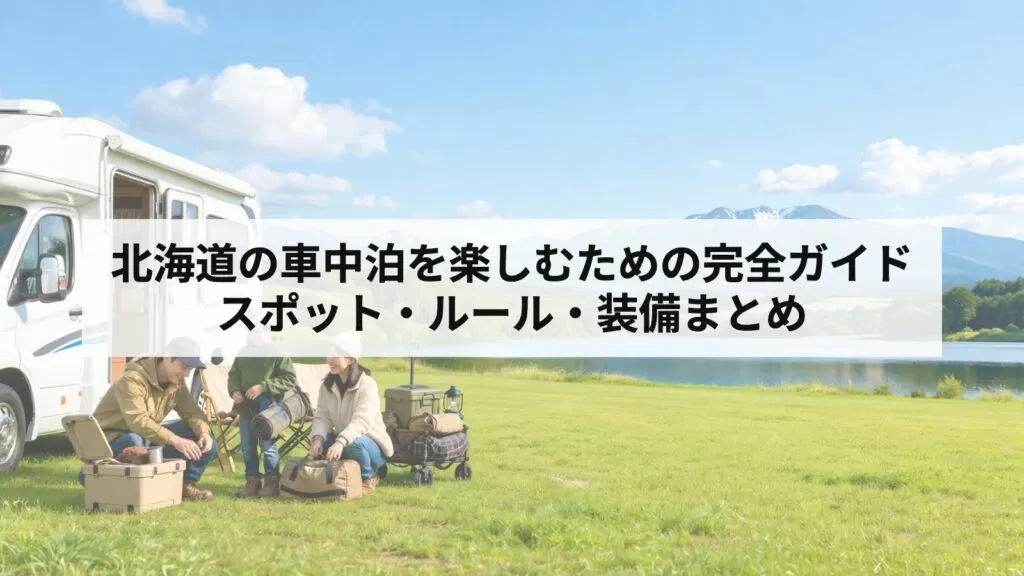
Can you sleep in your vehicle at a Hokkaido roadside station (michi no eki)? Here is the short answer first. The Ministry of Land, Infrastructure, Transport and Tourism states that resting in your vehicle to recover from fatigue during a drive is fine, but overnight accommodation use of public spaces such as parking lots is, in principle, something the ministry asks visitors to refrain from (source). In other words, the ministry draws a line between a brief nap and staying the night. Building on that, we checked the official websites of 94 of Hokkaido’s 128 roadside stations, one station at a time. Not a single one explicitly banned vehicle overnight stays. One station asks visitors to refrain from it, one station bans naps inside its building only, and four stations officially advertise paid facilities built for vehicle overnight stays.
You can rent a campervan for this trip.
- Guide price (Moving Inn, New Chitose Airport, per night, tax included): HIACE van conversion from ¥22,000, Cresson Journey cab-over camper from ¥30,800. 20–30% off when booked 60–90 days ahead (official rate table, checked 15 Oct 2026)
6 Stations That Mention Overnight Stays, and the 94 We Checked
Six stations mention vehicle overnight stays on their official websites. Click a station’s name to open the official page we used.
| Roadside station (official site) | Municipality | Area | What the official site says | Checked |
|---|---|---|---|---|
| 花ロードえにわ | Eniwa-shi | Doo / Donan | The paid RV Park (RV Park Hana Road Eniwa) is officially listed. Restrooms open 24 hours | 2026-08-03 |
| 道の駅 あさひかわ | Asahikawa-shi | Dohoku / Okhotsk | Naps and overnight stays inside the building (corridors, restrooms) are prohibited. Restrooms open 24 hours | 2026-08-03 |
| 道の駅 さるふつ公園 | Sarufutsu-mura | Dohoku / Okhotsk | Officially asks visitors to refrain from staying overnight. Restrooms open 24 hours | 2026-08-03 |
| 道の駅 びえい「白金ビルケ」 | Biei-cho | Dohoku / Okhotsk | A paid camping site is officially listed | 2026-08-03 |
| 道の駅 ピンネシリ | Nakatombetsu-cho | Dohoku / Okhotsk | The adjoining auto campground with powered car sites is officially listed. Restrooms open 24 hours | 2026-08-03 |
| 道の駅 しらぬか恋問(恋問館) | Shiranuka-cho | Tokachi / Kushiro / Nemuro | The paid RV Park is officially described for overnight use. Restrooms open 24 hours | 2026-08-04 |
Other stations we checked are below. These are stations whose official website and roadside-station listing we checked (as of August 2026).
- Doo / Donan (38): 230ルスツ, YOU・遊・もり, あかいがわ, あっさぶ, あぷた, いわない, くろまつない, しかべ間歇泉公園, しりうち, しんしのつ, そうべつ情報館i, つど~る・プラザ・さわら, てっくいランド大成, とうや湖, とようら, なとわ・えさん, なないろ・ななえ, みたら室蘭(カナスチールみたら室蘭), みなとま~れ寿都, よってけ!島牧, らんこし・ふるさとの丘, ウトナイ湖, オスコイ!かもえない, サーモンパーク千歳, スペース・アップルよいち, ニセコビュープラザ, マオイの丘公園, ルート229元和台, 上ノ国もんじゅ, 北前船 松前, 北欧の風 道の駅とうべつ, 名水の郷きょうごく, 望羊中山, 横綱の里ふくしま, 江差, 真狩フラワーセンター, 石狩「あいろーど厚田」, 縄文ロマン 南かやべ
- Dohoku / Okhotsk (29): 道の駅 えんべつ富士見, 道の駅 おといねっぷ, 道の駅 おびら鰊番屋, 道の駅 おんねゆ温泉, 道の駅 かみゆうべつ温泉チューリップの湯, 道の駅 ぐるっとパノラマ美幌峠, 道の駅 しゃり, 道の駅 しらたき, 道の駅 てしお, 道の駅 なかがわ, 道の駅 にしおこっぺ花夢, 道の駅 はなやか(小清水), 道の駅 ひがしかわ「道草館」, 道の駅 びふか, 道の駅 ほっと♡はぼろ, 道の駅 もち米の里☆なよろ, 道の駅 るもい, 道の駅 わっかない, 道の駅 オホーツク紋別, 道の駅 サロマ湖, 道の駅 マリーンアイランド岡島, 道の駅 メルヘンの丘めまんべつ, 道の駅 南ふらの, 道の駅 愛ランド湧別, 道の駅 森と湖の里ほろかない, 道の駅 流氷街道網走, 道の駅 羊のまち侍・しべつ, 道の駅 遠軽 森のオホーツク, 道の駅 香りの里たきのうえ
- Tokachi / Kushiro / Nemuro (21): 道の駅 あしょろ銀河ホール21, 道の駅 うらほろ, 道の駅 うりまく, 道の駅 おだいとう, 道の駅 おとふけ(なつぞらのふる里), 道の駅 かみしほろ, 道の駅 さらべつ, 道の駅 しかおい, 道の駅 しほろ温泉, 道の駅 なかさつない, 道の駅 オーロラタウン93りくべつ, 道の駅 ガーデンスパ十勝川温泉, 道の駅 コスモール大樹, 道の駅 ステラ★ほんべつ, 道の駅 スワン44ねむろ, 道の駅 ピア21しほろ, 道の駅 厚岸グルメパーク, 道の駅 忠類, 道の駅 摩周温泉, 道の駅 知床・らうす, 道の駅 阿寒丹頂の里
Why Is It Said to Be Banned?
One reason is that the national policy comes first. Roadside stations are 24-hour rest facilities meant to prevent traffic accidents, not accommodation — so individual stations feel less need to post their own notice about it. It’s easy to see how this “please refrain” language, passed along secondhand, hardened into “banned” in people’s minds.
The other reason is that real problems have happened. At Michi no Eki Mashu Onsen (Teshikaga Town), the parking lot filled up with vehicles staying overnight during peak tourist season, leaving no space for drivers who just wanted a rest. In August 2019, the Ministry of Land, Infrastructure, Transport and Tourism, the Kushiro Wetland–Akan–Mashu Scenic Byway, and Times24 worked together on a trial: part of the lot was set aside for reservation-only use, with the proceeds put toward beautification activities.
The real issue was never “is it banned or not” — it’s whether people who want a rest can actually find a parking space. Avoiding long stays and steering clear of the busiest hours does more to reduce that friction than any rule ever could.
When You Pull In, Check the On-Site Signs First
What we checked for this article was each station’s official website.
If a station has a physical sign, that sign is the most current and correct source. Once you pull into a parking lot, check the signage first.
We’ve compiled everything you need to enjoy safe and comfortable vehicle overnight stays in Hokkaido. If you’re planning a campervan trip, be sure to check out Moving Inn’s rental vehicles as well.
3 Reasons Hokkaido Is Perfect for Vehicle Overnight Travel
Hokkaido is overwhelmingly popular as a vehicle overnight destination — and for clear reasons.
First, there’s the vast natural scenery and stunning drive routes. National Route 238 along the Sea of Okhotsk, the rolling hills of Furano and Biei, the World Heritage site of the Shiretoko Peninsula — there are countless routes that are breathtaking just to drive.
Second, Hokkaido has the most roadside stations (Michi no Eki) in Japan — around 128 — making overnight infrastructure excellent throughout the island.
Third, there’s the abundance of hot springs and local food. Day-use onsen are available across the island, perfect for unwinding after a night in your vehicle. Sampling fresh seafood and Jingisukan lamb is one of the distinct pleasures of a road trip here.
Types of Places to Stay Overnight in Hokkaido
There are four main categories of places where overnight vehicle stays are possible. Understand the features and rules of each to find the right fit for your trip.
Roadside Stations (Michi no Eki) — For Brief Rests
Hokkaido has around 128 roadside stations, but not all permit overnight stays. According to the Ministry of Land, Infrastructure, Transport and Tourism, the parking lots at roadside stations are classified as “rest facilities” — not accommodation. Brief rests to recover from long-distance driving are permitted, but camping activities such as setting up tents or unfolding tables are prohibited. Policies vary by station, so check the official site or on-site signage before you go. We reviewed the official websites of 94 of Hokkaido’s 128 roadside stations (39 in central/southern Hokkaido, 22 in Tokachi/Kushiro/Nemuro, 33 in northern Hokkaido/Okhotsk) and found none that explicitly banned overnight parking. One exception: Michi no Eki Sarufutsu Park asks visitors to refrain from using its parking lot for overnight stays, though this is a request rather than a ban. Michi no Eki Asahikawa also restricts overnight use of its indoor 24-hour facilities (hallways, restrooms), but that wording targets the building interior, not overnight parking. Paid, RV-friendly sites were confirmed at four stations: RV Park Hana Road Eniwa, Shiranuka Koitoi, Biei Shirogane Birke, and Pinneshiri.
RV Parks
Certified by the Japan RV Association, these are paid facilities specifically designed for vehicle overnight stays. Standard amenities include power hookups, 24-hour restrooms, and garbage disposal services. Hokkaido has several, including “RV Park Hana Road Eniwa” and “Ebetsu RV Park,” where you can rest with confidence. Rates typically run ¥2,000–¥4,000 per night, and they’re especially well-suited for campervans. For details on toilet systems and waste disposal, see “The Complete Guide to Campervan Toilets.”
Auto Campgrounds
Campgrounds with drive-up sites are another option for overnight vehicle stays. They tend to have full amenities including cooking areas, showers, and laundry facilities, and since they’re reservation-based, you’re guaranteed a spot even during busy periods. Hokkaido has over 300 campgrounds, including spectacular locations along Lake Toya, Lake Shikotsu, and forested areas in northern Hokkaido.
Public Parking Lots and Park Parking Areas
Some public parking lots quietly tolerate overnight vehicle stays, but rules vary by municipality, and late-night restrictions are common. Toilet and water access is often limited, making this a less recommended option for beginners. Always confirm the facility’s rules before using it this way.
Rules and Etiquette for Vehicle Overnight Stays
In recent years, more and more facilities have completely banned overnight stays due to rule violations. To protect this travel culture, please follow these rules.
No Idling
Running the engine for extended periods causes noise and exhaust that inconveniences those around you. In summer, use a portable fan; in winter, rely on a sleeping bag or electric blanket. Come prepared with gear that lets you stay comfortable with the engine off.
Take Your Trash and Don’t Cook Outside
Leaving trash behind is the leading cause of overnight stay bans. Trash bins at roadside stations and RV parks are for facility users, not campers’ waste. Always take your garbage with you. BBQs, cooking equipment, and setting up tables and chairs in parking lots are also prohibited in most locations.
Don’t Stay Multiple Nights or Take Up Excessive Space
Staying multiple nights in the same spot or taking up a large footprint is inconsiderate to other users — this is basic roadside station etiquette. Also avoid hanging laundry outside or spreading personal items around the vehicle.
Seasonal Considerations and Essential Gear
Hokkaido’s climate varies dramatically by season. Prepare gear suited to the time of year for a comfortable and safe overnight experience.
Summer (June–September)
The best season for vehicle overnight stays in Hokkaido. Much cooler than Honshu, with most nights comfortable without air conditioning. Long daylight hours mean more time for sightseeing. That said, roadside stations and campgrounds get crowded during the July–August peak, so aim to arrive early. Don’t forget insect repellent and window screens.
Winter (November–March)
Inland Hokkaido can drop below -20°C — this is an advanced-level season. The biggest danger is carbon monoxide poisoning: if snow buries the exhaust pipe, fumes can back up into the vehicle. Never sleep with the engine running. Essential gear includes window insulation sheets, a winter mummy sleeping bag (rated to -15°C or lower), a portable power station, and an electric blanket. Don’t forget studded snow tires and winter wiper blades.
Seasonal Gear Checklist
| Gear | Summer (Jun–Sep) | Winter (Nov–Mar) |
|---|---|---|
| Sleeping bag | 3-season bag | Winter bag (rated -15°C or lower) |
| Insulation shade | Useful for blocking sun | Essential (blocks cold) |
| Portable power station | Fan and lighting | Electric blanket and heater (high capacity recommended) |
| Insect repellent | Essential (spray + window screen) | Not needed |
| Tires | Standard tires OK | Snow tires essential |
| Warm clothing | Light jacket | Down jacket + layering |
| Water and food | Bring extra | Insulated bottles recommended to prevent freezing |
Day-Use Hot Springs Near Vehicle Overnight Spots in Hokkaido
Pairing a vehicle overnight stay with a hot spring is a classic Hokkaido combination. Day-use onsen facilities are scattered throughout the island, conveniently located near overnight spots. Here are standout options by area.
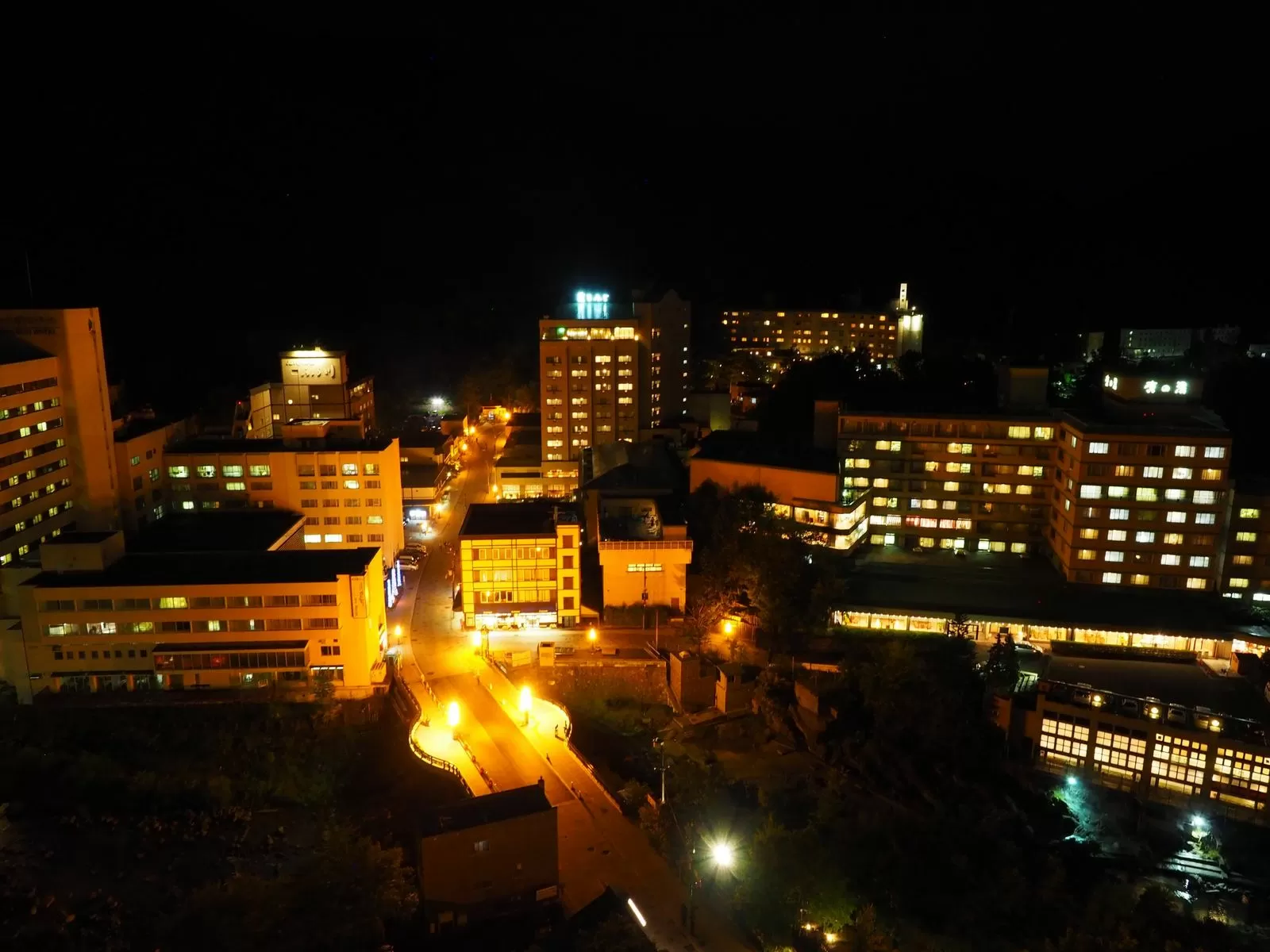
Central Hokkaido – Sapporo Area
| Facility | Location | Features | Price (approx.) |
|---|---|---|---|
| Toyohira-kyo Onsen | Minami-ku, Sapporo | Natural flow, famous for Indian curry, late-night hours | From ¥900/adult |
| Jozankei Onsen (various) | Minami-ku, Sapporo | Many ryokan with day-use bathing, riverside open-air baths | Varies by facility |
| Kita no Tamayura (multiple locations) | Various in Sapporo | 24-hour operation, convenient base for overnight trips | From ¥660/adult |
| Kogane-yu Onsen Matsuno-yu | Minami-ku, Sapporo | Natural flow, quiet setting, near a roadside station | From ¥600/adult |
Central Hokkaido – Lake Toya / Niseko Area
| Facility | Location | Features | Price (approx.) |
|---|---|---|---|
| Toya Lake Manseikaku Hotel Lake (day-use) | Toyako-cho, Abuta-gun | Lakeside open-air bath, day-use bathing available | From ¥1,000/adult |
| Sobetsu Onsen Ikoi-so | Sobetsu-cho, Usu-gun | Local public bath, affordable and casual | From ¥400/adult |
| Niseko Kombu Onsen Koikawa Onsen Ryokan (day-use) | Niseko-cho, Abuta-gun | Natural flow, sulfur spring, snowy outdoor bath | From ¥600/adult |
| Yumoto Onsen Hotel Kanro no Mori (day-use) | Rankoshi-cho, Isoya-gun | Niseko area, scenic outdoor bath, popular in winter | From ¥800/adult |
Northern Hokkaido – Asahikawa / Furano Area
| Facility | Location | Features | Price (approx.) |
|---|---|---|---|
| Asahidake Onsen (Hotel Bear Monte, etc.) | Higashikawa-cho | At the foot of Daisetsuzan, high elevation, grand scenery | Varies by facility |
| Tokachidake Onsen (Ryounkan) | Kamifurano-cho | Elevation 1,280m, one of Japan’s highest outdoor baths | From ¥800/adult |
| Fukiage Roten no Yu | Kamifurano-cho | Free outdoor bath, mixed bathing, open from early morning | Free |
| Sounkyo Onsen (various) | Kamikawa-cho | Columnar-jointed canyon, several ryokan with day-use bathing | From ¥600/adult |
Eastern Hokkaido – Kushiro / Akan / Shiretoko Area
| Facility | Location | Features | Price (approx.) |
|---|---|---|---|
| Lake Akan Onsen (various) | Akan-cho, Kushiro | Famous for marimo, some ryokan with day-use bathing | From ¥700/adult |
| Kawayu Onsen (various) | Teshikaga-cho | Strongly acidic sulfur spring, foot bath, near a roadside station | From ¥500/adult |
| Mashu Onsen (Teshikaga-cho) | Teshikaga-cho | Adjacent to Michi no Eki Mashu Onsen, easy access | From ¥460/adult |
| Utoro Onsen (various) | Shari-cho | Gateway to Shiretoko, some facilities offer day-use bathing | From ¥800/adult |
| Kuma no Yu | Rausu-cho | Free outdoor bath, gender-separated, on the hotter side | Free |
Southern Hokkaido – Hakodate Area
| Facility | Location | Features | Price (approx.) |
|---|---|---|---|
| Yachigashira Onsen | Hakodate | City-run, affordable, at the foot of Mt. Hakodate, open from 6am | ¥450/adult |
| Yunokawa Onsen (various) | Hakodate | Near Hakodate Airport, many ryokan with day-use bathing | Varies by facility |
| Ginkon-yu | Yakumo-cho | Secluded feel, many outdoor baths, day-use available | From ¥900/adult |
| Onuma Park Onsen (various) | Nanae-cho | Easy to combine with Onuma sightseeing, key stop in southern Hokkaido | Varies by facility |
Free outdoor baths like Fukiage Roten no Yu and Kuma no Yu have their own management styles and etiquette norms. Check the latest information and local rules before visiting. Hours and prices at day-use onsen can change, so always verify current details on each facility’s official site before heading out.
Mt. Tokachidake has been at Volcanic Alert Level 3 (entry restrictions) since September 12, 2026. Prefectural Route 966 beyond Bogakudai is closed to traffic, so if you are heading toward Tokachidake Onsen or Fukiage Onsen, check the Japan Meteorological Agency volcano information for Tokachidake and the latest notices from Biei Town and Kamifurano Town (checked 2026-10-08).
Compare Hokkaido Campervan Rentals
Base yourself at New Chitose Airport and compare rates, vehicle types, and pickup locations all in one place.
Compare Rental Companies and Rates →Campervans Make Vehicle Overnight Stays Even Better
In a regular car, you have to fold the seats down and carve out a sleeping space. In a campervan, a bed, kitchen, and storage are built in from the start. Many models also have excellent insulation, making them comfortable even in Hokkaido winters.
If the idea of buying feels like a big leap, renting is a great way to start. You get everything you need already set up — so even first-timers can jump into a vehicle overnight trip with confidence. For license requirements, see “Driving Licenses for Campervans“; for rental cost estimates, see “Campervan Rental Rates.” Moving Inn offers a wide lineup of campervans ideal for Hokkaido overnight travel. Check the rental page for equipment details and pricing.
Bear Safety and Crime Prevention Specific to Hokkaido
Hokkaido has some considerations that don’t apply to vehicle overnight stays on Honshu. Especially in parking areas near brown bear habitat, careful food management and up-to-date information are essential.
Brown Bear (Higuma) Safety
In parking areas near forests and mountains — around Shiretoko, Rausu, Akan, and Lake Shikotsu — brown bear sightings are sometimes reported. Bears are often drawn by the smell of food or garbage, so always keep food in sealed containers and store it inside the vehicle, ideally somewhere with limited scent exposure such as the trunk. Never leave cooking scraps or food waste outside the vehicle. Before your trip, check the latest sighting areas on each municipality’s or roadside station’s official site, or on the Hokkaido government’s “Brown Bear Sighting Information” page. Some vehicle overnight travelers also carry a bear bell (roughly 500–2,000 yen) or bear spray.
Crime Prevention
Free parking lots with little foot traffic or no street lighting carry some risk of car break-ins. Where possible, choose spots with other vehicle overnight travelers around, such as roadside stations or RV parks, where more eyes are on the area. Always check that the doors are locked before sleeping, and use insulated shades or curtains so the inside of the vehicle isn’t fully visible from outside — this also helps with security. Solo female travelers may feel more at ease basing themselves near a 24-hour facility.
A Sample First-Day Plan for Your Vehicle Overnight Trip
For those trying a vehicle overnight stay in Hokkaido for the first time, here’s a sample schedule for day one starting from New Chitose Airport. The key is to build in plenty of travel-time buffer and not push too hard on arrival day.
| Time | Activity |
|---|---|
| 10:00–11:00 | Arrive at New Chitose Airport; pick up your rental car / campervan |
| 11:00–12:00 | Stock up on food and water at a nearby supermarket or convenience store |
| 12:00–15:00 | Sightseeing / driving (keep the distance short on day one) |
| 15:00–17:00 | Unwind at a day-use hot spring |
| 17:00–18:00 | Arrive at your overnight spot; scout the area and choose a parking position |
| 18:00 onward | Dinner and bedtime prep (finish setting up while it’s still light out) |
A common first-night mistake is packing in too much sightseeing, arriving late, and settling in without ever seeing the parking spot or surroundings in daylight. Especially at a roadside station you haven’t used before, arriving while it’s still light lets you check restroom locations, nearby traffic noise, and whether the area is lit at night — all of which make for a much more reassuring night’s sleep.
Practical Tips for Insects and Condensation
Two things that make or break comfort during a Hokkaido vehicle overnight stay are insects and condensation. A single extra piece of gear can make a big difference to how well you sleep.
Insect Countermeasures
Summer in Hokkaido brings not just mosquitoes but also biting midges (buyo), whose bites tend to swell and itch more than mosquito bites on Honshu. When you want to open a window for airflow, a mesh window shade sized for your vehicle — sold ready-made for various vehicle types — works well. Choose insect repellent containing DEET, and reapply during the morning and evening hours when insects are most active.
Condensation Countermeasures
Hokkaido’s wide temperature swings — especially from autumn into winter — make window condensation common inside the vehicle. Left unchecked, it can lead to mold on the windows or damp bedding. Anti-condensation window sheets (the stick-on type), or in-vehicle dehumidifiers and dehumidifying sheets, are an easy fix. Simple habits help too: crack a vent to bring in outside air, or air out the cabin briefly before bed so moisture doesn’t build up. In winter, the insulated shades mentioned above also help control condensation.
Practice your route in a game: In Hokkaido Sugoroku, a free browser board game, every square is a real RV park or campground where you can stay the night, and the roads and distances are real. You drive up to 200 km a day, just like a safe real trip. (How to play)
FAQ
Q. Can I do a vehicle overnight stay at a Hokkaido roadside station?
Roadside station parking lots are classified as rest facilities — staying for accommodation purposes is not, in principle, intended. Brief rests are permitted, but rules vary by facility. Check the official site in advance to be safe. For a more comfortable night’s stay, an RV park or auto campground is a better choice.
Q. What gear do I need for vehicle overnight stays in Hokkaido?
In summer, a 3-season sleeping bag, insect repellent, and a portable power station are enough for a comfortable stay. In winter, a winter-rated sleeping bag, insulation shade, electric blanket, and snow tires are essential. Year-round, bring a flashlight, towels, and drinking water.
Q. Is it dangerous to do a vehicle overnight stay in Hokkaido in winter?
Attempting winter overnight stays without proper gear and knowledge is genuinely dangerous. Carbon monoxide poisoning and hypothermia are real risks. Equip yourself properly, always check the weather forecast, and be ready to cancel if heavy snow is expected. Beginners are advised to start with the summer season.
Q. What are the best areas for vehicle overnight stays in Hokkaido?
For beginners, central Hokkaido (Sapporo–Otaru–Niseko) is recommended. Roadside stations and RV parks are clustered here, and convenience stores and gas stations are easily accessible. For more experienced travelers, eastern Hokkaido (Shiretoko, Lake Akan) and northern Hokkaido (Wakkanai, Cape Soya) offer immersive natural settings.
Q. Can I do vehicle overnight stays with a rental campervan?
Yes, absolutely. Campervans come with a bed, kitchen, and storage as standard — they’re purpose-built for this. With a rental, everything comes set up and ready to use, making it accessible even for first-timers.
If this is your first campervan trip overall, the Campervan Beginner’s Guide covers the booking process and how to prepare.
Official Information on Roadside Station Vehicle Overnight Stays (Confirm Before You Go)
To answer the key question up front — where can you reliably stay: four roadside stations officially describe paid facilities for campervans / vehicle overnight stays: Hana Road Eniwa (Eniwa City), Shiranuka Koitoi (Shiranuka Town), Biei Shirogane Birke (Biei Town), and Pinneshiri (Nakatombetsu Town). At these four, following the official guidance means you don’t have to second-guess whether staying is allowed.
If you’re resting at a roadside station other than the four listed above, keep it strictly to a brief rest, and check that facility’s official site or on-site notices before you go. Below are six of the roadside stations most often mentioned online, with what their official sites say. This information can change, so confirm with each facility’s official site or on-site notices before your visit.
| Roadside station | Region | What the official site says |
|---|---|---|
| Mashu Onsen (Teshikaga) | Doto (East) / Kushiro | 24-hour restrooms |
| Biei Shirogane Birke | Dohoku (North) / Kamikawa | Paid campervan sites for vehicles up to 12 m (power, water, showers, laundry; spring to autumn) |
| Niseko View Plaza | Doo (Central) / Shiribeshi | 24-hour restrooms (in some restroom buildings) |
| Wakkanai | Dohoku (North) / Soya | 24-hour restrooms |
| Lake Saroma | Doto (East) / Okhotsk | 24-hour restrooms |
| Akaigawa | Doo (Central) / Shiribeshi | Closed since April 1, 2026 (no designated manager) |
Roadside stations are rest facilities. Setting up tents, using cooking equipment, running generators, or leaving trash behind all interfere with the parking lot’s intended users (sightseers and rest-stop drivers), so avoid them.
One exception: Michi no Eki Sarufutsu Koen (Sarufutsu Village) explicitly states on its official site, “Please refrain from using the ‘roadside station’ for accommodation purposes.” This is a request for restraint, not an outright ban. Separately, Michi no Eki Asahikawa (Asahikawa City) has language prohibiting “resting or staying overnight in 24-hour facilities (corridors, restrooms, etc.)” — but this applies to indoor facilities, not to vehicle overnight stays in the parking lot itself. The only roadside stations we could officially confirm as offering an RV park or equivalent paid facility for vehicle overnight stays are Hana Road Eniwa (Eniwa City), Shiranuka Koitoi (Shiranuka Town), Biei Shirogane Birke (Biei Town), and Pinneshiri (Nakatombetsu Town).
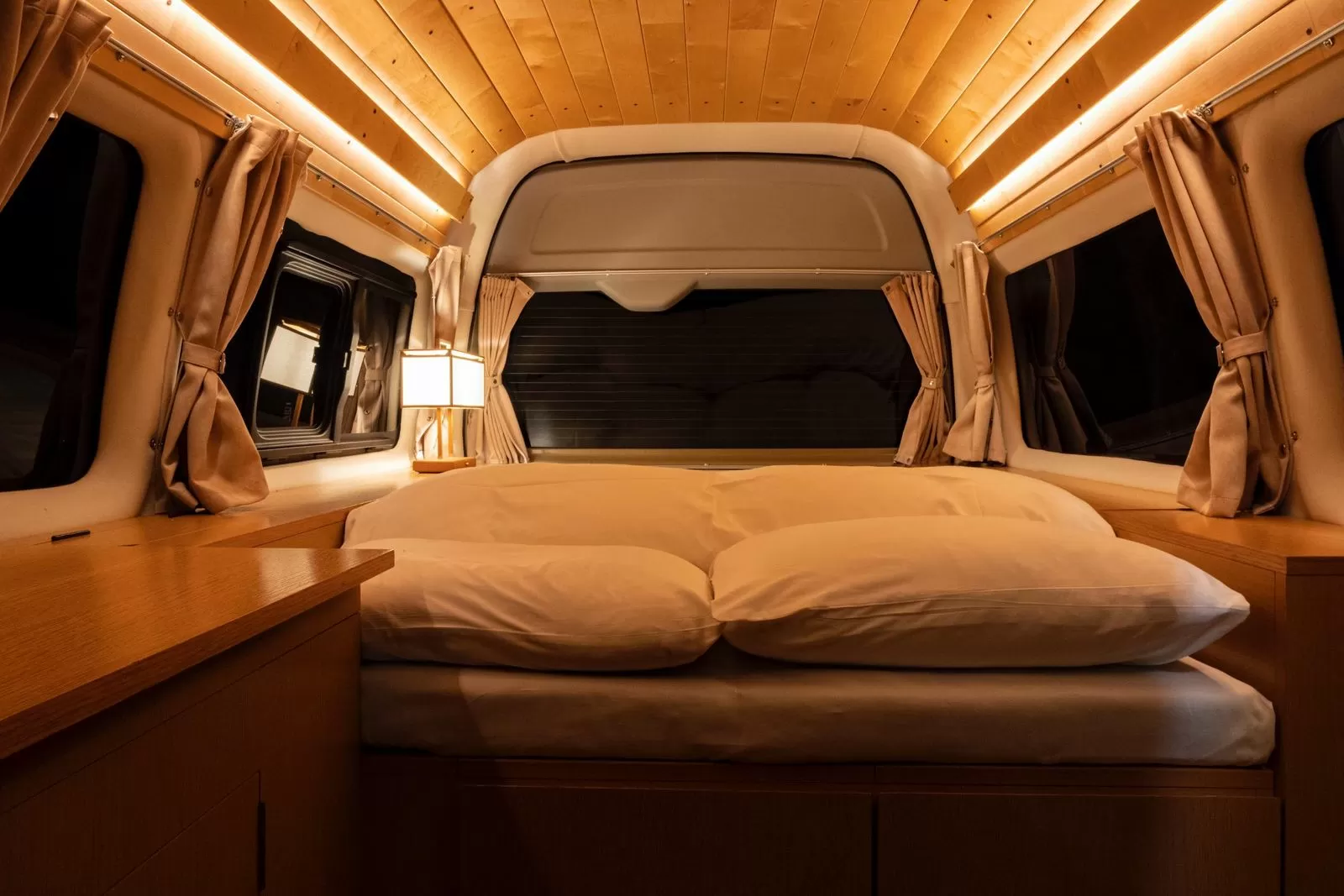
Moving Inn New Chitose Airport — Your Starting Point for a Hokkaido Vehicle Overnight Trip
About 10 minutes by car from New Chitose Airport (CTS), with shuttle service available. Rent a campervan equipped for roadside station rests, RV park stays, or campgrounds alike. Rates start from 20,000 yen per night, with long-stay plans available for 7+ nights.
See Moving Inn New Chitose Airport Details →Summary
Hokkaido is packed with everything that makes vehicle overnight travel rewarding. A rich variety of overnight spots — roadside stations, RV parks, auto campgrounds — and spectacular scenery that changes with the seasons. Respect the rules, bring the right gear for the time of year, and you’ll have a safe, comfortable trip.
Use this guide to start planning your Hokkaido campervan overnight adventure. Book a Moving Inn rental here.
※ Information in this article is current as of March 2026. Facility hours and rules are subject to change. Please check the latest details before your trip.
![When and Where Can You See Harbor Seals at Cape Erimo? Kaze no Yakata Official Information, Viewing Season, and Windy-Day Notes [2026-27]](https://hokkaido-campingcar.jp/wp-content/uploads/2026/10/erimo-cape-lighthouse-768x511.jpg.webp)
![Where and Under What Conditions Can You See Diamond Dust in Hokkaido? How Cold a Morning It Takes, and Where It Appears [2026-27]](https://hokkaido-campingcar.jp/wp-content/uploads/2026/10/hokkaido-diamond-dust-nayoro-768x512.jpg.webp)
![Can You Drive to Hokkaido Jingu for Hatsumode? Parking, Crowds, and Where to Park and Walk [2027]](https://hokkaido-campingcar.jp/wp-content/uploads/2026/10/hokkaido-jingu-winter-torii-768x504.jpg.webp)
![Hokkaido Roads Over New Year [2026-27] | Expressway Sections Prone to Blizzard Closures, Forecast Congestion Days, No Holiday Discount, and New Chitose Airport Parking](https://hokkaido-campingcar.jp/wp-content/uploads/2026/10/hokkaido-winter-rural-road-edge-markers-768x432.jpg.webp)
![Where to See Sea Smoke (Kearashi) in Hokkaido: Rumoi’s Ogon-misaki and the Morning Conditions [2026-27]](https://hokkaido-campingcar.jp/wp-content/uploads/2026/10/rumoi-kearashi-sea-smoke-768x511.jpg.webp)
![Geminid Meteor Shower 2026 in Hokkaido: Peak Around 23:00 on December 14, Sapporo Moonset 20:40, and Staying Warm in a Winter Campervan [2026]](https://hokkaido-campingcar.jp/wp-content/uploads/2026/10/geminids-2026-hokkaido-768x575.jpg.webp)