When and Where Can You See Harbor Seals at Cape Erimo? Kaze no Yakata Official Information, Viewing Season, and Windy-Day Notes [2026-27]
Harbor seals at Cape Erimo: telescopes inside Kaze no Yakata, March–November; pups until mid-June; closed Dec–Feb. Hours, fees, wind (verified 2026-10-14).
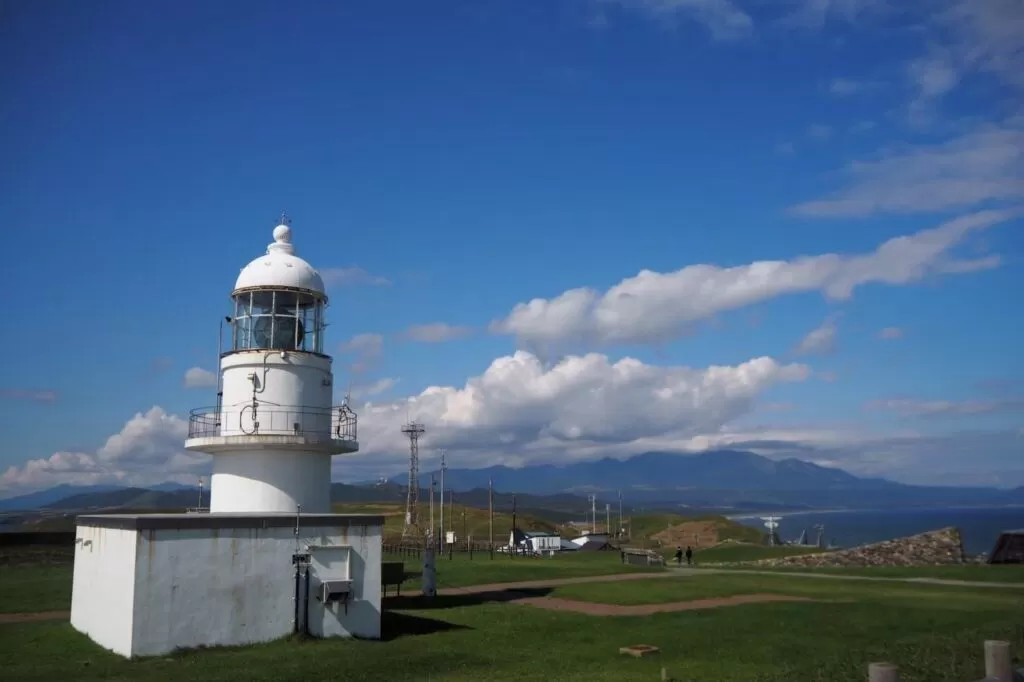
You can see the harbor seals at Cape Erimo through the TV-style telescopes inside Kaze no Yakata (Erimo Wind Museum) from March to November, when it is open. Spring is the pupping season, and the Kaze no Yakata official page says you can watch pups and their care until around mid-June. Kaze no Yakata is closed in December, January and February, so you cannot use the telescopes inside during those months (Kaze no Yakata: opening hours and admission fees, verified 2026-10-14).
This article is for people deciding which month to visit. It covers “when,” “where,” “until what time Kaze no Yakata is open and how much it costs,” and “what happens on windy days,” using only official information from Kaze no Yakata, the Japan Meteorological Agency and the Ministry of the Environment.
Compare Hokkaido campervan rentals
Base yourself at New Chitose Airport and compare rates, vehicle types, and pickup locations all in one place.
Compare rental companies and vehicles →When can you see the seals at Cape Erimo? The indoor telescopes are available March to November, and pups until around mid-June
The Kaze no Yakata official website describes Cape Erimo as “Japan’s largest habitat of harbor seals” and says “you can easily observe harbor seals from inside the building using TV-style telescopes and other equipment” (Kaze no Yakata: official top page, verified 2026-10-14). You can see them indoors during the period when Kaze no Yakata is open.
The seal watching information page says spring is the harbor seal pupping season, with about 70 pups born every year, and that you can watch the pups and their care until around mid-June (Kaze no Yakata: harbor seal watching information, last updated March 16, 2017, verified 2026-10-14). This page was last updated in 2017. Please check with Kaze no Yakata (tel. 01466-3-1133) before you leave for the situation this season.
| Month | Can you see them indoors? (Kaze no Yakata official) | What the official pages say |
|---|---|---|
| March–April | Open (9:00–17:00, last entry 16:30) | Spring is the pupping season. Pups can be observed until around mid-June |
| May–June | Open (9:00–18:00, last entry 17:30) | Pups and their care can be seen until around mid-June. The tagging survey takes place in mid-June every year |
| July–August | Open (9:00–18:00, last entry 17:30) | Visible through the TV-style telescopes and the exhibition monitor inside |
| September–November | Open (9:00–17:00 in September, October and November, last entry 16:30) | Visible through the TV-style telescopes and the exhibition monitor inside |
| December–February | Closed (open only 5:00–8:00 on January 1) | The telescopes inside cannot be used |
For March to November, Kaze no Yakata states: “We are open every day during this period, but please note that we may close temporarily in severe weather.” On rough-weather days it may not be open.
Where can you see the seals? The TV-style telescopes at Kaze no Yakata, and the reefs off the tip of the cape
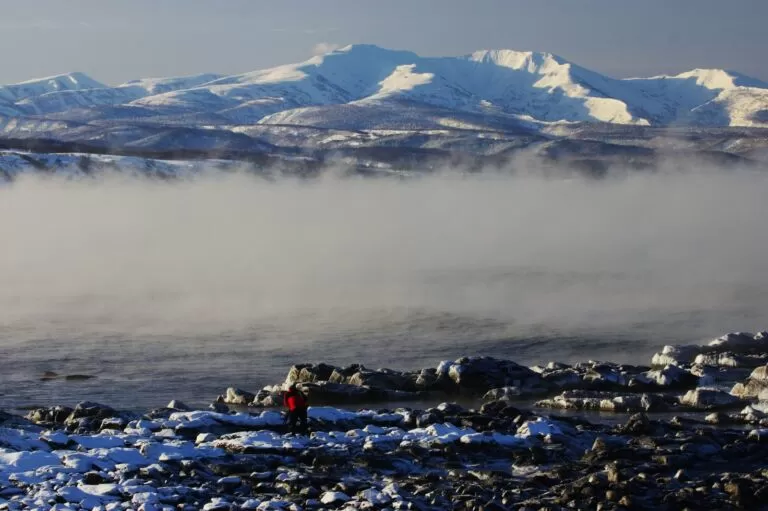
Regarding the area around Cape Erimo, a Ministry of the Environment document explains that dozens of reefs line up for about 1.5 km southeast from the tip of the cape, and that seals haul out on a dozen or so reefs beyond their midpoint, such as Rosoku-iwa and Tokkari-iwa. The same document calls the area around Cape Erimo “Japan’s largest haul-out site for harbor seals.” Note that this document is a draft titled “Erimo Region Harbor Seal Specified Rare Wildlife Management Plan (Phase 3) [draft]” (Ministry of the Environment, Hokkaido Regional Environment Office: document on the draft Management Plan (Phase 3) (PDF), verified 2026-10-14).
The place officially described for viewing is Kaze no Yakata. In the “Seal Watching” feature in Exhibition Zone B, the rocky reef area of Cape Erimo is shown in real time, and you operate the panel in front of you to look for seals. When fog hides the cape or the seals are not on the rocks, you can watch footage on the neighboring monitor (Kaze no Yakata: exhibition zones, last updated May 18, 2017, verified 2026-10-14).
In other words, even on days when no seals are on the reefs, the setup lets you see footage inside the building.
Until what time is Kaze no Yakata open? How much is admission?
There are two sets of opening hours depending on the month. From May to August it is 9:00–18:00 (last entry 17:30); in March, April, September, October and November it is 9:00–17:00 (last entry 16:30). Admission for individuals is ¥300 for adults and university students, ¥200 for elementary, junior high and high school students, and free for young children (Kaze no Yakata: opening hours and admission fees, last updated July 22, 2024, verified 2026-10-14).
| Category | Adults and university students | Elementary, junior high and high school students | Young children |
|---|---|---|---|
| Individual | ¥300 | ¥200 | Free |
| Group (15 or more) | ¥240 | ¥160 | Free |
| Annual pass (valid for 1 year from the date of purchase) | ¥600 | ¥400 | N/A |
If you will arrive in the late afternoon, note that the last entry is 30 minutes before closing. From September to November, you cannot enter after 16:30.
Can you not see the seals in winter (December to February)? Kaze no Yakata is closed
Kaze no Yakata is closed in December, January and February. The exception is January 1, when it opens only from 5:00 to 8:00 for the first sunrise of the year (Kaze no Yakata: opening hours and admission fees, verified 2026-10-14). In winter, the method of viewing seals through the telescopes inside is not available.
If you go in winter, do not plan your trip on the assumption that you will see seals until you have checked with Kaze no Yakata by phone.
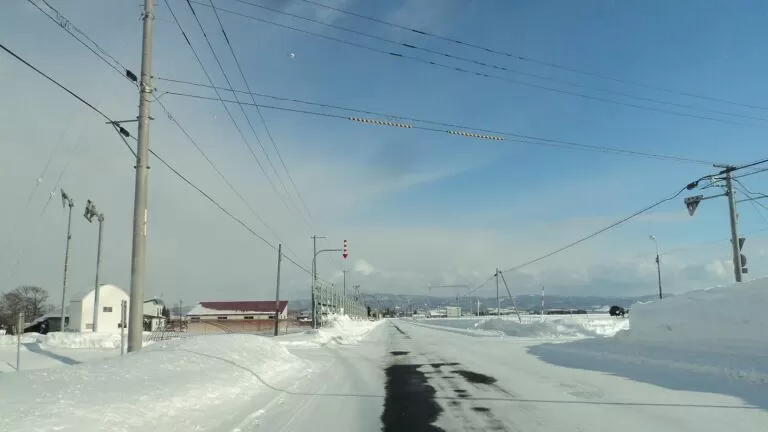
Winter road conditions are covered in a separate article. For how to think about closures of the national highway to Cape Erimo and nearby roads, see Hokkaido Roads That Close in Winter: Closure Periods and Detour Routes.
What are the baby seals in spring and the mid-June tagging survey?
According to the Kaze no Yakata official page, a harbor seal tagging survey is carried out every year in mid-June with permission from the Ministry of the Environment. It collects basic data for protection and management, and is conducted jointly by groups such as the Erimo Seal Club, the Obihiro University of Agriculture and Veterinary Medicine Harbor Seal Research Group, and the Hireashi Research Group. A marker patch is attached to the head, and it is said to come off when the molting season arrives (Kaze no Yakata: harbor seal watching information, verified 2026-10-14).
The pup observation period is written as “until around mid-June,” so if you are going to see pups, plan to visit before mid-June has passed and check directly with Kaze no Yakata.
What happens on foggy or stormy days? The exhibition monitor and the live camera
The Kaze no Yakata exhibition zone page says that footage is shown on the neighboring monitor for days when fog hides the cape or the seals are not on the rocks (Kaze no Yakata: exhibition zones, verified 2026-10-14). Even if you visit on a foggy day, you can see footage of the seals inside the building.
As for the live camera, an announcement on December 24, 2014 said “footage from the seal observation camera can now be streamed live” (Kaze no Yakata: seal observation camera), while a notice dated December 21, 2018, “[Notice] Suspension of the Cape Erimo live camera stream,” is posted on the official top page. The summary on the top page says “because the video equipment broke down, streaming will be suspended for the time being…” (Kaze no Yakata: official top page, verified 2026-10-14).
How strong is the wind at Cape Erimo? Monthly average wind speed and “more than 260 days a year”
The Kaze no Yakata official top page describes Cape Erimo as “one of Japan’s windiest areas, with winds of 10 meters per second or more blowing on more than 260 days a year.” It says that in the “Erimo Wind Experience” inside the building you can experience a strong wind of 25 meters per second (Kaze no Yakata: official top page, verified 2026-10-14).
According to the monthly normals (1991–2020) for the Japan Meteorological Agency AMeDAS station “Erimo-misaki,” the annual average wind speed is 8.1 m/s. Winds are strongest in winter: 10.8 m/s in December, followed by 9.9 m/s in January and 9.8 m/s in November. In May to August, when you would go to see the seals, it is 6.4–7.2 m/s, which is a calm period within the year (Japan Meteorological Agency: Past Weather Data Search, Erimo-misaki normals, verified 2026-10-14). The figures in the table are typical values for a normal year, not the forecast for the day.
| Month | Average wind speed (m/s) | Average temperature (°C) |
|---|---|---|
| January | 9.9 | -1.8 |
| February | 9.2 | -2.2 |
| March | 8.7 | 0.1 |
| April | 7.5 | 3.4 |
| May | 7.2 | 7.2 |
| June | 6.7 | 11.1 |
| July | 6.4 | 15.2 |
| August | 6.5 | 17.7 |
| September | 7.1 | 16.9 |
| October | 8.1 | 12.5 |
| November | 9.8 | 6.8 |
| December | 10.8 | 1.0 |
| Year | 8.1 | 7.4 |
Before you leave, check the wind using the Japan Meteorological Agency forecast and road information.
How far is it by car from New Chitose Airport or Obihiro? Where can you stay?
The Kaze no Yakata access page gives approximate figures for travel by private car: about 200 km and about 3 hours 30 minutes from Chitose Airport; about 235 km from Sapporo (about 4 hours using expressways, about 4 hours 30 minutes on ordinary roads); and about 130 km and about 2 hours from Obihiro (Kaze no Yakata: access, last updated April 27, 2021, verified 2026-10-14). These are the approximate figures given in the official guide.
For the drive itself, including distances along the Hidaka coast at about 200 km a day and where to stop overnight, see Chitose Airport to Cape Erimo by Campervan: Hidaka Coast Drive at 200 km a Day.
The official notes on places to stay around Cape Erimo, Hyakunin-hama Auto Campsite, and sleeping in a vehicle are collected in Can You Sleep in a Vehicle at Cape Erimo? Official Notes from Kaze no Yakata, Hyakunin-hama Auto Campsite, and Places to Stay.
New Chitose Airport · Tokachi-Obihiro Airport
See Moving Inn campervans
Check vehicle types, rates, and availability on the official site.
See details at Moving Inn →Here are the points to check before you leave.
- Whether the month you are going is between March and November (Kaze no Yakata is closed from December to February)
- Kaze no Yakata’s opening hours and last entry (17:30 from May to August; 16:30 in March, April and September to November)
- The weather and wind on the day, and whether it is closed temporarily because of severe weather (Kaze no Yakata, tel. 01466-3-1133)
- The fog forecast (on foggy days you will see footage on the monitors inside)
- The drive back. If you plan to drive after sunset, first check the hours when collisions with Ezo deer increase
On that last point, you can check the autumn hours when collisions with Ezo deer increase in When Do Ezo Deer Collisions Increase in Hokkaido? Autumn Peak Hours and Places, and Who to Contact.
How many seals are there in Japan? What the Ministry of the Environment document says
The document “Erimo Region Harbor Seal Specified Rare Wildlife Management Plan (Phase 3) [draft]” from the Ministry of the Environment, Hokkaido Regional Environment Office, contains the following. In the 1970s the confirmed number of individuals fell to fewer than 400 across Hokkaido, but it then increased, and the maximum number hauled out along the Hokkaido coast recovered to 1,089 in 2008 (Ministry of the Environment: document on the draft Management Plan (Phase 3) (PDF), verified 2026-10-14).
The same document explains the course of events: in August 2012 the assessment changed from Endangered IB to Vulnerable (II), and in September 2015 the Ministry of the Environment’s Red List review committee judged that Near Threatened was appropriate. The Phase 3 plan runs from April 1, 2025 to March 31, 2030, and the aim of management is to reduce fishery damage while preventing the seals from returning to the endangered category. The document also notes that the seals are used as a tourism resource.
The document is a draft, so please check the Ministry of the Environment’s publications for the figures and wording of the final version. The number is the “maximum number hauled out,” not the number at the cape at any given moment.
Frequently asked questions (FAQ)
When can you see the seals at Cape Erimo?
From March to November, when Kaze no Yakata is open, you can see them through the TV-style telescopes and the exhibition monitor inside. The official page says pups and their care can be seen until around mid-June (Kaze no Yakata: harbor seal watching information, verified 2026-10-14).
Where can you see them?
The place officially described is inside Kaze no Yakata. In the Seal Watching feature in Exhibition Zone B, you can see the reefs at the cape in real time, and when it is foggy or the seals are not on the rocks, you can watch footage on the neighboring monitor (Kaze no Yakata: exhibition zones, verified 2026-10-14).
Can you see them in winter (December to February)?
Kaze no Yakata is closed from December to February, and the telescopes inside cannot be used (Kaze no Yakata: opening hours and admission fees, verified 2026-10-14).
What are Kaze no Yakata’s opening hours and admission fees?
From May to August it is 9:00–18:00 (last entry 17:30); in March, April and September to November it is 9:00–17:00 (last entry 16:30). For individuals, admission is ¥300 for adults and university students, ¥200 for elementary, junior high and high school students, and free for young children (Kaze no Yakata: opening hours and admission fees, verified 2026-10-14).
What should you watch out for on windy days?
According to the official top page, winds of 10 meters per second or more blow on more than 260 days a year at Cape Erimo. In the AMeDAS normals, the average wind speed in May to August is 6.4–7.2 m/s, which is calm for the year, and December, at 10.8 m/s, is the windiest month (Japan Meteorological Agency: Erimo-misaki normals, verified 2026-10-14). Check the wind on the day and whether it is closed temporarily because of severe weather before you leave.
Pages to read next
- Can You Sleep in a Vehicle at Cape Erimo? Official Notes from Kaze no Yakata, Hyakunin-hama Auto Campsite, and the Hidaka and Cape Erimo Coastal Drive and Places to Stay [2026 Edition]
- 10 Places to See Wildlife in Hokkaido: Steller’s Sea Eagles, Red-crowned Cranes, Blakiston’s Fish Owls and Pikas, by Season and Region, and How to Get There and Stay by Vehicle
- Hokkaido RV Park List: Rates, Power, Hot Springs, and 38 Facilities Open in Winter [2026 Edition]
- Hokkaido Roads That Close in Winter: Closure Periods for Shiretoko Pass and More, Spring Reopening Dates, and Detour Routes [2026-27]
- When Do Ezo Deer Collisions Increase in Hokkaido? Autumn Peak Hours and Places, and Who to Contact After a Collision
Book a Campervan in Hokkaido
Moving Inn New Chitose Airport supports English booking and offers airport transfers.