When Do Deer Collisions Spike in Hokkaido? Autumn’s Worst Hours and Places, and Who to Call After a Crash
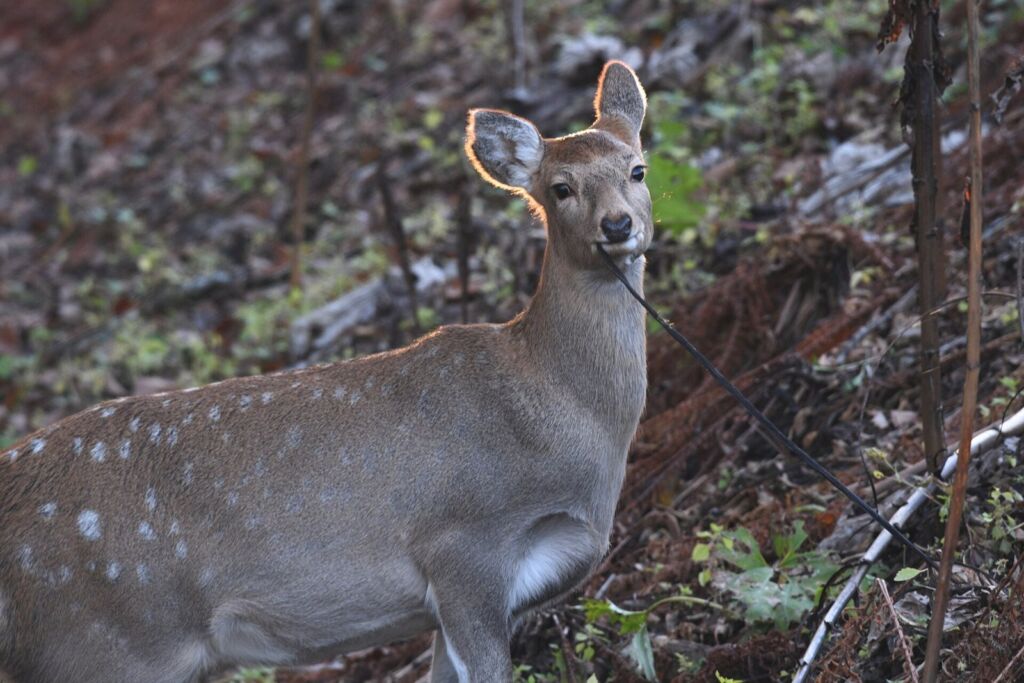
Traffic accidents involving Ezo deer (Hokkaido sika deer) in Hokkaido reached 6,705 in 2025 (Reiwa 7), according to Hokkaido Prefectural Police statistics, an increase of 1,245 from the previous year and a ninth consecutive year of record highs. October and November are the busiest months, together accounting for about 41% of the year. The peak hours are 6-8pm, with 70% of incidents concentrated between 4pm and midnight. By road type, national highways account for 60%; by police division, the Sapporo division accounts for 40% (Hokkaido Prefectural Police, “Status of Traffic Accidents Involving Ezo Deer (2025)” (PDF)).
This article translates that statistic for people driving a campervan around Hokkaido in autumn into “when, where, and what time to watch for.” It also covers what to do when a deer appears in front of you, the order in which to make phone calls after a collision (110, 119, #9910, your rental company, and insurance), and how to think about costs if a rental vehicle is involved in an accident. The figures come from public materials published by Hokkaido Prefectural Police, the Hokkaido Prefectural Government, the Hokkaido Regional Development Bureau, and the Ministry of Land, Infrastructure, Transport and Tourism, among others. All sources were checked on 2026-09-24.
Compare Hokkaido Campervan Rentals
Base yourself at New Chitose Airport and compare rates, vehicle types, and pickup locations all in one place.
Compare rental companies & vehicles →How Many Ezo Deer Accidents Happen in Hokkaido Each Year? 6,705 in 2025, A Ninth Straight Record
According to Hokkaido Prefectural Police statistics, 6,705 traffic accidents involving Ezo deer were reported between January 1 and December 31, 2025. That’s an increase of 1,245 from 5,460 the previous year (2024), a ninth consecutive year of record highs. Compared with 2004 (1,170), when records began, that’s roughly 5.7 times as many (Hokkaido Prefectural Police materials (PDF)).
This figure includes not only accidents where a vehicle directly hit a deer, but also accidents that happened while trying to avoid one. Of the total, 6,698 were property-damage accidents and 7 were injury accidents; there were no fatal accidents in 2025. Most incidents result only in vehicle damage, while the 7 injury accidents happened as a result of rear-end collisions or head-on collisions with oncoming vehicles after swerving to avoid a deer (same source).
| Year | Number of Accidents |
|---|---|
| 2004 (Heisei 16, records began) | 1,170 |
| 2017 (Heisei 29) | 2,430 |
| 2019 (Reiwa 1) | 3,188 |
| 2020 | 3,511 |
| 2021 | 4,009 |
| 2022 | 4,480 |
| 2023 | 5,287 |
| 2024 | 5,460 |
| 2025 (Reiwa 7) | 6,705 |
Note the pace of the increase too: the total passed 4,000 in 2021, passed 5,000 in 2023, and reached the 6,000s in 2025, an increase of more than 1,400 in two years. The Hokkaido Prefectural Government also notes that the figure has exceeded 2,000 every year since 2017 (Hokkaido Prefectural Government, “Preventing Traffic Accidents Involving Ezo Deer”).
Which Months Have the Most Accidents? October and November Account for About 41% of the Year
By month, October has the most accidents at 1,531 (22.8%), followed by November at 1,206 (18.0%). Together, these two months total 2,737 accidents, or 40.8% of the year. Numbers start climbing in September (616), and December (654) still runs about 1.5 times summer levels; February has the fewest, at 154 (Hokkaido Prefectural Police materials (PDF)).
| Month | Number of Accidents | Share |
|---|---|---|
| January | 245 | 3.7% |
| February | 154 | 2.3% |
| March | 226 | 3.4% |
| April | 424 | 6.3% |
| May | 402 | 6.0% |
| June | 438 | 6.5% |
| July | 421 | 6.3% |
| August | 388 | 5.8% |
| September | 616 | 9.2% |
| October | 1,531 | 22.8% |
| November | 1,206 | 18.0% |
| December | 654 | 9.8% |
This peak overlaps directly with the period when autumn foliage drives push people to cover more distance. The Hokkaido Prefectural Government explains this period by noting: “Ezo deer become more active during their breeding season in October-November, which also coincides with their migration to wintering grounds” (Hokkaido Prefectural Government page). We’ll come back to the reasons in more detail later, first, let’s look at time of day.
What Time of Day Is Riskiest? 6-8pm Is the Peak, With 70% Between 4pm and Midnight
By time of day, 6-8pm has the most accidents at 1,932 (28.8%), followed by 4-6pm at 1,506 (22.5%). Adding up 4pm to midnight gives 4,831 accidents, or 72% of the total. By day/night split, nighttime accounts for 99.5% (6,672), while daytime has only 33. There’s also a smaller peak in the early morning, with 423 accidents between 4-6am (Hokkaido Prefectural Police materials (PDF)).
| Time | Number of Accidents | Share |
|---|---|---|
| 12-2am | 269 | 4.0% |
| 2-4am | 279 | 4.2% |
| 4-6am | 423 | 6.3% |
| 6-8am | 272 | 4.1% |
| 8-10am | 172 | 2.6% |
| 10am-12pm | 141 | 2.1% |
| 12-2pm | 129 | 1.9% |
| 2-4pm | 189 | 2.8% |
| 4-6pm | 1,506 | 22.5% |
| 6-8pm | 1,932 | 28.8% |
| 8-10pm | 891 | 13.3% |
| 10pm-12am | 502 | 7.5% |
Map “6-8pm” onto autumn skies in Hokkaido and it’s already dark after sunset. By the National Astronomical Observatory of Japan’s calendar, sunset in Sapporo is 5:17pm on October 1, 4:29pm on October 31, and 4:01pm by November 30. In Nemuro, it comes even earlier, 4:11pm on October 31 and 3:44pm on November 30 (National Astronomical Observatory of Japan, Calendar Computation Office, Sapporo, October 2026, same, Nemuro, October 2026, same, Nemuro, November 2026). From late October onward, eastern Hokkaido is already in twilight by 4pm, and fully dark past 5pm. What feels like “driving in the early evening” turns out to be driving in the statistically most dangerous hours.
For a campervan trip, the fix is simple: plan to arrive at your overnight stop before sunset, around 4pm from late October on. Our article on Hokkaido’s October temperatures and what to wear already recommended “arriving by mid-afternoon,” and the deer statistics point to the same conclusion. If you absolutely must drive after dark, slow down and route around the high-frequency areas covered next.
Where Do Most Accidents Happen? The Sapporo Division Accounts for 40%, Iburi/Kushiro/Ishikari Lead by Subprefecture, and National Highways Account for 60%
By police division, Sapporo has the most at 2,790 (41.6%), followed by Kushiro at 1,751 (26.1%), Asahikawa at 1,272 (19.0%), Kitami at 589 (8.8%), and Hakodate at 303 (4.5%). By road type, national highways lead with 4,040 (60.3%), followed by prefectural roads at 1,803 (26.9%), municipal roads and others at 630, and expressways/motor-vehicle-only roads at 232 (Hokkaido Prefectural Police materials (PDF)).
“Sapporo division” covers not just Sapporo City but roughly all of Ishikari, Sorachi, Shiribeshi, Iburi, and Hidaka. In a table the Hokkaido Prefectural Government compiled by subprefecture, the highest counts for 2025 were Iburi (1,029), Kushiro (868), Ishikari (846), Kamikawa (605), Okhotsk (589), and Tokachi (555), in that order. The largest year-over-year increases were also in Ishikari (+200) and Iburi (+184) (Hokkaido Prefectural Government, “Status of Traffic Accidents Involving Ezo Deer, Reiwa 7 (2025)” (PDF)).
| Region | Subprefecture | 2024 | 2025 |
|---|---|---|---|
| Central | Iburi | 845 | 1,029 |
| Ishikari | 646 | 846 | |
| Hidaka | 197 | 273 | |
| Eastern | Kushiro | 831 | 868 |
| Okhotsk | 438 | 589 | |
| Tokachi | 453 | 555 | |
| Nemuro | 333 | 328 | |
| Northern | Kamikawa | 461 | 605 |
| Sorachi | 353 | 453 | |
| Soya | 353 | 386 | |
| Rumoi | 178 | 209 | |
| Southern | Shiribeshi | 218 | 297 |
| Oshima | 119 | 217 | |
| Hiyama | 35 | 50 | |
| Hokkaido-wide total | 5,460 | 6,705 | |
Put another way for travelers: the first few dozen kilometers after picking up your vehicle at New Chitose Airport (Chitose City, in Ishikari subprefecture) and heading toward Tomakomai, Shiraoi, or Lake Shikotsu (Iburi) already run through the No. 1 and No. 3 highest-frequency subprefectures. In eastern Hokkaido it’s Kushiro; in the north, Kamikawa. The idea that “you only need to watch out on rural mountain roads” doesn’t match this data. See our Tomakomai/Shiraoi campervan guide for road conditions around Tomakomai, and our comparison of rental bases departing New Chitose Airport for choosing a vehicle from the airport.
Deer movement is 89.9% crossing from one side or the other (from the right in 3,065 cases, from the left in 2,965). Weather was cloudy in 44.0% of cases and clear in 42.4%, accidents happen more on ordinary-weather nights than on rainy or snowy ones (Hokkaido Prefectural Police materials (PDF)). In other words, staying alert only on bad-weather days isn’t enough. We cover driving in bad weather itself in our guide to bad-weather driving on a Hokkaido campervan trip.
Which Specific National Highways Are Dangerous? Seven Sections the Development Bureau Flags as High-Risk
The Hokkaido Regional Development Bureau, part of the Ministry of Land, Infrastructure, Transport and Tourism, publishes an “Ezo Deer Collision Map” (2025 edition) that maps Ezo deer accident-response counts by roughly 10km section (Development Bureau survey, 2020-2024) for the national highways it manages. The following seven sections are named as “high-risk sections” in the all-Hokkaido edition (Hokkaido Regional Development Bureau, Ezo Deer Collision Map, all-Hokkaido edition PDF).
- Route 12, near Kamuikotan and Harushinai
- Route 38, near Lake Takisato
- Routes 36, 234, 235, and 276, Tomakomai City and surrounding area
- Route 240, near the Akan IC on the Doto Expressway
- Route 272, near the Kushiro-Beppo IC on the Doto Expressway
- Route 44, Kushiro Town to Hamanaka Town, and near Nemuro City Kawaguchi to Onkonuma
- Route 272, Nishi-Shumbetsu, Betsukai Town
The map also has regional editions for the Kushiro-Nemuro area, central Hokkaido (centered on Tomakomai), and Asahikawa-Furano, available in English and Traditional Chinese in addition to Japanese. Once your route is set, the most concrete thing you can do before leaving is to overlay it on this map and rearrange your schedule so you pass through the high-risk sections in daylight.
The picture from the insurance industry’s side matches. In a survey by the Hokkaido branch of the General Insurance Association of Japan covering member-company vehicle insurance payouts for October-November 2024, the top municipalities by number of payouts were Kushiro City (82), Tomakomai City (60), Sapporo City (43), Nemuro City (41), and Chitose City (34) (General Insurance Association of Japan, Hokkaido Branch, announcement dated September 26, 2025 (PDF)). For routes through Kushiro and Nemuro, see our Kushiro/Lake Akan campervan driving guide and our Cape Nosappu/Nemuro campervan driving guide.
Why Does It Concentrate in Autumn Evenings? Breeding Season, Migration to Wintering Grounds, and Earlier Sunsets
The Hokkaido Prefectural Government cites two reasons. One is that “Ezo deer become more active during their breeding season in October-November”; the other is that “this also coincides with their migration to wintering grounds.” In the season when their range expands, the number of times they cross roads increases too (Hokkaido Prefectural Government, “Preventing Traffic Accidents Involving Ezo Deer”).
On time of day, the government explains that “Ezo deer activity peaks around sunrise and sunset,” and that “it’s harder to spot them in the dim light, and traffic volume is also higher during commuting and going-home hours” (same page). In autumn, sunset gets earlier day by day, widening the window where deer activity and human travel overlap. The statistical peak at 6-8pm is exactly that overlap.
There’s also something autumn-specific about travelers themselves: chasing autumn foliage tends to stretch out daily driving distances, and trips end up still on the move after sunset. Deer aren’t the only animal that changes behavior in autumn Hokkaido, brown bear sightings also increase during this period. Read our guide to autumn brown bear safety for Hokkaido campervan trips alongside this one. If you want to watch wildlife while driving, it’s safer to decide in advance where you can pull over (10 places to watch wildlife in Hokkaido).
What Do You Do If a Deer Appears in Front of You? Don’t Swerve, All 7 Injury Accidents Happened While “Avoiding” One
Looking at the details of the 7 injury accidents in 2025 from Hokkaido Prefectural Police records, the patterns include: “rear-ended a vehicle that had slowed after spotting a deer on the road,” “rear-ended a vehicle stopped after colliding with a deer ahead,” “swerved right in surprise at a deer darting out from the left, and hit a guardrail,” and “collided with a deer darting out from the right, knocked it into the oncoming lane, and it collided with an oncoming vehicle” (Hokkaido Prefectural Police materials (PDF)). People are getting hurt not so much by the deer itself, but by what happens while avoiding it or after stopping.
The driving principles this points to overlap with the Hokkaido Prefectural Government’s 5 points and the Hokkaido Regional Development Bureau’s “6 Principles for Preventing Collisions” (Hokkaido Prefectural Government page, Development Bureau all-Hokkaido PDF).
- Slow down first. The Development Bureau’s map says, “To avoid an accident, first slow your vehicle down.”
- More deer appear around sunrise and sunset. Ease off the speed especially after evening falls
- If you see one deer, assume there’s another behind it. The prefectural government notes “the possibility of a second or later deer darting out”
- If you see something glowing in the dark, assume it’s a deer’s eyes reflecting your headlights
- A deer may not run even as your car approaches, the prefectural government notes that hooves can slip on asphalt, delaying their escape
- A stretch of road with continuous black brake marks in the mountains is a sign a previous vehicle encountered a deer there (Development Bureau)
- Woods along the roadside are deer habitat. Assume a deer could dart out at any time in sections flanked by forest (Development Bureau)
- If one appears, don’t try to swerve hard to avoid it. Among the 2025 injury accidents were cases of hitting a guardrail after a hard swerve, and cases of knocking a deer into the oncoming lane. Brake straight ahead and turn on your hazards for the vehicles behind you
A campervan is heavier than a passenger car and needs more distance to stop once you brake. Our article on Is driving a campervan hard? 7 pitfalls beginners run into covers the basics of braking earlier.
If You Hit One, What Order Do You Call In? 110 for Police, 119 for Injuries, #9910 for a Deer Left on the Road, Then Your Rental Company
Here’s the order up front: (1) pull over somewhere safe and turn on your hazards; (2) call 119 if anyone is injured; (3) call 110 for the police; (4) call the Road Emergency Hotline #9910 if a deer is lying in the road or debris is scattered on it; (5) call your rental company’s emergency contact; (6) call your insurance company if you might use your own coverage. Here’s the basis for each step.
A driver’s duties after a traffic accident are set out in Article 72 of Japan’s Road Traffic Act. It requires you to “immediately stop the vehicle, aid any injured persons, and take other necessary measures to prevent danger on the road,” and then to report to a police officer the date and location of the accident, “the number of dead and injured and the extent of their injuries,” and “the property damaged and the extent of the damage,” among other items (Road Traffic Act, Article 72, e-Gov Law Search). Since “property damaged” is explicitly one of the reporting items, you cannot skip reporting to the police even for a property-only accident with no injuries. Hokkaido Prefectural Police also lists “being involved in a traffic accident” as a reason to call 110 (Hokkaido Prefectural Police, “Proper Use of 110”).
A deer lying in the road, or scattered pieces of a bumper, are hazards for the vehicles behind you. The Ministry of Land, Infrastructure, Transport and Tourism’s Road Emergency Hotline, #9910, is the number for “potholes, shoulder collapse, and other road damage, fallen objects, road surface debris, and other road abnormalities,” nationwide, 24 hours, free of charge. Since March 29, 2024, you can also report via LINE. The same page states, “For accident reports, please contact the police (110),” so the accident itself goes to 110, while road hazards go to #9910 (Ministry of Land, Infrastructure, Transport and Tourism, Road Emergency Hotline (#9910)). The Hokkaido Regional Development Bureau’s map likewise directs you to #9910 “if you’ve had a collision” or “if you find a deer lying in the road,” and to the fire department (119) “if anyone is injured,” noting that response is faster if you can give the number on the nearest distance marker (Development Bureau all-Hokkaido PDF).
Once that’s done, call your rental company’s emergency contact number. Whether you can keep driving, how towing or a replacement vehicle will be arranged, and where the repair will be done are all decided by each company’s own procedure, so wait for instructions before you act. Confirm the emergency contact number when you book or when you pick up the vehicle, and save it on your phone before you set off. Our article on campervan rental troubles and how to handle them covers rental-period problems beyond accidents too.
JAF lists contacting your insurance company as a step that follows rescue, hazard prevention, and reporting to police (JAF, “What to Do If You’re in a Traffic Accident”). Rental coverage is normally handled through the rental company, but if you might use a rider on your own car insurance or coverage that comes with a credit card, contact that insurer too, the same day.
| Contact | Number | When to Use | Basis |
|---|---|---|---|
| Police | 110 | Reporting the accident. Applies even for property damage alone. State whether anyone is hurt, the location, and the situation | Road Traffic Act Art. 72, Hokkaido Prefectural Police |
| Fire department | 119 | When someone is injured | Hokkaido Regional Development Bureau map |
| Road Emergency Hotline | #9910 (LINE reports also accepted) | A deer lying in the road, debris, or other road abnormalities. Report the accident itself via 110 | MLIT, Hokkaido Regional Development Bureau |
| Expressway emergency phone | Every 1km on the main line, every 200m in tunnels | On expressways, when your mobile phone has no signal | NEXCO East Japan |
| Rental company | The emergency contact confirmed at booking or pickup | After contacting the police. Move the vehicle only after receiving instructions | Each company’s own policy |
| Your insurance company | Your policy’s accident line | If you might use a driving-other-cars rider or card-issued coverage | JAF |
If You Crash on an Expressway, Get Out of the Car Before You Call
Expressways and motor-vehicle-only roads account for 232 accidents, just 3.5% of the total, but the danger when something happens is far greater than on ordinary roads. NEXCO East Japan advises that if you’re stopped after an accident, “move promptly to the shoulder,” signal vehicles behind you with hazard lights, a flare, and a warning triangle, then “evacuate to a safe place such as outside the guardrail,” “staying inside the vehicle is dangerous,” and only call 110, use the emergency phone, or call #9910 after you’ve evacuated. Emergency phones are spaced every 1km on the main line and every 200m inside tunnels (NEXCO East Japan Doraplaza, “If You Have an Accident”).
Starting October 2025, emergency phone service has been suspended on the Hidaka Expressway between Tomakomai-Higashi IC and Numanohata-Nishi IC, and on the Fukagawa-Rumoi Expressway between Fukagawa JCT and Fukagawa-Nishi IC, with mobile calls to #9910 recommended instead (NEXCO East Japan, “Suspension of Some Expressway Emergency Phones”). Tomakomai-Higashi to Numanohata-Nishi falls within the Tomakomai high-frequency area covered above.
A warning triangle and flare are equipment NEXCO East Japan advises always keeping in your vehicle (same page). For a rental campervan, check where these are stored together with the rental company when you pick up the vehicle, so you’re not searching for them on a dark shoulder.
If Your Rental Campervan Hits a Deer, What Happens With Costs?
Start with the scale of the damage. In the Hokkaido branch of the General Insurance Association of Japan’s survey, vehicle insurance payouts for Ezo deer collisions in October-November 2024 totaled 1,229 claims worth ¥755.59 million, averaging ¥615,000 per claim, with the largest single payout at ¥8.9 million (total across 9 member companies; Hokkaido branch announcement, September 26, 2025 (PDF)). These figures are mostly for passenger cars, but they show that a collision typically means a repair bill in the hundreds of thousands of yen.
For a rental, you don’t pay the repair cost directly, your out-of-pocket cost is determined by a combination of the vehicle coverage included in the rental fee, the deductible, and the NOC (Non-Operation Charge, compensation for the days the company can’t rent out the vehicle while it’s being repaired). The deductible and NOC amounts, whether an animal collision is even covered, and how much a deductible-waiver option reduces your liability all vary by company, so this article won’t quote figures. Check the booking page and terms of service, and ask before you book if anything is unclear. Our article on campervan rental insurance, deductibles, and how much you might actually pay with NOC explains how the system works.
Reporting to the police also matters for the cost side. The traffic accident certificate required for insurance and compensation claims is issued by the Japan Safe Driving Center based on materials provided by the police, and the center advises: “If you’re involved in a traffic accident, be sure to report it to the police, and later obtain a traffic accident certificate” (Japan Safe Driving Center, “Certificates Related to Traffic Accidents”). Deciding on the spot that “it’s just a deer, so the police aren’t needed” tends to work against you later, by increasing what you end up paying yourself.
New Chitose Airport / Tokachi-Obihiro Airport
See Moving Inn’s Campervans
Check vehicle types, rates, and availability on the official site.
See details at Moving Inn →8 Things to Check Before Driving Around Hokkaido in Autumn
Here’s everything above rearranged in order from booking through driving. It’s a checklist to turn the statistics into your itinerary and packing list, rather than something you just read once.
| Timing | What to Check or Decide |
|---|---|
| When booking | Check the deductible and NOC amounts, and whether an animal collision is covered by vehicle protection, on the booking page and terms of service. Note down the emergency contact number |
| When planning your route | Overlay the national highways you’ll take on the Development Bureau’s Ezo Deer Collision Map, and order your schedule so you pass high-risk sections in daylight. Arrive at your overnight stop before sunset, around 4pm from late October on |
| When you set off | Confirm where the flare and warning triangle are stored. Save the rental company’s emergency contact on your phone |
| While driving | Slow down in the evening and early morning. If you see one deer, expect another. Stay extra alert for glowing eyes, brake marks on the road, and sections flanked by forest |
| If a deer appears | Don’t swerve, brake straight ahead. Turn on your hazards to warn the vehicles behind you |
| If you hit one | Pull over somewhere safe → 119 for injuries → 110 for police → #9910 for a deer or debris in the road → your rental company → your own insurer |
- □ Confirmed the deductible, NOC, and animal-collision coverage before booking
- □ Checked high-risk sections on the Development Bureau’s map and scheduled to pass them in daylight
- □ Planned to arrive at each night’s stop before sunset (around 4pm from late October on)
- □ Confirmed where the flare and warning triangle are stored when picking up the vehicle
- □ Saved the rental company’s emergency contact on my phone
- □ Shared with fellow passengers when to use 110, 119, and #9910
- □ Decided which stretches to slow down on for any day I’ll be driving after evening falls
- □ Said out loud, “if a deer appears, brake straight, don’t swerve,” to confirm it
Once November arrives, first snow and icy roads add another layer on top of this. See our article on when Hokkaido’s first snow falls and how it affects your campervan trip for that, and our Hokkaido campervan autumn trip guide for the whole autumn itinerary.
Frequently Asked Questions (FAQ)
How Many Ezo Deer Accidents Happen in Hokkaido Each Year?
By Hokkaido Prefectural Police statistics, 2025 (Reiwa 7) saw 6,705, up 1,245 from the previous year, a ninth consecutive record. That breaks down into 6,698 property-damage accidents and 7 injury accidents, with no fatalities.
Which Months Have the Most Ezo Deer Accidents?
October (1,531, 22.8%) and November (1,206, 18.0%). Together, the two months account for 40.8% of the year. Numbers start rising in September, and December still sees 654, not a small number. The Hokkaido Prefectural Government explains that October-November is breeding season, when deer become more active, and also overlaps with their move to wintering grounds.
What Time of Day Is Riskiest?
6-8pm has the most, at 28.8%, followed by 4-6pm at 22.5%; 72% concentrate between 4pm and midnight. Nighttime accounts for 99.5%. From late October on, the sun sets around 4:30pm even in Sapporo, and around 4:10pm in Nemuro, so the risky hours are already underway by 4pm (Hokkaido Prefectural Police, National Astronomical Observatory of Japan).
Where Do Ezo Deer Accidents Happen Most?
By police division, Sapporo has 41.6%, Kushiro 26.1%. By subprefecture, the order is Iburi (1,029), Kushiro (868), and Ishikari (846). By road type, national highways account for 60.3%. The Hokkaido Regional Development Bureau’s map flags sections of Routes 12, 38, 36, 234, 235, 276 (around Tomakomai), 240, 272, and 44 as high-risk.
What Should You Do If a Deer Darts Out?
Don’t swerve, brake straight ahead and turn on your hazards. Among the 7 injury accidents in 2025 were cases of hitting a guardrail after a hard swerve, and cases of a following car rear-ending a vehicle that had already slowed down. Even after one deer finishes crossing, wait, assuming the next one in the group may follow.
Who Do You Call If You Hit an Ezo Deer?
Call 119 if anyone is injured, and 110 for the police (Article 72 of the Road Traffic Act requires reporting even for property damage alone). Call the Road Emergency Hotline #9910 if a deer or debris is left on the road. After that, call your rental company’s emergency contact and wait for instructions before moving the vehicle. If you might use your own insurance, contact that insurer the same day too.
What’s Different If You Crash on an Expressway?
Evacuate before you call. NEXCO East Japan advises pulling onto the shoulder, signaling with hazards, a flare, and a warning triangle, then evacuating to a safe place such as outside the guardrail, and only then calling 110, using the emergency phone, or calling #9910. Staying inside the vehicle is considered dangerous.
If My Rental Campervan Hits a Deer, How Much Will I Pay?
It depends on each company’s deductible and NOC rules, so this article can’t quote a figure. As a benchmark, the Hokkaido insurance association’s survey found an average vehicle-insurance payout of ¥615,000 per claim for Ezo deer collisions in October-November 2024. Check the deductible, NOC, and animal-collision coverage on the booking page and terms of service before you book.
Related Pages
- Campervan Rental Insurance, Deductibles, and How Much You Might Actually Pay With NOC
- Campervan Rental Troubles and How to Handle Them, So You’re Not Stuck on a Hokkaido Trip
- Is Driving a Campervan Hard? 7 Pitfalls Beginners Run Into and How to Avoid Them
- Autumn Brown Bear Safety for a Hokkaido Campervan Trip: Avoiding Encounters in September-November
- When Does Hokkaido’s First Snow Fall? Impact on Your Campervan Trip and Last-Minute Prep
Featured photo: Nathan Ruser, “Hokkaido Sika Deer” (CC BY 4.0, Wikimedia Commons)
Book a Campervan in Hokkaido
Moving Inn New Chitose Airport supports English booking and offers airport transfers.
![Monbetsu Drift Ice Festival 2027 [Feb 11–14]: Dates, Ice Sculptures, Garinko-go Icebreaker, Parking and Access by Campervan](https://hokkaido-campingcar.jp/wp-content/uploads/2026/10/monbetsu-hl999-768x576.jpg)
![Hokkaido New Year Weather and What to Wear | Sapporo, Hakodate, Asahikawa, Obihiro Mornings and Evenings, and Heavy-Snow Years [2026-27]](https://hokkaido-campingcar.jp/wp-content/uploads/2026/10/hokkaido-new-year-holiday-weather-eyecatch-768x432.webp)
![Hokkaido Illumination 2026-27 [Dates]: Sapporo Starts Nov 20, Plus Otaru, Asahikawa, Obihiro & Hakodate for Campervan Trips](https://hokkaido-campingcar.jp/wp-content/uploads/2026/10/hokkaido-illumination-2026-eyecatch-768x432.webp)
![What to Do in Tokachi in Winter: Dog Sledding, Snowshoeing, the Shikaribetsu Ice Village, and Staying at Kitanomori [2027]](https://hokkaido-campingcar.jp/wp-content/uploads/2026/10/tokachi-winter-dogsled-1-768x432.jpg)
