Tomakomai & Shiraoi Campervan Guide | Ferry Hub, Upopoy & Lake Shikotsu Gateway [2026]
A practical campervan guide to basing yourself in Tomakomai and Shiraoi, Hokkaido.
Pick a campervan by what matters to you.
Rent at New Chitose Airport
See only the rental bases in Chitose, where the airport is.
Rent in winter (Dec–Mar)
Companies that rent through winter, listed apart from those that close.
Guide price
Moving Inn New Chitose Airport: HIACE van conversion from ¥22,000 per night. 20–30% off when booked 60–90 days ahead (official rate table, checked 15 Oct 2026).
New Chitose Airport map for campervan travellers →
Before you book: with an International Driving Permit if your country is in the Geneva Convention (for example the US, Australia, Singapore); Taiwan, Switzerland, Germany, France, Belgium and Monaco need your licence plus a Japanese translation (Tokyo Metropolitan Police). Questions in English: Moving Inn on WhatsApp. Every roadside station (michi-no-eki) must have free 24-hour toilets, and Hokkaido has 128 of them (MLIT).
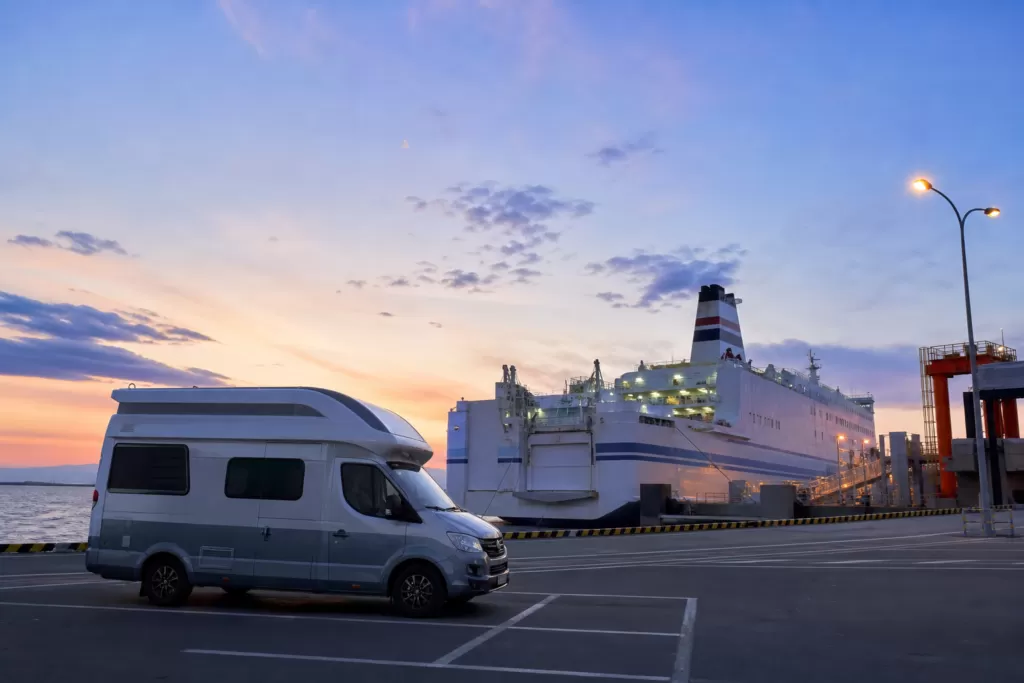
Tomakomai is the gateway to Hokkaido for travelers arriving by campervan from Honshu, served by Pacific Ferry and Shin Nihonkai Ferry. The moment you step off the ferry, the roads to central, eastern, and northern Hokkaido open up — and Upopoy in Shiraoi, Lake Shikotsu, and Noboribetsu Onsen are all within 30–60 minutes. How you use the time before and after boarding can make or break the trip. This guide covers everything you need to know about basing your campervan journey in Tomakomai and Shiraoi: ferry connections, sightseeing, shopping, and overnight parking spots.
Why Use Tomakomai & Shiraoi as Your Base
Tomakomai’s greatest advantage is how close the ferry terminals are to the expressway interchanges. Pacific Ferry connects from Sendai and Nagoya, letting you sleep, eat, and bathe on board — a perfect match for campervan travel. From Tomakomai Port you can access National Route 36 and the Do-o Expressway immediately.
New Chitose Airport is about 40 minutes away via Route 36. A common pattern is to pick up your campervan at the airport, do your first grocery run in Tomakomai, sort out the vehicle, and then head out. The city has 24-hour supermarkets and petrol stations, so getting organized is easy.
Shiraoi is just west of Tomakomai — about 30 minutes by car. It’s home to Upopoy (National Ainu Museum complex, opened 2020) and serves as a junction for Noboribetsu Onsen (15 min), Lake Shikotsu (50 min), and Muroran (40 min). If you want to explore central Hokkaido in a radial pattern, basing yourself here minimizes driving waste. In autumn (mid-October to early November), the Ayoro River in Shiraoi’s Kojohama district also runs with spawning salmon — see Watching the Salmon Run in Hokkaido by Campervan for viewing spots.
The proximity to New Chitose Airport also makes it easy to time vehicle returns at the end of the trip. This is a rare area that works as both the entry and exit point of a Hokkaido journey.
Sightseeing: Upopoy, Northern Horse Park & Beyond
Upopoy (National Ainu Culture Complex)
Upopoy opened in July 2020 on the shores of Lake Poroto in Shiraoi. It is a national cultural facility dedicated to the history, culture, and spirit of the Ainu people, comprising the National Ainu Museum, the National Indigenous Peoples’ Park, and a memorial facility.
The permanent exhibition covers six themes: language, world, daily life, history, work, and exchange. The combination of video, audio, and artifacts can easily keep adults engaged for 2–3 hours. In the park you can walk through reconstructed traditional Ainu houses (chise) and enjoy embroidery, wood-carving, and musical instrument demonstrations.
The dedicated car park accommodates large vehicles and campervans, and parking is free. Admission is ¥1,200 per adult (as of 2026). Upopoy is within 5 minutes of Shiraoi IC by car.
Northern Horse Park
Northern Horse Park in Tomakomai is a large leisure complex with horse riding, pony interaction, and restaurants set in expansive pastureland. Popular with families, it is well known across central Hokkaido as a place where children can interact with horses and animals.
The grounds have parking suitable for large vehicles, so campervan visits present no problems. It’s about 20 minutes from New Chitose Airport and 15 minutes from central Tomakomai — a comfortable first stop after the ferry arrives.
Gateway to Lake Shikotsu & Noboribetsu
The Tomakomai–Shiraoi area sits within 30–60 minutes of both Lake Shikotsu and Noboribetsu Onsen. Lake Shikotsu is a caldera lake renowned for its clarity, offering canoeing, SUP, and camping. A lakeside campsite (Shikotsu-ko Campsite) allows an overnight stay en route. Noboribetsu is one of Japan’s top hot-spring destinations, famous for Jigokudani (Hell Valley) and crab cuisine — ideal for unwinding after days on the road.
Rather than treating Tomakomai and Shiraoi as a pass-through, spending 1–2 nights here and making day trips in all directions is the most efficient campervan strategy for this region.
Muroran & Cape Chikyu Within Reach
Drive another 40 minutes west of Tomakomai and you reach the Cape Chikyu Observatory in Muroran — a clifftop viewpoint over the Pacific where the curvature of the earth is said to be visible. Free parking accommodates campervans. At sunset, the view of the sun sinking into the Pacific is spectacular, drawing many travelers on day trips from Shiraoi.
Muroran also has its own “Muroran Yakitori” — a local style using pork and onions, served at grills throughout the city. Combining the Cape Chikyu visit with a Muroran yakitori dinner makes for a highly satisfying day. From a Tomakomai campsite base, the round trip is very manageable.
Campervan Waiting & Overnight Parking Around the Ferry Terminal
How the Ferry Boarding Process Works
There are two ports: Tomakomai West Port and East Port. The departure port depends on the ferry company and route, so confirm which port your ferry uses in advance — they are about 20 minutes apart by car.
Campervans board in the “large vehicle lane,” separate from ordinary cars. Loading to the car deck begins 1–2 hours before departure. Because the rule is to stay with your vehicle after check-in, the ability to eat and rest in the campervan is a genuine advantage. For overnight or early-morning sailings, sleeping in the terminal car park before boarding is a practical plan.
The Evening Before Boarding & After Disembarking
The standard approach the night before boarding is to sleep in your campervan in Tomakomai. There are 24-hour convenience stores and supermarkets near the ferry terminal for last-minute provisioning. Note that access to the vehicle deck is restricted during sailing, so pack essentials into a bag to bring to your cabin.
After disembarkation (arriving in Hokkaido), resupply with groceries and water in Tomakomai first. Pacific Ferry typically arrives in the morning, and if supermarkets aren’t open yet, convenience stores fill the gap. Michi-no-Eki Utonai-ko (Tomakomai, Uenae) is a classic first stop after landing — large car park, toilets, and the Ramsar-listed Utonai Lake bird sanctuary for a morning walk.
Useful overnight spots near the ferry terminal:
- Michi-no-Eki Utonai-ko (Tomakomai, Uenae): 24-hour parking, toilets. About 20 minutes from the ferry terminal via Route 36.
- Tomakomai Midorigaoka Park Car Park: Large free parking in the city. Keep stays brief (early-morning nap only); avoid extended unauthorized parking.
- Poroto Nature Recreation Forest (Shiraoi): Natural area near Upopoy. Quiet at night with lakeside setting.
Compare Hokkaido Campervan Rentals
Base yourself at New Chitose Airport and compare rates, vehicle types, and pickup locations all in one place.
Compare rental companies & rates →Practical Facilities: Shopping, Bathing & Water (24-Hour Options)
Grocery Shopping
Tomakomai is an industrial city of around 170,000 people — well-served by commercial facilities by Hokkaido’s regional-city standards. Multiple 24-hour supermarkets make mid-trip provisioning straightforward.
- Super Arcs Nishikioka: Open 24 hours on Route 36 with a large campervan-friendly car park.
- AEON Tomakomai: Large mall stocking food, daily goods, and outdoor equipment. Generally open 10:00–21:00 on weekdays.
- Co-op Sapporo Tomakomai: Strong local selection including fresh Hokkaido seafood.
Shiraoi has fewer commercial options, so bulk shopping is best done in Tomakomai. Shiraoi has one or two small supermarkets for emergency top-ups, but range is limited.
Bathing & Hot Springs
The Tomakomai–Shiraoi area offers generous bathing options — and Noboribetsu Onsen is right next door.
- Yunomino-yu (Tomakomai): Municipal natural hot-spring facility. Outdoor bath, adults ¥440. Open 10:00–22:00 (closed some days). Campervan parking available.
- Near Nishiki Onuma Park (Tomakomai): Quieter, slightly outside the city center.
- Noboribetsu Onsen (15 min from Shiraoi): One of Japan’s most famous hot-spring towns. Many ryokan and hotels offer day-use bathing with varied spring types (sulfur, salt).
- Shikotsu-ko Onsen (50 min from Tomakomai): Lakeside hot-spring inns offering day-use entry with outdoor baths overlooking the lake.
Water & Waste
Fresh water is available at Michi-no-Eki Utonai-ko and at campsites in Tomakomai (Auto Resort Tomakomai Alten). The safest approach is to refill when you check into a campsite.
Both Tomakomai and Shiraoi use designated paid garbage bags (unique to each municipality). Convenience stores sometimes carry them, but in practice it is easiest to dispose of waste at campgrounds or RV parks, or to carry it out.
Petrol & LP Gas
Tomakomai has many petrol stations — including 24-hour self-service — so running low on fuel is rarely a concern. Shiraoi has fewer options, so fill up in Tomakomai before heading toward Noboribetsu or Muroran. LP gas canisters are available at DCM Homac hardware stores in Tomakomai.
RV Parks & Campsites
Main paid facilities for campervans in the Tomakomai area:
- Auto Resort Tomakomai Alten: Electric hook-up auto sites. On-site hot-spring facility and restaurant. About 15 minutes from central Tomakomai.
- Poroto-ko Auto Campsite (Shiraoi): Walking distance from Upopoy. Beautiful lakeside setting. Electric hook-up sites available.
- Shikotsu-ko Campsite: National campsite on the lake shore. No electricity; advance booking required. Mist over the lake at dawn is unforgettable.
New Chitose Airport / Tokachi-Obihiro Airport
Rent a Cab-Over Campervan “Cresson Journey”
Base yourself at New Chitose Airport and travel all across Hokkaido by campervan.
View details at Moving Inn →Sample Itineraries from Tomakomai
Itinerary A: First Day After Ferry Arrival
Pacific Ferry typically arrives in Tomakomai between 8:00 and 10:00. To make the most of your first day:
- 08:30 Disembark at Tomakomai West Port; fill up with petrol
- 09:30 Grocery run at Super Arcs Nishikioka (breakfast & lunch)
- 10:30 Arrive Northern Horse Park; horse riding (approx. 2 hours)
- 13:00 Lunch and rest in the campervan
- 14:00 Drive to Shiraoi / Upopoy (approx. 30 min)
- 14:30 Explore Upopoy (museum + park: 2–3 hours)
- 17:30 Check in at Poroto-ko Auto Campsite; refill water
- 19:00 Dinner in the campervan; prepare for sleep
Itinerary B: 2 Nights in Tomakomai, Central Hokkaido Loop
Use Tomakomai as a base for 2 nights and make day trips to central Hokkaido’s highlights.
Day 1: Arrive Tomakomai → Northern Horse Park → Yunomino-yu bath → Auto Resort Tomakomai Alten (overnight)
Day 2: Upopoy (Shiraoi) → Noboribetsu Onsen day-use bath → Cape Chikyu Observatory (Muroran) → return to Tomakomai campsite
Day 3: Day trip to Lake Shikotsu (canoeing or cycling) → prepare for vehicle return near New Chitose Airport → return campervan
This itinerary works best when picking up and returning the campervan at New Chitose Airport. With the expressway, Tomakomai to New Chitose is under 30 minutes, making it easy to work backward from the return time.
Itinerary C: Night Before Ferry Departure
At the end of your Hokkaido trip, heading home by ferry:
- 15:00 Return campervan to rental company (New Chitose Airport)
- 16:00 Travel to ferry terminal; complete boarding procedures
- 17:00+ Wait at the terminal until boarding begins (pick up dinner, etc.)
- 19:00+ Board and depart (overnight sailing)
Since you have already returned the campervan, the realistic approach is to pick up supplies at a convenience store near the terminal before boarding. On an overnight sailing, pack the next morning’s breakfast into your cabin bag.
FAQ
Q: Do I need to book in advance to take a campervan on the ferry?
Yes. Campervans are often classified as “large passenger vehicles” or “special vehicles,” with different pricing and procedures from ordinary cars. Confirm your vehicle’s overall length, height, and gross weight, and declare them accurately when booking. During the peak summer season (July–August) vehicle space fills up quickly, so booking 2–3 months ahead is advisable.
Q: Can I park a campervan at Upopoy?
Yes. Upopoy’s dedicated car park accommodates large vehicles and tour buses — cab-overs and coach-conversions are both fine. Parking is free. The site gets busy during summer holidays, but arriving before opening (before 9:00) usually means a smooth entry.
Q: Are there electric hook-up RV sites in the Tomakomai–Shiraoi area?
Yes. Auto Resort Tomakomai Alten offers fully equipped electric auto sites with an on-site hot spring. Poroto-ko Auto Campsite in Shiraoi also has electric sites. Both fill up quickly during the summer peak, so book as soon as your itinerary is fixed.
Q: Can a campervan drive from Tomakomai to Lake Shikotsu?
Yes. The route via National Route 276 takes about 50–60 minutes. The road is well maintained and large campervans have no trouble. Note that sections near the lake are winding two-lane mountain roads — watch for oncoming traffic and buses. Lakeside parking is shared between ordinary and large vehicles, and is free.
Q: Can I rent a campervan at New Chitose Airport and drive to Tomakomai?
Yes. It’s about 40 minutes via Route 36 (around 30 minutes by expressway). You can even board the ferry in Tomakomai and sail straight back to Honshu. For a list of Hokkaido campervan rental companies near New Chitose Airport that support English and Chinese, see our dedicated article. Note that one-way rental rules vary by company — most do not allow returns to a different operator’s base, so confirm drop-off conditions before booking.
Q: How long does a visit to Upopoy take?
The permanent museum exhibition alone takes 1.5–2 hours; add the park’s hands-on programs and allow 3–4 hours. Some experience workshops (embroidery, wood carving, instruments) require advance booking — check the official Upopoy website before visiting. With lunch at the on-site restaurant, half a day is a comfortable allocation.
Book a Campervan in Hokkaido
Moving Inn New Chitose Airport supports English booking and offers airport transfers.
Pick a campervan by what matters to you.
Rent at New Chitose Airport
See only the rental bases in Chitose, where the airport is.

![Campgrounds Near Tokachi-Obihiro Airport: 8 Sites Within 30 km, Compared by Vehicle Access, Power and Price [2026]](https://hokkaido-campingcar.jp/wp-content/uploads/2026/10/photo-obihiro-airport-featured-pl232-768x512.jpg.webp)
![Campgrounds Near Hakodate Airport: 12 Sites Within 30 km, Compared by Vehicle Access, Power and Price [2026]](https://hokkaido-campingcar.jp/wp-content/uploads/2026/10/photo-hakodate-airport-featured-hl4722-768x484.jpg.webp)