Hokkaido in November: Temperature & What to Wear, Early vs. Late Month, Plus Campervan Snow-Road Prep [2026]
![Hokkaido in November: Temperature & What to Wear, Early vs. Late Month, Plus Campervan Snow-Road Prep [2026]](https://hokkaido-campingcar.jp/wp-content/uploads/2026/09/eyecatch-hokkaido-november-temperature-1024x683.jpg)
In Hokkaido, November changes season once, from early month to late month. Sapporo’s normal daily high is 11.8°C in early November and 6.0°C in late November. The normal daily low falls from 4.0°C in early November to −0.4°C in late November. In early November, the normal daily low is above freezing at all 11 locations, but by late November, 10 of the 11 locations, all except Muroran, are below freezing. Late-November Asahikawa carries normal values of 42cm total snowfall depth and 24cm maximum snow depth: inland Hokkaido is already a month of snow-covered roads.
Jump to what you need
- A quick sense of how cold it gets
- Morning and evening temperatures at your destination
- Whether it snows and whether it sticks
- Which areas get snowy roads
- What to wear
- Campervan gear to check
- How to plan your itinerary
- Frequently asked questions
This article lines up the Japan Meteorological Agency’s 10-day normal values (1991–2020) for 11 locations, first establishing where the normal low drops below freezing, in early, mid, or late November, and where snow starts to accumulate within the month. From there, it covers what to wear during the day, in the morning and evening, and for overnight parking, plus what a campervan needs to drive in November: winter tires, heating, bedding, and power.
For the month before this one, see our article on Hokkaido’s October temperatures and what to wear. For the full winter from December onward, see our article on Hokkaido’s winter temperatures and overnight-parking gear. If you want the whole-season picture first, our article on the best time to visit Hokkaido is the place to start.
Unless noted otherwise, the temperatures in this article are normal values (1991–2020) from the Japan Meteorological Agency website, checked on 2026-09-24. Normal values are a typical-year guide, not a forecast for your travel date. In the week before you leave, check the latest temperature and snow outlook from the JMA or local forecasts.
Compare Hokkaido Campervan Rentals
Base yourself at New Chitose Airport and compare rates, vehicle types, and pickup locations all in one place.
Compare rental companies & vehicles →How Cold Is Hokkaido in November? Early Month Is Late Autumn, Late Month Is the Edge of Winter
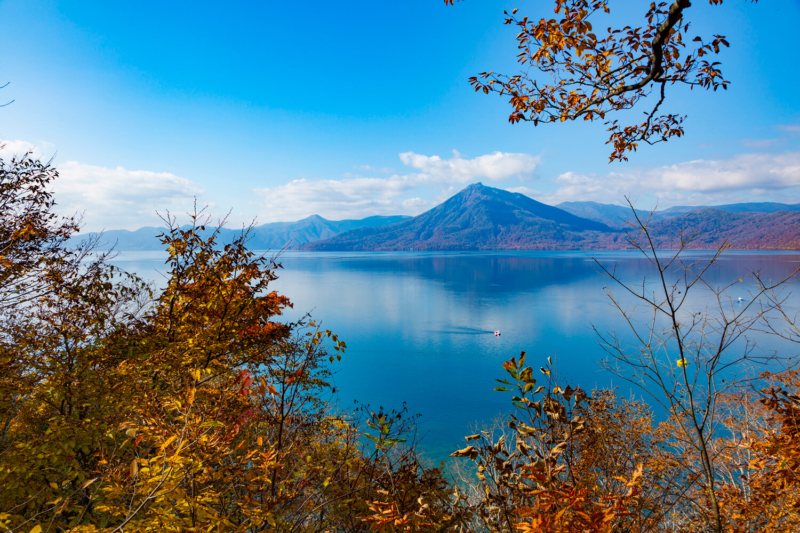
Using Sapporo as the benchmark, early November feels almost identical to mid-April. Mid-April’s normal values are a high of 11.6°C and a low of 3.3°C, versus early November’s high of 11.8°C and low of 4.0°C, essentially the same late-autumn weather where you walk around in a coat. Compared with late October (high 14.3°C, low 6.1°C), it still feels like part of the same season.
By late November, the high drops to 6.0°C and the low to −0.4°C. In three weeks, the high falls by 5.8°C and the low by 4.4°C, landing at the same level as late March (high 6.5°C, low −0.8°C), the same temperature that marks the end of winter arrives at the beginning of winter. The gap with early December (high 3.5°C, low −2.4°C) is now only about 2°C.
The turning point is mid-month. Five locations drop below freezing in mid-November: Furano (−2.3°C), Chitose (−1.7°C), Asahikawa (−1.6°C), Obihiro (−1.1°C), and Kushiro (−0.5°C). By late November, Hakodate (−0.2°C), Sapporo (−0.4°C), Date (−0.9°C), Wakkanai (−1.1°C), and Abashiri (−1.8°C) join them, leaving only Muroran (1.3°C) above freezing. Don’t think of “Hokkaido in November” as a single number, check the row for the 10-day period you’ll actually be traveling in.
Morning Temperatures Can Differ by 6°C Depending on Where You Go: Check the 11-Location, 10-Day Table
Even within the same late-November period, Pacific-coast Muroran has a low of 1.3°C, inland Furano −4.6°C, and Chitose (near New Chitose Airport) −4.5°C, a 5.9°C difference in morning temperature. Someone who picks up a campervan at New Chitose and heads straight to Furano or Asahikawa needs a whole level more morning-and-evening prep than someone touring Hakodate or Lake Toya.
The table below lists the normal daily high and low temperatures for early, mid, and late November at 11 locations, from the JMA’s 10-day normal values. Numbers are in the order “high/low,” in °C.
| Location | Early Nov High/Low | Mid Nov High/Low | Late Nov High/Low |
|---|---|---|---|
| Sapporo | 11.8/4.0 | 8.4/1.3 | 6.0/−0.4 |
| Chitose (near New Chitose Airport) *1 | 11.9/1.1 | 8.8/−1.7 | 5.8/−4.5 |
| Hakodate | 12.8/4.0 | 9.8/1.6 | 7.2/−0.2 |
| Muroran | 12.1/5.9 | 9.1/3.3 | 6.8/1.3 |
| Date (Lake Toya area) *2 | 12.2/3.6 | 9.3/1.2 | 6.2/−0.9 |
| Asahikawa | 9.6/0.8 | 5.7/−1.6 | 3.3/−3.6 |
| Furano | 9.8/0.5 | 5.9/−2.3 | 3.4/−4.6 |
| Obihiro | 11.4/1.2 | 8.1/−1.1 | 5.7/−3.4 |
| Kushiro | 11.4/2.2 | 8.8/−0.5 | 6.6/−2.6 |
| Abashiri (reference for the Shiretoko area) | 10.6/2.8 | 7.3/0.3 | 5.0/−1.8 |
| Wakkanai | 9.2/3.8 | 5.9/1.1 | 3.7/−1.1 |
Three ways to read the table. First, the high at all 11 locations runs 9–13°C in early November and 3–7°C in late November, single-digit daytime highs become normal, and you’ll rarely get the October-style moment of taking your jacket off at midday. Second, the low drops by 4.2–5.6°C from early to late November at every location, and by late November every location except Muroran is below freezing. Third, Chitose’s late-November low of −4.5°C is the second-coldest after Furano, being near the airport doesn’t make it warmer.
Here are the monthly figures too. November’s average monthly temperature is 6.4°C in Muroran, 6.0°C in Hakodate, 5.4°C in Date, and 5.2°C in Sapporo, compared with 2.3°C in Asahikawa and 2.1°C in Furano. Total monthly sunshine hours are longest on the Pacific side of eastern Hokkaido, 168.2 hours in Obihiro and 167.6 hours in Kushiro, while Wakkanai gets 55.9 hours and Asahikawa 67.3 hours (JMA website, monthly normal values).
Tokachi and Kushiro get more clear days, so mornings are colder but daytime brings sunshine. Northern Hokkaido and the Kamikawa area are cloudier, so temperatures struggle to rise even during the day. The same cold has a different character depending on where you are.
Does It Snow in November? Does It Stick? Answered With Normal Dates for First Snow, First Accumulation, and Permanent Snow Cover
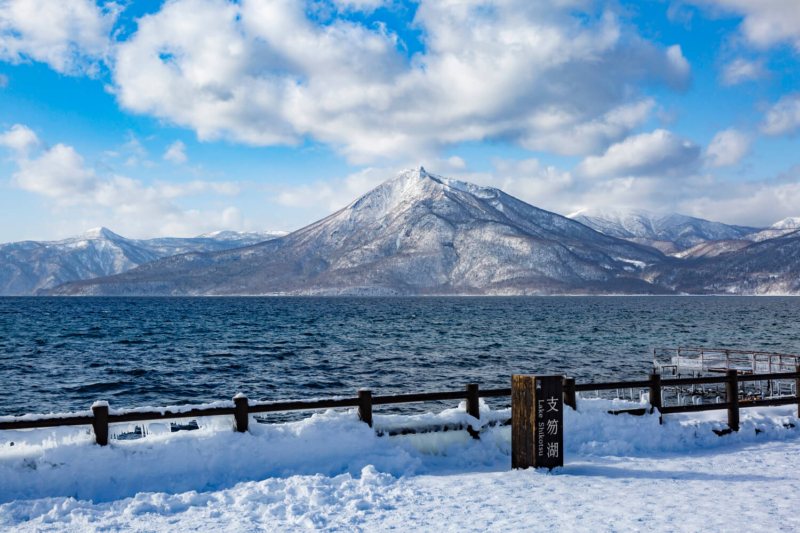
Yes, it snows, and in late November, some areas get accumulation. According to normal values published by the Sapporo Regional Meteorological Observatory (August 1990–July 2020), the first snow falls on October 19 in Wakkanai and Asahikawa, October 28 in Sapporo, October 30 in Abashiri, November 1 in Obihiro and Hakodate, November 2 in Muroran, and November 7 in Kushiro. By the time November begins, the normal first-snow date at all eight of these key locations has either already passed or falls within the coming week (Sapporo Regional Meteorological Observatory, “Normal Values for First Snow, Frost, and Ice”).
By number of snow days, the normal count of days with snow observed in November is 20.5 in Wakkanai, 20.3 in Asahikawa, 15.6 in Sapporo, 14.5 in Abashiri, 12.6 in Muroran, 11.8 in Hakodate, 9.8 in Obihiro, and 5.7 in Kushiro (JMA website, monthly normal values). Even in Sapporo, that works out to snow on about half the days in the month.
For trip planning, what matters more than first snow is the “first day of snow cover” and the “first day of long-term snow cover” (permanent snow, or nezuki). The first day of snow cover is the first day the maximum snow depth reaches 1cm or more; normal dates are November 4 in Asahikawa, November 12 in Sapporo and Wakkanai, November 17 in Abashiri, November 18 in Hakodate, November 24 in Obihiro and Muroran, and December 1 in Kushiro. The first day of permanent snow cover is November 24 in Asahikawa, December 3 in Wakkanai, December 6 in Sapporo, December 7 in Obihiro, December 8 in Abashiri, December 19 in Hakodate, December 30 in Kushiro, and January 1 in Muroran (same source).
| Location | First Snow (First Snow Day) | First Day of Snow Cover (Max. Depth ≥1cm) | First Day of Permanent Snow Cover |
|---|---|---|---|
| Wakkanai | October 19 | November 12 | December 3 |
| Asahikawa | October 19 | November 4 | November 24 |
| Sapporo | October 28 | November 12 | December 6 |
| Abashiri | October 30 | November 17 | December 8 |
| Obihiro | November 1 | November 24 | December 7 |
| Hakodate | November 1 | November 18 | December 19 |
| Muroran | November 2 | November 24 | January 1 |
| Kushiro | November 7 | December 1 | December 30 |
In short, November is the month when Asahikawa gets its first accumulation early in the month and permanent snow cover by late November. Sapporo, Wakkanai, Abashiri, and Hakodate see their first accumulation from mid- to late November, but permanent snow cover doesn’t arrive until December, so snow falls and melts repeatedly in the meantime. Obihiro, Muroran, and Kushiro don’t start accumulating until around the end of the month, and even then, only lightly.
But no accumulation doesn’t mean no freezing: Kushiro’s late-November low is −2.6°C, and Obihiro’s is −3.4°C. If you see news of the first snow right before you leave and need to adjust your itinerary, see our article on when Hokkaido’s first snow falls and how it affects your trip.
Where Do Roads Turn Snowy in Late November? Snow in Asahikawa, Furano, and Northern Hokkaido; “Falls and Melts” in Sapporo and Hakodate
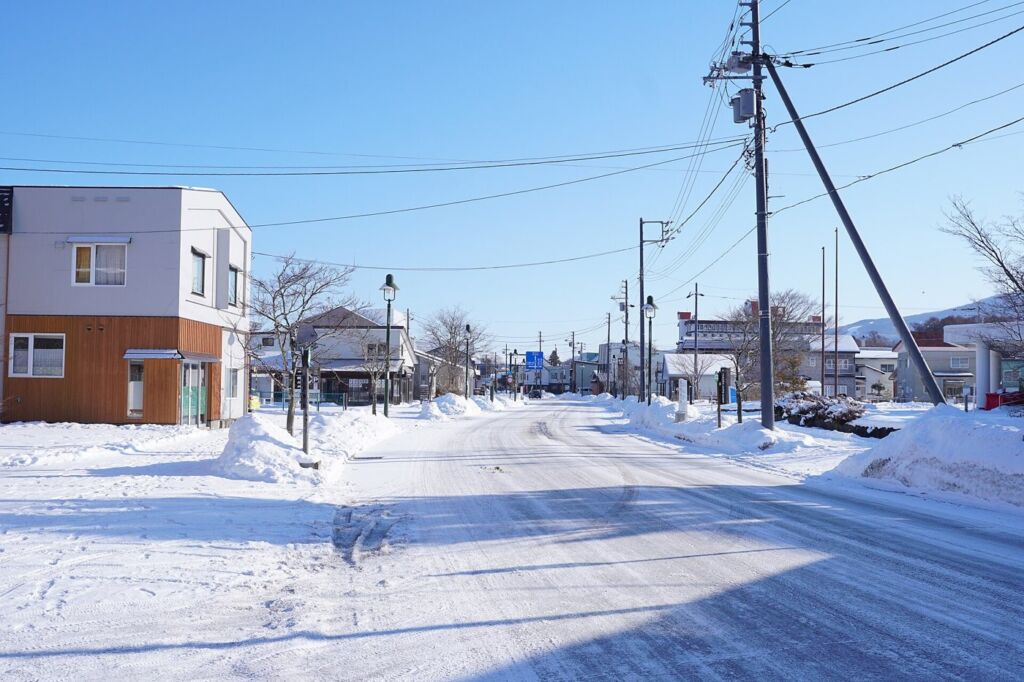
Lining up the normal values for total snowfall depth and maximum snow depth by 10-day period makes the regional differences clear. The table below is in the order “total snowfall depth (cm)/maximum snow depth (cm).”
| Location | Early Nov Total Snowfall/Max. Depth | Mid Nov Total Snowfall/Max. Depth | Late Nov Total Snowfall/Max. Depth |
|---|---|---|---|
| Sapporo | 3/2 | 11/7 | 17/11 |
| Chitose (near New Chitose Airport) *1 | 2/1 | 1/1 | 8/5 |
| Hakodate | 2/1 | 6/4 | 11/7 |
| Muroran | 0/0 | 1/1 | 4/2 |
| Date (Lake Toya area) *2 | —/— | —/— | —/— |
| Asahikawa | 13/8 | 27/15 | 42/24 |
| Furano | 10/5 | 23/13 | 39/19 |
| Obihiro | 1/0 | 2/2 | 7/7 |
| Kushiro | 0/0 | 1/1 | 3/3 |
| Abashiri (reference for the Shiretoko area) | 1/1 | 5/3 | 7/5 |
| Wakkanai | 4/2 | 17/10 | 21/12 |
Late-November total snowfall depth is 42cm in Asahikawa, 39cm in Furano, 21cm in Wakkanai, and 17cm in Sapporo. Maximum snow depth is 24cm in Asahikawa, 19cm in Furano, 12cm in Wakkanai, and 11cm in Sapporo. In Asahikawa, Furano, and northern Hokkaido, a late-November trip should assume snowy, icy roads.
Sapporo, Hakodate, and Chitose get 5–11cm of maximum snow depth in late November, but since the normal date for permanent snow cover is in December, you’ll get a mix of days with packed snow or ice in the morning and wet, melted roads during the day. Obihiro, Abashiri, Kushiro, and Muroran have less snow, but the low temperature is still below freezing.
Whether roads turn snowy varies this much by destination and 10-day period. If you’re touring inland Hokkaido or the north from mid-November onward, confirm before booking whether your rental vehicle has winter tires fitted. See our article on studless (winter) tire timing and rental companies’ winter tire policies for how each company handles this, and our article on whether a campervan needs to be 4WD for how to choose a drivetrain.
What Should You Wear? Split It Into Three Situations, Daytime, Morning/Evening, and Overnight Parking, and You Won’t Go Wrong
When translating temperature into clothing, the most common November mistake is packing only autumn wear and then freezing on a late-November morning. Late-November Chitose has a high of 5.8°C and a low of −4.5°C, a 10.3°C swing within a single day. Don’t try to get through the day in one outfit, split it by situation instead.
Daytime Driving and Sightseeing (Highs of 3–13°C)
Early-November highs are 12.8°C in Hakodate, 12.1°C in Muroran, 11.8°C in Sapporo, 9.6°C in Asahikawa, and 9.2°C in Wakkanai. Go in winter clothing: a thick knit or fleece layered under a windproof coat or down jacket. The heater keeps the vehicle warm, so the rhythm becomes taking a layer off while driving and putting it back on when you get out.
Late-November highs run 3–7°C (3.3°C in Asahikawa, 3.4°C in Furano, 3.7°C in Wakkanai, 6.0°C in Sapporo, 7.2°C in Hakodate). Even during the day, you’ll need a full-on winter coat or down jacket, and gloves and a knit cap stop being “morning and evening only” items and become things you wear all day. Kushiro, Muroran, and Wakkanai have normal late-November average wind speeds of 5–6m/s (same 10-day normal values page), so along the coast, the wind chill drops below the number on the thermometer. Bring something to cover your neck.
Morning and Evening Errands and Getting Ready at a Michi-no-Eki (Lows of −4.6 to 5.9°C)
Grocery runs, coming back from an onsen, using the restroom and getting ready in the morning, the time you spend outside clusters around morning and evening, and that’s when the low temperature matters. In early November, inland areas sit at 0–1°C (Furano 0.5°C, Asahikawa 0.8°C, Chitose 1.1°C, Obihiro 1.2°C), while southern and Pacific-coast Hokkaido is a bit warmer (Sapporo 4.0°C, Hakodate 4.0°C, Muroran 5.9°C). Dress as if some mornings will have frost, and that’s enough.
In late November, lows reach −4.6°C in Furano, −4.5°C in Chitose, −3.6°C in Asahikawa, −3.4°C in Obihiro, and −2.6°C in Kushiro. You’ll want a down jacket, gloves, a knit cap, and the right footwear. Since the normal first-snow-cover date is November 4 in Asahikawa and November 12 in Sapporo, from mid-November onward, assume the parking lot underfoot will be icy in the morning and wear shoes with slip-resistant soles. Flat-soled sneakers slip on icy pavement.
Nights of Overnight Parking (From Bedtime to Wake-Up)
The hours you sleep cover the entire window of that day’s lowest temperature, spent inside the vehicle. As far as clothing goes: wear thin long sleeves and long pants to sleep, and add one pair of thick socks. Sleeping in too many layers makes you sweat inside the bedding and then get cold toward dawn. Adjust warmth with heating and bedding, and keep clothing light. We’ll cover gear next.
Broken down by 10-day period, here’s what to bring.
- Early month: A thick knit or fleece plus a windproof coat or light down jacket. Pack gloves and a knit cap
- Mid-month: Switch to a down jacket for inland and eastern Hokkaido. Keep gloves and a knit cap within easy reach inside the vehicle
- Late month: A full winter coat or down jacket everywhere. Wear gloves, a knit cap, and neck protection at all times; choose shoes with slip-resistant soles
- Overnight parking: Thin sleepwear, plus one extra pair of thick socks. Don’t sleep in too many layers
Sub-Zero Nights Are Coming: Your November Campervan Needs Four Things, Winter Tires, Heating, Bedding, and Power
In late November, the normal low in Chitose, Furano, Asahikawa, and Obihiro is −3.4 to −4.6°C. Assuming you’ll spend that kind of night inside the vehicle, here are the four essentials. How cold it gets inside the vehicle varies by model and where you park, and there’s no measured data to cite, so we won’t guess at a number. Instead, we organize this around: what do you need to sleep through a sub-zero night outside and still be able to drive the next morning?
1. Winter Tires: From Mid-November On, Confirm Before Booking Whether They’ll Be Fitted on Your Travel Date
November is the month when the switch from summer to winter tires progresses, and the timing differs by rental company. Given that the normal first-snow-cover date is November 4 in Asahikawa and November 12 in Sapporo, if you’re booking from mid-month onward, the first thing to check before booking is whether winter tires will be fitted on your travel date. See our studless tire article, linked above, for how each company handles this, and our 4WD article for how drivetrain choice matters even with winter tires.
2. Heating: Whether You Have an FF Heater Decides Whether You Can Go Inland From Mid-Month On
An FF heater is heating you can run with the engine off. Sleeping with the engine running is best avoided because of noise and exhaust, so if your vehicle doesn’t have an FF heater, cross late-November Asahikawa or Furano off your options for an overnight stop. In early November, in southern or Pacific-coast Hokkaido, some people get by on bedding alone, but even then, mornings are in the 0–6°C range. You can check how FF heaters work, how to use them, and fuel considerations in our article on FF heater mechanics and use.
3. Bedding: Ask for Specific Numbers on Sets Per Person and Thickness
Bedding varies widely by company, from “one blanket” to “a winter sleeping bag.” If you’re sleeping inland in late November with the FF heater running low, one blanket won’t be enough for some people. Before booking, ask three things: how many sets come as standard, whether extra ones are available to rent, and whether there’s space to bring your own sleeping bag. Our article on what to check to sleep warm in a Hokkaido campervan in winter covers each of these one by one.
4. Power: On Multi-Night Trips, Include One Night Somewhere With Shore Power
The FF heater’s fan, lighting, and phone charging all draw from the sub-battery. Two or three cold nights in a row add up, so on trips of three nights or more, include one night at an RV park or campsite with power hookups partway through.
Some facilities close for winter, so check the operating period of anywhere you plan to stay on its official site before you leave. We’ve rounded up places that stay open through winter: an article checking 13 RV parks and Michi-no-Eki that offer winter overnight parking, verified on their official sites, and an article checking five campsites that stay open in winter.
One more thing: water. On sub-zero late-November nights, plan your usage assuming the water tank and pipes will freeze. Our winter temperature article, linked near the top, explains how outside temperature affects water, electricity, gas, and condensation, so if you’re heading inland in late November, read that one too.
Five Things to Check When Comparing Rental Companies
Translating the four points above into comparison checklist items, you get this.
- Winter tires: Are they fitted on your travel date? If you’re touring inland or northern Hokkaido from mid-November on, narrow it down to vehicles that already have them fitted
- Heating equipment: Is an FF heater standard, optional, or not fitted at all?
- Bedding: How many sets come standard, and how thick? Whether extra sets are available to rent, and storage space for a sleeping bag you bring yourself
- Power: Whether there’s a shore-power input, outlets that can run appliances, and roughly how large the sub-battery is
- Rental period and winter conditions: Whether they rent out vehicles in November, and whether there are conditions on driving on snowy roads (check the booking screen and official site)
These five items often aren’t spelled out on vehicle pages or price lists, so they tend to be things you have to ask about directly. The quickest path is to compare heating and equipment conditions on our comparison page, narrow it down to two or three candidates, and then confirm the final details on each company’s official site.
New Chitose Airport / Tokachi-Obihiro Airport
See Moving Inn’s Campervans
Check vehicle types, rates, and availability on the official site.
See details at Moving Inn →Three Rules for Your Itinerary if You’re Driving in November: Arrive While It’s Light, Cross Mountain Passes at Midday, and Check the Morning Forecast
Arrive while it’s light. Sunset in Sapporo is 16:27 on November 1 and 16:01 on November 30 (National Astronomical Observatory of Japan, Calendar Computation Office, “Sunrise and Sunset,” Sapporo, November 2026). Plan to arrive at your overnight stop sometime in mid-afternoon, and you can finish getting water and supplies before dark. After sunset, it’s also harder to see animals darting onto rural roads, so keep your driving to daylight hours.
Cross mountain passes at midday. High-altitude passes turn snowy earlier than the lowlands, and some sections close for winter. Avoid crossing passes in the early morning or at night, and check for restrictions on the Ministry of Land, Infrastructure, Transport and Tourism’s “Road Information Provision System” Hokkaido page before you leave. Keeping your daily driving distance short and not overpacking your schedule is the single best safety measure for this snowy month. Our article on worries about a winter Hokkaido campervan trip answers concerns about driving on snowy roads one by one.
Check the morning forecast. Normal values are a 30-year average, and November is a month with large year-to-year variation. Every morning, check the JMA forecast for the expected low temperature and snowfall, and decide that day’s pass crossing and overnight stop accordingly.
Still, there are reasons to travel in November. Sapporo’s late-November low of −0.4°C is 6°C warmer than January’s −6.4°C. It’s a notch milder than the depths of winter, and the only month where you can catch just the entrance to the snowy landscape. In early November, even first-timers to winter gear can tour southern and Pacific-coast Hokkaido; go inland in late November and you can see towns and mountains right before permanent snow sets in. For what to enjoy once winter truly arrives, see our article on 43 things you can only do in Hokkaido in winter.
Frequently Asked Questions (FAQ)
Is Hokkaido Cold in November?
The answer changes between early and late November. Sapporo’s normal values (1991–2020) are a high of 11.8°C and a low of 4.0°C in early November, and a high of 6.0°C and a low of −0.4°C in late November. Early month is late autumn where a winter coat is enough for walking around; late month is the edge of winter, when inland lows hit −3 to −5°C (JMA website).
How Different Are Early and Late November?
In Sapporo, the high falls by 5.8°C and the low by 4.4°C. In early November, the normal low is above freezing at all 11 locations; by late November, 10 of 11 locations, all except Muroran, are below freezing. Five locations drop below freezing in mid-November, Furano, Chitose, Asahikawa, Obihiro, and Kushiro, so inland and eastern Hokkaido turn to winter first.
Does Snow Accumulate in Hokkaido in November?
It depends on the location. The normal first day of snow cover (max depth ≥1cm) is November 4 in Asahikawa, November 12 in Sapporo and Wakkanai, November 17 in Abashiri, November 18 in Hakodate, November 24 in Obihiro and Muroran, and December 1 in Kushiro. Except for Asahikawa’s November 24, permanent snow cover doesn’t begin until December or later (Sapporo Regional Meteorological Observatory, “Normal Values for First Snow, Frost, and Ice”). Think of it as: snowy roads by late November in Asahikawa, Furano, and northern Hokkaido, and a “falls and melts” pattern in Sapporo and Hakodate.
Do I Need a Down Jacket for November?
Yes, if you’re going in late November. In early November, in southern and Pacific-coast Hokkaido (early-month lows of 4.0°C in Hakodate and 5.9°C in Muroran), a thick coat is often enough, but by late November, every location has single-digit daytime highs and near-freezing mornings. Regardless of destination, pack a down jacket, gloves, and a knit cap.
Can I Do Overnight Parking in a Campervan in November?
It depends on your gear. With an FF heater, enough bedding for everyone, and winter tires already fitted, you can sleep and drive fine even inland in late November. On the other hand, avoid heading to Asahikawa or Furano from mid-November on in a vehicle without an FF heater or with summer tires. The answer is to check five things before booking: winter tires, heating, bedding, power, and rental conditions.
If I’m Renting at New Chitose Airport, Where’s a Reasonable Place to Go in November?
Chitose itself has a late-November low of −4.5°C, so you’ll need winter prep from the moment you set out. That said, mornings are milder in southern and Pacific-coast Hokkaido (Muroran 1.3°C, Hakodate −0.2°C, Date −0.9°C) and harshest in Furano (−4.6°C), Asahikawa (−3.6°C), and Obihiro (−3.4°C). If it’s your first time with winter gear, head south; if you’re after snowy scenery, go inland, let your destination set your gear level.
Related Pages
- Hokkaido in October: Temperature and What to Wear, Early vs. Late Month Feel Like Different Trips [2026]
- Hokkaido Winter Temperatures: November–February Lows and Campervan Overnight-Parking Gear [2026]
- When Does Hokkaido’s First Snow Fall? Impact on Your Campervan Trip and Last-Minute Prep [2026 Edition]
- Hokkaido Campervans: When Do Studless (Winter) Tires Get Fitted? A Roundup of Rental Companies’ Winter Tire Policies [2026 Edition]
- Winter Overnight Parking in a Hokkaido Campervan: What to Check to Sleep Warm
Book a Campervan in Hokkaido
Moving Inn New Chitose Airport supports English booking and offers airport transfers.

![Monbetsu Drift Ice Festival 2027 [Feb 11–14]: Dates, Ice Sculptures, Garinko-go Icebreaker, Parking and Access by Campervan](https://hokkaido-campingcar.jp/wp-content/uploads/2026/10/monbetsu-hl999-768x576.jpg)
![Hokkaido New Year Weather and What to Wear | Sapporo, Hakodate, Asahikawa, Obihiro Mornings and Evenings, and Heavy-Snow Years [2026-27]](https://hokkaido-campingcar.jp/wp-content/uploads/2026/10/hokkaido-new-year-holiday-weather-eyecatch-768x432.webp)
![Hokkaido Illumination 2026-27 [Dates]: Sapporo Starts Nov 20, Plus Otaru, Asahikawa, Obihiro & Hakodate for Campervan Trips](https://hokkaido-campingcar.jp/wp-content/uploads/2026/10/hokkaido-illumination-2026-eyecatch-768x432.webp)
![What to Do in Tokachi in Winter: Dog Sledding, Snowshoeing, the Shikaribetsu Ice Village, and Staying at Kitanomori [2027]](https://hokkaido-campingcar.jp/wp-content/uploads/2026/10/tokachi-winter-dogsled-1-768x432.jpg)
