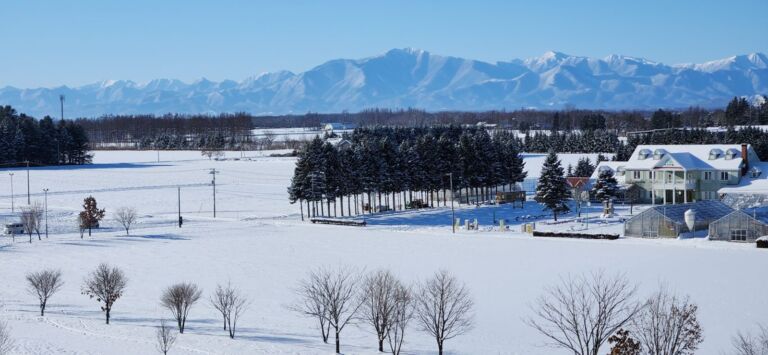
Before Traveling Hokkaido by Campervan in Winter: Solving Every Worry About Snow, Freezing, Heating, and Overnight Parking (2026 Edition)
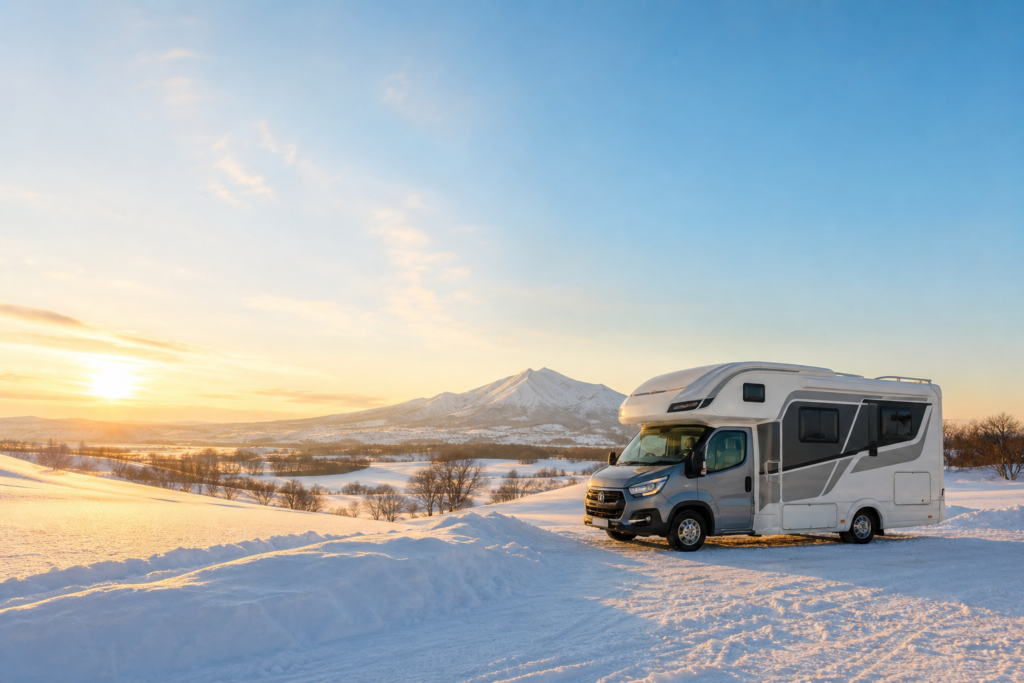
When you hear “traveling Hokkaido by campervan in winter,” the first worries that come to mind are usually snowy roads, a cold cabin at night, and whether you’ll even find a rental base open. In reality, though, winter (October–March) accounts for 62.5% of all overnight stays by foreign visitors to Hokkaido, and January is the single busiest month of the year for foreign-visitor overnight stays (Hokkaido Tourism Visitor Survey Report, FY2024). In other words, winter isn’t a season people merely tolerate in Hokkaido — it’s actively chosen. This guide walks through the most common worries about winter campervan travel here — snowy-road driving, freezing prevention, cabin heating, overnight-parking cold, off-season rental availability, insurance, and how foreign travelers actually rent — one by one.
All figures and facility details were confirmed as of July 2026. Please check each rental company’s official site for the latest conditions before booking.
Before You Book: Answers to the Questions Winter Travelers Ask Most
These are the questions travelers from overseas ask most often before booking a winter campervan in Hokkaido. Each link goes to an article with the full answer.
- Will I be warm enough sleeping in the van at night?
- Where am I allowed to park and sleep in winter?
- How much could I actually pay under insurance, the deductible and NOC?
- Can I drive in Japan on my licence from home?
- Which companies rent campervans in winter (December–March)?
- How early should I book, and how do early-bird discounts work?
New from New Chitose Airport — Available from June 2026
Rent the Cabcon “Cresson Journey”
Base yourself at New Chitose Airport and compare rates, vehicle types, and pickup locations all in one place.
See details at Moving Inn →What the Data Shows: Why People Still Come to Hokkaido in Winter
According to the Hokkaido Tourism Visitor Survey Report (FY2024) compiled by the Hokkaido government, 62.5% of overnight stays by foreign visitors are concentrated in winter (October–March), with January being the single busiest month of the year. By nationality, Taiwan accounts for 24.9%, South Korea 19.1%, and China 18.4% — together more than 60% of all foreign overnight stays (same report, FY2024 figures).
At the national level, the Japan National Tourism Organization (JNTO) estimates 3,466,700 visitors to Japan in February 2026 — up 6.4% year-on-year and a new record for the month of February (JNTO, “Visitor Arrivals to Japan, February 2026 Estimate”). Beyond powder-snow skiing and snowboarding, many travelers come specifically for drift ice and snow scenery, making winter one of Hokkaido’s most reliably popular seasons worldwide.
In other words, traveling Hokkaido by campervan in winter isn’t pushing your luck — it’s a choice a great many travelers actively make. From here, let’s look at the concrete steps that make that trip safe and comfortable.
Overseas travelers don’t come to Hokkaido for winter alone. See the full picture — nature, food, snow, and hot springs — in Why Do People from Overseas Visit Hokkaido? [2026 Edition].
Worry #1: “Can I Handle Driving on Snow?” — Studless Tires and Winter Driving Basics
Campervans rented out in winter come with studless (winter) tires as standard at nearly every rental company. Whether the vehicle is 4WD, however, varies by model, so confirm this at booking. If your route takes you through eastern or northern Hokkaido, where snow and ice are heavier, choosing a 4WD vehicle gives real peace of mind.
The three basics of winter driving: keep at least double your normal following distance, avoid sudden braking, steering, or acceleration, and drive along the existing ruts (wadachi) in the snow. Bridges and tunnel entrances/exits ice over easily, so slow down through these. Black ice — icy patches that look merely wet — is especially dangerous, so drive with extra caution during hours when temperatures dip below freezing, typically early morning and evening.
If it’s your first time driving on snow, plan your route mainly along cleared main roads and avoid narrow side streets or steep slopes. On days when conditions look like they’ll worsen, don’t push to cover more distance — head to your overnight stop (a Michi-no-Eki or RV park, covered below) earlier than planned.
Studless tires matter not just for whether they’re fitted, but how worn they are. A studless (winter) tire loses its snow performance once tread wear reaches 50% from new — a flat step called a “platform” appears in the tread grooves as the wear indicator. A simple way to check by hand: insert a Japanese 100-yen coin into a tread groove from the “1” numeral side; if the “1” is fully visible, the remaining tread depth is below the 50% mark (Bridgestone official blog, “How to Judge the Life of Studless Tires: Tread Depth and the Platform,” confirmed 2026-08-19). Asking staff at pickup about the tire’s manufacture year and how many winter seasons it has been used gives a more concrete sense of wear.
If the vehicle starts to skid and no longer responds to steering or the accelerator, the basic response is to ease off the accelerator and steer in the direction you want the vehicle to travel, without stamping on the brake. Hard braking only makes the tires lose grip further. Before and during your drive, you can check road closures and chain-regulation sections in real time on “Kita no Michi Navi” (https://northern-road.ceri.go.jp/navi/), a site overseen by Hokkaido’s regional development bureau and local governments and operated by the Civil Engineering Research Institute for Cold Region (confirmed 2026-08-19).
Worry #2: “I’m Scared of Freezing Pipes or a Dead Battery” — Freeze Prevention and Cold-Morning Starts
One thing to watch for during winter overnight parking is freezing in the water tank and on the windows. If your vehicle’s water tank is exposed to outside air, sustained sub-zero temperatures can freeze it solid. Avoid filling it to the brim before bed and refill in the morning instead, or choose a vehicle with a heated, freeze-protected tank. The same goes for the wastewater tank — keep it empty regularly, since a frozen wastewater tank simply won’t drain.
Condensation and frost on the windows can be reduced by running the ventilation fan while you sleep. If the windows are frozen in the morning, don’t scrape them — run the heater first and let the ice melt naturally so you don’t damage the glass.
As for dead batteries: in cold climates, the engine battery’s performance drops, so after a long period parked, starting the engine can take a bit longer than usual. On some vehicles, running the heater or lights too long off the auxiliary battery can affect the engine battery, so it’s worth confirming with staff at pickup how you’re meant to manage power use overnight.
Worry #3: “Will I Be Too Cold to Sleep?” — FF Heaters and Cabin Heating
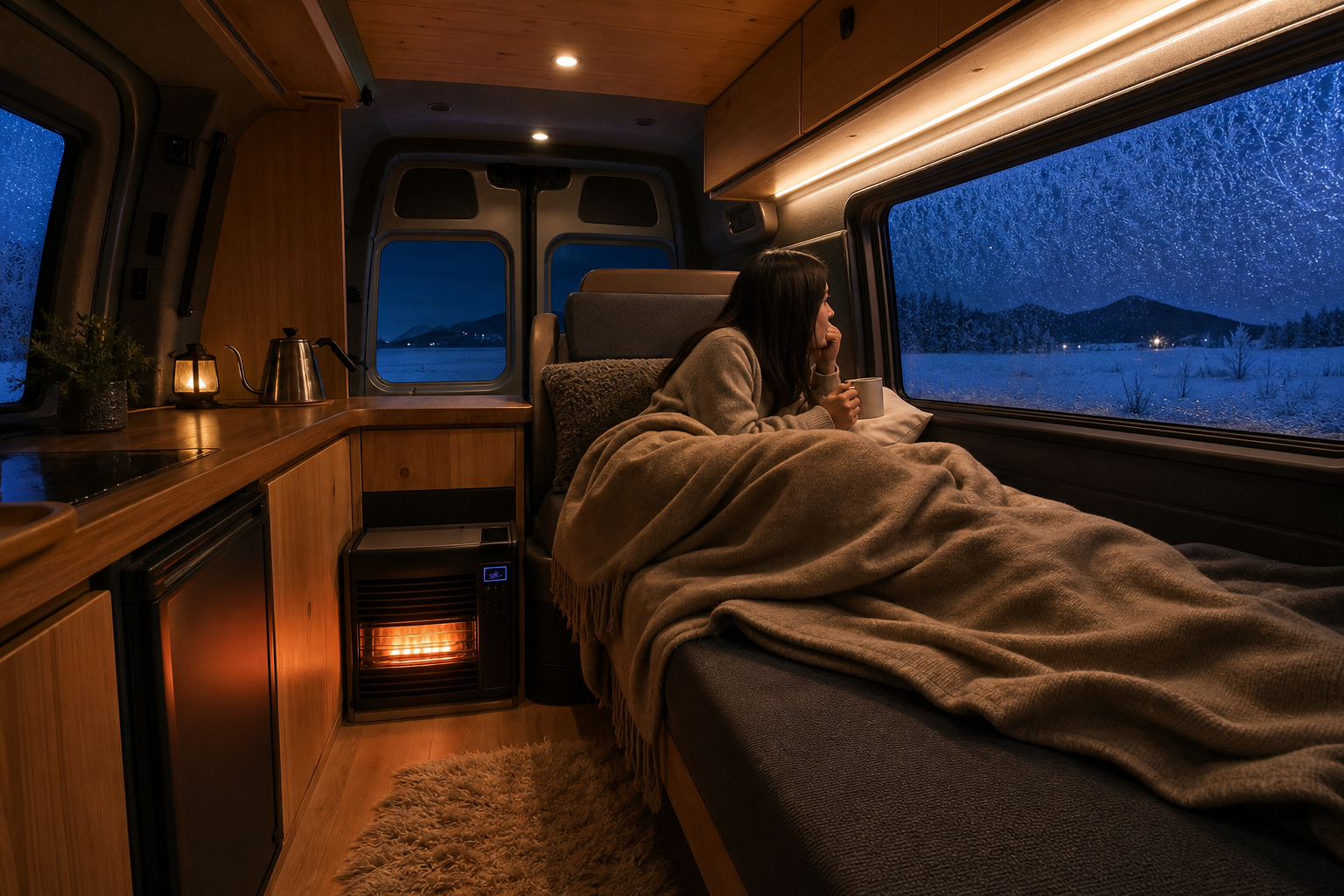
Most campervans rented in winter come equipped with an FF heater (a forced-air, forced-exhaust heater). Burning diesel or gasoline, it draws combustion air from outside the vehicle and warms the cabin without contaminating the interior air, and on most vehicles it can run continuously, including overnight. See our Complete FF Heater Guide for Campervans for more on how it works and how to use it.
Because an FF heater vents exhaust outside the vehicle, there’s little risk of carbon monoxide poisoning when used correctly. That said, if snow piles up around the vehicle and blocks the exhaust vent, exhaust won’t be expelled properly, so make it a habit to check around the vent after parking. It’s also worth checking fuel levels with plenty of margin before a long drive. For the full 11-location breakdown of November–February highs and lows, see our guide to Hokkaido’s winter temperatures — useful if you want to judge your gear from your destination’s numbers first.
Whether you can leave it running all night depends on the vehicle and the rental company’s guidance, so it’s worth confirming at pickup. Most units are designed to cycle on and off automatically to maintain your set temperature, so you don’t need to worry excessively about running out of fuel.
Worry #4: “Is My Cold-Weather Gear Enough for Overnight Parking?” — Staying Warm Overnight
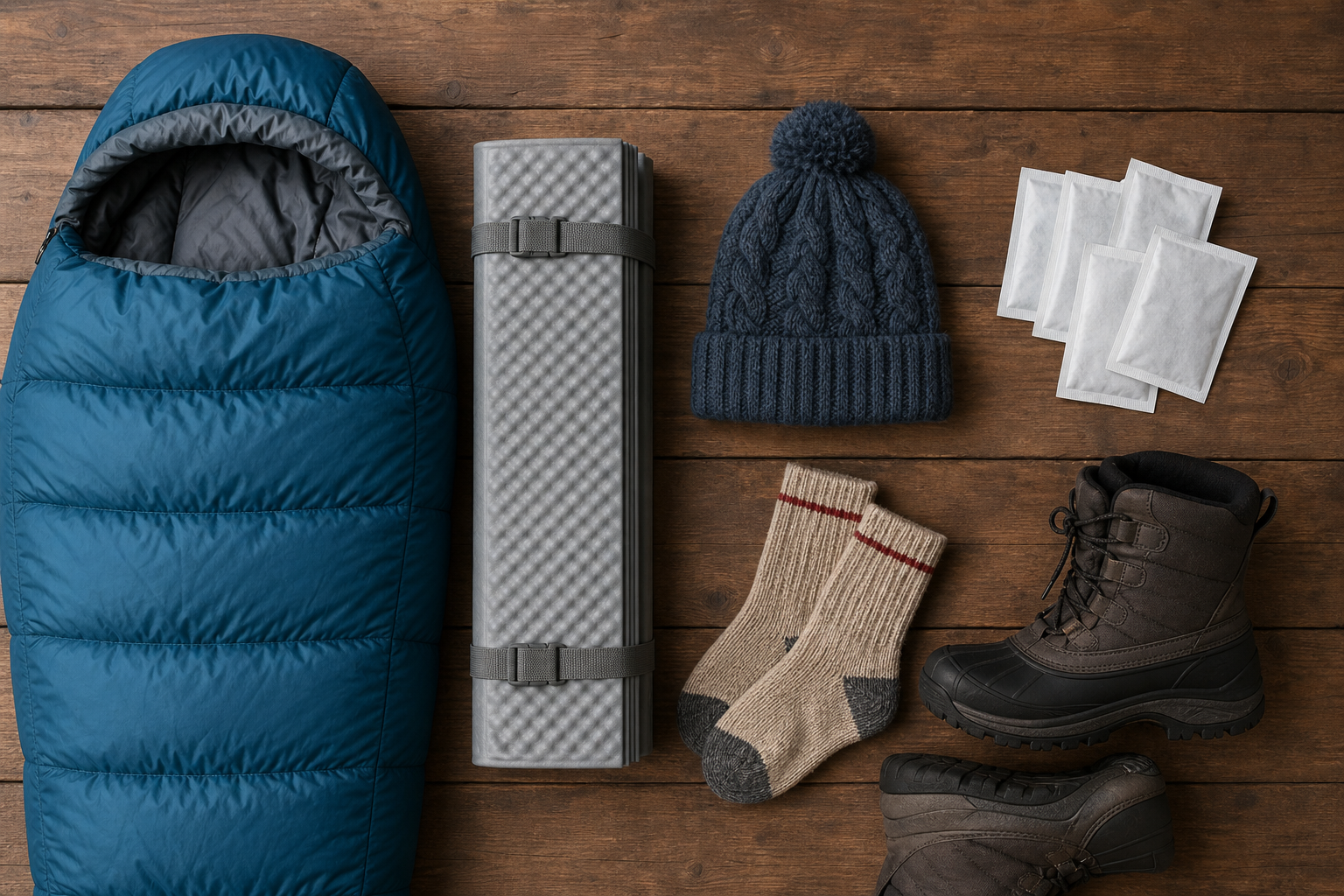
Even with an FF heater, many travelers lower the set temperature while sleeping, so bringing extra cold-weather gear makes a real difference in comfort. A winter-rated sleeping bag (comfort rating around -10°C), an insulating mat to block cold from the floor, and an electric blanket or small heater powered by a portable power bank are all worth having.
To manage condensation, run the ventilation fan for a few minutes before bed and apply anti-fog sheets to the windows. Thick socks, a knit cap, and fleece loungewear that warm your head and feet let you sleep comfortably without cranking up the cabin temperature.
On especially cold mornings, running the FF heater alongside a few minutes of engine warm-up after waking up makes both the cabin and the vehicle easier to get moving.
Cold-Weather Gear Checklist for Your Winter Trip
Here’s the cold-weather gear from Worry #4 laid out as a packing list. You don’t need every item, but if this is your first winter campervan trip in Hokkaido, treat the items toward the top as the highest priority.
| Item | Guideline | Why |
|---|---|---|
| Winter sleeping bag | Comfort rating around -10°C | Keeps you warm even with the heater turned down at night |
| Insulating / silver mat | Sized to cover the floor | Blocks cold rising from the floor |
| Thick socks, knit cap | 2–3 sets each | Warming your head and feet means less need to raise cabin temperature |
| Anti-fog window sheets | Cut to your window size | Reduces morning frost and condensation on windows |
| Disposable hand warmers | About 2–4 per day | For staying warm during outdoor sightseeing |
| Slip-resistant, waterproof boots | Rated for snow and ice | Prevents falls in parking lots and at sightseeing spots |
If you’re bringing your own portable power bank or electric blanket, check the vehicle’s auxiliary battery capacity in advance so you don’t run short on power overnight.
Winter-Specific Items to Confirm When Booking
Winter bookings come with a few questions you wouldn’t typically ask in summer. Confirming these by phone or email before you book saves you from scrambling on the day.
- Whether studless tires and 4WD are equipped
- The FF heater’s fuel type (diesel or gasoline) and the full-tank return policy
- Freeze prevention for the water/wastewater tanks (whether they’re heated)
- Any winter closure period, and whether pickup is possible right before or after it
- Whether tire chains are provided (and how to fit them) if you might drive through a chain-restriction zone
- Whether English or Chinese-language materials or interpretation are available, for international travelers
Chain restrictions in particular can be issued on sections of national highways or expressways when heavy snow or blizzard conditions are forecast. Even with studless tires fitted, chains may be required in restricted sections, so if you’re planning a long winter drive, it’s worth confirming in advance whether chains are provided.
Worry #5: “Are There Fewer Places to Rent or Park in Winter?” — Winter Closures, Open Bases, and Overnight Spots
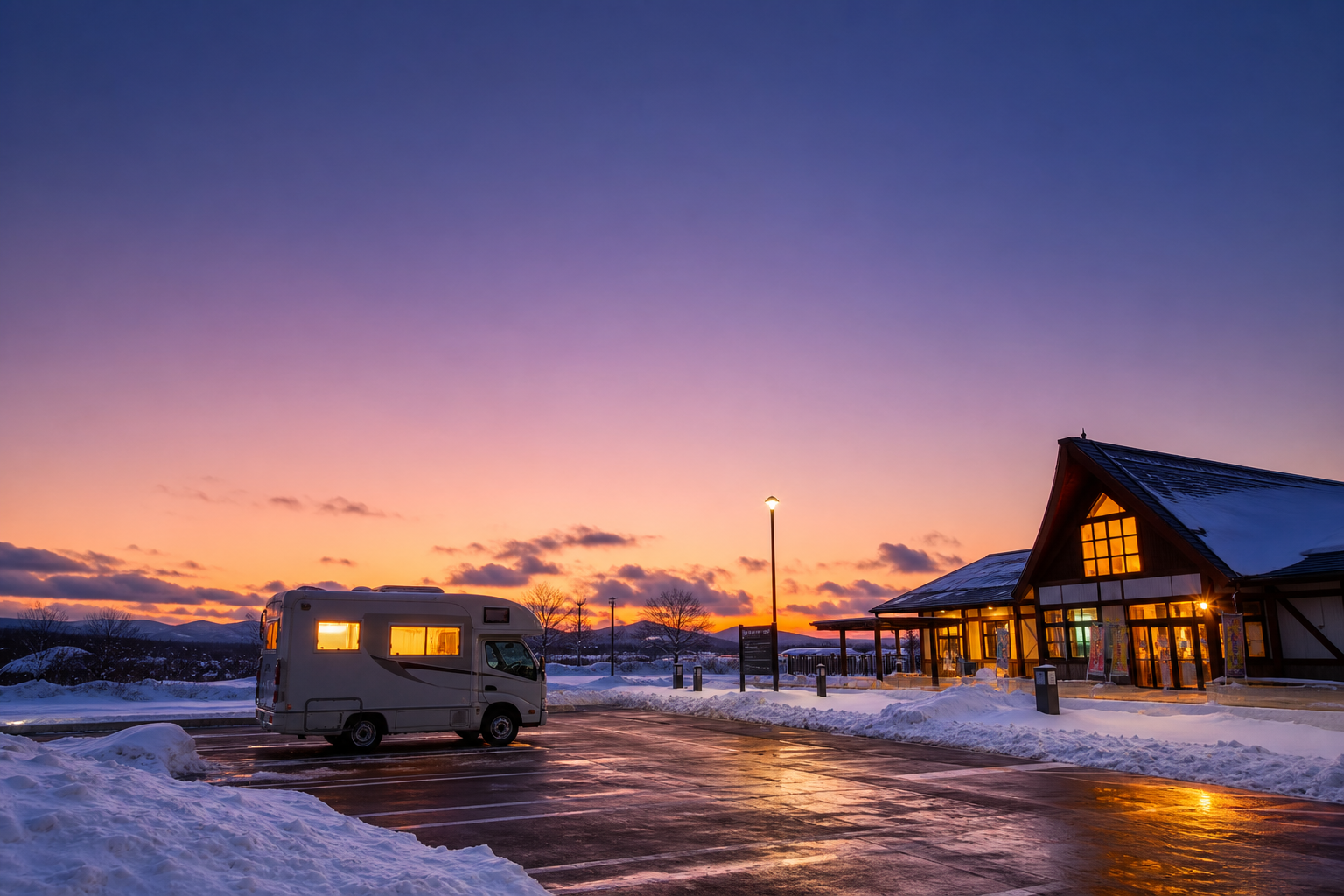
Some rental companies close their bases during winter (roughly December–March). Others stock 4WD, snow-ready vehicles and operate year-round, so if you’re renting in winter, always confirm winter operating status through the booking site or by phone. Rentals based at New Chitose Airport often operate year-round and, given the airport access, are an easy year-round starting point for a Hokkaido winter trip. A worked example comparing three Kitahiroshima rental companies on winter availability is in Kitahiroshima Campervan Rentals: 3 Companies Compared by Purpose.
As for overnight parking spots, some Michi-no-Eki roadside stations and RV parks close their restroom buildings for winter or don’t fully clear snow from their parking lots. Checking the winter operating status of any Michi-no-Eki or RV park you plan to stop at, via its official site before you leave, saves trouble on the ground. The basics still apply: choose a well-cleared, spacious parking spot, and park so your entry/exit isn’t blocked by snow.
New from New Chitose Airport — Available from June 2026
Rent the Cabcon “Cresson Journey”
Base yourself at New Chitose Airport and compare rates, vehicle types, and pickup locations all in one place.
See details at Moving Inn →Worry #6: “What If I Get Into an Accident?” — Insurance, the NOC, and Roadside Assistance
Winter roads carry higher accident and skidding risk than summer, so it’s important to fully understand the insurance waiver system (including the NOC — Non-Operation Charge) before signing your contract. Even with the waiver, whether a single-vehicle slide-off or a parking-lot scrape is covered depends on conditions that vary by company.
Most rental companies provide a 24-hour roadside assistance line, but in areas far from a rental base — eastern or northern Hokkaido, for example — it can take longer for help to arrive. Save the emergency contact number you receive at signing straight into your phone, and keep a paper copy in the vehicle too, so you’re not scrambling if something happens.
If you want to compare rental bases and insurance terms across companies, use our Complete Hokkaido Campervan Rental Company Comparison Guide.
Worry #7: “I’m Worried About Language and Paperwork” — How Foreign Travelers Rent a Campervan in Hokkaido
For foreign visitors, Japan’s driving license rules mean that in most cases you’ll need to present an International Driving Permit (issued under the Geneva Convention), your passport, and your home-country driving license. See our Guide to the Licenses Needed for a Campervan for the full breakdown. Japan drives on the left with right-hand-drive vehicles, so it’s worth taking a bit of time in a large, open parking lot right after pickup to get used to the vehicle before heading out.
The International Driving Permit only covers licenses issued by Geneva Convention member states and territories. Taiwan — whose visitors, as noted earlier, are among the largest nationality groups staying overnight in Hokkaido — isn’t covered by it. Taiwan, along with Switzerland, Germany, France, Belgium, and Monaco, instead requires the original driving license plus a Japanese translation from a government-designated body (valid for one year after arrival in Japan). A license issued in mainland China isn’t valid for driving in Japan under either arrangement (Tokyo Metropolitan Police Department, on Geneva Convention signatory countries; how to drive in Japan on a foreign license from a government-designated country; confirmed July 30, 2026). Requirements by nationality are laid out in Can You Rent a Campervan in Hokkaido on a Foreign License? Required Documents by Nationality.
Some bases have English- or Chinese-speaking staff, and some rental companies run multilingual booking sites. Rentals based at New Chitose Airport tend to have good airport access and stronger English support, making them an easy entry point for first-time visitors renting a campervan in Japan.
In winter especially, it’s worth having staff walk you through the condition of the studless tires, how to use the FF heater, and freeze-prevention steps for the wastewater tank when you pick up the vehicle. Ask about anything unclear on the spot — confirming everything before you leave is the single best way to put your mind at ease.
What a Winter Hokkaido Trip Can Look Like
For a concrete list of what is actually running, see 43 things you can only do in winter Hokkaido — each entry carries its season, price, age limit and the nearest RV park open in winter. Jewelry Ice on the Otsu coast is one example: clear blocks of river ice wash up on a Tokachi beach and are best seen at dawn, so you want to be parked nearby the night before.
Once your worries are addressed, all that’s left is enjoying the scenery only winter in Hokkaido offers. Winter days are short, with the sun setting early, so rather than being greedy with driving distance, a “move in the morning, settle in early in the afternoon” rhythm gives you plenty of margin even on snowy roads. A workable pattern for first-timers: stay near the airport on day one after picking up your campervan at New Chitose Airport, then head out toward Niseko, Furano/Biei, or the drift-ice areas of eastern Hokkaido from day two onward.
If you want a model route built around winter driving itself, see our Hokkaido Winter Driving Complete Guide (currently available in Japanese at hokkaido-winter-campingcar-drive); for ski/snowboard-focused overnight parking, see our Hokkaido Ski Resort × Campervan Overnight Parking Guide; for loading skis and snowboards, see how to carry skis and snowboards in a campervan; and for handling severe weather (heavy snow, blizzards), see our guide to Hokkaido campervan bad-weather countermeasures (currently available in Japanese at campingcar-bad-weather-hokkaido). Follow whichever fits your plans.
If you would like a concrete winter schedule, our 10-day winter itinerary covers nine nights from New Chitose Airport in a January course and a February course, with a place to stay each night and a plan for years when the drift ice does not arrive.
Summary: Your Pre-Departure Worry Checklist
- Confirmed studless tires and 4WD availability when booking
- Understand freeze prevention for the water/wastewater tanks and the pre-bed ventilation routine
- Confirmed how to use the FF heater and whether it’s okay to run it all night at pickup
- Packed cold-weather gear such as a winter sleeping bag and insulating mat
- Checked winter operating status for the Michi-no-Eki or RV parks you plan to stop at
- Know the NOC’s coverage scope and have the emergency contact saved
- (For international travelers) Carrying an International Driving Permit, passport, and home-country license
Winter is Hokkaido’s most popular season for foreign visitors, accounting for more than 60% of foreign overnight stays. Once you’ve covered the essentials — snowy-road driving, freeze prevention, heating, overnight-parking warmth, finding open bases, and insurance — a campervan trip in winter can be every bit as safe and comfortable as any other season.
Frequently Asked Questions (FAQ)
Is it dangerous to drive a campervan in Hokkaido in winter?
Snowy and icy roads do call for extra care, but if you choose a vehicle with studless tires and 4WD, keep a wide following distance, and avoid sudden steering or braking, it’s not an excessively dangerous trip. It’s also important not to push for more distance on days when the weather looks like it’s turning bad.
Do rental vehicles come with studless tires as standard?
Nearly all vehicles rented out in winter have studless tires as standard. Whether it’s 4WD varies by vehicle, so if you’re heading through heavy-snow areas like eastern or northern Hokkaido, confirm this when booking. If you’re concerned about wear, check the tread visually at pickup or ask staff about the manufacture year and how many winter seasons the tires have been used.
Is the cabin warm at night? Can I run the heater all night?
Most vehicles come with an FF heater that can be used overnight. Whether it’s fine to leave it running all night depends on the vehicle and company, so confirm at pickup for peace of mind.
Are there fewer bases open, or fewer places to park, in winter?
Some bases close for winter, but many others operate year-round with 4WD vehicles. Rentals based at New Chitose Airport often run year-round and are an easy option given the airport access. Winter operating status varies by Michi-no-Eki and RV park too, so we recommend checking in advance.
Can foreign visitors drive and rent a campervan?
In most cases, an International Driving Permit (issued under the Geneva Convention), a passport, and your home-country driving license are enough to rent. Japan drives on the left with right-hand-drive vehicles, so it’s a good idea to get used to the vehicle in a large parking lot before setting off.
Requirements differ if you hold a Taiwanese or mainland Chinese license. A Taiwanese license isn’t covered by the International Driving Permit and instead needs the original license plus a Japanese translation. A mainland Chinese license isn’t valid for driving in Japan at all. See our guide to required documents by nationality.
Is there support if I get into an accident or get stuck?
Most rental companies offer an insurance waiver system (the NOC) and 24-hour roadside assistance. Coverage scope varies by company, so confirm before signing, and keep the emergency contact number somewhere you can reach it instantly.
When’s the best time for a winter Hokkaido trip?
It depends on your goal, but January–February is a good target for the best powder snow, and late January through early March for drift ice. According to the Hokkaido Tourism Visitor Survey Report, January is the busiest month of the year for foreign overnight stays, so if you’re weighing crowds against booking availability, booking early is the safer bet.
Book a Campervan in Hokkaido
Moving Inn New Chitose Airport supports English booking and offers airport transfers.
![Things to Do in Sapporo in Winter: Beyond the Snow Festival, Plus Seasonal Highlights and a Campervan Guide [2026-27]](https://hokkaido-campingcar.jp/wp-content/uploads/2026/10/sapporo-hl1841-768x576.jpg)
![Monbetsu Drift Ice Festival 2027 [Feb 11–14]: Dates, Ice Sculptures, Garinko-go Icebreaker, Parking and Access by Campervan](https://hokkaido-campingcar.jp/wp-content/uploads/2026/10/monbetsu-hl999-768x576.jpg)
![Hokkaido New Year Weather and What to Wear | Sapporo, Hakodate, Asahikawa, Obihiro Mornings and Evenings, and Heavy-Snow Years [2026-27]](https://hokkaido-campingcar.jp/wp-content/uploads/2026/10/hokkaido-new-year-holiday-weather-eyecatch-768x432.webp)
![Hokkaido Illumination 2026-27 [Dates]: Sapporo Starts Nov 20, Plus Otaru, Asahikawa, Obihiro & Hakodate for Campervan Trips](https://hokkaido-campingcar.jp/wp-content/uploads/2026/10/hokkaido-illumination-2026-eyecatch-768x432.webp)