Why Do People from Overseas Visit Hokkaido? 4 Reasons Behind 2 Million Visitors, Backed by Data [2026 Edition]
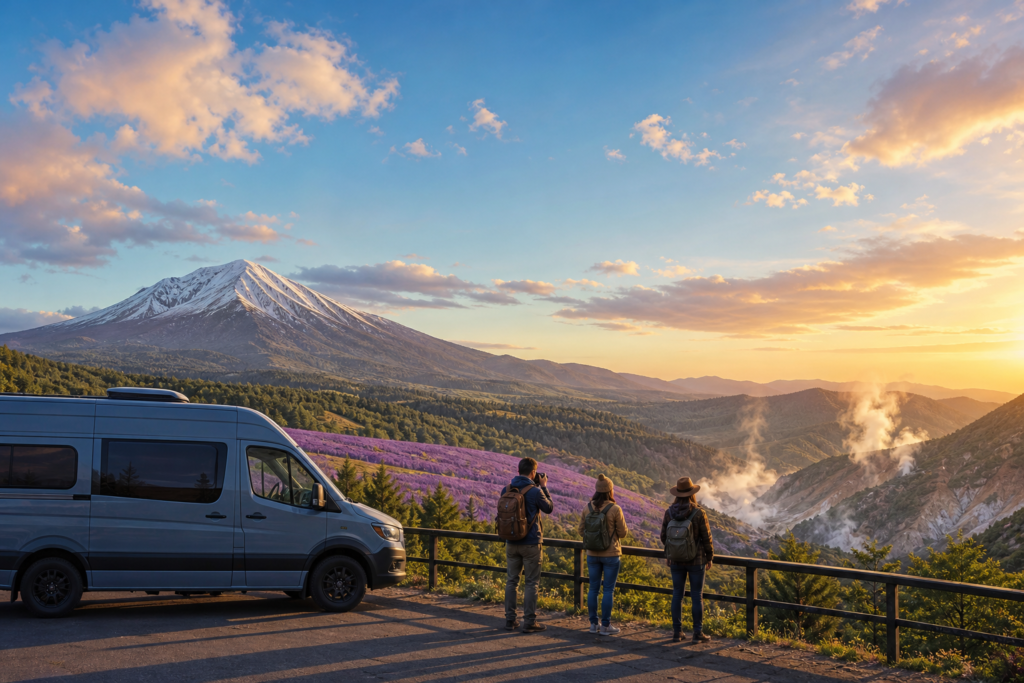
In the nine months from April to December of FY2025, 2,016,800 overseas visitors came to Hokkaido — up 18.0% from the same period the previous year (Hokkaido Economic Department Tourism Bureau, “FY2025 Q3 Tourist Arrivals Survey,” confirmed 2026-08-17). Growth wasn’t limited to South Korea, Taiwan, China, and Hong Kong in Asia — visitor numbers from the United States, Australia, and Canada rose sharply too.
Why do people from all over the world make the trip to Hokkaido? Reading the prefecture’s own statistics alongside a national survey by Japan’s Tourism Agency, the reasons sort into four main categories: nature, food, snow, and hot springs and experiences. This article checks each of the four against primary-source data, then works as a map connecting each one to our verified guides on how to enjoy it.
Every figure in this article is one we could confirm as of 2026-08-17 in materials published by the Hokkaido Economic Department Tourism Bureau and Japan’s Tourism Agency. The source is noted in the same paragraph as each figure.
New from New Chitose Airport — Available from June 2026
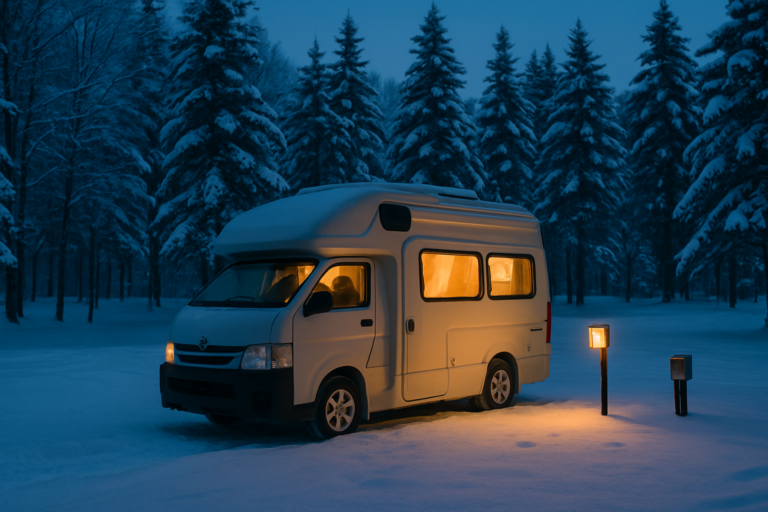
Rent the Cabcon “Cresson Journey”
Base yourself at New Chitose Airport and compare rates, vehicle types, and pickup locations all in one place.
See details at Moving Inn →How Much Has Overseas Travel to Hokkaido Grown in the Past Year?
Let’s start with the numbers. According to the Hokkaido Economic Department Tourism Bureau’s survey, the actual headcount of overseas visitors to Hokkaido from April to December of FY2025 was 2,016,800 — up 18.0% from 1,708,500 in the same period the previous year (confirmed 2026-08-17). Looking quarter by quarter, the growth comes in seasonal waves.
| Period (FY2025) | Overseas visitors | YoY change |
|---|---|---|
| Apr–Jun | 510,000 | +3.9% |
| Jul–Sep | 730,000 | +19.5% |
| Oct–Dec | 776,800 | +27.6% |
Both the headcount and the growth rate climb as the season moves from autumn into winter — the opposite pattern from Japanese domestic travel, which peaks in summer. In the same survey, the overall visitor count (including Japanese travelers) peaks in July–September at 16.26 million, so the contrast — “Japanese travel concentrates in summer, overseas travel in autumn and winter” — shows up clearly in the numbers (confirmed 2026-08-17).
By country and region, the April–December totals were 716,800 from South Korea (35.5% of the total), 480,700 from Taiwan (23.8%), 205,800 from China (10.2%), and 111,600 from Hong Kong (5.5%). Asia as a whole accounts for 86.1%, followed by 85,200 from the United States, 75,700 from Thailand, and 49,900 from Australia (confirmed 2026-08-17; Taiwan’s share corrected 2026-09-01).
| Country / region | Visitors (FY2025 Apr–Dec) | YoY change | Share |
|---|---|---|---|
| South Korea | 716,800 | +19.0% | 35.5% |
| Taiwan | 480,700 | +14.2% | 23.8% |
| China | 205,800 | +13.6% | 10.2% |
| Hong Kong | 111,600 | -1.8% | 5.5% |
| United States | 85,200 | +7.2% | 4.2% |
| Thailand | 75,700 | +15.7% | 3.8% |
| Australia | 49,900 | +50.3% | 2.5% |
Both tables are sourced from the Hokkaido Economic Department Tourism Bureau’s “Tourist Arrivals Survey Report” (FY2025 Q3, confirmed 2026-08-17). Note: for Taiwan’s share, we show 23.8% (480,700 divided by the 2,016,800 total) rather than the 27.7% printed in that source table — using 23.8% is what makes the individual country shares add up to the source’s own Asia-wide subtotal of 86.1% (re-confirmed 2026-09-01). So what are these 2 million visitors actually coming to Hokkaido to do? From here, we’ll use national data from the Japan Tourism Agency’s “Consumption Trend Survey for Foreigners Visiting Japan (2025 annual figures)” to look at the four reasons in turn.
Reason 1: Nature and Scenery — 68.0% of Visitors to Japan Go Sightseeing at Natural and Scenic Spots
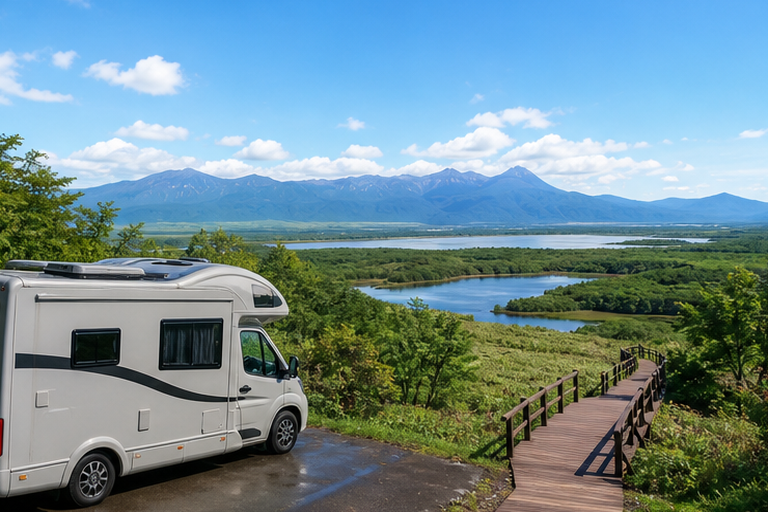
In the Tourism Agency’s national survey, 68.0% of respondents did “nature and scenic sightseeing” during their stay in Japan. It’s also named by 52.0% of people as something they want to do on their next visit — a staple activity ranking just behind Japanese food and shopping (Japan Tourism Agency, “Consumption Trend Survey for Foreigners Visiting Japan: 2025 Annual Report,” confirmed 2026-08-17).
As a destination for that demand, Hokkaido’s “inventory of nature” is on another scale entirely: the UNESCO World Heritage site of Shiretoko, the sprawling wetlands of Kushiro and Akan, the lavender fields of Furano and Biei, and the mountain scenery of Daisetsuzan. All of them are within driving distance of each other, which suits a trip built around moving between bases. Our area guides cover the highlights of each and where to park overnight, based on official information.
For nature in the east, see our Shiretoko Campervan Travel Guide and Kushiro–Akan Drive Guide; for a sea of clouds over the lake, see the Bihoro Pass–Lake Kussharo Guide. Flower fields and rolling hills are covered in the Furano–Biei Drive Guide, and mountain scenery in the Daisetsuzan–Sounkyo Guide. If it’s the blue of the sea you want, there’s the Shakotan Peninsula Guide, and for the northernmost wilderness, the Sarobetsu Plain and Wakkanai–Cape Soya Guide.
Reason 2: Food — 98.2% Have “Eaten Japanese Food,” Making It Almost Universal
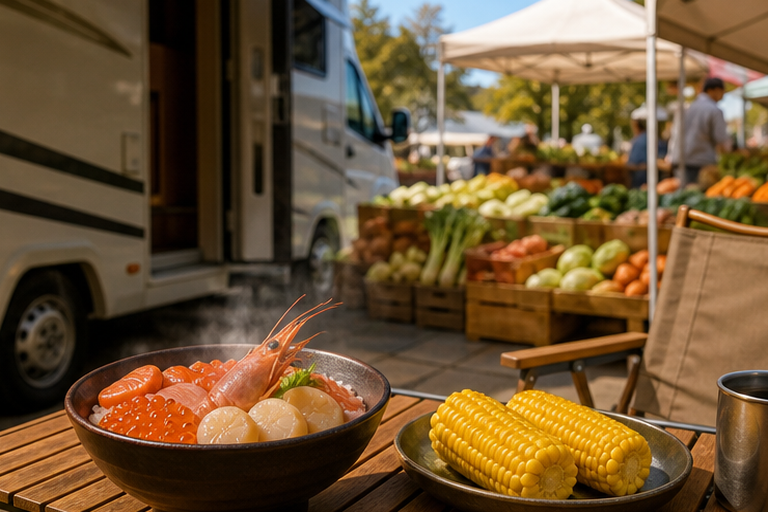
In the same national survey, 98.2% of respondents “ate Japanese food” during their stay — the top-ranked activity, ahead of shopping (88.1%) and walking around downtown areas (81.8%). It also ranks first among things people want to do next time, at 70.7% (Japan Tourism Agency, op. cit., confirmed 2026-08-17). Food is the most widely shared motivation for visiting Japan.
Hokkaido’s strength on the food side is its range — seafood, ramen, Genghis Khan grilled lamb, dairy — and the fact that the production areas are themselves tourist destinations. Being able to buy seafood at a market and eat it right at the table in your campervan is something unique to a campervan trip. Classic food-hopping routes are in our Hokkaido Campervan Gourmet Guide and Otaru Drive Guide, and roadside stops where local flavors gather are ranked in our Michi-no-Eki Ranking.
If you want to build a trip around seasonal food events, see our September Food Festival Touring Plan; for harvest experiences, there’s our article on fruit-picking and overnight parking and the Tokachi mushroom-foraging experience.
Reason 3: Snow — 97.1% of Those Who Skied or Snowboarded Said They Were Satisfied
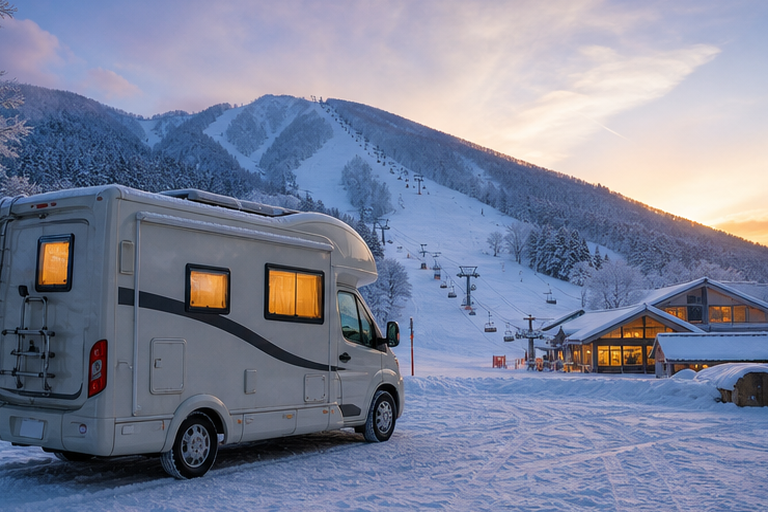
In the national survey, only 2.9% of respondents “did” skiing or snowboarding — a minority. Yet among those who did, 97.1% said they were satisfied, one of the highest scores in the whole survey. That figure jumps to 17.9% for people wanting to do it on their next visit (Japan Tourism Agency, op. cit., confirmed 2026-08-17). It’s an activity where the people who’ve tried it rate it highly, with plenty more waiting to give it a go.
Hokkaido’s own statistics show the same strength in the snow season. Overseas visitor numbers were highest in the October–December quarter, at 776,800 — the biggest of the three quarters. Broken down by country, growth over that period stands out for visitors likely drawn by snow: Canada +116.1%, the United States +74.9%, and Australia +67.1% (Hokkaido Economic Department Tourism Bureau, op. cit., confirmed 2026-08-17).
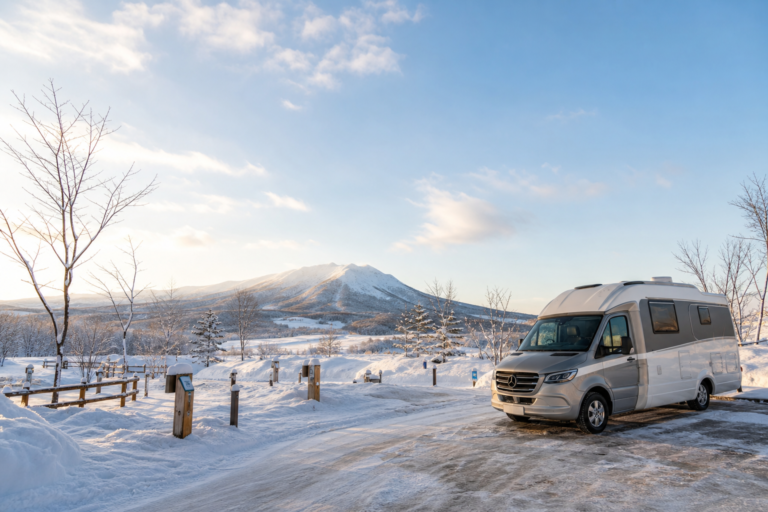
For ways to enjoy snowy Hokkaido: if it’s downhill runs you want, see our Ski Resort × Campervan Overnight Parking Guide and Niseko Drive Guide; if you want to see drift ice and snow scenery itself, there’s our Complete Drift Ice × Campervan Guide and Winter Travel Guide. If you’re worried about driving on snowy roads or the cold inside the vehicle, read our article that resolves every winter worry first.
Reason 4: Hot Springs and Experiences — “Things to Do Next Time” Shows Hot-Spring Bathing Jumping to 51.4%
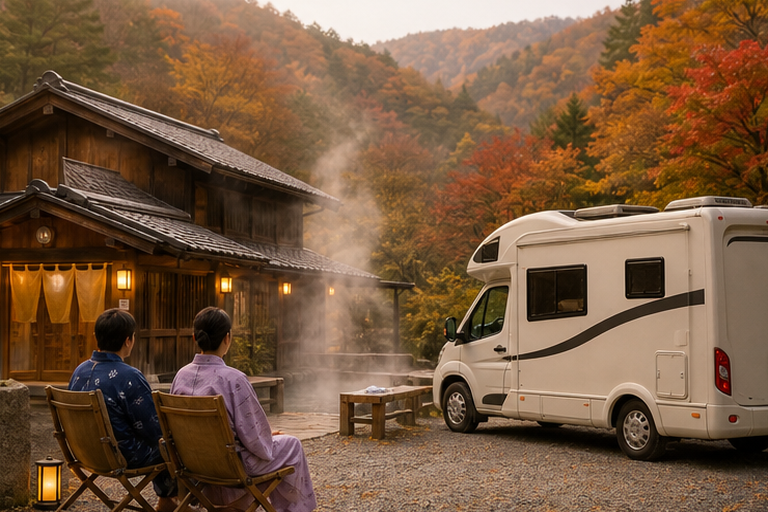
27.0% of respondents “bathed in a hot spring” during this stay. But for things they want to do next time, that jumps to 51.4% — nearly double (Japan Tourism Agency, op. cit., confirmed 2026-08-17). The numbers point to a shift in behavior: first-time visitors tour the cities, and from the second visit onward they head for hot springs and rural experiences. Satisfaction scores are high across the board here too: 94.6% for hot-spring bathing, 97.2% for experiencing everyday Japanese life, and 96.3% for nature tours and rural experiences.
The sheer number and variety of hot-spring areas is one of Hokkaido’s strengths. For the full picture, see our Campervan Trip Hot Spring Guide and our roundup of day-use hot springs you can visit while overnight parking; by area, there are guides to Noboribetsu Onsen, Jozankei, and Lake Toya–Mt. Usu.
For rural experiences, our articles on farm experiences (milking and cheese workshops), horseback riding, and Tokachi hot-air ballooning guide you through each facility together with nearby places to park overnight.
Satisfaction With “Experiencing the Four Seasons” Is 96.6% — the Same Place Wears a Different Face Each Season
The national survey includes an item for “experiencing the four seasons”: satisfaction among those who did it is 96.6%, and 30.7% name it as something they want to do next time (Japan Tourism Agency, op. cit., confirmed 2026-08-17). In Hokkaido, where the scenery swaps completely between summer and winter, this swing between “a different face each season” is far bigger than in Honshu. It’s entirely possible for the same traveler to come twice — once for lavender season, once for drift ice season.
For a season-by-season starting point: in summer, our 10 Recommended Summer Spots; in autumn, our Autumn Travel Guide and Complete Autumn Foliage Drive Guide; in winter, our Winter Travel Guide. For autumn nature-watching, there are also ways to explore on foot, such as salmon-run viewing and autumn foliage trekking.
What Do You Need to Get Around Hokkaido by Campervan, Coming From Overseas?
All four reasons covered so far — nature, food, snow, and hot springs and experiences — share one trait: they’re spread out. Shiretoko and Furano are half a day apart by car, and both hot-spring areas and food-producing regions are scattered across the whole island. That’s why a campervan, which combines transport and lodging in one, turns Hokkaido’s sheer size into part of the fun rather than an obstacle. To see how overseas travelers actually do this in practice, our 10 Hokkaido Campervan Trips Filmed by Overseas YouTubers introduces each one with video.
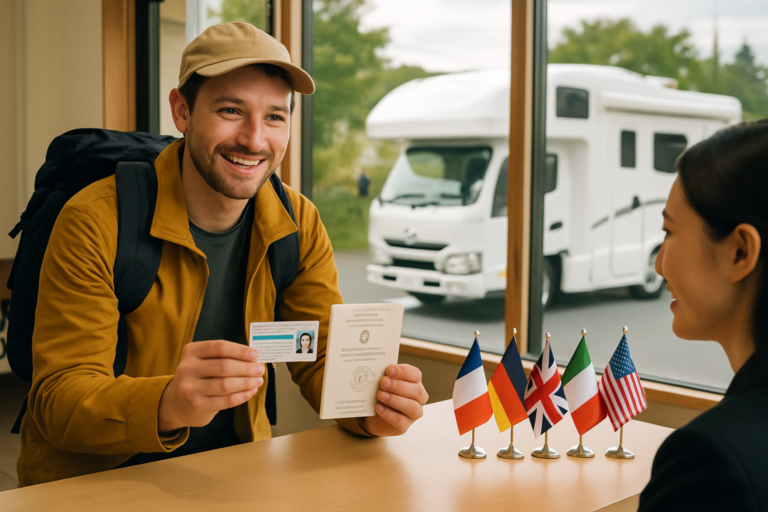
The first thing to check when preparing is your driver’s license. Depending on your nationality, you’ll either be able to drive with an International Driving Permit, or you’ll need a Japanese translation of your home license. Check which applies to you in our Guide to Renting With a Foreign License: Required Documents by Nationality.
New Chitose Airport and the surrounding area make an easy pickup base — how to choose is covered in our Complete Guide to Renting at New Chitose Airport. If you want to book in English or Chinese, our introduction to Moving Inn is worth a read. For first-timers, the fastest way in is our Complete Guide to Your First Campervan Rental, which covers the whole process.
New from New Chitose Airport — Available from June 2026
Rent the Cabcon “Cresson Journey”
Base yourself at New Chitose Airport and compare rates, vehicle types, and pickup locations all in one place.
See details at Moving Inn →Links by Purpose — Pick the One Article to Read Next From Here
Here are all the articles mentioned in this piece, reorganized by purpose. Pick the one that matches where you are in planning your trip.
| Purpose | Start here | Also read |
|---|---|---|
| See nature and scenery | Shiretoko Guide | Furano–Biei / Daisetsuzan–Sounkyo / Bihoro Pass–Lake Kussharo |
| Enjoy the food | Gourmet Travel Guide | Otaru / Michi-no-Eki Ranking |
| Experience snow and winter | Winter Travel Guide | Ski Resort × Overnight Parking / Drift Ice Guide / Winter Worries Resolved |
| Soak in hot springs | Hot Spring Guide | Overnight Parking × Day-Use Hot Springs / Noboribetsu Onsen |
| Experiences and activities | Farm Experience | Horseback Riding / Hot-Air Ballooning / Fruit Picking |
| Plan a route | Complete Model Course Guide | Eastern Hokkaido Traverse / Central Hokkaido Loop / Southern Hokkaido Route |
| Prepare to rent from overseas | Renting With a Foreign License | New Chitose Airport Rental / Moving Inn Introduction |
| First-time rental basics | Complete First-Timer’s Guide | 10 Trips by Overseas YouTubers |
Frequently Asked Questions (FAQ)
Can I rent a campervan in Hokkaido with a foreign driver’s license?
The documents you need depend on your nationality. Some countries can drive with an International Driving Permit, while others need a Japanese translation attached to their home license. Check your case first in our Required Documents Guide by Nationality, and let the rental company know when you book.
I’m worried about driving on snowy roads in winter Hokkaido. Is it manageable?
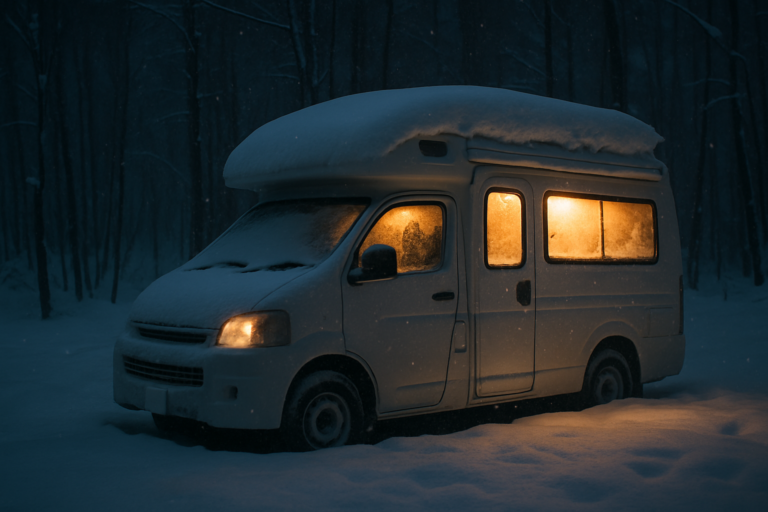
Break the worry down into its parts and prepare for each one, and it’s manageable — plenty of people actually rent and travel in winter. Our article that resolves every winter worry covers countermeasures for snowy-road driving, freezing, heating, and winter overnight parking, so read it once before you book.
How many days do I need to get around Hokkaido?
You’ll get more out of the trip by not trying to cover the whole island in one go. If you narrow it to one area, you can build a trip from 3–5 nights; extending as far as eastern Hokkaido, aim for 5–7 nights. Compare itineraries by length of stay in our Complete Model Course Guide.
What season sees the most overseas travelers?
In the FY2025 data, the October–December quarter had the most, at 776,800 — the highest of the three quarters (Hokkaido Economic Department Tourism Bureau, confirmed 2026-08-17). The overall total, including Japanese travelers, peaks in July–September, so the type of crowding changes by season: summer brings overall congestion, while autumn and winter bring more overseas travelers specifically.
Is there information available in English or Chinese?
Many articles on this site have English and Traditional Chinese versions, which you can switch to from each article’s language switcher. Language support at rental companies varies by company, so if you’re thinking of booking in English or Chinese, our introduction to Moving Inn is also worth checking.
Book a Campervan in Hokkaido
Moving Inn New Chitose Airport supports English booking and offers airport transfers.