Hokkaido Campervan Gourmet Travel Guide | Seafood, Genghis Khan, Ramen & Sweets Complete Edition [2026]
Regional guide to food you must try on a Hokkaido campervan trip.
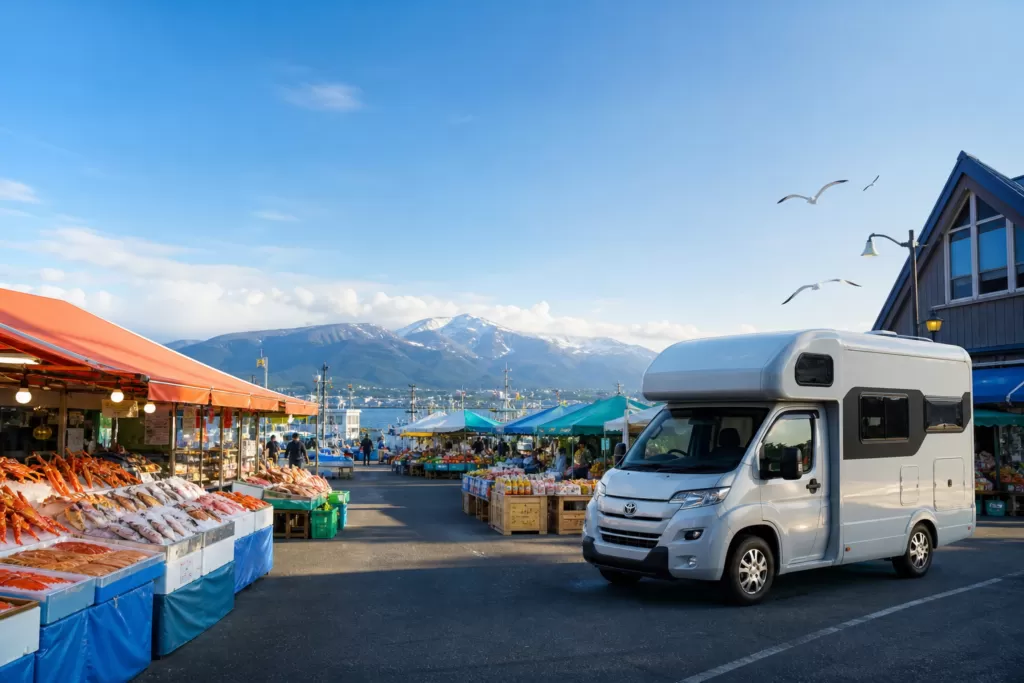
Hokkaido is a food paradise simply by virtue of passing through it. With a campervan, combining dining out with in-vehicle cooking lets you enjoy Hokkaido’s local produce to the fullest while keeping costs under control.
This guide covers regional specialty dishes, sourcing ingredients at roadside stations, in-van recipes, souvenir sweets, and tips for avoiding peak-hour crowds—everything you need for a Hokkaido campervan gourmet trip.
How to Split Dining Out vs. Cooking in the Van
Eating out for every meal drives up travel costs. Balancing the two is the key to managing your budget while enjoying Hokkaido’s food.
| Situation | Recommended Style | Reason |
|---|---|---|
| Local specialties (ramen, pork bowl, robata) | Dine out | Worth experiencing the authentic taste. Budget ¥800–¥1,500 per meal. |
| Breakfast / light lunch | Cook in van | Use ingredients from roadside stations. Big cost savings. |
| Fresh seafood & vegetables | Cook in van | Buy cheaply at local farms, cook on a burner or IH—the lowest-cost option. |
| Morning markets / fish markets | Dine out | The pleasure of Hakodate morning market and Kushiro Wasyou Market is eating on the spot. |
On a 7-night trip, cooking lunch in the van just 5 times saves roughly ¥5,000–¥8,000 per person. Campervans come equipped with a gas stove, IH cooktop, or microwave, plus a sink for washing up. Basic cookware is usually provided, but bringing a familiar knife and frying pan reduces effort.
New Chitose Airport / Tokachi-Obihiro Airport
Rent the Cabcon “Cresson Journey”
Base yourself at New Chitose Airport and compare rates, vehicle types, and pickup locations all in one place.
See details at Moving Inn →Area-by-Area Specialty Food Guide
Central Hokkaido / Sapporo
- Genghis Khan (jingisukan): Daruma and Matsuo Jingisukan are the two definitive spots. Fresh lamb vs. marinated—preferences divide. ¥1,500–¥2,500 per person. Matsuo’s marinated lamb is also sold in supermarkets.
- Miso ramen: Famous shops are concentrated around Sapporo Ramen Alley and the Susukino area. The authentic taste is a rich pork-based miso broth. ¥900–¥1,200.
- Soup curry: A Sapporo-born curry loaded with large pieces of ingredients. Fun to adjust the heat level. “Rakkyo” and “Magic Spice” are well-known restaurants. ¥1,200–¥1,800.
Parking a large campervan in central Sapporo is difficult. Using a suburban shopping mall parking lot or basing yourself at “Roadside Station Salmon Park Chitose” (30 min from Sapporo) and taking public transit into the city is more realistic.
Hakodate / Southern Hokkaido
- Hakodate Morning Market seafood bowl: Open from 5 a.m. A seafood bowl topped with sea urchin, salmon roe, and crab runs ¥1,500–¥3,000. Worth moving the campervan early to get there.
- Salt ramen: Clear, light chicken and seafood broth. ¥800–¥1,100. “Ajisai” and “Men Chubou Ajisai” are well-known.
- Squid dishes: Hakodate has a large catch of Japanese flying squid—squid sashimi, squid rice, and salted squid entrails are specialties. The “squid rice” station bento costs around ¥800. Frozen packs are also available at roadside stations.
- Oshamanbe crab rice (kanimeshi): The kanimeshi bento near Oshamanbe Station is ¥700–¥900. Easy to stop by on a southern Hokkaido drive.
For the Hakodate Morning Market, parking the campervan the previous evening at “Hakodate Nishi Hatoba parking lot” near Hakodate Port lets you walk over early in the morning. Peak crowd time is 8–9 a.m.; arriving at 6–7 a.m. lets you eat in peace.
Obihiro / Tokachi
- Pork bowl (buta-don): Originating at “Panchow,” the pork bowl is Obihiro’s signature dish—charcoal-grilled pork loin in a sweet-savory sauce. ¥900–¥1,400. Multiple specialist restaurants in Obihiro city.
- Indian curry (Indian Curry): The soul food of Obihiro residents. Spicy with a hint of sweetness. Multiple “Indian” chain locations in Obihiro. ¥600–¥900.
- Tokachi sweets: A rich lineup using Tokachi wheat, butter, potatoes, and corn. Rokkatei, Ryugetsudo, and other Tokachi confectionery shops are concentrated in the area.
- Tokachi wine & cheese: Wine tasting at Ikeda Wine Castle (Ikeda Town). Buy souvenirs at the shop.
Kushiro
- Robata grilling: A style originating in Kushiro. You grill seafood and vegetables yourself over charcoal. Old-established restaurants like “Robata” draw long queues. ¥2,000–¥4,000.
- Zangi: Hokkaido-style fried chicken with a distinctive sweet, strong seasoning. Widely served at izakaya and set-meal restaurants. ¥500–¥800. Also available from prepared-food counters at Kushiro Washoku Market.
- Kushiro Washoku Market “Katte-don”: Choose your own toppings to build a custom seafood bowl. ¥1,500–¥2,500 approximate. Earlier in the day means more variety.
Asahikawa / Furano / Niseko
- Asahikawa soy sauce ramen: Pork bone & seafood stock topped with a layer of lard that keeps the soup hot. “Hachiya” and “Santouka” are famous. ¥900–¥1,200.
- Furano curry & herb dishes: Herb-based cuisine using Furano-grown ingredients after lavender field sightseeing. “Furano Cheese Factory” pizza is also popular.
- Niseko farm produce: The Niseko area produces asparagus, potatoes, and corn. “Roadside Station Niseko View Plaza” is the go-to spot for stocking up.
- Otaru sushi: Otaru is a fiercely competitive sushi town ranging from conveyor belt to premium restaurants. Famous restaurants are concentrated around Hanazono Ginza shopping street. ¥1,500–¥5,000.
Sourcing Ingredients at Roadside Stations & Farm Stands
Hokkaido roadside stations have well-stocked farm-direct sections where you can buy fresher produce for less than in supermarkets. On a campervan trip, the fun of “gathering ingredients while driving” is enhanced by stopping at roadside stations.
| Available Ingredients | Recommended Area / Roadside Station | Approximate Price |
|---|---|---|
| Scallops, kelp, dried fish | Eastern Hokkaido (Saroma, Nemuro), Northern Hokkaido (Wakkanai) | Scallop meat 1 kg ¥1,500–¥2,500 |
| Corn & potatoes | Central / Tokachi (RS Nakasatsunai, etc.) | Corn ¥100–¥200 each |
| Dairy (cheese, butter, milk) | Tokachi, Furano, Southern Hokkaido (RS Tobetsu, etc.) | Cream cheese ¥400–¥600 |
| Mountain vegetables & mushrooms | Northern & Eastern Hokkaido (Sounkyo, around Akan) | Mountain veg set ¥300–¥600 |
| Fresh vegetables (asparagus, pumpkin) | Around Furano & Obihiro | Asparagus 1 bunch ¥200–¥400 |
| Salmon, Atka mackerel, saury | Eastern Hokkaido (Nemuro, Akkeshi, Kushiro) | Fresh salmon slice ¥200–¥400 |
Roadside station farm-direct sections are best stocked in the morning; popular items sell out by evening. The ideal timing is to shop in the morning and cook in the early afternoon.
JA (agricultural cooperative) direct-sale shops tend to be cheaper than roadside stations and carry produce that tastes closer to what locals eat. Search “農産物直売所” (farm produce stand) on Google Maps to find shops near you.
Timing Tips to Avoid Peak-Hour Crowds
Popular Hokkaido food spots see concentrated visitor traffic at certain times; a slight shift in timing can drastically cut your wait.
- Hakodate Morning Market: Less crowded at 6–7 a.m. Crowds build after 9 a.m.
- Popular ramen shops (Sapporo, Asahikawa): Right at opening (around 11 a.m.) or after mid-afternoon reopening (2–4 p.m.) is relatively quiet.
- Obihiro pork bowl: Lunch peak is 11:30–13:00. Arrive at 10:30–11:00 or aim for after 2 p.m.
- Robata grilling (Kushiro): Queue at opening (5–6 p.m.) to secure a seat. Lines grow long after 7 p.m.
- Roadside stations: Parking lots fill up with campervans and tour buses 11 a.m.–1 p.m. Before 10 a.m. or after 1 p.m. is much easier.
In-Van Hokkaido Ingredient Recipes
Quick dishes you can make with the IH cooktop or microwave installed in most campervans.
- Baked potato with butter (jagabata): Microwave a Hokkaido potato on 600W for 5–7 min. Cut open, add butter and salt. Ingredient cost ¥150–¥200.
- Butter-soy scallop pan: Melt butter in a pan, sear scallops on both sides, finish with a drizzle of soy sauce. A premium dish from roadside station scallops.
- Corn soup: Boil fresh corn from harvest season (Aug–Sep) and blend. Corn from northern Hokkaido or Tokachi is outstanding.
- Salmon chanchan-yaki: Steam-cook salmon and vegetables with miso butter in foil. A Hokkaido home dish you can make with roadside station salmon and foil.
- Lamb stir-fry: Stir-fry Matsuo Jingisukan marinated lamb in a pan with pre-cut vegetables. Available at supermarkets.
- Steamed Akkeshi oysters: Place fresh oysters from Akkeshi roadside station in foil, add a splash of water, and cover to steam. Serve with lemon and soy sauce.
The campervan kitchen is compact, so cooking two dishes simultaneously takes a bit of practice. Start with items that take longer to cook (root vegetables, meat), then finish with quick-cooking items (leafy vegetables, seafood) to minimize time.
Hokkaido Souvenirs & Sweets
| Product | Maker | Main Sales Points | Approximate Price |
|---|---|---|---|
| Shiroi Koibito | Ishiya Confectionery | New Chitose Airport, Ishiya stores | 18-pc box approx. ¥1,300 |
| Jaga Pokkuru | Calbee | Airports, roadside stations (limited qty) | 10-bag pack approx. ¥650 |
| Rokkatei Marusee Butter Sandwich | Rokkatei | Rokkatei shops across Hokkaido | 10-pc box approx. ¥1,300 |
| Royce’ Raw Chocolate | Royce’ | Airports, Royce’ stores | 20-pc box ¥700–¥900 |
| Ryugetsudo Sanpopo-Roku | Ryugetsudo | Ryugetsudo shops, airports | 1 bar approx. ¥900 |
| Yoitomake | Mitsuboshi | Tomakomai area, airports | 1 bar approx. ¥800 |
Fresh chocolates and pastries require refrigeration. Use the campervan’s refrigerator (included in most vehicles as standard equipment). However, if you start buying from day one, the fridge fills up fast—buy in bulk toward the end of the trip, close to your return date.
Buying & Cooking Hokkaido Produce Is the Best Food Experience
Touring famous restaurants is great, but cooking ingredients you bought at a roadside station or farm co-op in the campervan kitchen has its own deep satisfaction. The prices are lower, the produce is fresh, and you can finish it exactly to your taste. This “mobile home cooking” is one of the signature pleasures of a Hokkaido campervan trip.
Ingredients Available at Farm Stands, JA Shops & Roadside Stations (by Area)
Buying directly from the production area lets you experience freshness and prices you won’t find in supermarkets.
| Area | Recommended Ingredients | Main Shopping Spots | Approximate Price |
|---|---|---|---|
| Tokachi (around Obihiro) | Potato, corn, asparagus, cheese | RS Nakasatsunai, JA Memuro direct shop | Potato 1 kg ¥150–¥250 |
| Okhotsk (Mombetsu, Saroma) | Scallops, Atka mackerel, kelp | RS Saroma, JF fishery co-op direct shop | Scallop meat 1 kg ¥1,500–¥2,500 |
| Furano / Sorachi | Asparagus, pumpkin, onion, lavender herbs | RS Furano, farmhouse direct shops (look for signs) | Asparagus 1 bunch ¥200–¥400 |
| Southern Hokkaido (around Hakodate) | Flying squid, kelp, salmon, kelp products | RS Natowa Esan, Hakodate Jiyu Market | Squid 1 whole ¥300–¥600 |
| Northern Hokkaido (Wakkanai, Nayoro) | Scallops, kelp, mountain veg, dairy | RS Wakkanai, JA Horokanai | Mountain veg set ¥300–¥600 |
3 Easy Recipes for the Campervan Kitchen
The campervan kitchen has limited counter space. Recipes with few steps suit it best.
- Rinse a Tokachi potato and wrap it wet in plastic wrap
- Microwave at 600W for 5–7 minutes (adjust for size)
- While hot, cut a cross on top, add butter, sprinkle salt
- Cost: ¥50–¥80 per potato + a little butter. Satisfying for ¥100–¥150.
- Tip: Different varieties have different textures—Danshaku is fluffy, Kita Akari is smooth. Checking the variety at the roadside station is part of the fun.
- Pat scallop meat (fresh or thawed) dry with a paper towel
- Heat butter in a pan, sear scallops on high heat for 2 minutes per side
- Flip and cook another 1–2 minutes, drizzle soy sauce around the edge of the pan
- Cost: about ¥300–¥500 per 100g of scallop. A squeeze of lemon brightens the flavor.
- Tip: Overcooking makes them tough—high heat, short time is the rule. Seared outside, rare inside is best.
- Cut root vegetables (daikon, carrot, burdock, potato) and pork belly from the roadside station into bite-sized pieces
- Add water and dashi (instant is fine) to a pot and simmer the root vegetables first
- Add pork, skim foam, and once cooked through, dissolve in miso
- Cost: ¥800–¥1,200 for 2–3 servings. Hokkaido root vegetables are cheap and filling.
- Tip: A vacuum insulated pot (like Shuttle Chef) keeps it warm while you drive and lets you eat as soon as you arrive—easy in the moving van too.
Meal Timing (How to Split Sightseeing and Eating)
Drives between Hokkaido attractions are long; building meals into the route cuts wasted time.
- Light breakfast in the van: Bread or fruit bought at the roadside station the day before. Lets you start moving early.
- Lunch at a famous restaurant: Arriving before 11 a.m. (before peak 11:30–13:00) means little or no wait. Wrap up the morning sightseeing early and head for lunch.
- Dinner cooked in the van: Pick up ingredients at an afternoon roadside station and cook after reaching your overnight spot. Using what you bought the same evening keeps it fresh.
- Restaurants in tourist areas get crowded: Spots like Shiretoko and Furano can have 1–2 hour waits for restaurants in summer. Being able to say “we don’t need to eat out here” is a key advantage of in-van cooking.
New Chitose Airport / Tokachi-Obihiro Airport
Rent the Cabcon “Cresson Journey”
Base yourself at New Chitose Airport and compare rates, vehicle types, and pickup locations all in one place.
See details at Moving Inn →Recommended Campervan Rental
For a Hokkaido gourmet campervan trip, choosing a vehicle with a well-equipped kitchen is the key.
FAQ
Q1: How do I store ingredients?
Most rental campervans have a 12V refrigerator (capacity 40–80L) that runs off the vehicle battery while driving. Fresh seafood should be used the same day or stored in a cooler with ice. Ingredients from roadside stations should generally be used by the following morning.
Q2: Is alcohol cheap in Hokkaido?
Convenience store and supermarket prices are not much different from Honshu, but local liquor shops and roadside stations sometimes sell Hokkaido-limited craft beers (Sapporo Classic, Otaru Beer, etc.) and local sake more cheaply than usual. Sapporo Classic costs about ¥230–¥270 for a 350ml can at Hokkaido convenience stores.
Q3: What are the hours of the Hakodate Morning Market?
The Hakodate Morning Market is generally open from 5:00 to around 14:00 (varies by stall). Popular seafood bowl restaurants queue up between 8:00 and 10:00. Parking the campervan near Hakodate Port the night before and walking over in the early morning is very convenient. Check the official Hakodate Morning Market website (hakodate-asaichi.com) for details (as of May 2026).
Q4: What is the refrigerator capacity in the campervan?
Depending on the vehicle, rental campervans typically have 40–80L refrigerators—enough for 2–4 people’s ingredients for 2–3 days. Some refrigerators don’t support frozen foods, so check before booking if that matters.
Q5: How late do roadside station restaurants stay open?
Most roadside station restaurants are lunch-only, operating around 11:00–15:00. Even year-round facilities are often not open in the evening. Do not rely on roadside stations for dinner—either decide on a restaurant in advance or shop for ingredients to cook in the van.
Book a Campervan in Hokkaido
Moving Inn New Chitose Airport supports English booking and offers airport transfers.

![When and Where Can You See Harbor Seals at Cape Erimo? Kaze no Yakata Official Information, Viewing Season, and Windy-Day Notes [2026-27]](https://hokkaido-campingcar.jp/wp-content/uploads/2026/10/erimo-cape-lighthouse-768x511.jpg.webp)
![Where and Under What Conditions Can You See Diamond Dust in Hokkaido? How Cold a Morning It Takes, and Where It Appears [2026-27]](https://hokkaido-campingcar.jp/wp-content/uploads/2026/10/hokkaido-diamond-dust-nayoro-768x512.jpg.webp)
![Can You Drive to Hokkaido Jingu for Hatsumode? Parking, Crowds, and Where to Park and Walk [2027]](https://hokkaido-campingcar.jp/wp-content/uploads/2026/10/hokkaido-jingu-winter-torii-768x504.jpg.webp)
![Hokkaido Roads Over New Year [2026-27] | Expressway Sections Prone to Blizzard Closures, Forecast Congestion Days, No Holiday Discount, and New Chitose Airport Parking](https://hokkaido-campingcar.jp/wp-content/uploads/2026/10/hokkaido-winter-rural-road-edge-markers-768x432.jpg.webp)
![Where to See Sea Smoke (Kearashi) in Hokkaido: Rumoi’s Ogon-misaki and the Morning Conditions [2026-27]](https://hokkaido-campingcar.jp/wp-content/uploads/2026/10/rumoi-kearashi-sea-smoke-768x511.jpg.webp)
![Geminid Meteor Shower 2026 in Hokkaido: Peak Around 23:00 on December 14, Sapporo Moonset 20:40, and Staying Warm in a Winter Campervan [2026]](https://hokkaido-campingcar.jp/wp-content/uploads/2026/10/geminids-2026-hokkaido-768x575.jpg.webp)