Do Campervans Have Showers? How They Work, Which Vehicle Types Have Them, and Alternative Bathing Options in Hokkaido
“Does the campervan come with a shower?” and “Even if it does, is it actually usable?” — these are questions nearly every rental customer asks. Yet the equipment list in a brochure rarely tells the whole story. Here is the short answer upfront: only about 10–20% of campervans sold in Japan are fitted with a shower, and among rental vehicles the number is even smaller. For a Hokkaido road trip, however, the absence of an on-board shower is no hardship at all. The reason is simple: day-use hot spring baths and roadside rest stations (Michi-no-Eki) with bathing facilities are densely spread across the island.
This article covers the reality of shower-equipped campervans, how hot-water shower systems work, which vehicle types are most likely to have one, and the practical alternatives available throughout Hokkaido.
The Reality of Shower-Equipped Campervans
The most popular campervans sold in Japan are van conversion campers (based on vehicles such as the HiAce) and cab-over campers (truck-based), yet shower rooms are found mainly in larger cab-over campers, bus conversion campers, and imported models. The best-selling domestic models overwhelmingly come without a shower — roughly one or two vehicles in ten have one. There are three reasons for this.
- Water constraints: A single shower uses at least 20–30 litres. Even a large on-board tank holds only about 100 litres, which a family can drain in a single day.
- Space constraints: Adding a shower room means sacrificing bed space or storage. In a compact interior, the shower loses the priority battle.
- Drainage constraints: Used water collects in a gray water tank and must be emptied at a designated dump station. Facilities that accept gray water are limited.
In short, “shower-equipped” does not automatically mean “luxurious and convenient” — it comes bundled with the chore of managing fresh water and gray water. Understanding this reality is the smart way to decide whether a shower is genuinely necessary for your trip.
How Hot-Water Showers Work: Water Heaters and Tank Capacity
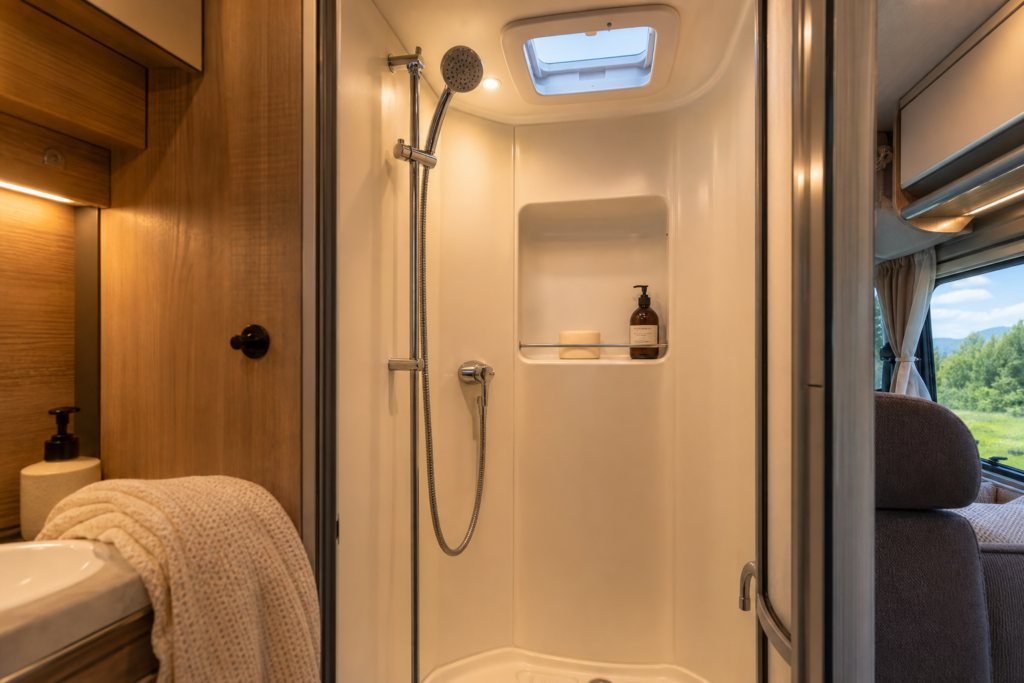
Hot water in a shower-equipped campervan is produced by an on-board water heater. The most common type is a combustion boiler running on LPG or diesel fuel. It heats a 6–10 litre hot-water tank to 50–60 °C over 20–30 minutes, and the hot water is then mixed with cold water for use. A typical example is the combi-type heater (combined space heating and hot water) found in many European campervans.
Here are the typical tank sizes: fresh water tank 50–100 litres, hot-water tank 6–10 litres, gray water tank 50–90 litres. Water consumption per shower is around 20 litres when you turn the water on and off carefully, or roughly 10 litres per minute if you let it run continuously. The numbers show that even with a 100-litre fresh-water tank, three or four adults showering normally will empty it in a single round. “Everyone in the family showers every day” is simply not realistic with on-board equipment.
It is also worth knowing that besides an indoor shower room, some vehicles offer an “exterior shower” — a hose and basic showerhead mounted near the tailgate, intended for rinsing sand off after swimming or washing a pet’s paws. Many exterior showers supply cold water only and function more as a rinse station than a proper wash. When a rental vehicle’s equipment list says “shower,” always confirm whether it is an indoor unit or an exterior one.
Shower Availability by Vehicle Type
| Vehicle Type | Shower Fitment Rate | Notes |
|---|---|---|
| Kei camper (mini campervan) | Nearly 0% | Neither the space nor the tank capacity makes it feasible |
| Van conversion camper | Very few | Exterior shower only in most cases |
| Cab-over camper (domestic) | 10–20% | Some models include a basic shower in a multi-purpose room (shared with the toilet) |
| Large cab-over camper / imported | Majority | Full-spec independent shower room with water heater |
| Bus conversion camper | Common | Microbus-based; larger tank capacity available |
A common feature in domestic cab-over campers is the “multi-room” — a small private compartment that doubles as a cassette toilet space, changing room, and basic shower, fitted with a waterproof tray and showerhead. However, many rental companies prohibit shower use in these rooms due to cleaning and drainage management concerns. The fact that the equipment is present does not mean it may be freely used — always confirm the usage rules before booking. Conversely, if you are considering a kei camper or van conversion camper, there is simply no shower option, so building bathing facilities into your itinerary from the outset will make your planning much cleaner. The lack of equipment is not a weakness; it is the flip side of lower rental costs and easier driving.
Alternatives in Hokkaido: Hot Springs, Roadside Rest Stations, and RV Parks
Now for the practical side of Hokkaido travel. Here is why the absence of an on-board shower is not a problem — in numbers.
Day-Use Hot Spring Baths: Within 30 km Anywhere in Hokkaido
Hokkaido has approximately 230 hot spring areas — more than any other prefecture in Japan. Including day-use onsen and public bathhouses along the main driving routes, you will almost always find a bathing facility within a 30 km radius. Entry fees are typically 450–1,000 yen per adult, and many facilities offer towel rentals or bath-kit sets, so you can drop in with next to nothing in hand. The standard pattern for a Hokkaido campervan trip is to visit a hot spring bath in the evening and then drive to your overnight stops in your fresh post-bath state. In terms of travel satisfaction, it easily beats a quick vehicle shower.
Roadside Rest Stations (Michi-no-Eki) with Hot Spring Baths
Hokkaido has more than 120 roadside rest stations (Michi-no-Eki), and over 10 of them have a hot spring or bathing facility on-site or immediately adjacent. Well-known examples include Shihoro Onsen, Mukawa Shiki-no-Yakata, and Aurora Town 93 Rikubetsu. You can bathe and then sleep nearby in the same visit, making them an ideal match for campervan travel.
Shower Facilities at RV Parks and Campgrounds
There are more than 50 RV parks (designated overnight vehicle parking areas) across Hokkaido, and most either include a bathing facility or have one nearby. Coin showers at auto-campgrounds typically cost 100–200 yen for 3–5 minutes. That is far more relaxed than rationing your on-board water supply one litre at a time.
The bottom line for Hokkaido travel is this: treat bathing facilities as your bathroom and the campervan as your bedroom — that is the optimal approach. On-board showers are genuinely useful only in limited situations, such as arriving late at night after bathing facilities have closed, or a quick rinse for a young child. Note that most day-use hot spring baths in Hokkaido close around 21:00–22:00, so making bathing a pre-dinner habit means you will never be caught by closing time. On multi-night trips, combining a bath pass (kaisuken) or a Michi-no-Eki stamp rally with your bathing routine is a very Hokkaido way to enjoy the journey.
How to Use an On-Board Shower: Step-by-Step and the Reality
If you do rent a shower-equipped vehicle, knowing the actual procedure helps set expectations. It is quite different from showering at home.
- Check the fresh-water tank level (skip the shower if less than 30 litres remain)
- Switch on the water heater and wait 20–30 minutes for hot water to be ready
- Confirm the shower-room drain is clear and the gray water tank has sufficient spare capacity
- Wet your body → turn off → lather → rinse; repeat methodically (known as the “military shower” technique)
- After use, wipe down the shower room, ventilate thoroughly to prevent mould
The shower itself may take only five minutes, but preparation and clean-up add up to a 40-minute job. When you consider that a hot spring bath costs 450 yen and requires no effort on your part, treating the vehicle shower as an emergency backup rather than a daily routine makes for a far more comfortable trip. In practice, even campervan owners who have a shower fitted tend to use hot spring baths on the road and employ the vehicle shower only a handful of times a year.
A Sample Hokkaido Bathing Plan: Verifying 5 Nights Without an On-Board Shower
To demonstrate that a no-shower vehicle is genuinely no problem, here is a typical 6-day round trip from Sapporo with bathing facilities mapped out.
| Day | Overnight Area | Example Bathing Facility |
|---|---|---|
| Day 1 | Furano | Highland Furano (day-use bath) |
| Day 2 | Sounkyo | Kurodake-no-Yu |
| Day 3 | Shiretoko / Utoro | Yuhi-dai-no-Yu |
| Day 4 | Akan Lake | Day-use bath at a lakeside hotel |
| Day 5 | Obihiro | City moor onsen public bath (from 490 yen) |
A hot spring bath every single evening for six days, and every facility is within a 15-minute drive of the overnight stop. That is the power of Hokkaido. In fact, deciding “which hot spring tonight?” becomes one of the pleasures of the trip. Keeping a bath kit — towel, change of clothes, small change — in an easily accessible spot near the vehicle door makes the nightly onsen run effortlessly smooth.
If You Still Want a Shower-Equipped Rental: Key Checkpoints
If you are set on renting a vehicle with a shower, confirm the following four points before booking.
- Indoor shower room or exterior shower: The word “shower” in an equipment list does not tell you which. Check with photos or by contacting the rental company directly.
- Does it supply hot water: A cold-water-only shower is impractically cold in Hokkaido even in summer. Confirm that a water heater is fitted.
- Does the rental company permit shower use: Some companies prohibit it despite having the equipment. Ask about cleaning fees and gray water handling at the same time.
- Tank capacity and refill points: With a fresh-water tank under 100 litres, do not plan on daily showering. Research where you can refill along your route (RV parks, etc.).
Portable Showers as an Option for Non-Shower Vehicles
For travellers who want hot springs as their main option but a backup just in case, aftermarket portable showers are available. There are two main types.
- Electric pump type: A pump submerged in a bucket or water container draws water up through a hose. USB-rechargeable models cost 2,000–5,000 yen. Mixing boiled water into the container gives a lukewarm shower.
- Pressurised (hand-pump) type: You manually pressurise the tank before use. No power source needed; costs 3,000–8,000 yen. A black container left inside the vehicle during the day will warm up from solar heat.
Practical uses include rinsing off sand or mud after swimming or camping, a quick cool-down rinse for children, and washing a pet’s paws. These are not substitutes for a proper body wash, but for a quick freshen-up before you reach a hot spring, they work well. When bringing one into a rental vehicle, use it outdoors with a leisure mat under your feet to avoid wetting the interior. A single 10-litre water container is enough for two quick rinse-downs for one adult.
Another backup option is large body-wipe sheets. They have become standard kit for campervan travellers as a fallback for days when no bathing facility is convenient. They pack flat, so throwing one pack into the vehicle for a Hokkaido trip is always worth it.
Renting a Campervan in Hokkaido
If you are flying into the Shin-Chitose Airport area, Moving Inn offers a convenient campervan rental service. Each vehicle’s equipment is clearly documented, and staff explain water system usage at the time of pick-up, so first-time renters can set off with confidence.
View Moving Inn Campervan Rentals
Compare all Hokkaido campervan rental companies here
Frequently Asked Questions About Campervan Showers
Q1. Can I use the shower in a rental campervan?
Rental vehicles with shower equipment are already in the minority, and even among those, some companies prohibit shower use. Always confirm “is the indoor shower available for use?” at the time of booking. For a Hokkaido trip, choosing a vehicle on the assumption you will use day-use hot spring baths gives you a wider range of options.
Q2. How much water does one shower use?
About 20 litres when you are careful to turn the water on and off, or approximately 10 litres per minute if left running. Even with a 100-litre fresh-water tank, three or four adults showering will empty it in one round. Remember that an equal volume of water ends up in the gray water tank.
Q3. Can the on-board shower be used in Hokkaido in winter?
Not in vehicles without winterisation. Water in the tank and pipes will freeze and cause damage. In the winter season, rental companies typically drain and disable the entire water system. Treat hot spring baths as your only bathing option in winter. The ability to enjoy a snow-view open-air bath (rotenburo) every evening is one of the unique luxuries of a winter Hokkaido campervan trip, so think of the equipment limitation as an invitation rather than a constraint.
Q4. Is travelling with children in a no-shower vehicle manageable?
Absolutely. Most day-use hot spring baths in Hokkaido have family baths and baby bath areas, and more than 10 roadside rest stations (Michi-no-Eki) have bathing facilities on-site. Note that some facilities do not admit infants who are not yet potty-trained, so it is wise to identify a few private bath (kashikiri-buro) options along your route in advance. For a quick freshen-up when children are sweaty, a hot damp towel and water from a portable container work perfectly well.
Q5. Where can I dispose of gray water?
Shower and sink drainage collects in the gray water tank and must be emptied at a dump station at an RV park or auto-campground. Processing fees are typically free to around 500 yen. Draining into roadside gutters or car park drains is a serious breach of etiquette and may result in being banned from facilities. For rental vehicles, most companies will handle gray water disposal on return if you let the staff know — it is safer not to try emptying it yourself on the road.