What Is a Camping Car? Types, Costs & Rentals Explained for Beginners [2026]
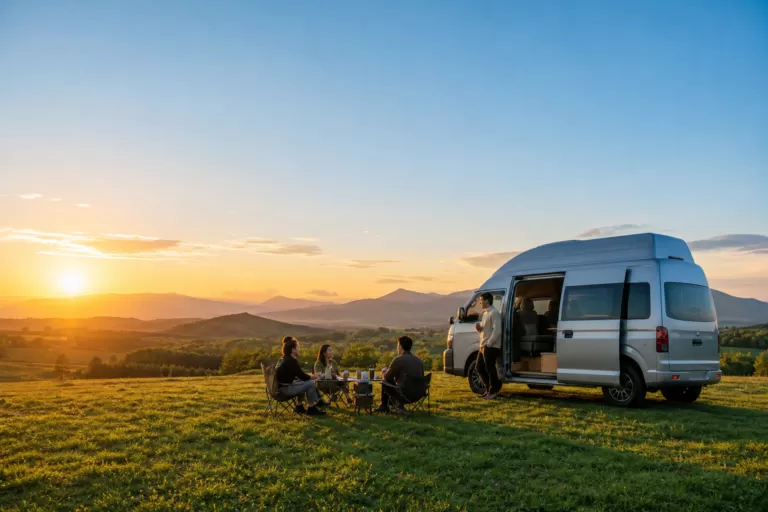
A camping car is a vehicle with a built-in bedroom, kitchen, and toilet.
Pick a campervan by what matters to you.
Rent at New Chitose Airport
See only the rental bases in Chitose, where the airport is.
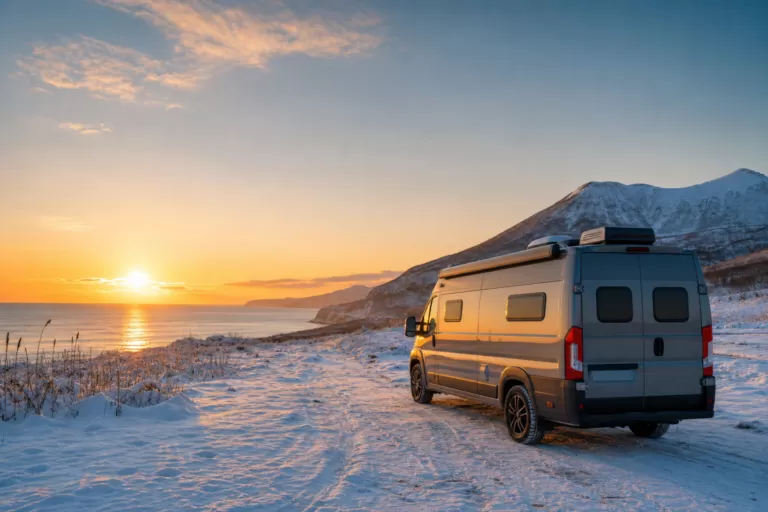
Rent in winter (Dec–Mar)
Companies that rent through winter, listed apart from those that close.
Guide price
Moving Inn New Chitose Airport: HIACE van conversion from ¥22,000 per night. 20–30% off when booked 60–90 days ahead (official rate table, checked 15 Oct 2026).
Before you book: with an International Driving Permit if your country is in the Geneva Convention (for example the US, Australia, Singapore); Taiwan, Switzerland, Germany, France, Belgium and Monaco need your licence plus a Japanese translation (Tokyo Metropolitan Police). Questions in English: Moving Inn on WhatsApp. Every roadside station (michi-no-eki) must have free 24-hour toilets, and Hokkaido has 128 of them (MLIT).
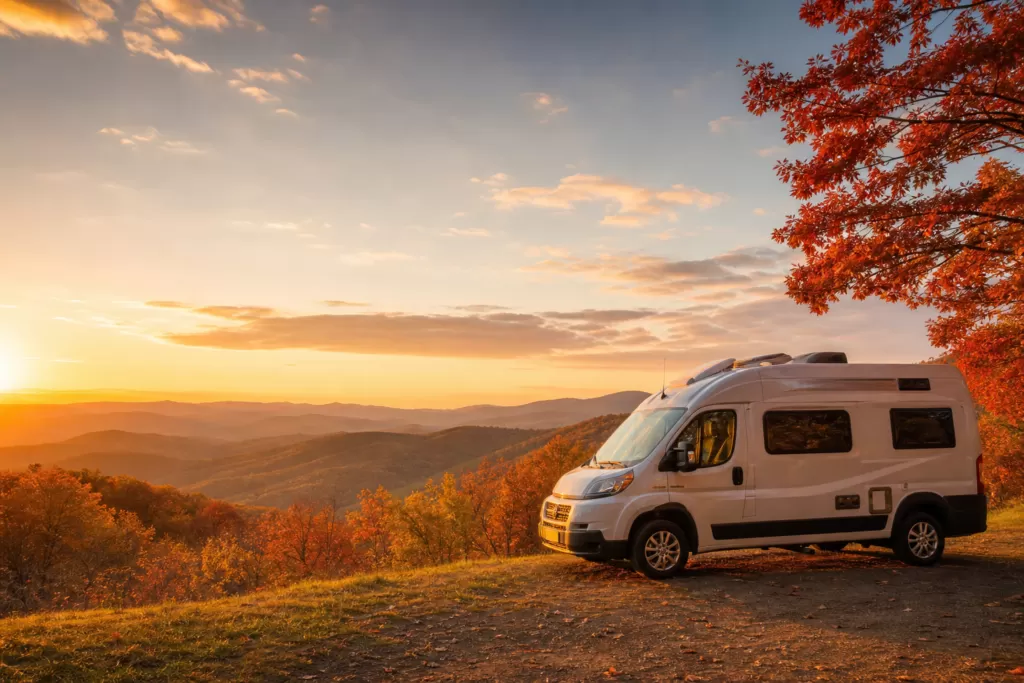
A camping car (RV) is a vehicle equipped with sleeping quarters, a kitchen, a toilet, and other living facilities inside. It lets you “live on the road” without relying on hotels or accommodations. In Japan, they are also called RVs (Recreational Vehicles) and have rapidly gained popularity among families, couples, and solo travelers alike.
Types of Camping Cars
Camping cars come in a wide variety of shapes and sizes. They can be broadly divided into five types, each with its own characteristics.
Cab Conversion (Cabcon)
A cabcon features a raised bunk over the cab section of a truck chassis, offering a spacious interior. It is popular among families. The driver’s cab and living area are separate, so passengers can relax in the back while the vehicle is moving. See What is a Cabcon? for details.
Van Conversion (Bancon)
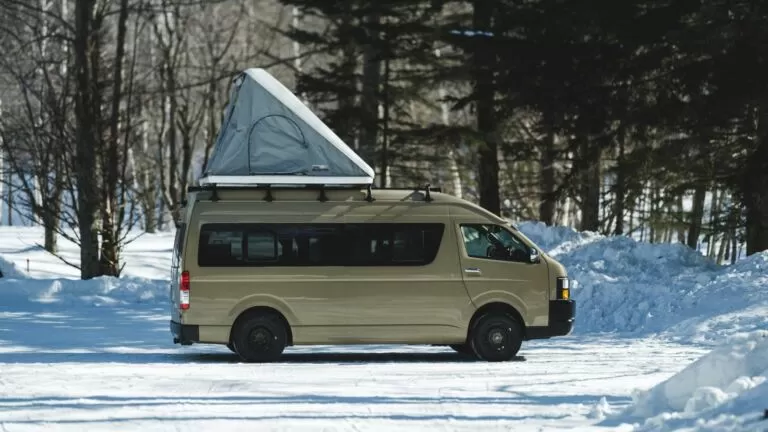
Based on vans such as the Toyota HiAce, a bancon is more maneuverable than a cabcon and easier to drive in urban areas. It also tends to fit within parking garage height restrictions. Check out What is a Bancon? for more.
Kei Camper
The most compact type, based on a kei (mini) car. Ideal for solo travel or couples. Running costs are low and it is easy to handle, though it may feel cramped on long trips.
Trailer
Towed by a separate vehicle. Offers a spacious living area, but may require a special towing license depending on size.
Bus Conversion (Buscon)
A large type based on a microbus chassis. Well-suited for group trips and long journeys, with generous amenities — and a higher price to match. See Comparing Types of Camping Cars for a detailed breakdown of all five.
Standard Equipment
While specifics vary by model, most camping cars include the following features:
- Beds/sleeping space: Accommodates 2–6 people. Often a two-tier layout with an upper bunk and a lower dinette.
- Galley (kitchen): Sink, stove, and refrigerator as standard. Powered by cassette gas or electricity.
- Toilet/shower: Some models include a cassette toilet and hot-water shower.
- Sub battery: Charged while driving, it powers lighting, the refrigerator, and device charging when parked.
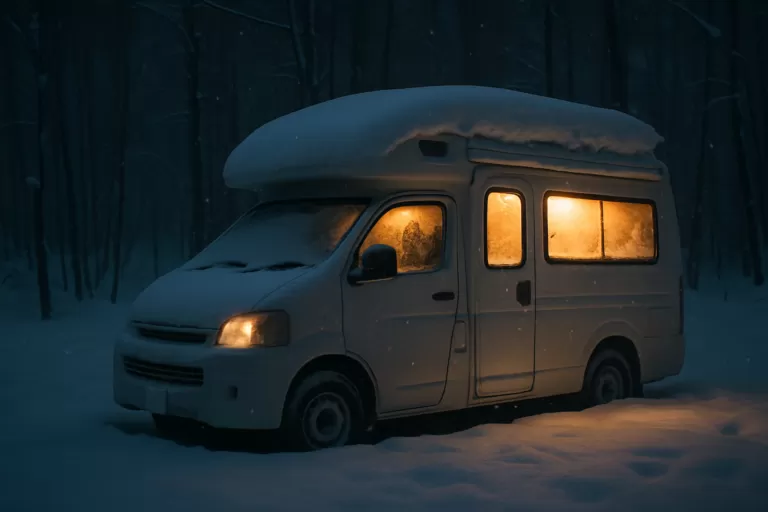
- FFheater: A standalone fuel-burning heater that operates without running the engine — essential for cold-weather overnight stays.
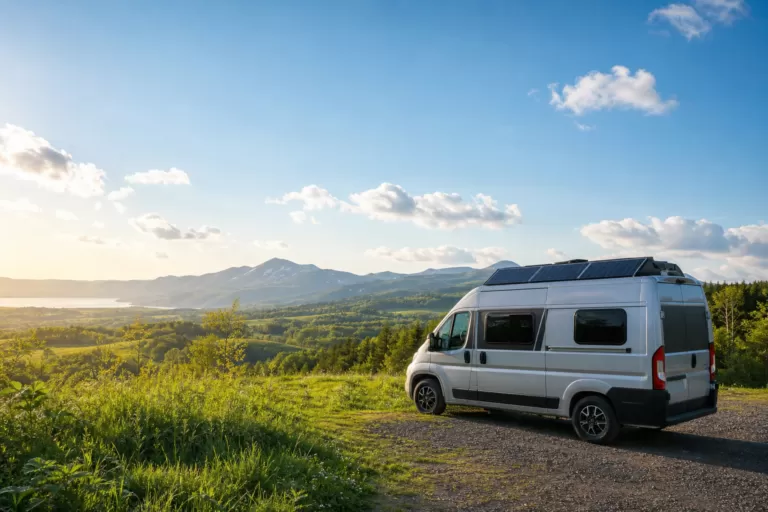
- Solar panels: Mounted on the roof to recharge the sub battery during daylight hours.
Benefits of Camping Car Travel
The biggest appeal of a camping car is freedom. You can stay wherever you like without being tied to hotel reservations, and wake up to stunning scenery all to yourself — an experience unique to camping car travel.
- Travel on your own schedule, stopping whenever and wherever you choose
- Minimal loading and unloading — your vehicle is your room
- Cook your own meals to significantly cut food costs
- No pet restrictions, unlike most hotels
- Kids can move freely inside the vehicle, making family trips much easier
Cost: Buying vs. Renting
Purchase prices range from ¥1–3 million for a kei camper, ¥3–6 million for a bancon, and ¥5–10 million or more for a cabcon. Annual running costs (parking, maintenance, insurance, inspection) add another ¥500,000–1,000,000. If you just want to try it out or only travel a few times a year, renting is far more cost-effective.
| Item | Buying | Renting |
|---|---|---|
| Upfront cost | ¥1M–10M+ | ¥0 |
| Annual running cost | ¥500K–1M | None |
| Best for | Frequent year-round users | Occasional travelers |
| Convenience | Requires preparation & management | Pick up and go |
For details on how rentals work, costs, and the booking process, see What is Camping Car Rental?. For rental price benchmarks, refer to How Much Does Camping Car Rental Cost?.
Why Hokkaido Is Perfect for Camping Car Travel
Hokkaido is one of Japan’s top destinations for camping car travel. Wide roads, abundant RV parks, and countless overnight spots make it a natural fit for the “live on the road” lifestyle. For regional highlights and specific route ideas, see Hokkaido Camping Car Travel Guide.
FAQ
Can I drive a camping car on a standard license?
Bancons and smaller cabcons (gross vehicle weight under 5 tonnes) can be driven on a standard Japanese driver’s license. Larger cabcons and big trailers may require a medium or large vehicle license. Check the license requirements when booking a rental.
Where can I park and sleep overnight?
Main options include RV parks, auto campsites, some Michi-no-Eki (roadside stations), and highway service areas. A brief rest at a Michi-no-Eki is generally tolerated, but extended stays are considered poor etiquette. Hokkaido has numerous RV parks, many with power and water hookups.
Is it okay for first-timers?
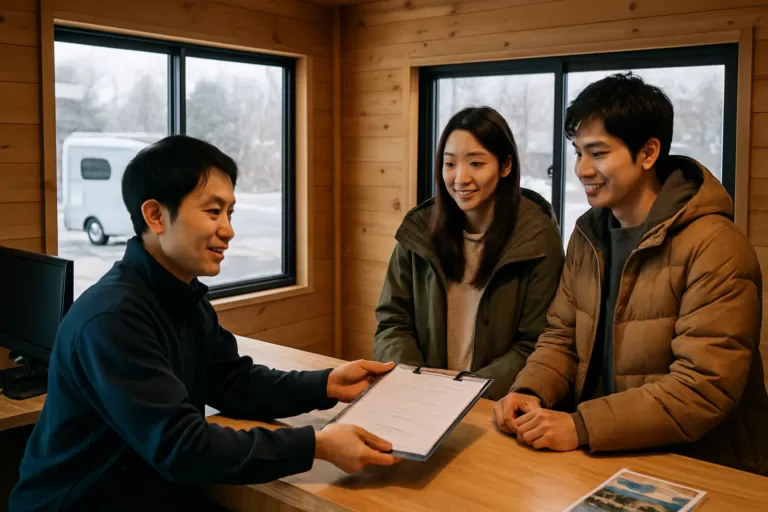
Absolutely. Rental companies walk you through all the equipment before departure. Tasks like filling and draining water or handling the toilet cassette may seem daunting at first, but they become straightforward once you’ve done them once.
Can I bring my pet?
Some rental plans allow pets on board — confirm with the rental company beforehand. One of the key advantages of a camping car is freedom from hotel pet policies.
New Chitose Airport / Tokachi-Obihiro Airport
Rent the Cabcon “Cresson Journey”
Base yourself at New Chitose Airport and compare rates, vehicle types, and pickup locations all in one place.
See details at Moving Inn →Book a Campervan in Hokkaido
Moving Inn New Chitose Airport supports English booking and offers airport transfers.
Pick a campervan by what matters to you.
Rent at New Chitose Airport
See only the rental bases in Chitose, where the airport is.