Central Hokkaido Campervan Model Route | Complete 3–5 Night Guide from New Chitose to Lake Toya, Niseko, and Otaru [2026 Edition]
A model campervan route for exploring central Hokkaido.
Pick a campervan by what matters to you.
Rent at New Chitose Airport
See only the rental bases in Chitose, where the airport is.
Rent in winter (Dec–Mar)
Companies that rent through winter, listed apart from those that close.
Guide price
Moving Inn New Chitose Airport: HIACE van conversion from ¥22,000 per night. 20–30% off when booked 60–90 days ahead (official rate table, checked 15 Oct 2026).
New Chitose Airport map for campervan travellers →
Before you book: with an International Driving Permit if your country is in the Geneva Convention (for example the US, Australia, Singapore); Taiwan, Switzerland, Germany, France, Belgium and Monaco need your licence plus a Japanese translation (Tokyo Metropolitan Police). Questions in English: Moving Inn on WhatsApp. Every roadside station (michi-no-eki) must have free 24-hour toilets, and Hokkaido has 128 of them (MLIT).
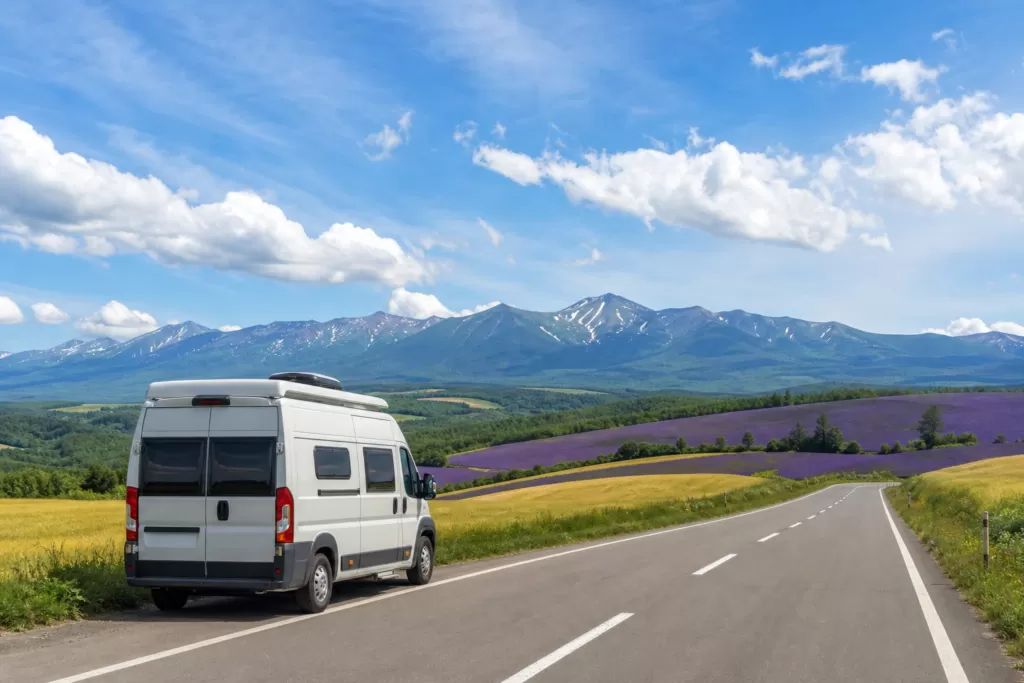
The central Hokkaido area — linking New Chitose Airport with Lake Shikotsu, Lake Toya, Niseko, Otaru, and Sapporo — is ideal for a first campervan trip. Daily driving distances stay around 80–130km, the spacing between attractions feels just right, and even a 3-night/4-day trip offers plenty to see.
This article covers the standard 3-night/4-day route, a 5-night/6-day extension including Furano and Biei, estimated costs, overnight options, and seasonal notes.
New Chitose Airport / Tokachi-Obihiro Airport
Rent the Cabcon “Cresson Journey”
Base yourself at New Chitose Airport and compare rates, vehicle types, and pickup locations all in one place.
See details at Moving Inn →Why Central Hokkaido Is the Best Starter Route
The central Hokkaido area is characterised by short distances between attractions and easy route planning.
- From New Chitose Airport: Lake Toya is about 80km, Niseko about 140km, Otaru about 70km — so daily mileage stays low
- Using the expressway (Doo Expressway) cuts travel times further
- Each stop has its own character: Lake Shikotsu and Lake Toya (volcanoes and hot springs), Niseko (Mt. Yotei and outdoor activities), Otaru (harbour town and food), Sapporo (city sightseeing)
- Using Moving Inn (a rental company near New Chitose Airport), you can pick up the campervan at its shop about 10 minutes by car from the airport (free shuttle) and head straight out
Because driving distances are shorter than in eastern Hokkaido, those with more energy can extend the trip to Furano, Biei, and Asahikawa — that’s the 5-night/6-day version.
How Much Does It Cost?
Here’s a rough overview. Figures below are rental fees only — fuel, campsite fees, and food are separate.
| Vehicle Type | Capacity | 3 nights/4 days | 4 nights/5 days | 5 nights/6 days |
|---|---|---|---|---|
| Kei camper | 1–2 people | ¥40,000–60,000 | ¥55,000–80,000 | ¥70,000–100,000 |
| Van conversion (HiAce-based) | 2–4 people | ¥60,000–90,000 | ¥80,000–120,000 | ¥100,000–150,000 |
| Cab-over (4–5 people) | 4–5 people | ¥80,000–120,000 | ¥110,000–160,000 | ¥140,000–200,000 |
Fuel costs for a 3-night/4-day trip run roughly ¥3,000–6,000 (depending on vehicle and distance). Campsite fees average ¥2,000–4,000 per night. Peak season (July–August) rental rates are 1.2–1.5× higher. For 2 people a van conversion offers the best value; for 4+ people, a cab-over makes more sense.
Clockwise or Counterclockwise?
Central Hokkaido loops can go either clockwise (New Chitose → Lake Shikotsu → Lake Toya → Niseko → Otaru → Sapporo) or counterclockwise (New Chitose → Sapporo → Otaru → Niseko → Lake Toya → Lake Shikotsu).
| Clockwise | Counterclockwise | |
|---|---|---|
| Day 1 | Lake Shikotsu → Lake Toya. A calm, nature-first start | Sapporo and Otaru. A lively urban opening |
| Final days | Wrap up in Sapporo and Otaru — easy for shopping before departure | Finish quietly at Lake Shikotsu and Lake Toya |
| Managing fatigue | When energy drops in the later half, Sapporo’s RV parks offer a good rest | City sightseeing is done early in the trip |
If you want to shop and return easily to the airport at the end, clockwise (starting at Lake Shikotsu, finishing in Sapporo and Otaru) flows most naturally.
Model Route 1: 3 Nights/4 Days from New Chitose (Classic Compact)
A route covering the classic spots at a comfortable pace. Total distance: 350–400km. Using the expressway leaves 2–3 hours at each stop. Even for a first campervan trip, navigation is straightforward and travel stress is low.
Day 1: New Chitose → Lake Shikotsu → Overnight at Lake Toya (approx. 100km)
- Pick up the campervan at the rental shop near New Chitose Airport (standard from 10:00; Moving Inn offers an airport shuttle)
- Lake Shikotsu: a crystal-clear caldera lake. Visit Shikotsu Lake Visitor Center to learn about the lake’s formation (free). Lunch and a bath at Shikotsu Onsen. Canoes and rowboats are available to rent
- From Lake Shikotsu to Lake Toya via Route 2 and National Route 230 — about 50km. Stop at Nakayama Pass (Roadside Station “Boyou Nakayama”) for a full view of Mt. Yotei. Don’t miss the famous deep-fried potato snack “age-imo”
- Check in at an RV park or campsite in the Lake Toya hot spring area. This hot spring resort sits at the foot of Mt. Usu — the water quality is excellent
- In summer, fireworks over Lake Toya (late April to late October, every night at 20:45) can be seen from the lakeshore. Watching them from a campsite through the trees is an unforgettable experience
Overnight options: Toyako Hummingbird RV Park (with power hookup, fireworks view), Takarada Campsite (walkable from lakeshore, close to hot springs, affordable)
Day 2: Lake Toya → Showa-Shinzan → Overnight at Niseko (approx. 80km)
- Morning: panoramic view of Lake Toya from the Silo Observation Deck (free). On a clear day you can see Mt. Yotei, Mt. Usu, and Nakajima Island all at once
- Mt. Usu Ropeway (round trip ¥1,800, about 30 min): view the crater from the 2000 eruption from above. Showa-Shinzan up close from the base is also impressively dramatic
- Showa-Shinzan: farmland that rose during volcanic activity from 1943–1945, now a nationally designated Special Natural Monument. Steam still vents from it today. Have lunch at the stalls at the base
- Head toward Niseko on National Route 230. Near Rusutsu, the conical silhouette of Mt. Yotei (1,898m, the “Ezo Fuji”) appears straight ahead — you’ll want to pull over for photos
- Check in at a campsite in the Niseko area. Spend the evening at a Niseko hot spring (Niseko Grand Hotel day bath ¥1,000, or Yakushi Onsen ¥660)
- In summer, guided tours for canoeing, rafting, and mountain biking are readily available. Book in advance for peace of mind
Overnight options: see our Niseko Campsite Guide. Niseko Outdoor Camp (Mt. Yotei view, affordable) and RV parks near Niseko Annupuri International Ski Area are also options
Day 3: Niseko → Yoichi → Overnight at Otaru (approx. 100km)
- Morning: outdoor activities in the Niseko area (summer: rafting, canoeing, cycling; winter: skiing, snowboarding; spring/autumn: mountain trekking). Several half-day experiences are available
- Yoichi (about 50km from Niseko): Nikka Whisky Yoichi Distillery (tours free, with tasting, open from 9:00; setting for the NHK drama “Massan”). Also a fishing port famous for sea urchin and spot prawns — plenty of eateries near Yoichi Fishing Port
- Otaru (about 20km from Yoichi): walk the Otaru Canal area and have lunch. Glassware workshops, music box shops, and Sushi Street are all within 1km of each other
- Overnight: Asarigawa Onsen Campsite (on-site hot spring, about 15 min from central Otaru) or an RV park within Otaru
Parking in Otaru: Large-vehicle parking near the Otaru Canal is limited. Irouchi Futo Park and Otaru City Tourism Parking have relatively lenient height limits (confirm in advance). During peak summer season, arrive early in the morning or stay in the Asari area and visit the canal in the morning to avoid crowds.
Day 4: Otaru → Sapporo Sightseeing → Return to New Chitose (approx. 80km)
- Otaru to Sapporo is about 40km (about 30 min by expressway). Move early if you want time for city sightseeing
- Light sightseeing around Odori Park, the Clock Tower, and the Former Hokkaido Government Office (Red Brick building). The TV Tower observation deck (¥780) gives a full view of Odori Park
- Hitsujigaoka Observation Hill (¥530): famous for the Clark statue, with a panoramic view of central Sapporo across pastureland
- Lunch: Sapporo ramen (Sumire, Sapporo Junren, Shingen, etc.) or soup curry or Genghis Khan BBQ. For Genghis Khan, Daruma and Sapporo Beer Garden are classics
- Head to New Chitose Airport. Return the vehicle (typically 15:00–16:00). Refuel before returning
- Before your flight, shop for sweets and seafood at the airport’s 3F shopping area. Rokkatei, Royce’, and Kitakaro all have flagship stores there
Model Route 2: 5 Nights/6 Days from New Chitose (Furano and Biei Extension)
An expanded version of the 3-night/4-day route, adding Furano, Biei, and Asahikawa. Total distance: 600–700km. Days 1–3 are the same as Route 1; it diverges from Day 4. This route is ideal if you want to see Furano’s lavender fields and Biei’s rolling hills.
Day 4: Otaru → Furano → Biei → Overnight at Asahikawa (approx. 160km)
- Depart from Otaru. Head to Furano via the Doo Expressway (toward Sapporo/Asahikawa). Alternatively, exit at Sunagawa or Iwamizawa and take the national road
- Farm Tomita (Nakafurano): lavender peaks early to mid-July. In August some varieties like “Okamuraski” are still blooming. Free entry, free parking. Large-vehicle spaces available
- Furano Cheese Factory (free tour, with direct sales of cheese, butter, and gelato) for lunch. The adjacent winery tour (free) can be done together in 30–40 minutes
- Biei’s rolling hills (about 30km from Furano): Patchwork Road, Zerbu Hill, Shikisai Hill. The hills are close together, so you can enjoy the scenery at a leisurely pace. Bicycle rental is popular here too
- Check in at an RV park or campsite in Asahikawa (about 30km from Biei). Dinner: Asahikawa ramen (Baikouken, Santouka, Tenkane — concentrated in the entertainment district)
Day 5: Asahikawa → Asahiyama Zoo → Head toward New Chitose, Overnight (approx. 160km)
- Asahiyama Zoo (Asahikawa): opens at 9:00. Famous for “behavioural exhibits” — watch penguins parade (winter), polar bears swim underwater (summer), and chimpanzees walk tightropes up close. ¥800 entry. Allow 2–3 hours
- Asahikawa ramen (Baikouken, Hachiya, Santouka, etc.) for lunch. Ramen Village (a cluster of Asahikawa ramen shops in the city) is another option
- Head south on the Doo Expressway (Asahikawa toward Chitose). Stop along the way at Roadside Station “Mikasa” (Coal Memorial Museum adjacent, free) or Maoi Hill Park (sweeping farmland views, local produce stalls)
- Overnight: RV park in the Chitose/Tomakomai area (convenient for the next morning’s return near the airport)
Day 6: Return to New Chitose
- Chitose Aquarium (¥900): underground viewing windows into the Chitose River let you watch salmon and ito trout. Small but surprisingly satisfying
- Revisit Lake Shikotsu for a final walk, or head slowly to the airport to rest after the trip
- Refuel and clean the interior before returning. Aim to arrive at least 30 minutes before the return time
Overnight Options List
| Area | Facility | Type | Features |
|---|---|---|---|
| Lake Shikotsu | Shikotsu Lakeside Campsite | Campsite | Directly on the lakeshore, summer only |
| Lake Toya | Takarada Campsite | Campsite | Walkable from lakeshore, hot springs nearby |
| Lake Toya | Toyako Hummingbird RV Park | RV Park | Power hookup, fireworks viewable |
| Niseko | Niseko Outdoor Camp | Campsite | Mt. Yotei view, affordable |
| Otaru | Asarigawa Onsen Campsite | Campsite | On-site hot spring, 15 min from central Otaru |
| Sapporo | Jozankei Nature Village | Campsite | 40 min from city, inside hot spring resort |
| Furano | Furanui Campsite | Campsite | Some pitches include hot spring entry |
| Asahikawa | Asahikawa Asahiyama Park Campsite | Campsite | Close to Asahiyama Zoo |
Seasonal Highlights
| Season | Highlights | Notes |
|---|---|---|
| Summer (Jul–Aug) | Furano lavender (peaks early–mid July), Lake Toya fireworks, Niseko outdoor activities | Peak season. Campsites need booking 1–2 months ahead |
| Autumn (Sep–Oct) | Autumn foliage at Daisetsuzan and Lake Shikotsu, Otaru seasonal seafood, fewer crowds | Mornings and evenings turn cold from October. Check FF heater |
| Winter (Dec–Mar) | Niseko skiing, Lake Toya snow scenery, Lake Shikotsu Ice Festival (February) | Winter tyres and FF heater essential. Some campsites close |
| Spring (Apr–Jun) | Cherry blossom (around Golden Week), fresh greenery, fewer crowds | Risk of snow and icy roads in early May |
If lavender is your goal, early to mid-July is peak season. Farm Tomita typically hits peak around 10 July. To avoid crowds, late June (early blooms) or early August (late blooms) are alternatives.
Best Campervan Types for This Route
Central Hokkaido’s shorter driving distances mean a kei camper or van conversion works perfectly well. Campsites around Niseko tend to have large pitches, so even a full-size cab-over parks comfortably.
- 2-person trips: kei camper or van conversion. Easy to manoeuvre, good fuel economy, and easier to fit in Otaru Canal area car parks
- 4+ people: cab-over. The difference in sleeping comfort is significant. Ideal for relaxing at lakeshore campsites at Lake Toya or Lake Shikotsu
- Winter trips: FF heater essential. Roads around Niseko ski resorts ice over — confirm the rental company’s winter tyre policy before booking
See also our Lake Shikotsu Campervan Travel Guide.
New Chitose Airport / Tokachi-Obihiro Airport
Rent the Cabcon “Cresson Journey”
Base yourself at New Chitose Airport and compare rates, vehicle types, and pickup locations all in one place.
See details at Moving Inn →FAQ
Q1: Is 3 nights/4 days enough to comfortably cover central Hokkaido?
Yes — the 3-night/4-day loop from New Chitose covering Lake Shikotsu, Lake Toya, Niseko, Otaru, and Sapporo keeps daily driving to around 80–100km, which is a very manageable schedule. Using the expressway reduces travel time and leaves 2–3 hours at each stop. If you want more time at each location, 4 nights/5 days or longer will increase your satisfaction considerably.
Q2: What is the best time to visit Furano?
Early to mid-July is peak lavender season. Farm Tomita typically reaches its peak around 10 July. To avoid crowds, late June (early blooms) or early August (late blooms) are alternatives. Outside summer, there’s also autumn cosmos (September) and winter greenhouse lavender tours.
Q3: Is there parking for campervans near the Otaru Canal?
Large-vehicle parking near the Otaru Canal is limited. Irouchi Futo Park and Otaru City Tourism Parking have relatively lenient height restrictions (confirm in advance). During peak summer season, arrive early in the morning or stay in the Asari area and visit the canal in the morning for the smoothest experience.
Q4: Are there overnight spots near Niseko?
Niseko Outdoor Camp (Kutchan) is an open, affordable site with views of Mt. Yotei. It gets busy during the summer high season — booking 2–3 weeks in advance is wise. For RV parks, call ahead to facilities near Niseko, or stay the previous night at an RV park near Lake Toya and visit Niseko as a day trip.
Q5: Is a winter campervan trip in central Hokkaido possible?
Yes, though the difficulty increases. Use for Niseko ski trips is growing, but icy and snowy roads are a given. Some rental companies offer winter-specific safety briefings. Before picking up the vehicle, confirm three things: the FF heater is working, winter tyres are fitted, and the fresh water tank is protected against freezing.
Book a Campervan in Hokkaido
Moving Inn New Chitose Airport supports English booking and offers airport transfers.
Pick a campervan by what matters to you.
Rent at New Chitose Airport
See only the rental bases in Chitose, where the airport is.

![When and Where Can You See Harbor Seals at Cape Erimo? Kaze no Yakata Official Information, Viewing Season, and Windy-Day Notes [2026-27]](https://hokkaido-campingcar.jp/wp-content/uploads/2026/10/erimo-cape-lighthouse-768x511.jpg.webp)
![Where and Under What Conditions Can You See Diamond Dust in Hokkaido? How Cold a Morning It Takes, and Where It Appears [2026-27]](https://hokkaido-campingcar.jp/wp-content/uploads/2026/10/hokkaido-diamond-dust-nayoro-768x512.jpg.webp)
![Can You Drive to Hokkaido Jingu for Hatsumode? Parking, Crowds, and Where to Park and Walk [2027]](https://hokkaido-campingcar.jp/wp-content/uploads/2026/10/hokkaido-jingu-winter-torii-768x504.jpg.webp)
![Hokkaido Roads Over New Year [2026-27] | Expressway Sections Prone to Blizzard Closures, Forecast Congestion Days, No Holiday Discount, and New Chitose Airport Parking](https://hokkaido-campingcar.jp/wp-content/uploads/2026/10/hokkaido-winter-rural-road-edge-markers-768x432.jpg.webp)
![Where to See Sea Smoke (Kearashi) in Hokkaido: Rumoi’s Ogon-misaki and the Morning Conditions [2026-27]](https://hokkaido-campingcar.jp/wp-content/uploads/2026/10/rumoi-kearashi-sea-smoke-768x511.jpg.webp)
![Geminid Meteor Shower 2026 in Hokkaido: Peak Around 23:00 on December 14, Sapporo Moonset 20:40, and Staying Warm in a Winter Campervan [2026]](https://hokkaido-campingcar.jp/wp-content/uploads/2026/10/geminids-2026-hokkaido-768x575.jpg.webp)