Top 20 Recommended Roadside Stations in Hokkaido | Overnight Stays, Scenery & Food [2026 Edition]
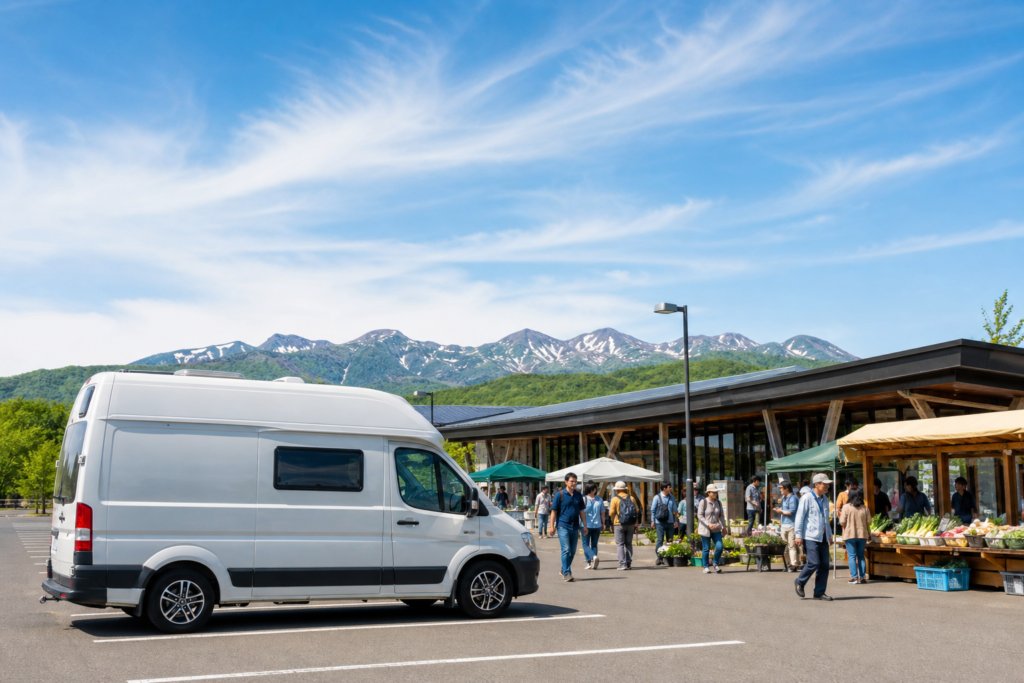
If you’re planning a campervan trip in Hokkaido, making the most of roadside stations (Michi-no-Eki) is key. With local produce, regional specialties, and a chance to check your next route, these stations are indispensable travel bases. That said, roadside stations are not necessarily “free overnight camping spots.” Rules vary by facility, so always check the official site or call ahead.
This guide introduces 20 recommended roadside stations across Hokkaido, organized by region, from the perspectives of overnight stays, scenery, and food. Covering central, southern, eastern, Shiretoko, northern, and Okhotsk areas, it’s ready to use directly for route planning.
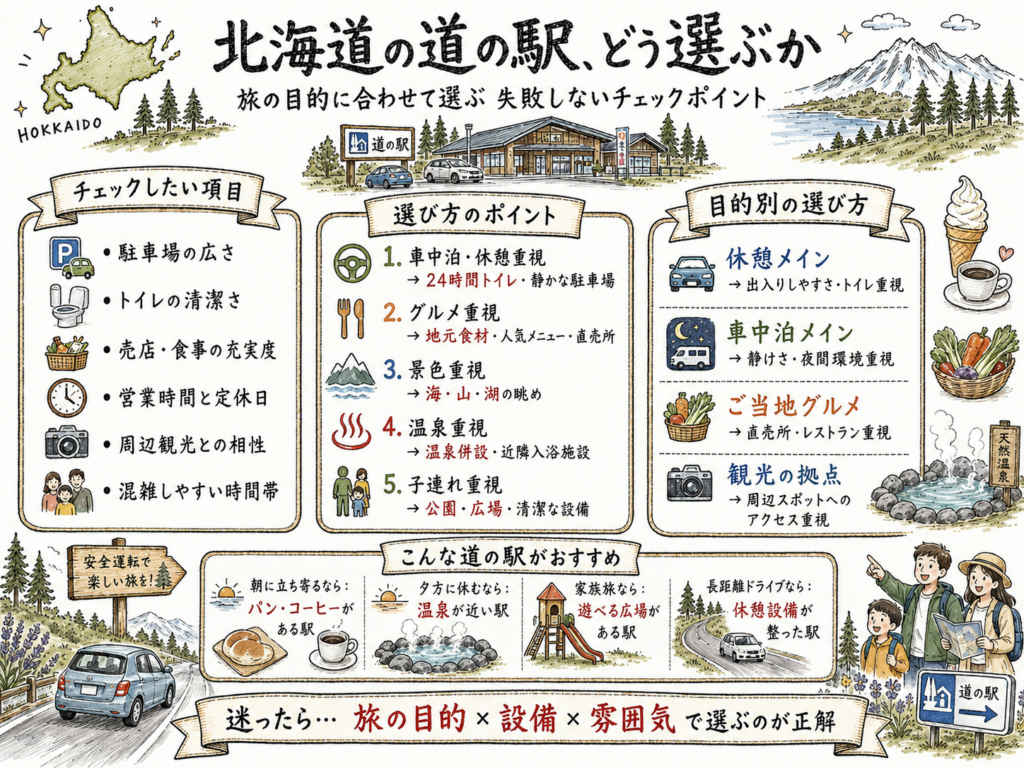
How to Choose Among Hokkaido’s Roadside Stations
Hokkaido has over 120 roadside stations. The right one depends on your trip’s purpose. Narrow it down with three criteria:
Choose by Facilities
For campervan travel, clean restrooms and 24-hour access are essential. Also check for Wi-Fi, power outlets, and whether trash disposal is allowed. Hokkaido’s roadside stations are generally well maintained, but facility scale varies significantly. Larger stations offer information centers and rest areas — useful in bad weather.
Choose by Location
Hokkaido’s roadside stations range from rural farmland to lakesides, coastlines, and mountain valleys. Choose efficiently by thinking about where you’re headed the next morning. Stations with good access to Shiretoko or Lake Mashu are popular; arrive early in peak summer to secure a space.
Choose by Food
Hokkaido roadside stations have high culinary standards. Freshly harvested vegetables, seafood, local soft serve, and specialty products are widely available. Build your itinerary around the food highlights at stations along your route for a more rewarding trip.
Top 5 Roadside Stations in Central & Southern Hokkaido
1. Tobetsu (Tobetsu Town)
About 40 minutes by car from Sapporo along National Route 275, this station is a convenient starting point for trips to northern or eastern Hokkaido. The farm direct-sale area is well stocked with Tobetsu-grown tomatoes and rice, among the most renowned produce in Hokkaido. The restaurant serves local-ingredient dishes — great for a meal before heading out. Large parking lot accommodates big vehicles.
2. Shikaoi (Shikaoi Town)
The gateway to the Tokachi area and an access hub to Lake Shikaribetsu and Lake Nukabira. Shikaoi Town is one of Hokkaido’s leading horse-breeding areas, and the station features horse-related exhibits. “Shikaoi Cheese” and Tokachi dairy gelato are local favorites. A dog run on the grounds welcomes pet travelers.
3. 230 Rusutsu (Rusutsu Village)
Adjacent to Rusutsu Resort with spectacular views of Mt. Yotei, this station overflows with outdoor activities — rafting and trekking in summer, skiing in winter. The signature Rusutsu potato fries often draw a line. Conveniently placed for trips to Lake Shikotsu and Lake Toya.
4. Mitara Muroran (Muroran City)
A station with a great vantage point over Muroran Port. Muroran is famous for industrial night views; the steelworks light up impressively from here. Local specialties like Muroran Curry Ramen and Muroran Yakitori (pork skewers) are sold on site. Easy access to the ferry terminal makes this a popular entry point from Aomori and Tomakomai.
5. Apta (Toyako Town)
On the southern shore of Lake Toya, overlooking Funka Bay. Fresh scallops and surf clams from the bay are a highlight — arrive early for the freshest catch. A foot bath is on site, perfect for resting tired legs. The Lake Toya Onsen resort is about 10 minutes away by car.
Top 5 Roadside Stations in Eastern Hokkaido & Shiretoko
6. Mashu Onsen (Teshikaga Town)
The go-to base for exploring Akan-Mashu National Park. Well located in Teshikaga town center with supermarkets, convenience stores, and gas stations nearby. Named for the adjacent hot spring. Birthplace of “Teshikaga Ramen” — confirm the taste at the station before heading to town ramen shops. Lake Mashu, Lake Kussharo, and Kawayu Onsen are all easily accessible. Many travelers who visit Lake Mashu’s “Mashu Blue” at dawn spend the previous night here.
7. Utoro Shirietoku (Shari Town)
Located in the Utoro district, gateway to the UNESCO World Natural Heritage site of Shiretoko. A morning base for travelers heading to Shiretoko Five Lakes and Kamuiwakka Falls. An information corner covers Shiretoko’s nature and history — useful for pre-visit research. Processed salmon, sea urchin, and scallops from Utoro fishing port are on sale. Stay current on frequent summer brown bear sightings here. Nearby reception for the Shiretoko Ranger Tour makes this an ideal first stop.
8. Shiranuka Koitoi (Shiranuka Town)
On the Pacific coast of Shiranuka Town. The memorable name “Koitoi” and panoramic Pacific views draw many visitors. Shiranuka is the main production area for “shishamo” (a native smelt) — processed products here are a rare find since domestically caught shishamo are limited in market supply. About 30 minutes from Kushiro, easy to pair with a Kushiro Wetlands stop.
9. Akkeshi Gourmet Park (Akkeshi Town)
Famous as the “Oyster Town,” Akkeshi is one of the few places in Japan where you can eat fresh oysters all year round. The dining hall “Abiya” lets you grill Akkeshi oysters and seasonal seafood over charcoal. Widely regarded as one of Hokkaido’s finest roadside station food experiences. Also a base for exploring the nearby Kiritappu Wetland and Bekanbeushi Wetland.
10. Nemuro Hanasaki (Nemuro City)
Near Japan’s easternmost mainland point, about 20 minutes by car from Cape Nosappu. Hanasaki crab is a Nemuro specialty; processed products are available in season. Stamping your stamp book here before heading to Cape Nosappu is the classic routine. The facility design references Nemuro’s red gerberas (Hanasaki flowers).
Compare Hokkaido Campervan Rentals
Browse prices, vehicle types, and bases from New Chitose Airport in one place.
Compare rental companies & prices →Top 5 Roadside Stations in Northern Hokkaido & Okhotsk
11. Obira Nishin Banya (Obira Town)
Built around the old Hanada family herring fishing base, a nationally designated Important Cultural Property. It preserves the herring fishing culture that supported Meiji-era Hokkaido. Herring-related exhibits and direct sales — “herring pickled with Japanese pepper” is a popular souvenir. A Sea of Japan location on the route from Rumoi north toward Wakkanai.
12. Bifuka (Bifuka Town)
On the Teshio River, with an unusual on-site aquarium called “Sturgeon Hall” exhibiting sturgeon and working toward caviar production. A waypoint for travelers heading toward Wakkanai and Otoineppu. Also a booking point for canoe experiences on the Teshio River. Quiet setting, ideal for stargazing in summer. Bifuka Onsen is nearby — soak before turning in for the night.
13. Wakkanai (Wakkanai City)
Japan’s northernmost roadside station. About 30 minutes from Soya Cape. Adjacent to Wakkanai Station with easy ferry terminal access. “Northernmost point certificate” is obtained at Soya Cape, but this station is best for gathering trip information in advance. Wakkanai “octopus shabu-shabu” and Rishiri Island kelp products are local highlights. The most convenient base if you plan to combine a ferry trip to Rishiri or Rebun Island.
14. Nakasatsunai (Nakasatsunai Village)
In the rural Tokachi farming area, on the “Tokachi Garden Road.” Broad flower fields and farmland surround it. The direct-sale area is rich in Tokachi vegetables, beans, and dairy; bean variety is particularly impressive. About 20 minutes south of Obihiro, on the route toward Hidaka and Erimo.
15. Drift Ice Street Abashiri (Abashiri City)
On the Okhotsk Sea coast. A drift ice–themed facility where, during winter drift ice season, you can buy tickets here for the sightseeing icebreaker “Aurora.” Summer brings fresh salmon and scallops. Close to Abashiri city center for easy access to supermarkets and convenience stores. A base for visiting the Notoro Lake coral grass colony and Koshimizu Primeval Flower Garden.
5 More Recommended Roadside Stations
16. Saroma Lake (Saroma Town)
On the shore of one of Japan’s largest lagoons. Saroma scallops and oysters are a top Hokkaido brand; direct-sale and processed products available. Beautiful lakeside views — misty early mornings are ethereal. Classic pairing with Wakka Primeval Flower Garden and Lake Notoro.
17. Niseko View Plaza (Niseko Town)
One of Hokkaido’s finest locations, with Mt. Yotei directly in front. A morning farmers’ market in summer draws locals and tourists alike. Niseko is an internationally known ski resort; multilingual support is strong here. Also a good information spot for outdoor activities.
18. Otofuke Natsuzora no Furusato (Otofuke Town)
A large roadside station in Otofuke, just north of Obihiro, famous as the setting for the NHK morning drama “Natsuzora.” Drama-related exhibits and merchandise abound. The farm direct-sale is well stocked with Tokachi sweet corn and beet products. Convenient base for Obihiro sightseeing.
19. Tomamae (Tomamae Town)
On the Sea of Japan coast, a waypoint for travelers driving the Hokkaido coastal route. Tomamae is a sea urchin production area; fresh uni is available in summer. Popular with travelers heading north along the Sea of Japan from Rumoi toward Haboro and Wakkanai.
20. Teshikaga (Teshikaga Town)
Near Mashu Onsen station; adjacent to the Mashu Onsen Tourism Center hot spring facility, so you can pair a roadside station stop with a soak. Good access to Lake Kussharo and Kawayu Onsen — handy for sorting gear and resting while exploring the eastern Hokkaido core area.
Tips for Touring Hokkaido Roadside Stations by Campervan
Roadside stations are a convenient base for campervan travel, but misusing them causes issues for other visitors. Follow these principles for a smooth trip.
Check Overnight Rules at Each Facility
Roadside stations are “rest facilities for road users,” not accommodations. Almost none explicitly prohibit sleeping in your vehicle, but individual stations have rules: no generators, no idling, take your trash home. Check each station’s official site or call before you arrive. Some prohibit consecutive nights or extended stays.
Plan for Early Morning Departures
Hokkaido campervan trips cover long distances and popular sights get busy early. Using a roadside station as an overnight base lets you arrive at the next morning’s destination well ahead of the crowds. Arriving at Lake Mashu or Shiretoko Five Lakes by 7–8 a.m. dramatically reduces parking congestion.
Use as a Local Ingredient Shopping Base
Roadside station direct-sale areas are often stocked by local farmers and fishers — frequently fresher and more varied than supermarkets. If you’re self-catering in your campervan kitchen, build roadside station shopping into your itinerary to enjoy Hokkaido’s flavors while keeping food costs down. Vegetables often sell out in the morning, so shop early.
Pair with Hot Springs for Added Comfort
Hokkaido is blessed with hot springs and many roadside stations are close to bathing facilities. Mashu Onsen station (Teshikaga) has an onsen right next door; Bifuka station is within walking distance of Bifuka Onsen. Soak at night, rise early to visit the sights — this cycle keeps you physically comfortable throughout a long trip.
Use Stamp Rallies as a Travel Goal
Hokkaido roadside stations have stamp stations, and the “Michi-no-Eki Stamp Rally” is popular among travelers. Stamp books are sold at roadside stations; collect a certain number and receive a certificate. Driving around freely collecting stamps is a uniquely Hokkaido way to travel.
New from New Chitose Airport — June 2026
Rent the Cab-Over Campervan “Creson Journey”
Explore all of Hokkaido by campervan from New Chitose Airport.
See details at Moving Inn →Frequently Asked Questions (FAQ)
Can I stay overnight in my campervan at a roadside station?
Few stations completely ban overnight stays in vehicles, but rules such as no generators, no idling, and no consecutive nights vary by facility. Check the official site or call each station before using it. Stations that explicitly state “overnight stays OK” tend to have better facilities than others.
What should I watch out for when touring roadside stations in a campervan?
Some roadside stations have space restrictions for large campervans. Don’t enter multi-story car parks with height restrictions (roadside stations generally use surface lots, but check anyway). Take your trash home — station trash cans are not intended for traveler use. Avoid extended idling out of courtesy to others.
Are there roadside stations in Hokkaido where I can soak in a hot spring?
Mashu Onsen station (Teshikaga) is adjacent to a hot spring facility. Bifuka station is near Bifuka Onsen. Apta station (Toyako) has an on-site foot bath. Stations with full hot springs inside are rare, but many are located near bathing facilities. Filter by “near onsen” when planning your route.
What are the operating hours of roadside stations? Can I use them late at night or early morning?
Shops and restaurants generally operate around 9 a.m.–6 p.m., varying by facility. However, most roadside station parking lots and restrooms are accessible 24 hours. If you’re departing before shops open, stock up on food and fuel the day before. In winter, hours may be reduced and some facilities partially closed — confirm well in advance for winter travel.