Hokkaido Campervan 1-Month Rental Guide | Costs, Model Plans & Key Notes [2026]
A guide to renting a campervan in Hokkaido for one month. Covers total costs, sample travel plans, and important considerations.
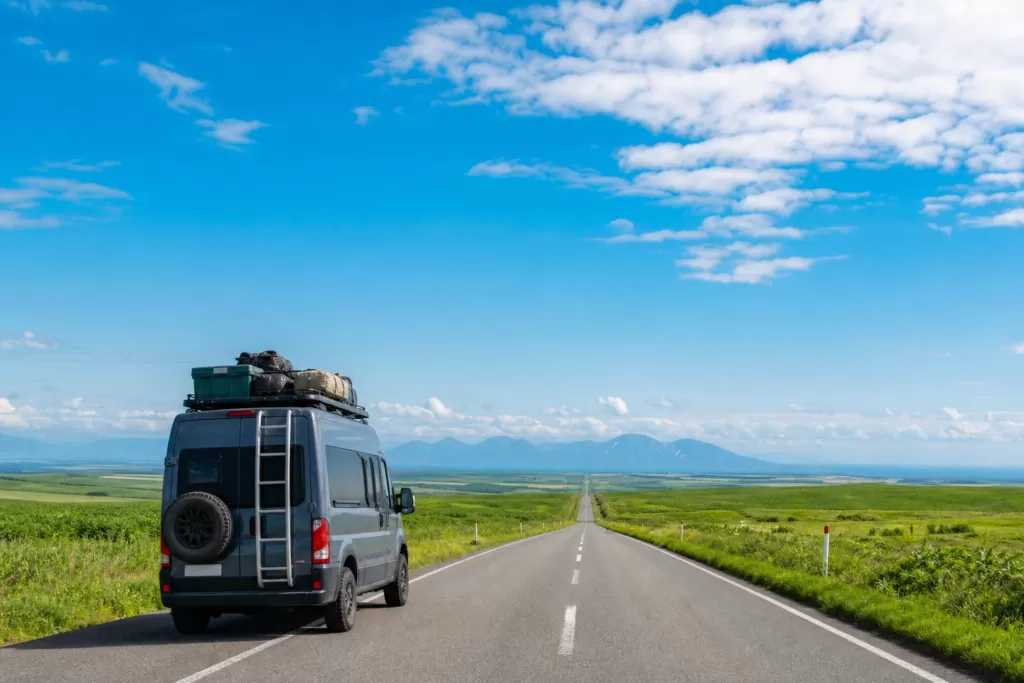
Plenty of travelers dream of taking a full month to explore Hokkaido at a relaxed pace in a campervan. Summer vacation, parental leave, early retirement, a sabbatical — whenever you can free up a long stretch of time, a rental campervan is one of the best ways to spend a full month in Hokkaido. That said, a long-term rental of a month or more comes with different costs, preparation, and considerations than a typical short trip. This article is for anyone considering a long-term rental — it lays out the real costs, how to choose, and recommended ways to spend your time.
Hokkaido covers roughly 83,000 km², about 22% of Japan’s total land area. Crossing the island from end to end — say, from Wakkanai to Hakodate — is about 600 km and takes 7–8 hours non-stop on the expressway. So can you cover all of Hokkaido in a month? Yes — at an unhurried pace. Being able to take your time without rushing is the biggest appeal of a long-term trip.
How much does a 1-month campervan rental in Hokkaido cost?
The cost of a 1-month (30 nights, 31 days) campervan rental varies a lot by vehicle type and season. The figures below are a guide as of June 2026. Note that long-term rentals usually aren’t simply the short-term daily rate multiplied by 30 — long-term discounts are common — so we recommend always contacting the rental company directly for an accurate quote.
| Vehicle type | Daily rate (approx.) | 30-day total (approx.) |
|---|---|---|
| Vancon (HiAce-based) | ¥15,000–¥25,000 | ¥450,000–¥750,000 |
| Cabcon (e.g. Cresson Journey) | ¥20,000–¥35,000 | ¥600,000–¥1,050,000 |
| Kei-camper | ¥8,000–¥15,000 | ¥240,000–¥450,000 |
Many rental companies offer a “long-term discount,” where staying 15 nights or more — or 30 nights or more — can bring the daily rate down by roughly 10–30%. Hokkaido rental companies also charge high-season rates in summer (July–August), so even for the same one-month trip, going in June or September can be about 20–30% cheaper.
On top of that, you’ll need to budget separately for fuel, expressway tolls, campsite and RV park fees, and food. As a realistic estimate, the total cost of a 1-month Hokkaido trip (rental fee included) runs about ¥800,000–¥1,200,000 for a Vancon and about ¥1,000,000–¥1,500,000 for a Cabcon. Leaning heavily on free or low-cost overnight parking at Michi-no-Eki and cooking your own meals can cut costs significantly. On the other hand, staying at paid campsites every night and eating out often will push costs higher. Setting a budget that matches your travel style is the key to a successful long-term trip.
Finding a rental company that supports long-term rentals
Not every rental company supports rentals of a month or longer. Companies that prioritize fleet availability for short trips sometimes decline long-term bookings that tie up a vehicle. Check the points below before you apply.
Checkpoint 1: Whether a long-term discount exists, and its conditions
Check how many nights are required to qualify for the long-term discount, what percentage discount applies, and whether high season is excluded from the discount. If the rate sheet doesn’t spell this out, contacting the company directly will often get you a custom quote.
Checkpoint 2: Maintenance and support during the trip
On a month-long trip, you may hit the point where an oil change is due (the general guideline is every 5,000 km). Check in advance how the company handles it if you reach 5,000 km mid-trip — whether they have a partner garage and who covers the cost. Also confirm the coverage area of their roadside assistance for flat tires or breakdowns — does it cover all of Hokkaido?
Checkpoint 3: Mileage limits
Short-term rentals sometimes come with limits like “300 km per day” or “up to 3,000 km total.” Touring Hokkaido for a month can easily add up to 5,000–8,000 km in total distance. For a long-term rental, it’s safer to choose a company that relaxes the mileage limit or offers an unlimited-mileage plan.
Checkpoint 4: Insurance and coverage details
The longer the trip, the higher the accident risk. Before signing, check whether there’s an NOC (Non-Operation Charge) / insurance waiver and how much it costs, the coverage limits for injury and property damage, and how natural disasters (hail, falling rocks) are handled. If a company offers an optional insurance waiver you can opt into, taking it can dramatically reduce your out-of-pocket cost in a worst-case scenario.
Compare Hokkaido campervan rentals
Base yourself at New Chitose Airport and compare rates, vehicle types, and pickup locations all in one place.
Compare rental companies and prices →A sample 1-month Hokkaido itinerary
With a full month, you can take your time and cover almost every area of Hokkaido. Being able to stay several days in a place you love, without rushing, is the real appeal of a long trip. Below is a rough 30-day itinerary starting and ending at New Chitose Airport.
Days 1–5: Central Hokkaido (Lake Shikotsu, Niseko, Otaru)
Pick up your campervan at New Chitose Airport and warm up nearby at Lake Shikotsu. The next day, drive through Niseko and the foot of Mt. Yotei to Kutchan Onsen. Then find your travel rhythm in Otaru, enjoying the canal and sushi. If you plan to stop in Sapporo, look up large parking lots in advance.
Days 6–12: Southern Hokkaido (Hakodate, Onuma, Lake Toya, Muroran)
Explore the geological history of the Lake Toya and Mt. Usu area, then enjoy Hakodate’s night view and morning market. After a relaxed stop at Onuma Quasi-National Park, head toward eastern Hokkaido via Muroran’s factory night view. Southern Hokkaido’s sights are relatively close together, so visiting after your first few days of warming up means you’ll already be comfortable behind the wheel.
Days 13–20: Eastern Hokkaido (Obihiro, Kushiro, Shiretoko, Abashiri)
In Obihiro, there’s Hanabatake Ranch, Kofuku Station, and Tokachigawa Onsen; in Kushiro, the wetlands and red-crowned cranes; in Shiretoko, the World Heritage old-growth forest and fresh seafood; and in Abashiri, Lake Saroma and Lake Notoro’s coral grass (autumn) — eastern Hokkaido alone has enough sights to fill 1–2 weeks. The Shiretoko Pass has seasonal traffic restrictions, so check whether it’s open while you’re still planning the trip.
Days 21–26: Northern Hokkaido (Kitami, Asahikawa, Wakkanai, Rumoi)
From Abashiri, continue through Kitami and the Daisetsuzan mountains to Asahikawa, stopping at Asahiyama Zoo before heading for Cape Soya, Japan’s northernmost point. Heading south from Wakkanai through the Sarobetsu Plain and along the Sea of Japan coast through Mashike and Rumoi, you’ll come across sunsets that look like paintings. Some stretches of northern Hokkaido have few places to refuel, so keep plenty of fuel in reserve.
Days 27–30: Back to central Hokkaido (Furano, Biei, New Chitose)
On the way back, take it slow through Furano’s lavender fields (July–August) and Biei’s patchwork hills to close out the trip. On the final day, soak away the fatigue at an onsen near New Chitose Airport (Lake Shikotsu Onsen, Chitose Onsen, etc.) before returning the vehicle.
Sorting out your “money management” before a month-long trip
Partway through a trip, you might hit your credit card limit or end up in an area with no ATMs nearby. For a long trip, managing your money takes some preparation too.
Raise your credit card’s monthly limit in advance. If the campervan rental fee (¥300,000 to over ¥1,000,000) is charged as a single lump sum, your normal limit may not be enough to cover it. You’ll also often run into cash-only shops at Michi-no-Eki, farm produce stands, and fishing ports during the trip, so it’s reassuring to carry a reasonable amount of cash.
Major cities in Hokkaido all have ATMs, but in sparsely populated parts of northern and eastern Hokkaido, there can be stretches of 10 km or more without a convenience-store ATM. It helps to note down financial institution locations along your planned route in advance, or to use a debit card from an online bank that lets you withdraw fee-free.
Preparation and considerations unique to a long trip
Cut down on luggage by buying food and supplies locally
Try to load a full month’s worth of groceries and you’ll blow past the vehicle’s load capacity. Hokkaido has plenty of supermarkets, Michi-no-Eki, and farm produce stands, so making local buying your basic policy means less luggage and more enjoyment along the way. A campervan with a refrigerator lets you store fresh food and cook with local ingredients on board.
Use Michi-no-Eki and coin laundries for laundry
A month-long trip means you’ll need to do laundry. Coin laundries across Hokkaido are often open 24 hours, and some are located near Michi-no-Eki. Installing an app like “Laundry Map Hokkaido” makes it easy to find a coin laundry on the road. Choosing quick-dry travel clothing also lets you do laundry less often.
Combine Michi-no-Eki overnight parking with RV parks
Staying at paid campsites every single night would add up to a serious amount over a month in lodging fees alone. A realistic approach is to combine overnight parking at Michi-no-Eki (following proper etiquette) with RV parks and paid campsites that have power hookups. Michi-no-Eki also make great bases for the trip since you can eat and shop there. That said, a Michi-no-Eki is not a dedicated overnight-parking facility, so use it in a way that doesn’t inconvenience the facility.
Sort out mail and utility bills in advance
If you’ll be away for a month or more, set up mail forwarding with the post office and switch your utility bills to automatic bank withdrawal or paperless billing before you leave. A mobile router or pocket Wi-Fi for your smartphone will let you keep working and stay in touch while you’re on the road.
New Chitose Airport / Tokachi-Obihiro Airport
Rent the Cabcon “Cresson Journey”
Equipped with an FF heater, refrigerator, and large bed — a cabin conversion built for long trips.
See details at Moving Inn →When’s the best season for a 1-month rental?
Campervan rentals in Hokkaido have distinct seasonal characteristics, and when you take your month-long trip makes a big difference to cost, comfort, and scenery.
June: Flowers and greenery, a hidden gem at off-season rates
June is the transition from spring to early summer in Hokkaido — Hakodate’s cherry blossoms (late April–early May) are over, but Furano’s lavender (from early July) and Biei’s flower fields are still getting ready. That means fewer crowds at tourist spots and relatively more room in Michi-no-Eki parking areas. Rental rates are also often 20–30% cheaper than high season, making June a pretty strong choice if you’re prioritizing value for money. The weather can be unsettled, but there’s a refreshing feeling to driving through the cool, crisp air.
July–August: High season. The scenery and experience are unbeatable — and so is the cost.
July and August are the most popular months, packed with Hokkaido’s best scenery — Furano’s lavender, Biei’s patchwork hills, and the sunflowers of the Sarobetsu Plain. On the other hand, Michi-no-Eki can fill up with overnight parkers, and tourist-spot parking lots get crowded during the day. Rental rates are at their highest, and popular vehicles can be fully booked up to six months in advance. For a full month-long rental, we recommend inquiring and making a provisional booking as early as possible.
September: Autumn foliage season — a hidden gem that balances cost and scenery
Once September arrives, high-season rates start to drop, and the autumn foliage begins across the Daisetsuzan mountain range (typically mid-to-late September). The autumn colors at Sounkyo, Mt. Kurodake, and Mt. Asahidake are the earliest in Japan — a stunning view you can only catch this season. Morning and evening temperatures drop sharply, which is where a campervan with an FF heater really earns its keep. There are also far fewer tourists than in August, making for a calmer trip. September is a hidden-gem season we highly recommend for a month-long trip.
October–November: Autumn flavors and the last of the foliage — cold-weather prep required
From mid-October, the first snow can fall in the north, making road conditions harder to predict. How and when a company switches to winter tires varies, so check in advance. On the other hand, autumn in Hokkaido is rich with food — salmon runs (in the Kushiro/Tokachi area), crab season, freshly harvested soba, and Michi-no-Eki brimming with the harvest. For travelers who love it, this is a chance to enjoy “the Hokkaido autumn almost no one knows about.” That said, if you’re heading out on a long trip, either wrap it up by the end of October or make sure you’re fully prepared for cold weather and winter road conditions before you set off.
Long-term rental vs. subscription/monthly plans
Some campervan rental companies offer a “monthly subscription” or “monthly plan” alongside their regular daily-rate pricing. These are flat monthly-fee, unlimited-use plans (with a mileage cap), and if you use the vehicle frequently, they can work out cheaper than paying by the day.
That said, few operators in Hokkaido currently offer a monthly subscription — as of June 2026, the norm is individual negotiation or negotiating a long-term discount. A realistic approach is to share your desired period and dates, get a quote, and compare several companies.
A trial relocation, a workation, a long retirement trip — depending on your purpose, the same one month can look very different. Getting clear on what kind of trip you want before choosing a vehicle and company will lead to a choice you won’t regret.
Frequently Asked Questions (FAQ)
Q: What’s the going rate for a 1-month campervan rental?
As a guide for June 2026, a 30-day rental runs about ¥450,000–¥750,000 for a Vancon (HiAce-based), ¥600,000–¥1,050,000 for a Cabcon, and ¥240,000–¥450,000 for a Kei-camper. Choosing a company with a long-term discount can bring the price down roughly 10–30% from the normal daily rate. High season (July–August) carries a surcharge, so starting your trip in June or September makes it easier to keep costs down.
Q: Will I run into trouble with mileage limits on a long-term rental?
If the same mileage limit as a short-term rental applies, touring all of Hokkaido in a month can push you over it. Before signing the contract, check the mileage limit for long-term rentals and choose a plan with unlimited mileage or a sufficiently high cap. If there’s a per-km surcharge for exceeding the limit, it’s reassuring to confirm that rate too.
Q: Will I need an oil change during a 1-month trip?
The general guideline for a campervan oil change is every 5,000 km. If you might drive more than 5,000 km in a month, let the rental company know in advance and check how they handle it. Some companies can refer you to a partner garage, and some even include a mid-trip oil change in the rental fee.
Q: Which vehicle type suits a 1-month trip best?
For a long trip, a Cabcon has the edge in comfort and equipment. With a spacious living area and a bunk bed, dinette, refrigerator, and FF heater all included, day-to-day living on board is a lot more comfortable. A Vancon is compact, easy to handle, and fuel-efficient, but the cramped interior can start to feel limiting over a long stay. A Kei-camper gets the best fuel economy and keeps costs down the most, but it suits solo travel — a long trip with two or more people can get tight.
Q: What’s the total cost of a 1-month Hokkaido campervan trip?
Adding up the rental fee, fuel, lodging (campsites, RV parks, etc.), food, and expressway tolls, the total for a month comes to roughly ¥800,000–¥1,200,000 for a Vancon and ¥1,000,000–¥1,500,000 for a Cabcon. Relying more on Michi-no-Eki and free or low-cost overnight parking, and cooking most of your own meals, can keep costs down. Both lodging and rental fees drop in the off-season (June, September), so if you want to keep your budget tight, choosing the right season is a major factor.
Book a Campervan in Hokkaido
Moving Inn New Chitose Airport supports English booking and offers airport transfers.
![When and Where Can You See Harbor Seals at Cape Erimo? Kaze no Yakata Official Information, Viewing Season, and Windy-Day Notes [2026-27]](https://hokkaido-campingcar.jp/wp-content/uploads/2026/10/erimo-cape-lighthouse-768x511.jpg.webp)
![Where and Under What Conditions Can You See Diamond Dust in Hokkaido? How Cold a Morning It Takes, and Where It Appears [2026-27]](https://hokkaido-campingcar.jp/wp-content/uploads/2026/10/hokkaido-diamond-dust-nayoro-768x512.jpg.webp)
![Can You Drive to Hokkaido Jingu for Hatsumode? Parking, Crowds, and Where to Park and Walk [2027]](https://hokkaido-campingcar.jp/wp-content/uploads/2026/10/hokkaido-jingu-winter-torii-768x504.jpg.webp)
![Hokkaido Roads Over New Year [2026-27] | Expressway Sections Prone to Blizzard Closures, Forecast Congestion Days, No Holiday Discount, and New Chitose Airport Parking](https://hokkaido-campingcar.jp/wp-content/uploads/2026/10/hokkaido-winter-rural-road-edge-markers-768x432.jpg.webp)
![Where to See Sea Smoke (Kearashi) in Hokkaido: Rumoi’s Ogon-misaki and the Morning Conditions [2026-27]](https://hokkaido-campingcar.jp/wp-content/uploads/2026/10/rumoi-kearashi-sea-smoke-768x511.jpg.webp)
![Geminid Meteor Shower 2026 in Hokkaido: Peak Around 23:00 on December 14, Sapporo Moonset 20:40, and Staying Warm in a Winter Campervan [2026]](https://hokkaido-campingcar.jp/wp-content/uploads/2026/10/geminids-2026-hokkaido-768x575.jpg.webp)