Northern Hokkaido Bifuka & Nayoro Campervan Travel Guide | Forest Parks, Trolley Railways & Hidden Summer Drive Spots [2026]
A campervan travel guide to northern Hokkaido's Bifuka and Nayoro. Covers forest parks, trolley railways, and lesser-known summer drive destinations.
Pick a campervan by what matters to you.
Rent at New Chitose Airport
See only the rental bases in Chitose, where the airport is.
Rent in winter (Dec–Mar)
Companies that rent through winter, listed apart from those that close.
Guide price
Moving Inn New Chitose Airport: HIACE van conversion from ¥22,000 per night. 20–30% off when booked 60–90 days ahead (official rate table, checked 15 Oct 2026).
New Chitose Airport map for campervan travellers →
Before you book: with an International Driving Permit if your country is in the Geneva Convention (for example the US, Australia, Singapore); Taiwan, Switzerland, Germany, France, Belgium and Monaco need your licence plus a Japanese translation (Tokyo Metropolitan Police). Questions in English: Moving Inn on WhatsApp. Every roadside station (michi-no-eki) must have free 24-hour toilets, and Hokkaido has 128 of them (MLIT).
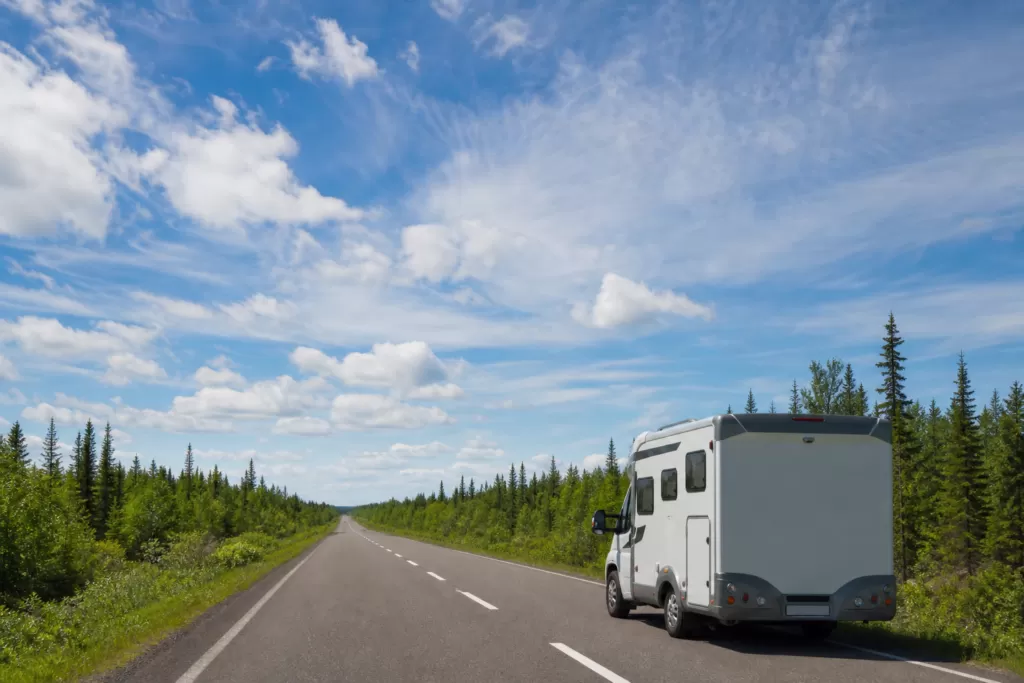
The Bifuka and Nayoro area of northern Hokkaido sits right between Asahikawa and Wakkanai. Sightseeing buses rarely come through, and summer temperatures almost never top 30°C, making it an ideal spot for travelers who want to avoid both crowds and heat. With a campervan, you can pull over along the Teshio River and simply stay the night, letting you travel the length of Hokkaido without worrying about hotel bookings.
This article covers access and through-routes from Asahikawa and Wakkanai, sightseeing spots in Bifuka and Nayoro, overnight parking conditions along the Teshio River, and local food and refueling precautions in northern Hokkaido. If you’d like to compare rental companies across all of Hokkaido, see also our Hokkaido campervan rental rate comparison.
The Appeal of Northern Hokkaido and Its Value as a Hidden Gem
When people list Hokkaido travel destinations, Furano/Biei, Shiretoko, and Hakodate are usually the first names that come up. Bifuka and Nayoro stay in their shadow, so even at the height of summer there’s almost no traffic congestion or waiting for parking. That’s a major advantage for campervan travel — you don’t have to fight over sightseeing parking lots and can move entirely at your own pace.
Although the elevation is low, the high latitude — 44 to 45 degrees north — keeps things cool even in summer, with few days topping 25°C. Nights in July and August in particular often drop to around 15–18°C, so you can sleep with barely any need for the vehicle’s air conditioner. That saves fuel and lets you enjoy Hokkaido’s characteristically cool summer air with the windows open.
Nayoro is known as one of Hokkaido’s premier stargazing spots. With little light pollution downtown, you can see the Milky Way with the naked eye on a clear night. The night sky seen from a campsite along the Teshio River is something you simply can’t experience in a city.
Why so few travelers come here, and how to enjoy going against the grain
The reason northern Hokkaido tends to get passed over is its distance from the major sightseeing areas and the inconvenience of getting there. It’s about 90km from Asahikawa to Bifuka, and about 65km to Nayoro. Access by train or bus is limited, so it’s really a place you can only visit with a rental car or campervan. Put another way, it’s an area that only travelers who have a campervan can casually drop into.
Nayoro and Bifuka have plenty of everyday shops and roadside stations that locals actually use, so — not being over-touristed — they still carry the feel of ordinary Hokkaido life. Stopping here after you’ve grown tired of sightseeing spots makes for the perfect reset.
Access and Through-Routes from Asahikawa and Wakkanai
It’s easiest to plan the northern Hokkaido area as a waypoint on the through-route connecting Asahikawa and Wakkanai. National Route 40 runs Asahikawa–Nayoro–Bifuka–Otoineppu–Wakkanai in a single line, with few traffic lights, making it an easy road to drive.
From New Chitose Airport / Asahikawa Airport to Nayoro and Bifuka
From New Chitose Airport to Nayoro is roughly 180km — drive the Doo Expressway to Asahikawa, then take National Route 40, for a total of about 2 hours 30 minutes to 3 hours. From Asahikawa Airport to Nayoro is about 65km, under an hour. If you rent a campervan at Asahikawa Airport and head straight north, you can already be sightseeing around Nayoro on day one.
Bifuka is a further 30km or so north. Going directly from Asahikawa to Bifuka is about 90km, roughly 1 hour 20 minutes. There are several roadside stations along the way, so you can take it easy with breaks along the drive.
The Asahikawa–Wakkanai through-route and how to pace it
Asahikawa to Wakkanai via National Route 40 is about 260km, a little over 3 hours. It’s physically possible to drive it in a day, but for a campervan trip it’s standard to spend a night or more along the way in Nayoro or Bifuka. A common 3-day/2-night pattern is one night in Bifuka at Bifuka Island, one night around Nayoro, and then on to Wakkanai.
If you’re looping back to Asahikawa from Wakkanai, changing your route slightly on the way back adds variety — for example, taking National Route 40 on the way out and a prefectural road along the Teshio River on the way back, so the scenery doesn’t repeat.
Road conditions and driving precautions
National Route 40 is a well-maintained arterial road, and even a large cabcon can drive it without issue. That said, the stretch between Bifuka and Otoineppu has few settlements, and the weather can change suddenly. Fog is common even in summer along parts of this stretch, so drive with extra care at night.
The prefectural roads heading from Otoineppu toward Nakagawa and Teshio have some stretches with rough surfaces or narrow sections. Many rental companies’ terms prohibit driving on unpaved roads or forest roads, so check the road conditions on Google Maps in advance and avoid entering unpaved sections.
Compare Hokkaido Campervan Rentals
Base yourself at New Chitose Airport and compare rates, vehicle types, and pickup locations all in one place.
Compare rental companies and prices →Sightseeing Spots in Bifuka and Nayoro
Bifuka and Nayoro don’t have flashy, large-scale attractions, but they do have a number of spots where you can relax amid Hokkaido’s natural surroundings. Planning ahead makes it easier to get around.
Bifuka Town Forest Park, Bifuka Island
“Bifuka Town Forest Park, Bifuka Island,” spread out along the Teshio River, is a complex bringing together an auto campsite, a hot spring, and cottages in one location. If you book a powered auto-camping site here with your campervan, you can use shore power to run your vehicle’s appliances. The hot spring also accepts day-trip bathers, and the convenience of being able to head straight from your campsite to a hot bath is popular with travelers.
The facility has river access, so you can fish or play in the water. Since it’s a Hokkaido river, the water stays cold even in summer, so it’s best to limit how long children play in it, but it’s a pleasant spot for adults to just sit by the riverside. There are also cottage buildings, giving you a chance to meet other travelers staying in a cottage partway through your campervan trip.
Auto-camping site fees run to a few thousand yen per site (rates can change year to year, so check locally or on the official website). Sites can fill up on summer weekends, so it’s a good idea to book 1–2 weeks ahead.
Trolley Kingdom Bifuka
A must-try Bifuka experience is “Trolley Kingdom Bifuka.” It uses the tracks of the former, now-discontinued Bikou Line, letting you ride a hand-powered trolley car along a 9.6km round trip on the old line. There are two types: one towed by an engine-powered motor car, and one you pedal yourself.
No license is needed to operate one, so it’s enjoyable for anyone from small children to seniors. Bears can occasionally appear along the line, so bringing a bear bell is recommended (free rentals are available). As a uniquely Hokkaido experience, it gets strong reviews online, and plenty of travelers make the trip to Bifuka specifically for it.
It operates roughly from late May to late October, with a round trip taking about 1.5–2 hours. Some days allow riding without a reservation, but weekends can involve waiting, so it’s best to check availability on the official website. Campervans can park on site, and large vehicles are accommodated too.
Nayoro’s Sunflower Fields (best viewed in August)
Sunflower fields spread across Nayoro in summer. The best viewing period is generally early to mid-August, when fields both used by local agriculture and maintained for sightseeing burst into a sea of yellow. The sweeping scale of these fields, typical of Hokkaido, photographs beautifully, and with fewer visitors than the sunflower fields in Biei, you can shoot at a relaxed pace.
The exact location can change from year to year, so it’s best to check with Nayoro’s tourism information or the city’s official website beforehand. Parking your campervan nearby to view the fields is fine, but entering the farmland or picking flowers without permission is strictly forbidden.
Nayoro City Observatory, Kitasubaru
The Nayoro City Observatory “Kitasubaru” is known as Japan’s northernmost public observatory. Its 1.6m reflecting telescope is among the largest in the country, and it regularly holds astronomical observation events. It’s close to the city center, making it easy to visit by campervan.
Check the website in advance for observation event dates and times. Nights in northern Hokkaido get cold even in summer, so bringing warm clothing is recommended. It pairs perfectly with a campervan, since you can sleep in your own vehicle right after an observation session — you can even take a nap in the parking lot afterward if attending a late-night event (please confirm this is allowed).
Overnight Parking and Auto-Campsites Along the Teshio River
The Teshio River is a major 256km river flowing north to south through northern Hokkaido, running through Bifuka, Nayoro, Otoineppu, Nakagawa, and the town of Teshio before emptying into the Sea of Japan. Campsites and RV parks dot its banks, so overnight stops naturally present themselves along a campervan route.
Bifuka Island Auto-Campsite
The auto-campsite at Bifuka Island mentioned earlier sits right next to the Teshio River and has powered sites for a comfortable stay. There’s a shop on site where you can pick up basic supplies like charcoal and firewood locally. Because there’s a hot spring on the grounds, you don’t need to travel elsewhere to bathe, which suits a campervan trip where you’re carrying a lot of gear.
Overnight parking spots in Nayoro
Nayoro has a campsite inside “Sun Pillar Park,” which also includes auto-camping sites. Being close to the city center makes it easy to shop or sightsee the next morning, and nearby convenience stores and supermarkets make restocking food simple.
The Michi-no-Eki “Nayoro” is located within the city, with a large parking area that’s easy to nap in. That said, check the facility’s rules regarding extended parking or overnight stays. It’s a popular spot where several large vehicles often park side by side.
Campsites around Otoineppu and Nakagawa
“Osaushinai Campsite” in the village of Otoineppu is a quiet campsite facing the Teshio River, available free or at low cost. Facilities are minimal, but you can camp in your vehicle with the feel of pitching a tent right beside the river. There’s no power supply, so you’ll need a sub-battery or portable power station.
“Ponpira Aqua-Rhythm Campsite” in the town of Nakagawa is also along the Teshio River. It’s another relatively uncrowded hidden gem, suited to travelers who prefer a quiet setting. In both cases, it’s best to check the town’s official website or call ahead to confirm they’re open before visiting.
Canoeing and river fishing on the Teshio River
The Teshio River is also known as a canoeing route, with rental canoes and guided tours running on certain stretches. The section between Nayoro and Bifuka has a gentle current that’s easy for beginners to enjoy. Setting up a base with your campervan while you canoe is a way of spending time that’s unique to northern Hokkaido.
Fishing is possible on the Teshio River’s main stream and tributaries for species like yamame trout, char, and Amago-related sea-run trout. Inland fishing in Hokkaido requires a fishing fee, so purchase a fishing permit from the local fisheries cooperative before you start. With a campervan, you can keep your fishing gear loaded and simply stay overnight wherever you find a good spot.
New Chitose Airport / Tokachi-Obihiro Airport
Rent the Cabcon “Cresson Journey”
Base yourself at New Chitose Airport and travel all across Hokkaido by campervan.
See details at Moving Inn →Northern Hokkaido Food, Roadside Stations, and Refueling Precautions
When driving through northern Hokkaido, food and refueling need to be planned together. It’s not a heavily touristed area, so there aren’t many restaurants, but you can find simple, high-quality cooking made with local ingredients.
Nayoro and Bifuka food and roadside stations
Nayoro is known as a production area for glutinous “mochi” rice. Local restaurants and supermarkets carry dishes and products made with it. Nayoro also markets itself as a “barbecue town,” with barbecue facilities set up around the city where you can enjoy grilling locally grown vegetables and meat. If your campervan has a stove, cooking ingredients bought at a roadside station — either in the vehicle or at a campsite — is a very northern-Hokkaido way to spend an evening.
The Michi-no-Eki “Nayoro” carries local produce and processed foods. The adjoining “Mochi-Mochi no Ki” sells sweets made with Nayoro’s glutinous rice, and it’s a classic stop. Bifuka has “Michi-no-Eki Bifuka,” with local specialty products as well as a food counter serving ramen and set meals.
The black soba noodles (Otoineppu soba) once served by “Tokiwaken” in front of Otoineppu Station were a long-standing local specialty, but the restaurant closed in 2021. A different operator has since taken over production and sale of Otoineppu soba, so check for the latest information before visiting.
Sections with few gas stations [check before you drive]
Fuel planning is critical when driving a campervan through northern Hokkaido — running out of fuel here is extremely difficult to deal with. Here are the sections that need particular attention.
- Bifuka–Otoineppu (approx. 30km): There is no operating gas station along this stretch. Fill up completely in central Bifuka before setting out.
- Otoineppu–Nakagawa (approx. 30km): There is one gas station in the village of Otoineppu, but its opening hours are limited. It may be closed if you arrive in the evening, so it’s best to stop by during the day.
- Nakagawa–Teshio (approx. 80km): There is one station in the town of Nakagawa. Beyond this it’s a long stretch to Teshio, so be sure to refuel in Nakagawa.
- Toward Horokanai / Shumarinai: There’s only one gas station in the town of Horokanai, and you can’t refuel outside its operating hours. If you’re taking the route from Nayoro to Asahikawa via Horokanai, fill up completely in Nayoro before setting off.
Campervans generally have larger fuel tanks than passenger cars, but their fuel economy is worse. When driving in northern Hokkaido, it’s safest to stick strictly to the rule of “refuel at the next station once you’re down to half a tank.”
Many gas stations in northern Hokkaido are closed on Sundays and public holidays. If your itinerary includes a Sunday, it’s a good idea to refuel the day before.
Timing your shopping and restocking food
There are almost no supermarkets in the Bifuka, Otoineppu, and Nakagawa areas. Nayoro has several supermarkets, so the basic strategy is to stock up on food generously when you pass through Nayoro. There are convenience stores in Nayoro and Bifuka, but none beyond Otoineppu. Restock drinking water, food, and ice before you pass through Otoineppu.
Frequently Asked Questions (FAQ)
Q: What type of campervan is best for a trip to the Bifuka/Nayoro area of northern Hokkaido?
Even a large cabcon can drive the campsites along the Teshio River and the roads of northern Hokkaido without trouble. That said, some prefectural roads and forest roads have height or length restrictions. If it’s your first time driving in northern Hokkaido, starting with an easier-to-handle vancon or a pop-up-roof model gives more peace of mind. Cabcons offer more living space and suit a long, multi-day through-trip.
Q: How many nights should I spend in Bifuka and Nayoro?
If you’re using the area as a waypoint on an Asahikawa–Wakkanai through-trip, one night in Bifuka and one in Nayoro — two nights total — is a good baseline. Combining Trolley Kingdom, the Bifuka Island hot spring, the sunflower fields (August only), and the observatory can comfortably fill 2–3 days. If you’re not continuing to Wakkanai and want to explore northern Hokkaido in more depth, 3–4 nights lets you add canoeing and fishing for a fuller trip.
Q: Do I need a reservation for Trolley Kingdom Bifuka?
You can sometimes ride without a reservation on the day, but weekends and the busy summer holiday season can involve waiting in line. If you want to be sure of a ride, it’s best to reserve in advance through the official website or by phone. It can be suspended in bad weather, so check the forecast too.
Q: When’s the best time to see Nayoro’s sunflower fields?
The typical best-viewing window is early to mid-August. In late July the flowers often haven’t bloomed yet, and by late August they start to fade. If you’re planning your trip, aim for roughly August 5–20. Check the location and blooming status on Nayoro’s tourism website or official social media before you go.
Q: How should I time refueling in the northern Hokkaido area?
Make sure to fill up completely in Bifuka before heading north. There’s one station in Otoineppu, but its hours are short, so it’s safer to plan a route that passes through during the day. Following the rule of “refuel at the next station once you’re at half a tank” essentially eliminates the risk of running out of fuel in northern Hokkaido. Since stations tend to close on Sundays and public holidays, refuel the day before if possible.
Q: Can I drive a campervan through northern Hokkaido in winter?
Winter in northern Hokkaido brings continuous snow and icy roads, with lows sometimes dropping below -20°C. If your campervan has an FF heater and proper insulation, living inside is possible, but you’ll need far more thorough preparation than usual — measures against frozen water tanks, staying on top of road conditions, and so on. Many rental campervans prohibit or restrict driving in the northern Hokkaido area in winter, so check the rental terms before booking.
Book a Campervan in Hokkaido
Moving Inn New Chitose Airport supports English booking and offers airport transfers.
Pick a campervan by what matters to you.
Rent at New Chitose Airport
See only the rental bases in Chitose, where the airport is.
![When and Where Can You See Harbor Seals at Cape Erimo? Kaze no Yakata Official Information, Viewing Season, and Windy-Day Notes [2026-27]](https://hokkaido-campingcar.jp/wp-content/uploads/2026/10/erimo-cape-lighthouse-768x511.jpg.webp)
![Where and Under What Conditions Can You See Diamond Dust in Hokkaido? How Cold a Morning It Takes, and Where It Appears [2026-27]](https://hokkaido-campingcar.jp/wp-content/uploads/2026/10/hokkaido-diamond-dust-nayoro-768x512.jpg.webp)
![Can You Drive to Hokkaido Jingu for Hatsumode? Parking, Crowds, and Where to Park and Walk [2027]](https://hokkaido-campingcar.jp/wp-content/uploads/2026/10/hokkaido-jingu-winter-torii-768x504.jpg.webp)
![Hokkaido Roads Over New Year [2026-27] | Expressway Sections Prone to Blizzard Closures, Forecast Congestion Days, No Holiday Discount, and New Chitose Airport Parking](https://hokkaido-campingcar.jp/wp-content/uploads/2026/10/hokkaido-winter-rural-road-edge-markers-768x432.jpg.webp)
![Where to See Sea Smoke (Kearashi) in Hokkaido: Rumoi’s Ogon-misaki and the Morning Conditions [2026-27]](https://hokkaido-campingcar.jp/wp-content/uploads/2026/10/rumoi-kearashi-sea-smoke-768x511.jpg.webp)
![Geminid Meteor Shower 2026 in Hokkaido: Peak Around 23:00 on December 14, Sapporo Moonset 20:40, and Staying Warm in a Winter Campervan [2026]](https://hokkaido-campingcar.jp/wp-content/uploads/2026/10/geminids-2026-hokkaido-768x575.jpg.webp)