Campervan License Guide Japan: Regular or Medium License? Camroad & Cab-Over Requirements by Type [2026]
Which driver's license do you need for a campervan in Japan?
The type of driver’s license you need in Japan depends on when you obtained your license and what class it is. Use the quick-reference table below to find out which campervans you can legally drive.
Quick Reference Table
| License Type | When Obtained | Max GVW | Campervans You Can Drive |
|---|---|---|---|
| Standard (普通免許) | March 2017 or later | Under 3.5t | Kei camper, Vancon, Small Cabcon |
| Semi-medium (準中型) | March 2017 or later | Under 7.5t | Almost all Cabcon |
| Standard (普通免許) | June 2007 – March 2017 | Under 5t | Vancon, mid-size Cabcon and more |
| Standard (普通免許) | Before June 2007 | Under 8t | Almost all except Buscon |
| Medium (中型) | Any time | Under 11t | Buscon, Full-con |
| Large (大型) | Any time | No limit | All types |
Popular Hokkaido Rental Vehicles & Required License
| Vehicle Type | Approx. GVW | License Required | Available at Moving Inn? |
|---|---|---|---|
| Kei Camper | ~850 kg | Standard (all dates) | Not available (other operators only) |
| Vancon (HiAce-based) | 2.7–3.0t | Standard (all dates) | Yes — HiAce CA / LX / KAR (AT 4WD) |
| Small Cabcon (Camroad-based) | 3.0–3.4t | Standard (all dates) | Yes — Cresson Journey Type X / W |
| Large Cabcon | 3.5–5.0t | Semi-medium recommended | No |
The vehicle lineup available for Hokkaido rentals is covered in 15 Recommended Hokkaido Campervan Rentals.
Can You Drive a Camroad-Based Cabcon on a Standard License?
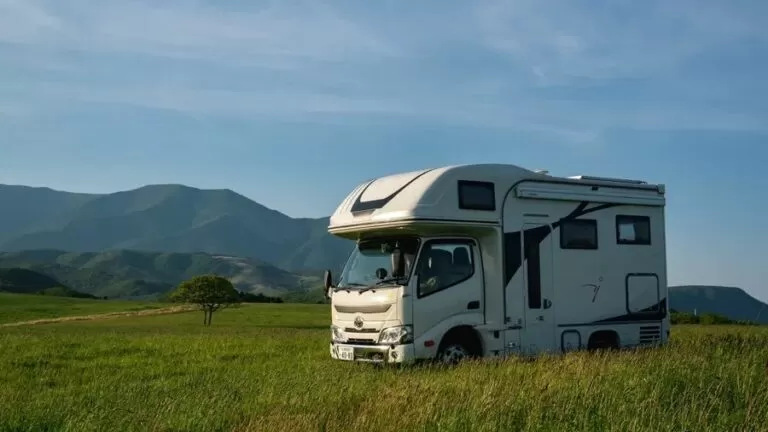
Short answer: yes. A small cabcon built on the Toyota Camroad chassis has a gross vehicle weight (GVW) of around 3.0–3.4t, which falls within the limit for a current standard license (under 3.5t GVW) obtained March 2017 or later. If your standard license predates that, you have even more headroom.
As the “Small Cabcon (Camroad-based)” row in the table above shows, a standard license covers this vehicle regardless of when you obtained it. Moving Inn’s “Cresson Journey” is also a Camroad diesel 4WD-based cabcon, and it can be driven on a standard license (automatic-only is fine) — more on this below.
That said, the Camroad chassis is used as a base by multiple manufacturers, so GVW varies depending on the specific build and equipment. Some models — especially heavier custom builds — come close to the 3.5t line. Always check the vehicle registration certificate or each company’s spec sheet for the exact GVW before booking.
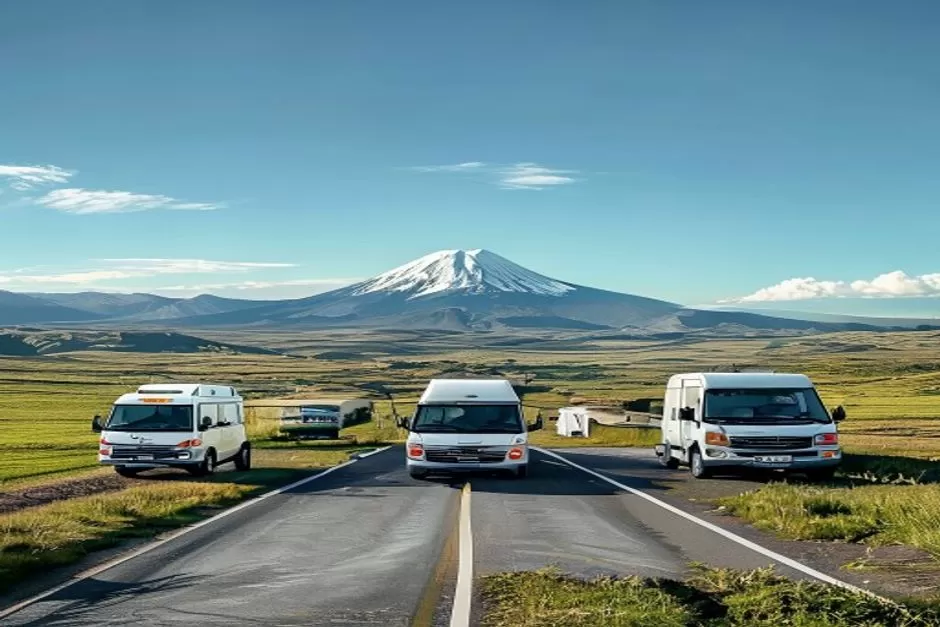
3 Vehicle Types You Can Drive on a Standard License
If You Recently Got Your License (March 12, 2017 or Later) and Want to Drive a Large Cabcon (3.5t+)
A standard license obtained on or after March 12, 2017 caps out at under 3.5t GVW, so a large cabcon (roughly 3.5–5.0t) or a buscon is off-limits as-is. In that case, you have two options:
- Add a semi-medium license: A semi-medium license (under 7.5t GVW) covers nearly every large cabcon. If you already hold a standard license, you can get one by completing the additional skills and classroom training at a driving school (hours and cost vary by school — check in advance).
- Choose a vehicle your standard license already covers: Kei campers, vancons, and small cabcons (Camroad-based, roughly 3.0–3.4t class) all fall under 3.5t GVW and are covered by a current standard license. Most Hokkaido rental vehicles fall in this range, so starting your search here is the simplest route.
Before booking, always check the GVW of the vehicle you want against your license class and acquisition date. Whether the GVW is under 3.5t is the deciding factor if you got your standard license recently.
Kei Camper
GVW around 850 kg, great for 1–2 people. Note: Moving Inn does not offer kei campers.
Vancon (Van Conversion)
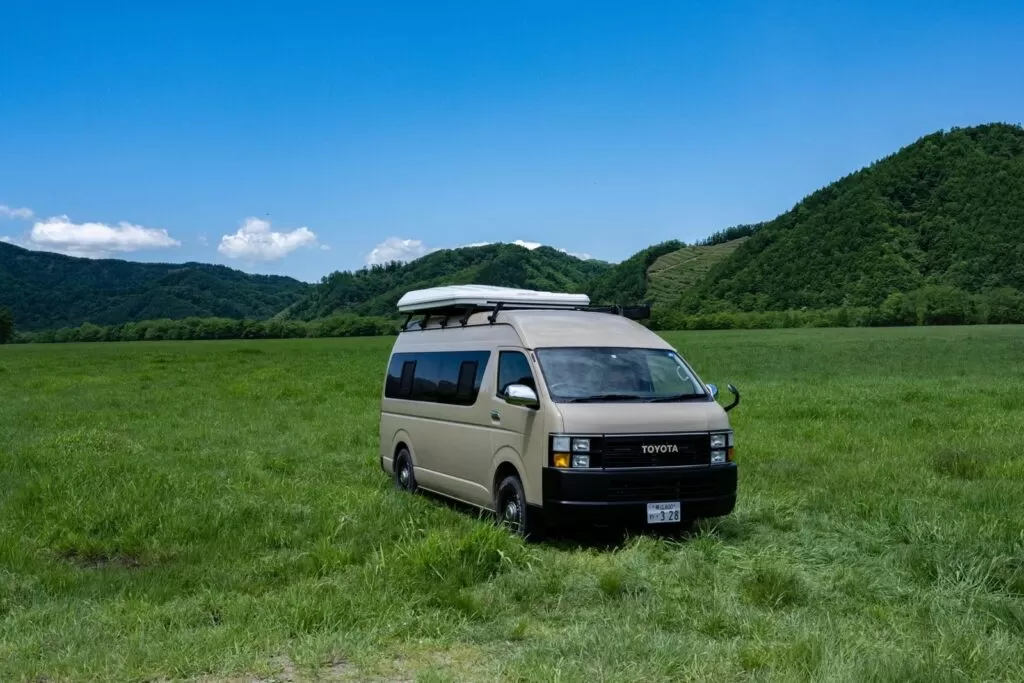
HiAce or Caravan-based, GVW 2.7–3.0t — well within the standard license limit. Moving Inn offers the HiAce CA, LX, and KAR models (all automatic 4WD), the most popular choice in Hokkaido.
Small Cabcon
Camroad-based, GVW 3.0–3.4t — standard license applies. Sleeps 4–6. Moving Inn’s Cresson Journey Type X/W: 90L fridge, FFheater, sleeps 6.
When a Semi-Medium or Medium License Is Needed
Semi-Medium License (Available Since March 2017)
This license class was created in the March 12, 2017 revision to the Road Traffic Act. It covers vehicles up to 7.5t GVW, which includes nearly every large cabcon (roughly 3.5–5.0t). You can obtain it starting at age 18, making it the recommended path if you’re getting your license for the first time now.
Medium License (Buscon / Full-Con)
Bus-based buscons and large full-cons run roughly 8–11t GVW. These require a medium license (age 20+, with at least 2 years of driving experience). Hokkaido rental locations rarely carry these vehicles — most rentals fall within the standard-to-semi-medium range.
How Your Acquisition Date Changes Things
Under the Road Traffic Act, the same “standard license” covers a different vehicle class depending on when you obtained it.
Obtained March 12, 2017 or Later
This is the current standard license. It covers up to 3.5t GVW and 10 or fewer seats. Kei campers, vancons, and small cabcons are your main options.
Obtained June 2, 2007 – March 11, 2017
A standard license from this period covers up to 5t GVW. Many mid-size cabcons fall within this range, opening up more vehicle choices.
Obtained Before June 1, 2007
An old-format standard license covers up to 8t GVW — close to today’s medium license range. Nearly every vehicle type is available except buscon/full-con. For vehicle choices and things to watch for as a senior driver, see Rental Notes and Support Services for Senior Travelers.
Check Your Own License in 30 Seconds

Check the “license type” field on the front of your driver’s license. Whether it says “Standard,” “Semi-medium,” “Medium,” or “Large” determines what class of vehicle you can drive.
You can find your acquisition date in the “date obtained” field on the same license. A standard license issued March 12, 2017 or later caps out at under 3.5t GVW — for anything earlier, check the matching row in the table above.
Most rental bookings will ask for a copy of your license. Checking it yourself in advance makes the process go smoothly.
Automatic (AT) License Is Fine
Almost all rental campervans in Hokkaido are automatic transmission. An automatic-only license is no problem at all.
Towing a Trailer? 750kg Is the Cutoff
If you’re towing a campervan trailer, any trailer over 750kg GVW requires a separate towing license (けん引免許/kenin menkyo). At 750kg or under, a standard license alone is enough to tow. If you’re considering a trailer-type rental in Hokkaido, check the license requirements directly with the rental company.
FAQ
Can I rent a campervan in Hokkaido with just a standard license?
Yes. Kei campers, vancons, and small cabcons all fall within the standard license limit. Most vehicle types available at Hokkaido rental locations fall within this range.
Does an automatic-only license work?
Yes. Hokkaido rental campervans are almost exclusively AT. Check the transmission type for your vehicle on the booking page in advance.
I got my license before 2007 — what’s different?
Your old standard license covers up to 8t GVW, so nearly every campervan type (except buscon/full-con) is available.
Do I need a separate license to tow a trailer?
Yes. Towing a trailer over 750kg GVW requires a towing license (けん引免許/kenin menkyo). At 750kg or under, a standard license alone is enough.
Where can I check my license type?
Check the “license type” field on the front of your driver’s license. The acquisition date is printed on the same side.
Can I rent with a foreign license?
It depends on your country or region. Visitors from Geneva Convention signatory countries such as the US, Canada, Australia, New Zealand, South Korea, the UK, and Hong Kong can drive with an International Driving Permit (IDP) plus their home license and passport. France, Belgium, and Monaco are on the Geneva list but do not issue the Geneva-format IDP, so an IDP from these three countries is not valid in Japan — use your home license plus a certified Japanese translation instead (Tokyo MPD — Geneva Convention countries, checked 2026-10-05). Germany and Switzerland are not on Japan’s Geneva Convention signatory list, so the IDP is not valid there — a certified Japanese translation of the home license is required instead. Taiwan is the same: the IDP is not valid, and a certified Japanese translation is required. Mainland China (PRC) residents cannot legally drive in Japan — China is neither a Geneva Convention signatory nor covered by the translation pathway. For any country or region not listed here, check the Tokyo Metropolitan Police Department’s signatory list before you travel. See the country guide table below for details.
For the rules country by country, including who needs a Japanese translation instead of an IDP and who cannot drive in Japan at all, see our guide to driving a campervan in Hokkaido on your licence, by country.
How many tons does a campervan weigh?
It varies significantly by vehicle type. Kei campers are around 850kg, vancons around 2.7–3.0t, small cabcons around 3.0–3.4t, large cabcons around 3.5–5.0t, and buscons/full-cons around 8t. Check the GVW of each vehicle before booking and match it against your license class.
Can I rent if I got my license less than a year ago?
Conditions vary by rental company. Some rental locations require at least one year since obtaining your license, so check each company’s terms before booking. Major operators like Moving Inn list license requirements on their booking page.
Drive Right on a Standard License — Book with Moving Inn
Once you’ve confirmed your license, the next step is booking. Moving Inn offers vancons (HiAce-based) and cabcons (Cresson Journey), all drivable on a standard license — automatic-only is fine. Departing directly from New Chitose Airport or Tokachi-Obihiro Airport is another convenient plus.
Things to Watch for When Driving a Campervan
Once you’ve confirmed a standard license covers you, it’s worth knowing a few things that differ from driving a regular car.
Watch for Height Restrictions
Campervans sit tall, so multi-story parking structures, low tunnels, and low overpasses may not be an option. Rough clearance is about 2.2m for a vancon and 2.8m for a cabcon. Always check the posted height limit at a parking structure’s entrance. Ground-level lots at Hokkaido roadside stations and service areas are almost always fine.
Length and Handling
A vancon runs 5–6m long; a cabcon, 6–7m. The inner-wheel difference on turns and the blind spots when reversing are both bigger than in a regular car, so check your backup camera and side mirrors frequently. Parking may require a large space, or the equivalent of two regular spots.
Expressway Toll Class
Depending on GVW and axle count, some campervans are classified as “medium-size vehicles” for expressway tolls, which can cost more than the standard car rate. Check the toll class when you pick up your rental, and confirm whether your ETC card works before booking.
Hokkaido-Specific Notes
Traveling in winter (November–March), be mindful of ventilation when running an FF heater (carbon monoxide risk) and that braking distance on snow is longer than on dry pavement. Hokkaido’s national highways are often long and straight, which invites higher speeds — watch for wildlife (deer, foxes) darting into the road. Slowing down is especially advisable when driving at night.
5-Point Checklist Before You Book
Checking these 5 points before booking keeps things simple.
- 1. Check the “license type” field on your license. Confirm whether it says Standard, Semi-medium, Medium, or Large.
- 2. Check your acquisition date and match it against the reference table. March 12, 2017 and June 1, 2007 are the cutoff dates.
- 3. Confirm whether your license is AT-only or also covers MT. Hokkaido rentals are almost all AT, but confirm on the booking page just in case.
- 4. If you want a trailer, check whether it’s over 750kg. Trailers over 750kg GVW require a separate towing license.
- 5. If you hold a foreign license, prepare either an International Driving Permit (IDP) or a certified Japanese translation plus your passport. The required format depends on your country or region — check the country guide below.
Driving in Japan with a Foreign License — Country Guide
Japan is a signatory to the 1949 Geneva Convention on Road Traffic. If your home country issued your IDP under this convention, you can drive in Japan legally. Rules differ by country — check before you go.
| Country / Region | Can Drive in Japan? | Required Documents |
|---|---|---|
| 🇺🇸 USA / 🇨🇦 Canada / 🇦🇺 Australia / 🇳🇿 New Zealand | ✅ Yes | Geneva Convention IDP + home license + passport |
| 🇰🇷 South Korea | ✅ Yes | Geneva Convention IDP + home license + passport |
| 🇬🇧 UK | ✅ Yes | Geneva Convention IDP + home license + passport |
| 🇫🇷 France / 🇧🇪 Belgium / 🇲🇨 Monaco | ⚠️ Yes (translation only) | These countries do not issue the Geneva-format IDP, so their IDP is NOT valid in Japan. Requires home license + certified Japanese translation + passport. |
| 🇩🇪 Germany / 🇨🇭 Switzerland | ⚠️ Yes (translation required) | Not on Japan’s Geneva Convention signatory list, so the IDP is NOT valid here. Requires original home license + certified Japanese translation + passport. Translations can be issued by ADAC (Germany), the license-issuing authority, the relevant embassy/consulate in Japan, or JAF. |
| 🇹🇭 Thailand / 🇵🇭 Philippines | ✅ Yes | Geneva Convention IDP + home license + passport |
| 🇹🇼 Taiwan | ⚠️ Yes (translation required) | Not on Japan’s Geneva Convention signatory list, so the IDP is NOT valid. Requires original Taiwan license + certified Japanese translation (prepared by the Taiwan-Japan Relations Association, JAF, Zip Plus Co., Ltd., or another designated body) + passport. |
| 🇭🇰 Hong Kong SAR | ✅ Yes | IDP issued by Hong Kong Transport Department (Form TD51) + HK license + passport. Note: Mainland China (PRC) licenses are treated separately and are NOT valid. |
| 🇨🇳 Mainland China (PRC) | ❌ Cannot drive | China is NOT a member of the 1949 Geneva Convention. No valid IDP pathway exists for Japan. Mainland Chinese residents currently cannot legally drive in Japan. |
Source: Tokyo Metropolitan Police Department, “Information on Geneva Convention Signatory Countries” (https://www.keishicho.metro.tokyo.lg.jp/menkyo/menkyo/kokugai/kokugai04.html); “Driving in Japan with a Foreign License from a Cabinet-Order-Designated Country” (https://www.keishicho.metro.tokyo.lg.jp/menkyo/menkyo/kokugai/gaikokumenkyo.html); “Driving in Japan with an International Driving Permit Issued Abroad” (https://www.keishicho.metro.tokyo.lg.jp/menkyo/menkyo/kokugai/kokusaimenkyo.html). Confirmed July 30, 2026.
Note: An IDP is valid for one year from issue and must be used within one year of entering Japan. A certified Japanese translation is valid for one year from entering Japan (re-entering after a trip abroad of less than three months does not reset this clock). For any country or region not listed above, check the Tokyo Metropolitan Police Department’s list before you travel. Some rental companies may request additional documentation — always confirm before booking.
For a country-by-country breakdown of required documents and procedures, see Can You Rent a Campervan in Hokkaido with a Foreign License? Required Documents and Procedures by Nationality.
Summary: A Standard License Covers Most Campervans
You don’t need a special license to drive most campervans. Kei campers, vancons, and small cabcons are all covered by a current standard license obtained in or after 2017, and most vehicles available for Hokkaido rentals fall within this range.
The older your license, the wider your options. If you obtained your standard license before June 2007, nearly every vehicle type is available to you except buscons and full-cons. Start by checking the “license type” and “date obtained” fields on your own license, and match them against the reference table above.
An automatic-only license is not a problem for Hokkaido rentals. Visitors need either an International Driving Permit (IDP) or a certified Japanese translation, depending on their country or region. Once your license is confirmed, all that’s left is choosing a vehicle and dates and booking.
New Chitose Airport / Tokachi-Obihiro Airport
Rent the Cabcon “Cresson Journey”
Base yourself at New Chitose Airport and compare rates, vehicle types, and pickup locations all in one place.
See details at Moving Inn →Book a Campervan in Hokkaido
Moving Inn New Chitose Airport supports English booking and offers airport transfers.

![Hokkaido Winter Trip: Shoes & Packing List [2026] – 2,060 Sapporo Fall Transports and a Pre-Departure Checklist](https://hokkaido-campingcar.jp/wp-content/uploads/2026/10/hokkaido-winter-trip-shoes-packing-eyecatch-768x432.webp)
![Snow Cancels Your New Chitose Airport Flight? Rebooking Rules and Campervan Rental Delays [2026]](https://hokkaido-campingcar.jp/wp-content/uploads/2026/10/new-chitose-airport-snow-cancellation-eyecatch-768x432.webp)