Driving Mashike & Rumoi by Camper Van | Scenic Drives and Fresh Seafood on the Northern Orofuron Line [2026 Guide]
Discover the northern Orofuron Line by camper van: golden sunsets at Kogane-misaki in Rumoi, historic streets and fresh sweet shrimp in Mashike, and practical tips for overnight parking and onward routes to Wakkanai.
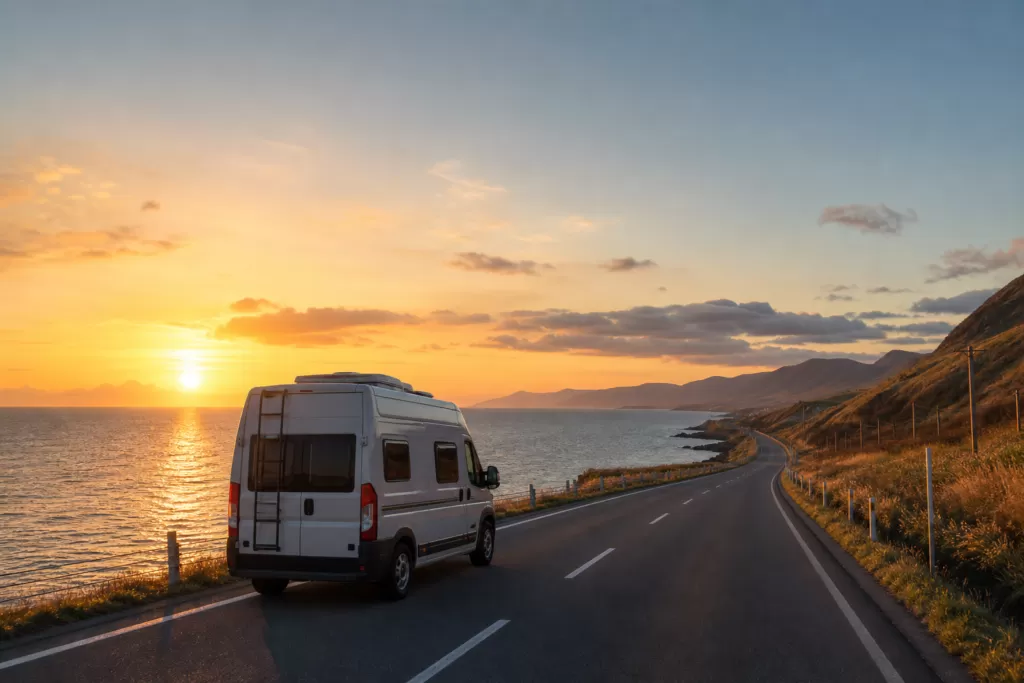
Sunsets over the Sea of Japan at Rumoi’s Kogane-misaki, sweet shrimp and octopus from Mashike, and the Orofuron Line stretching northward with the ocean to your left — you can experience all of this in one camper van trip through the Mashike-Rumoi area. About 2.5 hours by expressway from New Chitose Airport, or roughly 1 hour 40 minutes from Sapporo, this Sea of Japan coastal area is one of Hokkaido’s more accessible. This guide covers practical route information for the northern Orofuron Line, including overnight parking spots, fresh seafood, and connections toward Wakkanai.
Mashike and Rumoi on the Orofuron Line
The Orofuron Line is the popular name for National Routes 231 and 232, which run along Hokkaido’s Sea of Japan coast from south to north. Starting from Otaru and Ishikari, it passes through Rumoi, Mashike, Tomamae, and Haboro before reaching Wakkanai — roughly 380 km in total (definitions of the route vary). The Rumoi–Mashike–Ishikari section is Route 231; the Rumoi–Wakkanai section is Route 232.
Mashike is a small fishing town just south of Rumoi, population about 3,000. Once prosperous from herring fishing, it still retains wooden buildings from the Meiji and Taisho eras. Rumoi, with about 18,000 residents, is a regional city known nationally for the golden sunsets at Kogane-misaki. Touring both towns by camper van is the classic northern Orofuron Line itinerary.
The defining characteristic of this area is its manageable scale: about 20 minutes by car between Mashike and Rumoi, about 50 minutes from Rumoi to Haboro. It works as a stopover en route to Wakkanai, or as a destination for 2–3 days of relaxed exploration.
Best Season: June to September
The best time to visit is June through September. Sweet shrimp are caught year-round but are tastiest in spring and summer. Octopus peaks July to September — visit the Mashike Fishermen’s Cooperative direct sales shop then for the freshest local catch. After October, rough weather increases and facilities shorten their hours.
Driving the Northern Orofuron Line
There are two main approaches: northbound from Sapporo/New Chitose, or southbound from Wakkanai. Departing from New Chitose Airport or Sapporo, the northbound route is most common — the Fukagawa-Rumoi Expressway connects directly to Rumoi with no tolls.
Access from New Chitose Airport / Sapporo
- New Chitose Airport → Sapporo IC: Doo Expressway, approx. 35 min
- Sapporo IC → Fukagawa JCT: Doo Expressway, approx. 55 min
- Fukagawa JCT → Rumoi IC: Fukagawa-Rumoi Expressway, approx. 35 min (toll-free)
- Rumoi IC → Rumoi city center: approx. 5 min
- Rumoi → Mashike (Route 231): approx. 20 min (about 21 km)
Allow about 2 hours 40 minutes from New Chitose Airport to Rumoi, and about 3 hours to Mashike without stops. The Fukagawa-Rumoi Expressway is entirely toll-free.
Road Conditions on Route 231
Route 231, running south from Rumoi through Mashike toward Ishikari, hugs the Sea of Japan coastline. Views are excellent, but some sections run along narrow cliff roads where large camper vans (over 7 m long or 2.2 m wide) need to watch for oncoming traffic. The stretch near Ofuyu, at the southern entrance to Mashike Town, is particularly narrow. Tourist buses also use this road, so early morning or weekday driving is recommended.
Scenic Highlights: Golden Beach Rumoi and Ofuyu-misaki Observatory
“Golden Beach Rumoi” is a white-sand beach and coastal viewpoint with a large parking lot accessible to camper vans. Toilets are available along the shore. At Ofuyu, where Route 231 enters Mashike Town from the Sapporo side, the Ofuyu-misaki Observatory overlooks the Sea of Japan from a dramatic cliff. Parking is limited, so large camper vans should use a roadside pullout and visit early in the morning.
Compare Hokkaido Camper Van Rentals
Base yourself at New Chitose Airport and compare rates, vehicle types, and pickup locations all in one place.
Compare rental companies & rates →Mashike’s Historic Streets and Seafood
The name “Mashike” is said to derive from the Ainu word meaning “place where seagulls gather.” Wooden buildings from the Meiji and Taisho eras still stand today, several registered as national tangible cultural assets. This combination of historic townscape and active fishing harbor is Mashike’s greatest charm.
Kunimare Sake Brewery and the Former Maruichi Honma Merchant House
Founded in 1882, Kunimare Sake Brewery is Hokkaido’s northernmost sake producer and Mashike’s landmark attraction. Free to visit, the direct sales shop offers tastings (drivers excluded) and sales. Large cab-over camper vans should use the public parking near Mashike Port (3 minutes on foot). The Former Maruichi Honma Merchant House (built 1889) is a registered national tangible cultural asset open for interior tours (admission fee, seasonal hours).
Mashike Fishermen’s Cooperative Direct Sales Shop
The direct sales shop adjacent to Mashike Port sells sweet shrimp, octopus, scallops, and more fresh off the boat. Sweet shrimp are available spring through autumn with exceptional freshness. Octopus peaks July to September. The shop opens around 7 a.m.; selection varies with the catch. Boiling sweet shrimp in salted water on your van’s gas stove is one of the quintessential camper van experiences.
Rumoi’s Sunset Spot and Overnight Parking
Rumoi’s signature attraction is the sunset at Kogane-misaki, selected as one of Japan’s Top 100 Sunsets. With nothing blocking the horizon, the moment the entire sea turns gold is breathtaking.
Kogane-misaki: Practical Tips
Free parking for about 20 regular cars. In summer, the lot fills up 1–2 hours before sunset. Large camper vans take two standard spaces, so arrive early. The ideal shooting position is the observation deck near the tip of the cape, about 30 minutes before sunset. In July, sunset is roughly 19:10–19:30; in August, roughly 18:50–19:10.
Overnight Parking in Rumoi
Michi-no-Eki Rumoi on Route 232 is the main overnight option, with a large lot and 24-hour toilets. Roadside stations are for rest stops, not extended stays or cooking. As of June 2026, there is no RV park with power hookups in Rumoi; if you need power, continue to facilities near Haboro Onsen Sunset Plaza.
Overnight Parking in Mashike: Near Mashike Port
The public parking lot near the port is a candidate for overnight stays. The Kunimare direct sales shop and Fishermen’s Cooperative shop are within walking distance. Nights are quiet with a pleasant fishing harbor atmosphere in the morning. No RV park facilities (power/water hookups) — suits self-sufficient travelers only. Park where you won’t obstruct fishing workers’ early morning operations.
New Chitose Airport / Tokachi-Obihiro Airport
Rent the Cab-over “Cresson Journey”
Base yourself at New Chitose Airport and travel all across Hokkaido by campervan.
See details at Moving Inn →Practical Info: Roadside Stations, RV Parks, and Bathing
Roadside Station List
| Roadside Station | Location | Features |
|---|---|---|
| Michi-no-Eki Rumoi | Omachi 2-chome, Rumoi | On Route 232, 24H toilets, local products |
| Michi-no-Eki Obira Nishin-banya | Obira, Tomamae-gun | 30 km north of Rumoi; adjacent to Former Hanada Fisherman’s Hut (Important Cultural Property) |
| Michi-no-Eki Marine Island Okajima | Mashike, Mashike-gun | Close to Mashike town; port information available |
Bathing Facilities
In Rumoi city, “Rumoi Natural Hot Spring Yuttarikan” (Sakae-cho) offers day-use bathing. Hours: 10:00–22:00 (last entry 21:30), approx. ¥600 for adults. There are no hot spring facilities in Mashike; bathe in Rumoi or head north about 50 km to Haboro Onsen Sunset Plaza.
Water, Waste, and Fuel
For water, use a coin laundry in Rumoi or a campground kitchen. Gray water must not go into roadside station toilet tanks; use designated campground disposal facilities. Multiple gas stations in Rumoi; one in Mashike. Fill up in Rumoi before heading north — gas stations become sparse between Haboro and Horonobe.
Onward: Wakkanai and the Teuri/Yagishiri Islands
After Mashike and Rumoi, heading north to Wakkanai and Cape Soya is the classic way to complete the full Orofuron Line. From Rumoi, Route 232 north to Wakkanai is about 250 km — allow 4–5 hours with rest stops.
About 30 km north of Rumoi is Obira with its Michi-no-Eki Obira Nishin-banya. The Former Hanada Fisherman’s Hut is a nationally designated Important Cultural Property. In Haboro, the ferry terminal serves Teuri Island and Yagishiri Island — but camper vans cannot board (car deck is for small vehicles only). Park at Haboro Port and board on foot. For detailed logistics, see Traveling to Teuri and Yagishiri Islands by Camper Van.
North of Haboro, fuel stops become infrequent. Stock up in Haboro. Near Bakkai, approaching Wakkanai, the Sarobetsu Plain and Sea of Japan are both visible — a popular stop for cyclists combining camper van travel. Wild seals can be observed near Bakkai Port.
FAQ
Q: When is the best time to visit?
June to September. Sweet shrimp are best in summer; octopus peaks July–September. After October, rough weather increases and facilities shorten hours.
Q: Can a large camper van drive Route 231?
Yes, but the cliff-side section near Ofuyu has narrow spots. Vans over 7 m long or 2.2 m wide need to watch for oncoming traffic. Drive in early morning or on weekdays. Check road conditions via the Hokkaido Regional Development Bureau’s road information service.
Q: Is there an RV park with power hookups in Rumoi?
As of June 2026, there is no official RV park in Rumoi city. Michi-no-Eki Rumoi has parking but no power. Contact Haboro Onsen Sunset Plaza in Haboro about camper van parking if you need power.
Q: What are the hours of the Mashike Fishermen’s Cooperative direct sales shop?
Generally open from around 7:00 a.m. until early afternoon, but may be closed on days with no landings. Contact Mashike Fishermen’s Cooperative (Tel: 0164-53-1201) before your trip.
Q: Can I rent a camper van from New Chitose Airport and drive to Mashike and Rumoi?
Yes. From a rental company near New Chitose Airport, Rumoi is about 2 hours 40 minutes via the Fukagawa-Rumoi Expressway. Moving Inn, based near New Chitose Airport, offers English and Chinese support and started renting the cab-over “Cresson Journey” from June 2026, covering the Orofuron Line.
Book a Campervan in Hokkaido
Moving Inn New Chitose Airport supports English booking and offers airport transfers.

![Campgrounds Near Tokachi-Obihiro Airport: 8 Sites Within 30 km, Compared by Vehicle Access, Power and Price [2026]](https://hokkaido-campingcar.jp/wp-content/uploads/2026/10/photo-obihiro-airport-featured-pl232-768x512.jpg.webp)
![Campgrounds Near Hakodate Airport: 12 Sites Within 30 km, Compared by Vehicle Access, Power and Price [2026]](https://hokkaido-campingcar.jp/wp-content/uploads/2026/10/photo-hakodate-airport-featured-hl4722-768x484.jpg.webp)