Campervan Buyer’s Remorse: 5 Common Regrets, the Honest Downsides, and the One Way to Avoid Them
Campervan regret follows predictable patterns: overestimated usage, wrong size, surprise running costs.
Pick a campervan by what matters to you.
Rent at New Chitose Airport
See only the rental bases in Chitose, where the airport is.
Rent in winter (Dec–Mar)
Companies that rent through winter, listed apart from those that close.
Guide price
Moving Inn New Chitose Airport: HIACE van conversion from ¥22,000 per night. 20–30% off when booked 60–90 days ahead (official rate table, checked 15 Oct 2026).
New Chitose Airport map for campervan travellers →
Before you book: with an International Driving Permit if your country is in the Geneva Convention (for example the US, Australia, Singapore); Taiwan, Switzerland, Germany, France, Belgium and Monaco need your licence plus a Japanese translation (Tokyo Metropolitan Police). Questions in English: Moving Inn on WhatsApp. Every roadside station (michi-no-eki) must have free 24-hour toilets, and Hokkaido has 128 of them (MLIT).
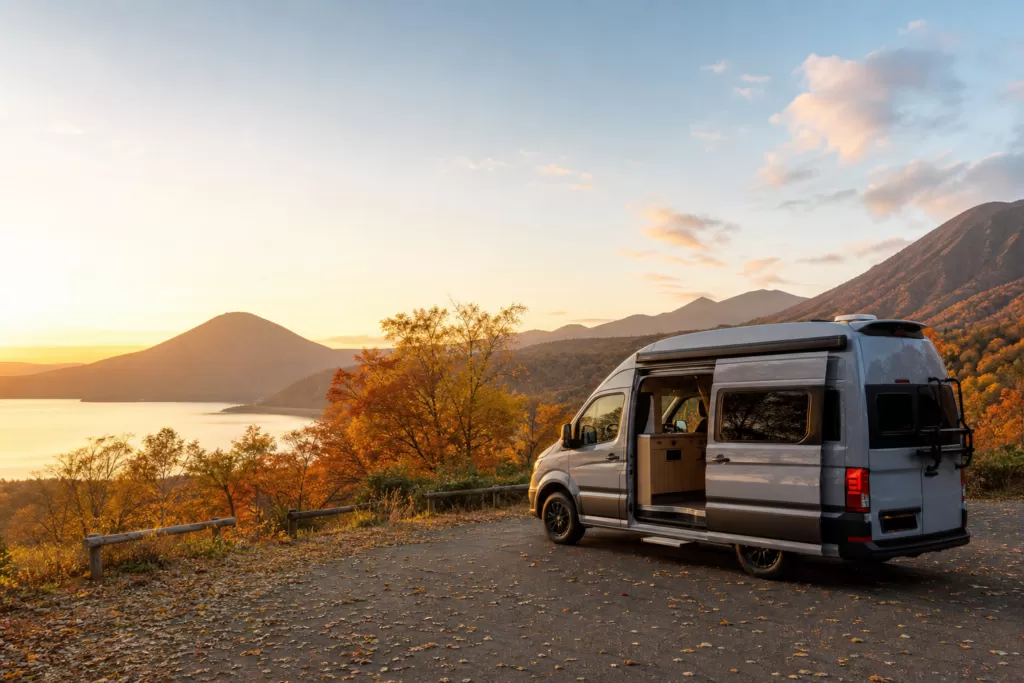
Search for “campervan regret” and you’ll find more posts than you’d expect—owners who spent millions of yen and wish they hadn’t. Read those stories closely, though, and a pattern emerges: the problem usually isn’t the vehicle. It’s that they bought on imagination instead of experience.
This article walks through the most common regret patterns, the honest downsides of campervan ownership, the upsides that keep people hooked anyway—and the one method that reliably prevents buyer’s remorse: renting before you buy. We’ll close with a concrete option for testing the lifestyle in Hokkaido.
New Chitose Airport / Tokachi-Obihiro Airport
Rent the Cabcon “Cresson Journey”
Base yourself at New Chitose Airport and compare rates, vehicle types, and pickup locations all in one place.
See details at Moving Inn →The 5 Most Common Regret Patterns
1. “We barely used it”
The number-one regret. The first months are full of weekend trips; six months in, it’s once a month; a year later, once a season. Work and school schedules limit free weekends more than most buyers admit, and the result is an expensive vehicle sitting in a parking space. The owners who avoided this regret all did the same thing: they counted their realistic travel days per year before buying.
2. “We chose the wrong size”
Buy a large cab-conversion motorhome for the family and you discover it doesn’t fit in multi-story car parks and turns every narrow street into a stress test. Buy a compact kei-camper for easy driving and you discover four people can’t actually sleep in it comfortably. Catalog “sleeping capacity” and real-world comfort are different numbers—and you only learn the difference by sleeping in one.
3. “The running costs surprised us”
Judge the purchase by sticker price alone and the parking fees, insurance, taxes, inspections, tires, and equipment maintenance arrive later as an unpleasant series of surprises. Cab conversions ride on truck chassis, so parts and servicing don’t price like a passenger car. “I never calculated the monthly cost before buying” is a classic line in regret posts.
4. “We had nowhere to keep it”
Campervans are tall and long, and plenty of home driveways and monthly parking lots can’t take them—height limits and “no campervans” clauses are common. Storing the vehicle far from home adds a “go pick up the car first” step to every trip, which quietly kills usage frequency.
5. “My family never got on board”
The buyer loves it; the family tolerates it, then gradually pushes back toward hotels. A campervan changes the whole family’s travel style, so a purchase driven by one person’s enthusiasm often ends up unused. Owners who took the whole family on a trial trip before buying almost never report this regret.
The Downsides, Stated Honestly
- Fuel economy is poor—heavy, tall vehicles burn more fuel than a comparable passenger car, and long road trips make the difference visible
- Driving takes adjustment—height, width, and turning radius all feel different, and crosswinds are a real factor. Manageable with practice, but the first drives are tense
- Fixed costs never stop—parking, insurance, inspections, and consumables bill you monthly whether you travel or not
- Most models are poor daily drivers—commuting or grocery-shopping in a cab conversion isn’t realistic, so it tends to become a second vehicle
- Resale value varies widely—popular models hold value well; the wrong choice costs you at sale time
Every one of these is manageable if you know it going in—and a source of regret if you don’t.
Why People Buy Anyway: The Upsides
- Freedom from hotel bookings—change your destination and schedule on the day, even in peak season when every hotel is full
- Your bed and bathroom travel with you—dramatically less stress for families with small children, seniors, and pet owners
- Accommodation savings—the longer the trip, the bigger the gap versus hotel costs for a family
- Travel with pets, no compromises—no more hunting for pet-friendly hotels
- Disaster preparedness—a rolling shelter with power, beds, and water
The One Reliable Way to Avoid Regret: Rent First
Look back at the regret patterns and you’ll notice something: every single one would have surfaced during a rental trip. Vehicle size, driving feel, your family’s honest reaction, what sleeping aboard is actually like, the daily tidying and water-tank chores—none of this comes through in catalogs or YouTube videos. All of it comes through in a two-night rental.
What to verify on a trial rental:
- Rent the type you’re considering (kei-camper / van conversion / cab conversion)—if you’re torn between two, rent twice
- Bring the whole family—collect everyone’s verdict, not just your own
- Actually sleep aboard—at full listed capacity, so you learn the real comfortable headcount
- Run a normal itinerary—sightseeing, meals, baths, shopping—and note where the friction is
- Share the driving—if only one person can drive it, trip fatigue lands on them
Spending a few tens of thousands of yen on a rental to avoid a multi-million-yen mistake is the cheapest insurance you’ll ever buy. And even if the verdict is “we shouldn’t buy one,” you still got a great trip out of it. There’s no losing outcome.
Testing the Lifestyle in Hokkaido: Moving Inn
If you’re going to rent as a test, you may as well do it somewhere the campervan lifestyle shows its best side. Hokkaido’s wide roads and generous parking make it the easiest place in Japan to drive a large vehicle for the first time—far more relaxed than city driving on the main island.
For a trial in Hokkaido, Moving Inn (Misawa, Tomakomai City — about 10 minutes by car from New Chitose Airport, with a free shuttle) is worth shortlisting. Built on a “mobile hotel” concept, they carry both cab conversions and van conversions—the two types most buyers are torn between—so you can compare them with a single company. The interiors prioritize comfort, which means you’re evaluating the lifestyle at its best. Pet-friendly vehicles are available, and bookings are handled in English, so the whole trial is manageable for overseas visitors too.
FAQ
Do many campervan owners regret the purchase?
Regret stories exist in meaningful numbers, but the causes repeat: overestimated usage, wrong vehicle size, underestimated running costs. Nearly all of them are preventable with a pre-purchase trial.
What’s the single most common regret?
“We barely used it.” Count your realistic travel days per year, divide the ownership cost by that number, and compare it with rental prices—the math usually makes the decision for you.
How long should a trial rental be?
Two nights minimum. One night is all novelty; the second night surfaces the real routines—tidying, water tanks, garbage, finding baths—that define what ownership would actually feel like.
Is it cheaper to keep renting or to buy?
It depends on frequency. At low annual usage, renting wins on total cost and spares you storage and inspection hassles. When renting every time starts to feel like the bottleneck, that’s your signal to consider buying.
My family isn’t enthusiastic. What should I do?
Skip the persuasion and take them on a rental trip. If it doesn’t click, you’ve avoided a bad purchase; if it does, your family becomes your ally. Either way, no one at home ends up resenting the decision.
Book a Campervan in Hokkaido
Moving Inn New Chitose Airport supports English booking and offers airport transfers.
Pick a campervan by what matters to you.
Rent at New Chitose Airport
See only the rental bases in Chitose, where the airport is.
![Campgrounds Near Tokachi-Obihiro Airport: 8 Sites Within 30 km, Compared by Vehicle Access, Power and Price [2026]](https://hokkaido-campingcar.jp/wp-content/uploads/2026/10/photo-obihiro-airport-featured-pl232-768x512.jpg.webp)
![Campgrounds Near Hakodate Airport: 12 Sites Within 30 km, Compared by Vehicle Access, Power and Price [2026]](https://hokkaido-campingcar.jp/wp-content/uploads/2026/10/photo-hakodate-airport-featured-hl4722-768x484.jpg.webp)