Noboribetsu Onsen Campervan Guide: Jigokudani, the Bear Park, and Day-Use Bathing with Overnight Parking [2026]
A model campervan route around Noboribetsu Onsen's Jigokudani (Hell Valley), the Bear Park, and day-trip hot springs.
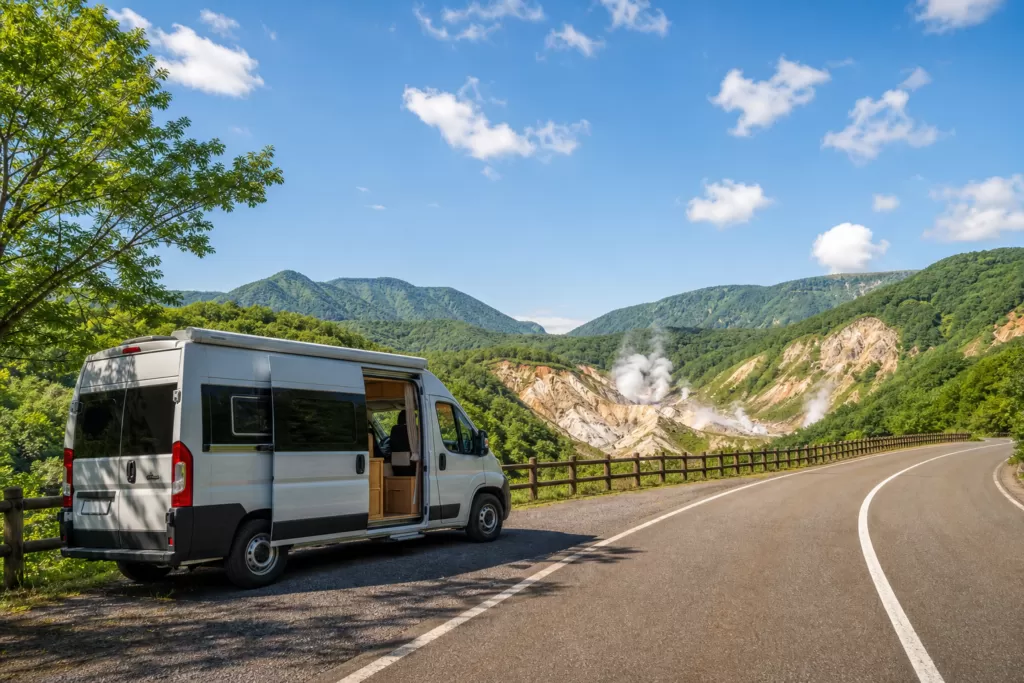
Noboribetsu Onsen is close enough to reach on a day trip by campervan from Sapporo, yet it packs in Jigokudani (Hell Valley), the Noboribetsu Bear Park, and hot-spring hopping all in one day. This guide covers the highlights and prices, access from central Hokkaido, and the parking areas and roadside spots where you can spend the night in your campervan, all based on official information.
The biggest advantage of traveling by campervan here is that you’re not tied to a check-in or check-out time. You can rearrange how long you spend at Jigokudani, at the Bear Park, or in the bath depending on the weather and the crowds that day. Instead of locking in a tight schedule in advance like you would with a hotel booking, you can adjust your plan on the ground — which really pays off in an area like Noboribetsu where the sights are packed so close together.
How far is Noboribetsu Onsen, really
Noboribetsu Onsen is about 155 km from Sapporo. Taking the Doou Expressway gets you there in around 1 hour 30 minutes: enter at Kitago IC and exit at Noboribetsu-Higashi IC, then it’s about another 10 minutes to the hot-spring town (per NAVITIME, confirmed July 2026). Via local roads on National Route 230 through Nakayama Pass, it takes roughly 2 hours 50 minutes, so taking the expressway is the realistic choice for a day trip by campervan.
From New Chitose Airport, the Doou Expressway also gets you there in about an hour and a half, so it’s an easy plan to pick up your campervan at the airport and head straight to Noboribetsu.
New Chitose Airport / Tokachi-Obihiro Airport
Rent the Cabcon “Cresson Journey”
Travel all across Hokkaido from a New Chitose Airport base — perfect for both a day trip and an overnight stay in Noboribetsu.
See details at Moving Inn →Jigokudani has two parking lots, but one payment covers both
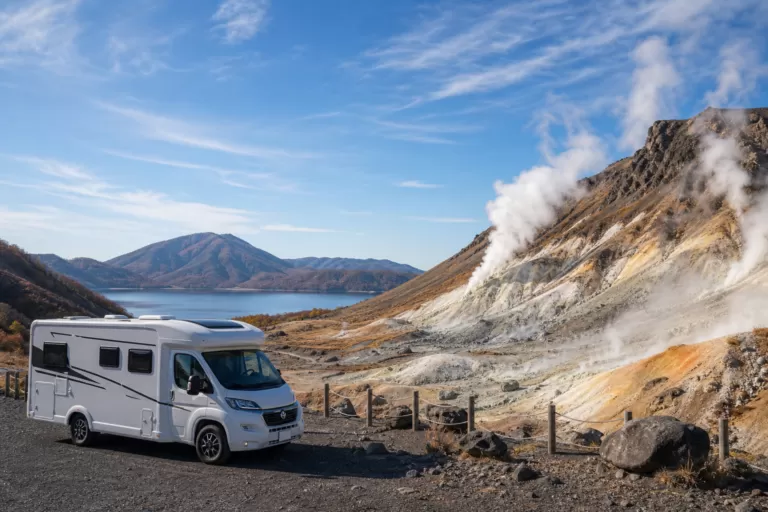
Jigokudani, the symbol of Noboribetsu Onsen, is the crater of an ancient volcanic explosion about 450 meters across. The smell of sulfur, the rising steam, and the reddish-brown rock face give it a striking, otherworldly power, and the walking trail starts just a short stroll from the hot-spring town.
Parking is split between the “Jigokudani parking lot” and the “Oyunuma parking lot” a bit further in, both charging ¥500. Pay once, though, and you can re-enter either lot as many times as you like the same day. The fee applies from around 8:00 a.m. to 5:00 p.m. (5:30 p.m. in summer); outside those hours parking is free (confirmed July 2026). The Oyunuma lot closes for winter, so from late November through late April only the Jigokudani lot is available.
Walk a little further to Oyunuma Pond and you’ll find the “Oyunumagawa Natural Footbath,” where a stretch of the stream flowing out of the pond sits at just the right temperature. It’s about a 20-minute walk from Jigokudani, so bring a towel for your feet and you’re all set.
The Bear Park’s ticket includes the ropeway, and hours shift with the season
Noboribetsu Bear Park sits atop Mt. Shihoure, overlooking the hot-spring town, and you reach the entrance by taking a gondola up from the ropeway station at the base. The ticket includes the round-trip ropeway ride: ¥3,200 for adults, ¥1,600 for children. Opening hours run 9:00 a.m.–5:00 p.m. from April 21 to October 20, and 9:30 a.m.–4:30 p.m. from October 21 to April 20 (as of July 2026, per official information). Some years the park closes temporarily for facility maintenance, so it’s worth checking the official site for the latest operating days before you go.
From the summit you get views over the town of Noboribetsu and toward Lake Kuttara, along with exhibits on brown bear ecology and a facility on Ainu culture. Pairing it with a walk through Jigokudani makes for a classic half-day-to-full-day plan.
Hot-spring hopping for a day, with prices that vary by inn
Noboribetsu Onsen is said to have nine different types of spring water, and several inns let you bathe for the day even without staying overnight. At the flagship Dai-ichi Takimotokan, the regular rate is ¥2,250 for adults and ¥1,100 for children. From 4:00 to 6:00 p.m. an “evening discount rate” drops that to ¥1,700 for adults and ¥825 for children. Reception runs from 9:00 a.m. to 6:00 p.m., with a final check-out from the baths at 9:00 p.m. (confirmed July 2026). The fee includes use of bath and face towels plus shampoo and other amenities.
Traveling by campervan means no bath on board, so these day-use bathing facilities become a real lifesaver. For a one-night, two-day trip, a good flow is to bathe during the evening-discount window on day one, spend the night in the campervan, and then walk Jigokudani the next morning before heading to your next stop. Rates, hours, and closing days differ by inn, so as your visit approaches, check with the official website or call ahead.
Choosing the right parking spot makes a big difference if you’re sleeping in the campervan
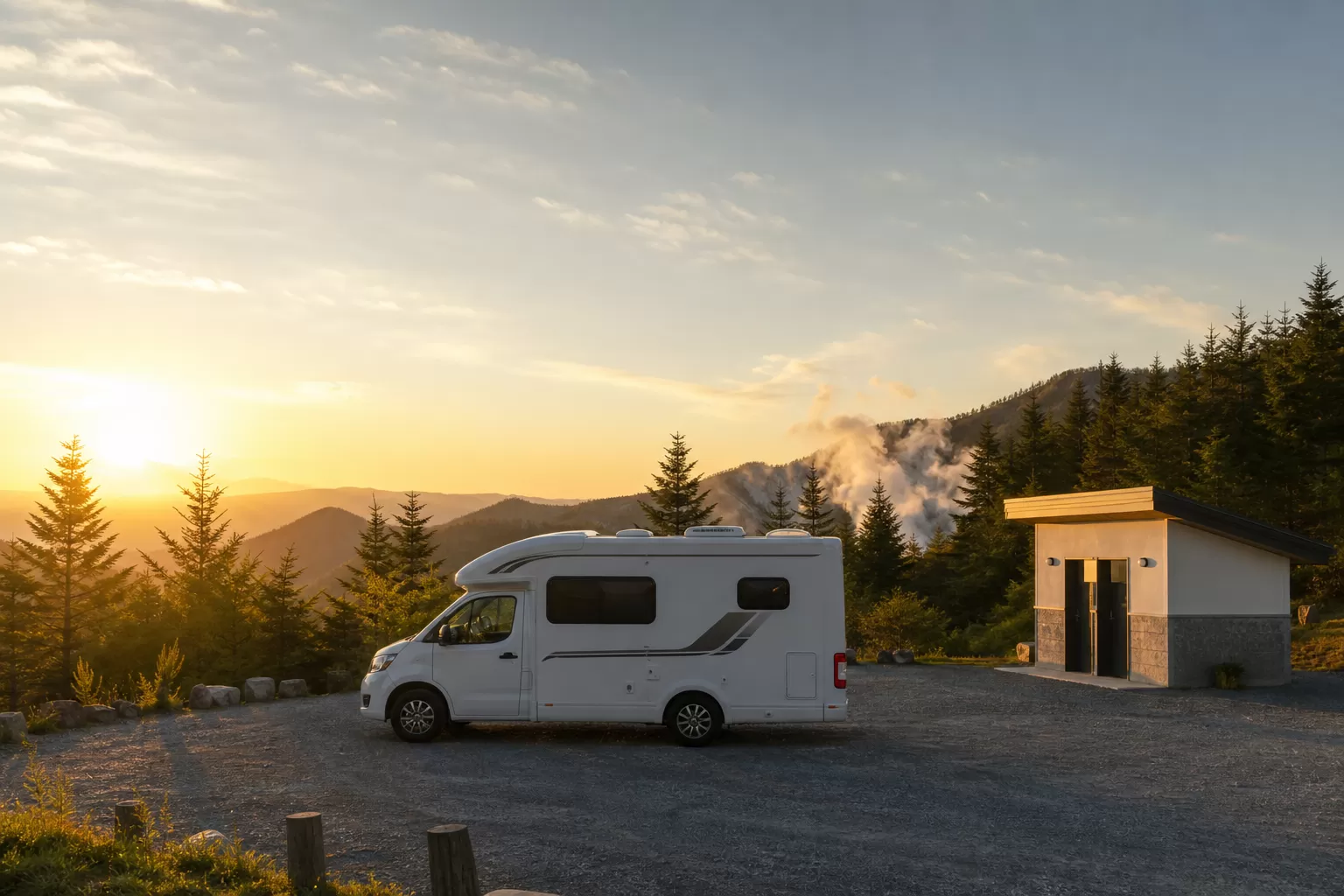
There’s no Michi-no-Eki in the center of Noboribetsu Onsen itself, so the parking area most often mentioned for overnight parking is “Sakurazaka Parking Park.” It’s a free parking area in Naka-Noboribetsu-cho, Noboribetsu City, with a 24-hour flush toilet (Western-style available only in the multipurpose stall). Space is limited to around ten cars, but the ground is nearly flat and easy to pull in and out of, and there’s no signage prohibiting overnight parking (per on-the-ground reports as of July 2026). It’s a small lot, though, so it can fill up during peak season — arrive early or have a backup spot in mind.
If you want to go a bit further, “Michi-no-Eki Mitara Muroran” is about 20–30 minutes away toward Muroran. It sits along National Route 37, about 10 minutes from the Muroran IC on the Doou Expressway, with a view of the Hakucho Bridge and rest facilities. It’s an easy Michi-no-Eki to build into a wider central Hokkaido loop that extends beyond Noboribetsu to Muroran’s factory night views and Cape Chikyu.
A Michi-no-Eki is a rest stop set up by the road authority, not a place designed for overnight parking. Use it as a break in a long drive rather than a destination, and avoid staying for extended periods or multiple consecutive nights. Whether you’re at Sakurazaka Parking Park or a Michi-no-Eki, be considerate of nearby residents and other visitors.
Sleeping over means borrowing a facility’s rest area, so stick to the basics: take all your trash with you, don’t leave the engine running, and keep conversation and noise down at night. Treating it as a short “nap” stop that includes a restroom break, rather than a full stay, is what keeps these parking areas usable for everyone going forward.
The public bathhouse “Yumemoto Sagiriyu” makes touring the hot-spring town easier
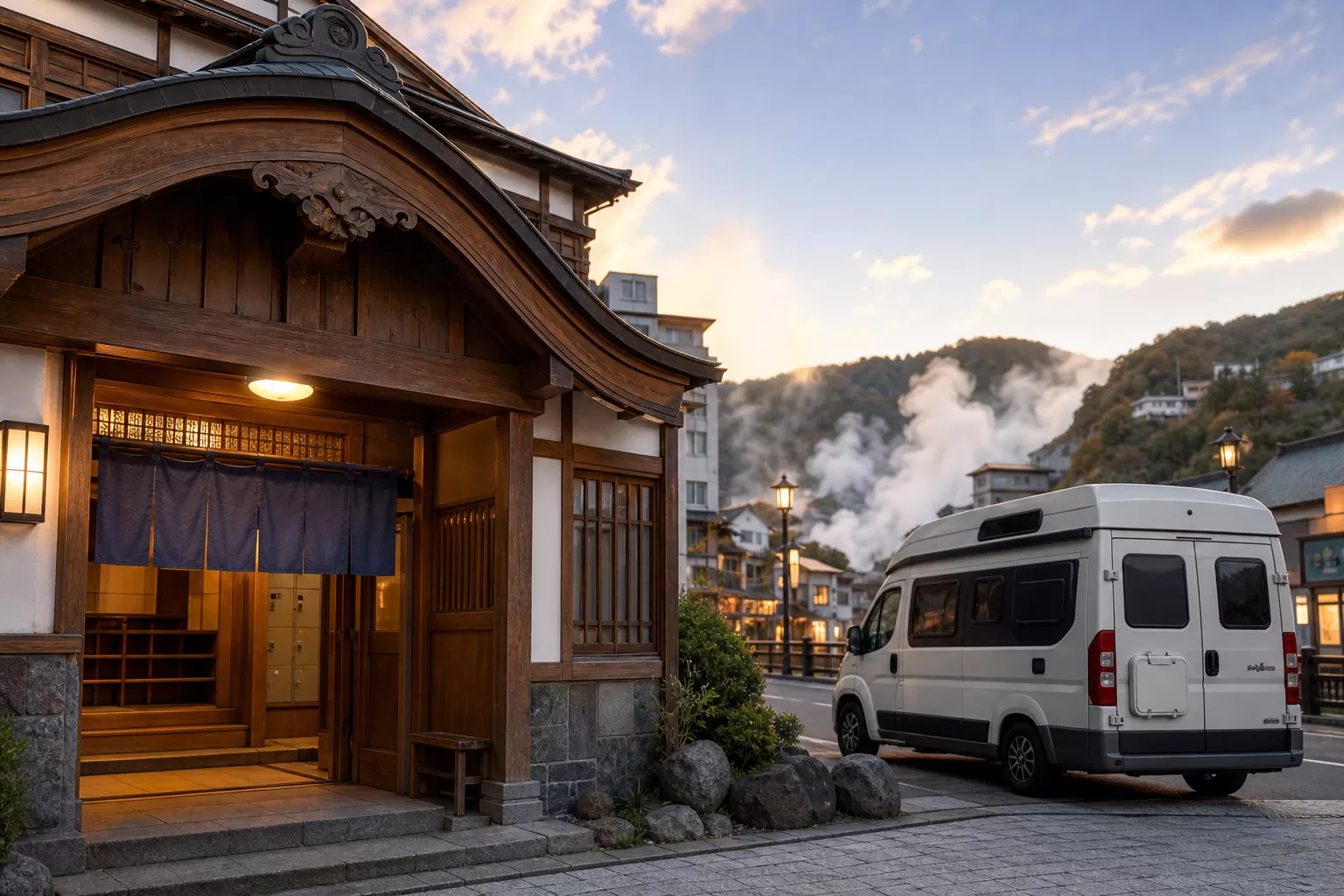
If the day-use baths at the inns feel a bit formal, the public bathhouse “Yumemoto Sagiriyu,” at the entrance to the hot-spring town, is worth a look. It’s the only public bathhouse in Noboribetsu Onsen, with several 100%-source hot-spring baths, and it’s typically cheaper than an inn’s day-use bath. Hours and prices vary slightly depending on the source, so check the official site or call ahead (0143-84-2050) to confirm the current rate. Locals use it too, so it has a different atmosphere from the tourist-facing inns.
If you’re driving a larger campervan into the center of the hot-spring town, watch for narrow stretches of road and parking lots with height restrictions. In December 2025, a new “Noboribetsu Onsen Parking Lot” opened in the hot-spring town — a camera-based lot with no gate bar or wheel lock, priced at ¥500 per day in regular season (confirmed July 2026). If you’re driving a tall vehicle, it’s worth checking the entrance clearance in advance. The Jigokudani parking lot is within walking distance of the hot-spring town, so parking the bigger vehicle there and covering the town on foot is one straightforward way to split things up.
The scenery changes with the season, so time your visit accordingly
Noboribetsu Onsen is enjoyable year-round, but it looks different depending on the season. In summer, the steam at Jigokudani stands out sharply against a blue sky, and the Oyunumagawa footbath has steady water flow that’s easy to walk to. In autumn, the mountains around the hot-spring town turn color, and the view from the Jigokudani trail takes on the same tint. In winter, the Oyunuma parking lot closes, so access is limited to the Jigokudani lot, but the combination of snowy scenery and rising steam is something you only get in winter. Spring brings a mix of lingering snow and fresh greenery, though the Bear Park sometimes has a temporary closure for facility maintenance — if you’re planning to visit in April, check the official site for closure dates.
Noboribetsu Marine Park Nixe pairs well with a visit too
If you’re traveling with kids, Noboribetsu Marine Park Nixe, about 10 minutes by car from Noboribetsu Onsen, is another option. This aquarium is styled after a European castle, with a spacious parking lot for 750 regular cars and a ¥500 parking fee. Hours run from 8:30 a.m. with a final exit at 5:30 p.m., so if you’re combining it with Jigokudani and the Bear Park in a single day, stopping by in the morning keeps things moving smoothly (confirmed July 2026).
Building a one-night, two-day model itinerary
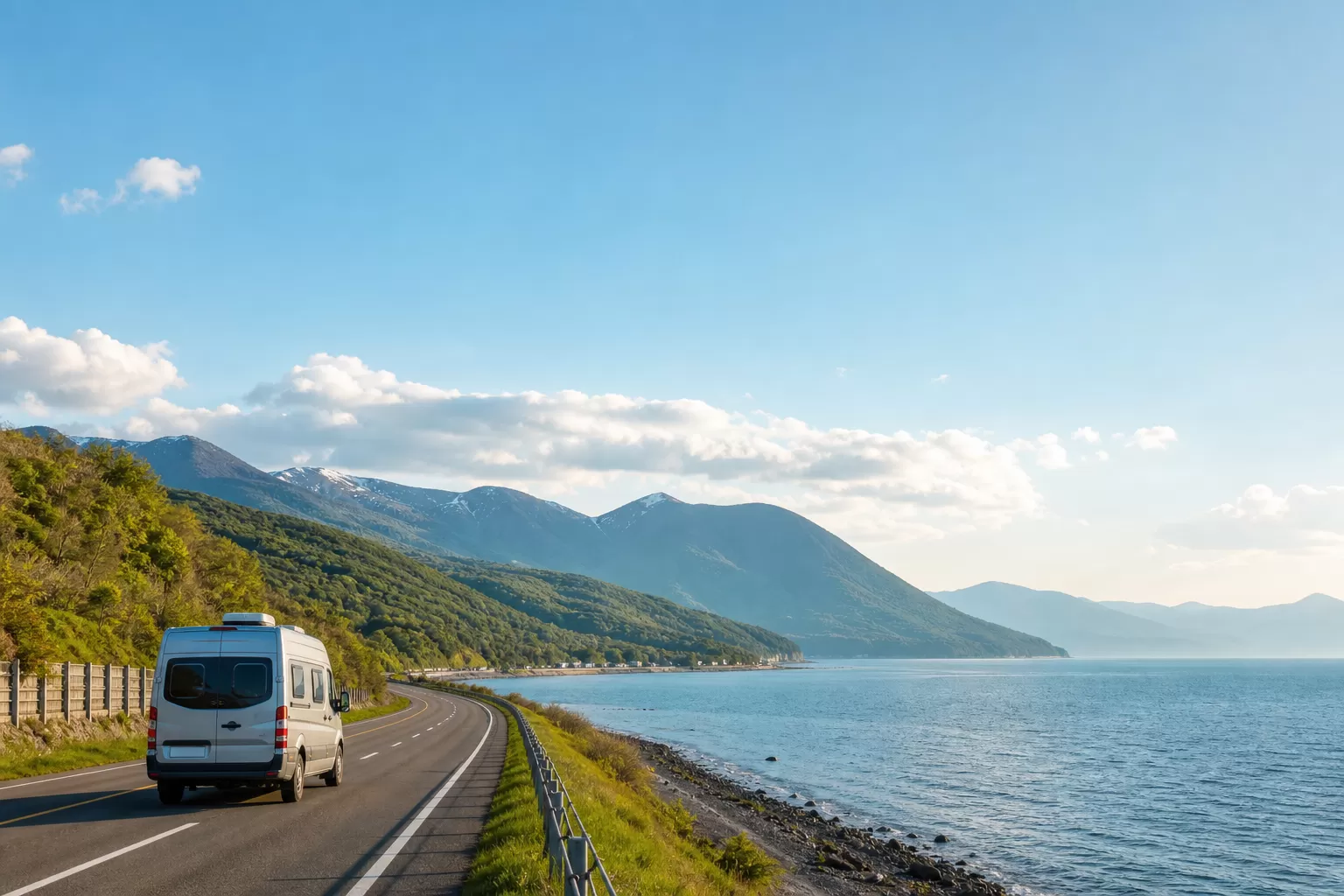
Starting from Sapporo, a comfortable flow is to take the Doou Expressway to Noboribetsu-Higashi IC on day one, visit the Bear Park in the morning, walk Jigokudani and the Oyunumagawa footbath in the afternoon, bathe off the day’s travel during the evening-discount hours, and then spend the night at Sakurazaka Parking Park. On day two, stop by Noboribetsu Marine Park Nixe and continue on toward Muroran or Lake Toya, tying together a loop of central Hokkaido.
Starting from New Chitose Airport instead, a westward route works well too: Muroran and Noboribetsu on day one, then continuing to Lake Toya or Niseko from day two onward. The strength of a campervan trip is not having to worry about a hotel reservation, so you can freely extend how long you linger — adjust your time at Jigokudani or in the bath based on the weather on the day.
On rainy days, the Jigokudani trail can get slippery, so it’s worth skipping the footbath and focusing instead on the indoor bathing and the Bear Park’s indoor exhibits. On clear days, on the other hand, walking all the way to the Oyunumagawa footbath and quickly drying off with a towel from the car before heading to the next spot is the kind of light, flexible movement that a campervan trip is made for.
New Chitose Airport / Tokachi-Obihiro Airport
Rent the Cabcon “Cresson Journey”
Even a loop connecting Noboribetsu, Muroran, and Lake Toya works without a hotel reservation, all in a campervan.
See details at Moving Inn →Other inns besides Dai-ichi Takimotokan also offer day-use bathing
Beyond Dai-ichi Takimotokan, several other inns in Noboribetsu Onsen — including Meito no Yado Park Hotel Miyabitei — also accept day-use bathers. Rates, reception hours, and closed days differ by inn, and can change seasonally. This article only covers the rates confirmed for Dai-ichi Takimotokan, so if you want to visit other inns, check each one’s official site or call ahead to confirm whether day-use bathing is available and what it costs. Every inn has a different spring quality and bath atmosphere, so if you have the time, hopping between two or three is worth trying.
Shift your timing earlier to avoid the crowds
Both Jigokudani and the Bear Park tend to fill up between around 10:00 a.m. and 2:00 p.m., when tour buses arrive. Traveling by campervan frees you from a hotel’s breakfast schedule, so walking Jigokudani right at opening and getting on the Bear Park ropeway before the crowds build up makes for easier photos and shorter waits. Day-use baths, on the other hand, tend to open up in the evening, so doing your sightseeing during the day and saving your bath for the evening-discount window spreads things out nicely across the day.
A few things worth packing for a campervan trip here
Noboribetsu is an area where the smell of sulfur clings easily to clothing. If you’re planning to spend time in the vehicle right after walking Jigokudani, bring an extra layer you can take off outside before getting in, so the smell doesn’t linger inside. If you’re planning to hop between day-use baths or the public bathhouse, bath towels are usually available to rent on-site, but bringing your own face towel and toiletries means no waiting around.
If you’re sleeping over at Sakurazaka Parking Park or a Michi-no-Eki, nighttime temperatures can drop more than you’d expect. Even in summer, some nights turn chilly, so it’s worth packing an extra thin blanket. Topping up your water supply the next morning at a Michi-no-Eki or a nearby convenience store keeps you moving quickly.
Some stretches of road through the hot-spring town are narrow, so if you’re driving a large Cabcon, it’s worth checking the actual road width on a map app, not just your car navigation. Basing yourself at wider lots like the Jigokudani parking area or Marine Park Nixe’s parking lot, and covering the narrow streets in town on foot, is a reasonable way to split things up.
FAQ
Is parking at Noboribetsu Onsen free?
Jigokudani’s parking lot charges ¥500 during operating hours (roughly 8:00 a.m. to 5:00 p.m.). It’s free at night and early morning. Parking at the Bear Park and Marine Park Nixe also has a separate fee, so check each facility.
Can you sleep overnight in a campervan at Noboribetsu Onsen?
There’s no official overnight parking space right in the hot-spring town, but “Sakurazaka Parking Park” a bit further out is known as a free lot with a 24-hour toilet that people do use for overnight parking. It relies on responsible use, so take your trash with you and keep your stay quiet.
How long does it take to drive from Sapporo to Noboribetsu Onsen?
About 1 hour 30 minutes via the Doou Expressway, or roughly 2 hours 50 minutes on local roads. From New Chitose Airport it’s also about an hour and a half via the expressway, making this an easy area to visit on a day trip from the airport.
How long does it take to visit both Jigokudani and the Bear Park?
Plan around an hour for walking the Jigokudani trail, or about 90 minutes if you go round-trip to the Oyunumagawa footbath. The Bear Park takes about 1–2 hours including ropeway wait time. Visiting both fits into a half day, or a full day if you add in a day-use bath.
Is it okay to drive a large campervan into the center of Noboribetsu Onsen?
The center of the hot-spring town has narrow stretches of road and parking lots with height restrictions, so a large vehicle like a Cabcon needs some caution. Parking at a wider lot like the Jigokudani lot or Marine Park Nixe’s lot, then covering the narrow streets on foot, avoids most of the hassle. The Noboribetsu Onsen Parking Lot that opened in December 2025 is another option.
What other sights pair well with Noboribetsu Onsen?
Muroran, about 20–30 minutes away, has Michi-no-Eki Mitara Muroran, Cape Chikyu, and its factory night views, and it connects via the Doou Expressway to a loop that extends toward Lake Toya or Niseko. Coming from the Sapporo direction, a comfortable plan is Noboribetsu on day one, then Muroran or Lake Toya from day two onward, over a trip of one night or more.
Book a Campervan in Hokkaido
Moving Inn New Chitose Airport supports English booking and offers airport transfers.