Kawayu Onsen Campervan Drive Guide | The pH 1.7 Strongly Acidic Hot Spring, Mt. Io, and Lake Mashu (2026 Edition)
Kawayu Onsen Campervan Drive Guide | The pH 1.7 Strongly Acidic Hot Spring, Mt. Io, and Lake Mashu (2026 Edition)
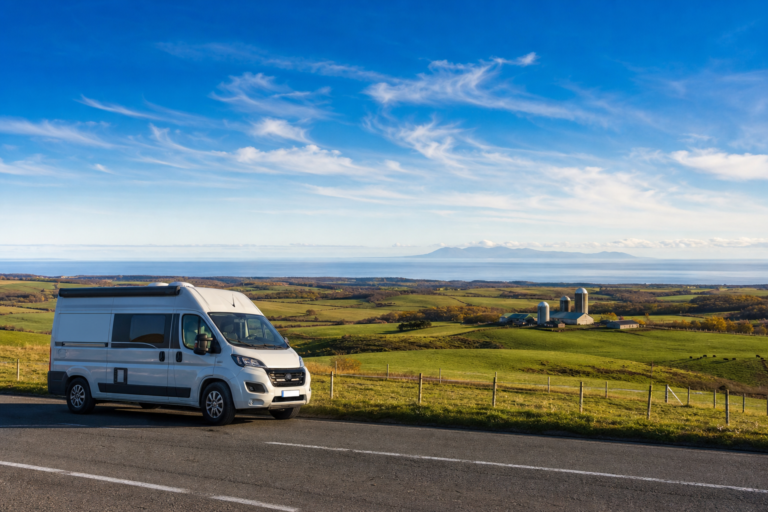
Imagine parking your campervan in a hot spring town where the smell of sulfur hangs in the air, then walking from bath to bath. Kawayu Onsen (Teshikaga Town, Hokkaido) is one of the rare places in Hokkaido where you can actually do this. Its source is Mt. Io (Atosanupuri), a still-active volcano that continues to vent steam today. The town sits almost exactly between Lake Mashu and Lake Kussharo, making it an excellent base for touring eastern Hokkaido. This guide covers only what we could confirm from primary sources: the rates at six day-use bathing facilities, places you can park safely overnight, how the shared parking ticket for Mt. Io and Lake Mashu works, and how to get in from the airport.
Teshikaga Town’s actual visitor count for fiscal 2024 (Reiwa 6) was 755,513, with the Kawayu Onsen area alone accounting for 627,516 — the town’s single busiest destination. Overnight stays by international visitors reached 18,472, up 30% year on year (source: Teshikaga Town FY2024 visitor statistics, confirmed 2026-08-19). International arrivals are surging, yet Kawayu’s hot spring town remains compact with a limited number of places to stay. That is exactly where a campervan — a bed that travels with you — earns its place.
Why Kawayu Onsen Suits a Campervan Trip
There are three reasons. The first is location. Mt. Io is only about 3 km from Kawayu Onsen, and both the Lake Mashu First Observation Deck and Lake Kussharo’s Sunayu (sand bath) are within easy driving distance. No other hot spring town packs this many eastern Hokkaido highlights into a roughly 15 km radius.
The second is the sheer number of day-use baths on offer. Six hotels and public bathhouses in the hot spring town accept day-use bathers, with some baths open for as little as ¥500. Sleep in the campervan, soak in a famous hot spring — the “bathing problem” that usually works against campervan travel becomes a strength here.
The third is morning flexibility. The morning mist over Lake Mashu and the early light on Lake Kussharo can be gone by the time a hotel checkout time rolls around. If you’re already staying at a campsite in the area the night before, you can simply drive to the observation deck before sunrise.
What Kind of Water Is Kawayu Onsen? Its pH 1.7 Acidity Is No Exaggeration
Kawayu Onsen’s official water classification is an acidic, sulfur-and-iron(II)-bearing sodium sulfate-chloride spring (hydrogen sulfide type). At roughly pH 1.7, it is strongly acidic: groundwater seeping from Lake Mashu is heated underground by magma and travels about 4 km before emerging in the hot spring town (source: Kawayu Onsen official site (Lake Mashu Tourism Association), confirmed 2026-08-19).
To put pH 1.7 in perspective, it’s more acidic than lemon juice (around pH 2). Expect a slight stinging sensation, and it’s not a bath for lingering. Silver jewelry will tarnish black, so take it off before you get in. If you’re worried about feeling light-headed afterward, follow the facility’s posted guidance on whether to rinse off with fresh water when you get out. This “you can really feel it working” quality is exactly what has built Kawayu’s fan base.
Where Can You Bathe for the Day? Rates and Hours at Six Facilities
The facilities listed on the Lake Mashu Tourism Association’s day-use hot spring page are as follows (source: Lake Mashu Tourism Association, day-use hot springs, confirmed 2026-08-19). Rates and hours can change, so confirm with the official site or by phone before you visit.
| Facility | Day-use hours | Adult rate | Notes |
|---|---|---|---|
| Kawayu Public Bathhouse “Yukichi” | 11:00–19:00 | ¥500 | Closed Wednesdays |
| Hotel Parkway | 11:00–20:00 | ¥500 | Children ¥300 |
| KKR Kawayu | 13:00–20:00 | ¥700 | Children ¥400, infants ¥200 |
| Kawayu Kanko Hotel | 13:00–21:00 (last entry 20:00) | ¥1,000 | Cash only |
| Kawayu Onsen Hotel Kitafukurou | 10:00–20:00 | ¥1,000 | Irregular closures, infants free |
| Oyado Kinkiyu Bettei Suikazura | 13:00–16:00 (last entry 15:00) | ¥1,500 | Children ¥1,000 |
If you’re keeping costs down, Yukichi or Hotel Parkway are your best bets; if you want to take your time, the hotel-style baths are the way to go — Kawayu lets you choose by budget. Yukichi, the public bathhouse, is used by locals too, so bathe quietly and follow the lead of the people around you when it comes to washing-area etiquette.
Compare Hokkaido Campervan Rentals
See prices, vehicle types, and bases side by side, including areas beyond Kawayu.
Compare rental companies and rates →Where to Park at Night: Overnight Parking Around Kawayu Onsen
For Sleeping Over, an Operating Campsite Is the Baseline
Within Teshikaga Town, the parking spaces set up for overnight stays are the campsites that are actually open for business. RECAMP Mashu (Sakuragaoka Forest Park Auto Campsite) in the Mashu Onsen area is operating from April 24 to November 23 for the 2026 season and has powered auto sites (source: Lake Mashu Tourism Association, RECAMP Mashu, confirmed 2026-08-19). There are several rate plans, so check them when you book. RECAMP Wakoto on the shore of Lake Kussharo has posted notice of a closure for renovation; check the official site for its current operating status (as of 2026-08-19).
We could not confirm on official sites whether there is a JRVA-certified RV park within Teshikaga Town (confirmed 2026-08-19). If your itinerary needs electrical hookups or a dump station, decide on your stops in advance using the list of dump stations in Hokkaido so you’re not left guessing en route.
Treat the Michi-no-Eki Mashu Onsen as a Rest Stop, Not a Place to Sleep
The Michi-no-Eki (roadside rest stop) Mashu Onsen in central Teshikaga has a free, 24-hour footbath and a dog run, making it a handy break on a longer drive (source: Lake Mashu Tourism Association, Michi-no-Eki footbath, confirmed 2026-08-19). We could not confirm any official statement permitting overnight parking there (confirmed 2026-08-19). If anything, a Japan RV Association news item notes that “parking lots fill up with vehicles used for overnight stays, which can prevent ordinary rest-stop users from parking, and poor manners among some overnight users have been pointed out — overnight parking has become one of the issues facing Michi-no-Eki” (source: Japan RV Association news, confirmed 2026-08-19). If your stop is going to be more than a short nap, switching to an actual campsite is the way to keep enjoying this area with a clear conscience.
Mt. Io (Atosanupuri): Get More Out of the Shared Parking Ticket
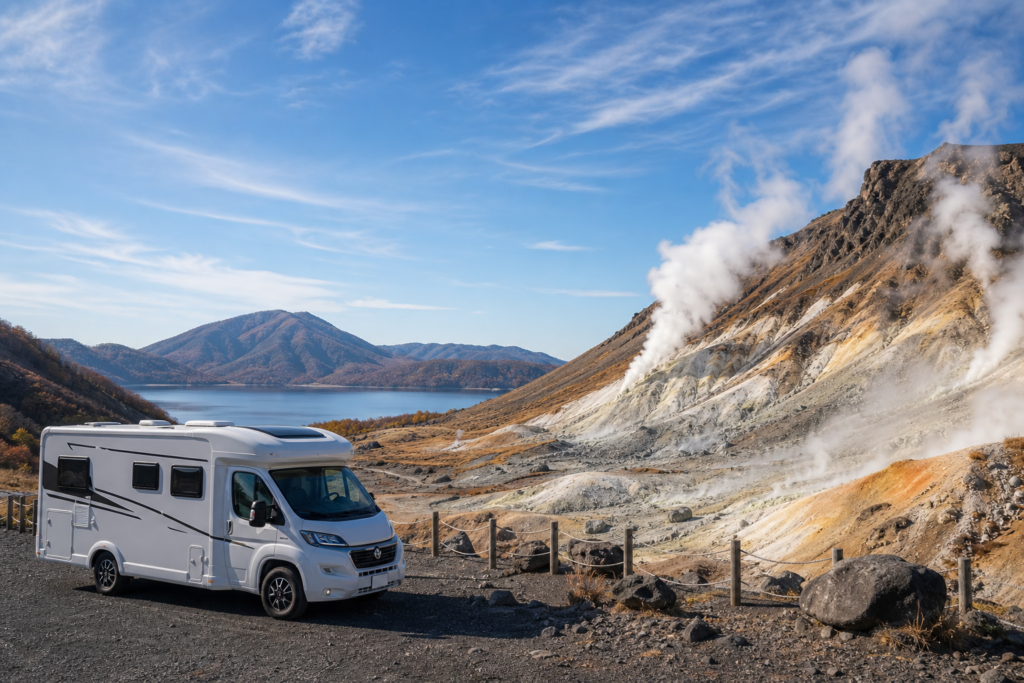
Mt. Io, the source of Kawayu Onsen’s water, is an unusual active volcano you can walk right up to, close enough to see its yellow fumaroles venting steam. The parking lot holds 150 vehicles; passenger cars pay ¥500 (tax included) from May 1 to October 31, and parking is free from November 1 to April 30. Worth remembering here is the shared parking ticket. The official guidance states, “This fee lets you use the parking lots at both the Lake Mashu First Observation Deck and Mt. Io once each, valid for one day” (source: Lake Mashu Tourism Association, Mt. Io, confirmed 2026-08-19). In other words, ¥500 covers parking at both Mt. Io and Lake Mashu — there’s no reason not to visit both on the same day.
At the foot of the mountain, the Mt. Io MOKMOK Base rest house is open 8:30–17:00 (irregular closures, closed over the New Year holidays; source: Mt. Io Rest House official site, confirmed 2026-08-19). Its shop sells the well-known onsen tamago (eggs steamed by the volcanic vents), a good excuse for a break. Because a campervan sits higher than a regular car, be mindful of where you park on windy days.
The Lake Mashu First Observation Deck Is Best Early in the Morning
True to its nickname, “The Foggy Lake Mashu,” whether you actually see the water is a matter of luck. Even so, the air is clearer and the parking lot emptier early in the morning. The First Observation Deck’s parking lot holds 125 vehicles; passenger cars pay ¥500 in summer, and parking is free from November through the following April (source: Kawayu Eco-Museum Center, Lake Mashu First Observation Deck, confirmed 2026-08-19). Since the shared parking ticket mentioned above covers both Mt. Io and Lake Mashu, routing Kawayu Onsen → Mt. Io → Lake Mashu keeps your movements efficient.
If you’re extending your trip toward Kushiro and Lake Akan, which also lies near Lake Mashu, our Kushiro–Lake Akan Campervan Drive Guide covers how to route the wetland side of the trip.
Heading on to Lake Kussharo? Try Sunayu and Kotan no Yu
It’s a short drive from Kawayu Onsen to the shore of Lake Kussharo. There you’ll find Sunayu, where digging into the lakeshore sand reveals hot spring water, and Kotan no Yu, a free open-air bath where you soak right in the lake itself — spots where nature itself is the bathtub. Kotan no Yu is open 24 hours (temperature is managed 9:00–16:00), and closes from 16:00 on Fridays for cleaning. Parking has 5 spaces and is free (source: Lake Mashu Tourism Association, Kotan no Yu, confirmed 2026-08-19).
We cover overnight parking conditions around Lake Kussharo, Sunayu, and the sea of clouds at Mount Bihoro Pass in detail in our Bihoro Pass–Lake Kussharo Campervan Drive Guide, so if you’re planning a lake-centered itinerary, start there. This guide instead recommends basing yourself at Kawayu Onsen and driving out to the lake: sleep near the hot spring town at night, and head to the lake only during the best morning light. No traffic to fight, and you’re never far from a bath.
Enjoying Kawayu Without Spending Much: Footbaths and Forest Walks
Kawayu also has plenty of free things to do. The hot spring town’s footbath is free 24 hours a day, and its 40-space parking lot is also free (cleaned every Tuesday; source: Kawayu Onsen official site, confirmed 2026-08-19). JR Kawayu-Onsen Station has an indoor footbath with heated flooring, also free (source: Lake Mashu Tourism Association, confirmed 2026-08-19).
The Kawayu Eco-Museum Center, on the edge of the hot spring town, has free admission. It’s open 8:00–17:00 from April to October and 9:00–16:00 from November to March, closed Wednesdays (the following day if a Wednesday is a public holiday; open every day from the third week of July through August 31; closed December 29–January 3; source: Kawayu Eco-Museum Center, confirmed 2026-08-19). Walking the nearby forest trail or learning how Mt. Io formed before you go changes how much you notice in the same scenery, and it’s a useful fallback if it rains.
How Do You Get In From the Airport? All Three Airports Are a Little Over an Hour by Car
Teshikaga Town’s official tourism site says, “It’s a little over an hour by car from any of the three airports — Kushiro, Memanbetsu, and Nakashibetsu” (source: Lake Mashu Tourism Association, access, confirmed 2026-08-19). Your first decision is whether to rent near one of eastern Hokkaido’s airports and head straight to Kawayu, or rent at New Chitose Airport and drive the distance to eastern Hokkaido.
- Coming in via Memanbetsu Airport: Route through Abashiri and Bihoro Pass to reach Kawayu from the Lake Kussharo side. See How to rent a campervan at Memanbetsu Airport for the practical details.
- Coming in via Kushiro Airport: Route via the Kushiro Wetlands and Lake Mashu from the south. Our Complete guide to campervan rental in Kushiro lists companies we verified directly.
- Coming in via New Chitose Airport: This route offers the widest choice of vehicles. Eastern Hokkaido is a long drive from here, so a practical itinerary — like the one in our Eastern Hokkaido cross-country campervan model route — builds in an overnight stop along the way.
If you’re arriving from overseas, check your driving eligibility first. Depending on your nationality, you may be able to drive on an international driving permit, or you may need an official translation of your home license. See Can you rent a campervan in Hokkaido with a foreign driver’s license? for a breakdown by nationality.
Departing from New Chitose Airport and Tokachi-Obihiro Airport
Head to Eastern Hokkaido in a Moving Inn Campervan
Base yourself at New Chitose Airport and compare rates, vehicle types, and pickup locations all in one place.
See vehicles at Moving Inn →A 2-Day, 1-Night Model Route: Enter via Memanbetsu, Focused on Bathing
Day 1: Airport → Lake Kussharo → Kawayu Onsen
After picking up your campervan at Memanbetsu Airport, head to Lake Kussharo via Bihoro Pass. Drive south along the lake, stopping at Sunayu and Kotan no Yu, then arrive at Kawayu Onsen in the afternoon. In the evening, walk the hot spring town, relax at the footbath, and then head to a day-use bath. Pick up supplies after your bath, and settle in for the night at whichever campsite you’ve booked, such as RECAMP Mashu. The strongly acidic water takes more out of you than you’d expect, so limiting yourself to one or two baths on the first day pays off the next morning.
Day 2: Lake Mashu → Mt. Io → Onsen Tamago → Head Home
In the morning, head to the Lake Mashu First Observation Deck. If the fog has lifted, count yourself lucky; even in fog, the view can look like a sea of clouds. Your parking ticket is shared with Mt. Io, so move straight there, walk close to the fumaroles, and pick up onsen tamago at the rest house. Take one more bath at midday before heading back to the airport. This itinerary keeps your drive times manageable while covering the hot spring, the lake, and the volcano. If you have extra days, extending toward Shibetsu and Nakashibetsu or on to Shiretoko is the classic follow-on.
Is Kawayu Onsen Okay by Campervan in Winter?
The short answer: it depends on your winter gear and experience. Winters inland in eastern Hokkaido are severe, and roads ice over. On the other hand, this is also when the Mt. Io and Lake Mashu parking lots open for free, and the contrast of snow against volcanic steam is something you only see in winter. An FF heater, freeze protection for your water system, and preparation for early sunsets are essential. Our Hokkaido winter campervan guide covers how to drive and equip your vehicle for winter — read it first if you’re new to winter roads. If you’re going in autumn instead, the timing details in our Eastern Hokkaido autumn foliage campervan trip guide are useful.
Note that RECAMP Mashu is closed outside its operating season in winter (through November 23 for the 2026 season). Secure your winter sleeping arrangements before you finalize your itinerary.
Frequently Asked Questions
Q: Where can I take the cheapest day-use bath in Kawayu Onsen?
Kawayu Public Bathhouse “Yukichi” and Hotel Parkway both charge adults ¥500 (confirmed 2026-08-19, from the Lake Mashu Tourism Association’s day-use hot spring page). Yukichi is closed on Wednesdays, so watch the day of the week. Rates can change, so it’s worth checking the latest information before you visit.
Q: Can I park overnight at the Michi-no-Eki Mashu Onsen?
We could not confirm any official statement permitting overnight parking there (confirmed 2026-08-19). A Japan RV Association news item also mentions overnight-parking congestion and manners as an issue at Michi-no-Eki nationwide. If sleeping over is your goal, booking an operating campsite with powered sites, such as RECAMP Mashu, is the reliable option.
Q: Do I pay separately for parking at Mt. Io and Lake Mashu?
No — the shared parking ticket covers both. ¥500 for a passenger car lets you use the parking lots at both Mt. Io and the Lake Mashu First Observation Deck once each, valid for one day (confirmed 2026-08-19). Both lots are free from November 1 to April 30.
Q: Is Kawayu Onsen’s water okay for sensitive skin?
Because it’s a strongly acidic spring at roughly pH 1.7, anyone with sensitive skin or young children should start with short soaks. If the stinging feels strong, don’t push through it. If you’re concerned, ask the facility staff before getting in — they can advise on a bathing approach that suits you.
Q: Are Sunayu and Kotan no Yu on Lake Kussharo free?
Kotan no Yu is a free, open-air bath open 24 hours a day (temperature managed 9:00–16:00; closed from 16:00 on Fridays for cleaning; confirmed 2026-08-19). Sunayu is a spot where you dig into the lakeshore sand — digging itself costs nothing. We cover it in more detail in our Lake Kussharo guide article.
Q: Can I rent a campervan and drive to Kawayu Onsen with a foreign driver’s license?
It depends on your nationality. Some travelers can drive on an international driving permit issued under the Geneva Convention; others (Taiwan, for example) need an official translation of their home license. Check the nationality-by-nationality breakdown in our explainer article before you book, and declare your license type to the rental company as well.
Q: When’s the best season to visit Kawayu Onsen?
If you want to enjoy the hot spring, the lakes, and the mountain together, May through October is best, since the campsites are open and there’s little concern about road conditions. Teshikaga Town’s monthly statistics show August as the peak month for visitors, with January dropping to roughly a fifth of that level (source: Teshikaga Town FY2024 visitor statistics, confirmed 2026-08-19). If you’d rather avoid the crowds, June or the autumn-foliage stretch from late September into October are good targets.
In Short: Base Yourself at the Hot Spring, and Commute to the Lake and Volcano
A Kawayu Onsen campervan trip comes together faster once you separate “where to sleep” from “where to bathe.” Sleep at an operating campsite at night, bathe at one of the six facilities in the hot spring town, and use the shared parking ticket for Mt. Io and Lake Mashu during the day. Once you have that framework, all that’s left is adjusting to the weather. Start by fixing your dates and airport, then book your vehicle.
Book a Campervan in Hokkaido
Moving Inn New Chitose Airport supports English booking and offers airport transfers.