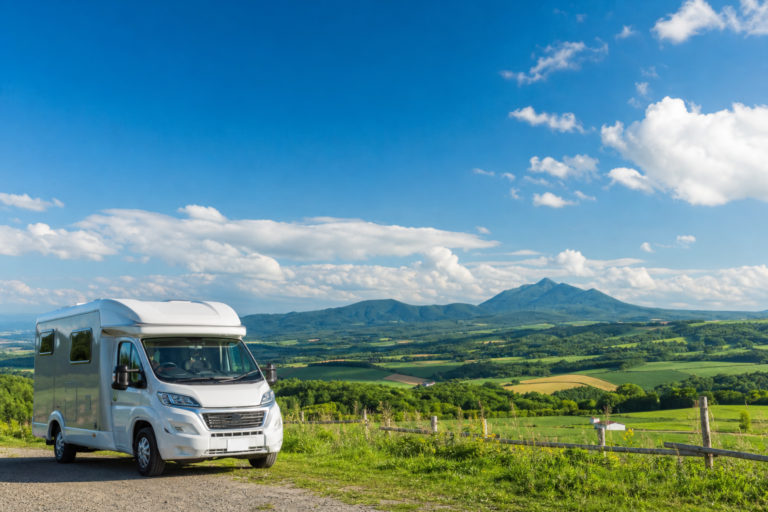
How to Rent a Campervan at Asahikawa Airport | Your Gateway to Furano, Biei, and Daisetsuzan (2026 Edition)
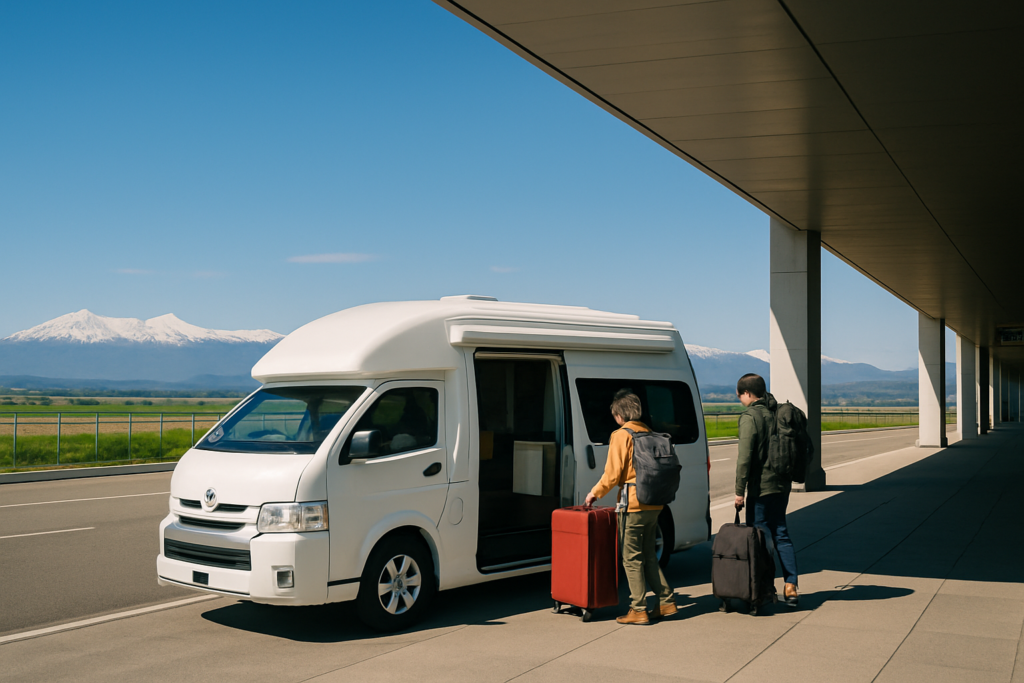
Asahikawa Airport handles 1.16 million passengers a year. According to Japan’s Ministry of Land, Infrastructure, Transport and Tourism’s “Airport Management Status Report” (confirmed July 31, 2026), the total number of passengers in FY2024 (April 2024 to March 2025) was 1,160,750 — 1,112,834 on domestic flights and 47,916 on international flights. Step off a plane at an airport this size and switch straight into a campervan, and you can reach Furano, Biei, Daisetsuzan, and Asahiyama Zoo — the main sights of northern Hokkaido — the same day.
This article covers how to get from Asahikawa Airport to a campervan rental base, what happens on pickup day, how one-way rentals with New Chitose Airport work, winter driving notes, and a model route through Furano, Biei, and Daisetsuzan. If you want to compare the rental bases in the Asahikawa area on price and vehicle type, see our Asahikawa campervan rental comparison.
New from New Chitose Airport — Available from June 2026
Rent the Cabcon “Cresson Journey”
Base yourself at New Chitose Airport and compare rates, vehicle types, and pickup locations all in one place.
See details at Moving Inn →Tap a dot on the map to see its name here.
Outside this map: Onuma Park. Tap a dot to see its name and a link to where it appears in this article. 2 places whose location could not be confirmed are not shown. Dot positions are based on each facility’s address or officially published location. Lakes and expressways are from OpenStreetMap data.
How many people actually use Asahikawa Airport?
The 1.16 million passenger figure above comes from the FY2024 edition of the "Airport Management Status Report," published annually by Japan's Ministry of Land, Infrastructure, Transport and Tourism. Domestic flights account for the vast majority, at over 1.11 million passengers, with roughly 48,000 on international routes. It's a smaller airport than New Chitose, but with regular flights from Haneda and Chubu Centrair, plus seasonal flights from Itami and Kansai International, it functions as a direct gateway to northern Hokkaido. Routes and flight frequency change with the season, so check the flight schedule on the official Asahikawa Airport website (Hokkaido Airports) before you travel.
Asahikawa Airport works as a starting point partly because of how much overnight-stay demand northern Hokkaido already draws. According to the Hokkaido District Transport Bureau's "Basic Data on Hokkaido Tourism" (published June 30, 2026; confirmed July 31, 2026), the Kamikawa region — centered on Asahikawa — accounted for 1.208 million foreign-visitor overnight stays in FY2024, or 13.5% of Hokkaido's total of 8.925 million. That's second only to Sapporo City's 42.9%, and close behind Shiribeshi's 15.1%. Domestic overnight stays in Kamikawa were also substantial, at 2.618 million stays, or 8.3% of the prefectural total. The same report also notes that "visitor numbers dip in April and November, and expanding tourism content in those months is needed to lift the totals" — meaning those two months tend to have more availability for booking.
How close Asahikawa Airport puts you to Furano, Biei, Daisetsuzan, and Asahiyama Zoo
What makes Asahikawa Airport such a convenient base for a northern Hokkaido drive is that nearly every major sight is within about an hour. Asahikawa city center is roughly 15 km away, about 20–25 minutes by car. From there it's roughly 30 km / about 35 minutes to the Biei hills, roughly 55 km / about 55 minutes to the Farm Tomita area in Furano, roughly 65 km / about 1 hour 10 minutes to the Mt. Asahidake ropeway station in Daisetsuzan, and roughly 80 km / about 1 hour 20 minutes to Sounkyo Gorge. Heading to the same places from New Chitose Airport means driving roughly 160 km to Asahikawa city center first — about 1 hour 55 minutes via the Dou-o Expressway — so using Asahikawa Airport alone saves well over an hour and a half each way.
Asahiyama Zoo is also close to the airport. According to the official Asahiyama Zoo website (run by the City of Asahikawa; confirmed July 31, 2026), it's 14.5 km from Asahikawa Airport to the zoo, about a 25-minute drive, with a taxi costing roughly ¥3,500. If you finish your pickup and paperwork by late morning, heading to the zoo that same afternoon is a realistic plan.
| Destination | Distance from Asahikawa Airport | Approximate drive time |
|---|---|---|
| Asahikawa city center | ~15 km | ~20–25 min by car |
| Asahiyama Zoo | ~14.5 km | ~25 min by car |
| Biei (the hills) | ~30 km | ~35 min |
| Furano (Farm Tomita) | ~55 km | ~55 min |
| Mt. Asahidake, Daisetsuzan (ropeway station) | ~65 km | ~1 hr 10 min |
| Sounkyo Gorge | ~80 km | ~1 hr 20 min |
| New Chitose Airport | ~160 km | ~1 hr 55 min via the Dou-o Expressway |
These times change with road conditions and snow cover, so treat them as estimates and check your route on a car navigation system or map app before you set out. For how to spend your time around Furano and Biei, see our Furano & Biei Campervan Drive Guide; for the Daisetsuzan and Sounkyo side, see our Daisetsuzan & Sounkyo Campervan Drive Guide.
Getting from Asahikawa Airport to a campervan rental base
Six companies (4 pickup locations) rent campervans in Asahikawa City: Ureska Asahikawa Base, Camping Lines Hokkaido Asahikawa Base, and Camping Tree Asahikawa (all on Minami 7-jo Dori), plus Panoren Asahikawa (Nishikagura), Blue Wind Story Asahikawa, and Car Collection Rent-a-Car Dobutsuen-dori. It's about a 20–25 minute drive from the airport to the Minami 7-jo Dori bases — none of the companies has a counter inside the airport terminal itself, so you'll either take a shuttle to the base or make your own way there.
Camping Lines Hokkaido states its airport shuttle fee clearly, at ¥5,500 one way, with a ¥3,300 one-way shuttle from Asahikawa Station. Ureska Asahikawa Base also offers an airport shuttle, but you'll need to check the fee on their website or at booking. Both accept dogs on board, and Camping Lines also accepts cats, giving it a wider range of pet acceptance. Ureska has the broader vehicle lineup, with cabcons like the Zil 520 and Cresson Voyage plus vancons like the KUMA Q — if you already know which vehicle you want, Ureska tends to have more options; if you want the shuttle fee settled up front, Camping Lines makes that easier to plan around. For a full rundown of pricing and vehicle types, see our Asahikawa campervan rental comparison.
Taking the bus to Asahikawa Station, Furano, Biei, or the Daisetsuzan area
If you'd rather skip the shuttle — say you want to sightsee on the way to the rental base, or your chosen company doesn't offer one — Asahikawa Airport's connecting buses are an option. According to the official Hokkaido Airports website for Asahikawa Airport (transportation access) (confirmed July 31, 2026), the direct Dohoku Bus service to Asahikawa Station takes about 35 minutes, the Furano Bus service to the Furano/Biei area takes about 60 minutes, and the Asahikawa Denki Kido bus to the Higashikawa/Asahidake area takes about 50 minutes. Having a direct bus from the airport all the way to the Daisetsuzan area is one advantage unique to Asahikawa Airport.
According to the Furano Bus official website (confirmed July 31, 2026), the "Lavender Go" service (the Asahikawa Line, Route L) connects Furano and Asahikawa Station via Asahikawa Airport, stopping at Biei Station along the way. It runs 7 times a day in each direction and needs no reservation. That said, the official site notes that "local and inter-city bus routes are not scheduled around flight arrival and departure times," so build in some buffer when connecting from a flight. Fares are pay-as-you-exit — you take a numbered ticket when boarding and pay when you get off.
Can you rent at New Chitose and return at Asahikawa, or the other way around?
One-way rentals — picking up at New Chitose Airport and returning at Asahikawa, or vice versa — depend on the company, and fees vary. In the Asahikawa area, Camping Lines Hokkaido offers a one-way drop-off between its Asahikawa Base and Sapporo Base for ¥16,500. Structuring your trip as Asahikawa in, a loop through northern Hokkaido, and Sapporo out means almost no extra travel is needed to catch your flight home from New Chitose. Whether a base near New Chitose Airport supports a one-way drop-off toward Asahikawa is something you'll need to confirm directly with each company.
To compare New Chitose Airport rentals overall, see our Complete Guide to Campervan Rental at New Chitose Airport; to understand how one-way plans work in general, see our Guide to Hokkaido Campervan One-Way Rentals. Because a one-way plan adds a repositioning fee for the vehicle, it tends to cost more than a standard round-trip rental — weigh that against how much time and driving it saves you.
Compare Hokkaido campervan rentals
See prices, vehicle types, and bases side by side, including areas beyond Asahikawa.
Compare rental companies and prices →What happens on pickup day
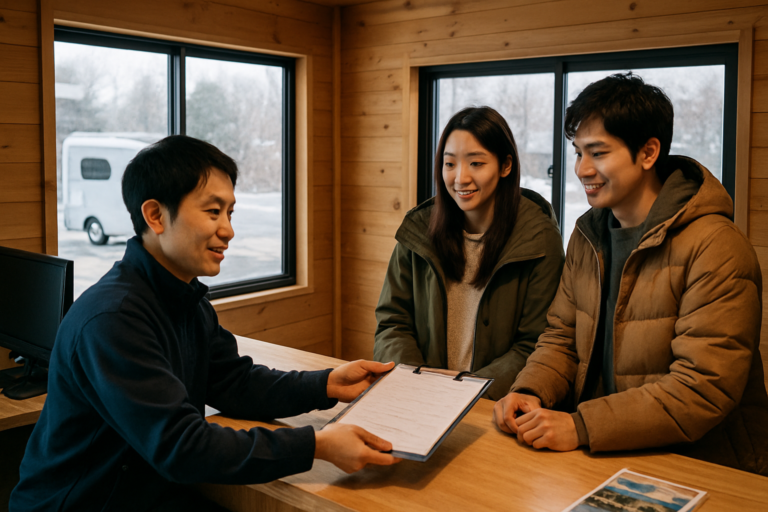
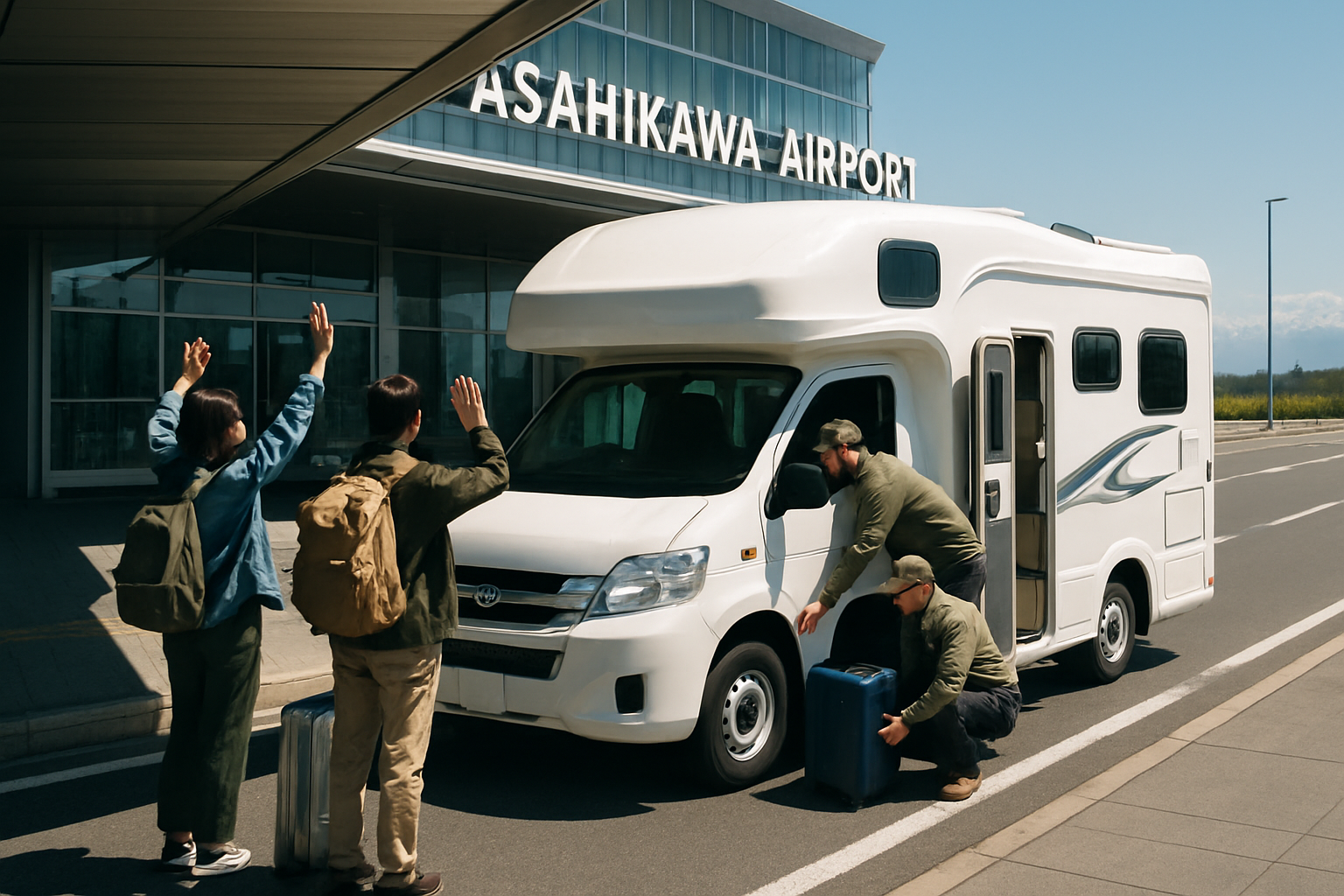
Handing over a campervan takes longer than a standard rental car, mostly because of how much there is to explain about the vehicle's systems. It helps to build that time into your schedule for the day you land.
- Showing your driver's license and confirming your booking details
- A walk-around inspection of the vehicle's exterior for scratches or dents, done together with staff
- An explanation of how to use the kitchen, sink, toilet, heater, and other onboard systems
- Checking the water supply and wastewater tank levels
- An explanation of your insurance coverage and the NOC (Non-Operation Charge)
This briefing alone often takes 30 minutes to an hour, and if you've booked a shuttle, add that travel time on top. Plan for nearly half a day between landing and actually driving off, so your first-day schedule doesn't fall apart. If it's your first time in a campervan, it's worth trying out the heater, water pump, and fridge power switch — controls a regular car doesn't have — while staff are still there, so you're not guessing once you're on the road.
Before returning the vehicle, you'll typically be asked to refuel (or return it with a full tank), clear out any trash, do a light clean, and empty the wastewater tank. The specifics vary by company, so re-read the return conditions in your contract or booking confirmation email before you head back. Planning to return the vehicle three hours before your flight gives you some cushion even if things run a little late.
What to pack before you leave
- Your driver's license (the original — if you need an International Driving Permit, get it in your home country before you travel)
- Your booking confirmation email or a way to show your booking number
- A credit card (most companies use one for the deposit and any extra charges)
- Overnight essentials like a sleeping bag or a change of clothes (bedding is often supplied with the vehicle, so check at booking)
- If traveling with a pet, a carrier and leash, plus a final check that your chosen company accepts pets
An International Driving Permit has to be obtained in your home country before you fly — there's no way to arrange one after you land at Asahikawa Airport, so if you're coming from overseas, put it near the top of your pre-departure checklist. For the requirements around Geneva Convention international driving permits, and how things work if your home country's license isn't covered, see our Can You Rent a Campervan in Hokkaido with a Foreign Driver's License?
What's different about renting at Asahikawa Airport in winter
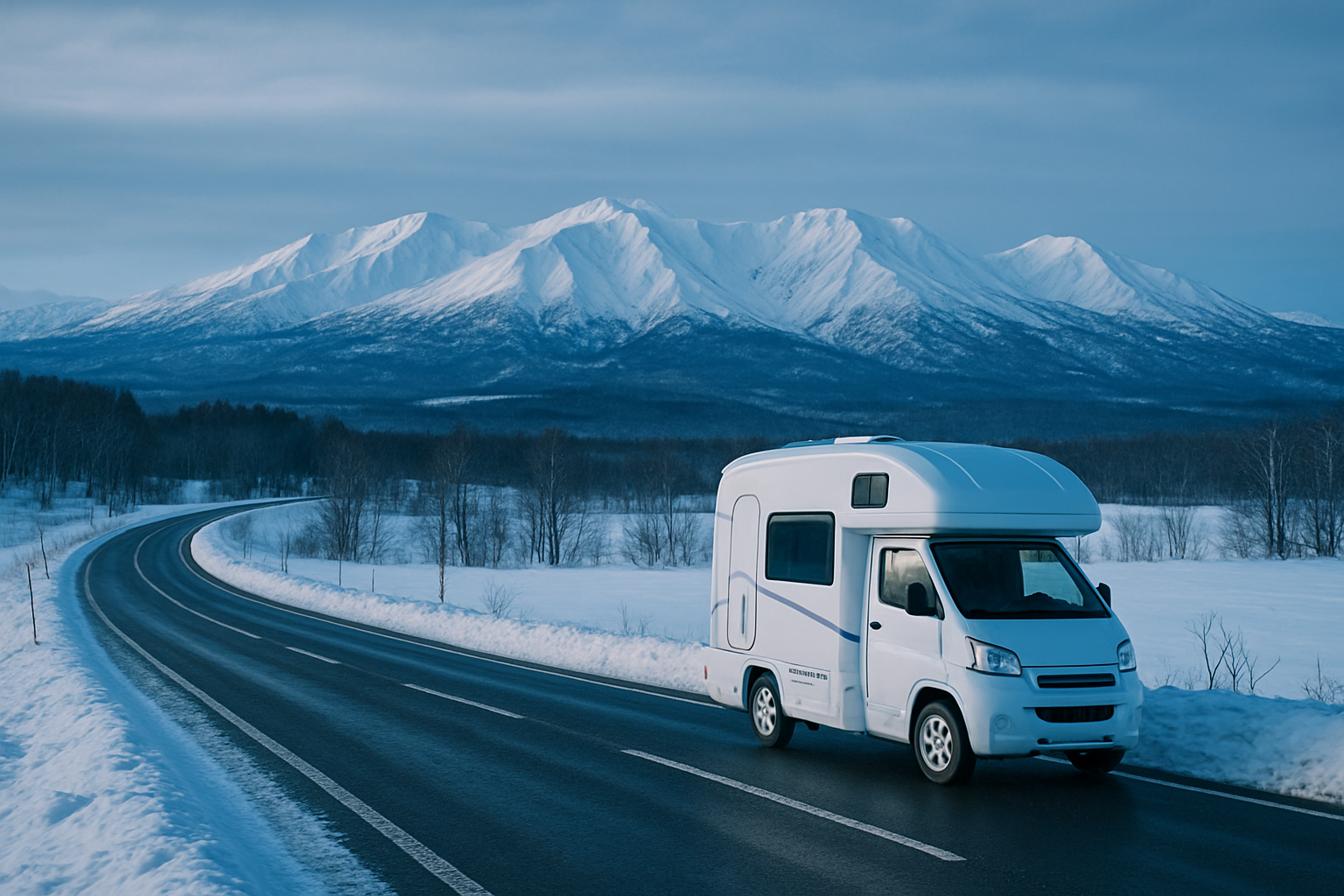
The Kamikawa region sees some of the heaviest snow and cold in Hokkaido. If you're renting at Asahikawa Airport in winter, confirm at booking whether the vehicle has studless tires and 4WD. If you're planning to drive toward Daisetsuzan, Sounkyo, or the mountain passes of northern Hokkaido, choosing a 4WD vehicle makes a real difference in confidence behind the wheel.
The type of fuel the FF heater uses, the rules around returning with a full tank, and how the fresh-water and wastewater tanks are protected from freezing are all things that rarely come up in summer bookings. Airport shuttle buses can also run late because of snow or icy roads, so if you're flying in during winter, build in extra buffer for your connections. For a full rundown of cold-weather prep — freeze protection, keeping warm inside the vehicle, and winter driving technique — see our Before You Take a Campervan Trip Through Winter Hokkaido.
A model route from Asahikawa through Furano, Biei, Daisetsuzan, and northern Hokkaido
If you land on a morning flight, pickup and the vehicle briefing will typically wrap up around midday. It's realistic to keep day one to Asahikawa city or the Biei hills, staying the night at a parking area attached to a roadside station or similar spot. On day two, tour the Patchwork Road around Biei, then head south to Farm Tomita in Furano, staying your second night in or around Furano — a pace that doesn't push your driving too hard.
On day three, you can either head back toward Asahikawa and aim for Mt. Asahidake in Daisetsuzan, or push further to Sounkyo Gorge. Asahidake is known as the first place in Hokkaido where the autumn colors begin, typically peaking from mid to late September. If you're continuing on to Sounkyo, your drive time adds up, so it's worth planning around a 4-night, 5-day itinerary or longer to leave yourself some slack. On your last day, either head back to Asahikawa Airport, or return the vehicle at the Asahikawa base and travel on to New Chitose Airport.
Fitting in a stop at Asahiyama Zoo
At about a 25-minute drive from the airport, Asahiyama Zoo is easy to fit into your first afternoon or your final morning before departure. The penguin walk is a winter event: during the snowy part of the winter season (usually until around mid-March) you can watch penguins walking through the snow. Weekends in summer get crowded, so aim to arrive right when the zoo opens to cut down on wait times. For more of what's around Asahikawa city besides the zoo — Asahikawa ramen, Asahi Bridge, and Tokiwa Park among them — see our Asahikawa & Asahiyama Zoo Campervan Guide.
Easy-to-miss points to check before booking
The Asahikawa area has far fewer rental bases than the New Chitose Airport area, so availability fills up early during peak lavender season (early to mid-July) and the Asahidake autumn foliage season (mid to late September). Once your dates are set, checking base availability should be your first move. For more on the general timing of when to book, see our When Should You Book a Campervan Rental?
- Whether an airport shuttle is offered and the fee (confirm the exact one-way cost at booking)
- Whether pets are accepted, and which kinds (dogs only, or dogs and cats)
- Whether one-way drop-off is supported, which areas, and any extra fee
- Any winter closure period, and whether pickup is possible just before or after it
- Whether studless tires and 4WD are fitted (if renting in winter)
- Required documents if you're visiting from overseas — International Driving Permit, passport, and so on
Vehicles run on a mix of diesel and gasoline, so always confirm the fuel type before refueling. Asahikawa city has several gas stations, but they thin out once you're away from Furano and Biei, and further still around Daisetsuzan. Topping up once you're down to half a tank means you won't be watching the gauge nervously in the mountains.
How this compares to the Hakodate and Memanbetsu airport guides
Hokkaido has a handful of airports where you can step straight off a plane and into a campervan, but which region you should treat as your base depends on where you're actually headed. Asahikawa Airport's strength is its closeness to the inland sights of Furano, Biei, Daisetsuzan, and northern Hokkaido; Hakodate Airport's strength is southern Hokkaido — Onuma Park, Matsumae, and Esashi; and Memanbetsu Airport's strength is eastern Hokkaido — Abashiri, Shiretoko, Lake Mashu, and Lake Akan. If your itinerary centers on northern Hokkaido, fly into Asahikawa; if it's southern Hokkaido, fly into Hakodate; if it's eastern Hokkaido, fly into Memanbetsu. Picking your entry point based on where most of your trip happens is the simplest way to decide.
Frequently Asked Questions
Q1: Can I pick up a campervan right at Asahikawa Airport?
Neither company has a counter inside the terminal — you'll either take a shuttle to their base on Minami 7-jo Dori in Asahikawa City, or make your own way there. Camping Lines Hokkaido states its airport shuttle fee clearly at ¥5,500 one way; Ureska Asahikawa Base also offers a shuttle, but the fee needs to be confirmed.
Q2: How do I get from the airport to a rental base on my own?
The direct Dohoku Bus service to Asahikawa Station takes about 35 minutes. Buses aren't scheduled around flight arrival times, so build in a buffer for your connection. From the station, take a taxi the rest of the way to the rental base.
Q3: How long does it take from Asahikawa Airport to Furano, Biei, or Daisetsuzan?
Roughly 35 minutes to the Biei hills, about 55 minutes to the Farm Tomita area in Furano, and about 1 hour 10 minutes to the Mt. Asahidake ropeway station in Daisetsuzan. Continuing on to Sounkyo Gorge adds about 1 hour 20 minutes. These vary with road conditions, so check your route before you set out.
Q4: Should I rent at New Chitose Airport or Asahikawa Airport?
If your trip centers on Furano, Biei, Daisetsuzan, or northern Hokkaido, Asahikawa Airport saves considerable driving time — it's about 1 hour 55 minutes from New Chitose Airport to Asahikawa city via the Dou-o Expressway. If your trip centers on Niseko, Lake Toya, or southern Hokkaido, New Chitose Airport is the easier base.
Q5: Can I do a one-way rental — pick up at New Chitose and return at Asahikawa?
It depends on the company. In the Asahikawa area, Camping Lines Hokkaido offers a one-way drop-off between its Asahikawa Base and Sapporo Base for ¥16,500. Whether a base near New Chitose Airport supports a drop-off toward Asahikawa needs to be confirmed with each company at booking.
Q6: Can you still rent a campervan at Asahikawa Airport in winter?
It depends on the company. Whether there's a winter closure, whether studless tires and 4WD are fitted, and how the FF heater fuel and freeze protection for the water tanks work are all things to confirm at booking. The Kamikawa region sees some of the harshest cold in Hokkaido, so if you're not confident driving in snow, it's fine to decide against it.
Q7: How far is Asahiyama Zoo from the airport?
According to the official Asahiyama Zoo website, it's 14.5 km from Asahikawa Airport, about a 25-minute drive, with a taxi costing roughly ¥3,500. It's an easy fit into your schedule the afternoon you land.
Q8: Can I rent a campervan with an International Driving Permit?
Most companies accept an International Driving Permit issued under the Geneva Convention. It can't be obtained after you arrive, though — you need to get it in your home country before flying to Asahikawa Airport. Confirm what's accepted and what documents you'll need with the company before booking.
Once you've settled how you're getting from Asahikawa Airport to your campervan, the rest comes down to picking a base. Shuttle or make your own way there, round-trip or one-way, summer or winter — decide those three things first, then compare prices and vehicles at our comparison of the 6 Asahikawa rental companies.
Book a Campervan in Hokkaido
Moving Inn New Chitose Airport supports English booking and offers airport transfers.

![Can You Rent a Campervan in Hokkaido in Winter (Dec–Mar)? Companies With Winter Closures and What to Check Before Booking [2026]](https://hokkaido-campingcar.jp/wp-content/uploads/2026/10/hokkaido-campingcar-rental-winter-open-eyecatch-768x432.webp)