Do You Need a Fire Extinguisher in a Campervan? Legal Equipment Rules Under Safety Regulations Article 47
Do you need a fire extinguisher in a campervan?
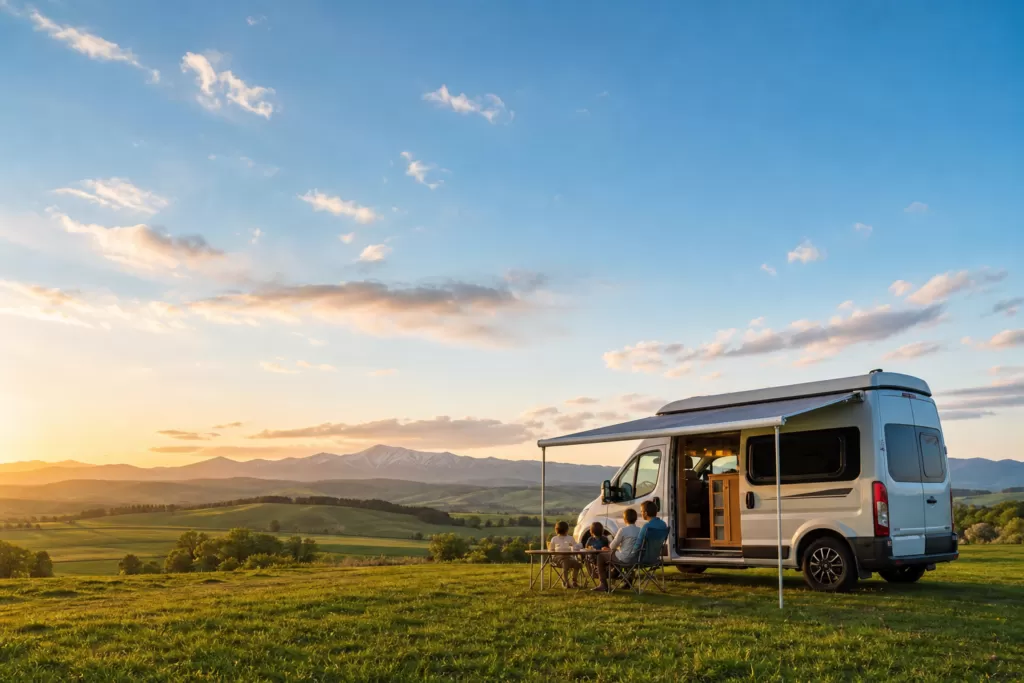
"Does it count as a violation if a campervan doesn’t carry a fire extinguisher?" That’s a question that comes to mind before booking a rental, once you start looking into legally required equipment. To give the conclusion first: for a typical campervan with a seating capacity of 10 or fewer (cab conversions, van conversions, kei-campers), carrying a fire extinguisher is, in most cases, not a legal requirement — that’s the current reading of the rules.
The basis is Article 47 of Japan’s Safety Regulations for Road Vehicles. Only a limited set of vehicles is required to carry a fire extinguisher — vehicles transporting explosives or hazardous materials, vehicles with a seating capacity of 11 or more, and a few other categories (confirmed 2026-08-24; the text of the regulation is linked in this article). A family-sized campervan you’d rent for a trip usually doesn’t meet any of these conditions.
That doesn’t mean "no legal requirement, no need for a fire extinguisher." Because a campervan uses both fire and electricity inside the cabin, safety measures outside the legally mandated equipment still matter. This article walks through the legal basis, the exception, and the equipment worth checking before you rent.
New Chitose Airport / Tokachi-Obihiro Airport
Rent the Cabcon "Cresson Journey"
Base yourself at New Chitose Airport and compare rates, vehicle types, and pickup locations all in one place.
See details at Moving Inn →Which Vehicles Are Legally Required to Carry a Fire Extinguisher?
Fire extinguisher requirements for automobiles are set out in Article 47 of Japan’s Safety Regulations for Road Vehicles (Ministry of Land, Infrastructure, Transport and Tourism, PDF) (confirmed 2026-08-24). Reading the text, the vehicles required to carry a fire extinguisher are limited to the following:
| Item | Vehicle covered |
|---|---|
| Item 1 | Vehicles transporting explosives |
| Item 2 | Vehicles transporting hazardous materials above a specified quantity |
| Item 3 | Vehicles transporting combustible materials above the type and quantity set by public notice |
| Item 4 | Vehicles transporting 150kg or more of high-pressure gas (limited to flammable gas and oxygen) |
| Items 5–6 | Towing vehicles for the above, and vehicles transporting radioactive cargo |
| Item 7 | Vehicles with a seating capacity of 11 or more |
| Item 8 | Towing vehicles that tow the Item 7 vehicles |
| Item 9 | Vehicles used exclusively for young children |
Lining these up, the target is clear: vehicles carrying hazardous materials and vehicles carrying large numbers of people. Most rental campervans seat 2 to 8 people, and none of them transport explosives or hazardous materials. In other words, a typical privately registered cab conversion, van conversion, or kei-camper usually doesn’t fall under any of these items — meaning that, under the Safety Regulations, carrying a fire extinguisher often isn’t mandatory.
The Exception: Large Campervans With 11 or More Seats
There is one exception. A campervan converted from a microbus with a seating capacity of 11 or more falls under Item 7 of Article 47 ("vehicles with a seating capacity of 11 or more") and is required to carry a fire extinguisher (same PDF, confirmed 2026-08-24). That said, vehicles of this size aren’t commonly available for rental. If the seating capacity is 10 or fewer, this item doesn’t apply.
What About the Fire Service Act — Doesn’t That Require One?
Some people may wonder, "Isn’t a fire extinguisher a Fire Service Act thing?" The Fire Service Act requires fire extinguishers for "fire-protected objects" — meaning buildings, forests, ships, and the like — and a moving vehicle itself is not normally included in that definition (reference: Japan Fire Equipment Inspection and Maintenance Association, "Fire Extinguisher Installation Obligations", confirmed 2026-08-24). So the Fire Service Act isn’t generally the basis for requiring vehicles to carry fire extinguishers either.
On a related note about onboard cassette stoves and LP gas: LP gas doesn’t qualify as a "hazardous material" under the Fire Service Act. Once storage or handling reaches 300kg or more, notifying the fire department becomes necessary, but the amount of gas carried in a campervan is normally far below that threshold. Loading a few gas canisters doesn’t trigger a notification requirement.
That covers the legal side: whether it’s the Safety Regulations or the Fire Service Act, a standard-sized campervan usually isn’t under any legal obligation to carry a fire extinguisher. So does that mean you don’t need one? That’s the next topic.
Why You’ll Still Want a Fire Extinguisher, Even Without a Legal Requirement
Whether there’s a legal requirement and what makes sense as an actual safety measure are two different things. Inside a campervan cabin, there are fire-related elements a regular passenger car doesn’t have: the combustion of an FF heater, cooking on a cassette stove, charging a portable power station or auxiliary battery. It’s a vehicle that uses fire and electricity every day, right next to the space where you sleep.
Traveling in Hokkaido adds another layer. Once you leave a town, stretches of tens of kilometers to the next one aren’t unusual. In mountainous or coastal areas, cell signal can be hard to get. Sleeping in places where you can’t count on a fire truck arriving quickly is exactly why having a way to put out a small fire yourself, while it’s still small, matters.
In practice, rental companies are well aware of this, and many voluntarily carry a fire extinguisher on board regardless of the legal requirement. That said, whether the equipment is present and what type it is varies by company and vehicle, so this article doesn’t go into the specifics of individual equipment lists. Always confirm whether the vehicle you’re renting has a fire extinguisher, either when booking or during the pickup briefing (as of 2026-08-24).
What Safety Equipment Should You Check When Renting?
The pickup briefing tends to focus on handing over the keys and explaining how to drive. Asking about the following five things on the spot will help you feel at ease for the whole trip.
- Whether there’s a fire extinguisher and where it’s mounted — if there is one, ask to be shown exactly where it’s fixed in place
- Where the flares and warning triangle are — it’s too late to go looking once you’ve broken down on the road; check the footwell or luggage area location first
- How to use the FF heater correctly — whether it’s okay to leave it running while you sleep, how to park without blocking the intake/exhaust vents, and what to do if you notice a smell or unusual noise
- The rules for using fire inside the cabin — whether you can use a cassette stove varies by company; confirm it in the contract or the briefing
- Emergency contact information — who to call if something happens at night or outside business hours
Checking where the equipment is at departure means you won’t be searching for it at return, either. It also helps to check, before returning the vehicle, that anything you didn’t use is back in its original spot. Return-time checks are covered in the Rental Campervan Return Checklist.
One more thing: whether damage from a vehicle problem or a fire is covered depends on the insurance or coverage plan you sign up for. The Complete Guide to Campervan Rental Insurance & Coverage covers how deductibles and coverage scope work, so reading it before you book means you won’t be caught off guard at the counter.
A 5-Minute Safety Check Before You Set Off
Once you know where the equipment is, take a quick look at its condition too. It only takes about 5 minutes.
If there’s a fire extinguisher, its label shows an expiration date (the standard design service life). Also check that the pressure gauge needle sits in the green range and that the safety pin is in place. Flares have an expiration date too, printed on the unit. If you find something expired or damaged, just tell staff on the spot and have it replaced.
As a habit during your trip, following just these points cuts fire risk quite a bit: fully extinguish any flame and turn off cooking equipment before you sleep. Remove the cassette gas canister and put it in its designated spot before driving. Keep the area around the FF heater’s intake/exhaust vents clear of snow or luggage. All of these take only a few dozen seconds.
Bringing your own small fire-suppression device is another option. An aerosol-type compact extinguisher is about the size of a 500ml plastic bottle and is available at home centers or online. Keeping one on hand as a backup — for when you won’t know the rental vehicle’s equipment until pickup day — brings peace of mind, too. For the full packing list, see the Hokkaido Campervan Trip Packing Checklist.
New Chitose Airport / Tokachi-Obihiro Airport
Rent the Cabcon "Cresson Journey"
Base yourself at New Chitose Airport and compare rates, vehicle types, and pickup locations all in one place.
See details at Moving Inn →Frequently Asked Questions (FAQ)
Will my campervan fail an inspection if it doesn’t have a fire extinguisher?
A typical privately registered campervan with a seating capacity of 10 or fewer usually doesn’t fall under any item of Article 47, which sets the fire-extinguisher requirement, so the absence of a fire extinguisher by itself isn’t commonly a cause for failing a vehicle inspection. For details, check the text of Safety Regulations Article 47 (MLIT, PDF) (confirmed 2026-08-24).
Does a rental campervan come with a fire extinguisher?
It depends on the company and the vehicle. Many companies voluntarily equip one regardless of the legal requirement, but it isn’t guaranteed, so confirm whether one is present and where it’s located, either at booking or during the pickup briefing (as of 2026-08-24).
Can I use a cassette stove inside the vehicle?
Ahead of any law, it comes down to each rental company’s own usage rules. Some companies restrict using fire inside the cabin, while others allow it under conditions such as ventilation, so check your contract terms. If you do use one, open a window to ventilate, don’t use it while driving, and store the gas canister somewhere cool.
What changes for a campervan with 11 or more seats?
It falls under Item 7 of Safety Regulations Article 47 ("vehicles with a seating capacity of 11 or more") and is required to carry a fire extinguisher (MLIT, PDF, confirmed 2026-08-24). This applies to large, microbus-converted campervans, but most vehicles available for rental have a seating capacity of 10 or fewer.
What should I do if a fire breaks out inside the vehicle?
Get everyone out of the vehicle first, then call 119. Only attempt to put the fire out yourself while it’s still small — about the size of a stovetop flame — and get away from the vehicle if the flames are reaching the ceiling. Once things have settled, be sure to contact the rental company’s emergency line. How much of the vehicle damage is covered depends on your contract plan, so reading the Insurance & Coverage Guide before you book will help you act quickly if it happens.
Book a Campervan in Hokkaido
Moving Inn New Chitose Airport supports English booking and offers airport transfers.

![Hokkaido Winter Trip: Shoes & Packing List [2026] – 2,060 Sapporo Fall Transports and a Pre-Departure Checklist](https://hokkaido-campingcar.jp/wp-content/uploads/2026/10/hokkaido-winter-trip-shoes-packing-eyecatch-768x432.webp)
![Snow Cancels Your New Chitose Airport Flight? Rebooking Rules and Campervan Rental Delays [2026]](https://hokkaido-campingcar.jp/wp-content/uploads/2026/10/new-chitose-airport-snow-cancellation-eyecatch-768x432.webp)