Campervan Curtains & Privacy Screens: How to Protect Your Privacy During Overnight Parking [2026 Guide]
Do rental campervans come with curtains? It depends on the company. Here's what's confirmed, plus the law on closing curtains while driving.
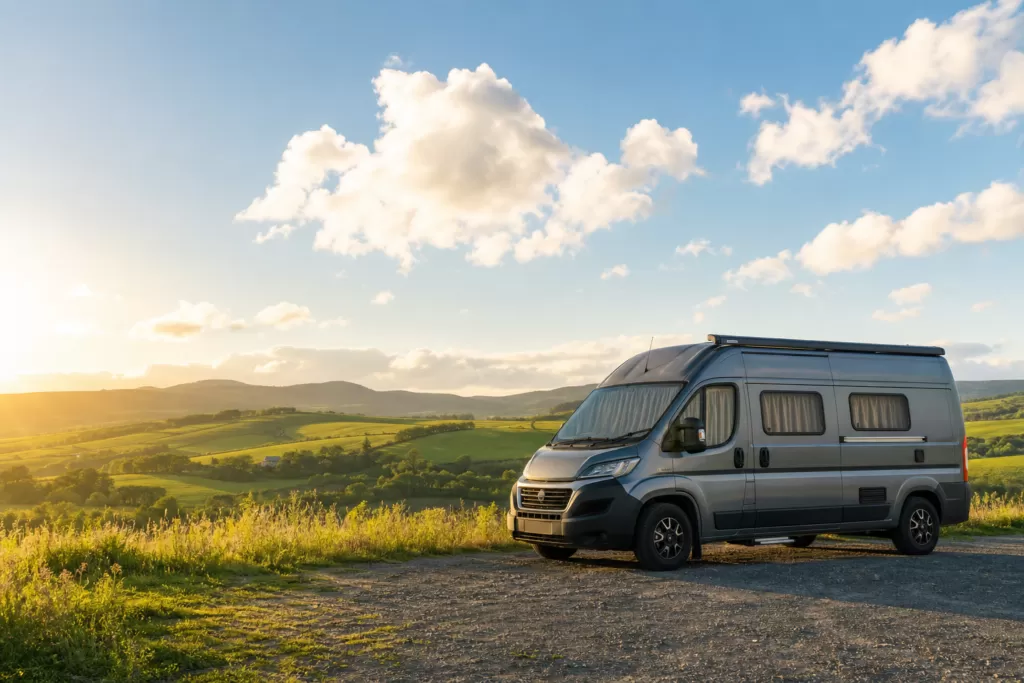
Have you ever been overnight parking in a campervan and suddenly wondered, “how much can people outside actually see through this window?” Changing clothes, right before bed, or just after waking up — Michi-no-Eki (roadside rest stops) and convenience store parking lots see more foot traffic than you’d expect, and even the car parked next to you while driving can get a clear view inside. Unlike tent camping, having solid walls makes it easy to let your guard down, but window glass is built to let people see in clearly from outside.
This article sticks to facts we could actually verify: whether rental campervans come with curtains as standard, whether it’s okay to close curtains while driving, and what options exist if you want to add your own privacy screens. Where we couldn’t confirm something definitively, we say so honestly.
Why do campervans need curtains in the first place?
Campervan windows are larger and more numerous than those on regular passenger cars in most models. Since you’ll often be parking and sleeping in places where other people are around — Michi-no-Eki, RV parks, convenience store lots — without curtains or privacy screens, the inside of your vehicle is visible from outside. Beyond the discomfort of being seen while sleeping or changing clothes, the fact that people outside can tell whether anyone is inside the vehicle is itself a security concern.
On top of that, curtains also help with seasonal temperature control during overnight parking in Hokkaido — direct summer sun and winter cold. Thick curtains that combine light-blocking and insulation can hold down interior temperature rise during summer days and soften the cold air coming through the windows in winter. Privacy and temperature control — these two things are the answer to “why do you need them.”
So do rental vehicles come with curtains already installed? Let’s check next.
Do rental vehicles come with curtains as standard?
The short answer: it varies by rental company, based on what’s stated on their official websites. Fuji Cars Japan’s Chitose Rental Station explicitly lists “blackout curtains” in its standard equipment list (confirmed 2026-08-27, official site). QUUM’s official site, on the other hand, lists car navigation, ETC, a dashcam, bed, fridge, and air conditioning in its per-vehicle equipment list, but we could not find any line item for curtains or blackout shades (confirmed 2026-08-27, official site). This doesn’t necessarily mean the equipment isn’t there — it just means it isn’t listed as such on the official equipment list.
We also checked the vehicle introduction pages of other companies, but couldn’t find any page that explicitly lists curtains or privacy screens as standard equipment (confirmed 2026-08-27). Given that equipment varies by vehicle at many companies, the surest way to find out whether curtains come standard or whether you’re allowed to bring your own is to ask the company directly before booking.
Here’s a table summarizing what we could confirm from each official site.
| Rental company | What the official equipment list states | Confirmation date |
|---|---|---|
| Fuji Cars Japan (Chitose Rental Station) | Lists “blackout curtains” as standard equipment | 2026-08-27 |
| QUUM | Lists car navigation, ETC, dashcam, etc.; no line item found for curtains | 2026-08-27 |
| North Camper | No curtains/shades listed on the equipment introduction page | 2026-08-27 |
| Moving Inn | No curtains/shades listed within the publicly available pages | 2026-08-27 |
“Not listed” doesn’t mean “not equipped” — it simply means the item doesn’t appear on the official equipment list. It’s possible some vehicles have the equipment but it’s just omitted from the listing, so if you want to know for certain, ask when you make your booking.
Even if a vehicle does have curtains, whether you’re allowed to close them while driving is a separate question. Let’s look at the legal side next.
Is it okay to close the driver’s and passenger’s seat curtains while driving?
On this point, there’s a clear legal rule. Article 55, Paragraph 2 of the Road Traffic Act states that “the driver of a vehicle shall not drive the vehicle while carrying passengers or cargo in a manner that obstructs the driver’s field of view or the operation of the steering wheel or other devices” (quoted from the Saga Prefectural Police traffic rules information sheet, confirmed 2026-08-27). Fitting curtains or sunshades to the driver’s or passenger’s side windows and driving in a state where they obstruct your field of view falls under this rule and is subject to enforcement as a passenger/cargo-loading violation. The fine is ¥6,000 for standard passenger vehicles, with 1 penalty point (same source, Saga Prefectural Police, confirmed 2026-08-27).
In other words, the curtains on the driver’s and passenger’s windows need to stay open while driving. You can only close them when the vehicle is parked, such as when you’re sleeping during overnight parking. It’s worth adding “open the front curtains” to your pre-departure checklist so you don’t forget and drive off with them closed.
So what about the curtains in the rear sleeping area, apart from the driver’s and passenger’s seats?
Can the rear seat / sleeping area curtains stay closed while driving?
What Article 55, Paragraph 2 of the Road Traffic Act is concerned with is whether the “driver’s field of view” is obstructed. Windows in the rear seats or sleeping area don’t directly affect the driver’s field of view, so they’re not covered by the rule above. Keeping the rear curtains closed while driving won’t get you cited under this provision.
However, it’s a different story if the curtain is positioned in a way that blocks the rearview mirror. The same Article 55, Paragraph 2 also includes a rule that “a vehicle shall not be driven while loaded in a manner that negates the effectiveness of the rearview mirror,” and if curtains or luggage block the mirror’s view of the rear so much that you can’t see behind you, that could fall under this provision. Even when closing the rear curtains, make sure to keep the rearview mirror’s line of sight clear.
Next, let’s look at privacy options other than curtains.
What other privacy screen options are there besides curtains?
Suction-cup or magnetic sunshades
These are sunshades that attach to the inside of the window with suction cups or magnets. They don’t require installing a curtain rail, and you can use them without drilling holes or driving screws into the vehicle body. It’s an easy option to bring into a rental vehicle, with the convenience of attaching it only when needed and taking it down and storing it the rest of the time.
Window-specific blackout / insulation boards
These are thick, board-type privacy shields molded to the shape of the windshield or rear window. They offer better light-blocking and insulation than fabric curtains, making them well suited for reducing cold air from the windows during winter overnight parking. That said, window shapes differ by vehicle model, so generic products can leave gaps — something worth keeping in mind.
Window privacy film
This is a film-type privacy option applied directly to the window glass. Unlike removable curtains or shades, it can be left on permanently, but rental vehicles are generally expected to be returned to their original condition, so check with the rental company before your contract whether applying film is allowed. It’s better suited as a long-term solution for your own personal vehicle.
Whichever method you choose, the criteria for picking one are the same. Let’s go over them next.
How should you choose the material and light-blocking level for privacy screens?
Three things determine how well a privacy screen performs: color, light-blocking level, and size.
Darker colors like black or gray make it harder to see through into the vehicle from outside. Commercially available blackout curtains come in grades from Class 1 to Class 3, with Class 1 blocking the most light. You can choose a Class 1 (or close to it) curtain for a sleeping area where you want to block light completely, and go down a grade for areas where you want to leave a little brightness. Choosing a size that’s a bit larger than the window itself helps prevent light leaking or gaps in coverage around the edges.
Fabric with insulating or heat-reflecting properties works as both a privacy screen and a countermeasure against summer heat and winter cold. When traveling somewhere with big seasonal temperature swings like Hokkaido, choosing a product that combines light-blocking and insulation lets you avoid carrying extra gear.
How important privacy screens are also depends on where you park. Let’s look at the differences by location next.
Does the importance of privacy screens change depending on where you park overnight?
Yes, it does. There’s a big difference in how often you’re seen from outside between RV parks or dedicated parking areas with less foot traffic and convenience store or expressway rest area (SA/PA) lots where a constantly changing crowd of cars and people pass through. RV parks and campgrounds are mostly used by other overnight parkers and facility staff, and parking spots are often generously spaced apart, whereas convenience stores and SA/PAs see a steady stream of shoppers and cars stopping to rest, with neighboring spots often close together.
For overnight parking etiquette at convenience stores, see our article on convenience store parking etiquette; for the reality of overnight parking at Hokkaido’s expressway rest areas, see our SA/PA overnight parking guide; and for the legal side of overnight parking itself, see our article on whether overnight parking is legal. Thicker privacy screens don’t automatically make any location safe — think about where to park in the first place alongside your privacy setup.
Finally, let’s cover what to watch out for when actually installing or bringing your own privacy items.
What should you be careful of when installing or bringing your own gear?
Rental vehicles are generally expected to be returned in their original condition. Installation methods that leave a permanent mark on the vehicle body — screwing in a curtain rail, drilling holes in the window frame — may be prohibited under the rental contract. Suction-cup, magnetic, or tension-rod privacy screens can be removed without damaging the vehicle body, making them easier to bring into a rental vehicle. Check with the rental company at booking time about whether you can bring your own gear and any restrictions on installation methods.
If you’re bringing your own privacy screens, starting with suction-cup types or thin blackout curtains that don’t take up much luggage space makes it easier to pack alongside the rest of your overnight parking gear.
Do you need to be considerate of the car parked next to you, not just your own?
Yes, you do. Privacy screens protect your own privacy, but in a parking lot where multiple people are parking overnight, you’re also the one whose actions and noise outside the vehicle can be seen or heard by the occupants of the car next to you. Hanging your changed clothes outside the window, or talking loudly on the phone outside the vehicle, creates a situation where — from the neighboring car’s point of view — you’re “hidden inside, but fully visible outside.”
Once you’ve set up privacy screens so the interior can’t be seen, keep that same awareness in mind for your behavior outside the vehicle, and stay quiet. It’s only with both of these together that the whole parking lot becomes a comfortable place for everyone parking overnight.
Frequently Asked Questions (FAQ)
Q1: How can I check whether the campervan I’m renting has curtains?
Some companies explicitly list “blackout curtains” in their official equipment list (for example, Fuji Cars Japan’s Chitose Rental Station, confirmed 2026-08-27), while others don’t list it as an item. The surest way to find out is to contact the rental company directly when you book.
Q2: What happens if I close the driver’s seat curtain while driving?
It constitutes a passenger/cargo-loading violation under Article 55, Paragraph 2 of the Road Traffic Act, and is subject to a fine and penalty points (confirmed 2026-08-27). Always keep the driver’s and passenger’s curtains open while driving.
Q3: Is it a violation to keep the rear seat curtains closed while driving?
No — since they don’t directly obstruct the driver’s field of view, they’re not covered by the rule above. However, if positioned in a way that blocks the rearview mirror, that could fall under the same article as negating the mirror’s effectiveness, so make sure to keep the rearview mirror’s line of sight clear.
Q4: Can I bring my own privacy shade to a rental vehicle?
Types that don’t leave any mark on the vehicle body, such as suction-cup or magnetic ones, tend to be easier to bring along. Installation involving screws or drilling holes into the window frame may be prohibited from a return-to-original-condition standpoint, so check with the rental company when you book.
Q5: When parking overnight at a convenience store or SA/PA, is it enough to just worry about privacy screens?
No — privacy screens are just one part of privacy protection. Also check the etiquette and rules for the parking location itself. Our article on convenience store parking etiquette and SA/PA overnight parking guide cover specific points to watch for.
Compare Hokkaido Campervan Rentals
Base yourself at New Chitose Airport and compare rates, vehicle types, and pickup locations all in one place.
Compare rental companies & rates →Privacy screens aren’t the only thing that affects how comfortable your overnight parking is. Checking our article on shower options, list of RV parks, and article on connectivity as well will help you knock out your trip-planning worries one by one.
Compare Hokkaido Campervan Rentals
Base yourself at New Chitose Airport and compare rates, vehicle types, and pickup locations all in one place.
Compare rental companies & rates →Book a Campervan in Hokkaido
Moving Inn New Chitose Airport supports English booking and offers airport transfers.

![Hokkaido Winter Trip: Shoes & Packing List [2026] – 2,060 Sapporo Fall Transports and a Pre-Departure Checklist](https://hokkaido-campingcar.jp/wp-content/uploads/2026/10/hokkaido-winter-trip-shoes-packing-eyecatch-768x432.webp)
![Snow Cancels Your New Chitose Airport Flight? Rebooking Rules and Campervan Rental Delays [2026]](https://hokkaido-campingcar.jp/wp-content/uploads/2026/10/new-chitose-airport-snow-cancellation-eyecatch-768x432.webp)