Insect Protection Inside Your Campervan: Screens, Repellents, and Hokkaido’s Summer Bugs (2026 Guide)
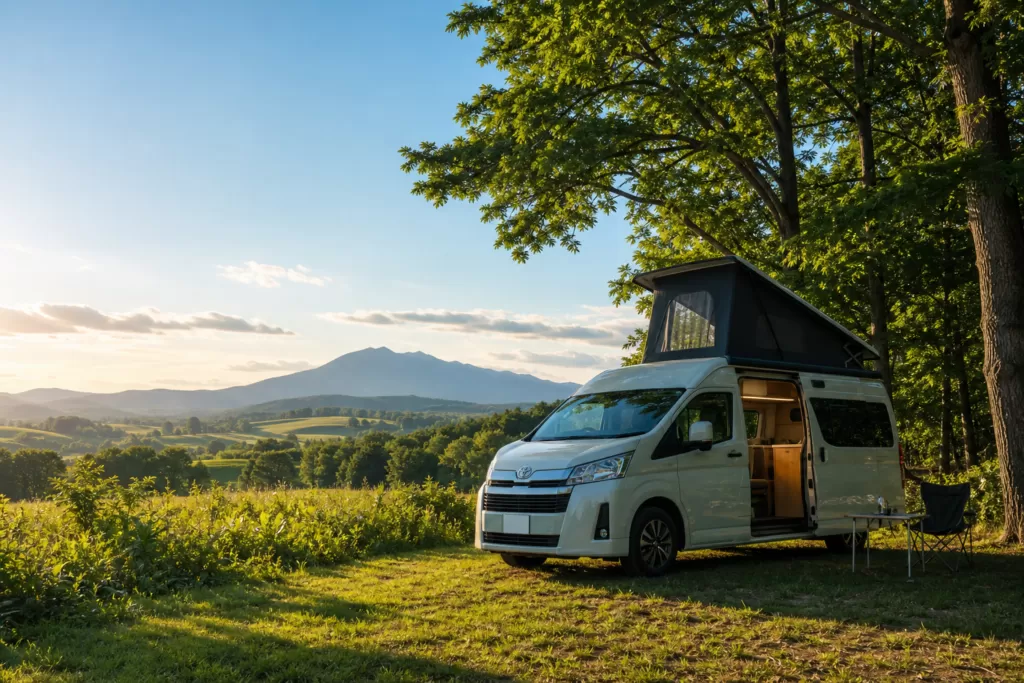
Hokkaido's summer overnight parking often means dealing with black flies and mosquitoes.
Insect Protection Inside Your Campervan: Screens, Repellents, and Hokkaido’s Summer Bugs (2026 Guide)
Hokkaido summers are cooler and more comfortable than mainland Japan, but overnight parking often runs into one recurring problem: insects. “Buyo” (black flies) in particular can cause more swelling and itching than mosquito bites, and whether or not your window screens are in good shape can decide how comfortable a night with the windows open really is. According to observation records from the Hokkaido Regional Forest Office, black flies, mosquitoes, and horseflies were reported active around the Daisetsuzan Midorigatake first flower field, noting that “insect protection is needed” (Hokkaido Regional Forest Office, Daisetsuzan GSS mountain patrol log, dated July 28, 2022, confirmed 2026-08-27). This guide covers why insect protection matters for overnight parking in Hokkaido, how window screens differ by campervan type, and how to choose add-on screens and repellents — organized around where insects actually get in.
For general bear safety and roadside-station rules during overnight parking, see our complete guide to overnight parking in Hokkaido, and for a general packing list see the Hokkaido campervan packing checklist, and for summer roadside-station tips see Overnight parking at Michi-no-Eki in summer 2026. All three touch on insects briefly — this guide goes one level deeper, focused on how screen availability and insect entry points differ by vehicle type and by window.
How are Hokkaido’s insects different from the mainland? Getting to know Buyo (black flies)
Hokkaido summers bring not just mosquitoes but a noticeable presence of “Buyo” (black flies). Unlike mosquitoes, which announce themselves with a buzz, black flies land silently and bite by cutting the skin to draw blood, so they’re easy to miss until afterward — and the bite tends to swell more and itch longer than a mosquito bite. They’re especially active along streams, wetlands, and forest-edge parking areas. The official blog of the Ministry of the Environment’s Hokkaido Regional Office also notes that “carrying insect-repellent gear (such as a head net) and fanning yourself with an uchiwa while walking helps against black flies, mosquitoes, and flies” (Ministry of the Environment Hokkaido Regional Office official blog, posted May 2015, confirmed 2026-08-27). The same blog also states that activity “comes and goes depending on temperature and weather (rain or wind),” suggesting black fly activity tends to be weaker on windy days.
For campervan travelers, insects whose activity shifts with the wind may not be a problem while driving, but can rush in the moment you park and open a window. The classic dilemma of overnight parking is wanting to open the windows because it’s hot during the day, only to have insects pour in the instant you do.
Where do insects get in? A look by vehicle type
Campervans vary widely in the number, shape, and opening style of their windows depending on the vehicle type, and that directly affects how easily insects can get in. Our guide to the 7 types of campervans covers the basic classification, but from an insect-protection standpoint, here’s how they break down:
- Kei-camper: Fewer windows, but because the body is small, the sleeping area sits close to the windows, so opening one has a bigger effect on the whole cabin.
- Vancon (HiAce-based, etc.): Multiple openings — front, sliding door, rear — and the rear cargo-area windows often lack screens on many models.
- Cabcon: Multiple windows in the living area plus roof vents for ventilation, so there are simply more openings to check for screens.
In other words, don’t assume “screens included” applies uniformly to a vehicle type — check each window, sliding door, and roof vent individually. Asking the rental company specifically whether the windows around the sleeping area have screens before you book can cut down on last-minute improvising.
Compare Hokkaido campervan rentals
Check vehicle types, rates, and availability on the official site.
Compare rental companies →How do you add a screen to a window that doesn’t have one?
For windows without a screen, aftermarket add-on screens are an option. The most common type is a mesh shade that attaches to the window frame with Velcro or hooks — available either in sizes made for specific vehicles or as a general-purpose size you cut to fit. For HiAce-based vehicles with large sliding-door openings, roll-in mesh screens that extend and retract with the door are also sold. For kei-campers with large rear-hatch or tailgate openings, mesh kits that cover the whole hatch are sometimes used.
The key point when using aftermarket gear is to confirm the vehicle and window size before you buy. General-purpose sizes are often meant to be bought a bit oversized and trimmed to fit — if you buy one without measuring right before your trip, you may find it doesn’t fit on the day. If you’re renting, checking the window dimensions from the vehicle photos on the rental company’s site (or by asking directly) before you prepare your gear avoids wasted purchases.
How to choose an insect repellent spray
How long a repellent spray lasts depends on the concentration of DEET or Icaridin listed on the label. Higher-concentration DEET tends to last longer, but some products limit how often young children can use it, so families traveling with kids may want an Icaridin-based product with no such usage limit for the children, giving everyone more flexibility. Reapplying to hands, feet, and neck before bed — not just during outdoor walks — also helps against anything that slips in through a gap in a screen.
Can you use mosquito coils or battery-powered repellents inside the vehicle?
Mosquito coils use fire and smoke, so it’s safer to use them outside the vehicle only. Burning one in the confined space of a campervan cabin can irritate your throat and eyes with smoke, and creates a fire-safety risk while you sleep. Inside the vehicle, choose fire-free options such as battery- or USB-powered electric mosquito repellers or ultrasonic insect deterrents. That said, electric repellers don’t always cover the entire cabin depending on the product, so it’s realistic to combine them with screens and spray.
What to do if you get bitten by a black fly
Black fly bites often swell and itch more a few hours to a day after the bite than right away. Right after being bitten, washing the area with clean water and using a poison remover (suction extractor) to draw out the toxin is a known first step. Carrying an over-the-counter anti-itch cream with an antihistamine helps with more severe symptoms. If the swelling is widespread or you develop a fever, don’t tough it out — see a local medical facility.
Areas and seasons with more insects
As noted above, 2022 observation records reported black flies, mosquitoes, and horseflies around the Daisetsuzan Midorigatake first flower field (Hokkaido Regional Forest Office, Daisetsuzan GSS mountain patrol log, confirmed 2026-08-27), and mountain areas near streams and wetlands tend to have more insects generally. For overnight parking bases near Sounkyo/Daisetsuzan, see our Daisetsuzan/Sounkyo campervan driving guide, and around the Shiretoko Five Lakes, our Shiretoko Five Lakes campervan guide — both areas have boardwalks close to wetlands, so pack extra insect protection for either. Exact dates and numbers vary with each year’s weather, so check the latest information with the local tourism association or visitor center right before your trip.
Keeping insects out when getting in and out
Even with screens and spray ready, insects slip in during the instant a door opens and closes each time you get in or out. Especially at dusk and after dark, cabin lighting attracts insects, so it helps to turn off exterior lights before opening a door, and if traveling with others, to get in or out together rather than one at a time. The same applies to loading and unloading gear — gather what you need first and minimize how many times the door opens and closes, rather than leaving it open.
Using screens at bedtime during overnight parking
Hokkaido summer nights cool down enough that on many nights you can sleep comfortably just by cracking a screened window, no air conditioning needed. That said, a screen alone doesn’t guarantee zero insects — depending on the mesh size, small flying insects can still get through. Check the cabin lighting for any insects before bed, and if you’re concerned, run an electric repeller alongside the screen. On rainy days you can’t leave a screened window open, so also plan an alternative for ventilation, such as a vent fan or a portable fan.
Insect-protection gear checklist
Here’s everything above turned into a packing checklist. Adjust based on your trip length and the areas you’re visiting.
- Insect repellent spray (DEET or Icaridin — bring plenty)
- Aftermarket mesh shade for windows without screens (confirm vehicle/window size in advance)
- Battery- or USB-powered electric mosquito repeller (for indoor use — keep any flame-based type outside)
- Anti-itch cream with antihistamine
- Poison remover (suction extractor)
- Long sleeves and pants (if you’ll be walking near wetlands or streams)
New Chitose Airport / Tokachi-Obihiro Airport
Rent the Cabcon “Cresson Journey”
Base yourself at New Chitose Airport and travel all across Hokkaido by campervan.
See details at Moving Inn →Frequently Asked Questions
Q: How is Hokkaido’s black fly different from mainland mosquitoes?
Black flies (Buyo) approach silently, unlike mosquitoes, and bite by cutting the skin to draw blood. The bite tends to swell more and itch longer than a mosquito bite. The Ministry of the Environment’s Hokkaido Regional Office blog recommends carrying insect-repellent gear and fanning yourself with an uchiwa while walking (Ministry of the Environment Hokkaido Regional Office official blog, posted May 2015, confirmed 2026-08-27).
Q: Do rental campervans have window screens?
It varies by vehicle and company. For kei-campers, vancons, and cabcons alike, whether a screen is present differs window by window, sliding door by sliding door, and vent by vent around the sleeping area, so you can’t assume based on vehicle type alone. Ask the rental company about specific locations when you book.
Q: How do I deal with a window that has no screen?
An aftermarket mesh shade is an option. These come in vehicle-specific sizes as well as general-purpose sizes you trim to fit, so confirming the window size of your rental vehicle before you prepare one avoids problems on the day.
Q: Can I use a mosquito coil inside the vehicle?
It’s safer to use one only outside the vehicle, since it involves fire and smoke. Inside, choose a fire-free option such as a battery- or USB-powered electric repeller.
Q: What should I do if I get bitten by a black fly?
Wash the area with clean water and use a poison remover (suction extractor) to draw out the toxin — a known first step. Carrying an anti-itch cream with an antihistamine helps with the response. If swelling is widespread or you develop a fever, see a local medical facility.
Q: Are there areas or seasons with more insects?
2022 observation records reported black flies, mosquitoes, and horseflies around the Daisetsuzan Midorigatake first flower field, and mountain areas near streams and wetlands tend to have more insects generally. Exact timing varies with each year’s weather, so check the latest information with the local tourism association or visitor center right before your trip.
Q: How is this different from our other guides that mention insect protection?
Our other guides touch on insect protection briefly as part of general overnight-parking prep, packing lists, or summer Michi-no-Eki tips. This guide instead focuses specifically on how insect entry points differ by vehicle type and how to handle each window, sliding door, and roof vent. For general overnight-parking prep, see our complete guide to overnight parking in Hokkaido, and for a full packing list, see the Hokkaido campervan packing checklist.
Book a Campervan in Hokkaido
Moving Inn New Chitose Airport supports English booking and offers airport transfers.

![Hokkaido Winter Trip: Shoes & Packing List [2026] – 2,060 Sapporo Fall Transports and a Pre-Departure Checklist](https://hokkaido-campingcar.jp/wp-content/uploads/2026/10/hokkaido-winter-trip-shoes-packing-eyecatch-768x432.webp)
![Snow Cancels Your New Chitose Airport Flight? Rebooking Rules and Campervan Rental Delays [2026]](https://hokkaido-campingcar.jp/wp-content/uploads/2026/10/new-chitose-airport-snow-cancellation-eyecatch-768x432.webp)