Hokkaido Campervan Trip Guide for Groups of 4–6 | Vehicles, Costs, and Routes for Large Groups and Families [2026 Edition]
A guide to renting a campervan in Hokkaido for groups of 4–6. Covers cab-over selection, cost simulation, child-friendly spots, and per-person cost breakdown.
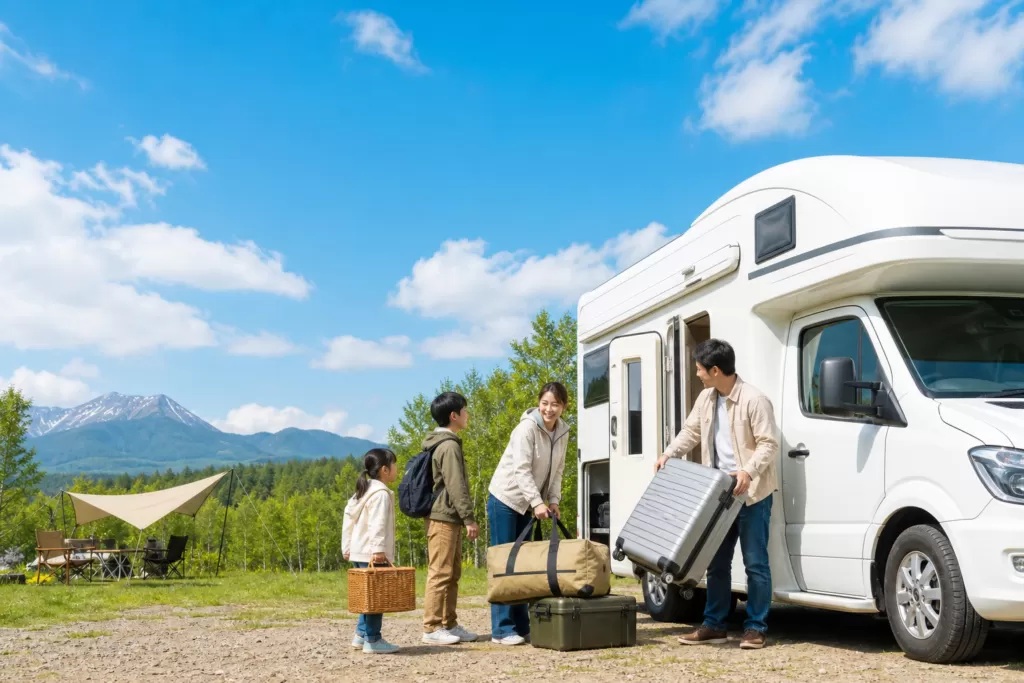
Traveling Hokkaido by campervan with 4–6 people significantly lowers the cost per person for accommodation and transport. Without the hassle of hotel bookings or splitting up the group, everyone travels in the same space. This guide covers everything you need to plan a large-group trip: vehicle selection, cost simulation, campsite choice, family-friendly spots, and how to divide roles.
Why choose a campervan for a group of 4–6?
Once the group exceeds four, hotels require at least two rooms. During peak season in Hokkaido, a single room can cost 30,000–50,000 yen, so five nights can easily reach 300,000–500,000 yen in accommodation alone. With a campervan, the entire group sleeps in one vehicle, and the more people sharing the vehicle, fuel, and campsite fees, the lower the cost per person.
- Lower cost per person: Vehicle, fuel, and campsite costs are shared — the more people, the better the deal.
- No hotel bookings needed: Securing accommodation is easier even during peak season, and last-minute changes are manageable.
- Travel and living in one space: Leave luggage in the vehicle during sightseeing; tired children can rest immediately inside.
- Easier to cut food costs: Camp cooking and BBQ reduce dining out. Cooking Hokkaido’s fresh ingredients on the road adds another layer of enjoyment.
- Private space: A dedicated mobile base with no strangers to worry about.
Note: large-group campervans are limited in number, so booking six months in advance is realistic for a summer Hokkaido trip. “Seats for 6” and “comfortable sleeping for 6” are different things — always check the sleeping layout diagram before booking.
New Chitose Airport / Tokachi-Obihiro Airport
Rent the Cabcon “Cresson Journey”
Base yourself at New Chitose Airport and compare rates, vehicle types, and pickup locations all in one place.
See details at Moving Inn →Vehicle types by group size and travel style
| Type | Seats | Sleeping | Key features | Best for |
|---|---|---|---|---|
| Cab-over (standard) | 4–5 | 4–5 | Bank bunk above cab adds sleeping space without converting the dinette. Comfortable living area. | Family of 4–5, primary/secondary-school children |
| Cab-over (large) | 5–6 | 5–6 | Over 6m long. Full kit: toilet, shower, refrigerator, microwave. Best-equipped option. | Family of 6, families with infants |
| Bus conversion (buscon) | 6–8 | 6–8 | Microbus base. Most seats and largest sleeping area. | Large groups, two-family trips |
| Caravan (tow) | — (towed) | 4–8 | Trailer-house type. May require a towing licence. Suited to base-camp style. | Groups wanting a fixed base camp |
※ Six-seater campervans available for rental in Hokkaido are very limited. Peak-season bookings fill months in advance.
Why choose a cab-over for a group of 4–6
The cab-over is the most popular choice for large-group trips. The bank bunk above the cab provides a dedicated sleeping space without converting the dinette — children sleep in the bank, adults on the converted dinette bed. This layout is standard for trips of 4–6 people.
Many vehicles come standard with an integrated kitchen — fridge, gas stove, microwave, and sink — so large grocery hauls can be stored and cooked entirely inside. Vehicles with shower and toilet allow staying at campgrounds rather than RV parks (which rely on nearby onsen facilities), keeping accommodation costs lower.
For families departing from New Chitose Airport, Moving Inn New Chitose Airport, which began offering the Creston Journey from June 2026, is another option. Free shuttle service and strong support for first-time campervan travelers are highlights.
Cost simulation (5 nights, 6 days)
| Item | Total | Per person (4 pax) | Per person (6 pax) |
|---|---|---|---|
| Campervan rental (5 nights) | ¥150,000–250,000 | ¥37,500–62,500 | ¥25,000–41,700 |
| Fuel (gasoline/diesel) | ¥20,000–35,000 | ¥5,000–8,750 | ¥3,300–5,800 |
| Campsite / RV park fees | ¥15,000–25,000 (5 nights) | ¥3,750–6,250 | ¥2,500–4,200 |
| Food (mainly self-catering) | ¥40,000–60,000 | ¥10,000–15,000 | ¥6,700–10,000 |
| Total estimate | ¥225,000–370,000 | ¥56,250–92,500 | ¥37,500–61,700 |
Comparison with hotel stays (4 people, 5 nights)
| Accommodation type | Per night (4 pax) | 5-night total | Per person |
|---|---|---|---|
| Business hotel (4 pax, 2 rooms) | ¥20,000–32,000 | ¥100,000–160,000 | ¥25,000–40,000 |
| Tourist hotel (4 pax, 2 rooms) | ¥40,000–80,000 | ¥200,000–400,000 | ¥50,000–100,000 |
| Campervan (above) | equiv. ¥30,000–50,000 | ¥225,000–370,000 (all costs) | ¥56,000–92,000 (all costs) |
When comparing with hotels, remember that food and transport are included in the campervan total. The accommodation-only comparison looks close, but calculating the true total shows campervans offer strong value for larger groups.
Where to bulk-buy food and supplies
For large groups, ingredient and supply sourcing directly affects the trip’s rhythm. Know Hokkaido’s main sourcing points in advance.
- Co-op Sapporo: Island-wide presence. Jingisukan, dairy products, and local ingredients all available. Frequent sales make it ideal for bulk buying.
- Gyomu Super: Large-format packs significantly cut food costs. Good for bulk charcoal, lighter fluid, and seasonings.
- Roadside station produce corner: Corn, asparagus, potatoes, and local cheese not found in supermarkets. Go in the morning.
- Farm direct sales (Tokachi, Furano): Fresh milk, butter, and vegetables at farm prices. Some farms combine experience activities with purchasing.
- Aeon / Ralse: Some open 24 hours — handy for late-night top-ups. BBQ charcoal, drinks, and toiletries all available.
Exceeding the fridge capacity (40–80L) means food will spoil. Create a cycle of buying only that day’s seafood, and only as much meat as fits in the freezer. Adding a cooler box as a supplement makes temperature management easier on long drives.
Choosing accommodation for large groups
For large campervans or multiple vehicles, checking pitch size and power hookup availability is critical.
Need for electric hookup pitches
Large 6-seater campervans drain the battery quickly when running fridge, microwave, air-con, and lighting simultaneously. Even in summer, some nights in Hokkaido require ventilation, and the FF heater (kerosene heating) used in autumn–spring increases power consumption further. Build electric hookup pitches (AC100V) into your base route.
Checking pitch size
Cab-overs and bus conversions over 6m can feel cramped in a standard auto-camp pitch (approx. 10m × 10m). Ask at booking: “Can large vehicles use this pitch?” and “Is there space to set up a tarp and table?”
Using onsen-adjacent RV parks and roadside stations
Hokkaido has RV parks adjacent to hot spring facilities, some offering packages with power, water, and onsen entry. For large groups, using nearby hot springs instead of the vehicle’s shower is practical and cheaper.
Family-friendly spots
| Spot | Area | Why recommended |
|---|---|---|
| Northern Horse Park | Tomakomai | Horse riding, pony experience, adventure course. 15 min from New Chitose Airport. Fun for primary-school children and up. |
| Hokkaido Museum | Sapporo (Atsubetsu) | Interactive exhibits on Hokkaido’s nature, history, and culture. Great on rainy days. Free parking. |
| Farm experience facilities | Tokachi, Furano, Ebetsu | Milking, vegetable harvesting, cheese-making. Food education for children. |
| Asahiyama Zoo | Asahikawa | Famous for behavioral exhibits. Penguins, polar bears, orangutans popular with children. Large parking lot. |
| Beaches (Shakotan, Otaru, Tomakomai) | Central Hokkaido | Summer only. Well-maintained beaches with showers and changing rooms. |
| Kushiro Marshland / Shiretoko Peninsula | Eastern Hokkaido | Nature experience tourism. Observation decks and walking paths suitable for primary school children and up. |
| Furano and Biei lavender fields | Central / Kamikawa | Peak mid-July. Farm Tomita has free entry and a large lot — easy to access by campervan. |
Dividing roles on a large-group trip
When 4–6 people travel in one vehicle, assigning roles makes the trip run smoothly. “Everyone decides everything together” leads to exhaustion quickly.
- Navigation: Confirm the day’s route on Google Maps the evening before and share it. Check traffic and parking info in advance.
- Grocery shopping: Plan the next day’s meals the night before. Decide when to stop at roadside stations and supermarkets.
- Children’s welfare: Entertain children during drives, manage toilet breaks, prepare boredom-busting items.
- Campsite booking and check-in: Check facility info, handle check-in, guide the group to the pitch.
- BBQ / cooking: Light the fire, prep ingredients, manage waste sorting.
Roles do not need to be fixed every day. Just deciding “who leads dinner tonight” is enough. Keeping the trip flexible while preventing any one person from shouldering too much is the key to enjoying a long journey.
New Chitose Airport / Tokachi-Obihiro Airport
Rent the Cabcon “Cresson Journey”
Base yourself at New Chitose Airport and compare rates, vehicle types, and pickup locations all in one place.
See details at Moving Inn →Things to watch out for on family trips
Child seats
Child seats are legally required for children under six. Bring a seat belt-compatible child seat or confirm with the rental company in advance. Riding in the living area (rear cabin) while the vehicle is moving is not legally permitted. See the Child Safety Guide for details.
Sleeping layout check
Even a “capacity 6” vehicle may not comfortably sleep 6 adults — it varies by model. At booking, state the exact composition (adults and children) and confirm the sleeping layout. Check bank bunk width and mattress thickness too.
Meals and kitchen
Feeding a large group will push the vehicle kitchen to its limits. Bring an extra gas burner or use the campsite kitchen. Buy ingredients in bulk and manage them carefully so the fridge (approx. 40–80L) does not overflow.
Luggage volume
Clothes, bedding, and food for six people take up more space than you expect. Check storage space in advance and minimize unused items. Compression bags for clothes dramatically improve packing efficiency. Underfloor storage (skirt section) can hold large suitcases and BBQ grills.
Parking and road restrictions
Large cab-overs and bus conversions reaching 6–8m cannot enter small tourist parking lots or multi-story car parks. Major spots such as Asahiyama Zoo, Mt. Hakodate, and Shiretoko usually have dedicated large-vehicle spaces, but confirm in advance. Some mountain roads and farm tracks are off-limits to large vehicles.
Why larger groups get the best value per person
The total cost for a 4–6 person trip can look high, but per-person it becomes one of the most cost-effective ways to travel Hokkaido. The reason: fixed costs — vehicle, fuel, and campsite fees — are split among everyone.
Per-person cost simulation (3 nights 4 days / 5 nights 6 days)
| Duration | Total estimate | Per person (4 pax) | Per person (6 pax) |
|---|---|---|---|
| 3 nights 4 days | ¥130,000–200,000 | ¥32,500–50,000 | ¥21,700–33,300 |
| 5 nights 6 days | ¥225,000–370,000 | ¥56,250–92,500 | ¥37,500–61,700 |
※ Total includes rental, fuel, campsite, and food (mainly self-catering).
Full comparison with hotel / ryokan stays
When comparing with hotels, comparing only accommodation costs makes the gap look small. But campervan travel consolidates transport, food, and accommodation almost entirely into the vehicle cost plus ingredients. A group of 4–6 dining out at a tourist restaurant easily spends 5,000–12,000 yen per meal; self-catering cuts that to 1,500–3,000 yen. Over 5 nights, the difference between fully eating out and self-catering can reach 30,000–60,000 yen.
- Accommodation: 2 hotel rooms (30,000–60,000 yen/night) × number of nights → campervan campsite 3,000–5,000 yen/night
- Food: Eating out, 2,000–4,000 yen per person per meal → self-catering, 500–800 yen per person per meal
- Transport: No separate rental car needed. Transport cost is included in the vehicle rental.
With 6 people, the per-person cost for a 3-night 4-day trip is roughly 21,000–33,000 yen — comparable to or less than three nights at a business hotel (15,000–24,000 yen per person, room only) plus food and transport.
FAQ
Q1: Is it fine with young children?
Yes. Campervans are well suited to family travel with children. No need to worry if a child cries or gets noisy, and naps can happen instantly in the vehicle. Children under 6 must use a child seat in a proper seatbelt position at all times while driving.
Q2: Can I rent a 6-person campervan in Hokkaido?
Yes, some operators in Hokkaido offer 6-seat campervans, but numbers are very limited. During summer peak season, bookings fill months in advance. Early enquiry is essential. Also confirm whether “capacity 6” means 6 seated or 6 sleeping.
Q3: How do we handle large amounts of luggage?
Cab-overs and bus conversions often have underfloor storage (skirt section) for large suitcases and BBQ equipment. Some vehicles support roof carriers. Tell the rental company your luggage volume in advance to confirm it fits.
Q4: How many nights is realistic for 6 people in Hokkaido?
At minimum, 5 nights. Hokkaido is vast — just the round trip between Sapporo and Shiretoko exceeds 1,000 km. A 7-night 8-day to 10-night-plus plan suits large-group family travel well. Keeping daily driving under 200–300 km allows a good balance of sightseeing and rest.
Q5: What is the fuel cost estimate?
Large cab-overs and bus conversions average 6–8 km/L (gasoline) or 7–10 km/L (diesel), depending on the vehicle and load. A rough guide is 15,000–25,000 yen for 1,000 km (based on Hokkaido gasoline prices of approx. 170–190 yen/L as of May 2026). Split six ways, that is about 2,500–4,200 yen per person.
Book a Campervan in Hokkaido
Moving Inn New Chitose Airport supports English booking and offers airport transfers.
![When and Where Can You See Harbor Seals at Cape Erimo? Kaze no Yakata Official Information, Viewing Season, and Windy-Day Notes [2026-27]](https://hokkaido-campingcar.jp/wp-content/uploads/2026/10/erimo-cape-lighthouse-768x511.jpg.webp)
![Where and Under What Conditions Can You See Diamond Dust in Hokkaido? How Cold a Morning It Takes, and Where It Appears [2026-27]](https://hokkaido-campingcar.jp/wp-content/uploads/2026/10/hokkaido-diamond-dust-nayoro-768x512.jpg.webp)
![Can You Drive to Hokkaido Jingu for Hatsumode? Parking, Crowds, and Where to Park and Walk [2027]](https://hokkaido-campingcar.jp/wp-content/uploads/2026/10/hokkaido-jingu-winter-torii-768x504.jpg.webp)
![Hokkaido Roads Over New Year [2026-27] | Expressway Sections Prone to Blizzard Closures, Forecast Congestion Days, No Holiday Discount, and New Chitose Airport Parking](https://hokkaido-campingcar.jp/wp-content/uploads/2026/10/hokkaido-winter-rural-road-edge-markers-768x432.jpg.webp)
![Where to See Sea Smoke (Kearashi) in Hokkaido: Rumoi’s Ogon-misaki and the Morning Conditions [2026-27]](https://hokkaido-campingcar.jp/wp-content/uploads/2026/10/rumoi-kearashi-sea-smoke-768x511.jpg.webp)
![Geminid Meteor Shower 2026 in Hokkaido: Peak Around 23:00 on December 14, Sapporo Moonset 20:40, and Staying Warm in a Winter Campervan [2026]](https://hokkaido-campingcar.jp/wp-content/uploads/2026/10/geminids-2026-hokkaido-768x575.jpg.webp)