Hokkaido Campervan Trip Packing Checklist | Essentials & Useful Extras Complete List [2026]
Complete packing list for a Hokkaido campervan rental trip.
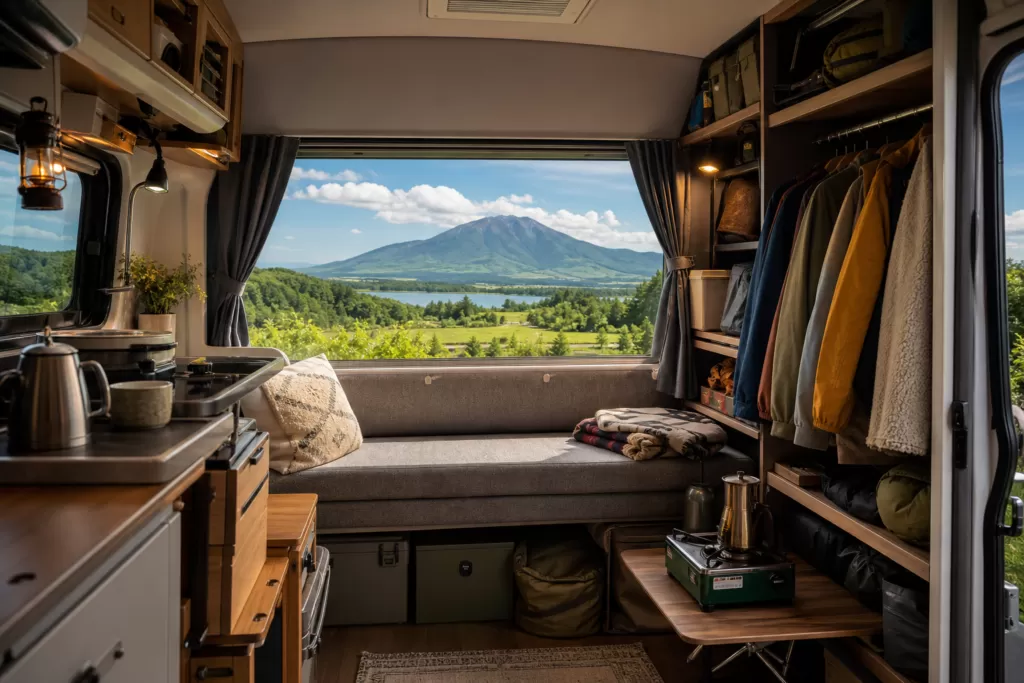
“I have no idea what to pack” is one of the most common things people say before a campervan rental trip. Campervans come with cooking equipment, bedding, and power, but the small items that make or break day-to-day comfort are easy to forget. Hokkaido is particularly different from mainland Japan — cold mornings and evenings even in summer, plenty of insects in mountain areas, and stretches of wilderness in eastern and northern Hokkaido where a convenience store might be 40 kilometres away.
This guide covers what to pack for a Hokkaido campervan trip, sorted by category. Use it as a checklist before you leave.
First: what your rental vehicle comes with
Before deciding what to bring, it helps to know what the rental campervan already has. This varies by operator and vehicle type, so always confirm at booking. The following is a general guide to what is typically included.
- Bedding (duvet, blanket, pillow)
- Cooking equipment (saucepan, frying pan, knife, chopping board)
- Crockery and cutlery (for the number of passengers)
- Refrigerator (small, approx. 20–50 L)
- Microwave (may not be included depending on vehicle type)
- Sub-battery and inverter
- FF heater (cold-weather vehicles or as an option)
Assuming the above is in place, the list below covers what you need to bring yourself. For additional option costs, see Extra Costs & Options.
New Chitose Airport / Tokachi-Obihiro Airport
Rent the Cabcon “Cresson Journey”
Base yourself at New Chitose Airport and compare rates, vehicle types, and pickup locations all in one place.
See details at Moving Inn →Essential checklist
Documents & ID
- □ Driving licence (all drivers, check expiry)
- □ Booking confirmation / rental agreement (printed or saved on phone)
- □ Credit card (for deposit and any additional charges)
- □ Travel insurance documents (optional)
- □ Emergency contact list (operator, JAF breakdown service, family)
Toiletries & hygiene
- □ Towels (bath and face towels, 1–2 per person)
- □ Shampoo, body wash, toothbrush, toothpaste
- □ Hair dryer (if not provided in the vehicle)
- □ Toilet paper (1–2 spare rolls)
- □ Wet wipes / antibacterial sheets (bring more than you think you need)
- □ Laundry bag and mesh laundry bag
- □ Medication (regular prescription, motion sickness tablets, plasters, paracetamol)
- □ Sunscreen (summer to autumn)
Food & cooking
- □ Basic condiments (salt, soy sauce, oil, miso, sugar)
- □ Coffee, tea, instant soup, drinks
- □ Tinned food, dried noodles, retort meals (emergency food for remote areas)
- □ Bin bags (large and small, 15–20 of each)
- □ Kitchen paper, cling film, foil
- □ Sponge, washing-up liquid
- □ Zip-lock bags (food storage, liquid spill prevention)
Clothing
- □ Changes of clothes (for the number of days, plus 2–3 spare; plan 1–2 laundromat visits per week)
- □ Cold-weather layer (fleece, down jacket — necessary regardless of season)
- □ Rain gear (rain jacket, folding umbrella)
- □ Hat and gloves (spring, autumn, winter)
- □ Good walking shoes or trail runners
- □ Sandals (for moving around campsites and RV parks)
- □ Slippers (for inside the van)
Electronics & power
- □ Phone charger and cable
- □ Portable battery (large capacity, 20,000 mAh+ recommended)
- □ Car USB charger
- □ Camera, spare battery, memory cards
- □ Portable power bank (one that can charge from the sub-battery is useful)
Hokkaido-specific essentials
Hokkaido has conditions that simply do not exist in mainland Japan. The following are must-haves specifically for Hokkaido travel.
Bear bell & bear spray
Hokkaido is brown bear (Higuma) territory. From May to October, there is a real risk of encountering bears in mountain areas, wilderness, and near rivers. Always carry a bear bell when hiking or walking on trails. Bear spray (capsaicin type) is carried by some who venture into serious wilderness areas. The areas around Shiretoko, Daisetsuzan, and Hidaka deserve particular attention.
Insect repellent (summer to autumn)
Horseflies and blackflies are widespread in Hokkaido in summer (June to August), especially near wetlands and rivers. Bring DEET-based repellent and bring plenty of it. Insects ease off from September, but in mountain areas can persist into early October.
Offline maps downloaded in advance
Mobile signal drops out in mountain areas, farmland, and wilderness in eastern and northern Hokkaido. Download Google Maps or Yahoo Car Navigation offline maps before you leave. A paper road atlas of Hokkaido is also a reassuring backup.
Sunshade / blackout curtains
In Hokkaido’s summer, daylight starts before 4 a.m. If the van’s built-in shades or curtains are not sufficient, you will wake up very early. Bring extra sun shades or blackout curtains, or ask your operator if the vehicle has adequate coverage.
Plan your laundromat stops in advance
On trips of 5 nights or longer, you will need to do laundry. Laundromats exist near many roadside stations and hot spring facilities in Hokkaido, but they are sparse in remote areas and eastern Hokkaido. Identify laundromat locations along your route before you leave.
Seasonal extras
Summer (June–August)
- □ Insect repellent (plenty — horseflies and blackflies)
- □ Sunscreen, sunglasses, hat
- □ Heatstroke prevention (sports drink, salt tablets, oral rehydration solution)
- □ Swimwear (lake, river, or campsite pool)
- □ Cool box (for carrying fresh produce from farm shops)
- □ USB desk fan (ventilation inside the van)
Spring & Autumn (April–June, September–October)
- □ Windproof, waterproof outer layer
- □ Thick socks
- □ Gloves and neck warmer (cold mornings and evenings)
- □ Disposable hand warmers (5–10)
- □ Waterproof trousers (for hiking in rain)
Winter (November–March)
- □ Thermal base layers (top and bottom)
- □ Heavy down jacket (rated to around -15°C as a guide)
- □ Snow boots (waterproof, insulated)
- □ Kerosene (for FF heater top-up — confirm refill procedure with operator)
- □ Snow brush and ice scraper
- □ Anti-slip boot soles (for ice)
- □ Hand warmers (bring lots)
- □ Goggles and windproof face mask (for blizzard conditions)
Organising the van interior
Campervans have limited storage. Getting organised — and staying that way — has a real impact on how comfortable the trip feels.
Compression bags for clothing
Compression bags can reduce clothes volume by a third to a half. Cold-weather layers in particular take up space — 3–5 compression bags make a real difference on a Hokkaido trip.
Assign storage by frequency of use
Things you use every day (toiletries, chargers, condiments) go somewhere accessible. Things you rarely use (spare bedding, tools) go in the back. Under-floor storage is hard to reach — use it for emergency supplies and spare clothes, not daily items.
Deal with rubbish every day
Leaving rubbish in the van causes smell and attracts insects. Use the bins at roadside stations, convenience stores, or campsites every day — do not let it accumulate. Many sites require separated recycling, so keeping a few small bags for different types of waste saves time.
Forgotten items & useful extras
- Folding chair & table: Makes outdoor breaks much more enjoyable (if not included with the vehicle)
- Lantern & head torch: Essential at dark campsites and for power outages
- Portable Bluetooth speaker: Background music in the van
- Spice kit: Elevates BBQ and camp cooking with minimal effort
- Spare batteries: Remotes, lanterns, bear bells all need them
- Plastic bags in various sizes: Food storage, wet items, rubbish sorting — you go through these constantly
- Extension cord: Useful at powered pitches for running multiple devices
- Tow rope: For recovery in snow or off-road situations
Things not to bring / things to be careful about
- Fireworks: Often prohibited at campsites and roadside stations — check in advance
- Pets: Do not bring a pet in a non-pet-friendly rental vehicle (confirm pet-OK vehicles at booking)
- LPG gas canisters: Ferry travel may have restrictions — check with the ferry company
- Large quantities of fresh waste: Check disposal options before buying more perishable food than you can deal with
For traveling with a pet by campervan, see the Hokkaido Pet-Friendly Campervan Rental Guide.
Keeping the interior organised on a long trip
By the second half of a trip, the tidy interior you started with tends to drift. Building good organisation habits from the first day makes the whole trip more comfortable.
Making the most of limited space
Campervan storage usually comes in four zones: shelves, under-floor, under the dinette, and door pockets. Give each zone a role and you will always know where to look.
- High shelves: Light items (clothes, towels, hats). Never put heavy things up high — they fall when the van is moving.
- Under-floor storage: Heavy or infrequently used items (tools, spare bedding, emergency food). Avoid putting daily items here — it is awkward to access.
- Under the dinette: Medium-frequency items. A box with condiments and spare cooking utensils works well here.
- Door pockets: Maps, bin bags, wet wipes, charging cables — things you reach for constantly.
Cheap divider storage boxes from 100-yen shops work well for shelf organisation. Label boxes by function (cooking, hygiene, electronics) so you can find things quickly. S-hooks, tension rods, and magnetic hooks can make good use of wall space too.
Managing food storage and expiry
On a Hokkaido trip there is a strong temptation to stock up heavily at roadside stations, farm shops, and markets. But the campervan fridge is small — once it is full, things get complicated.
- Plan to use fresh ingredients on the day you buy them
- Base your stores on ambient-temperature items (potatoes, onions, dried pasta, tins) and only buy 1–2 days worth of refrigerated items at a time
- Set the fridge to 3–5°C; in the height of summer, run it cooler if you have the power to spare
- Write dates on zip-lock bags to track what needs to be used first
- Plan dinner or breakfast menus in advance to use up anything that needs finishing
In peak summer (July–August), fresh ingredients spoil faster. Seafood (fish, ikura salmon roe, shellfish) should be eaten the same day you buy it, or shipped home frozen.
Keeping the sleeping area tidy
Good sleep drives good days. Five minutes of tidying the bed area before you sleep is worth it.
- If converting the dinette to a bed each night feels like a chore, simply leave it in bed mode for the whole trip
- Keep your bedside items in a dedicated spot: phone, charging cable, head torch, medication
- Pack sleeping bags and blankets in compression bags under the seat during the day to free up space
- Hang tomorrow’s cold-weather layer on an S-hook so you can reach it the moment you wake up
New Chitose Airport / Tokachi-Obihiro Airport
Rent the Cabcon “Cresson Journey”
Base yourself at New Chitose Airport and compare rates, vehicle types, and pickup locations all in one place.
See details at Moving Inn →Cooking equipment for classic Hokkaido camp meals
One of the genuine pleasures of campervan travel is cooking fresh, locally sourced ingredients. Hokkaido is stocked with potatoes, onions, corn, salmon, and scallops — all cheap when bought at the source. A few extra pieces of kit beyond what the rental vehicle supplies can significantly broaden what you can cook.
Skillet, camp pot, and gas canisters
- Cast iron skillet: Retains heat brilliantly for pan-frying buttered potatoes, scallops in soy butter, and steak — all Hokkaido classics. Works on the cassette gas burner. Minimal washing up and goes straight to the table.
- Camp pot / cooker: If you want to cook fresh rice, a compact pot that works on a cassette burner is handy. Good rice from Asahikawa, Iwamizawa, or the Sorachi area can be bought at farm stalls.
- Cassette gas canisters (CB type): Bring 3–5 extra canisters. Available at Hokkaido roadside stations and convenience stores, but stocks thin out in remote areas. In winter, CB gas underperforms in the cold — OD (outdoor type) canisters are better suited to sub-zero conditions.
Where to buy ingredients (roadside stations and farm co-ops)
Hokkaido has 128 roadside stations (as of September 2026), most with farm produce stalls. Agricultural co-op shops and direct-sale markets are also found throughout the island, selling fresher, cheaper local ingredients than supermarkets.
- Obihiro / Tokachi area: Potatoes (Danshaku, Meiclean), corn, wheat, dairy. The co-op stalls near Michi-no-Eki Ashoro and Shihoro Highland Nupka no Sato are worth knowing about.
- Nemuro / Akkeshi area: Autumn saury, autumn salmon, oysters. Buying direct from fishery co-ops can be half the supermarket price.
- Furano / Biei area: Corn and asparagus in summer, pumpkin, carrot, and daikon in autumn. Unmanned farm stalls appear along the roadside.
- Wakkanai / Soya area: Scallops are the local specialty. Frozen scallops at Wakkanai’s Fukukou Market can be picked up cheaply and pan-fried in a skillet for an outstanding quick meal.
The rule at roadside stations is to buy the local seasonal produce. If a vegetable is cheap and comes in large quantities, be realistic — for a group of 2–3 you might not eat it all. Buy bigger portions early in the trip and switch to smaller top-up purchases from convenience stores and town supermarkets in the second half.
FAQ
Q1: Does a rental campervan have a fridge?
Most rental campervans include a small fridge, typically 20–50 L. With all the produce buying that happens on a Hokkaido trip, capacity can feel tight. A cool box as a supplement is worth considering. Confirm details with your operator at booking.
Q2: How do I handle laundry?
Laundromats are the standard option. Many are near roadside stations and hot spring facilities in Hokkaido. For 5+ night trips, plan on 1–2 visits. Compression bags and extra changes of clothes help stretch the time between washes.
Q3: Can I navigate Hokkaido using just a phone?
Main roads are fine with Google Maps or Yahoo Car Navigation. But signal drops in mountain areas, farmland, and wilderness in eastern and northern Hokkaido. Download offline maps before you leave. A printed Hokkaido road atlas is good peace of mind.
Q4: What do people most commonly forget to pack?
Based on frequent feedback: disposable hand warmers and gloves, bear bell, offline maps (forgotten to download), and spare bin bags. The bear bell in particular is needed the moment you step onto any trail or mountain path — available at outdoor shops in the city, but easier to bring from home.
Q5: What extras are needed for traveling with children?
Child seat (confirm whether the vehicle includes one), children’s cold-weather clothing and rain gear, child-safe insect repellent, toys or books (for long drives), and extra changes of clothes. More detail is in a separate article on family campervan travel.
Book a Campervan in Hokkaido
Moving Inn New Chitose Airport supports English booking and offers airport transfers.
![When and Where Can You See Harbor Seals at Cape Erimo? Kaze no Yakata Official Information, Viewing Season, and Windy-Day Notes [2026-27]](https://hokkaido-campingcar.jp/wp-content/uploads/2026/10/erimo-cape-lighthouse-768x511.jpg.webp)
![Where and Under What Conditions Can You See Diamond Dust in Hokkaido? How Cold a Morning It Takes, and Where It Appears [2026-27]](https://hokkaido-campingcar.jp/wp-content/uploads/2026/10/hokkaido-diamond-dust-nayoro-768x512.jpg.webp)
![Can You Drive to Hokkaido Jingu for Hatsumode? Parking, Crowds, and Where to Park and Walk [2027]](https://hokkaido-campingcar.jp/wp-content/uploads/2026/10/hokkaido-jingu-winter-torii-768x504.jpg.webp)
![Hokkaido Roads Over New Year [2026-27] | Expressway Sections Prone to Blizzard Closures, Forecast Congestion Days, No Holiday Discount, and New Chitose Airport Parking](https://hokkaido-campingcar.jp/wp-content/uploads/2026/10/hokkaido-winter-rural-road-edge-markers-768x432.jpg.webp)
![Where to See Sea Smoke (Kearashi) in Hokkaido: Rumoi’s Ogon-misaki and the Morning Conditions [2026-27]](https://hokkaido-campingcar.jp/wp-content/uploads/2026/10/rumoi-kearashi-sea-smoke-768x511.jpg.webp)
![Geminid Meteor Shower 2026 in Hokkaido: Peak Around 23:00 on December 14, Sapporo Moonset 20:40, and Staying Warm in a Winter Campervan [2026]](https://hokkaido-campingcar.jp/wp-content/uploads/2026/10/geminids-2026-hokkaido-768x575.jpg.webp)