The Complete Kei Campervan Guide [2026] | Types, Prices, Running Costs & Trying One in Hokkaido
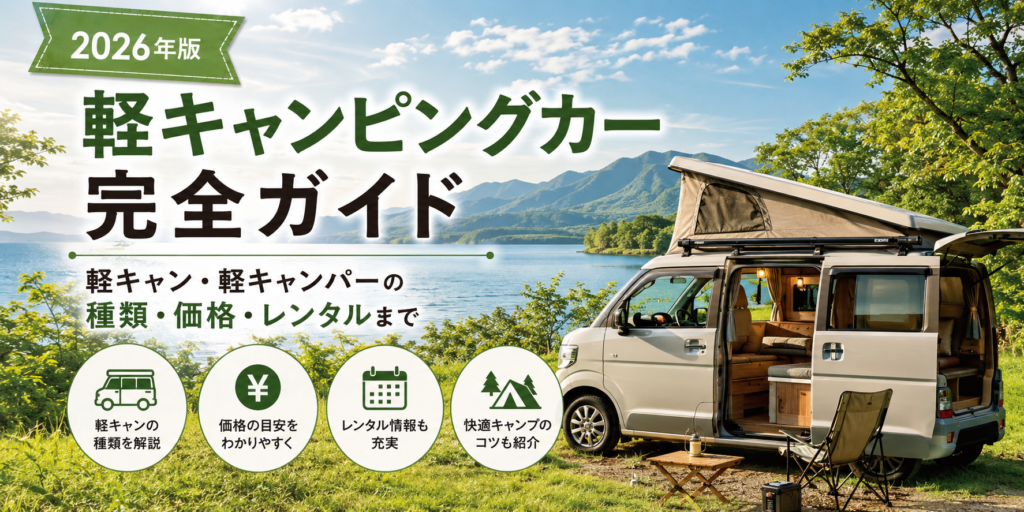
A kei campervan (kei-camper) is a camping vehicle built on a Japanese kei-class microvan or truck. New models start at 2–4 million yen — far below full-size campervans — running costs stay at kei-car level, and a standard driver’s license is all you need. This guide covers the types, price ranges, running costs, pros and cons of kei campervans, plus a smart option many buyers overlook: renting one in Hokkaido to try before you buy.
Prices listed reflect 2026 market ranges confirmed across multiple sources. Actual figures vary by model and grade, so always check official dealer or rental company information before committing.
What Is a Kei Campervan?
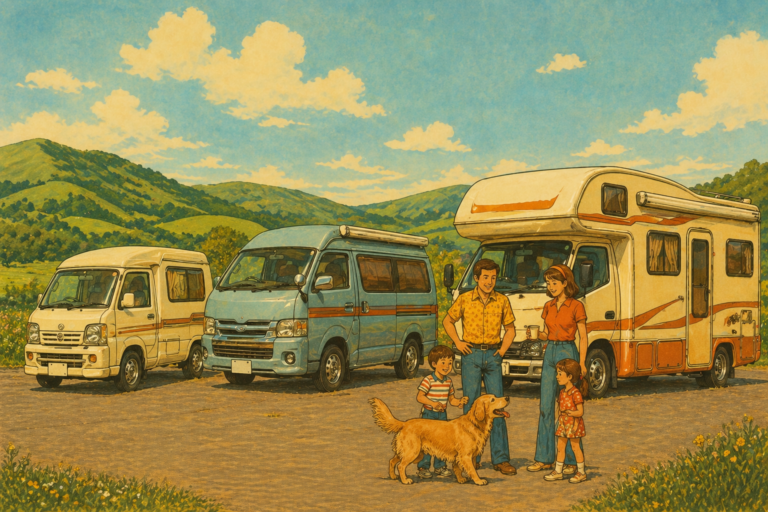
A kei campervan is a camping conversion built on a kei-class vehicle — Japan’s smallest highway-legal category, capped at 3.4 m in length and 1.48 m in width. Because the vehicle stays within kei regulations, taxes, insurance, and highway tolls are all charged at kei-car rates. That is the single biggest difference from HiAce-based van conversions and truck-based cab conversions.
Kei campervans have grown rapidly over the past decade as the entry point for people who found full-size campervans too big or too expensive. Surveys by the Japan RV Association show camping vehicle ownership continuing to rise, with kei campers as a popular first step.
The Three Types: Kei Van Conversion, Kei Cab Conversion, and Truck Camper
| Type | Base vehicle | Characteristics | Best for |
|---|---|---|---|
| Kei van conversion | Suzuki Every, Daihatsu Atrai, Honda N-VAN | Interior of a kei van refitted for sleeping; looks like a normal van outside, easy to use daily | Daily-use owners, solo or couple travel |
| Kei cab conversion | Suzuki Carry, Daihatsu Hijet Truck | Living shell mounted on a kei truck chassis; enough headroom to stand and change clothes | Comfort-focused travelers, multi-night trips |
| Kei truck camper | Shell loaded on a kei truck bed | Shell can be removed to return the truck to normal work duty | People sharing the truck with farm or site work |
Popular base vehicles include the Suzuki Every, Daihatsu Atrai, and Honda N-VAN for van conversions, and the Suzuki Carry and Daihatsu Hijet Truck for cab conversions and truck campers.
Price Range: New 2–4 Million Yen, Used 1–2.5 Million Yen
| Category | Price range | Notes |
|---|---|---|
| New | 2–4 million yen | Fully equipped models with rich electrical systems trend toward 4 million |
| Used | 1–2.5 million yen | Low-mileage units in good condition are widely available |
Compare that with 7–10+ million yen for a new cab conversion or 5–8 million yen for a HiAce-based van conversion, and the affordability stands out. Recent models increasingly ship with air conditioners and lithium-ion batteries as standard, so the old image of “cheap but bare-bones” is fading — along with prices climbing toward 4 million yen for fully loaded versions.
For the full price landscape across vehicle types, see our campervan price guide.
Running Costs: Roughly 200,000–300,000 Yen per Year
Kei campervans are cheap to keep because taxes, insurance, and highway tolls are all calculated at kei-car rates. Annual vehicle tax runs from a few thousand to just over ten thousand yen, varying with whether the vehicle is registered as a camping car (8-number plate) or kept as a standard kei van registration. Even with inspections, insurance, and tires included, the total stays well below full-size campervan levels.
Our running cost breakdown walks through each item with saving tips — worth a read before any purchase decision.
Five Advantages of Kei Campervans
1. Low purchase price and running costs
New models start in the 2-million-yen range, and every recurring cost is charged at kei-car rates. No other campervan class costs less to own.
2. Easy to drive
The body is the same size as an ordinary kei car, so it drives like one. Narrow mountain roads and city streets pose no stress — a major reason first-time campervan users start here.
3. Parking is never a problem
It fits in any standard parking space at convenience stores, roadside stations, and tourist sites. Large campervans require advance research on where to park; a kei campervan removes that chore entirely, and it fits in a home parking space too.
4. Doubles as a daily driver
Van conversions in particular look like normal kei vans outside, so they work for commuting and shopping. One vehicle covers both daily life and travel — a benefit unique to this class.
5. A standard license is enough
It is a kei car, so an ordinary driver’s license covers it. For how licenses map to campervan classes in Japan, see the license guide.
Three Drawbacks and How to Handle Them
1. The interior is small
Kei regulations cap the living space, and two adults sleeping is the realistic limit — a family of four cannot overnight in one. Workarounds include packing ruthlessly light, moving cargo to a roof carrier or external storage, and combining the vehicle with campsite pitches on longer trips.
2. Equipment stays minimal
Showers, toilets, and large refrigerators rarely fit in a kei campervan. The travel style assumes day-use hot springs and roadside stations — and Hokkaido, rich in both, is one of the easiest places in Japan to live with this limitation.
3. Underpowered on long hauls
With a 660 cc engine, maintaining speed on highway climbs or into headwinds can be a struggle. Choosing a turbocharged grade and keeping daily driving under 300 km makes a noticeable difference.
Kei Campervan vs. Van Conversion vs. Cab Conversion
| Item | Kei campervan | Van conversion | Cab conversion |
|---|---|---|---|
| New price | 2–4M yen | 5–8M yen | 7–10M+ yen |
| Sleeps | 1–2 | 2–4 | 4–6 |
| Ease of driving | ◎ Same as a kei car | ○ Like a minivan | △ Width and height take practice |
| Running costs | ◎ Kei-car rates | ○ | △ |
| Living comfort | △ | ○ | ◎ |
| Daily use | ◎ | ○ | △ |
For a deeper comparison of the larger classes, see cab conversion vs. van conversion. As a rule of thumb: solo or couple on a budget → kei campervan; family of four → cab conversion.
Popular Base Vehicles and How to Choose
Suzuki Every — the van conversion standard
The Every is the most common base for kei van conversions. Its tall, boxy cargo area gives the best bed-mode livability in its class, and turbocharged grades like the JOIN Turbo take most of the sting out of highway driving. Rental fleets in Hokkaido rely on Every-based sleepers as a staple.
Daihatsu Atrai and Hijet — the widest conversion lineup
The Atrai (van) and Hijet Truck are Daihatsu’s two pillars. The Hijet Truck is the go-to base for kei cab conversions and truck campers, some of which offer enough headroom to stand and change. If you want to spend time in the vehicle rather than just sleep, look at cab conversion types.
Honda N-VAN — pillar-less flexibility
The N-VAN’s pillar-less passenger side opens into one huge aperture, giving unmatched freedom for cargo and interior layout. It is popular as a DIY base, and both Honda and converters offer sleeping packages. If daily usability is your top priority, the N-VAN family deserves a look.
The two decision axes are simple: van conversion types for sleeping, cab conversion types for living — and in a long-distance region like Hokkaido, a turbo engine matters more than any interior option.
Buy or Rent? It Comes Down to Trips per Year
| Item | Buy (assuming a 3M-yen new vehicle) | Rent (assuming 13,000 yen/night) |
|---|---|---|
| Upfront cost | ~3M yen + fees | 0 yen |
| Annual fixed costs | ~200,000–300,000 yen | 0 yen |
| One 2-night trip | Fuel and tolls only | ~26,000 yen + fuel and tolls |
| 10-year outlook | 5M+ yen incl. upkeep (partly recovered at resale) | 3 trips/year × 10 years ≈ 780,000 yen |
At around three trips a year, renting wins decisively; if you will use it monthly or as a daily driver, buying makes sense. If you are unsure, rent first and count your actual trips over a year — that order protects you from the most expensive mistake.
Why Renting Before Buying Is the Smart Move
Kei campervans are a class where post-purchase regret is common — “smaller than expected,” “couldn’t fit our gear for two.” Before spending millions of yen, spend one or two nights in a rental. Check three things:
- Bed size and comfort: is it long enough for your height, and is the mattress acceptable?
- Cargo capacity: does your usual travel gear actually fit?
- Driving performance: any stress on highways and climbs?
Rentals start from the low 10,000s of yen per night. Less than one percent of the purchase budget to find out whether the class fits you — cheap insurance.
Renting a Kei Campervan in Hokkaido
Hokkaido suits kei campervan rental unusually well: wide roads, light traffic, and roadside stations, day-use hot springs, and campsites across the entire island, which neutralizes the “minimal equipment” weakness.
Rental companies around Sapporo, New Chitose Airport, and Hakodate offer kei campervans from roughly 11,000–14,300 yen per 24 hours: Chiki Chiki Camping Car Rental in Eniwa (from 11,000 yen, JR Eniwa Station pickup), GOODLUCK Camping Car Rental in Chitose (from 14,300 yen, free New Chitose Airport shuttle), and adoVAN’S in Hakodate (from 14,300 yen), among others.
Departure-point comparisons and model routes are covered in our Hokkaido kei campervan rental guide.
Compare Hokkaido Campervan Rentals
Compare prices, vehicle types, and pickup locations from New Chitose Airport.
Compare rental companies & prices →Who a Kei Campervan Suits
- Solo travelers and couples: the two-sleeper limit never bites, and you get the full benefit of the compact size
- One-vehicle households: a van conversion covers commuting, shopping, and overnight trips in a single car
- Campervan beginners: minimal driving anxiety, minimal price barrier — starting with a kei camper is the classic route in
- Cost-conscious owners: kei-rate taxes, insurance, and tolls compound the longer you own it
Conversely, for four-person family overnights, midsummer multi-night trips needing air conditioning, or covering long distances fast, a van conversion or larger will leave you happier.
Common Regrets and How to Avoid Them
“Two people’s gear wouldn’t fit”
In many models the cargo space disappears once the bed is deployed. Avoid the trap by loading your actual travel gear into a rental before buying — catalog numbers never show you the margin left over when you are living in the vehicle.
“Too hot to sleep in summer”
Weak insulation and ventilation make summer nights exhausting. A ventilation fan, insect screens, and a circulator are the minimum; if you run hot, look at models with built-in air conditioning — several converters offer them as of 2026.
“Couldn’t keep up on highway climbs”
A non-turbo engine hauling a heavy conversion can make the climbing lane your permanent home. If long drives are in your plans, turbo is the only sensible choice — and always test on an actual highway during your rental or test drive.
“We barely use it”
The most common and most expensive regret. If you travel only a few times a year, renting beats owning on pure economics. Use the cost comparison above, rent for a year, count your trips, then decide.
Equipment Checklist: Seven Items to Verify
- Bed size: 180 cm or longer? How many minutes to convert to full-flat?
- FF heater: engine-off heating, effectively mandatory for Hokkaido winters — see the FF heater guide
- Sub-battery / portable power: does it charge while driving, and what capacity? This sets your phone, lighting, and electric blanket runtime
- Ventilation fan and screens: summer comfort is decided almost entirely by airflow
- Insulation: ceiling and wall insulation directly affect condensation and winter cold
- Storage layout: is there anywhere to put gear with the bed deployed?
- Turbo: the biggest felt difference in a long-distance region like Hokkaido
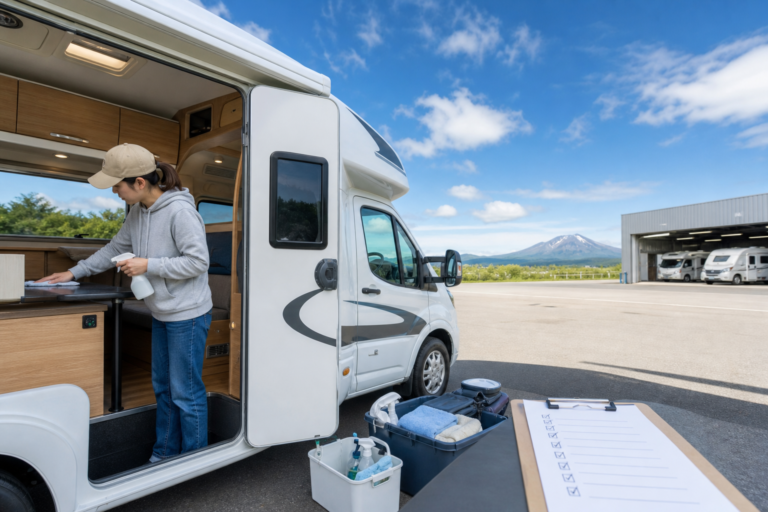
Run through this list before reserving a rental too — it prevents the “arrived and the equipment wasn’t enough” failure. For getting the most out of onboard equipment, see the fridge, bed, and storage guide.
A One-Night Hokkaido Trial Route
To make “try before you buy” concrete, here is a one-night, two-day model route from New Chitose Airport that shows off the agility of a kei campervan.
Day 1: pick up the vehicle near New Chitose Airport at noon → lunch overlooking Lake Shikotsu → drive south toward Tomakomai and soak at Kojohama Onsen → overnight at a roadside station or nearby campsite. Under 100 km of driving leaves plenty of slack for a first car-camping night.
Day 2: morning walk along the lake or coast → birdwatching at Lake Utonai → shopping in Chitose and return the vehicle by early afternoon. This itinerary checks the bed, the storage, and the driving feel in one loop.
Longer two-night routes and Sapporo/Hakodate departures are covered in the Hokkaido kei campervan rental comparison.
Frequently Asked Questions (FAQ)
Can a family of four sleep in a kei campervan?
Most models sleep two, so four-person overnights are not realistic. Travel four-up and sleep in a tent at a campsite, or choose a van conversion or cab conversion for family trips.
How much does a new kei campervan cost?
The 2026 market range is 2–4 million yen new, with fully equipped models around 4 million. Used units run 1–2.5 million yen.
What are the annual running costs?
Roughly 200,000–300,000 yen a year including taxes, insurance, inspections, and consumables, varying with registration type and storage. Details in the running cost guide.
Can I travel Hokkaido in winter in a kei campervan?
Yes, if the vehicle has an FF heater. Insulation is weaker than in larger campervans, so plan around powered campsites and RV parks in midwinter. For rentals, confirm winter availability, studless tires, and heater equipment before booking.
How many nights should a pre-purchase rental trial be?
Two nights. One night only shows you the novelty; the inconveniences you notice on the second morning — condensation, storage, sleep quality — are what you will live with after buying.
Try a Kei Campervan in Hokkaido First
The kei campervan’s strengths are clear — affordable, easy to drive, usable every day — and so are its weaknesses: tight space and modest power. If you are considering a purchase, the reliable path is to spend a night or two in one first. In Hokkaido you can rent a kei campervan from 11,000 yen per night, with the roadside stations, hot springs, and scenic routes that make the trial genuinely enjoyable.
Compare Hokkaido Campervan Rentals
Compare prices, vehicle types, and pickup locations from New Chitose Airport.
Compare rental companies & prices →