Hokkaido Campervan Trip Hot Spring Guide | Day-Trip Baths, Free Hot Springs & Onsen Towns for Overnights [2026 Edition]
Area-by-area guide to hot springs for Hokkaido campervan trips. Covers free outdoor baths, onsen near roadside stations, and the best hot spring towns for campervan overnights.
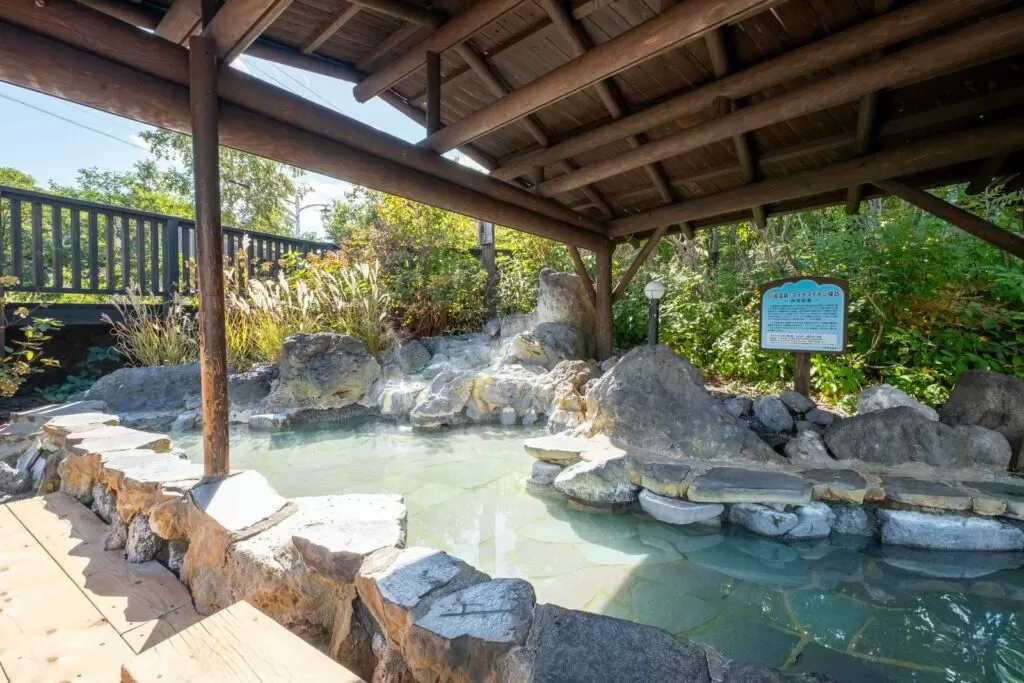
Hokkaido has over 500 hot spring facilities, and they pair perfectly with campervan travel. Being able to soak in a different hot spring every day while traveling through the island is one of the unique pleasures of a campervan trip, and day-trip entry fees are generally affordable at ¥400–¥900.
You can rent a campervan for this trip.
- Guide price (Moving Inn, New Chitose Airport, per night, tax included): HIACE van conversion from ¥22,000, Cresson Journey cab-over camper from ¥30,800. 20–30% off when booked 60–90 days ahead (official rate table, checked 15 Oct 2026)
This guide covers area-by-area recommended hot springs, free wild baths (yayu), RV park–adjacent facilities, spring types and their properties, and tips for families with children—all the information you need to plan bathing into your Hokkaido campervan itinerary.
For cost simulations, model routes, and Michi-no-Eki overnight parking rules — the fuller picture of Hokkaido campervan travel — see our Complete Guide to Hokkaido Campervan Travel.
New Chitose Airport / Tokachi-Obihiro Airport
Rent the Cabcon “Cresson Journey”
Base yourself at New Chitose Airport and compare rates, vehicle types, and pickup locations all in one place.
See details at Moving Inn →Why Hot Springs Work So Well with Campervan Travel
Campervans have shower facilities, but the water tank capacity makes daily showers impractical. Using hot spring facilities along the route is a far more efficient way to handle bathing and laundry.
- Typical day-trip entry fee: ¥400–¥900 (varies by facility)
- Shampoo & body soap provided: common at larger facilities (confirm in advance)
- Opening hours: generally 10:00–22:00; watch for last-entry times
- Parking: almost all hot spring facilities have free large-vehicle parking
Warming up in the hot spring, then returning to the van and going straight to bed is the comfortable campervan travel pattern. RV parks adjacent to hot springs let you walk straight from your vehicle to the bath, with no evening driving needed.
Most hot spring facilities have coin-operated washers and dryers. Getting laundry done while soaking wastes no time. Large day-trip hot spring complexes often include a restaurant, nap space, and massage, functioning as a half-day base.
Area-by-Area Recommended Hot Springs (Day-Trip Bathing)
Central Hokkaido: Jozankei, Noboribetsu, Niseko
| Facility | Spring Type | Day-Trip Fee | Notes |
|---|---|---|---|
| Jozankei Onsen (Hoheikyo Onsen) | Sodium bicarbonate spring | ¥900 | Wide outdoor bath, about 1 hr from Sapporo. Easy large-vehicle parking. |
| Noboribetsu Onsen (Daiichi Takimotokan) | Sulfur, salt & 9 other types | ¥1,500+ | One of Japan’s most varied spring types. Combine with Jigokudani sightseeing. |
| Noboribetsu Grand Hotel | Sulfate spring | ¥1,000 | Long day-trip hours; often accessible 14:00–21:00. |
| Niseko Konbu Onsen (Koikawa Onsen Ryokan) | Weakly alkaline simple spring | ¥600 | Secluded Niseko-area bath. Faint sulfur scent, rustic atmosphere. |
Noboribetsu is known as the “king of hot springs” for its unrivaled variety of spring types—one visit lets you experience multiple types. There is also a large supermarket and home center nearby, making it a convenient supply stop.
Eastern Hokkaido: Kawayu, Kussharo, Mashu, Akan
| Facility | Spring Type | Day-Trip Fee | Notes |
|---|---|---|---|
| Kawayu Onsen (Misono Hotel) | Strongly acidic sulfur spring | ¥600 | pH 1.8. High sterilizing power; caution for sensitive skin. |
| Kussharo Lake Kotan Onsen | Alkaline simple spring | Free | Outdoor bath on the lakeshore. Swimwear recommended. |
| Sunayu (Kussharo Lake) | Simple spring | Free | Dig the lakeshore and hot spring water wells up—a quirky spot. Good as a foot bath too. |
| Mashu Onsen (Teshikaga Town Public Bath “Mashu-no-Yu”) | Bicarbonate spring | ¥450 | Public bath frequented by locals. Simple and inexpensive. |
| Lake Akan Onsen (Marimo-yu) | Salt spring | ¥400 | Shared bath on the lake shore. Budget option in eastern Hokkaido. |
The Kussharo area has a concentration of free wild baths and is popular with campervan travelers. Sunayu’s parking lot accommodates large vehicles; you can soak and then relax on the lakeshore.
Northern Hokkaido: Near Wakkanai, Sounkyo, Around Asahikawa
| Facility | Spring Type | Day-Trip Fee | Notes |
|---|---|---|---|
| Domo (Wakkanai Onsen) | Sodium chloride spring | ¥500 | One of the northernmost hot spring facilities. Near Wakkanai Roadside Station. |
| Sounkyo Onsen (Kurodake-no-Yu) | Sodium bicarbonate spring | ¥700 | Gateway to Daisetsuzan. Good for post-hiking soaks. |
| Shumarinai Lakeside Onsen | Simple spring | ¥500 | Horokanai Town. Outdoor bath surrounded by quiet forest. Note: brown bear habitat. |
| Asahikawa (Palace Hotel Asahikawa) | Weakly saline spring | ¥800 | In Asahikawa city. Easy to combine with Asahiyama Zoo. |
Travelers heading up to Wakkanai and Cape Soya often use “Domo” as a base. A popular route is to drive north to the cape, wash off fatigue in the hot spring, then head south the next day.
Southern Hokkaido: Hakodate, Onuma, Oshamanbe
| Facility | Spring Type | Day-Trip Fee | Notes |
|---|---|---|---|
| Yunokawa Onsen (Yunomoto Bokutei-tei) | Sodium chloride spring | ¥1,000 | Inside Hakodate city. Convenient for end-of-trip wrap-up, close to Hakodate Airport. |
| Onuma Prince Hotel Onsen | Simple spring | ¥800 | Outdoor bath overlooking Onuma Quasi-National Park. |
| Esan Onsen Ryokan | Strongly acidic sulfur spring | ¥400 | Among the cheapest in southern Hokkaido. Rustic local bath. |
| Oshamanbe Onsen (Hotel Shikokuya) | Salt bicarbonate spring | ¥600 | Along the Oshamanbe crab rice road. Combine dining and bathing. |
Yunokawa Onsen is a fully-fledged hot spring resort within Hakodate city. Its urban setting makes it easy to dine out and then return for a soak before sleeping.
Free & Budget Wild Baths (Yayu)
Scattered across Hokkaido are “yayu” wild baths that can be entered free or for a nominal donation. Some have no changing rooms or lighting and are mixed-gender, so check local information before visiting.
- Horoka Onsen (Kamishihoro Town): Free. Four different spring types from separate sources. Known as a hidden gem of the Tokachi area.
- Tokachigawa Onsen Foot Bath: Free. A foot bath using the famous beauty-spring “moor water.” Easy to stop by.
- Kussharo Lake Kotan Onsen: Free. Mixed outdoor bath on the lakeshore. Bring swimwear.
- Ikenohyu (Kussharo Lake): Free. Natural outdoor bath with spring water welling up from the lake bottom. Quiet in early morning.
- Kamuiwakka Hot Waterfall (Shiretoko): Free. A river that is itself a hot spring—a true hidden gem. Accessible in summer only. Rocks are slippery—watch your step.
- Miharashi Onsen (Kawayu): Free or voluntary donation. Small outdoor bath at the edge of the Kawayu hot spring district.
To find wild baths, web services like “Hokkaido Yayu Map” and asking staff at roadside stations are effective. Google Maps reviews often have up-to-date info. Some locations close seasonally or for maintenance, so call ahead to be sure.
Hot Spring–Adjacent RV Parks
Using a facility that combines an RV park and hot spring means you can bathe and go straight to bed. Shore power is also available, which helps with power management.
- RV Park Tokachigawa Onsen Spa Plaza (Otofuke Town): Adjacent to moor spring. Full hookups (power & water). Hot spring within walking distance.
- RV Park Shikaribikohan Onsen (Shikaoi Town): Highland spring at 800 m elevation. Quiet nights. Seasonal operation—check before visiting.
- RV Park Kitayuzawa Onsen (Date City): Adjacent to a secluded spring in Otaki district. Off-the-beaten-path in central Hokkaido.
- Niseko Hirafu-no-Yu RV Site (Niseko Town): Near Niseko Hirafu Ski Area. Available in summer too for hot springs and BBQ.
RV parks usually require advance reservations. During peak summer season (July–August), they fill up two to three weeks ahead—book as soon as your route is set.
Spring Types and How to Choose
Hokkaido’s hot springs offer a rich variety of spring types. Choosing one suited to your purpose elevates the quality of your trip.
| Spring Type | Main Benefits | Representative Area |
|---|---|---|
| Sulfur spring | Skin conditions, chronic dermatitis, skin beauty | Noboribetsu, Kawayu, Kamuiwakka |
| Carbonate spring (bicarbonate) | Skin beauty, neuralgia, joint pain | Jozankei, Sounkyo, Tokachigawa |
| Alkaline spring (simple alkaline) | Skin beauty, fatigue recovery | Kussharo, Onuma |
| Salt spring (sodium chloride) | Warming, cold sensitivity, fatigue recovery | Yunokawa, Wakkanai |
| Moor spring (plant-based organic) | Skin beauty, gynecological benefits | Tokachigawa (globally rare) |
| Strongly acidic sulfur spring | Sterilizing, athlete’s foot, atopic dermatitis | Kawayu, Esan |
Strongly acidic springs (Kawayu, Esan) are harsh on skin—avoid long soaks. Children and those with sensitive skin are better suited to alkaline or simple springs. After a strongly acidic spring, a light rinse in the shower is gentler on the skin than leaving it on.
Towels & Change of Clothes
For campervan travel, preparing to bathe daily from the start makes things comfortable.
- Bath towels: Bring 2–3 large ones. Facility rentals cost ¥100–¥200, so your own saves money.
- Face towels: One per person plus a few spares. Wet towels can be hung on the campervan’s exterior drying hooks.
- Change of underwear & clothes: Pre-pack each day’s set in a small bag for easy access inside the van.
- Shampoo, conditioner & body wash: Decant into small travel bottles in a pouch. Many facilities supply these, but bringing your own is recommended.
On days you plan to use a hot spring, aim to arrive at least one hour before last entry. Build the day’s driving plan around that timing.
Tips for Families with Children at Hot Springs
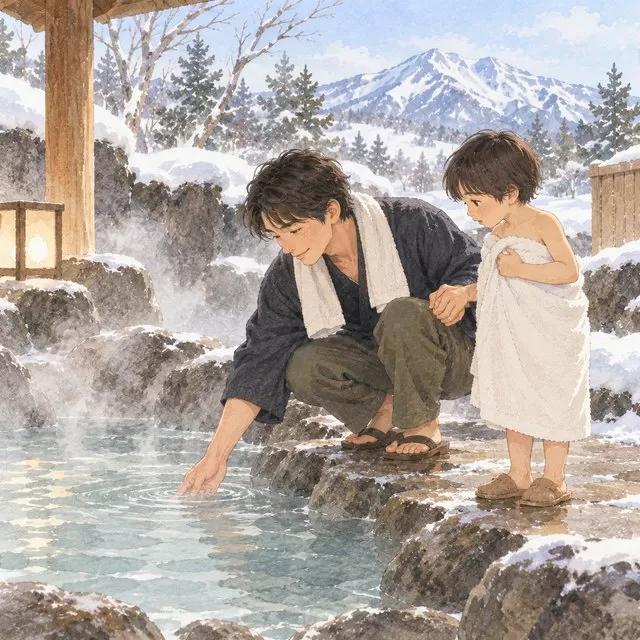
When traveling with children on a family campervan trip, check in advance whether the hot spring accepts children.
- Age restrictions: Some facilities require children under school age to be accompanied by a guardian or ban toddlers. Hotel/inn day trips tend to have more restrictions.
- Mixed-gender wild baths: Places like Kussharo Lake Kotan Onsen are mixed-gender and generally unsuitable for families with children.
- Showers & washing areas: Wild baths often have no washing area. If you need to wash first, use a nearby facility.
- Changing space: Small public baths may have limited changing areas—a lot of luggage makes it awkward.
- Water temperature: Many Hokkaido hot springs are on the hot side (42–44°C). Encourage children to get out after a short soak rather than lingering.
Large-scale day-trip hot spring complexes (spa-sento style) often have a kids’ corner, restaurant, and rest areas, making them family-friendly choices.
Time After the Hot Spring—in the Campervan
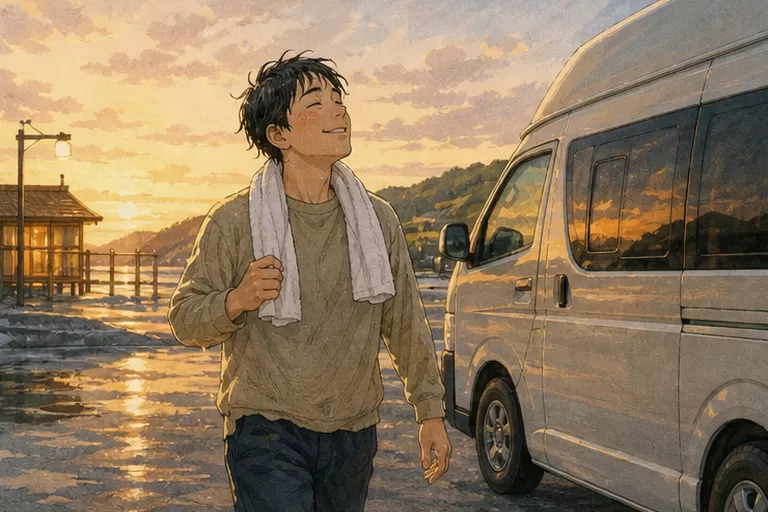
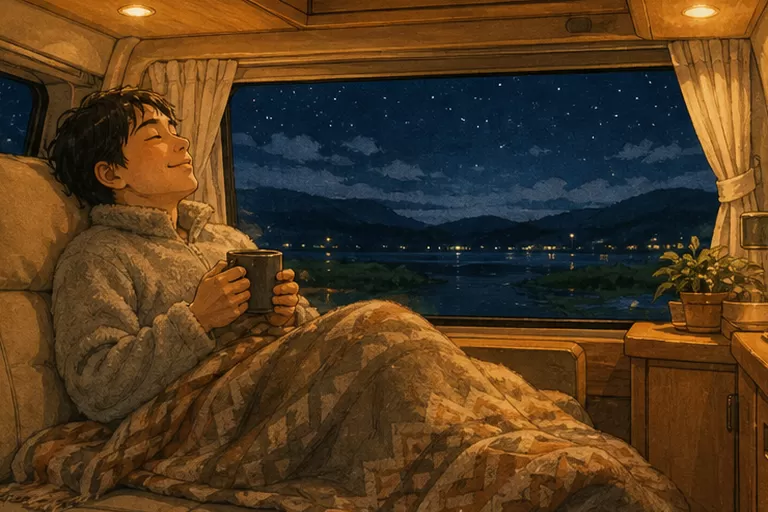
The time back in the campervan after a hot spring is one of the most pleasant parts of the trip. Warmed and relaxed, you can sink right into bed. The seamless flow of dining out, soaking, and sleeping is a feeling unique to campervan travel.
What to Do in the Van After a Soak
- Check the next day’s route: Leisurely decide where to go next—easy to do in a calm post-bath state.
- Light late-night snack: Nibble on ingredients from the roadside station. Pairs well with a drink.
- Dry laundry: Run the FF heater on low and air-dry laundry inside. In autumn, the outside is cold but the interior dries just fine.
- Reading or video: Watch something if you have signal; read if not. Listening to music and relaxing quietly is very Hokkaido.
Areas Where Hot Springs + Stargazing Combine
Hokkaido has many areas with high clear-sky rates, and there are places where you can stargaze right after a soak. Eastern and northern Hokkaido in particular have little light pollution, with nights when the Milky Way is clearly visible to the naked eye.
- Eastern Hokkaido (Nakashibetsu, Teshikaga, Notsuke): Little urban light; the sky opens wide above farm roads. A classic route after Kawayu or Lake Akan onsen is to move to a nearby clearing and look up.
- Northern Hokkaido (Otoineppu, Horokanai): Minimal light pollution in depopulated areas. Stargazing on the shore of Shumarinai Lake after the adjacent onsen is an experience unique to this area.
- Tokachi Plain: Vast farmland means the sky opens to the horizon. A short drive from the city after Tokachigawa Onsen reveals stunning starfields.
Onsen Towns Worth a Multi-Night Stay
Staying multiple nights at the same hot spring town is also an accessible option with a campervan.
- Tokachigawa Onsen (Otofuke Town): Enjoy the moor spring morning and night. Use RV Park Tokachigawa Onsen Spa Plaza as a base and day-trip to Obihiro city and Kofuku Station. Two nights are easy to fill.
- Sounkyo Onsen (Kamikawa Town): Gateway to Daisetsuzan National Park. Kurodake Ropeway, Ginga/Ryusei Falls, and other sights are within a few km of the spring. Good for a multi-night stay while passing from Asahikawa toward northern Hokkaido.
- Noboribetsu Onsen: One of Japan’s top multi-type hot spring resorts, with multiple day-trip facilities including Daiichi Takimotokan and Noboribetsu Grand Hotel. Jigokudani, Lake Kuttara, and the bear park easily fill two nights of sightseeing.
Timing Tips for Morning Baths
Multi-night stays at a hot spring town make the morning bath something to look forward to. Early morning soaks usually mean almost no other guests—you practically have the bath to yourself.
- Morning hours vary by facility, but some day-trip hot springs in Hokkaido open as early as 6–7 a.m.
- Tokachigawa Onsen Spa Plaza allows bathing from 7 a.m. Eating breakfast first and then soaking puts you in great shape for the morning’s sightseeing.
- Mashu-no-Yu (Teshikaga) is a public bath used by locals from early morning. Open from 6 a.m., open to travelers too. ¥450—very affordable.
- After a morning bath, picking up breakfast ingredients at a roadside station and eating lightly in the van before heading out is a great Hokkaido morning routine.
Recommended Campervan Rental
To start your Hokkaido campervan trip, first compare and book a rental company.
New Chitose Airport / Tokachi-Obihiro Airport
Rent the Cabcon “Cresson Journey”
Base yourself at New Chitose Airport and compare rates, vehicle types, and pickup locations all in one place.
See details at Moving Inn →FAQ
Q1: What is the typical day-trip entry fee?
Public baths and hot spring facilities in Hokkaido typically charge ¥400–¥700. Hotel and inn day-trip plans run ¥800–¥1,500. Free wild baths such as Kussharo Lake’s Kotan Onsen also exist. Fees and facilities vary widely, so check the official website or call ahead before visiting.
Q2: Should I bring my own towel?
Large hot spring facilities offer towel rental (¥100–¥200) or sales, but wild baths and small facilities require you to bring your own. Keeping one or two large bath towels in the campervan is convenient. Having more face towels than the number of people in your group makes daily bathing smooth.
Q3: How do I find hot springs where there’s no cell signal?
Parts of eastern and northern Hokkaido’s mountain areas have no coverage. Save the official Hokkaido tourism site or “MAPPLE Hokkaido” as an offline map in advance, or pick up a paper hot spring map at a roadside station or tourist information center. Roadside station staff know local hot spring information well—asking them directly is often the fastest approach.
Q4: How do I find hot springs that accept children?
Look for facilities whose official sites mention “family bath available” or “children’s rates.” Large day-trip hot spring complexes often have a kids’ corner, restaurant, and rest areas—well-suited for family trips. Wild baths and inn day-trips often have age restrictions or mixed-gender rules, so check before visiting.
Q5: How much does daily hot spring bathing cost over the trip?
Choosing facilities at ¥500–¥700 per person, a 7-night 8-day trip costs roughly ¥3,500–¥5,000 per person. Mixing in free wild baths or foot baths can bring one or two days’ costs to zero. For families of two to four, facility family rates or multi-use passes offer further savings.
![When and Where Can You See Harbor Seals at Cape Erimo? Kaze no Yakata Official Information, Viewing Season, and Windy-Day Notes [2026-27]](https://hokkaido-campingcar.jp/wp-content/uploads/2026/10/erimo-cape-lighthouse-768x511.jpg.webp)
![Where and Under What Conditions Can You See Diamond Dust in Hokkaido? How Cold a Morning It Takes, and Where It Appears [2026-27]](https://hokkaido-campingcar.jp/wp-content/uploads/2026/10/hokkaido-diamond-dust-nayoro-768x512.jpg.webp)
![Can You Drive to Hokkaido Jingu for Hatsumode? Parking, Crowds, and Where to Park and Walk [2027]](https://hokkaido-campingcar.jp/wp-content/uploads/2026/10/hokkaido-jingu-winter-torii-768x504.jpg.webp)
![Hokkaido Roads Over New Year [2026-27] | Expressway Sections Prone to Blizzard Closures, Forecast Congestion Days, No Holiday Discount, and New Chitose Airport Parking](https://hokkaido-campingcar.jp/wp-content/uploads/2026/10/hokkaido-winter-rural-road-edge-markers-768x432.jpg.webp)
![Where to See Sea Smoke (Kearashi) in Hokkaido: Rumoi’s Ogon-misaki and the Morning Conditions [2026-27]](https://hokkaido-campingcar.jp/wp-content/uploads/2026/10/rumoi-kearashi-sea-smoke-768x511.jpg.webp)
![Geminid Meteor Shower 2026 in Hokkaido: Peak Around 23:00 on December 14, Sapporo Moonset 20:40, and Staying Warm in a Winter Campervan [2026]](https://hokkaido-campingcar.jp/wp-content/uploads/2026/10/geminids-2026-hokkaido-768x575.jpg.webp)