What Is a Kei Campervan? Complete Guide to Kei-Based Campervans [Perfect for Hokkaido Rentals]
You may have heard the term “kei campervan” but aren’t quite sure how it differs from a regular campervan. That’s more common than you might think.
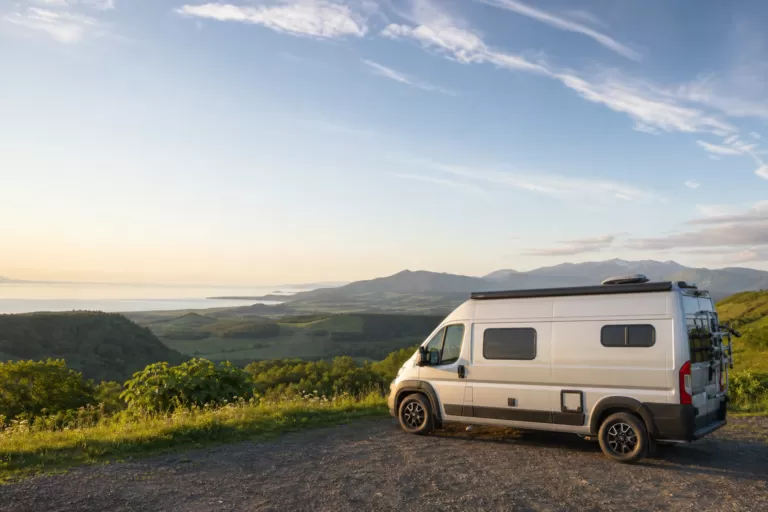
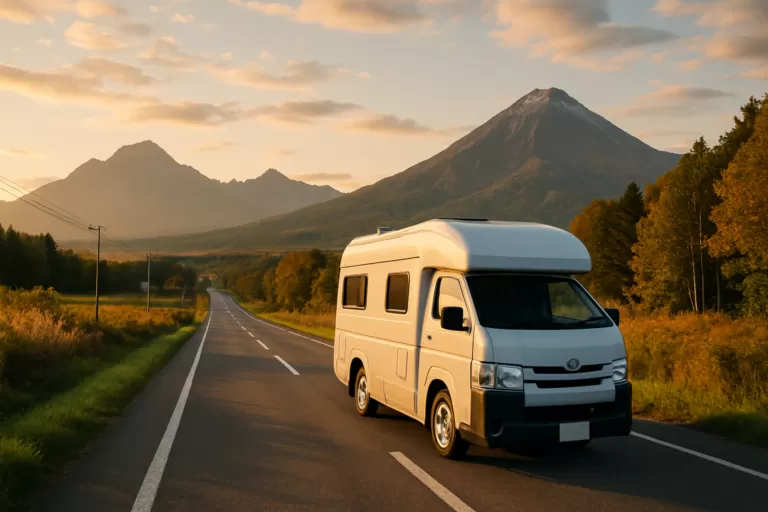
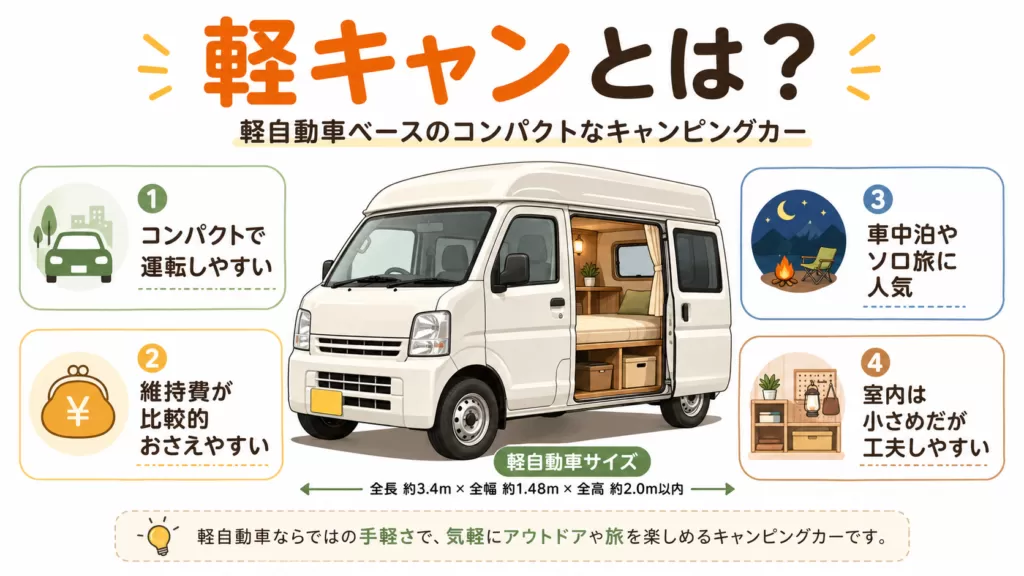
A kei campervan is a campervan built on a kei vehicle (Japanese mini car) base. Compact, fuel-efficient, and affordable to rent, they are increasingly popular for solo travel and couples. This article covers everything: basic features, advantages and disadvantages, how they compare with van conversions and cab conversions, and whether they suit Hokkaido travel.
New Chitose Airport / Tokachi-Obihiro Airport
Rent the Cabcon “Cresson Journey”
Base yourself at New Chitose Airport and compare rates, vehicle types, and pickup locations all in one place.
See details at Moving Inn →What Is a Kei Campervan?
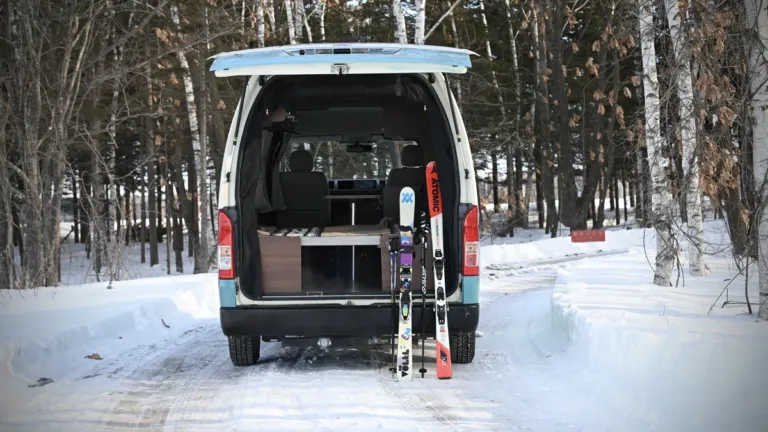
A kei campervan (kei camping car) is a campervan built by adding living and sleeping space to a kei vehicle base — such as a kei truck, kei van, or kei wagon. “Kei” refers to Japan’s mini-vehicle category with strict size and engine displacement regulations.
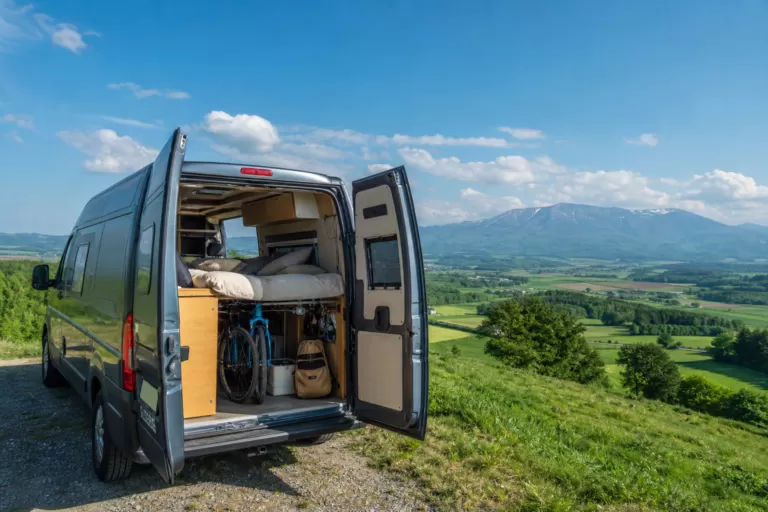
Designed for Japan’s road conditions, high ownership costs, and tight parking, kei campervans represent a uniquely Japanese evolution of the campervan concept. Styles vary: some place a shell on the bed of a kei truck (truck camper style); others convert the interior of a kei wagon.
Basic Specifications
| Specification | Typical Values |
|---|---|
| Length | 3.4–3.6 m |
| Width | Under 1.48 m (within kei vehicle regulations) |
| Height | 1.8–2.2 m (over 2.5 m with pop-up roof extended) |
| Engine | 660 cc or less (turbo or naturally aspirated) |
| Passenger capacity | 2–4 |
| Sleeping capacity | 1–2 (up to 3–4 with pop-up roof) |
| License required | Standard (automatic OK) |
| Fuel economy | 10–13 km/L |
| Rental rate guide | ¥12,000–¥18,000/day |
5 Advantages of Kei Campervans
① Excellent Fuel Economy
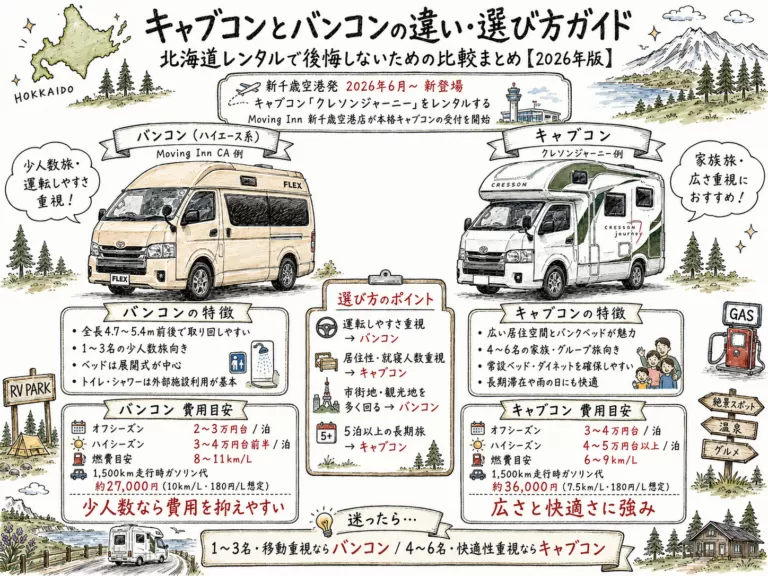
Real-world fuel economy of 10–13 km/L beats cab conversions (6–9 km/L) and van conversions (8–10 km/L), making long-distance Hokkaido travel much cheaper on fuel.
Comparison for 200 km/day in Hokkaido (fuel ¥170/L):
- Kei campervan (12 km/L): approx. ¥2,800/day
- Van conversion (9 km/L): approx. ¥3,800/day
- Cab conversion (8 km/L): approx. ¥4,250/day
Over a 7-day trip, a kei campervan saves approximately ¥16,000 compared to a cab conversion.
② Lowest Rental Price Class
At ¥12,000–¥18,000 per day, kei campervans are cheaper than van conversions (¥18,000–¥30,000) or cab conversions (¥25,000–¥45,000). A great entry point for first-time campervan travelers or budget-conscious trips.
③ Easy to Drive and Park Anywhere
At 3.4–3.6 m long and under 1.48 m wide, it handles like a regular car. Narrow farm roads, forest paths, and tight tourist parking lots are no problem — go anywhere in Hokkaido’s nature.
The height restriction issues that affect cab conversions in multi-story car parks are largely irrelevant for kei campervans.
④ Ideal Size for Solo or Couple Travel
With a sleeping capacity of 1–2, it’s perfectly suited for solo or 2-person trips. If a van conversion or cab conversion feels too big, a kei campervan is just right.
⑤ Standard Driver’s License (Automatic OK)
No special license needed. Most models can be driven with an automatic-only standard license, so there are no license restrictions to worry about.
Disadvantages and Cautions
① Limited Living Space
The kei vehicle footprint means interior living space is inevitably limited. Getting used to changing clothes and organizing luggage in a small space takes some adjustment. Not suitable for groups of 3+ or extended stays.
② Minimal Onboard Facilities
Many kei campervans lack the sink, stove, refrigerator, and toilet standard in cab conversions. Many models offer only a basic sleeping space and small storage. If cooking or full vehicle living functionality is important, you may find kei campervans lacking.
That said, recent models increasingly feature pop-up roofs for extra sleeping space plus compact refrigerators and sinks. Always check the specific equipment when renting.
③ 660 cc Engine Can Feel Strained on Long Distances and Mountain Roads
The 660 cc kei engine can feel underpowered on highways and mountain passes. The effect increases with more passengers and luggage. We recommend keeping daily driving to within 300 km for a comfortable pace.
④ Cold Weather Preparation Needed for Hokkaido
Many models don’t have a standard diesel heater (FFH), so cold protection is critical for spring, fall, and winter visits. Bring a sleeping bag and hot water bottle. In summer (July–August), Hokkaido nights are 15–20°C — comfortable without a heater.
Kei Campervan vs Van Conversion vs Cab Conversion
Use this comparison table when deciding which type to choose.
| Feature | Kei Campervan | Van Conversion | Cab Conversion |
|---|---|---|---|
| Length | 3.4–3.6 m | 4.7–5.4 m | 5.3–6.5 m |
| Sleeping capacity | 1–2 | 2–4 | 4–8 |
| Fuel economy | 10–13 km/L | 8–10 km/L | 6–9 km/L |
| Rental rate/day | ¥12,000–¥18,000 | ¥18,000–¥30,000 | ¥25,000–¥45,000 |
| License | Standard (auto OK) | Standard | Standard (large: confirm) |
| Fixed bed | △ (model dependent) | ✕ (mostly convertible) | ◎ (bunk bed standard) |
| Kitchen / sink | △ (basic or none) | ○ (most have one) | ◎ (fully equipped) |
| Best group size | 1–2 | 2–4 | 4–6 |
| Best trip length | 1–5 nights | 2–7 nights | 5+ nights |
See also our article comparing all campervan types.
Who Is a Kei Campervan For?
| Good fit | Not a good fit |
|---|---|
| Solo travel or couples | Groups of 3+ or family trips |
| Budget-conscious travelers | Trips centered on cooking in the vehicle |
| First-time campervan renters | Long-term stays of 1 week+ |
| Drivers who want to go anywhere, including narrow roads | Hokkaido in spring/fall/winter (cold protection needed) |
| Summer Hokkaido campervan travel | Travelers who need toilet, sink, and full facilities |
New Chitose Airport / Tokachi-Obihiro Airport
Rent the Cabcon “Cresson Journey”
Base yourself at New Chitose Airport and compare rates, vehicle types, and pickup locations all in one place.
See details at Moving Inn →How to Rent a Kei Campervan in Hokkaido
Multiple rental companies operate in Sapporo and near New Chitose Airport. Moving Inn offers kei campervan models and is conveniently located for airport pickup.
For a complete guide to kei campervan rentals in Hokkaido — rates, locations, and how to book:
FAQ
Q. Can I drive a kei campervan with a standard license?
Yes, most models can be driven with a standard automatic license. However, the total vehicle weight may vary by conversion, so confirm at the time of rental.
Q. What season is best for a kei campervan trip in Hokkaido?
June–September (summer season) is most recommended since many models lack a diesel heater. In spring and fall, nighttime temperatures can drop to around 5°C, so bring a sleeping bag. In winter, a cab conversion with better facilities is more comfortable.
Q. Can 2 people sleep in a kei campervan?
Yes, if the model sleeps 2. Pop-up roof models allow one person to sleep in the upper section and one below. Keep luggage minimal as storage space is limited.
Q. Should I choose a kei campervan or a van conversion?
For 1–2 people on a budget, choose a kei campervan. For 2–4 people who also want kitchen facilities, choose a van conversion. Many first-time renters start with a kei campervan to get a feel for it, then step up to a van conversion or cab conversion next time.
Q. How much does it cost to rent a kei campervan?
¥12,000–¥18,000 per day is typical. Peak season (July–August) may be higher. For a 3-night/4-day trip, budget approximately ¥60,000–¥80,000 including fuel and insurance. See our cost simulation article for details.
Summary: Kei Campervans Are the Best Value for Solo and Couple Travel
Key points about kei campervans:
- Built on a kei vehicle base — drivable with a standard driver’s license (automatic-only OK)
- Fuel economy 10–13 km/L and rental from ¥12,000–¥18,000/day — best cost performance of the three types
- At just 3.4 m, it handles narrow roads and tight tourist parking effortlessly
- Sleeping capacity 1–2 — ideal for solo travel and couples
- Facilities are simple on most models; van conversions or cab conversions are better for cooking or longer stays
- Comfortable for summer Hokkaido travel; winter trips call for a higher-class vehicle with a diesel heater
If you want to “just try a campervan” or travel solo/as a couple on a budget, a kei campervan is the ideal first step.
Interested in cab conversions? See:
Book a Campervan in Hokkaido
Moving Inn New Chitose Airport supports English booking and offers airport transfers.