The Complete Guide to Family Camping Car Trips in Hokkaido | Safety, Vehicle Selection, Spots & Costs
A complete guide to enjoying a family camping car trip in Hokkaido safely and comfortably.
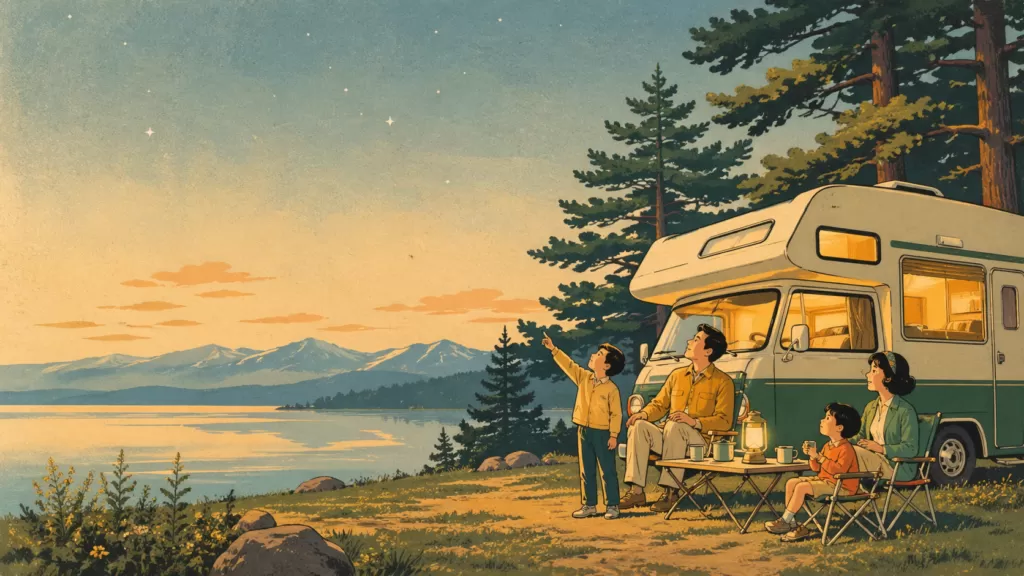
“We want to travel Hokkaido with our kids, but moving between hotels every day with all that luggage sounds exhausting…” “Driving freely in a camping car would be amazing, but is it really safe for young children?” This guide is for families who feel a little anxious but truly want to enjoy the adventure. Here you’ll find everything you need to enjoy a family camping car trip in Hokkaido with confidence, comfort, and freedom.
We cover safety rules, how to choose a camping car that fits your family, family-friendly campgrounds and RV parks, recommended sightseeing spots, a 3-night 4-day model route from Sapporo, and a realistic cost simulation for a family of four over one week.
“Read this and you’ll be ready to head to Hokkaido right away.” Think of it as a single travel notebook where you can check all the information you need at once.
For cost simulations, model routes, and Michi-no-Eki overnight parking rules — the fuller picture of Hokkaido campervan travel — see our Complete Guide to Hokkaido Campervan Travel.
First-timers: Start with the Beginner’s Guide
If this is your first time, learning about vehicle types, driver’s licenses, and the rental process first will make things much clearer. Check the beginner’s guide before planning your family trip.
New Chitose Airport / Tokachi-Obihiro Airport
Rent the Cabcon “Cresson Journey”
Base yourself at New Chitose Airport and compare rates, vehicle types, and pickup locations all in one place.
See details at Moving Inn →3 Reasons Why Hokkaido Is Perfect for Family Camping Car Trips
“A camping car trip with kids sounds a bit daunting…” Many people feel this way. But in reality, there is no place better suited for family camping car travel than Hokkaido. Here are the three main reasons why.
Reason 1: Hokkaido’s Wide Roads and Spacious Interiors Are Perfect for Families
Hokkaido features wide roads and many long, straight stretches with excellent visibility. This means even a large cab-over camper can be driven without stress — a major appeal for family travelers.
The roomy interiors mean that if a child suddenly gets fussy, there’s an immediate space to calm down. The journey itself is less stressful, and the whole family can enjoy the travel experience more easily.
Reason 2: Breastfeeding, Naps, and Diaper Changes in Your Own Private Space
A camping car is essentially a small private room that travels with you. When it’s time for nursing or a nap, you don’t have to search for a facility — just pull over and take a break.
Diaper changes can be done quickly inside the vehicle, so the stress of “where do I change this?” disappears. Parents have much more freedom of movement, and children can spend time in a comfortable, familiar environment.
Reason 3: No Check-In Times — Travel at Your Family’s Own Pace
One surprising source of fatigue in family travel is having to structure your day around hotel check-in and check-out times. But with a camping car, the vehicle itself is tonight’s accommodation.
If the kids say “We want to keep playing!”, you can enjoy the beach until evening. In the morning, everyone wakes up naturally and you depart at a relaxed pace.
Traveling without being rushed by the clock is especially valuable when you have children. The ability to move at your family’s own rhythm is one of the greatest strengths of camping car travel.
4 Safety Rules to Follow on a Family Camping Car Trip
As a parent, safety is your top concern. Please review these points before departure.
Rule 1: Child Seats Are Mandatory for Children Under 6
Children under 6 must use a child seat in a camping car, just as in a regular vehicle. However, older vehicles may have rear seat belt configurations that don’t fit all child seats, so it’s important to confirm where and how a child seat can be secured before renting.
Moving Inn and most major rental companies offer child seat rentals and flexible assistance with installation. Even first-timers can get a safe start.
Rule 2: Never Let Children Sleep in the Bed While Driving
“It would be so convenient to let them sleep in the bed while we drive…” Many parents think this, but it is something to absolutely avoid. While the vehicle is moving, everyone must be seated and wearing a seatbelt. Side-facing and rear-facing seats in camping cars must also be used safely while driving.
In the event of sudden braking or an accident, a child lying in a bed or in a lateral position cannot be protected. Keep this in mind as the most critical safety rule for continuing your trip safely.
Rule 3: Passenger Capacity and Sleeping Capacity Are Different
One thing often overlooked when choosing a camping car is that the number of people who can ride and the number who can sleep are not the same. Relying solely on the vehicle registration’s passenger capacity can lead to realizing at night that “there’s less sleeping space than I expected.” For example, a vehicle that seats 5 during the day may only comfortably sleep 4. For a family of four wanting plenty of room, a model rated for 5–6 or more passengers will give you breathing space.
Think of travel comfort and nighttime relaxation separately. That is the key to a successful family camping car trip.
Rule 4: Always Use Heating with Proper Ventilation
In chilly Hokkaido, heating is essential, but using it without adequate ventilation risks carbon monoxide poisoning. Especially when sleeping, avoid leaving the engine running and instead choose a vehicle equipped with an FF heater (a heater that works with the engine off).
How to Choose the Right Camping Car for Families with Children
“Cab-over camper,” “van conversion,” “kei camper“… Booking based on the name alone can lead to a mismatch where things aren’t what you expected. Here’s a clear breakdown from a family travel perspective.
Choose a Capacity of “Family Size + 1–2 Extra Seats”
Family trips always come with more luggage than expected. Strollers, changes of clothes, food supplies, toys, child seats… once packed, they take up far more space than you imagine. For this reason, aiming for a passenger capacity of “family size + 1–2” will give you comfortable room inside the vehicle.
The Cab-Over Camper Is the Top Choice
Truck-based cab-over campers have generous interior headroom where adults can stand upright — their biggest advantage. This makes the small but frequent tasks of family travel — diaper changes, nursing, dressing — much smoother.
Models with a fixed bed also mean nighttime setup is incredibly easy. Some models include a shower, making them an excellent match for longer Hokkaido trips.
Van Conversions and Kei Campers for Short Trips or Small Families
Van conversions based on vehicles like the Hiace offer these advantages:
- Easier to drive than a cab-over camper
- More parking options available
- Generally lower rental cost
This makes them a strong candidate for short trips or smaller families.
Kei campers are even more affordable, but tend to feel cramped for family trips, making them more suited for “1–2 adults + a very young child” compact getaways.
Check for 3-Point Belts, ISOFIX, and FF Heater
Before signing the rental agreement, confirm: ① the number of seats with 3-point seatbelts, ② whether any seats are ISOFIX-compatible, and ③ whether an FF heater is installed. Having all three makes it easier to achieve both safety and comfort. See also the camping car type comparison guide, cab-over camper guide, and rental price overview.
Family-Friendly Campgrounds and RV Parks in Hokkaido
Choosing the right place to stay greatly affects your satisfaction on a family camping car trip. Make the most of the freedom a camping car offers while prioritizing facilities where children can feel comfortable and safe.
5 Conditions for Family-Friendly Facilities
Here are five points to check for a comfortable family stay:
- Auto sites (drive-up access): Makes loading and unloading luggage much easier
- Flush toilets and cooking facilities: Clean facilities that are easy to use at night
- Playground or water play area: Keeps children entertained
- On-site management staff: Someone to rely on in case of trouble
- Nearby hot springs and supermarket: Makes bathing and grocery shopping smooth, reducing parents’ burden
When all five are in place, you’re much more likely to achieve the ideal stay where the children have fun and the parents can relax.
3 Recommended Family Auto Campgrounds
① Maruseppu Ikoi-no-Mori Auto Campground (Maruseppu Kamutakari 80, Engaru-cho, Monbetsu-gun)
A campground where children can play all day, featuring a steam locomotive “Amenomiya No. 21” and an array of playground equipment. The adjacent hot spring facility is convenient, making this a great all-in-one family environment for play, accommodation, and relaxation.
② Auto Resort Tomakomai Arten (Tarumae 421-4, Tomakomai)
One of the largest auto campgrounds in Hokkaido, with abundant facilities including not just campsites but also cottages, bungalows, hot springs, and park golf. With so many options, it’s easy for first-time camping families to feel comfortable.
③ Auto Resort Takino (inside Kokuei Takino Suzuran Hillside Park) (Takino 247, Minami-ku, Sapporo)
Just about 30 minutes by car from central Sapporo, making it highly accessible. With play areas in the expansive park and dedicated camping car sites, it’s perfect as an introductory overnight stay. Especially recommended for families who want to “get comfortable with camping car travel first, without pushing it.”
3 Reassuring RV Parks for First-Time Overnight Stays
① Sapporo Koganyu Sakura RV Park (Koganyu, Minami-ku, Sapporo)
Close to Jozankei and Koganyu hot springs, offering the comfortable flow of “play → hot spring → vehicle overnight stay“ without any difficulty.
② RV Park Tabisuru Kuruma New Chitose Airport BASE (Chitose)
Excellent access from New Chitose Airport, making it ideal for the night before or after a flight. Its flexibility with flight schedules greatly reduces the burden on arrival and departure days for families with children.
③ RV Park Itoi-no-Mori (Itoi 465-2, Tomakomai)
Conveniently located near the Tomakomai IC and ferry terminal, with a great position as a gateway to the central Hokkaido area. Perfect for families who want to “start out in an easy-access location before heading further.”
For more on how to use RV parks, see also the RV Park guide and Hokkaido overnight driving guide.
Use Roadside Stations Only for Short Rest Stops
Roadside stations (Michi-no-Eki) are rest facilities, so avoid extended stays or cooking outside the vehicle. For families with children, it’s safer to move to a campground or RV park for the night.
For those considering resting or staying at roadside stations
It’s reassuring to check in advance whether Hokkaido’s roadside stations have overnight-friendly facilities. For an area-by-area breakdown, see our roundup of overnight-friendly roadside stations.
View Hokkaido’s Top 20 Roadside Stations for Overnight Stays
7 Recommended Spots in Hokkaido That Kids Will Love on a Camping Car Trip
We’ve carefully selected spots that are accessible even in large vehicles and genuinely enjoyable for children. Every one of them is the kind of place that makes a stop on your route elevate the whole trip.
① Asahiyama Zoo, Asahikawa (Kuranuma, Higashi-Asahikawa-cho, Asahikawa)
A pioneer in behavioral exhibits and one of Japan’s most popular zoos. You can watch animals up close in their natural behaviors, and it’s a classic spot where you can easily spend half a day to a full day. The parking lot is large and accommodates big vehicles.
② Otaru Aquarium (3-303 Shukutsu, Otaru)
A seaside aquarium with especially rich shows and outdoor exhibits. There are hands-on sections where children can interact with sea creatures, making it a spot kids can’t get enough of. The large parking lot makes it easy to visit by camping car.
③ Northern Horse Park (114-7 Misawa, Tomakomai)
Close to New Chitose Airport, this family facility features horse interaction experiences, wide lawns, and various activities. Also great for a light stop on arrival or departure day.
④ Farm Tomita (Kisen Kita 15-go, Nakafurano-cho)
Famous for its summer lavender fields. Even a short visit lets you experience the quintessential Hokkaido landscape. The large parking lot makes it easy to include in your travel route.
⑤ Kokuei Takino Suzuran Hillside Park (247 Takino, Minami-ku, Sapporo)
About 30 minutes by car from central Sapporo. With bouncy domes and large play equipment, it’s a vast park where children can play to their hearts’ content. Perfect for a dedicated “play day” on your camping car trip.
⑥ Moerenuma Park (1-1 Moerenuma Park, Higashi-ku, Sapporo)
An art park designed by sculptor Isamu Noguchi. The appeal is the sense of freedom you get from leisurely strolling the spacious grounds, climbing hills, and exploring freely. The parking lot is large and the spot is easy to visit.
⑦ Ginga no Taki & Ryusei no Taki Waterfalls (Sounkyo Onsen, Kamikawa-cho, Kamikawa-gun)
The twin waterfalls representing Sounkyo. A great detour spot when traveling from central to eastern Hokkaido, offering impressive scenery just moments after stepping out of the vehicle. You can experience the scale of nature in a short visit.
3-Night 4-Day Model Route for Families (Departing Sapporo, Approx. 580 km Total)
Here is a 3-night 4-day model route departing and returning to Sapporo, to help you visualize what a real camping car trip looks like.
Day 1 | Sapporo → Asahikawa (Asahiyama Zoo)
- Morning: Pick up vehicle (see New Chitose Airport rental guide)
- Midday: Sapporo → Asahikawa (Doo Expressway, approx. 140 km / 2 hours)
- Afternoon: Spend half a day at Asahiyama Zoo
- Overnight: Auto campground or RV park near Asahikawa
Day 2 | Asahikawa → Furano (Farm Tomita)
- Morning: Asahikawa → Nakafurano-cho (approx. 55 km / 1.5 hours)
- Midday: Lavender viewing + soft serve ice cream at Farm Tomita
- Afternoon: Drive through Biei’s Blue Pond and Patchwork Road
- Overnight: Campground in the Furano–Shimukappu area
Day 3 | Furano → Auto Resort Tomakomai Arten (Hot Springs & Camping)
- Morning: Shimukappu → Tomakomai (Doto Expressway, approx. 180 km / 2.5 hours)
- Midday: Grocery shopping in Tomakomai
- Afternoon: Check in to Auto Resort Tomakomai Arten. Enjoy park golf, horseback riding, and hot springs
- Overnight: Auto Resort Tomakomai Arten
Day 4 | Tomakomai → Sapporo (Final Play at Takino Suzuran Hillside Park)
- Morning: Tomakomai → Sapporo Minami-ku (approx. 75 km / 1.5 hours)
- Midday: Bouncy dome + water play at Kokuei Takino Suzuran Hillside Park
- Afternoon: Return camping car in Sapporo
Total driving distance approx. 580 km, averaging 145 km per day — a manageable schedule that keeps the burden on children to a minimum.
What to Do in the Car and How Often to Take Breaks
Traveling with children goes more smoothly if you take breaks more often than you would on an adults-only trip. As a rough guideline, stopping for 10–15 minutes after every 1 to 1.5 hours of driving helps prevent boredom and fussiness. Roadside stations (michi-no-eki) or convenience store parking lots — places with a restroom and some fresh air — make good break points.
Since kids need to stay seated with a seatbelt on while the vehicle is moving, it helps to have activities ready that don’t involve lying down on the bed. Besides watching videos on a tablet, games that use the passing scenery — spotting animals or signs out the window, guessing how far it is to the next stop — tend to cause less motion sickness and hold kids’ attention longer. If you’re traveling with an infant, timing your breaks around nursing or diaper changes makes things easier to handle in the vehicle.
Packing Checklist for a Family Camping Car Trip
To avoid last-minute scrambling before departure, organize what you need by age group and season in advance.
For Babies and Toddlers
- Child seat (confirm rental availability in advance)
- Diapers (15–20 per day × number of days + extras)
- Baby wipes and wet tissues
- Baby food (focus on shelf-stable options)
- Nursing cover (for unexpected nursing outdoors)
- Baby monitor (useful for watching sleeping children inside the vehicle)
- Warm blanket (essential even in summer — mornings and evenings can be cold)
For Elementary School-Age Children
- Motion sickness medicine (reassuring on long drives in Hokkaido)
- Tablet + pre-downloaded videos
- Headlamp (for safety at nighttime campgrounds)
- Rubber boots and insect repellent (essential in dewy or bug-heavy seasons)
- Two days’ worth of clothing + water play outfit (for unexpected water play or heavy sweating)
For the Whole Family (by Season)
| Season | Essential Items |
|---|---|
| Summer (June–September) | Mosquito net, insect repellent, cooler box, sunscreen, hat |
| Winter (November–March) | FF heater fuel, winter sleeping bag, confirm studded tires, condensation cloth, snow shovel |
For a more detailed packing list, see the Camping Car Packing Checklist.
Best Season and Times to Avoid | Family Hokkaido Camping Car Calendar
July–August: The Classic Season for First-Timer Families
With comfortable average temperatures of 20–25°C and long daylight hours, you can fully enjoy activities kids love — zoos, parks, water play, and lavender fields.
This season coincides with peak flower viewing and is highly popular, so booking at least 2 months in advance is recommended.
June and September: Quieter, Comfortable Hidden Gems
June: Less affected by the rainy season than the rest of Japan — actually a great hidden gem. Temperatures are stable and easy to move around in.
September: Tourist crowds thin out and everywhere is more relaxed.
However, in both months mornings and evenings can be chilly, so warm layers (fleece, blankets) are essential.
Winter (December–March): For Experienced Travelers
Temperatures drop significantly, and in some areas can reach below -10°C. Studded tires and an FF heater are essential equipment.
Driving difficulty increases due to icy roads and blizzards, so families with young children are advised to avoid this period. If you really want to go in winter, check the Winter Hokkaido Camping Car Guide.
Rental Process and Cost Simulation for a Family of Four (3 Nights, 4 Days)
The Process: Reservation → Pickup → Return
- 2–3 months before departure: Check vehicle availability on the rental company’s website
- Make a provisional reservation for your preferred vehicle and dates
- Submit required documents (driver’s license, health insurance card)
- Pick up the vehicle on departure day at the shop or airport and receive a vehicle orientation
- Return the vehicle with a full tank on the designated date and time
Required Documents, Insurance, and Non-Operation Charge
Confirm driver’s licenses for all drivers, voluntary insurance, and non-operation charge coverage. For families with children, loss-of-business compensation and substitute vehicle coverage in case of breakdown are also reassuring.
Model Cost Estimate for a Family of Four (3 Nights, 4 Days)
| Item | Estimated Cost |
|---|---|
| Cab-over camper (4 passengers, 3-night 4-day plan) | ¥120,000–160,000 |
| Fuel (580 km / avg. camping car fuel efficiency 12 km/L / regular ¥170/L) | Approx. ¥8,200 |
| Accommodation (2 nights campground + 1 night RV park) | ¥15,000–20,000 |
| Entry fees and food (4 people × 4 days) | ¥50,000–70,000 |
| Total | Approx. ¥193,200–258,200 |
With a budget comparable to a flight + hotel + rental car family trip, the quality of the experience is in a different league. For more details, see the rental price overview and Top 15 Hokkaido Camping Car Rental Recommendations.
Moving Inn: Reliable for First-Timer Families
Moving Inn offers a lineup of cab-over campers equipped with FF heaters and other family-friendly gear, centered around vehicles that are easy to use for families with children. Even in Hokkaido’s wide temperature swings, you can spend comfortable nights.
In addition, they provide:
- Child seat rentals
- Thorough pre-departure vehicle orientation
- Guidance on fuel stations and routes
- 24-hour roadside assistance
With consistent support throughout, they provide an environment where “even first-time Hokkaido camping car travelers can depart with confidence.”
With equipment, explanations, and support all in place, Moving Inn’s strength is enabling first-timer families to enjoy Hokkaido without stress.
New Chitose Airport / Tokachi-Obihiro Airport
Rent the Cabcon “Cresson Journey”
Base yourself at New Chitose Airport and compare rates, vehicle types, and pickup locations all in one place.
See details at Moving Inn →Frequently Asked Questions (FAQ)
Q1. Can I take a baby (0–1 years old) on a camping car trip in Hokkaido?
Yes, it’s possible. Be sure to confirm the compatibility of a newborn baby seat, plan for frequent rest stops, and manage the temperature inside the vehicle carefully. Since nursing and diaper changes can be handled inside the vehicle, some families find it more comfortable than hotel stays.
Q2. Which type of camping car is best for families with children?
A cab-over camper is the top choice. The generous headroom and fixed bed make nursing and diaper changes easier. Many models include toilets and showers. Kei campers in Hokkaido tend to be a bit cramped for long family trips.
Q3. Is it okay to let children sleep in the bed while driving?
No. While driving, everyone must be seated with a seatbelt or child seat fastened. If you want to let a child sleep, pull over in a safe parking area first.
Q4. Which campgrounds and RV parks in Hokkaido are safe and comfortable for families with children?
Auto Resort Tomakomai Arten, Auto Resort Takino, and Maruseppu Ikoi-no-Mori Auto Campground are reliable choices in terms of play facilities, hot springs, and management. For a first overnight stay, Sapporo Koganyu Sakura RV Park, RV Park Tabisuru Kuruma New Chitose Airport BASE, and RV Park Itoi-no-Mori are easy places to start.
Q5. How much does a 3-night 4-day camping car trip cost for a family of four?
Adding up cab-over camper rental, fuel, accommodation, food, and entry fees, the estimated total is approximately ¥193,200–258,200. It’s a budget comparable to flights + hotel + rental car, but with much greater freedom.
If you’re planning a summer itinerary, also check the Summer Hokkaido Camping Car Guide for information on crowds during the Obon period and the best booking timing.
Summary | In Hokkaido Family Camping Car Travel, “Preparation Is 90% of Success”
There are three keys to a successful family camping car trip in Hokkaido:
- Thorough safety measures: Parents must understand child seat requirements, safe behavior while driving, and CO poisoning prevention
- Careful facility selection: Prioritize family-friendly facilities with play equipment, hot springs, and on-site management
- Packing and scheduling with room to spare: Use a packing checklist and keep daily driving distance to around 150 km
A good approach is to spend the first night at an RV park near Sapporo to get comfortable, then expand to auto campgrounds and family-friendly facilities from the second night onward.
Book a Campervan in Hokkaido
Moving Inn New Chitose Airport supports English booking and offers airport transfers.

![Hokkaido Tourism Statistics: 46.13 Million Visitors a Year, Foreign Visitors by Country, Peak Months and Travel Purposes [FY2025]](https://hokkaido-campingcar.jp/wp-content/uploads/2026/10/hokkaido-tourism-statistics-2025-eyecatch-768x432.webp)
![What to Do in Tokachi in Winter: Dog Sledding, Snowshoeing, the Shikaribetsu Ice Village, and Staying at Kitanomori [2027]](https://hokkaido-campingcar.jp/wp-content/uploads/2026/10/tokachi-winter-dogsled-1-768x432.jpg.webp)
![Where to See Snow for the First Time in Hokkaido: Snow Play Spots and When Snow Is Guaranteed [2026-27]](https://hokkaido-campingcar.jp/wp-content/uploads/2026/10/hokkaido-snow-play-first-snow-eyecatch-768x432.webp)
![10 Days in Hokkaido in Winter: Campervan Itinerary from New Chitose Airport, January Skiing and Hot Springs, February Snow Festival and Drift Ice [2027]](https://hokkaido-campingcar.jp/wp-content/uploads/2026/10/winter10days-eyecatch-a-0-mi-js1v1qqiiz0aaaaaaaclwq-768x432.jpg.webp)