Hokkaido Campervan Travel × Honshu Round-Trip Ferry Guide | Route Comparison, Vehicle Transport Rates & Overnight Ferry Tips [2026]
A guide to combining Hokkaido campervan travel with Honshu ferries. Compares routes, vehicle transport rates, and tips for sleeping aboard the ferry.
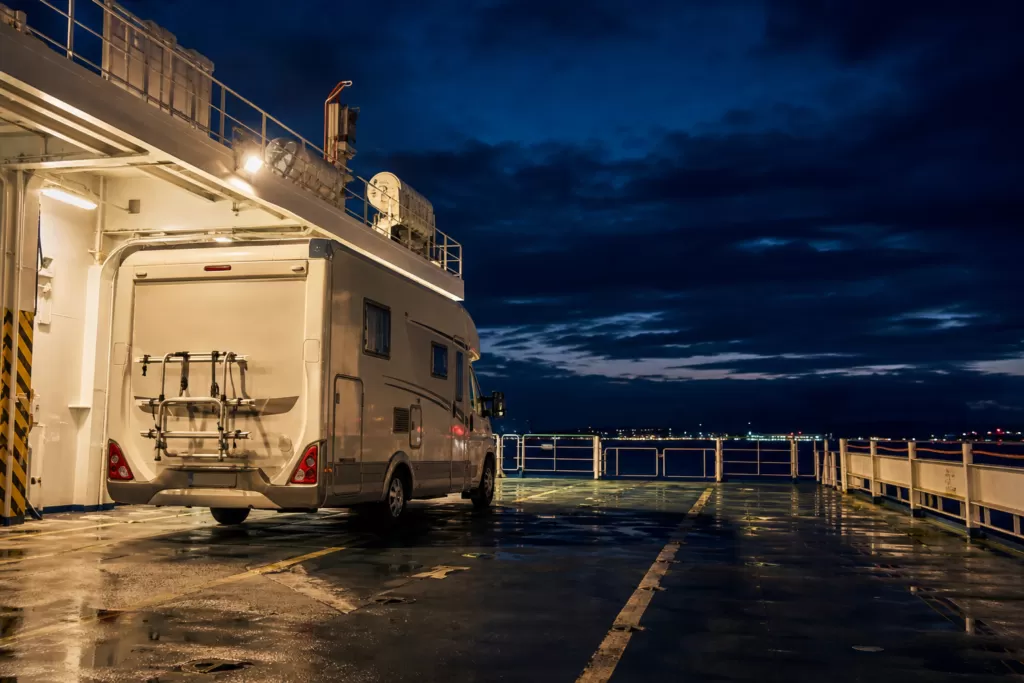
If you want to bring your own campervan to Hokkaido, taking a long-distance ferry and driving it aboard is the only option. You load your vehicle onto the ship, spend a night on board, and step off in Hokkaido the next morning — an experience that feels extraordinary from the very first leg of the trip. That said, if you don’t understand how to choose a route, how vehicle transport fares are structured, and when to book, you can end up unable to secure a sailing during peak season or facing unexpectedly high costs.
This article thoroughly compares the ferry routes for driving your own vehicle from various parts of Honshu to Hokkaido, covering fare estimates by vehicle size, tips for booking during peak season, and how to spend your time on board. Ferries that depart from or arrive within Hokkaido itself (such as the Hakodate–Aomori route) are outside the scope of this article.
Benefits of Driving Your Own Vehicle by Ferry, and Who It Suits
The biggest advantage of bringing your own campervan from Honshu is the sheer freedom it gives your trip. With a rental campervan, almost every company is based around New Chitose Airport, so your trip has to start and end there. With your own vehicle, on the other hand, the whole journey can flow as one continuous trip from your home to Hokkaido and back.
Another major benefit is that you can board the ferry with your bedding, cooking gear, and outdoor equipment already loaded. Rental campervans come with rules about what you can and can’t bring aboard, but with your own vehicle you manage your gear entirely at your own pace.
Who driving your own vehicle by ferry suits
- You own a campervan and want to travel around Hokkaido for an extended period (a week or more)
- You want complete freedom to plan your movements within Hokkaido, without being tied to public transport
- You’re particular about your own gear, bedding, and interior setup
- You want to enjoy the round-trip crossing itself as part of the journey
Comparing this with rental + flight
“Rent a campervan at New Chitose Airport and fly home” is also a strong option. With a rental, you don’t need to pay any vehicle transport fare, and if the company allows one-way drop-off, you can keep your return travel costs down too. Driving your own vehicle over by ferry, on the other hand, means paying for a round-trip sailing, but you can also think of it as spreading your campervan’s running costs (inspection, insurance) across the whole trip rather than a single rental period. As a rule of thumb: choose rental for a short stay, and driving your own vehicle over for a long trip or repeated visits.
For rental cost simulations, model routes, and Michi-no-Eki overnight parking rules — the fuller picture of Hokkaido campervan travel — see our Complete Guide to Hokkaido Campervan Travel.
Compare Hokkaido Campervan Rentals
Base yourself at New Chitose Airport and compare rates, vehicle types, and pickup locations all in one place.
Compare rental companies and prices →Comparing the Main Routes (Departing from Tomakomai and Otaru)
The long-distance ferry routes connecting Honshu and Hokkaido fall broadly into two groups: those departing from/arriving at the Port of Tomakomai, and those at the Port of Otaru. Different ferry companies operate each group, and the departure points, crossing times, and fare levels all differ accordingly. Choose based on where you’re starting from and where you want your Hokkaido trip to begin.
Routes via Tomakomai
Tomakomai ↔ Oarai (MOL Ferry “Sunflower”)
This route connects to the port of Oarai in Ibaraki Prefecture, northern Kanto. It offers easy access from Tokyo, Saitama, Gunma, and Tochigi, and since you don’t need to drive all the way down the Tohoku Expressway to Tomakomai, it’s a convenient connection for people in the Kanto region. The evening sailing departs Oarai at 19:45 and arrives at Tomakomai (West Port) at 13:30 the next day; the late-night sailing departs Oarai at 01:45 and arrives at Tomakomai the same day at 19:45 (crossing time approx. 17 hours 45 minutes–18 hours). Multiple sailings run each week, and capacity is relatively well maintained even during peak season.
Tomakomai ↔ Sendai (Taiheiyo Ferry)
This route departs from the port of Sendai and extends all the way to Nagoya, so it’s also used by travelers from the Chubu and Tokai regions. The Tomakomai–Sendai crossing takes about 15 hours. Boarding from Nagoya turns it into a voyage of over 40 hours, but it keeps your overall travel cost down. The onboard facilities are extensive, giving it the feel of a large-scale passenger ship.
Tomakomai ↔ Hachinohe (Silver Ferry)
This route departs from the port of Hachinohe in Aomori Prefecture. You drive north to Hachinohe via the Tohoku Expressway and board the ferry from there. The crossing is relatively short, at about 8 hours, and an overnight sailing gets you to Tomakomai by the next morning. For travelers from Tohoku and northern Kanto, it’s one of the shortest routes available.
Tomakomai East Port ↔ Tsuruga / Niigata / Akita (Shin Nihonkai Ferry)
Besides its Otaru routes, Shin Nihonkai Ferry also runs sailings connecting Tsuruga, Niigata, and Akita with Tomakomai. The direct sailing from Tsuruga takes about 20 hours 35 minutes and arrives the following night (around 20:30). The Niigata sailing runs via Akita and takes about 18 hours 15 minutes, arriving the following evening (around 16:45). This route doesn’t use Tomakomai West Port — it arrives at Tomakomai East Port, which is located in Atsuma Town, not the city of Tomakomai. It’s about a 40-minute drive from JR Tomakomai Station, and it’s a separate port from Tomakomai West Port (about 17 minutes by bus from JR Tomakomai Station), where Taiheiyo Ferry and Sunflower dock. Build that transfer time into your plans after disembarking.
Routes via Otaru
Otaru ↔ Maizuru / Tsuruga (Shin Nihonkai Ferry)
This is well suited to travelers from the Hokuriku, Kansai, Chugoku, and Kyushu regions. Direct sailings run from the port of Maizuru (Kyoto Prefecture) and the port of Tsuruga (Fukui Prefecture) to Otaru, taking about 20–21 hours. It’s a long, unhurried voyage heading north along the Sea of Japan coast.
Otaru ↔ Niigata (Shin Nihonkai Ferry)
There is also a service via the port of Niigata, taking about 18 hours. This is a realistic option for travelers from the Hokuriku and Koshinetsu regions.
| Route | Ferry Company | Crossing Time (approx.) | Main Access Area |
|---|---|---|---|
| Tomakomai ↔ Oarai | MOL Ferry (Sunflower) | approx. 17 hours 45 minutes–18 hours | Kanto, northern Kanto |
| Tomakomai ↔ Sendai (↔ Nagoya) | Taiheiyo Ferry | Tomakomai–Sendai approx. 15 hours | Tohoku, Chubu, Tokai |
| Tomakomai ↔ Hachinohe | Silver Ferry | approx. 8 hours | Tohoku, northern Kanto |
| Tomakomai East Port ↔ Tsuruga | Shin Nihonkai Ferry | approx. 20 hours 35 minutes | Kansai, Hokuriku |
| Tomakomai East Port ↔ Niigata (via Akita) | Shin Nihonkai Ferry | approx. 18 hours 15 minutes | Hokuriku, Koshinetsu, Tohoku |
| Otaru ↔ Maizuru | Shin Nihonkai Ferry | approx. 20–21 hours | Kansai, Hokuriku, Chugoku, Kyushu |
| Otaru ↔ Tsuruga | Shin Nihonkai Ferry | approx. 20 hours | Hokuriku, Kansai |
| Otaru ↔ Niigata | Shin Nihonkai Ferry | approx. 18 hours | Hokuriku, Koshinetsu |
※Crossing times and sailing frequency vary by season and schedule. Please check each company’s official website for the latest information before booking.
Vehicle Transport Fares and How They Change with Vehicle Length
Ferry vehicle transport fares are set in brackets based on the vehicle’s overall length. Because campervans have larger bodies, they almost always fall into a higher fare bracket than an ordinary passenger car. It’s essential to check your vehicle’s listed overall length in advance.
Length brackets and fare estimates
The length brackets set by each ferry company are roughly divided as shown below. The exact figures vary by company, route, and season, but use this as a general guide.
| Overall Length (approx.) | Example Campervan Types | One-Way Transport Fare Estimate (excluding peak season) |
|---|---|---|
| Under 4m | Kei-campers, converted kei vans | approx. ¥15,000–¥20,000 |
| 4m–under 5m | Compact vancons, small cabcons | approx. ¥20,000–¥30,000 |
| 5m–under 6m | Standard vancons, small cabcons | approx. ¥30,000–¥40,000 |
| 6m–under 7m | Large cabcons, Coredo Van-type | approx. ¥40,000–¥50,000 |
| 7m and over | Full-size cabcons, large custom-built models | approx. ¥50,000–¥70,000 or more |
※The figures above are rough estimates of the vehicle fare. The vehicle fare includes one driver in the lowest cabin class (in the case of Shin Nihonkai Ferry); fares for other passengers are charged separately. Always check each company’s official fare table for actual rates.
Watch out for the 5m and 6m boundaries
Campervan owners in particular need to watch the switchover points between under-5m/5m-and-over and under-6m/6m-and-over. Exceeding one of these boundaries by just a few centimeters can mean a difference of around ¥10,000 on a one-way fare.
Cabcon lengths vary a lot by model. The “Cresson Journey,” for example, is 4.99m long and stays under 5m, while larger cabcons can exceed 6m — which bracket a vehicle falls into directly affects the fare. Rather than relying only on the catalog spec, make sure you know the actual measured length, including any spare tire or rear protrusions. Since measurements taken at the ferry terminal can sometimes push you into a different bracket, it’s worth measuring your actual vehicle once after purchase.
Peak-season surcharges
During the July–August peak season, a peak-season surcharge applies to both vehicle transport fares and passenger fares. The surcharge varies by company and route, but rates 20–40% higher than the regular season are common. For a round trip with a campervan, it’s not unusual for the peak-season surcharge to add ¥20,000–¥40,000 in extra cost. Be sure to factor this into your overall trip budget.
Booking Timing and How to Secure a Sailing During Peak Season
Ferries have a fixed limit on vehicle capacity. During peak season in particular (mid-July through the end of August), the space allocated to larger vehicles like campervans tends to fill up before the space for ordinary passenger cars. If you decide “let’s go to Hokkaido this summer” and only then try to book, you’ll very often find it’s already full.
Book 2–3 months ahead as a rule
Each company typically opens bookings 2–3 months before the sailing date. The exact opening date varies by company, but most major operators let you book from about 3 months before departure. That means if you want a sailing around the Obon holiday in mid-August, you need to have your booking in by April or May.
The Oarai–Tomakomai “Sunflower” route in particular is easy to use from the Kanto area, so competition for spots is fierce, and it’s not unusual for sailings to fill up right after booking opens. Go in with the mindset of “I need to book the moment reservations open.”
Traveling outside peak season improves both price and availability
In early June and from September onward, the peak-season surcharge disappears and vehicle capacity also opens up. Hokkaido’s climate is already pleasant in June, and the popular sightseeing spots are much less crowded during these periods. If you have any flexibility in timing, avoiding peak season pays off in both cost and comfort.
Waitlists and provisionally holding multiple sailings
Waitlist policies differ between companies. Shin Nihonkai Ferry accepts waitlist requests online, but Sunflower sometimes has no waitlist system at all, in which case you simply have to keep checking availability yourself. If your itinerary has some flexibility, some travelers provisionally hold two sailings — a first choice and a second choice — and cancel one once their schedule is finalized (however, be sure to check each company’s cancellation policy in advance).
Life On Board: Whether You Can Stay in Your Vehicle, and Power Considerations
On a long ferry crossing, how you spend your time on board affects the overall quality of the trip. It’s worth knowing the rules and circumstances specific to traveling with a campervan.
Restrictions on accessing the vehicle deck while underway
On almost every long-distance ferry, access to the vehicle deck is prohibited in principle once the ship has left port. In other words, you cannot go back to your campervan while the ferry is underway. Since you can’t return to your vehicle to sleep in your own bed, you need to book a cabin or berth on board (a private room, a shared sleeping area, etc.).
A set time before arrival (typically 1–2 hours before docking), you’ll be directed to return to the vehicle deck. Before that, you spend your time in the ship’s lobby, restaurant, communal bath, or cabin.
Engine-off rules
On the vehicle deck, the rule is that your engine must be switched off while parked. Leaving the engine running poses a fire and exhaust-gas risk, so it’s prohibited on every long-distance ferry. In addition, some ferry companies prohibit staying in your vehicle at all, requiring every passenger to move to the cabin area. How strictly this is enforced varies by company, so check the terms of each operator when you book.
Power supply on the vehicle deck
Very few ferries have external shore-power outlets on the vehicle deck. As a rule, fully charge your campervan’s sub-battery or portable power station before boarding. If you need to keep something like a fridge or FF heater running while docked, calculate your sub-battery capacity against its power draw beforehand. Also keep in mind that even if you find you need to operate an electrical appliance on board, you won’t be able to, since you can’t access the vehicle deck during the crossing.
Onboard facilities and making the most of the crossing
The flagship ships of Taiheiyo Ferry and Shin Nihonkai Ferry are equipped almost like “hotels at sea,” with a full communal bath, restaurant, shop, and lounge. Booking a private cabin gives you your own space to properly rest, so you arrive in Hokkaido with your energy restored and ready to start your trip. The surcharge for a single private cabin depends on the route and season, but typically runs around ¥10,000–¥20,000. Booking a private room is worth considering so the fatigue of a long crossing doesn’t carry over into the next day.
The Silver Ferry (Hachinohe ↔ Tomakomai) has a short 8-hour crossing with simpler facilities, but since it’s an overnight sailing that gets you to Tomakomai by the next morning, it’s very efficient in terms of travel time.
New Chitose Airport / Tokachi-Obihiro Airport
Rent the Cabcon “Cresson Journey”
Base yourself at New Chitose Airport and travel all across Hokkaido by campervan.
See details at Moving Inn →Frequently Asked Questions (FAQ)
What should I use as the basis for my vehicle’s overall length when booking?
The “overall length” figure listed in the catalog is the basic reference, but if you have equipment protruding from the rear of the vehicle — such as a spare tire carrier, an add-on ladder, or a hitch member — the actual measured length including that equipment will apply. Since your vehicle can be measured on the day of boarding and bumped into a higher bracket with an extra charge, it’s safer to measure it yourself in advance.
Is there a round-trip discount?
Every company offers a “round-trip discount.” The conditions (same route both ways, time limits, etc.) vary by company, but it can work out about 10–15% cheaper than booking each leg separately. If you already know you’ll be doing a round trip, make use of the round-trip booking page.
What about traveling with a pet?
Many ferry companies provide dedicated pet cages or “pet rooms.” If you’re traveling with a dog, cat, or other pet, you need to book pet-friendly accommodation or a cage separately. Since you can’t access the vehicle deck during the crossing, you cannot leave a pet in your vehicle. Always check what pet facilities are available before you book.
Are there height restrictions for campervans?
Yes, ferry vehicle decks do have height restrictions. The limit is commonly set around 4m, though it varies by ship. If your campervan has a high-roof conversion or pop-up roof, it’s safest to check directly with the company beforehand. If your vehicle exceeds the limit, it may need to be loaded on an open deck instead, so also confirm how that’s handled in case of rain.
Can I drive off right away after arriving in Hokkaido?
After docking, all passengers move to the vehicle deck at once once the announcement is made. Because large ferries carry a lot of passengers and vehicles, it can take about 30 minutes to an hour from when movement begins until you actually drive off the ship. If you’re arriving early in the morning, also factor in the opening hours of nearby facilities when planning your schedule.
What are the options for meals on the ferry?
Major ferries have a restaurant, a buffet, and a shop on board. That said, dining areas can get crowded during peak season, so it’s a good idea to bring along easy food like instant noodles, bread, or rice balls just in case. Rules on bringing your own alcohol vary by company.
Should I wash the vehicle and fill the water tank before boarding?
You cannot fill or empty your water tanks on the vehicle deck. Filling your fresh water tank and emptying your grey water tank before you leave means you can start using them comfortably as soon as you arrive in Hokkaido. If there’s a gas station or home center near the ferry terminal, you may also be able to fill up with water there before boarding.
Summary: Driving Your Own Vehicle to Hokkaido via Ferries from Honshu
The best ferry route for driving your own campervan from Honshu to Hokkaido depends on where you’re starting from and where you want your Hokkaido trip to begin. Geographically, Oarai–Tomakomai makes sense from Kanto, Hachinohe–Tomakomai from Tohoku, and Maizuru/Tsuruga–Otaru from Kansai or Hokuriku.
Because vehicle transport fares change significantly around the 5m and 6m length boundaries, the first step is knowing your own vehicle’s actual measured length. During peak season (July–August), the realistic way to secure a spot is to book right when reservations open, 2–3 months in advance. Since the vehicle deck is off-limits during the crossing, put together a pre-boarding checklist — private cabin booking, pet arrangements, sub-battery charge status, and so on — so nothing gets missed.
If you can enjoy the ferry not just as a means of transport but as part of the trip itself, your journey has already begun before you even set foot in Hokkaido.
For ferry travel within Hokkaido after you’ve landed — for example, crossing between Hakodate and Aomori, or reaching the islands of Rishiri and Rebun from Wakkanai — we cover that in detail in a separate article. Please refer to it alongside your plans for getting around Hokkaido.
Book a Campervan in Hokkaido
Moving Inn New Chitose Airport supports English booking and offers airport transfers.

![When and Where Can You See Harbor Seals at Cape Erimo? Kaze no Yakata Official Information, Viewing Season, and Windy-Day Notes [2026-27]](https://hokkaido-campingcar.jp/wp-content/uploads/2026/10/erimo-cape-lighthouse-768x511.jpg.webp)
![Where and Under What Conditions Can You See Diamond Dust in Hokkaido? How Cold a Morning It Takes, and Where It Appears [2026-27]](https://hokkaido-campingcar.jp/wp-content/uploads/2026/10/hokkaido-diamond-dust-nayoro-768x512.jpg.webp)
![Can You Drive to Hokkaido Jingu for Hatsumode? Parking, Crowds, and Where to Park and Walk [2027]](https://hokkaido-campingcar.jp/wp-content/uploads/2026/10/hokkaido-jingu-winter-torii-768x504.jpg.webp)
![Hokkaido Roads Over New Year [2026-27] | Expressway Sections Prone to Blizzard Closures, Forecast Congestion Days, No Holiday Discount, and New Chitose Airport Parking](https://hokkaido-campingcar.jp/wp-content/uploads/2026/10/hokkaido-winter-rural-road-edge-markers-768x432.jpg.webp)
![Where to See Sea Smoke (Kearashi) in Hokkaido: Rumoi’s Ogon-misaki and the Morning Conditions [2026-27]](https://hokkaido-campingcar.jp/wp-content/uploads/2026/10/rumoi-kearashi-sea-smoke-768x511.jpg.webp)
![Geminid Meteor Shower 2026 in Hokkaido: Peak Around 23:00 on December 14, Sapporo Moonset 20:40, and Staying Warm in a Winter Campervan [2026]](https://hokkaido-campingcar.jp/wp-content/uploads/2026/10/geminids-2026-hokkaido-768x575.jpg.webp)