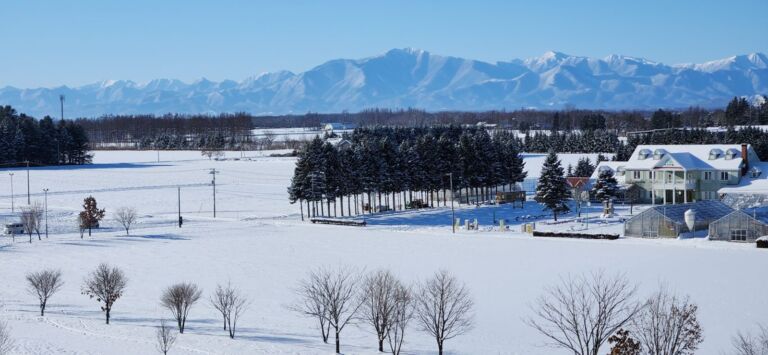
Hokkaido Campervan Guide for Lunar New Year | Snow Festivals, Drift Ice, and Winter Road Tips
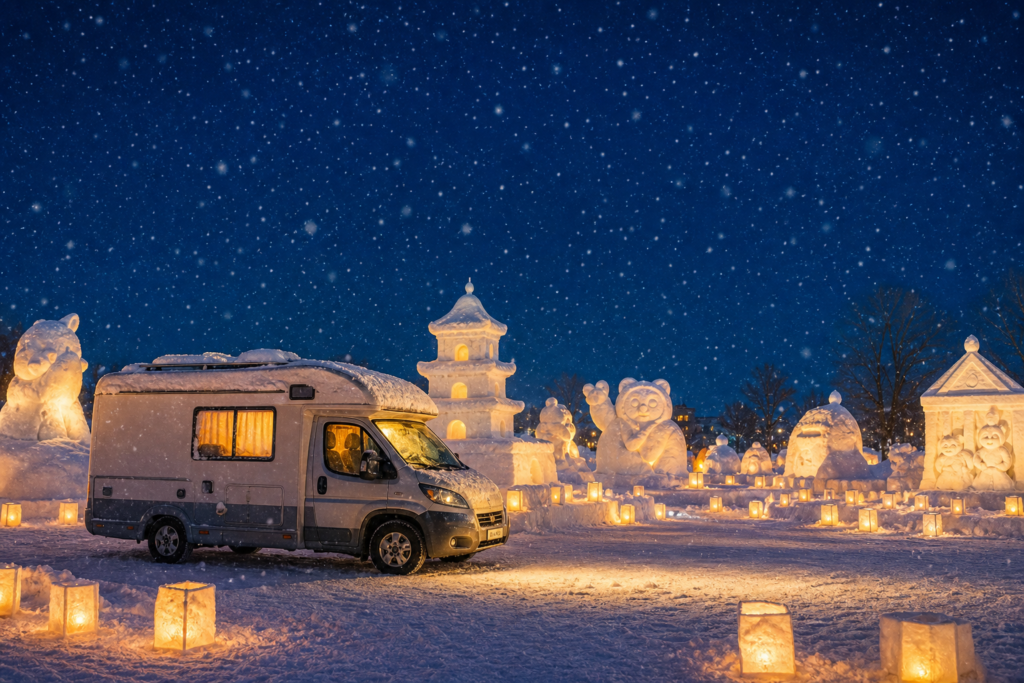
Lunar New Year (Chinese New Year) is the major holiday period across Taiwan, Hong Kong, and much of East Asia, falling somewhere between late January and mid-February each year. The exact dates shift from year to year, so the smartest starting point for planning is this: whenever it falls, you will land in Hokkaido at the deepest point of winter. Snow is at its heaviest and temperatures at their lowest — and in exchange, the things you can only see in these few weeks, from snow festivals to drift ice, all arrive at once.
The two practical challenges are lodging and transport. Hotels book up quickly over the holiday, and travel between cities depends on the snow. That is where a campervan comes in: one vehicle that covers both your bed and your wheels. A winter-ready campervan with an FF heater keeps the cabin livable even on sub-zero nights (see our guide to how FF heaters work).
This article covers what Hokkaido is like during the Lunar New Year period, what to watch out for on a midwinter campervan trip, how to get ahead of holiday bookings, and a low-stress itinerary starting from New Chitose Airport. We also compare the season against Taiwan’s other holiday periods, such as the Qingming break.
Renting a campervan at New Chitose Airport?
Moving Inn New Chitose Airport
Base yourself at New Chitose Airport and compare rates, vehicle types, and pickup locations all in one place.
See details at Moving Inn →During the Lunar New Year Holiday, Hokkaido Sits at the Bottom of Winter
The holiday moves around the calendar, but it generally lands somewhere between late January and mid-February. For Hokkaido, those are the weeks when snow depth and cold both peak. Even in Sapporo, daytime temperatures often stay below freezing, and mornings and nights get colder still. In eastern Hokkaido and the inland areas, mornings below minus 15 degrees Celsius are not unusual.
Days are short, too. Sunset in Sapporo at this time of year comes around 5 p.m., and the scenery darkens fast once evening starts. Build your itinerary around finishing each day’s drive in daylight. Arriving in Taiwan-winter clothing will not get you through the day here — down jackets, waterproof shoes, gloves, and hats for everyone in the group are the baseline.
If you want to work through every winter-trip worry one by one — cold, freezing, heating — we cover them all in our article on solving every concern about winter campervan travel in Hokkaido.
Pick Your Destination From What Only These Weeks Can Offer
Midwinter Hokkaido has clearly defined seasonal highlights. Four of them overlap with the Lunar New Year period.
- Snow festivals and winter events: The Sapporo Snow Festival and winter events across the island tend to cluster around early February. Dates change every year, so check each event’s official site for the schedule.
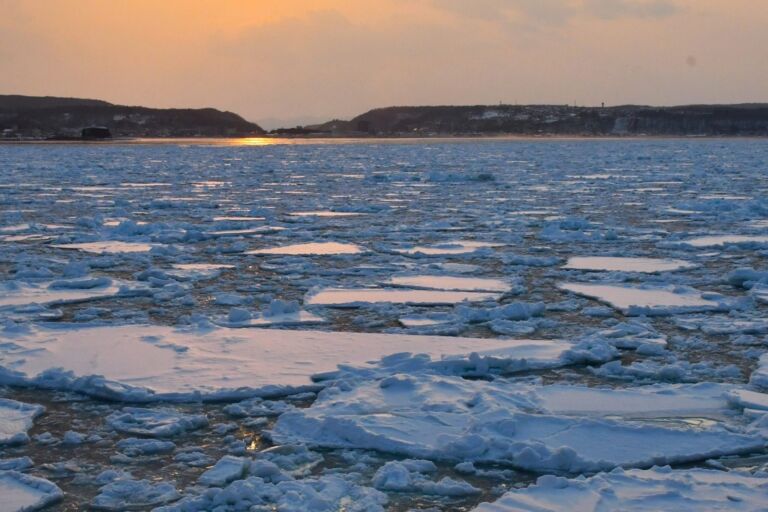
- Drift ice: Along the Sea of Okhotsk coast (Abashiri, Monbetsu, and the Shiretoko area), drift ice typically reaches the shore between late January and around March. Timing varies with the year and the winds. See our complete drift ice campervan guide.
- Powder-snow skiing: January and February are peak powder season. Ski-resort parking and cold-climate tips are covered in our ski resort × campervan overnight guide.
- Snow-view hot springs: An open-air bath surrounded by snow is a pleasure unique to this season. Day-use hot springs that pair well with car camping are listed in our hot spring guide.
You do not need to cram all of them into one trip. In midwinter, keeping your driving distances modest actually raises the quality of the trip. Either stay in the Sapporo–Otaru area for snow events and city strolls, or commit to eastern Hokkaido for the drift ice. Deciding between these two first makes the rest of the planning move quickly. For the full picture of drift ice, snow festivals, and cold-weather prep, our Hokkaido campervan winter travel guide is a good companion.
Is a Campervan Actually Warm Enough in Midwinter?
The short answer: choose a winter-ready vehicle and you can sleep in it comfortably. The key piece of equipment is the FF heater — a heater that warms the cabin with the engine off, and close to indispensable for winter campervan travel in Hokkaido. How it works, its fuel use, and usage tips are covered separately in our FF heater explainer.
One caution: winter equipment differs by vehicle and by rental base. Whether an FF heater is fitted, how the water system is protected from freezing, how much battery capacity you get — confirm these directly with the rental base before you book. If you are renting around New Chitose Airport, you can check vehicle types and equipment at Moving Inn New Chitose Airport on its base page (confirmed 2026-08-19). At Moving Inn, every vehicle has studless tires and 4WD, and every HIACE and Cresson Journey has an FF heater (interview with Moving Inn, October 6, 2026).
Bedding makes a big difference to how warm the night feels. Even with the heater on, the window side gets cold, so it is worth asking at booking whether winter sleeping bags or blankets are available to rent.
Plan Snow-Road Driving Around Never Pushing Your Luck
During the Lunar New Year period, assume Hokkaido’s roads are packed snow or ice as the default. Snow clearing is thorough, but this is not a season to expect bare pavement. The less snow-driving experience you have, the more these principles pay off.
- Daily driving distance varies by operator and weather, but as a guide, plan for roughly 60-70% of your summer distance in winter
- Arrive at your destination before sunset. Never schedule a mountain pass for the evening
- Leave more than double your usual following distance. Brake early, steer gently
- On days with a blizzard forecast, do not drive. Build a one-day buffer into the itinerary
- The approaches to intersections and tunnel entrances are especially slippery. Slow down before you reach them
Rental campervans in Hokkaido are typically fitted with studless winter tires in winter. Equipment details vary by operator, though, so confirm when booking. For a deeper look at snow-road technique and winter overnight routines, see the complete winter driving guide for Hokkaido.
If you are not confident behind the wheel, keep the no-car option open. The Sapporo area alone can be covered by subway and JR trains. A campervan earns its keep on itineraries that reach the suburbs and eastern Hokkaido, where public transport thins out.
How to Get Ahead of Holiday Crowds and Bookings
During Lunar New Year, Hokkaido’s winter event season and holiday demand stack on top of each other. Sapporo during the Snow Festival period in particular sees lodging demand climb, and last-minute options get thin. Going the hotel route? Lock in the hotel first. Going by campervan? Lock in the vehicle first. Either way, book the moment your dates firm up. Winter-ready campervans exist in limited numbers, so dates that overlap the holiday tend to go to whoever moves first.
For a campervan trip, building your nights around RV parks with power hookups keeps things stable even in winter. RV parks inside Sapporo are few, so shortlist candidates and prices in advance with our list of Sapporo RV parks. If you nap at a Michi-no-Eki (roadside rest stop), follow each station’s rules and never park where you would obstruct snow-clearing work — that is basic winter etiquette here.
For family trips, a common pattern is spending the first half of the holiday with relatives and flying to Hokkaido for the second half. Return flights fill up fast at the tail end of the holiday, so fix your round-trip flights first, then fill in the vehicle and lodging.
An Easy 5-Day Loop From New Chitose Airport
Here is a Sapporo-area model itinerary with short driving legs, designed for people not yet used to snow roads. No day’s drive exceeds roughly an hour and a half — in winter Hokkaido, that is exactly the right pace.
| Day | Itinerary | Driving |
|---|---|---|
| Day 1 | Pick up the campervan at New Chitose Airport and head to Lake Shikotsu. Start with the frozen lakeside and a hot spring | About 30 km |
| Day 2 | Lake Shikotsu to Sapporo. Park on the outskirts and move around the city by subway | About 60 km |
| Day 3 | Sapporo. Winter events and the Curb Market by day; overnight at an RV park with hookups | City only |
| Day 4 | Sapporo to Otaru. The canal, seafood, and glass workshops on foot | About 40 km |
| Day 5 | Otaru back to New Chitose Airport for the return. Leave with time to spare | About 100 km |
Central Sapporo during the Snow Festival period will eat your time just looking for parking. The realistic move is to leave the campervan at a suburban RV park or large parking lot and ride the subway to the festival grounds. If drift ice is your goal, this itinerary changes into an eastern Hokkaido plan — total driving jumps sharply, so look at the route examples in the drift ice guide before deciding.
How Hokkaido Changes Outside the Lunar New Year Holiday
Seen through Taiwan’s holiday calendar, Hokkaido shows a completely different face for each break. Which holiday you come on decides what kind of trip it becomes.
| Holiday | Approximate timing | What Hokkaido is like |
|---|---|---|
| Lunar New Year | Late January to mid-February, varying by year | Peak midwinter. Snow festivals, drift ice, powder snow. Snow-road driving is a given |
| Feb 28 Memorial Day break | End of February | Still midwinter. Drift ice often remains, but it varies by year |
| Qingming break | Around early April | The thaw transition. City streets are mostly clear of snow and driving gets easier. Cherry blossoms are still ahead |
| Dragon Boat Festival break | Around late May to June | Fresh greenery and flower season. Long days — among the year’s best for campervan touring |
| Mid-Autumn Festival break | Around September to October | The start of autumn colors, beginning from the Daisetsuzan range |
If you’d like to compare climate, crowds, and cost across the whole year, our Hokkaido Best Season Comparison Guide has it laid out season by season.
If you would rather avoid snow-road driving, coming from the Qingming break onward is easier. Early April in Hokkaido is still not mainland-spring, but the roads are mostly clear of snow. Passes and shaded stretches can hold leftover snow or ice, so keep a winter mindset for morning and evening driving. For how to tour Hokkaido in spring, see our spring travel guide.
Put the other way around: miss the Lunar New Year window and the snow festivals and drift ice are gone until next winter. Ease of driving, or sights that exist only in these weeks — this article should give you everything you need to talk it over with your family.
Renting a campervan at New Chitose Airport?
Moving Inn New Chitose Airport
Base yourself at New Chitose Airport and compare rates, vehicle types, and pickup locations all in one place.
See details at Moving Inn →Frequently Asked Questions (FAQ)
Can I tour Hokkaido during Lunar New Year without snow-driving experience?
Yes, but the itinerary makes the difference. Daily driving distance varies by operator and weather, but plan on roughly 60-70% of your summer distance in winter and aim to arrive before sunset. Add one buffer day for staying put in a blizzard and the plan will not fall apart. If you are unsure about driving at all, keep the option of covering just the Sapporo area by public transport.
Can I really sleep in a campervan in midwinter?
Choose a vehicle with winter equipment such as an FF heater and you can spend sub-zero nights in the cabin. Equipment varies by vehicle and rental base, so confirm before booking. Our FF heater explainer covers the heating, and the winter worries article answers the broader concerns.
Can I park near the Sapporo Snow Festival venues?
Realistically, do not count on parking in the city center. We recommend leaving the campervan at a suburban RV park or large parking lot and taking the subway to the venues. RV parks inside Sapporo are covered in our list article.
Will I see drift ice during Lunar New Year?
Drift ice typically reaches the Sea of Okhotsk coast between late January and around March, so it overlaps with the holiday in many years. The timing shifts with the year and the winds, though, so check local drift ice reports shortly before you go. Route planning is covered in the drift ice campervan guide.
Lunar New Year or the Qingming break — which suits a Hokkaido trip better?
It depends on the goal. If snow festivals, drift ice, or powder snow are the point, only the Lunar New Year window has them. If you want to reduce the driving and cold burden, the post-thaw Qingming break onward is easier. Do you want to show your family the snow, or enjoy relaxed touring? Decide from there and the choice makes itself.
Once you have candidate dates, start by checking vehicle availability. Winter-ready campervans are limited in number, and the earlier you move, the more you get to choose from.
Book a Campervan in Hokkaido
Moving Inn New Chitose Airport supports English booking and offers airport transfers.

![Things to Do in Sapporo in Winter: Beyond the Snow Festival, Plus Seasonal Highlights and a Campervan Guide [2026-27]](https://hokkaido-campingcar.jp/wp-content/uploads/2026/10/sapporo-hl1841-768x576.jpg)
![Monbetsu Drift Ice Festival 2027 [Feb 11–14]: Dates, Ice Sculptures, Garinko-go Icebreaker, Parking and Access by Campervan](https://hokkaido-campingcar.jp/wp-content/uploads/2026/10/monbetsu-hl999-768x576.jpg)
![Hokkaido New Year Weather and What to Wear | Sapporo, Hakodate, Asahikawa, Obihiro Mornings and Evenings, and Heavy-Snow Years [2026-27]](https://hokkaido-campingcar.jp/wp-content/uploads/2026/10/hokkaido-new-year-holiday-weather-eyecatch-768x432.webp)
![Hokkaido Illumination 2026-27 [Dates]: Sapporo Starts Nov 20, Plus Otaru, Asahikawa, Obihiro & Hakodate for Campervan Trips](https://hokkaido-campingcar.jp/wp-content/uploads/2026/10/hokkaido-illumination-2026-eyecatch-768x432.webp)