Campervan Rental Beginner’s Guide | Everything You Need to Know for Your First Hokkaido Campervan Trip [2026 Edition]
A guide for first-time campervan renters.
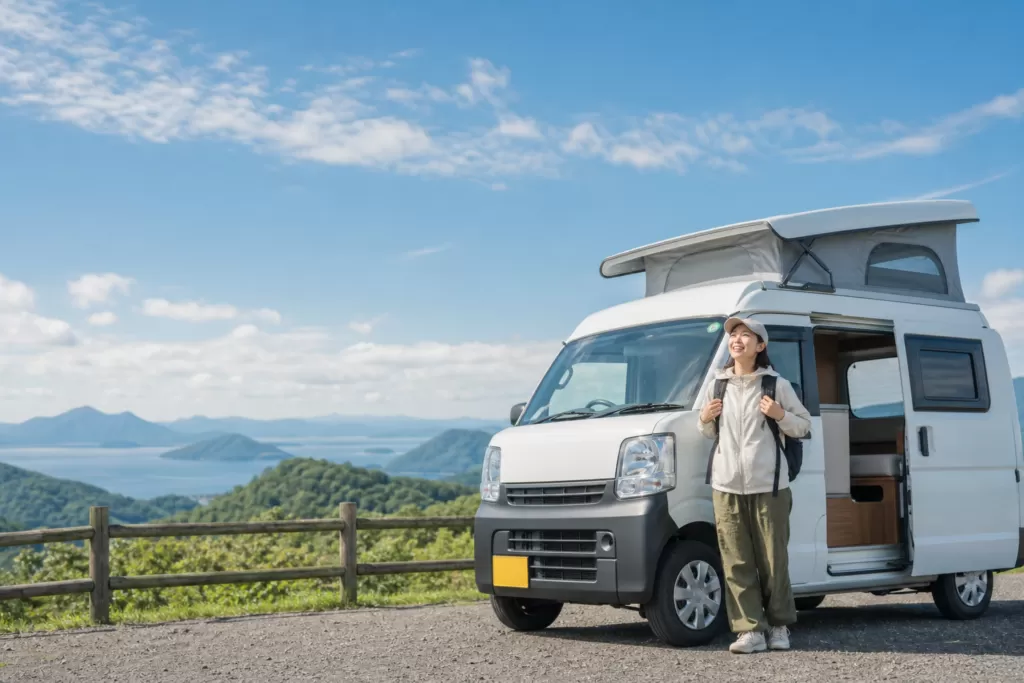
Many people wonder if a special license or experience is required to drive a campervan. In reality, most rental campervans in Japan can be driven with a standard driver’s license. With some advance knowledge, even first-timers can safely and comfortably enjoy a Hokkaido campervan trip.
This guide covers everything beginners need to know — from the booking process to vehicle pickup, driving, overnight parking rules, and return.
For cost simulations, model routes, and Michi-no-Eki overnight parking rules — the fuller picture of Hokkaido campervan travel — see our Complete Guide to Hokkaido Campervan Travel.
Most First-Time Concerns Can Be Resolved in Advance
| Common Concern | The Reality |
|---|---|
| Do I need a special license? | Vehicles under 8t gross weight and up to 10 passengers are covered by a standard license — the vast majority of rental campervans qualify |
| Is the vehicle too large to drive? | Most are 5–6m long. Backup cameras are standard, and they become easy to handle with practice |
| Is operating the electrical/water systems complex? | The rental company gives a thorough walkthrough at pickup. An operations manual is always on board |
| What if something breaks down? | Roadside assistance insurance is standard. Most operators offer 24-hour emergency support |
The most common “mistake” first-timers report is not paying full attention during the pickup explanation. The walkthrough takes 20–40 minutes, but how well you absorb it makes a huge difference to your trip. Ask every question you have on the spot — that’s what the staff is there for.
The Process from Booking to Return
Compare Hokkaido Campervan Rentals
Base yourself at New Chitose Airport and compare rates, vehicle types, and pickup locations all in one place.
Compare rental companies and prices →STEP 1: Compare and Inquire
Start by comparing multiple operators and narrowing down your options. Key points to check:
- Your desired dates, group size, and vehicle type (van conversion, cab-over, or kei camper)
- What’s included in the price (insurance, one-way drop-off, ETC card, chairs, etc.)
- Pickup and return locations (near your home or near the airport)
- NOC (Non-Operation Charge) policy and whether a liability waiver plan is available
In Hokkaido, many operators are concentrated around New Chitose Airport. If you’re flying in, choosing an operator with airport pickup saves you extra travel.
STEP 2: Contract and Payment
After confirming your booking, you’ll review contract documents and complete payment. Many operators now handle this fully online.
- License details for all drivers are required (additional drivers must be pre-registered)
- A credit card deposit may be required — typically tens of thousands to ¥100,000
- Always check the cancellation policy — many operators charge fees from one week before pickup during peak season
STEP 3: Vehicle Pickup
On pickup day, allow a comfortable 1–1.5 hours. Trying to rush through this will cause problems later.
STEP 4: The Trip and Return
The evening before your return, fill up fuel and clean the interior so the return day goes smoothly. If you think you’ll be late, call the operator in advance.
What to Check at Pickup
Exterior and Damage Inspection
- Walk around the entire vehicle with a staff member and record any existing scratches or dents on the inspection sheet
- Take photos and video with your smartphone (useful for resolving disputes later)
- Roof scratches are easy to miss — use a step ladder if possible to check
- Pay close attention to: rear bumper, side mirrors, roof air conditioner (raised section)
Equipment Check
- Cooking utensils (pots, pans, knife, cutting board) — confirm they’re all there
- Bedding (futon/blanket/pillow) — check there’s enough for your group
- Gas and kerosene levels — note the amounts at pickup
- External power cable, table and chairs
- Tools, warning triangle, emergency flares (confirm they’re on board)
Operations Walkthrough Items
- Engine start, air conditioning, lights
- Sub-battery on/off
- How to refill the fresh water tank and where to dispose of grey water
- FF heater startup and fuel refilling
- Toilet usage and cassette disposal (for cassette-type)
- Roof bed and sliding door operation
Toilet and Heating Systems
Toilet
- Cassette toilet: Add a dedicated decomposing agent before use. Remove the cassette (waste tank) and dispose of it at designated facilities at campsites or RV parks
- Flush toilet (typically in larger models): Waste collects in a black tank. Dispose at dump stations at RV parks or campsites
- Showering uses a lot of water — using public hot spring facilities (onsen) is the practical approach
FF Heater
An FF heater (forced combustion heater) runs on kerosene. In Hokkaido, temperatures can drop below 10°C at night even in May and September, so knowing how to use it is important.
- Fuel: white kerosene. Note the level at pickup and refill at gas stations when low
- Carbon monoxide risk during sleep is minimal, but never block the ventilation slots
- Fuel consumption: approx. 0.3–0.5L per hour
Power Management Notes
| Device | Power Consumption | Notes |
|---|---|---|
| LED lighting | Low | Can run for extended periods on sub-battery |
| 12V refrigerator | Medium | No issue while driving. Watch levels during long stationary periods |
| Microwave oven | High (900W+) | Recommended for external power (AC100V) use only |
| Air conditioner (household type) | Very high | Requires external power. Sub-battery alone cannot run it |
| Smartphone charging | Low | Use USB charging ports. Most efficient when charging while driving |
If you need external power (AC100V), book an electrical hookup site at an RV park or auto campsite. On nights without power, limiting usage to lighting, phone charging, and the refrigerator will comfortably get you through to morning.
Overnight Parking Rules and Etiquette
- Overnight at Michi-no-Eki (roadside stations): Overnight stays (as a rest stop) are permitted, but camping activities (setting up tables/chairs, BBQ, etc.) are prohibited. Avoid staying multiple consecutive nights
- Noise: Avoid idling after 10pm. Using generators at night also requires consideration for others nearby
- Garbage: Dumping large amounts of garbage in Michi-no-Eki or service area bins is poor etiquette. Use campsite or convenience store designated bins
- Prohibited areas: Overnight stays on riverbanks, public roads, or private property are not allowed. Use designated overnight parking locations
- Privacy considerations: Leave adequate space between neighboring vehicles. Open and close doors quietly at night
Staying overnight at Michi-no-Eki is treated as a “rest stop,” not a campsite. Confirm the local rules in advance for cooking, tent setup, or outdoor table use.
What to Do Before Return
- Fuel: Return with the same level of gasoline, kerosene, and gas as at pickup (depending on contract terms)
- Cleanliness: Interior cleaning is often included in the rental fee, but food debris or excessive mess may incur additional charges
- Re-check for damage: Do a full walkround inspection at return, just like at pickup. Keep photos as evidence
- Equipment: Confirm all borrowed equipment is returned
- Grey/black water tank: Do not return with a full tank. Empty it at a campsite or RV park beforehand
For help choosing a rental and comparing multiple operators, see our Hokkaido Campervan Rental Comparison Guide. For troubleshooting if something goes wrong, see our Campervan Rental Trouble Guide.
Common Beginner Mistakes
- Rushing through the pickup explanation and leaving without fully understanding the controls
- Trying to enter a multi-story car park and nearly hitting the roof
- Running low on fuel in eastern or northern Hokkaido (gas stations can be very far apart)
- Grey water tank filling up and losing time searching for a disposal point
- Trying to dispose of toilet cassette at a Michi-no-Eki and being turned away
- Trying to use the microwave without external power and tripping the breaker
- Mounting a kerb while reversing and damaging a tyre
- Being complained at for idling the engine at night near other campervans
Most of these mistakes can be avoided by following three habits: thorough pickup checks, routine fueling and waste disposal, and stepping out to check clearance before reversing.
How to Plan a Comfortable First Hokkaido Trip
Many first-timers wonder where to start in Hokkaido and how far to travel each day. The key is not to be too ambitious — focusing on a base area leads to a much more comfortable trip.
Suggested Itinerary for First-Timers (New Chitose → Lake Shikotsu → Lake Toya, 2 nights/3 days)
Arriving at New Chitose Airport, picking up your campervan, and spending 2 nights/3 days exploring the central Hokkaido area is ideal for beginners.
| Day | Route | Notes |
|---|---|---|
| Day 1 | New Chitose Airport (pickup) → grocery shopping in Chitose → overnight at Lake Shikotsu | Approx. 40km. Pickup takes time, so stay close on the first night |
| Day 2 | Lake Shikotsu sightseeing (canoeing, lakeside walk) → Noboribetsu hot spring (day bath) → overnight at Lake Toya | Approx. 100km. Experience a famous hot spring on the way |
| Day 3 | Lake Toya sightseeing (Silo Observation Deck, Mt. Usu) → Oshamanbe kani-meshi lunch → Onuma Quasi-National Park → head toward Hakodate or return location | Approx. 150km. End with Hokkaido’s southern scenery |
This route avoids busy city centres and stays on roads that are easy to drive in a campervan. Major attractions are well-spaced, and you’ll be surrounded by Hokkaido scenery from the very first night.
Daily Distance Guide (150km or Less Is Comfortable)
A common trap for first-timers is being too ambitious and exhausting yourself. Hokkaido looks wide on a map, and distances between attractions are usually longer than they appear.
- Comfortable daily driving distance: 100–150km. This leaves plenty of time for sightseeing, meals, bathing, and sleep
- Eastern Hokkaido (Kushiro–Shiretoko–Nemuro) has very long distances between attractions — a whole day can disappear just driving. Think “one area per day”
- Sightsee in the morning, travel and shop in the afternoon, bathe and secure your overnight spot in the evening. Making this a daily habit keeps things flowing
- Not sticking to the plan is normal in campervan travel. Finding somewhere you love along the way and making a detour is what makes the trip memorable
Common Worries and Where to Resolve Them
Addressing your concerns before departure leaves you more relaxed on the road.
- “I don’t know how to operate it” → The pickup walkthrough is the most important moment. Ask everything until you’re clear — the staff will explain as many times as needed. Recording the walkthrough on video so you can refer back to it later is a great idea
- “What if something goes wrong?” → Most operators provide a 24-hour emergency number. Save it to your phone at contract time. Choosing an operator with roadside assistance included gives extra peace of mind
- “What if I can’t find somewhere to sleep?” → Use services like RV Park Hokkaido, CarStay, or Kurukuru Navi to pre-identify 2–3 overnight candidates. Having multiple options is much safer than committing to one
- “When should I refuel?” → Refuel when the gauge reaches half. In eastern and northern Hokkaido, gaps between gas stations can exceed 100km — check your map app in advance for those stretches
Recommended Campervan Rentals
Frequently Asked Questions (FAQ)
Q1: Can I drive with a standard driver’s license?
Yes — almost all rental campervans in Japan can be driven with a standard car license (including automatic-only). However, some larger campervans or vehicles with 11 or more passengers require a medium or large license. Always check the license requirements before booking. Licenses obtained before June 2007 (old standard license) are equivalent to the current “semi-medium license” and cover a broader range of vehicles.
Q2: How do I use the toilet?
Cassette toilets are the most common type. Add a dedicated decomposing and deodorising agent before use. When the cassette (waste tank, typically 15–20L) is full, empty it at the toilet waste disposal facility at a campsite or RV park. Disposing in a Michi-no-Eki or regular public toilet is strictly against etiquette and may be prohibited.
Q3: Will parking be difficult?
Hokkaido’s tourist spots and Michi-no-Eki generally have wide parking areas that accommodate large vehicles, so it’s less of an issue than in cities. However, popular spots like Shiretoko Goko Lakes and Biei’s hills can fill up during peak summer season. Arriving early or switching to walking or cycling at congested sites is effective. Coin-operated car parks typically have height restrictions and are not suitable for campervans.
Q4: How cold are Hokkaido nights? Is the heating sufficient?
Even in July and August, Hokkaido nights can drop to 10–15°C. In May, June, and September, temperatures below 5°C are not unusual. A campervan fitted with an FF heater handles this comfortably, but we recommend bringing extra sleeping bags or blankets. Running the FF heater on a timer overnight to guard against early-morning drops keeps things very comfortable.
Q5: Is it suitable for families with children?
Campervan trips in Hokkaido are very popular with families. However, the number of seatbelts and whether a child seat can be installed varies by vehicle. Before booking, confirm with the operator whether child seats can be fitted and whether everyone can ride safely within the passenger limit. While driving, movement in the cabin (living area) is dangerous — ensure everyone is seated and belted before moving off.
Book a Campervan in Hokkaido
Moving Inn New Chitose Airport supports English booking and offers airport transfers.
![When and Where Can You See Harbor Seals at Cape Erimo? Kaze no Yakata Official Information, Viewing Season, and Windy-Day Notes [2026-27]](https://hokkaido-campingcar.jp/wp-content/uploads/2026/10/erimo-cape-lighthouse-768x511.jpg.webp)
![Where and Under What Conditions Can You See Diamond Dust in Hokkaido? How Cold a Morning It Takes, and Where It Appears [2026-27]](https://hokkaido-campingcar.jp/wp-content/uploads/2026/10/hokkaido-diamond-dust-nayoro-768x512.jpg.webp)
![Can You Drive to Hokkaido Jingu for Hatsumode? Parking, Crowds, and Where to Park and Walk [2027]](https://hokkaido-campingcar.jp/wp-content/uploads/2026/10/hokkaido-jingu-winter-torii-768x504.jpg.webp)
![Hokkaido Roads Over New Year [2026-27] | Expressway Sections Prone to Blizzard Closures, Forecast Congestion Days, No Holiday Discount, and New Chitose Airport Parking](https://hokkaido-campingcar.jp/wp-content/uploads/2026/10/hokkaido-winter-rural-road-edge-markers-768x432.jpg.webp)
![Where to See Sea Smoke (Kearashi) in Hokkaido: Rumoi’s Ogon-misaki and the Morning Conditions [2026-27]](https://hokkaido-campingcar.jp/wp-content/uploads/2026/10/rumoi-kearashi-sea-smoke-768x511.jpg.webp)
![Geminid Meteor Shower 2026 in Hokkaido: Peak Around 23:00 on December 14, Sapporo Moonset 20:40, and Staying Warm in a Winter Campervan [2026]](https://hokkaido-campingcar.jp/wp-content/uploads/2026/10/geminids-2026-hokkaido-768x575.jpg.webp)