The Complete Guide to Camper Van Overnight Parking Spots in Hokkaido (Summer 2026)
Pick a campervan by what matters to you.
Rent at New Chitose Airport
See only the rental bases in Chitose, where the airport is.
Rent in winter (Dec–Mar)
Companies that rent through winter, listed apart from those that close.
Guide price
Moving Inn New Chitose Airport: HIACE van conversion from ¥22,000 per night. 20–30% off when booked 60–90 days ahead (official rate table, checked 15 Oct 2026).
New Chitose Airport map for campervan travellers →
Before you book: with an International Driving Permit if your country is in the Geneva Convention (for example the US, Australia, Singapore); Taiwan, Switzerland, Germany, France, Belgium and Monaco need your licence plus a Japanese translation (Tokyo Metropolitan Police). Questions in English: Moving Inn on WhatsApp. Every roadside station (michi-no-eki) must have free 24-hour toilets, and Hokkaido has 128 of them (MLIT).
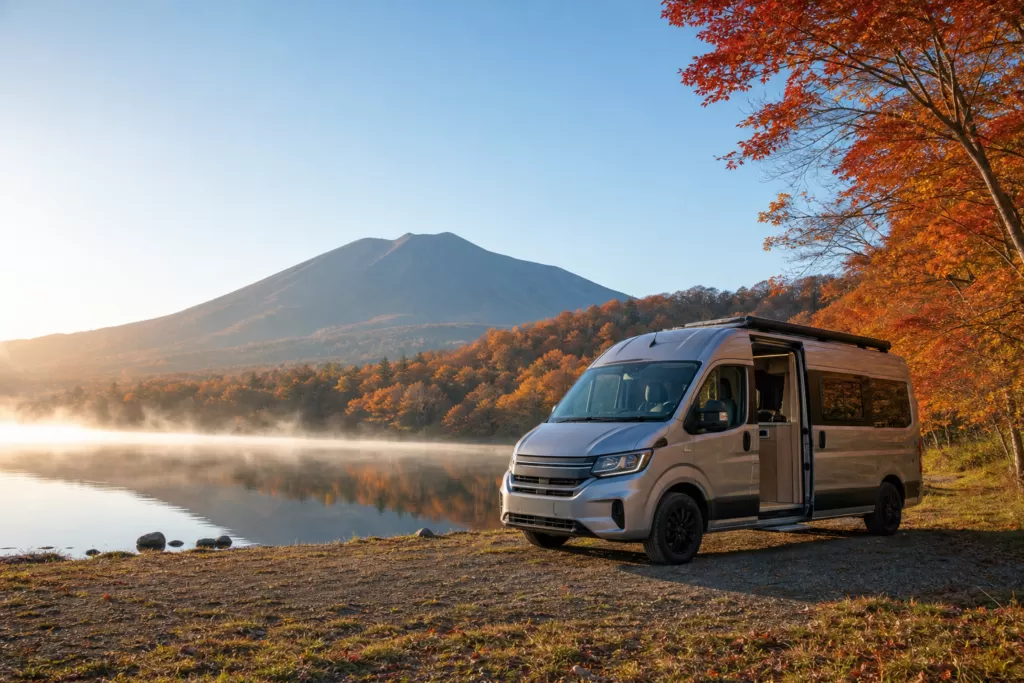
The Complete Guide to Camper Van Overnight Parking in Hokkaido: How to Roam Freely Around the Island
The real appeal of touring Hokkaido in a camper van comes down to one thing: you can stop wherever you like, whenever you like. Across this vast island there are hundreds of spots suited to overnight parking and car camping, from RV parks and campgrounds to roadside stations known as michi-no-eki. In this guide, we’ve rounded up the best overnight parking spots by region, plus model routes built specifically around camper van travel.
New Chitose Airport / Tokachi-Obihiro Airport
Rent the Cabcon “Cresson Journey”
Base yourself at New Chitose Airport and compare rates, vehicle types, and pickup locations all in one place.
See details at Moving Inn →What to Know Before Sleeping in Your Camper Van in Hokkaido
At Michi-no-Eki, Overnight Parking Means Rest, Not Camping
Parking overnight at a michi-no-eki (roadside station) isn’t illegal, but leaving your engine running or setting up tables and chairs outside your vehicle is considered poor etiquette. These stops are meant for rest and a short sleep, not full-on camping. Some facilities explicitly prohibit long-term parking for camper vans, so it’s worth checking the official website beforehand.
RV Parks vs. Campgrounds: What’s the Difference?
RV parks are certified by the Japan RV Association specifically for overnight vehicle stays, with power hookups, restrooms, and waste disposal on site. Expect to pay around 1,500 to 3,000 yen a night. Campgrounds, on the other hand, are often shared with tent campers and usually have cooking areas and showers, though nighttime rules can be stricter. Which one suits you best really depends on your travel style and what you’re after that night.
Mind Hokkaido’s Seasons and Climate
The main season for camper van travel in Hokkaido runs from late May through early October. Campground bookings fill up fast from June to August, especially on weekends, so plan ahead. From September onward, morning and evening temperatures can dip into single digits, so pack a sleeping bag even if your camper van has heating. Between November and April, many facilities in northern and eastern Hokkaido close entirely, so if you’re planning a winter trip, confirm availability in advance.
Central Hokkaido: Best Overnight Spots Near Sapporo
RV Park Kitahiroshima (Kitahiroshima City)
About 20 minutes by car from New Chitose Airport, this is a popular first stop for travelers who’ve just picked up their rental camper van and want to hit the road right away. Powered sites make it a great base for arriving the night before and setting off across Hokkaido the following morning. A nearby supermarket makes stocking up on groceries easy too.
Michi-no-Eki Maoi no Oka Park (Naganuma Town)
Set in rolling hills against the backdrop of the Yubari mountains, this roadside station has a spacious parking lot with plenty of room even for large camper vans. It’s well stocked with local vegetables and specialty goods, making it a handy stop for restocking supplies mid-trip.
Lake Shikotsu Onsen Area (Chitose City)
Known as Hokkaido’s largest caldera lake and famous for its clarity, Lake Shikotsu is ringed by several campgrounds. Morappu Campground lets you pitch a tent or park your camper van right along the shore, and waking up to breakfast with the lake in view is something special. The nearby day-use hot spring Marukoma Onsen Ryokan is also worth a soak, even if you’re not staying overnight there.
Eastern Hokkaido: Spots Where You’ll Have Nature All to Yourself
Lake Mashu and Lake Kussharo (Teshikaga Town)
Nearly every camper van traveler exploring eastern Hokkaido passes through this area. Sunayu Campground on Lake Kussharo is famous for its natural hot spring right beneath the sand — dig a hole on the shore and warm water bubbles up, which is about as good as overnight parking gets. Lake Mashu can look almost otherworldly wrapped in mist before dawn, and staying nearby the night before means you can catch that view first thing in the morning.
Notsuke Peninsula and Shiretoko (Shibetsu Town, Shari Town)
Notsuke Peninsula is Japan’s largest sand spit, with striking stands of dead trees known as Todowara and Narawara that create a stark, unforgettable landscape. There are parking areas nearby that function much like RV parks, and watching the sunset and sunrise from there is unforgettable. Shiretoko sits at the heart of a UNESCO World Natural Heritage site, and the Utoro area has several campgrounds and RV parks. Because bears are a real risk here, be strict about storing food inside your vehicle and disposing of scraps properly.
Kushiro Wetlands and Kushiro City
The Kushiro Wetlands are best known for canoeing and the view from the observation decks — the marshland shrouded in early morning mist is a classic sight among camper van travelers. RV Park Kushiro in the city has power hookups, hot showers, and waste disposal, all in one place. Its proximity to town makes restocking supplies and handling water and waste easy, and it works well as a base for exploring the rest of eastern Hokkaido.
Northern Hokkaido: Hidden Gems Where the Crowds Thin Out
Sarobetsu Plain and the Wakkanai Area
On the way to Cape Soya, Japan’s northernmost point, the Sarobetsu Plain unfolds into an endless flat landscape that’s genuinely awe-inspiring. In Wakkanai, Michi-no-Eki Wakkanai has a large parking lot that’s easy for camper vans to access. The coastal route from Cape Soya to Wakkanai Port is beautiful simply to drive.
Bifuka, Nayoro, and Shibetsu (Northern Kamikawa)
Heading north from Asahikawa, this area sees far fewer tourists, making it a quiet hidden gem for overnight parking. The campground in Bifuka Town is great value and has an easygoing, welcoming feel with the locals. At the foot of Mount Piyashiri near Nayoro City, a well-maintained campground offers stunning summer stargazing.
Teshio, Shosanbetsu, and Haboro (Sea of Japan Coast)
Running along the Sea of Japan coast, the Orokan Line is a route beloved by road trip enthusiasts in Hokkaido. In Shosanbetsu Village, Misaki no Yu Shosanbetsu is a hot spring with sweeping ocean views, and many travelers use the adjacent parking lot for overnight stays (always check the facility’s rules first). It’s also known as a sunset spot — park facing west and you can watch the sun go down right from your window.
Southern Hokkaido: Camper Van Routes Starting from Hakodate
Hakodate City and Mount Hakodate Area
If you arrive in Hokkaido by ferry or shinkansen, Hakodate makes a convenient base for your first night. RV Park Hakodate in the city gives you easy access to the famous night view and the morning market. The parking area at the foot of Mount Hakodate gets busy with tourists chasing the night view, but it quiets down later in the evening — time your rest right and you can settle in comfortably.
Onuma Quasi-National Park and Nanae Town
About 30 minutes by car from Hakodate, Onuma Quasi-National Park offers a stunning lake view backed by Mount Komagatake. Several campgrounds line the lakeshore, and weekend bookings fill up fast in peak season, so reserve early. Pair a canoe trip on the lake with the cycling routes nearby, and you’ll find one night is barely enough.
Matsumae and Esashi (Southwestern Hokkaido)
Matsumae Town, home to Hokkaido’s only Japanese-style castle, draws crowds during cherry blossom season in spring. Esashi’s old townscape still holds merchant buildings from the herring boat era, making for a walk steeped in history. With relatively fewer tourists, it’s a good choice if you want to avoid the Golden Week or Obon crowds. The parking lot at Michi-no-Eki Esashi is spacious enough for large camper vans too.
Recommended Camper Van Model Routes
7-Day Loop Around Eastern Hokkaido
This classic route picks up your camper van at New Chitose Airport and loops counterclockwise through Obihiro, Kushiro, Shiretoko, Abashiri, Asahikawa, and back to Sapporo. Total distance runs about 1,000 to 1,200 km, averaging 150 to 170 km a day. The relaxed pace lets you spend a full night each at the Kushiro Wetlands and around Lake Mashu and Lake Kussharo.
- Day 1: New Chitose Airport to Obihiro (overnight at RV park)
- Day 2: Obihiro to Kushiro Wetlands to Kushiro City (overnight at RV park)
- Day 3: Kushiro to Notsuke Peninsula to Shiretoko Utoro (overnight at campground)
- Day 4: Explore Shiretoko (second night at same campground)
- Day 5: Shiretoko to Abashiri to Lake Kussharo (overnight at Sunayu Campground)
- Day 6: Lake Mashu to Asahikawa (overnight at michi-no-eki or RV park)
- Day 7: Asahikawa to New Chitose Airport (return vehicle)
5-Day Northern Hokkaido and Orokan Line Route
Starting from Asahikawa, head north and then loop back south along the Sea of Japan coast via the Orokan Line. Total distance is 700 to 900 km. The route sets aside two nights in the weather-dependent Wakkanai and Sarobetsu area, giving you a complete taste of northern Hokkaido’s highlights: Cape Soya, the Sarobetsu Plain, and sunset at Shosanbetsu.
- Day 1: Asahikawa to Nayoro to Bifuka (overnight at campground)
- Day 2: Bifuka to Wakkanai and Cape Soya (overnight at RV park)
- Day 3: Sarobetsu Plain to Shosanbetsu (overnight near Misaki no Yu)
- Day 4: Haboro to Rumoi to Mashike (overnight at michi-no-eki)
- Day 5: Rumoi to Asahikawa (return vehicle)
3-Day Central Hokkaido Short Route (Great for First-Timers)
If this is your first camper van trip in Hokkaido, a 3-day loop from New Chitose Airport through Lake Shikotsu, Lake Toya, and Niseko is just right. Total driving distance is around 350 km, easy enough even if long drives make you nervous. This area is also rich in hot springs, so even if your van doesn’t have a shower, you’ll still travel comfortably — another reason it suits beginners well.
- Day 1: New Chitose Airport to Lake Shikotsu (overnight at lakeside campground)
- Day 2: Lake Shikotsu to Lake Toya to Niseko (overnight at campground)
- Day 3: Niseko to Otaru to New Chitose Airport (return vehicle)
Camper van travel in Hokkaido works best when you don’t over-plan — just settle on a rough direction and where you’ll sleep each night, and stay flexible from there. The real joy of traveling this way is being able to linger somewhere you love or change your route on a whim depending on the weather. Bookmark a few spots in the areas that catch your eye, and just get on the road.
New Chitose Airport / Tokachi-Obihiro Airport
Rent the Cabcon “Cresson Journey”
Base yourself at New Chitose Airport and compare rates, vehicle types, and pickup locations all in one place.
See details at Moving Inn →Want to test a route first? In Hokkaido Sugoroku, a free browser board game, you drive real roads around Hokkaido between real RV parks and campgrounds, up to 200 km a day, and get an itinerary at the end. (How to play)
Book a Campervan in Hokkaido
Moving Inn New Chitose Airport supports English booking and offers airport transfers.
Pick a campervan by what matters to you.
Rent at New Chitose Airport
See only the rental bases in Chitose, where the airport is.

![Campgrounds Near Tokachi-Obihiro Airport: 8 Sites Within 30 km, Compared by Vehicle Access, Power and Price [2026]](https://hokkaido-campingcar.jp/wp-content/uploads/2026/10/photo-obihiro-airport-featured-pl232-768x512.jpg.webp)
![Campgrounds Near Hakodate Airport: 12 Sites Within 30 km, Compared by Vehicle Access, Power and Price [2026]](https://hokkaido-campingcar.jp/wp-content/uploads/2026/10/photo-hakodate-airport-featured-hl4722-768x484.jpg.webp)