When Are the Orionids 2026 Best Seen in Hokkaido? Peak Night and Dark-Sky Viewing Spots
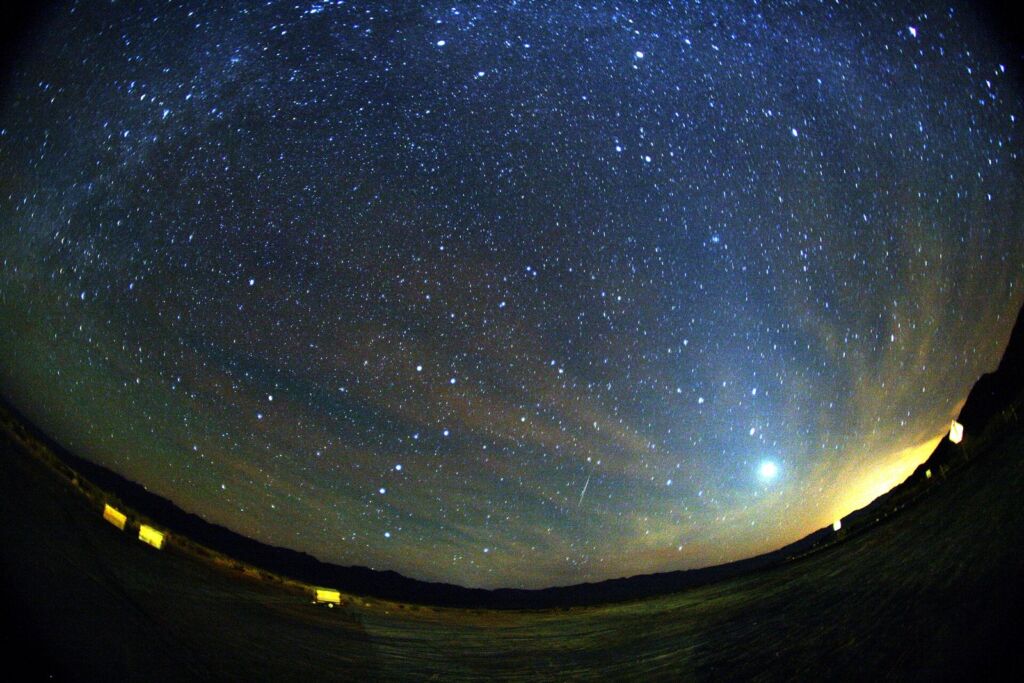
The 2026 Orionid meteor shower is at its best in Hokkaido around October 22. The National Astronomical Observatory of Japan (NAOJ) states that “the best viewing period is from midnight to pre-dawn over the several days centered on the peak, at a rate of about 5 to 10 meteors per hour.” It also notes that the moon is still fairly bright as of the 22nd, and conditions improve once the moon sets before dawn.
This article confirms the peak date and expected meteor count from NAOJ’s announcement, then covers the effect of moonlight, how to think about finding dark spots in Hokkaido, how cold the nights get in late October, and what to prepare in terms of heating and power if you plan to wait from midnight until dawn in a campervan.
For temperatures and clothing across all of October, see Hokkaido in October: Temperatures and What to Wear. If you haven’t decided when to travel at all, The Best Season for a Hokkaido Campervan Trip covers that in detail.
Unless noted otherwise, the astronomical and temperature figures in this article are primary-source data checked on 2026-09-29. The meteor shower’s date and expected count are from the National Astronomical Observatory of Japan; temperatures are from the Japan Meteorological Agency’s 10-day normal values, which are typical seasonal reference figures, not a forecast for any specific day.
Compare Hokkaido Campervan Rentals
Base yourself at New Chitose Airport and compare rates, vehicle types, and pickup locations all in one place.
Compare Rental Companies & Vehicles →Orionids 2026: when is the best night to see them in Hokkaido?
NAOJ’s “Tokyo Night Sky, Calendar & Planets (October 2026)” lists this event for October: “22nd — around this date, the Orionid meteor shower peaks (best viewed from midnight to pre-dawn over the several days centered on the peak, at about 5 to 10 meteors per hour; conditions are good once the moon sets before dawn)” (National Astronomical Observatory of Japan, “Tokyo Night Sky, Calendar & Planets (October 2026)”). Aim for the 22nd and the days around it, and for the hours from around midnight until dawn.
You don’t need to wait for “the exact moment of the peak” down to the second. As NAOJ describes it, the days around the 22nd behave much the same way. Think of it as a window that lets you skip a night with bad weather and pick a clear one instead. The same rough timing and meteor count apply anywhere in Hokkaido; differences in how well you can see them mainly come down to how dark the sky is.
How much does moonlight get in the way? Conditions during a waxing moon heading toward full
According to the same NAOJ calendar, October 2026 has a new moon on the 11th, first quarter on the 19th, and full moon on the 26th. The peak on the 22nd falls in the phase between first quarter and full moon, so the moon is up and bright during the evening hours.
NAOJ’s note that “conditions are good once the moon sets before dawn” reflects this moon phase. From evening through midnight, moonlight makes faint meteors hard to see, so the real window is the pre-dawn hours after the moon has set. Moonset time varies day to day, so check the exact time for your date with an official source such as NAOJ’s Ephemeris Computation Office before you head out.
About how many meteors per hour? NAOJ’s guideline figure
NAOJ’s guideline for the meteor count is “about 5 to 10 per hour.” This is described as the roughly maximum hourly rate under a dark sky where you can see the Milky Way, during the best viewing period. Watching under city lights, or outside the peak period, can bring the count down to a fraction of that, according to NAOJ.
Conversely, under good sky conditions and with practice at observing, you may see more than the guideline number. Treat the figure not as a “guaranteed count” but as “a rough guide for a certain amount of waiting time under a sky with no city lights.”
Where in Hokkaido are the stars densest? How to find a dark spot
Meteors show up better the darker the night sky is. One yardstick for darkness within Hokkaido is a location officially recognized as such by the Environment Agency (now the Ministry of the Environment) or by local municipalities. Rikubetsu Town, for example, “was selected as a ‘Town of Starry Skies’ by the Environment Agency (now the Ministry of the Environment) in fiscal 1987, and certified among the ’10 Selected Towns Kind to the Starry Sky’ in fiscal 1997” (Rikubetsu Town, “Ginga no Mori Observatory (Rikubetsu Space & Earth Science Museum)”). The town has a public observatory with a 115 cm reflecting telescope, one of the largest of its kind in Japan, and this designation is an officially recognized result of the town’s own efforts.
The basic idea for finding a spot is simple: conditions improve the farther you get from city lights, and the better the parking lot or open space is at avoiding streetlights and signage. Areas designated as “Towns of Starry Skies” are one useful benchmark. Always check the day’s weather and road conditions with the latest local information, and don’t enter private property or areas that are off-limits.
How cold do Hokkaido nights get in late October? Temperatures at 11 locations
A night spent waiting for a meteor shower means either standing outside for a long time or looking up at the sky from inside your vehicle. Either way, you need to know how cold late-October nights get. Here are the average daily high/low temperatures for late October from the Japan Meteorological Agency’s 10-day normal values (1991–2020):
| Location | Late Oct. High / Low (°C) |
|---|---|
| Muroran | 14.1 / 8.1 |
| Hakodate | 15.1 / 6.0 |
| Wakkanai | 12.0 / 6.3 |
| Date (reference for the Lake Toya area) *1 | 14.3 / 5.4 |
| Abashiri (reference for the Shiretoko area) | 13.0 / 5.1 |
| Kushiro | 13.3 / 4.2 |
| Obihiro | 13.7 / 3.2 |
| Chitose (around New Chitose Airport) *2 | 14.0 / 2.3 |
| Furano | 12.6 / 2.3 |
| Asahikawa | 12.6 / 2.5 |
| Sapporo | 14.3 / 6.1 |
The coldest spots are Furano, Asahikawa, Chitose, and Obihiro, where the pre-dawn low sits in the 2–3°C range. If you stand outside from midnight until dawn, it will feel colder still than these numbers suggest. Muroran, Hakodate, and Wakkanai are relatively mild for Hokkaido, but nights there are still single-digit temperatures. Full details on how temperatures change across October and what to wear are in the article linked above.
Waiting out the meteor shower in your vehicle: how do you prepare heating and power?
A campervan’s strength is that you can look up at the sky from inside, even in the cold outside. If your vehicle has a window or part of the roof that opens, you can check the sky while staying warm inside and only step outside when a meteor streaks by. Whether this way of waiting is actually workable comes down to how well you’ve prepared your heating and bedding.
An FF heater is what lets you heat the vehicle without the engine running. Keeping the engine on for several hours from midnight to dawn isn’t realistic in terms of noise and fuel, so whether or not you have an FF heater determines whether you can comfortably wait in the vehicle until morning. How it works and how to use one is covered in the article on how FF heaters work and how to use them, and what to check for sleeping warmly is in the article on what to check to sleep warmly in a Hokkaido campervan in winter. If your plan is to wake up once around midnight to check the sky and go back to sleep, how warm your bedding is directly affects how easy it is to keep observing.
Heating and lighting run on the sub-battery, so using them all night increases your power draw. If you don’t plan to drive back somewhere during the day, also consider parking where you can get shore power, or topping up the charge during daylight hours.
New Chitose Airport / Tokachi-Obihiro Airport
See Moving Inn’s Campervans
Check vehicle types, rates, and availability on the official site.
See Details on Moving Inn →What to watch for when spending the night at an RV park or Michi-no-Eki
If you’re going to be outdoors late into the night for a meteor shower, where you park needs to be checked not just for darkness but for whether staying overnight there is actually allowed. Michi-no-Eki parking lots are meant for rest stops and aren’t designed around extended outdoor activity. RV parks, built with overnight stays in mind, are the ones with clear rules on power, waste disposal, and nighttime use.
A list of RV parks around Hokkaido, along with rates, power availability, and winter operating status, is summarized in the article listing Hokkaido’s RV parks. Whether the RV park near your destination has an open parking area with a clear view of the sky, and where the streetlights are, should be checked on the official site or on site, together with how busy it is that day.
Do you need binoculars or a camera? What to check before you worry about gear
The short answer is no — you don’t need binoculars or a telescope to watch the Orionids. Meteors move quickly across a wide stretch of sky, so gear with a narrow field of view actually makes them harder to track. What you need is your own eyes and about 15–20 minutes for them to adjust to the dark. Simply avoiding your phone screen also makes a noticeable difference.
If you want to capture it on camera, you’ll need a camera, tripod, and long-exposure settings, but this article doesn’t go into that level of detail. How to shoot night-sky photos and the main Milky Way photo spots are covered in the Hokkaido Campervan Stargazing Photo Guide. For now, prioritize watching with your own eyes.
Pre-observation checklist
Here are the things to check before you leave and once you’re on site, in order.
- Date: pick a clear night from the days centered on October 22
- Time: from around midnight until dawn; it gets darker once the moon sets before sunrise
- Location: somewhere away from city lights, or use a designated “Town of Starry Skies” area as a benchmark
- Where to park: an RV park built for overnight parking, or a spot where you’ve confirmed the local rules
- Clothing: gloves, a knit hat, a heavy coat. Late-October nights are single digits (°C) at many locations in Hokkaido, and near freezing further inland
- In-vehicle prep: check your heating (FF heater), bedding, and remaining power before you leave
- What to bring: no gear needed. Let your eyes adjust for 15–20 minutes with the naked eye, then wait
Frequently Asked Questions
When is the peak of the 2026 Orionid meteor shower?
Per NAOJ’s announcement, around October 22. The best viewing period is from midnight to pre-dawn over the several days centered on the peak. You don’t need to hit the exact date — just pick a clear night from among the days around it.
Does moonlight affect visibility?
Yes. In October 2026, first quarter falls on the 19th and full moon on the 26th, so the moon phase on the 22nd peak is close to full. From evening through midnight, moonlight makes faint meteors hard to see, and NAOJ also states that “conditions are good once the moon sets before dawn.”
How many meteors can I expect to see per hour?
NAOJ’s guideline is about 5 to 10 per hour. This is the figure for watching under a dark sky during the best viewing period; with city lights nearby, it can drop to a fraction of that.
Where in Hokkaido is best for viewing?
Choose somewhere away from city lights. Rikubetsu Town has an official track record of being designated a “Town of Starry Skies” by the Environment Agency (now the Ministry of the Environment), making it one useful benchmark for darkness. Spot-finding that includes photography is covered in the stargazing photo guide article.
Do I need a telescope or binoculars?
No. Meteors are actually easier to spot with the naked eye’s wide field of view, so no gear is required. Wait for about 15–20 minutes, away from light sources, to let your eyes adjust to the dark.
What should I prepare if I’m waiting in my vehicle?
Late-October nights bring single-digit lows at most locations in Hokkaido, dropping to the 2–3°C range further inland. Check your FF heater, bedding, and remaining power before you leave, and also confirm the rules for wherever you park, such as an RV park built for overnight stays.
Read Next
- Hokkaido Campervan Stargazing Photo Guide: Milky Way and Night-Sky Photo Spots, and Techniques for Shooting from an Overnight Parking Spot [2026 Edition]
- Hokkaido in October: Temperatures and What to Wear — Early and Late October Are a Different Trip for Campervan Travel [2026]
- List of RV Parks in Hokkaido: Rates, Power, Hot Springs, and Winter Operating Status [2026 Edition]
- What Is an FF Heater for a Campervan? How It Works, How to Use It, Fuel Efficiency, and Where in Hokkaido You Can Rent One With an FF Heater [2026 Edition]
- What Should You Check to Sleep Warmly in a Hokkaido Campervan in Winter?
- When Is the Best Season for a Hokkaido Campervan Trip? Comparing Climate, Crowds, and Cost Across the Four Seasons [2026 Edition]
Featured photo: Brocken Inaglory, “Orionid Meteor(1)” (CC BY-SA 3.0, Wikimedia Commons)
Book a Campervan in Hokkaido
Moving Inn New Chitose Airport supports English booking and offers airport transfers.

![Monbetsu Drift Ice Festival 2027 [Feb 11–14]: Dates, Ice Sculptures, Garinko-go Icebreaker, Parking and Access by Campervan](https://hokkaido-campingcar.jp/wp-content/uploads/2026/10/monbetsu-hl999-768x576.jpg)
![Hokkaido New Year Weather and What to Wear | Sapporo, Hakodate, Asahikawa, Obihiro Mornings and Evenings, and Heavy-Snow Years [2026-27]](https://hokkaido-campingcar.jp/wp-content/uploads/2026/10/hokkaido-new-year-holiday-weather-eyecatch-768x432.webp)
![Hokkaido Illumination 2026-27 [Dates]: Sapporo Starts Nov 20, Plus Otaru, Asahikawa, Obihiro & Hakodate for Campervan Trips](https://hokkaido-campingcar.jp/wp-content/uploads/2026/10/hokkaido-illumination-2026-eyecatch-768x432.webp)
![What to Do in Tokachi in Winter: Dog Sledding, Snowshoeing, the Shikaribetsu Ice Village, and Staying at Kitanomori [2027]](https://hokkaido-campingcar.jp/wp-content/uploads/2026/10/tokachi-winter-dogsled-1-768x432.jpg)
