Where to See Sea Smoke (Kearashi) in Hokkaido: Rumoi’s Ogon-misaki and the Morning Conditions [2026-27]
Kearashi (sea smoke) is mist rising off the sea on freezing mornings. Rumoi's Ogon-misaki, the Jan-Feb season, conditions, and where to stay the night before.
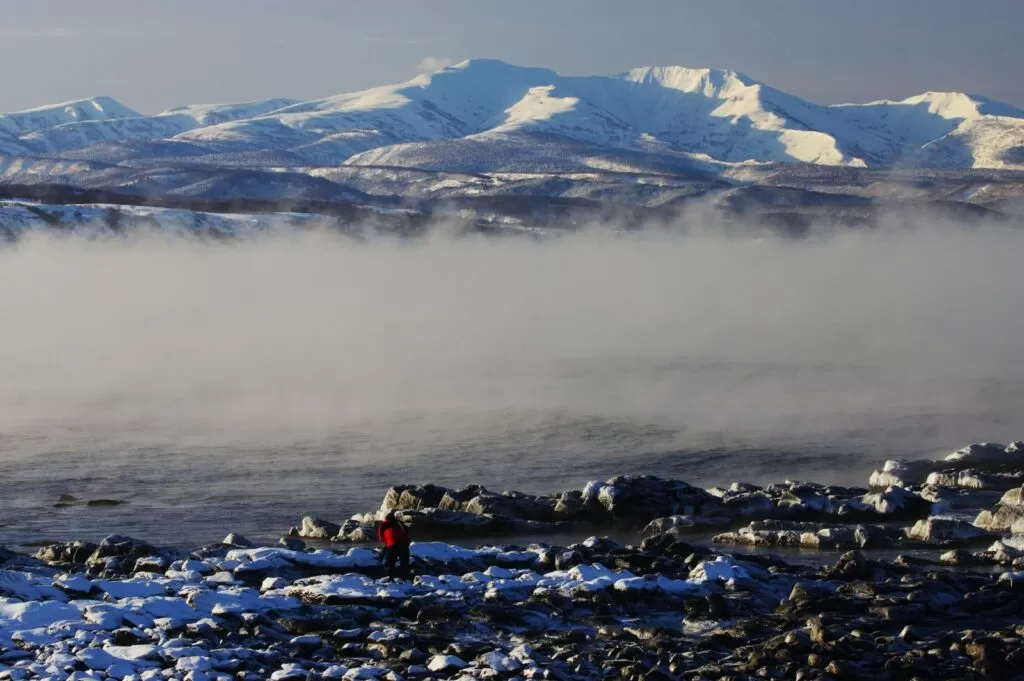
Kearashi (sea smoke, steam fog) is a phenomenon in which mist rises from the sea surface like steam on a bitterly cold winter morning. The one place in Hokkaido that an official source says you can see it is Ogon-misaki Seaside Park in Rumoi. The Tokachi River mouth (Toyokoro Town) and the Hakodate coast are listed separately as places where a newspaper reported sea smoke. This article is for people touring in winter by campervan: what kind of morning to aim for and where to spend the night before, covering only what I was able to confirm (confirmed October 14, 2026).
Compare Hokkaido campervan rentals
Base yourself at New Chitose Airport and compare rates, vehicle types, and pickup locations all in one place.
Compare rental companies and vehicles →What is sea smoke, and what kind of morning produces it?
The Rumoi Subprefectural Bureau’s photo spot page describes kearashi (sea smoke) as “a phenomenon in which mist rises from the water surface like steam on a cold day in the depths of winter, around January to February, when temperatures can drop to minus 20 degrees.” As for the mechanism, it says that “when the water is warmer than the air, the cold air over land flows slowly out over the sea, water evaporates from the surface as vapor, and is then rapidly cooled by the air” (Rumoi Subprefectural Bureau (Hokkaido Government), “Photo Spots”, confirmed October 14, 2026).
In the Japan Meteorological Agency’s forecast terminology, “fog” means a condition in which visibility is under 1 km because of tiny suspended water droplets (Japan Meteorological Agency, “Ice, frost, fog, thunder, and sunshine duration”, confirmed October 14, 2026). The same page has no entry for “steam fog” or “kearashi,” and I found no figure for how large the gap between air and water temperature must be. I will not give a number, and will limit the conditions to the following three.
| Condition | Official description |
|---|---|
| Cold | A cold day, around January to February, when temperatures can drop to minus 20 degrees |
| Water and air | The water surface is warmer than the air |
| Air movement | Cold air over land flows slowly out over the sea |
In other words, you should not expect it on a windy day or a mild morning. Before you set out, check the weather forecast to see whether the night is likely to turn cold and whether the wind looks light.
Where in Hokkaido can you see it? The official source names Ogon-misaki in Rumoi
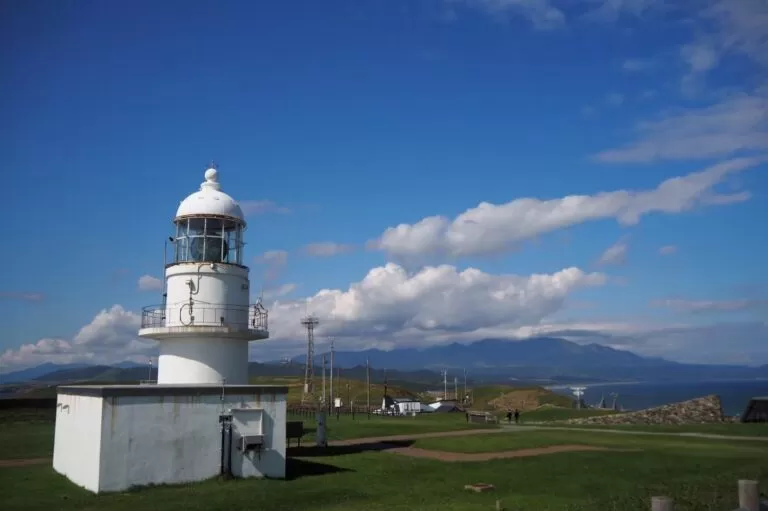
The official Rumoi City website introduces Ogon-misaki Seaside Park with the line “In winter you may also see the rare ‘kearashi.'” On the Rumoi Subprefectural Bureau’s photo spot page as well, the only entry that mentions kearashi is the one for Rumoi City (Rumoi City, “Sightseeing in Rumoi”, confirmed October 14, 2026).
One thing to note: the same page gives the park’s opening period as “April 25 (Sat) to October 12 (Mon),” which is a summer season. If you plan to go in winter, check by the day before with the Rumoi City Economic and Tourism Division or the Rumoi Tourism Association (contact details are on the same page) to confirm that you can park.
The route to Rumoi and places to stay, including Michi-no-Eki Rumoi, are covered in Driving Mashike and Rumoi by Campervan.
Places reported in the news: Tokachi River mouth, Hakodate, and Rumoi Port (no official guide yet)
These places do not appear in official tourist guides, but a newspaper has reported sea smoke at each. The source is Hokkaido Shimbun articles, not a municipality or tourism association, so I do not count them among the “places you can see it” and list them here separately. If an official guide turns up, I will move them to the section above.
| Place | What was reported | Source |
|---|---|---|
| Near the Tokachi River mouth, Otsu, Toyokoro Town | In late December, as the river began to freeze, sea smoke rose from the sea and river surfaces and turned pink in the morning sun. The early-morning temperature on the coast was minus 12.6 degrees. | Hokkaido Shimbun, December 26, 2023 (confirmed October 14, 2026) |
| Coast of Yunokawa, Hakodate | In mid-January, on a morning when Hakodate’s low was minus 14.4 degrees, sea smoke filled the air. | Hokkaido Shimbun, January 14, 2014 (confirmed October 14, 2026) |
| Over the sea near Rumoi Port and Ogon-misaki | In early February, on a morning when central Rumoi was at minus 17.9 degrees, sea smoke filled the bay from before sunrise. | Hokkaido Shimbun, February 8, 2018 (confirmed October 14, 2026) |
What the three have in common is that they were the coldest mornings of that winter. This also fits the Rumoi Subprefectural Bureau’s description of “a cold day when temperatures can drop to minus 20 degrees.” For the Otsu coast at the Tokachi River mouth, When and Where Can You See Jewelry Ice? covers the best season, parking, and consideration for the residential area. A reasonable way to look at it is to greet the morning there and treat sea smoke as a possibility if it turns out to be a cold day. The Jewelry Ice page on Hokkaido’s official tourism site mentions sunrise glow and morning sun (HOKKAIDO LOVE! “Jewelry Ice”, confirmed October 14, 2026).
Which month and what time of morning should you aim for?
The only season I could confirm is “around January to February,” as stated by the Rumoi Subprefectural Bureau. In the Japan Meteorological Agency’s normals, the average daily minimum temperature in Obihiro, Tokachi, is -8.9°C in December, -13.0°C in January, and -12.0°C in February, so January is the coldest. This is a typical-year guide, not a forecast for the day (Japan Meteorological Agency, “Normals (Obihiro, 1991-2020)” https://www.data.jma.go.jp/obd/stats/etrn/view/nml_sfc_ym.php?prec_no=20&block_no=47417, confirmed September 24, 2026). Rumoi is not a weather station, so it is not included in these figures.
Rather than fixing a time, the practical approach is to wait nearby from the night before and decide based on the cold and the wind when you wake up.
Where should you stay the night before an early-morning outing?
In Rumoi, Michi-no-Eki Rumoi is the base for overnight parking. However, a Michi-no-Eki is a place for short naps and rests, and long stays and cooking are prohibited. There is no RV park with electric hookups within Rumoi City (as of June 2026, per the earlier Mashike and Rumoi article). If your plan needs electricity, build it around staying in a different town.
For RV parks and Michi-no-Eki that are open in winter, 13 RV Parks and Michi-no-Eki Where You Can Park Overnight in Winter checks each official site one by one. If you base yourself on the Tokachi side, 5 RV Parks for Overnight Parking in Obihiro and Tokachi, and How to Use Them in Winter will help.
| Candidate for the night before | What to check |
|---|---|
| Michi-no-Eki Rumoi | Short naps and rests only. Cooking and long stays are prohibited |
| RV park (outside Rumoi) | Winter operation, and whether the electricity works in winter |
| Ogon-misaki Seaside Park parking lot | Ask Rumoi City or the tourism association whether it can be used in winter |
How do you stay warm while waiting for sea smoke?
A morning when sea smoke appears is, going by the subprefectural bureau’s description, a day when temperatures fall close to minus 20 degrees. For what to have for waiting out the morning in the vehicle, What to Check to Sleep Warm in a Hokkaido Campervan in Winter lists points to check for heating and bedding. For monthly temperatures, Hokkaido Winter Temperatures is a useful reference.
Before you head out to take photos, prepare a warm drink in the vehicle, gloves, and shoes that keep your feet warm even outside. Heating equipment differs from vehicle to vehicle depending on the rental company, so check when you book.
New Chitose Airport / Tokachi-Obihiro Airport
See Moving Inn campervans
Check vehicle types, rates, and availability on the official site.
See details at Moving Inn →Cautions when you go to see it
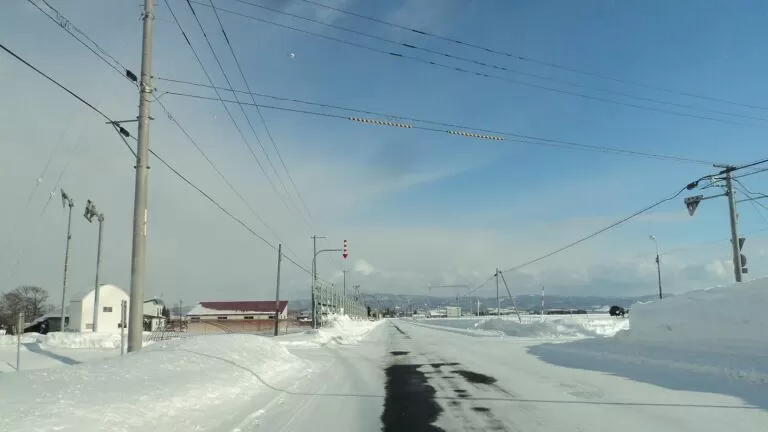
Check icy roads along the coast, wind, and places where you can park against official sources before you leave. Road closures are announced by the Hokkaido Regional Development Bureau and road administrators, and for parking, check with Rumoi City and the Rumoi Tourism Association.
On sea smoke days, the water’s edge may be frozen. Do not get too close to the water, and bring a light to illuminate your footing. For where this fits within a whole winter itinerary, 43 Things You Can Only Do in Hokkaido in Winter has the full list.
Frequently asked questions (FAQ)
What is kearashi (sea smoke)?
It is a phenomenon in which mist rises from the water surface like steam on a cold day in the depths of winter. The Rumoi Subprefectural Bureau explains that when the water is warmer than the air, cold air over land flows out over the sea and causes it.
Where in Hokkaido can you see sea smoke?
The place with an official mention is Ogon-misaki Seaside Park in Rumoi. Check with Rumoi City or the tourism association in advance about winter use.
Can you see it at the Tokachi River mouth or in Hakodate too?
The Hokkaido Shimbun has reported sea smoke at the Tokachi River mouth (December 2023), the coast of Yunokawa, Hakodate (January 2014), and Rumoi Port (February 2018). All were the coldest mornings of that winter.
Which month and what time of morning should I aim for?
The official mention is “around January to February.” Wait nearby from the night before and decide based on the cold and the wind.
Where should I stay the night before?
In Rumoi, Michi-no-Eki Rumoi is the base, but it is meant for naps and rests. If you need electricity, check winter operation at RV parks when you book.
What should I do to stay warm?
Plan for a morning close to minus 20 degrees, and check heating and bedding with the rental company. If you go outside, you will need gloves and insulated boots.
What should I be careful of when I go to see it?
Check icy roads along the coast, wind, and where you can park against official sources before you leave. Do not get too close to the water’s edge.
Pages to read next
- Driving Mashike and Rumoi by Campervan
- When and Where Can You See Jewelry Ice?
- 5 RV Parks for Overnight Parking in Obihiro and Tokachi, and How to Use Them in Winter
- Sleeping Warm in a Hokkaido Campervan in Winter
- 43 Things You Can Only Do in Hokkaido in Winter
Book a Campervan in Hokkaido
Moving Inn New Chitose Airport supports English booking and offers airport transfers.