Geminid Meteor Shower 2026 in Hokkaido: Peak Around 23:00 on December 14, Sapporo Moonset 20:40, and Staying Warm in a Winter Campervan [2026]
Geminids 2026 in Hokkaido: peak around 23:00 on Dec 14, Sapporo moonset 20:40, busiest 0:00–2:00 on the 15th, plus cold-weather tips for waiting in a vehicle.
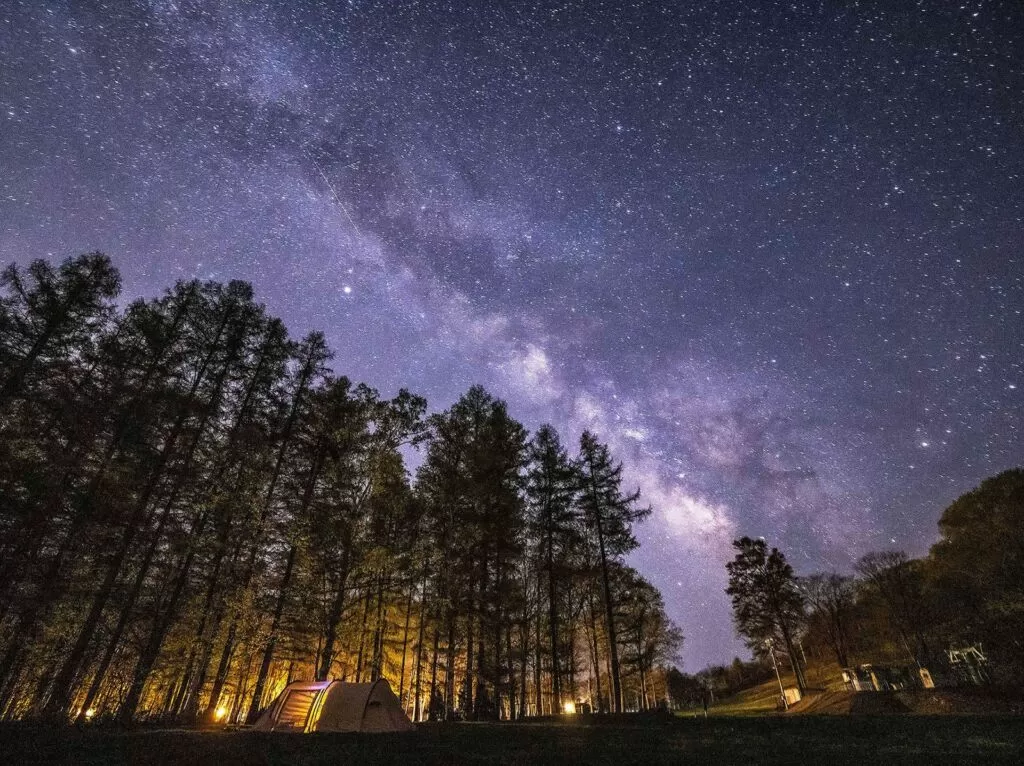
The Geminid meteor shower peaks around 23:00 on December 14, 2026. For anyone watching in Hokkaido, the answer is this: in Sapporo on the 14th the Moon sets at 20:40, so after that the night has no moonlight. You will be waiting outdoors in sub-zero temperatures, so it is enough to plan on moving between the vehicle and the outdoors and stepping outside for the main show, around 0:00–2:00 on the 15th. This article sticks to “when, what time, how cold, and how to wait in a vehicle” (National Astronomical Observatory of Japan (NAOJ), “Starry Sky Information, December 2026: Geminid Meteor Shower at Its Peak”, verified 2026-10-14).
Compare Hokkaido campervan rentals
Base yourself at New Chitose Airport and compare rates, vehicle types, and pickup locations all in one place.
Compare rental companies and vehicles →Is the 2026 Geminid meteor shower easy to see in Hokkaido? The Moon sets early this year
NAOJ describes the 2026 Geminid meteor shower as having “excellent conditions.” The reason is the Moon. It says the Moon on the night of the 14th sets by about 21:00, and after that there is no effect from moonlight at all (National Astronomical Observatory of Japan (NAOJ), “Starry Sky Information, December 2026: Geminid Meteor Shower at Its Peak”, verified 2026-10-14).
Applied to Sapporo, the Ephemeris Computation Office gives a moonset of 20:40 on December 14 (NAOJ Ephemeris Computation Office, “Local Almanac: Sapporo, December 2026”, verified 2026-10-14). After the Moon sets, you can wait under a Moonless sky until sunrise at 6:58 on the 14th (Sapporo, again from the Ephemeris Computation Office sunrise and sunset, verified 2026-10-14).
The meteor counts in the tables below (35–40 per hour, about 60, and so on) are NAOJ forecasts given “for the Tokyo area.”
When is the peak? Around 23:00 on the 14th, with the most meteors around 0:00–2:00 on the 15th
The peak is the time when the meteor shower itself is most active. In 2026 it is forecast for around 23:00 on December 14. However, NAOJ notes that the number you can see also depends on the height of the radiant and on moonlight, so the time of the peak and the time when the most meteors are visible do not necessarily match (National Astronomical Observatory of Japan (NAOJ), “Starry Sky Information, December 2026: Geminid Meteor Shower at Its Peak”, verified 2026-10-14).
That said, the most meteors are expected from 0:00 to 2:00 on the 15th, after the 23:00 peak, when the radiant is higher still. Since this means staying up late, the 14th is a night where it is easy to plan a nap in the vehicle early and step outside around midnight.
What time does the Moon set in Sapporo? Moonrise and moonset for the 13th–16th
The earlier the Moon sets, the longer you can watch under a dark sky. Here are December 13 to 16 for Sapporo.
| Date (Sapporo) | Moonrise | Moonset | Moon age |
|---|---|---|---|
| December 13 | 10:01 | 19:36 | 4.1 |
| December 14 | 10:26 | 20:40 | 5.1 |
| December 15 | 10:47 | 21:44 | 6.1 |
| December 16 | 11:07 | 22:49 | 7.1 |
On the 14th the Moon sets at 20:40, and the next moonrise is at 10:47 on the 15th. The 0:00–2:00 window on the 15th that NAOJ names as the main show falls in the middle of this Moonless stretch. On the 15th the Moon sets late, at 21:44, so you get a longer dark period on the night of the 14th than on the night of the 15th.
What time should you go outside? A guide by time of night, and the night before if the 14th does not work out
We have reorganized the meteor counts given by NAOJ by time of night. All are forecasts for the Tokyo area when observing from a dark place (National Astronomical Observatory of Japan (NAOJ), “Starry Sky Information, December 2026: Geminid Meteor Shower at Its Peak”, verified 2026-10-14).
| Date and time | Forecast per hour (Tokyo area) |
|---|---|
| December 14, around 21:00 | 35–40 |
| December 15, around 0:00–2:00 (the busiest period) | about 60 |
| From 2:00 on the 15th to dawn | 40–55 |
| Night of the 13th to dawn on the 14th (around 0:00–4:00 on the 14th) | 30–35 |
At 21:00 the forecast is already 35–40. This is after the Sapporo moonset at 20:40, so it is not wasted effort to finish dinner and put on warm clothing and go outside before 21:00. However, NAOJ writes that your eyes need at least about 15 minutes to adjust to the sky. Do not go straight back to the vehicle just because you cannot see anything right after stepping out.
If the 14th is forecast to be cloudy or snowy, the night before, from the night of the 13th to dawn on the 14th, is also forecast at 30–35 per hour. On the 13th the Moon sets in Sapporo at 19:36, so late at night there is no Moon then either. You have room to look at the weather forecast and decide which night to go out.
How cold is it outside in Hokkaido in mid-December? Cold by 10-day climate normals
Using the Japan Meteorological Agency (JMA) normals for mid-December, here are the daily maximum and daily minimum temperatures at 11 locations in Hokkaido. These are typical values at the observation stations, not a forecast for the day you observe. (Japan Meteorological Agency (JMA), 10-day normals, verified 2026-10-14)
| Location | Normal daily maximum (°C) | Normal daily minimum (°C) |
|---|---|---|
| Sapporo | 1.6 | -4.4 |
| Asahikawa | -1.1 | -8.3 |
| Obihiro | 0.6 | -9.4 |
| Kushiro | 2.2 | -7.1 |
| Hakodate | 2.7 | -4.0 |
| Wakkanai | -0.3 | -4.5 |
| Abashiri | 0.4 | -6.2 |
| Muroran | 2.5 | -2.1 |
| Chitose | 1.5 | -9.2 |
| Furano | -1.5 | -10.8 |
| Date | 2.5 | -4.0 |
The minimum is -4.4°C in Sapporo, -9.4°C in Obihiro, and -10.8°C in Furano. Even within Hokkaido, places that cool down at night show a large difference. Observation stations are often on the town side, so the actual temperature at a place away from settlements, chosen for stargazing, can be lower than in this table. On the day you go, look at the forecast minimum for a location close to where you will be.
Winter temperatures and gear for sleeping in the vehicle are organized by month in Hokkaido Winter Temperatures: Minimum Temperatures from November to February and Gear for Sleeping in the Vehicle.
If you wait in the vehicle, how to handle the cold and decide when to go outside
NAOJ writes, “It is a very cold season, so please take thorough measures against the cold.” It also advises that you can observe in a comfortable posture by lying on a leisure sheet on the ground or sitting in a chair whose back can be reclined (National Astronomical Observatory of Japan (NAOJ), “Starry Sky Information, December 2026: Geminid Meteor Shower at Its Peak”, verified 2026-10-14). While you are outside you rely on your jacket and cold-weather gear, so it is easier to plan if you think of the vehicle as “the place you go back to warm up.”
Here are three general cautions for waiting in a campervan. First, do not keep the engine running to stay warm. Second, whether a vehicle has an FF heater (forced-flue heater) differs by rental company, so confirm it when you book. How an FF heater works is summarized in this FF heater explainer. Third, limit the time you spend outside and warm up inside the vehicle about once an hour.
What to check in order to sleep warmly in a winter vehicle is covered in Winter Hokkaido Campervan Overnight Stays: What to Check to Sleep Warmly. This article sticks to the actions of the person waiting for the meteor shower.
New Chitose Airport · Tokachi-Obihiro Airport
See Moving Inn campervans
Check vehicle types, rates, and availability on the official site.
See details at Moving Inn →What to bring on the day and a step checklist
- A leisure sheet, or a chair whose back reclines (what NAOJ lists as comfortable postures)
- Warm clothing (as the same page says, take thorough measures against the cold)
- Confirm the Sapporo moonset of 20:40 on the 14th, and go outside after that
- Once outside, keep looking at the sky for at least 15 minutes to let your eyes adjust
- Warm up inside the vehicle about once an hour
- Ask the company when booking whether the vehicle you rent has an FF heater
- On the evening of the day you go, check the forecast and road surface near your location
How do you choose a dark place? Somewhere with a wide sky where you can park safely
In NAOJ’s guidance, three points are written about location. Meteors appear in any direction, not only near the radiant, so look over as wide a part of the sky as possible. Take great care not to have an accident. Observe good manners (National Astronomical Observatory of Japan (NAOJ), “Starry Sky Information, December 2026: Geminid Meteor Shower at Its Peak”, verified 2026-10-14). It also says that observing in city lights can cut the number of meteors to a fraction.
This article does not recommend specific places. Do not choose a parking place on darkness alone; first check snow cover, road surface, and whether stopping and parking is permitted there. A list of places where you can stay overnight in winter is in 13 RV Parks and Michi-no-Eki (roadside stations) in Hokkaido Where You Can Sleep in the Vehicle in Winter. If you plan a winter stay in northern Hokkaido, Winter Shibetsu and Nayoro Campervan Trip is also an option.
How to photograph the stars (camera settings and composition) is left to the Hokkaido Campervan Stargazing Photo Guide. We do not discuss photography here.
Frequently asked questions (FAQ)
When is the peak of the 2026 Geminid meteor shower?
NAOJ forecasts the peak at around 23:00 on December 14, 2026. The most meteors are expected around 0:00–2:00 on the 15th (National Astronomical Observatory of Japan (NAOJ), “Starry Sky Information, December 2026: Geminid Meteor Shower at Its Peak”, verified 2026-10-14).
What time does the Moon set in Sapporo?
The Sapporo moonset on December 14 is 20:40. On the 13th it is 19:36, and on the 15th it is 21:44 (NAOJ Ephemeris Computation Office, “Local Almanac: Sapporo, December 2026”, verified 2026-10-14). Moonset times for other cities are in the Ephemeris Computation Office “Local Almanac.”
What time should I go outside?
In NAOJ’s forecast (Tokyo area), it is 35–40 meteors per hour around 21:00 on the 14th and about 60 around 0:00–2:00 on the 15th. After going outside, keep looking for at least 15 minutes until your eyes adjust.
How do I stay warm when waiting in the vehicle?
NAOJ advises taking thorough measures against the cold. As general cautions for a campervan: do not keep the engine running, ask the rental company whether the vehicle has an FF heater, and warm up inside the vehicle about once an hour.
If the 14th is cloudy, can I not see it?
There is also a forecast of about 30–35 meteors per hour from the night of the 13th to dawn on the 14th (around 0:00–4:00 on the 14th) (Tokyo area, National Astronomical Observatory of Japan (NAOJ), “Starry Sky Information, December 2026: Geminid Meteor Shower at Its Peak”, verified 2026-10-14). Look at the weather forecast and decide which night to go out.
Pages to read next
- Hokkaido Campervan Stargazing Photo Guide: Milky Way and Starscape Spots, and Photography Tips from Your Vehicle
- Winter Hokkaido Campervan Overnight Stays: What to Check to Sleep Warmly
- What Is a Campervan FF Heater? How It Works, How to Use It, and Fuel Use
- Hokkaido Winter Temperatures: Minimum Temperatures from November to February and Gear for Sleeping in a Campervan
- Which RV Parks and Michi-no-Eki in Hokkaido Allow Winter Overnight Stays? 13 Facilities Checked on Official Sites
Book a Campervan in Hokkaido
Moving Inn New Chitose Airport supports English booking and offers airport transfers.