Hokkaido Expressway Toll Guide: Campervan Vehicle Classes, ETC Discounts & Flat-Rate Passes Explained (2026 Edition)
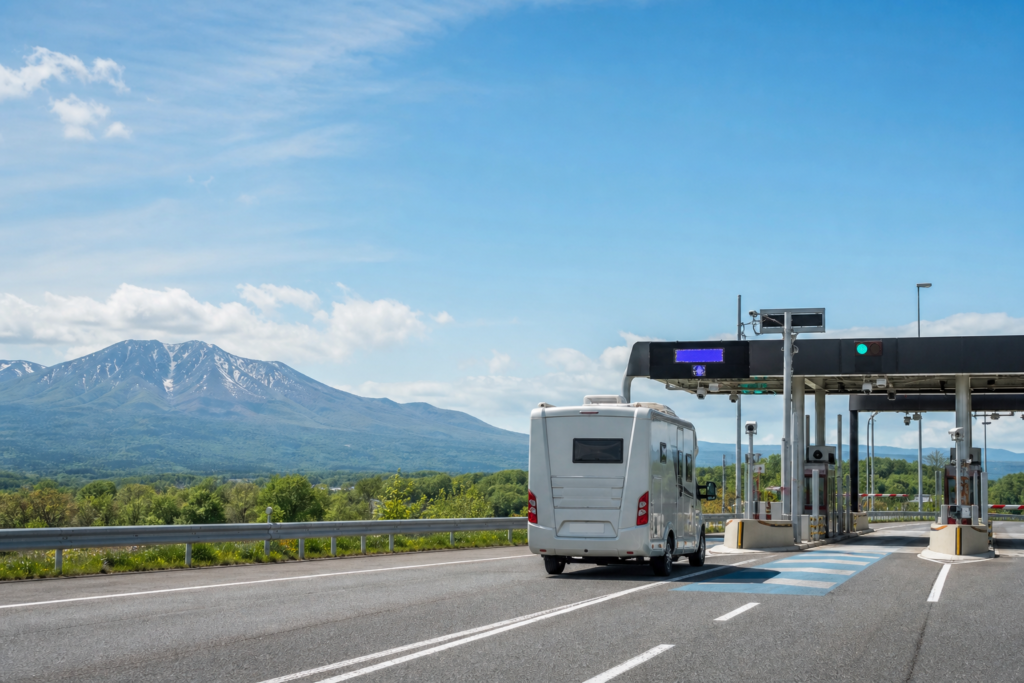
Rent a campervan in Hokkaido and the expressway toll can turn out different from what you expected. The reason is almost always vehicle class. Even the same campervan can be built on a kei-car base, a van base like the HiAce, or a truck-chassis cabcon — and Japan’s expressway system treats these as “kei-car class,” “standard car,” or “midsize car” respectively. That changes both the toll itself and which ETC discounts apply. Hokkaido trips also tend to involve long single stretches of driving — Sapporo to Asahikawa, Obihiro, or Hakodate — so this class difference adds up across the whole itinerary. Based on the vehicle classification table published by NEXCO East Japan, this guide covers how to identify your vehicle class, the conditions for the ETC weekend discount and late-night discount, and the rates for Hokkaido’s flat-rate passes: the “HOKKAIDO LOVE! Do-Toku Free Pass” for residents and the Hokkaido Expressway Pass for visitors from overseas.
All rates and conditions in this article were confirmed on the official NEXCO East Japan “Driveplaza” site (driveplaza.com) as of August 3, 2026. Rules can change, so always check the official site again before you depart.
New from New Chitose Airport — Available from June 2026
Rent the Cabcon “Cresson Journey”
Base yourself at New Chitose Airport and compare rates, vehicle types, and pickup locations all in one place.
See details at Moving Inn →Expressway Tolls Aren’t Decided by the Class Printed on Your Vehicle Inspection Certificate
NEXCO East Japan’s vehicle classification table carries this note: “The ‘ordinary’ category shown in the vehicle type field of a Japanese vehicle inspection certificate, as defined under the Road Transport Vehicle Act, does not refer to our toll ‘standard car’ class” (driveplaza.com, “Expressway Vehicle Classification,” confirmed August 3, 2026). In other words, even if the “type” field on your vehicle inspection certificate says “ordinary,” the expressway toll system may still classify the vehicle as midsize or large.
Toll vehicle class is split into five tiers — kei-car class, standard car, midsize car, large car, and extra-large car — and is determined by a combination of the license plate classification number (the leftmost digit of the three- or four-digit number), the vehicle’s dimensions, maximum payload, gross vehicle weight, and seating capacity. Because campervans vary widely in both base vehicle and conversion, it’s not unusual for one to straddle two classes. The same classification table also notes: “Some vehicles, such as special-purpose vehicles (8-series plates), are difficult to classify, so we may ask you to show your vehicle inspection certificate.” If you’re renting or own an 8-series-registered campervan, keeping the vehicle inspection certificate inside the vehicle makes things go more smoothly at the toll booth.
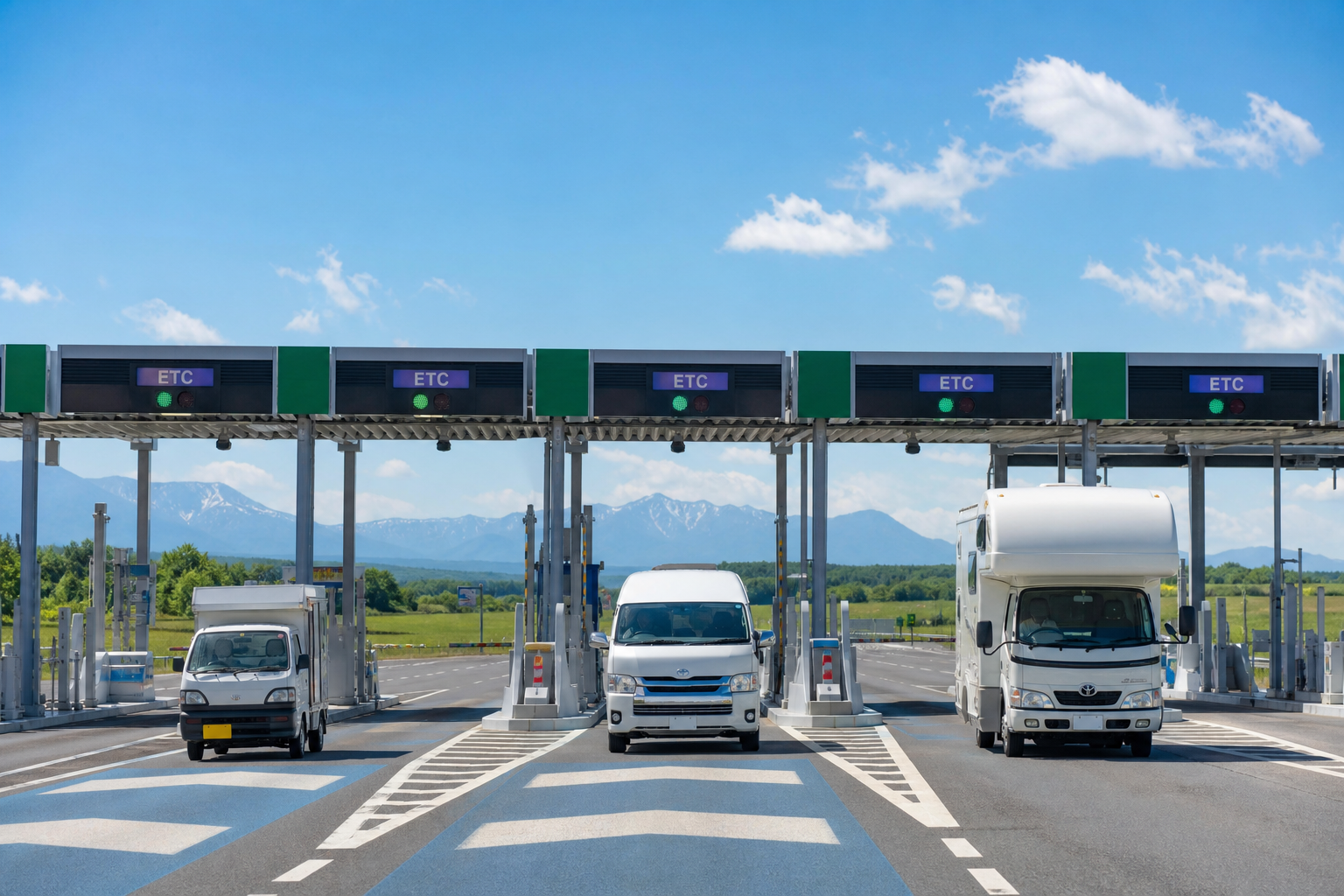
Question 1: “What class is my campervan?” Where to check first
The quickest check is the license plate classification number. Of the four digits, if the leftmost one (for example, the “3” in a plate reading “300”) is 3, the vehicle is registered as a standard passenger vehicle; 1 means standard freight vehicle; 2 means microbus or bus. Kei-cars use plate numbers starting with 4 or 5 and are automatically fixed in the kei-car class. Some vehicles can’t be determined by the classification number alone, though, so the surest method is to check the “gross vehicle weight” and “maximum payload” fields on the vehicle inspection certificate.
If you’re renting, the fastest route is simply to ask staff at the counter: “Is the toll class for this vehicle standard car or midsize car?” Rental companies hold the vehicle inspection certificate, so they can answer on the spot.
Question 2: “How much cheaper is a kei-camper?”
A kei-camper built on a kei-car base is consistently classified as “kei-car class” for tolls. The ETC weekend discount, the late-night discount, the Do-Toku Free Pass, and the Hokkaido Expressway Pass are all priced lower for kei-car class than for standard car (see the comparison table below for conditions). The cabin is smaller, but purely in terms of toll cost, this is the cheapest class to drive in Hokkaido.
Question 3: “Does a vancon pass through as a standard car?”
A vancon based on a HiAce or Caravan is toll-classed as a standard car as long as it’s registered with license plate classification number 3 (standard passenger vehicle), even if the body is fairly large. NEXCO’s classification table sets no upper limit on length, width, or height for standard passenger vehicles (3-series plates), so they’re treated as standard car regardless of body size.
On the other hand, some vancons are registered under 8-series plates (special-purpose vehicle) because of their sleeping-space conversion. 8-series vehicles have no dedicated entry in the classification table, and NEXCO itself lists them among the “vehicles that are difficult to classify,” so it’s worth confirming with your rental company before signing — “Does this vehicle pass through as a standard car?” — for peace of mind.
Question 4: “Do cabcons cost more?”
Cabcons, which build a living space onto a truck chassis, are often registered under 1-series plates (standard freight vehicle). In that case, a vehicle with a maximum payload under 5 tons and a gross vehicle weight under 8 tons is classed as midsize car; above that, it becomes large car. Once a vehicle is classed as midsize car, it loses eligibility for both the ETC weekend discount and the Do-Toku Free Pass / Hokkaido Expressway Pass (only the late-night discount, which covers every vehicle class, still applies). It’s worth checking the “gross vehicle weight” field on the vehicle inspection certificate ahead of time to see which class your cabcon will fall into.
Question 5: “Does towing a trailer really change your toll class?”
Yes, it does. The Do-Toku Free Pass Q&A states clearly: “If you tow a boat trailer or camping trailer, your vehicle class will move up a tier (kei-car to standard car, standard car to midsize car, and so on), so please be aware” (driveplaza.com, confirmed August 3, 2026). If you’re driving around Hokkaido with a towed camping trailer, it’s easy to overlook that the toll is based on the class of the towing vehicle and trailer combined, not the towing vehicle alone — so confirm this before you set out.
New from New Chitose Airport — Available from June 2026
Rent the Cabcon “Cresson Journey”
Base yourself at New Chitose Airport and compare rates, vehicle types, and pickup locations all in one place.
See details at Moving Inn →Question 6: “Is it cheaper to drive on weekends?” The ETC weekend discount, explained
The ETC weekend discount cuts tolls by about 30% for all-day travel on Saturdays, Sundays, and public holidays. However, it only applies to “standard car” and “kei-car class” — midsize car and above are not eligible. In addition, the discount doesn’t apply at all during “peak travel periods” such as Golden Week, Obon, the New Year holidays, or three-day weekends. Excluded dates change every fiscal year, so check the calendar on Driveplaza’s weekend discount page before you depart.
Question 7: “Is it better to drive late at night?” The ETC late-night discount, explained
The ETC late-night discount applies a roughly 30% cut to travel between midnight and 4 a.m. every day, and unlike the weekend discount, it covers every vehicle class, from kei-car class up through large car and extra-large car. Even a cabcon bumped up to midsize car, or a vehicle whose class rose because it’s towing a trailer, can still use this late-night discount. Since ferries from Otaru, Tomakomai, and Hakodate sometimes arrive in Hokkaido in the early morning, this is one of the few discounts still available to travelers using the expressway right after disembarking.
This system is scheduled for a revision sometime during fiscal 2026: the eligible hours would expand to 10 p.m.–5 a.m., split into a 30% discount for travel between 11 p.m. and 5 a.m. and a 20% discount for travel during the 10 p.m. hour, according to the plan described on Driveplaza. The way the discount is paid out is also set to change, moving to a later reimbursement through the ETC Mileage Service or an ETC corporate card. As of August 3, 2026, Driveplaza states the start date is “to be announced once decided,” so check the late-night discount page right before you travel.

Question 8: “Is there really a flat-rate pass just for Hokkaido?”
NEXCO East Japan’s Hokkaido Branch offers the “HOKKAIDO LOVE! Do-Toku Free Pass,” a flat-rate pass that lets you get on and off the entire Hokkaido expressway network freely within a set period. During Period A, April 1 through December 6, 2026, plans range from a 2-day pass at ¥8,000 up to a 7-day pass at ¥13,700 for standard car, and from ¥6,400 up to ¥11,200 for kei-car class, with several length-of-stay options in between (driveplaza.com, confirmed August 3, 2026). It cannot be used during peak travel periods such as Golden Week or Obon.
Eligibility is limited to standard car and kei-car class, so cabcons and other vehicles classed as midsize car or above cannot purchase it. Also easy to miss: as of April 1, 2026, it can no longer be used with a rental car company’s ETC card — you now need an ETC card issued in your own name. Since it’s an ETC-only product, you can’t apply at all without an ETC onboard unit installed.
Question 9: “I heard there’s a special pass for visitors from overseas” — the Hokkaido Expressway Pass
The “Hokkaido Expressway Pass” (HEP) is a flat-rate pass reserved for holders of a non-Japanese passport. You can only apply through a participating rental car company, and it’s set up so you rent a dedicated ETC card along with the pass. Rates run from ¥7,700 for standard car and ¥6,200 for kei-car class over 4 days, up to ¥15,400 for standard car and ¥12,300 for kei-car class over 8 days, with several length-of-stay options (driveplaza.com, confirmed August 3, 2026). If you’re driving for 9 days or more, you’ll need to apply for multiple plans back to back.
Just as with the Do-Toku Free Pass, eligibility here is limited to standard car and kei-car class — midsize car and above don’t qualify. For rental conditions and required documents, check Can You Rent a Campervan in Hokkaido With a Foreign Driver’s License? first, which makes it easier to follow the process through to purchasing the pass.
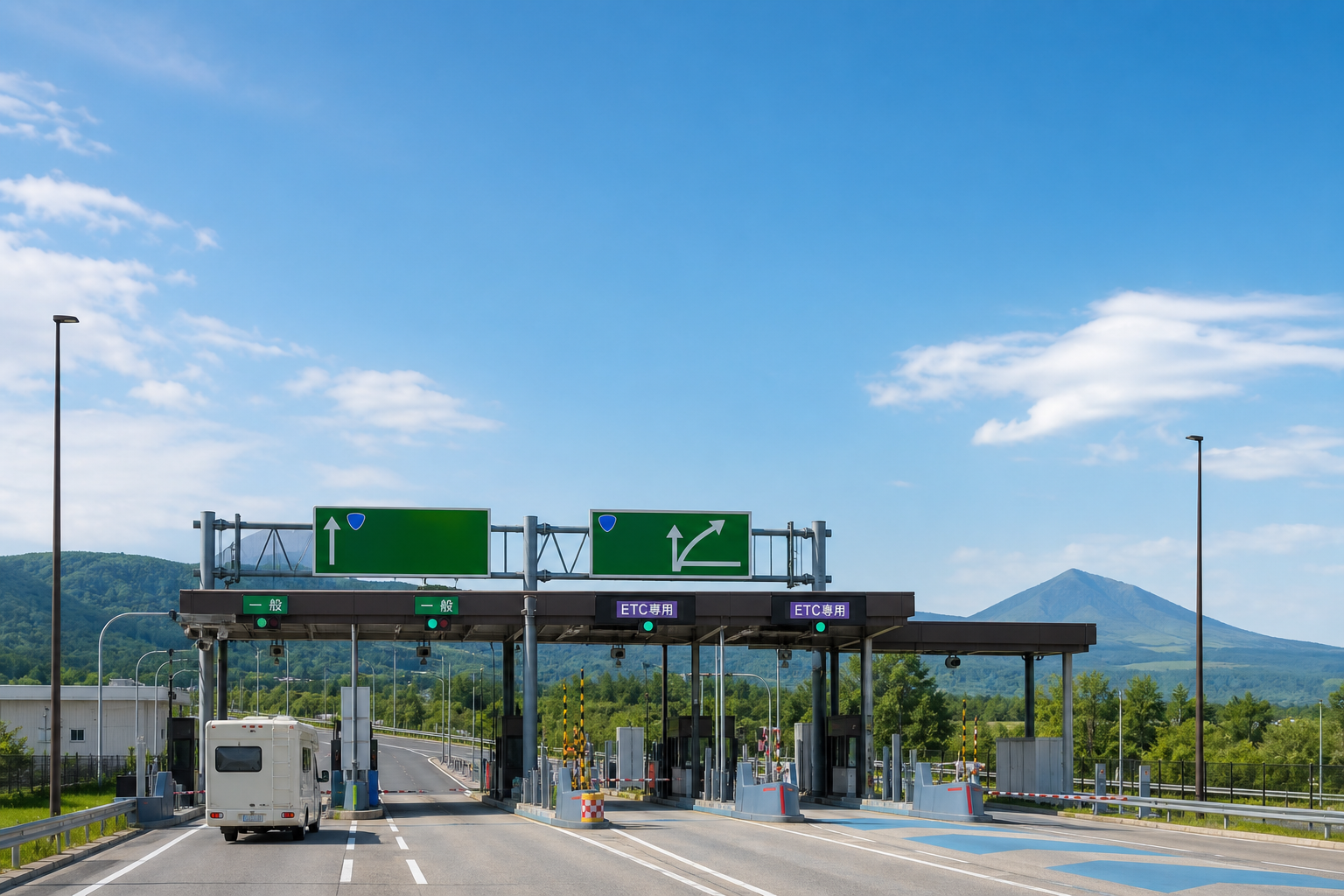
Quick-Reference Table: Vehicle Class vs. ETC Discounts vs. Flat-Rate Passes
The toll for a specific route — say, “New Chitose Airport to Asahikawa in a standard car” — depends on vehicle class, which interchanges you use, and the date and time, so this article alone can’t give you a definite figure. For an exact amount, the surest way is to enter your departure point, destination, and vehicle class into Driveplaza’s “Toll & Route Search” (driveplaza.com/dp/SearchTop). For now, here’s a summary of which discounts and passes apply to which vehicle class.
| Toll vehicle class | ETC weekend discount (~30%, weekends & holidays) | ETC late-night discount (~30%, midnight–4 a.m.) | Do-Toku Free Pass | Hokkaido Expressway Pass |
|---|---|---|---|---|
| Kei-car class (kei-campers) | Eligible | Eligible | Eligible | Eligible (overseas visitors only) |
| Standard car (most vancons) | Eligible | Eligible | Eligible | Eligible (overseas visitors only) |
| Midsize car (some cabcons) | Not eligible | Eligible | Not eligible | Not eligible |
| Large / extra-large car | Not eligible | Eligible | Not eligible | Not eligible |
The longer your route runs on the expressway, the more a flat-rate pass pays off — think of a long trip through Shiretoko and Abashiri or a full loop of eastern Hokkaido like the Eastern Hokkaido Campervan Route, or a Hakodate/Lake Toya loop like the Southern Hokkaido Campervan Tour Route. For specific itineraries by number of days, it’s also worth checking the Hokkaido Campervan Model Course Complete Guide and the Complete Guide to Hokkaido Scenic Drive Routes — they make it easier to judge how much to budget for tolls based on your driving distance.
Summary: What to Confirm Before You Set Out
- Have you confirmed, via the vehicle inspection certificate or your rental company, whether your vehicle’s toll class is standard car or midsize car?
- Does your situation involve any of the harder-to-judge conditions, such as 8-series registration or towing a trailer?
- If your trip centers on weekends, have you checked which vehicle classes qualify for the weekend discount and confirmed the excluded dates on the calendar?
- If you’ll be driving early morning or late at night, have you checked the timing of the late-night discount revision?
- If you’re covering a wide area of Hokkaido, have you compared the eligible vehicle classes and rates for the Do-Toku Free Pass and HEP?
- Have you confirmed whether your ETC card is in your own name or a rental card, and whether that matches the conditions of the pass you want to use?
A single difference in vehicle class can shift your toll anywhere from kei-car class all the way up to extra-large car, and it also determines whether any discount or flat-rate pass applies at all. Once you know which class your vehicle falls into, there’s nothing to be confused about at the toll booth on the day. From there, it’s just a matter of applying that class to the official site — checking excluded dates for the weekend discount if your trip is weekend-heavy, or checking pass rates if you’re touring widely. If you’re still working out your route, it’s worth checking the Campervan Fuel Economy Comparison Guide for choosing a vehicle by fuel efficiency, and the Hokkaido Campervan Rental Cost-Saving Guide for ways to save beyond tolls. Hokkaido’s expressways have very few full-service SAs and rely mainly on PAs, and places to refuel are limited too — see our Hokkaido Expressway SA/PA Guide for how to plan your rest stops and fuel stops.
Frequently Asked Questions (FAQ)
Where can I check whether my campervan is a standard car or a midsize car?
The license plate classification number gives you a rough idea (3 means standard passenger vehicle, 1 means standard freight vehicle), but the surest way is the gross vehicle weight and maximum payload fields on the vehicle inspection certificate. If you’re renting, it’s fastest to just ask staff directly when you sign the contract.
Is a kei-camper always the cheapest for tolls?
Since its toll class is consistently kei-car class, both ETC discounts and flat-rate passes are priced lower than for standard car.
Are all vancons treated as standard cars?
If registered under 3-series plates (standard passenger vehicle), it’s treated as standard car even with a fairly large body. However, some vehicles are registered under 8-series plates because of their sleeping-space conversion and need to be checked individually — it’s worth confirming with your rental company beforehand.
Do cabcons become midsize cars?
Many are registered under 1-series plates, and if the gross vehicle weight is under 8 tons they’re often classed as midsize car; 8 tons or above often means large car. Being classed as midsize car means losing eligibility for the weekend discount and flat-rate passes, so check the gross vehicle weight field on the vehicle inspection certificate first.
Does towing a camping trailer raise the toll?
Yes. The Do-Toku Free Pass Q&A explicitly states that towing raises your vehicle class by one tier (for example, kei-car to standard car).
Does driving on weekends always get me a 30% discount?
Eligibility is limited to standard car and kei-car class, and the discount doesn’t apply during peak travel periods such as Golden Week or Obon. Check the Driveplaza calendar before you plan your dates.
Will the late-night discount stay the same going forward?
A revision is planned during fiscal 2026 that would expand the eligible hours to 10 p.m.–5 a.m., along with a change to later reimbursement via the ETC Mileage program and similar schemes. As of this article’s confirmation date (August 3, 2026), the start date is undecided, so check the official site right before you travel.
Should I use the Do-Toku Free Pass or the Hokkaido Expressway Pass?
It depends on who you are. Residents of Japan use the Do-Toku Free Pass; visitors holding a non-Japanese passport are limited to the Hokkaido Expressway Pass. Both require your vehicle to be classed as standard car or kei-car class, since midsize car and above are not eligible for either.
Can I use a flat-rate pass with a rental car’s ETC card?
Since April 1, 2026, the Do-Toku Free Pass can no longer be used with a rental car company’s ETC card — you need one issued in your own name. HEP works differently: you rent a dedicated ETC card through a participating rental car company along with the pass. Confirm which method applies before you book.
Book a Campervan in Hokkaido
Moving Inn New Chitose Airport supports English booking and offers airport transfers.

![Can You Rent a Campervan in Hokkaido in Winter (Dec–Mar)? Companies With Winter Closures and What to Check Before Booking [2026]](https://hokkaido-campingcar.jp/wp-content/uploads/2026/10/hokkaido-campingcar-rental-winter-open-eyecatch-768x432.webp)