Hokkaido Campervan Trip Camp Cooking & BBQ Guide | Ingredient Sourcing, Recipes, and Equipment [2026 Edition]
A camp cooking and BBQ guide for Hokkaido campervan rental trips. Covers ingredient sourcing at supermarkets and roadside stations, recipes using Hokkaido ingredients, and essential cooking equipment.
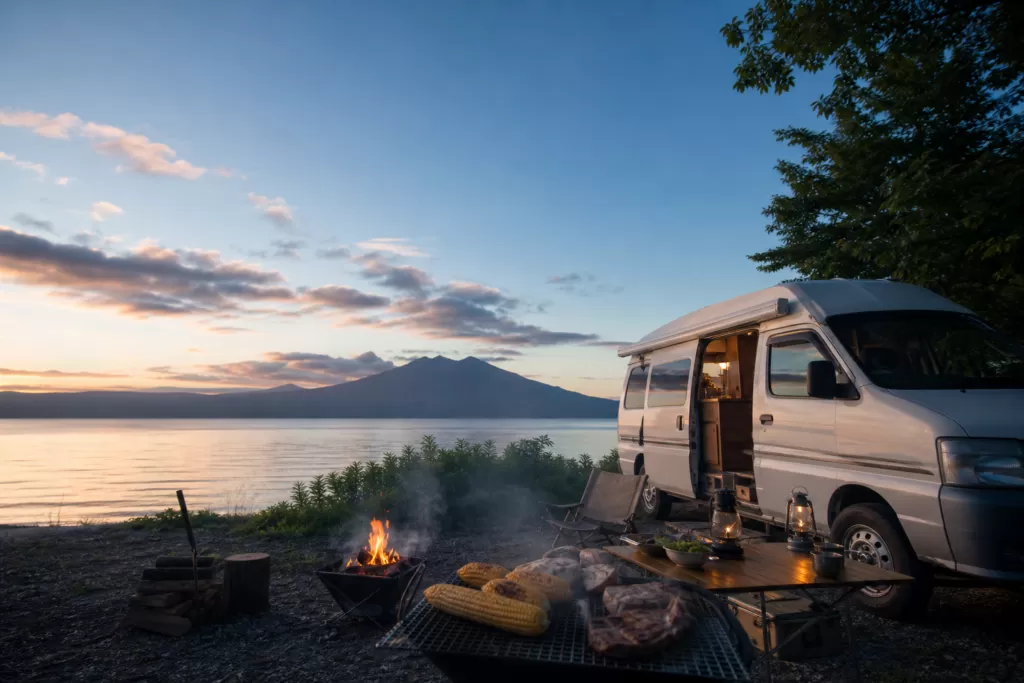
One of the joys of a Hokkaido campervan trip is cooking camp meals and BBQ with local ingredients. Grilling Jingisukan lamb, scallops, corn, and potatoes that represent Hokkaido at your own campsite is a special experience you cannot get at a restaurant. This guide covers everything from ingredient sourcing and recipes to equipment and waste disposal.
For cost simulations, model routes, and Michi-no-Eki overnight parking rules — the fuller picture of Hokkaido campervan travel — see our Complete Guide to Hokkaido Campervan Travel.
Why do BBQ on a campervan trip?
- Significantly reduces food costs: Ingredients from roadside stations and supermarkets are cheaper than tourist restaurants. A family of four can eat for 1,500–3,000 yen per meal.
- Source Hokkaido ingredients directly: The closer to the production area, the fresher the food. You can taste local varieties unavailable in regular stores.
- Memorable travel experience: Cooking your own food while enjoying the scenery is more satisfying than any restaurant.
- Freedom of timing: Eat whenever you want without worrying about opening and closing times.
- Kids love it: Grilling corn or flipping scallops themselves creates lasting memories for children.
New Chitose Airport / Tokachi-Obihiro Airport
Rent the Cabcon “Cresson Journey”
Base yourself at New Chitose Airport and compare rates, vehicle types, and pickup locations all in one place.
See details at Moving Inn →Where to source ingredients in Hokkaido
What you can buy and the prices vary greatly depending on where you shop. Combining a few sources along your route helps balance cost and freshness.
| Source | Features | Recommended items |
|---|---|---|
| Roadside station (Michi-no-Eki) produce corner | Local farmer vegetables and processed goods. Freshest in the morning. | Corn, potatoes, asparagus, local cheese |
| Co-op Sapporo (Coop) | Wide presence across Hokkaido. Full range of camp ingredients. | Jingisukan (Bell/Matsujin brand), butter, dairy products |
| Gyomu Super (bulk grocery) | Large portions at low prices. Good for bulk buying. | Chicken, pork, frozen foods, sauces, charcoal |
| Local fishing cooperative / fish market | Adjacent to ports. Same-day catch available at market prices. | Scallops (Okhotsk), saury (eastern Hokkaido), horsehair crab |
| Farm direct sales | Buy directly at farms. Many rare varieties available. | Fresh milk, butter, yogurt, seasonal vegetables |
| Aeon / Ralse (local supermarket) | Some open 24 hours. Convenient for late-night shopping. | BBQ charcoal, lighter fluid, seasonings, drinks |
How to make the most of roadside stations
Hokkaido has 128 roadside stations (as of 2026), and you can stop at almost every point along your route. The produce corner gets busy in the morning, so fresh vegetables and processed goods sell out early. Decide in advance to buy tonight’s dinner ingredients here, and you’ll establish a smooth shopping rhythm.
Some roadside stations also carry local seafood products (dried scallop muscle, kelp, soy-marinated salmon roe). Frozen and vacuum-packed items stay fresh during long-distance travel and can double as souvenirs.
Buying at fishing cooperatives and fish markets
Fishing cooperative direct sales near ports in eastern Hokkaido (Kushiro, Nemuro, Monbetsu, Abashiri) and southern Hokkaido (Hakodate, Muroran) let you buy same-day catch at market prices. Shell-on scallops cost roughly 150–300 yen each (varies by area and size). Buy only what you can eat that day, and store in a cooler box with ice.
Recommended recipes using Hokkaido ingredients
Jingisukan
Hokkaido’s signature BBQ. Using a dome-shaped Jingisukan pan lets you cook using the vegetables’ moisture. Bell’s Jingisukan sauce is the local standard, available at supermarkets and Co-op.
- Ingredients: lamb (raw or pre-marinated), onion, bell pepper, bean sprouts
- Tip: Cook meat on the raised center of the pan; use the oil that runs into the surrounding groove to stir-fry vegetables
- Serving guide: 200g meat + 150g vegetables per person
Scallop grilled with butter and soy sauce
Large Okhotsk scallops grilled over charcoal are exceptional. Place shell-on on the grill and add butter and soy sauce.
- Ingredients: fresh scallops (in shell), butter, soy sauce, lemon
- Tip: Place flat side down on charcoal. When the shell opens, add butter. Done in 30–60 seconds.
Potato with butter (Jagabutter)
Wrap Hokkaido May Queen or Danshaku potatoes in foil and toss into the charcoal. Cooked through in 30–40 minutes.
- Ingredients: potato, butter, salt, optional cheese
- Tip: Wrap in damp kitchen paper before double-wrapping in foil for even cooking.
Yama-wasabi rice
In Hokkaido, “yama-wasabi” (horseradish) is sold at supermarkets and roadside stations. Simply grate it, mix with soy sauce, and put on white rice. The heat is milder than fresh wasabi, and children can enjoy it too.
- Ingredients: grated yama-wasabi, soy sauce, white rice
- Tip: Pile generously on hot rice, drizzle a little soy sauce, and mix. Butter and soy sauce version is also delicious.
Butter soy sauce corn
Grill Hokkaido sweet corn (Gold Rush, Pure White, etc.) over charcoal and coat with butter and soy sauce. Best from July to September.
- Ingredients: corn, butter, soy sauce
- Tip: Grill with the husk on for 15–20 minutes, then peel — steam-grilling intensifies the sweetness.
Ishikari nabe
A traditional Hokkaido dish of salmon, vegetables, and tofu simmered in miso broth. Warms you up after BBQ or on a cool night. Buy salmon fillets at a supermarket or try gutting a whole fish from a roadside station.
- Ingredients: salmon fillet, potato, onion, cabbage, tofu, Hokkaido miso, butter
- Method: Boil vegetables, add salmon, dissolve miso. Finish with a knob of butter.
Hokkaido corn soup
Grilling the corn first before making soup takes the sweetness and aroma to another level.
- Ingredients: 1 ear of corn, 300ml milk, 10g butter, salt and pepper
- Method: Grill corn over charcoal, strip the kernels, and simmer in milk. Without a blender, enjoy it as-is as corn broth.
Zangi (Hokkaido fried chicken)
Richer seasoning than regular karaage, with ginger and garlic. Convenient to marinate the night before and bring to camp.
- Ingredients: chicken thigh, soy sauce/mirin/sake/ginger/garlic (marinade), potato starch, frying oil
- Tip: Easy to shallow-fry in a deep pan on a portable gas stove.
Making the most of the campervan kitchen
Most campervans come standard with a 2-burner gas stove, sink, and refrigerator (40–80L), making indoor cooking fully feasible. Vehicles with a microwave or toaster oven allow breakfast toast and reheating leftovers.
Standard campervan equipment (included in most rental vehicles)
- 2-burner gas stove
- Pots and pans (small to medium)
- Basic dishes and cutlery set
- Knife and cutting board
- Refrigerator (40–80L)
※ Equipment varies by rental company. Confirm at the time of booking.
Useful tools to bring
| Item | Use | Notes |
|---|---|---|
| Folding BBQ grill | The centerpiece of charcoal BBQ. Choose a size that fits a Jingisukan pan. | Compact A4-size foldable models suit campervans. |
| Jingisukan pan | Essential for Hokkaido BBQ. Versatile for other dishes too. | 1,000–3,000 yen at camping stores or home centers. |
| Skillet (cast iron) | Versatile for scallops, steak, eggs, etc. | Heavy, but high heat retention produces great results. |
| Tongs (charcoal and cooking) | Moving charcoal and turning food | Keep two pairs for hygiene. |
| Fire starter / long lighter | Lighting charcoal | Solid fire starters are reliable. Use liquid types with caution. |
| Foil and zip-lock bags | Marinating, storage, baked potatoes, etc. | Bring extra — you use a lot. |
| Oil solidifier (e.g. Katameru Tenpuru) | Disposing of waste oil from frying and stir-frying | Essential — never pour oil down the drain. |
Where BBQ is allowed and where it is not
- Designated areas within campsites only: BBQ areas, cooking stations, and designated fire pit zones are specified. Always check the campsite rules.
- No charcoal at roadside stations: BBQ and charcoal use in roadside station parking lots is strictly prohibited. It disturbs neighbors.
- No riverbanks or parks either: Unauthorized BBQ is prohibited by most municipalities.
- Be mindful of wind direction: Position your charcoal so smoke does not blow toward neighboring tents or facilities.
Using charcoal inside a campervan is absolutely prohibited due to carbon monoxide poisoning risk. BBQ must only take place in designated outdoor areas within campsites.
Food storage and shopping timing
- Morning shopping: Roadside station produce corners have the freshest stock in the morning. Buy only what you can eat that day for seafood.
- Using the refrigerator: Store meat and dairy in the campervan refrigerator (2–8°C). A freezer compartment allows you to freeze meat and plan meals strategically.
- Cooler box supplement: Use a cooler box alongside the refrigerator on long drives to reduce the load. Restock ice packs at roadside stations or convenience stores.
- Raw seafood: Consume on the day of purchase. Cook scallops and horsehair crabs the same day you buy them.
The refrigerator capacity (40–80L) fills up quickly with a large group. Shopping every 1–2 days locally is more practical than buying 3 days at once for both freshness and fridge space.
New Chitose Airport / Tokachi-Obihiro Airport
Rent the Cabcon “Cresson Journey”
Base yourself at New Chitose Airport and compare rates, vehicle types, and pickup locations all in one place.
See details at Moving Inn →Waste disposal and extinguishing charcoal
Accumulating waste in the second half of the trip makes the vehicle smell and reduces comfort. Plan your waste disposal routine in advance.
- Campsite trash bins: Sort and use them. Some facilities require paid garbage bags — check at check-in.
- Do not dump at roadside stations or convenience stores: Disposing of BBQ waste or charcoal ash in their bins is bad manners. Take it with you or use a paid disposal service.
- Charcoal disposal: After BBQ, extinguish and place in a dedicated container to take home. Douse with water, wait until completely cool, then bag it. Caution: pouring large amounts of water on hot charcoal at once produces sudden steam.
- Waste oil: Never pour frying or cooking oil down a drain. Absorb into newspaper or kitchen paper, bag it, and dispose as combustible waste.
- Food scraps: Seal in zip-lock bags, store in the vehicle, and carry to the next paid disposal point. A deodorizer and double-bagging are effective against odors.
How to run a successful campervan BBQ with Hokkaido ingredients
If it is your first time doing BBQ on a campervan trip, planning the sequence — where to buy ingredients and how to start the fire — in advance will make the day go smoothly.
Ingredient sourcing route unique to Hokkaido (fishing port → agricultural co-op / roadside station → supermarket)
One of the great pleasures of a Hokkaido campervan trip is sourcing ingredients as you travel through production areas. Combine the following sourcing spots according to your route.
- Fishing ports and co-op direct sales (eastern and southern Hokkaido): Direct sales points are near ports in Kushiro, Nemuro, Abashiri, and Hakodate. Buy same-day catch — scallops, saury, kelp — at market prices. Aim to use everything the same day.
- Agricultural co-op and farm direct sales (Tokachi, Furano): Buy corn, asparagus, potatoes, and onions at production-area prices. Agricultural co-op facilities are scattered across Hokkaido and carry local vegetable varieties.
- Roadside stations (128 across Hokkaido): You can stop at almost every day of your trip. The trick is to bulk-buy daily ingredients at the morning produce corner. Frozen and vacuum-packed processed goods are also available.
- Co-op Sapporo and Gyomu Super: Good for bulk buying meat for Jingisukan, seasonings, and charcoal. Stable prices — stock up early in the trip or the evening before.
Waste disposal and charcoal rules (standards for what to take home)
Dispose of BBQ waste according to campsite rules. Checking in advance prevents confusion on the day.
- Combustible waste: If the campsite has a trash area, sort and use it. Some facilities require paid garbage bags — confirm at check-in. At facilities without trash areas, take everything home.
- Charcoal: After BBQ, slowly pour water over charcoal to extinguish. Pouring large amounts at once causes steam to burst up — pour little by little and confirm it is completely cool. Place cooled charcoal in a dedicated bag or plastic bag and dispose as combustible waste. Never bag charcoal while still hot — the bag will melt.
- Food scraps: Place in sealable zip-lock bags before storing in the vehicle. A deodorizer and double-bagging are effective against odors. Do not dump in roadside station or convenience store bins — that is bad manners. Carry to the next paid disposal location.
How to use the campsite cooking area: manners
The campsite cooking area is a shared facility. Peak times (7–9 am and 5–7 pm) are busy, so washing dishes outside those hours is considerate.
- Do not pour oil or food scraps down the drain: Oil and food debris can clog drains. Wipe with kitchen paper before washing dishes.
- Prep raw ingredients at the cooking area: Handling raw fish and meat outside prevents smells in the vehicle.
- Wipe down after use: Rinse the counter and drain area after use as a courtesy to the next person.
- Avoid late-night or early-morning use: Water sounds carry further than you think. Avoid major cooking after 10 pm.
FAQ
Q1: Can I do charcoal BBQ in a campervan?
Absolutely not inside the vehicle — carbon monoxide poisoning risk is real. BBQ must only be done in designated outdoor areas at campsites. Some campsites have zones where personal BBQ grills are allowed and zones where they are not — check when booking.
Q2: Is it fine to bring seafood?
Yes. However, freshness management is critical. Keep seafood from ports and fish markets in a cooler box (with ice) or the refrigerator, and consume on the day of purchase. Live shellfish (scallops, oysters) spoil especially quickly — keep them well chilled.
Q3: How do I dispose of cooking oil?
Never pour frying or cooking oil down a drain. Absorb into newspaper or kitchen paper, bag it, and dispose as combustible waste. An oil solidifier (e.g. Katameru Tenpuru) brought in advance is convenient. Some campsites have dedicated waste oil disposal boxes.
Q4: Can I rent a Jingisukan pan locally?
Some campsites rent them, but quantities are limited. You can buy one for 1,000–3,000 yen at home centers (Homac, Cainz) or camping stores in Hokkaido, so purchasing on the first day of your trip is also an option. Some travelers sell or leave theirs at a roadside station or secondhand shop on the way home.
Q5: Can I get BBQ ingredients at roadside stations?
Vegetables, processed goods, and local cheese are available at the produce corners of roadside stations. Meat (Jingisukan, pork, etc.) is better sourced at nearby supermarkets or Co-op in terms of variety and price. Some roadside stations have a meat section or carry farm-direct products — check the official site or reviews before stopping to shop efficiently.
Book a Campervan in Hokkaido
Moving Inn New Chitose Airport supports English booking and offers airport transfers.
![When and Where Can You See Harbor Seals at Cape Erimo? Kaze no Yakata Official Information, Viewing Season, and Windy-Day Notes [2026-27]](https://hokkaido-campingcar.jp/wp-content/uploads/2026/10/erimo-cape-lighthouse-768x511.jpg.webp)
![Where and Under What Conditions Can You See Diamond Dust in Hokkaido? How Cold a Morning It Takes, and Where It Appears [2026-27]](https://hokkaido-campingcar.jp/wp-content/uploads/2026/10/hokkaido-diamond-dust-nayoro-768x512.jpg.webp)
![Can You Drive to Hokkaido Jingu for Hatsumode? Parking, Crowds, and Where to Park and Walk [2027]](https://hokkaido-campingcar.jp/wp-content/uploads/2026/10/hokkaido-jingu-winter-torii-768x504.jpg.webp)
![Hokkaido Roads Over New Year [2026-27] | Expressway Sections Prone to Blizzard Closures, Forecast Congestion Days, No Holiday Discount, and New Chitose Airport Parking](https://hokkaido-campingcar.jp/wp-content/uploads/2026/10/hokkaido-winter-rural-road-edge-markers-768x432.jpg.webp)
![Where to See Sea Smoke (Kearashi) in Hokkaido: Rumoi’s Ogon-misaki and the Morning Conditions [2026-27]](https://hokkaido-campingcar.jp/wp-content/uploads/2026/10/rumoi-kearashi-sea-smoke-768x511.jpg.webp)
![Geminid Meteor Shower 2026 in Hokkaido: Peak Around 23:00 on December 14, Sapporo Moonset 20:40, and Staying Warm in a Winter Campervan [2026]](https://hokkaido-campingcar.jp/wp-content/uploads/2026/10/geminids-2026-hokkaido-768x575.jpg.webp)