Hokkaido Campervan Hire & Rental for Couples & Partners: The Complete Guide [2026 Edition]
Your complete guide to exploring Hokkaido by campervan as a couple.
Pick a campervan by what matters to you.
Rent at New Chitose Airport
See only the rental bases in Chitose, where the airport is.
Rent in winter (Dec–Mar)
Companies that rent through winter, listed apart from those that close.
Guide price
Moving Inn New Chitose Airport: HIACE van conversion from ¥22,000 per night. 20–30% off when booked 60–90 days ahead (official rate table, checked 15 Oct 2026).
Before you book: with an International Driving Permit if your country is in the Geneva Convention (for example the US, Australia, Singapore); Taiwan, Switzerland, Germany, France, Belgium and Monaco need your licence plus a Japanese translation (Tokyo Metropolitan Police). Questions in English: Moving Inn on WhatsApp. Every roadside station (michi-no-eki) must have free 24-hour toilets, and Hokkaido has 128 of them (MLIT).
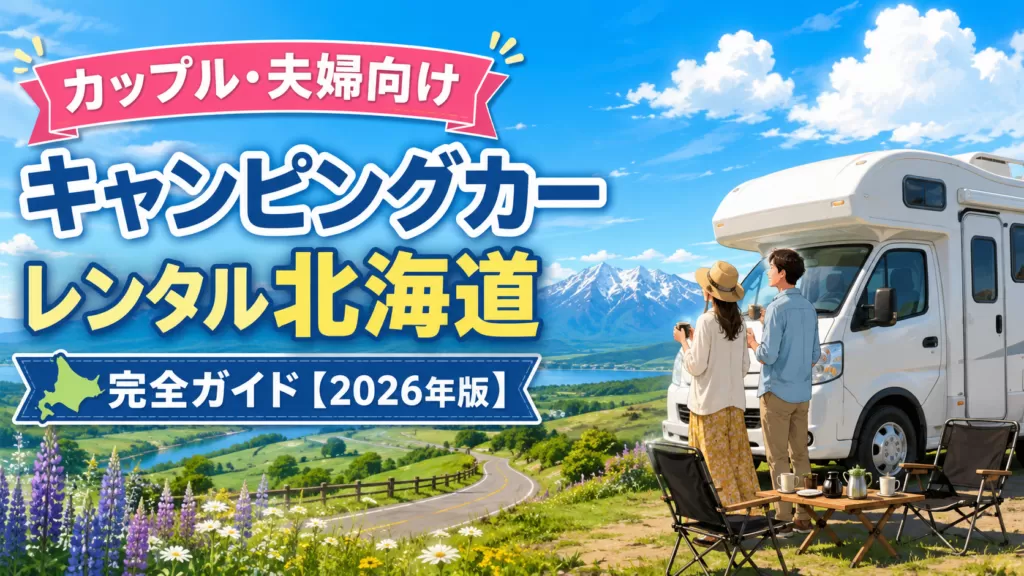
Dreaming of a road trip across Hokkaido in a campervan with your partner? A campervan journey for couples offers the freedom to choose where you sleep each night, and delivers a uniquely intimate “moving home” experience that a hotel simply cannot match.
In this guide, we compare vehicle types suited to two travellers, walk through cost simulations, and lay out popular routes with detailed itineraries. From booking timings to peak-season strategies, everything you need to plan confidently — even if this is your first time.
New Chitose Airport / Tokachi-Obihiro Airport
Rent the Cabcon “Cresson Journey”
Base yourself at New Chitose Airport and compare rates, vehicle types, and pickup locations all in one place.
See details at Moving Inn →Why a Campervan Rental is Perfect for a Couple
Your own private space, wherever you stop: Unlike a hotel, there are no other guests to worry about. Park at a lakeside at sunset, a meadow in the morning mist, or a quiet stretch of coastline — and stay as long as you like. That freedom is the essence of campervan travel.
Go wherever the road takes you: A campervan lets you reach spots that public transport simply cannot, from hidden scenic viewpoints to off-the-beaten-track roadside stations. Staying an extra night somewhere you love is always an option.
Better value than you might expect: Splitting the rental cost between two people effectively halves your per-person cost. During summer, when hotel prices in Hokkaido soar to ¥15,000–¥25,000 per person per night in popular areas, a campervan often works out significantly cheaper in total.
Cook your own meals, your way: Many campervans include a kitchen, letting you buy fresh local produce at markets and roadside stalls and cook it on the spot. A lakeside breakfast made from ingredients picked up that morning is an experience that no restaurant can replicate.
Comparing Vehicle Types for Two Travellers
Hokkaido campervan rentals generally fall into three categories. Here is how each one works for a couple:
To compare every campervan rental base in Hokkaido side by side, see the Hokkaido campervan rental & hire comparison.
| Type | Rate per night | Per person / night | Fuel economy | Sleeping capacity | Best for |
|---|---|---|---|---|---|
| Kei camper | ¥7,800–¥19,800 | ¥3,900–¥9,900 | 12–18 km/L | 1–2 | 2–4 night trips · budget-focused · compact |
| Van conversion (bankon) | ¥12,000–¥33,000 | ¥6,000–¥16,500 | 8–12 km/L | 2–4 | 3–7 nights · best all-rounder · most popular |
| Compact cab-over (cabcon) | ¥18,000–¥45,000 | ¥9,000–¥22,500 | 7–10 km/L | 2–4 | 5+ nights · comfort-focused · extended trips |
Van Conversion: The Couples Favourite
For two people, a HiAce-based van conversion is the most popular choice. The sleeping area comfortably fits two when the rear converts flat to a double-bed layout. Manoeuvring is easy, and tourist car parks rarely pose a problem.
- Rate: ¥12,000–¥33,000/night (¥6,000–¥16,500 per person)
- Fuel economy: 8–12 km/L
- Sleeping: comfortable double bed for two
- Storage: under rear seats + luggage area fits 2–3 suitcases
Learn more about van conversions →
Kei Camper: Great for Budget-Conscious Couples
At ¥7,800–¥19,800 per night, a kei camper is the most affordable option. Its compact footprint gives you more parking choices, and on Hokkaido’s wide roads the kei-class size feels perfectly at home even on narrow farm tracks.
- Rate: ¥7,800–¥19,800/night (¥3,900–¥9,900 per person)
- Fuel economy: 12–18 km/L
- Best for: 2–4 night trips, light packing
- Note: storage is limited — pack smart
View kei camper providers in Hokkaido →
Compact Cab-Over: For Couples Who Want to Slow Down
A cab-over gives two people more room than they strictly need, but with a fixed bed and a separate living area, it feels far more like a home on wheels. A fridge, sink, microwave and dinette table make week-long trips surprisingly comfortable.
- Rate: ¥18,000–¥45,000/night (¥9,000–¥22,500 per person)
- Features: fridge, sink, toilet (model-dependent), microwave
- Best for: 5+ nights, cooking-heavy trips, resort-feel travel
Cost Simulations for Two (by Number of Nights)
The totals below include rental fee, insurance, petrol, and campsite fees. Petrol is estimated at ¥170/L over 1,000 km.
3 Nights / 4 Days — Central Hokkaido: New Chitose → Lake Toya → Niseko → Otaru
| Vehicle | Rental (4 days) | Insurance | Petrol (est.) | Campsite (3 nights) | Total (2 people) | Per person |
|---|---|---|---|---|---|---|
| Kei camper | ¥31,200–¥79,200 | ¥4,400–¥22,000 | ~¥9,500 | ~¥4,500 | ¥49,600–¥115,200 | ¥24,800–¥57,600 |
| Van conversion | ¥48,000–¥132,000 | ¥4,400–¥22,000 | ~¥12,800 | ~¥4,500 | ¥69,700–¥171,300 | ¥34,850–¥85,650 |
| Cab-over | ¥72,000–¥180,000 | ¥4,400–¥22,000 | ~¥14,600 | ~¥4,500 | ¥95,500–¥221,100 | ¥47,750–¥110,550 |
5 Nights / 6 Days — Furano, Biei & Eastern Hokkaido
| Vehicle | Rental (6 days) | Insurance | Petrol (est.) | Campsite (5 nights) | Total (2 people) | Per person |
|---|---|---|---|---|---|---|
| Kei camper | ¥46,800–¥118,800 | ¥6,600–¥33,000 | ~¥12,000 | ~¥7,500 | ¥72,900–¥171,300 | ¥36,450–¥85,650 |
| Van conversion | ¥72,000–¥198,000 | ¥6,600–¥33,000 | ~¥17,000 | ~¥7,500 | ¥103,100–¥255,500 | ¥51,550–¥127,750 |
| Cab-over | ¥108,000–¥270,000 | ¥6,600–¥33,000 | ~¥19,000 | ~¥7,500 | ¥141,100–¥329,500 | ¥70,550–¥164,750 |
7 Nights / 8 Days — Hokkaido Full Loop
| Vehicle | Rental (8 days) | Insurance | Petrol (est.) | Campsite (7 nights) | Total (2 people) | Per person |
|---|---|---|---|---|---|---|
| Kei camper | ¥62,400–¥158,400 | ¥8,800–¥44,000 | ~¥15,000 | ~¥10,500 | ¥96,700–¥227,900 | ¥48,350–¥113,950 |
| Van conversion | ¥96,000–¥264,000 | ¥8,800–¥44,000 | ~¥21,000 | ~¥10,500 | ¥136,300–¥339,500 | ¥68,150–¥169,750 |
| Cab-over | ¥144,000–¥360,000 | ¥8,800–¥44,000 | ~¥24,000 | ~¥10,500 | ¥187,300–¥438,500 | ¥93,650–¥219,250 |
※ Totals cover rental fee, insurance, petrol and RV park / campsite charges. Food, sightseeing and toll roads are not included. A realistic all-in budget for a 7-night van conversion trip for two is around ¥80,000–¥160,000 per person. See the full list of add-on costs and options for details.
Popular Routes for Couples — with Sample Itineraries
Lake Toya & Niseko (3 nights / 4 days) — Classic Central Hokkaido
A natural loop from New Chitose Airport covering roughly 350 km — relaxed, scenic, and ideal for a first campervan trip.
- Day 1: Pick up campervan at New Chitose → Lake Shikotsu (canoe / lakeside walk) → overnight at RV park near Lake Toya
- Day 2: Lake Toya sightseeing boat → Mt. Usu Ropeway → Toya hot-spring day bath → drive to Niseko, overnight
- Day 3: Niseko area (rafting or onsen) → Mt. Yotei loop drive → head toward Kutchan or Otaru
- Day 4: Otaru (canal, Sakaimachi Street) → return campervan at New Chitose
RV parks along the Lake Toya shoreline commonly offer electrical hook-ups, and during the fireworks season (April–October) you can watch the display from inside your campervan — an experience no hotel room can offer.
Furano & Biei (3–5 nights) — Flower Fields and Rolling Hills
The July lavender season draws more visitors to this route than almost any other in Hokkaido. Biei’s rolling hills, Farm Tomita and the Blue Pond are endlessly photogenic.
- Day 1: Pick up at Asahikawa Airport → Asahikawa city (Asahiyama Zoo or ramen) → overnight near Biei or Shirogane Onsen
- Day 2: Biei patchwork hills (Ken & Mary’s Tree, Seven Star Tree) → Blue Pond → Tokachidake Onsen (Fuki-age open-air bath) → drive to Furano
- Day 3: Farm Tomita (lavender peak: early–mid July) → Furano Cheese Factory → Furano Winery → Ningle Terrace
- Day 4 (optional): Head toward the Hidaka range, or loop back via Mt. Asahi (Daisetsuzan)
Mt. Tokachidake has been at Volcanic Alert Level 3 (entry restrictions) since September 12, 2026. Prefectural Route 966 beyond Bogakudai is closed to traffic, so if you are heading toward Tokachidake Onsen or Fukiage Onsen, check the Japan Meteorological Agency volcano information for Tokachidake and the latest notices from Biei Town and Kamifurano Town (checked 2026-10-08).
Asahikawa Airport makes this route easy to plan. For rental options based in Asahikawa, see Asahikawa campervan rental comparison.
Eastern Hokkaido (5–7 nights) — Wildlife and Raw Nature
Shiretoko, Abashiri, Lake Akan and the Kushiro Marshland form a constellation of wild, unspoiled landscapes. Allow at least five nights so the driving never feels rushed.
- Day 1: Pick up at Kushiro Airport → Kushiro Marshland (observation deck) → Lake Akan (marimo, Ainu Kotan) → overnight nearby
- Day 2: Lake Mashu · Lake Kussharo → Kawayu Onsen (foot bath) → drive toward Shiretoko
- Day 3: Shiretoko Five Lakes (guided tour) → Furepe Falls → Shiretoko cruise → overnight at RV park near Utoro
- Day 4: Shiretoko Pass → Rausu (Northern Territories viewpoint) → Notsuke Peninsula (Todowara) → head to Nemuro
- Day 5: Nemuro (Cape Nosappu, hanasaki crab) → Akkeshi (oysters) → return toward Kushiro
- Day 6: Kushiro Marshland canoe experience → return campervan at Kushiro Airport
In September, the coral grass (sango-so) at Lake Notoro near Abashiri turns brilliant crimson — an increasingly popular sight that rewards an eastern Hokkaido detour.
Niseko & Shakotan (2–3 nights) — Perfect Short Getaway
When time is tight, Niseko combined with the Shakotan Peninsula delivers big rewards. From New Chitose, Shakotan is about 2.5 hours; Niseko about 2 hours.
- Day 1: Pick up at New Chitose → Shakotan Peninsula (Cape Kamui, Shakotan Blue sea) → sea urchin rice bowl lunch → overnight at RV park near Niseko
- Day 2: Niseko area (summer: rafting / canoeing; winter: skiing) → Goshiki Onsen → drive around Mt. Yotei
- Day 3: Lake Toya → return campervan at New Chitose
Tips for Getting the Most out of a Couples Trip
Make the Most of RV Parks
RV parks with electrical hook-ups, fresh water and waste disposal are far more comfortable for an overnight stay than a free roadside car park. Many are attached to onsen facilities, so you can soak after a long drive and fall asleep right there. The Japan RV Association website lists Hokkaido RV parks by area.
Treasure Mornings and Evenings
Being able to wake up exactly where you want to is the campervan traveller’s greatest privilege — a starlit sky far from city lights, a sunrise over the Biei hills, or Lake Toya’s fireworks from inside your own vehicle. These are the memories that last.
Divide and Pack Smart
Packing well directly affects comfort. Keep to one suitcase each and transfer clothing into soft bags to maximise sleeping space. Bring your own toiletries (shampoo, body wash, towels) for onsen stops — many campervans provide no amenities at all.
Let Food be Part of the Adventure
Hokkaido is a food lover’s paradise. Pick up lamb, seafood and dairy from morning markets, farmers’ markets and roadside stalls — cook them lakeside on a barbecue or in the van kitchen, and you have a meal that no restaurant can replicate.
New Chitose Airport / Tokachi-Obihiro Airport
Rent the Cabcon “Cresson Journey”
Base yourself at New Chitose Airport and compare rates, vehicle types, and pickup locations all in one place.
See details at Moving Inn →When to Book and How to Beat Peak Season
Summer (July–August) is peak season for Hokkaido campervan rentals. Popular operators often sell out 2–3 months in advance. Use the table below as a booking guide:
| Travel period | Recommended booking window | Pricing | Availability |
|---|---|---|---|
| July–August (incl. Obon) | 3–6 months ahead | Highest (early-bird discounts available) | Books out fast — book early |
| June / September | 2–3 months ahead | Slightly above standard | Relatively available |
| May / October | 1–2 months ahead | Standard | Good availability |
| November–April (winter/spring) | 2–4 weeks ahead may suffice | Lower–standard | Available (check for snow conditions) |
Ways to Keep Costs Down in Peak Season
- Weekday departures: Mon–Thu departures are often priced lower than Fri–Sun at many operators.
- Early-bird discounts: Some operators offer 10–20% off for bookings made 60–90 days in advance.
- Late June / early September: Lavender is just past or just starting, but pricing and crowds are better balanced.
- Regional airports: Asahikawa, Obihiro and other Hokkaido airports sometimes offer lower base rates than New Chitose-based operators.
For overnight parking spots across Hokkaido, see the Hokkaido overnight parking guide (Japanese).
Frequently Asked Questions
Which vehicle type is best for two people?
A van conversion (bankon) offers the best balance. For budget-conscious couples, a kei camper works well for trips up to 3 nights; for 4 nights or more, a van conversion or cab-over is noticeably more comfortable.
What does it cost to rent a campervan as a couple?
For a 3-night / 4-day van conversion trip, expect a combined total of ¥69,700–¥171,300 (¥34,850–¥85,650 per person). Adding petrol, campsites and food brings the all-in per-person budget to roughly ¥50,000–¥120,000.
I’m worried about driving an unfamiliar vehicle. Any advice?
A HiAce-based van conversion is close in size to a standard minivan, making it one of the more approachable options. Allow time for a handover briefing with the operator and a short familiarisation drive before heading out. Some operators offer a practice session on request.
What is the best season for a couples campervan trip in Hokkaido?
Early to mid July (lavender peak) and September (early autumn colours) are both excellent. July–August is the busiest season and requires early booking, but the combination of flower fields, blue skies and wide-open pastures is uniquely beautiful. September brings quieter roads and a lovely early-autumn crispness.
Can we bring our pet?
Some Hokkaido campervan operators accept pets with an additional cleaning fee. Rules vary — always confirm before booking. See pet-friendly campervan rentals in Hokkaido (Japanese) for a comparison.
Can we shower inside the campervan?
Most van conversions do not have a shower or toilet. Plan to use onsen (hot spring baths), public bathhouses and RV park facilities along the way — Hokkaido has them almost everywhere. Cab-over models sometimes include a compact shower; confirm with the operator when booking.
Book a Campervan in Hokkaido
Moving Inn New Chitose Airport supports English booking and offers airport transfers.
Pick a campervan by what matters to you.
Rent at New Chitose Airport
See only the rental bases in Chitose, where the airport is.

![When and Where Can You See Harbor Seals at Cape Erimo? Kaze no Yakata Official Information, Viewing Season, and Windy-Day Notes [2026-27]](https://hokkaido-campingcar.jp/wp-content/uploads/2026/10/erimo-cape-lighthouse-768x511.jpg.webp)
![Where and Under What Conditions Can You See Diamond Dust in Hokkaido? How Cold a Morning It Takes, and Where It Appears [2026-27]](https://hokkaido-campingcar.jp/wp-content/uploads/2026/10/hokkaido-diamond-dust-nayoro-768x512.jpg.webp)
![Can You Drive to Hokkaido Jingu for Hatsumode? Parking, Crowds, and Where to Park and Walk [2027]](https://hokkaido-campingcar.jp/wp-content/uploads/2026/10/hokkaido-jingu-winter-torii-768x504.jpg.webp)
![Hokkaido Roads Over New Year [2026-27] | Expressway Sections Prone to Blizzard Closures, Forecast Congestion Days, No Holiday Discount, and New Chitose Airport Parking](https://hokkaido-campingcar.jp/wp-content/uploads/2026/10/hokkaido-winter-rural-road-edge-markers-768x432.jpg.webp)
![Where to See Sea Smoke (Kearashi) in Hokkaido: Rumoi’s Ogon-misaki and the Morning Conditions [2026-27]](https://hokkaido-campingcar.jp/wp-content/uploads/2026/10/rumoi-kearashi-sea-smoke-768x511.jpg.webp)
![Geminid Meteor Shower 2026 in Hokkaido: Peak Around 23:00 on December 14, Sapporo Moonset 20:40, and Staying Warm in a Winter Campervan [2026]](https://hokkaido-campingcar.jp/wp-content/uploads/2026/10/geminids-2026-hokkaido-768x575.jpg.webp)